Days have been getting shorter since late June, but most households feel it in October. The sun sets before dinner is done, the evening shrinks … Read moreThe post Family game nights come back when the days get shorter appeared…










Days have been getting shorter since late June, but most households feel it in October. The sun sets before dinner is done, the evening shrinks … Read moreThe post Family game nights come back when the days get shorter appeared…

(The Center Square) – Vulnerabilities in Georgia’s voting system could allow tens of thousands of potentially illegal ballots to be cast next month by people no longer living at their addresses of record, an elections data analyst is warning state…

 Guillermo Rodriguez and Witney Carson are determined to put their best foot forward.
While the couple have consistently sat at the bottom of the leaderboard during the first four weeks of Dancing…
E! Online (US) – Top Stories
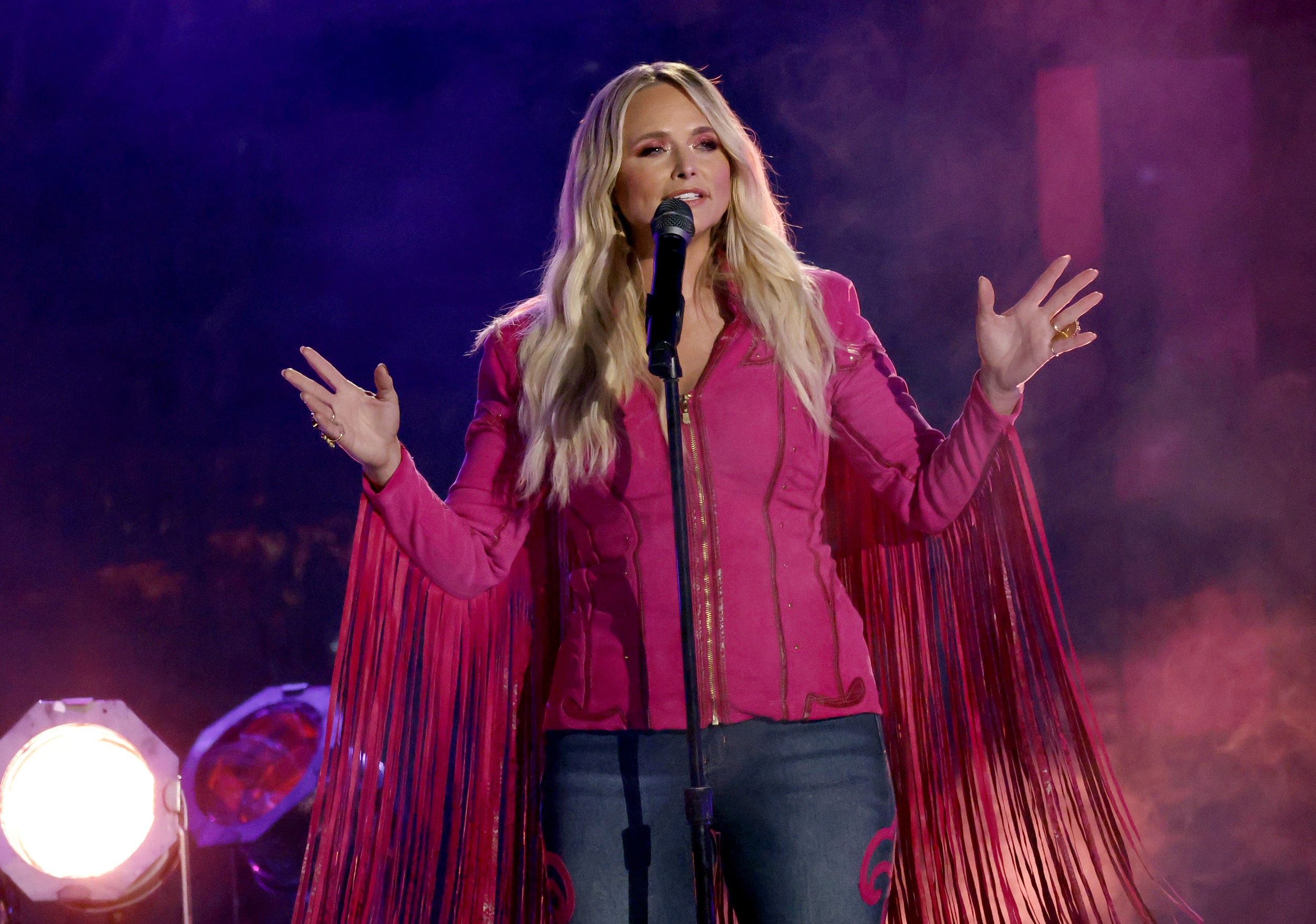
Miranda Lambert calls A.I. in songwriting rooms ‘terrifying,’ though she’s trying to keep an open mind about the technology. Continue reading…Country Music News – Taste of Country
Miranda Lambert calls A.I. in songwriting rooms ‘terrifying,’ though she’s trying to keep an open mind about the technology. Continue reading…The Boot – Country Music News, Music Videos and Songs

Reading Time: 2 minutes
Sydney Sweeney has often been compared to Marilyn Monroe, which makes sense:
After all, they’re both blonde bombshell sex symbols whose names are as alliterative as their job titles.
And now, it looks as though the icons — who were born about 70 years apart — are actually related by blood.
News of the unexpected connection comes courtesy of a report from genealogical research firm MyHeritage.
The study shows that the actresses are related through Sydney’s dad, Steven Sweeney, and Marilyn’s dad, Charles Stanley Gifford.
Of course, if you go back far enough, just about everyone is related.
And in the case of Sydney and Marilyn, you have to go back pretty freakin’ far.
The actresses’ fathers are both descended from an early Massachusetts settler named Ezra Perry.
Perry lived in the 1600s in Sandwich, Massachusetts, meaning Sweeney and Monroe have to travel quite a few branches down the family tree before they get to their connection.
So, no, Sweeney isn’t exactly getting calls from Monroe’s immediate family. But the connection is legitimate, according to MyHeritage’s research.
“People have always drawn parallels between Sydney Sweeney and Marilyn Monroe, but seeing their paths align on a deeper level inspired us to look for a real bond in the MyHeritage archives,” MyHeritage Director of Research Roi Mandel tells Page Six.
“Uncovering their shared branch was incredible,” Mandel added, calling the discovery a reminder of how interconnected family trees can be.
And considering how frequently Sweeney has channeled Monroe over the years, the news is almost suspiciously perfect.
In February, Sweeney appeared at the Santa Barbara International Film Festival wearing a vintage Ceil Chapman gown that looked remarkably similar to the dress Monroe wore on the cover of Life magazine in 1952.
Sweeney also gave fans some serious Monroe vibes at the Los Angeles premiere of The Housemaid in December 2025.
The actress wore a custom white Galia Lahav gown that appeared to pay tribute to Monroe’s famous white dress from The Seven Year Itch. She also previously rocked a retro blonde bob at the Governors Awards that called to mind Monroe’s Gentlemen Prefer Blondes era.
In other words, Sweeney has been doing the Marilyn thing for years.
She just apparently didn’t know she had a family tree to back it up.
The discovery also gives a little more weight to the comparisons made by people who have dubbed Sweeney a modern-day Monroe.
Even Sweeney’s boyfriend, Scooter Braun, has reportedly embraced the comparison, with a source previously telling Page Six that he views her as the “modern Marilyn Monroe.”
Sweeney has yet to publicly react to the genealogy discovery.
But if Hollywood ever decides it needs another Marilyn Monroe biopic, casting directors may want to keep Sweeney’s phone number handy.
Sydney Sweeney Related to Marilyn Monroe, Genealogy Test Shows was originally published on The Hollywood Gossip.
The Hollywood Gossip

 Olivia Rodrigo wishes this discourse would drop dead.
Nearly three months after the “Stupid Song” singer stepped out with Julian Croonenberghs, a finance associate, she addressed the speculation…
E! Online (US) – Top Stories

Reading Time: 3 minutes
Joy-Anna Duggar has found herself in hot water.
For someone who didn’t really know how to bathe herself until she was married, many fans would say that she’s done okay as a mom.
But even Joy’s diehard supporters are calling her out for endangering her 3-year-old.
A look at her life showed little Gunner with a pretty infamous choking hazard. What is Joy thinking?
Joy-Anna Duggar, who is pregnant with Baby #4, shared a “morning in my life” video.
This was a supercut showing the less-than-glamorous first couple of hours of her day.
Most of the morning routine was fully anodyne. If anything, it served as a warning to people who romanticize parenthood that their lives will no longer be their own.
But we see Joy making breakfast for her kids. Scrambled eggs, toast, and grapes are pretty normal foods.
If you’re a parent yourself, you may have already spotted where Joy went wrong here.
Eggs, toast, and some sort of fruit are very generic breakfast foods. They’re not for everyone, but they’re usually fine unless there’s an allergy.
But Gunner is only three years old.
As Joy’s fans and critics alike across social media are calling out, grapes are a choking hazard for toddlers and preschoolers.
Children develop more experience eating as they grow, and they also develop larger throats. At 3, though, many children could more easily have a grape go down their windpipe — turning a snack into a health emergency.
Even the CDC advises cutting grapes for little kids to make eating safer for them. (For now; if RFK Jr. gets wind of it, they’ll probably just recommend replacing grapes with smallpox-infected roadkill or something like that.)

Obviously, there are people who will always raise a stink about anything that Joy-Anna Duggar or any of her siblings do.
This isn’t always unreasonable. People who grew up in an abusive cult will often get things wrong, especially when they have not actually left said cult.
But even people who are normally Joy’s fans — people who know, for example, that Gunner has choked before — called her out here.
Critics pointed out that there are other risks, like kids not wearing helmets or being photographed around guns.
Point is: nobody wants to see a toddler choke to death when there are plenty of grape slicers on the market for exactly this situation. (Also for making chicken salad. Seriously, find firm, crisp grapes and slice them and they will transform the meal.)
We would be remiss if we did not acknowledge that it is possible that Jinger Duggar was throwing shade at her sister and podcast co-host.
On her own Instagram page, Jinger shared “mom hacks” — and one happened to be a grape slicer.
It’s possible that she hadn’t seen Joy’s blunder and just happened to post this.
At the same time, maybe she wants to make sure that fans know that she takes precautions with the health and safety of her children.
We hope that Joy’s kids continue to be “lucky” — as much as someone born into the Duggar or Forsyth families could possibly be, anyway.
Joy-Anna Duggar Accused of Endangering 3-Year-Old With ‘Choking Hazard’ was originally published on The Hollywood Gossip.
The Hollywood Gossip
There are many reasons why people might opt out of using deodorants. These entertainment A-listers have been open about their disdain for such products.
Health Digest – Health News, Wellness, Expert Insights

In June 2026, the U.S. Supreme Court agreed to hear appeals of two lower court rulings that challenged assault weapons restrictions. The high court will decide whether the Second and 14th amendments protect the right to possess semi-automatic rifles like the AR-15. This marks a reversal for the court, which for years has declined to consider such challenges.
Two lower court rulings followed the Supreme Court announcement. On July 9, the U.S. Court of Appeals for the 7th Circuit upheld Illinois’ assault weapons ban. And on July 17, the 33rd Circuit struck down New Jersey’s ban on semi-automatic assault weapons, making it the first federal appeals court to so rule.
Some analysts suggested that these decisions had an eye on the Supreme Court’s fall review.
As a gun policy scholar, I believe this flurry of legal activity brings to a head the multi-decade dispute over restricting assault weapons that extends far beyond legal arguments. The source of the conflict ranges from elements of gun culture identity to the technical characteristics of these weapons. Much of this controversy remains misunderstood, including conflicting claims about the weapons’ origins and definition.
Where the court ultimately stands will have to do with its answers to these tough questions. Is an assault weapon a weapon of war or a sporting rifle? Is it a machine gun or simply a tricked-out hunting rifle? Does it really pose a risk to the public compared to other guns?
Assault-style weapons – particularly the AR-15 – date to the late 1950s, when they emerged as a next-generation battlefield weapon.
According to Jim Sullivan, one of the AR-15’s designers, the weapon was “designed for full automatic military use. It wasn’t really designed as a sporting rifle.” The U.S. military adopted the weapon during the Vietnam War and designated it as the M16. The gun could fire in automatic or semi-automatic fashion.
As military demand for the M16 declined, a semi-automatic version, the AR-15, was sold to the domestic civilian market. But consumers took little interest until the late 1980s, when cheap imports began to flood the market.
Then in 1989, an assailant attacked an elementary school in Stockton, California, using an assault rifle to kill five people and wound 29, prompting public outcry and calls to restrict such weapons. Other mass shootings in Killeen, Texas, in 1991 and San Francisco in 1993 followed.

Outrage over these shootings led Congress to pass the 1994 Federal Assault Weapons Ban, a 10-year ban on specific types of assault weapons. But the ban lapsed in 2004 because the law included a sunset provision. Repeated efforts to resurrect it have failed.
Today, 15 states have enacted assault weapons restrictions. Most of these laws ban their manufacture, sale or transfer.
Opponents of these laws note that the weapons available to civilians fire only in semi-automatic mode, making them functionally no different from traditional semi-automatic hunting rifles.
However, even in semi-automatic firing mode, the assault weapon is destructive and usually retains other military features. Battlefield experience has found that semi-automatic firing – a single round for each pull of the trigger – is often more effective, as it improved targeting and wasted less ammunition.
It’s also worth noting that the term “assault weapon” predates 1989 and the era of mass shootings. Gun manufacturers used the term before the 1980s, when the rifle’s military provenance was a major selling point.
Opponents of these restrictions argue that assault weapons have become the nation’s highest-selling guns, with sales increasing after the federal assault weapons ban lapsed in 2004.
Much of this market has been driven by politics. Assault weapons buyers increasingly view such purchases as a way to make a political statement – to register their objection to gun regulations. The gun industry refers to these purchases as “political sales.”

Supporters of assault weapons restrictions propose a different calculus: These weapons represent a small percentage of the total number of guns in the country while accounting for an inordinate number of mass shooting casualties. There are no precise counts of assault weapons, but if a 2022 estimate of 20 million is divided by a total of some 400 million guns in the U.S., assault weapons represent only about 5% of them.
Opponents of assault weapons restrictions are correct in pointing out that such weapons are rarely used in crimes committed with guns. Indeed, nearly 80% of those weapons are handguns.
On the other hand, assault weapons pose three specific safety threats.
First, they are increasingly the gun of choice for mass shooters. Handguns are used in roughly two-thirds of all mass shootings, but assault weapons are appearing with increasing frequency – nearly 40% of these events in the past decade.
Moreover, they result in greater harm. That’s because of their ability to use large-capacity ammunition magazines, which can hold up to 100 rounds. And their muzzle velocity – the speed at which the bullet leaves the barrel – means rounds travel farther and cause more harm.
A 2019 study of public mass shootings found that over 85% of fatalities from those incidents were from assault rifles. And in the past 10 years, the 10 highest-casualty mass shootings were committed with assault weapons.
Second, assault weapons are disproportionately more likely to be used in the shooting of a police officer.
Third, they are increasingly guns of choice for gang-style violence and extremist political groups.
When the Supreme Court takes up the assault weapons cases this fall, it will apply its history standard to determine whether assault weapons restrictions are “consistent with this Nation’s historical tradition of firearm regulation.”
As I mention in my book, if the history of weapons regulation shows anything, it is that weapons deemed dangerous by the public and state and local governments or otherwise incompatible with civilian use have been widely restricted. That includes everything from Bowie knives and certain types of clubs to the notorious Tommy gun of the 1920s.
Despite this extensive regulatory past, experts generally expect that the court will strike down assault weapons restrictions. If so, it will be hard-pressed to justify the result as consistent with America’s extensive history of weapons regulation.

Robert Spitzer is a member of the National Rifle Association and of Brady United Against Gun Violence
Politics + Society – The Conversation