Categories
Sports Fox

Guardians Stay Hot: 3 Takeaways From Cleveland’s ALCS Game 1 Upset Win vs. Rays

TROPICANA Field (St. Petersburg, Fla.) — Talk about an upset. Facing the Tampa Bay Rays, the best team in the American League, it was the tough and tired Cleveland Guardians who came through and remarkably took Game 1 of the ALCS with a 7-3 win on Monday night at Tropicana Field. The odds were against them after going the distance in the ALDS. Cleveland spent all its energy storming back from the brink of elimination against the White Sox, only to still have some fight left in the tank. No matter that Tampa Bay’s indomitable ace was on the mound. No matter that the Rays were recharged after four days off following their sweep of the Yankees. No matter that Tropicana Field was rocking with a sold-out crowd waving yellow towels and creating extra pressure. The Guardians, on the strength of their MVP-caliber stars, stole Game 1 on the road. Here are my takeaways: The Guardians were waiting for their unofficial team captain, Jose Ramirez, to make some noise all night. If their epic comeback in the ALDS was any indication, these Guardians go as Ramirez goes. He finally got his moment and started a rally when he led off the top of the eighth inning with a hustling infield single to Rays third baseman Junior Caminero, who tried and failed to barehand the grounder. Ramirez reached first base safely with the spark that Cleveland needed to get going. Guardians rookie outfielder Chase DeLauter picked up where Ramirez left off by lacing a double to right field off Rays right-hander Tyler Wells. Suddenly, after catcher Patrick Bailey tied the game at 2-2 in the sixth on a solo homer, the Guardians had the go-ahead runs in scoring position. First baseman Nathaniel Lowe, acquired by Cleveland at the trade deadline for his postseason experience, delivered when his team needed him the most. Lowe ripped a single up the middle, past Tampa Bay’s diving infielders and into center field, scoring Ramirez and DeLauter and completing yet another epic comeback just two days after their last one. “It’s hard to hit solo homers and win games,” Lowe said after the win. “And the guys that did it tonight deserve all the credit for doing it, for keeping us in the game. But when we build momentum, the way that we play, when runners get into scoring position, it’s when we can capitalize. I’m so thankful that I’m the guy that got to do it first tonight.” Cleveland scored seven of the game’s last eight runs between DeLauter’s solo shot in the sixth, Bailey’s game-tying homer in the seventh, Lowe’s two-run single in the eighth, and Jo Adell’s two-run double in the ninth to put them over the edge with a 7-3 lead over the Rays. This would have been unthinkable just days ago, when the Guardians trailed the White Sox two games to none in the ALDS before clawing back, winning the series and advancing to the ALCS. The Rays seemed stunned. The Guardians put on a show and reminded us why they shouldn’t be. “That’s a very good team over there,” Rays manager Kevin Cash said of the Guards. “They put a lot of pressure on pitchers and can foul balls off and lengthen out at-bats. And then you add the component that they’re good hitters.” Cash is one of this year’s favorites to win the American League Manager of the Year award. It would be his third time receiving the honor, and the first time since he won it back-to-back in 2020 and 2021, pointing to his consistency and longevity as one of the game’s best skippers. That being said, Cash’s decision to leave his ace on the mound for one more batter won’t make it onto his career highlight reel. Tampa Bay right-hander Drew Rasmussen was dominant against the Guardians on Monday, though not as untouchable as he was against the Yankees in Game 1 of the ALDS. Rasmussen had limited Cleveland to one run through six solid innings, with his only blemish up to that point coming on a DeLauter home run to lead off the sixth inning. He had racked up seven strikeouts and did not allow a walk. It was everything the Rays could’ve asked from their ace. After the top of the sixth inning was over, Rasmussen was walking around in the Rays dugout like his night was over. There were two relievers warming up while the Rays batted in the bottom of the inning. Especially with Tampa Bay’s well-rested bullpen, since they swept the Yankees in the ALDS and haven’t played a game since Wednesday, it seemed like the ideal time to end Rasmussen’s night. But Cash got greedy in a tight one-run game. The Rays were leading the Guardians, 2-1, and Cash went back to Rasmussen for the top of the seventh inning to try and preserve their lead. Rasmussen picked a bad time to throw his worst pitch of the night: a hanging cutter. Instead of burying it in on the hands, he missed his target and threw it up and in the middle to Guardians catcher Patrick Bailey, who crushed it 436 feet to center field for a game-tying solo home run. Though it was one batter too late, Cash promptly removed Rasmussen from the game, his mistake evident in the tens of thousands of fans who were silent as their ace walked back to the dugout with his tail between his legs. After the loss, Cash indicated he would’ve let Rasmussen finish the seventh inning if not for the Bailey home run. “A little bit,” Guardians left fielder Steven Kwan said when I asked if he was surprised Rasmussen came back out for the seventh inning. “But that’s more a reflection of today’s baseball climate as opposed to how he was doing. You have an ace. You want to ride him out as long as possible. But I’m happy with that. I like that decision.” The Rays didn’t waste any time giving the Guardians a headache, and it might have hurt them more knowing which players did the early damage. Rays designated hitter Yandy Diaz, who on Tuesday will set the franchise record for the most games played in the postseason (31), was all over Guardians left-hander Foster Griffin in the first inning. Diaz, leading off as usual, ripped a 114.6 mph double to left field to set the table for the big boppers behind him. Slugger Jonathan Aranda surprised everyone by putting down a perfect sacrifice bunt that advanced Diaz, 90 feet from home plate. Then Junior Caminero smacked an RBI single to left, and just three batters into the bottom of the first, the Rays had a 1-0 lead. Call it retribution. Diaz played for Cleveland from 2017-18, though he only played in 88 games in that two-year span. Before the 2019 season, Diaz was part of a three-team trade that sent him to Tampa Bay, where he played mostly at third base until Caminero took over in 2023. Caminero signed as a free agent with Cleveland in 2019. He was traded to the Rays in 2021 for right-handed pitcher Tobias Myers, and Caminero finally made his major-league debut in 2023 as one of the Rays’ highly-touted top prospects. “Thank you to Cleveland for making me a professional,” Diaz said through an interpreter ahead of Game 1 on Monday. “I started my career there. I signed my first pro contract there. But also, I’m happy with the way things worked out. I’m happy that I was traded over here to Tampa Bay, in my opinion, the best organization in the league. I’ve made my career here. So that’s something I’m really proud of.” The Guardians, who were stymied by the Rays early, remembered that they didn’t need two big boppers like Diaz and Caminero in their lineup. They had their own way of manufacturing power. 3 ½. What’s next? It will be Rays right-hander Freddy Peralta versus Guardians left-hander Parker Messick for Game 2 of the ALCS on Tuesday. Peralta, who said he prepared for the Guardians to be “very disciplined at the plate,” will try to set the tone with a much-needed win for Tampa Bay before the team goes on the road for Game 3. Messick, who has a 5.40 postseason ERA after giving up four runs in two abbreviated starts against the White Sox in the ALDS, grew up in Orlando, Fla. The rookie southpaw went to high school in Plant City, which is about 45 minutes northeast of Tropicana FIeld, and he went to college at Florida State University. He’s expecting a large contingent of family members for his pivotal start on Tuesday. “Pretty large group of people coming,” Messick said. “Mostly family. I know my hometown is throwing a little bit of a watch party. So that may keep a lot of people over there. It’s going to be fun.”​Latest Sports News from FOX Sports

Categories
Music

Dolly Parton’s Nephew Bryan Seaver Addresses Estate Dispute

Bryan Seaver’s attorneys argue the legal battle has taken a toll on his family and that the story told in court filings doesn’t tell the whole story. Continue reading…​Country Music News – Taste of Country

Categories
Music

Dolly Parton’s Nephew Bryan Seaver Addresses Estate Dispute

Bryan Seaver’s attorneys argue the legal battle has taken a toll on his family and that the story told in court filings doesn’t tell the whole story. Continue reading…​The Boot – Country Music News, Music Videos and Songs

Categories
Entertainment

The Recipe For One Of The Best Classic American Beers Was Found In A Garage Attic

Sometimes, the only secret hiding in an attic is a nosy raccoon or freakishly large spider. However, Jim Koch found one of the keys to building a beer empire.

​Mashed – Fast Food, Celebrity Chefs, Grocery, Reviews

Categories
Alaska News

Indigenous Peoples Day event at Alaska college showcases tradition, food and fellowship

Members of the Ida'ina K'eljeshna dance group, a Dena'ina group also known as the Friendship Dancers, perform at the Oct. 12, 2026, Indigenous Peoples Day celebration at Alaska Pacific University. (Photo by Yereth Rosen/Alaska Beacon)

Members of the Ida’ina K’eljeshna dance group, also known as the Friendship Dancers, perform Monday at the Indigenous Peoples Day celebration at Alaska Pacific University. The Dena’ina group was one of three dance groups performing at the celebration, which has become an annual event at the Anchorage college. (Photo by Yereth Rosen/Alaska Beacon)

Alaska has for years designated the second Monday of October as a holiday to honor the nation’s Indigenous cultures and acknowledge the harms of colonialism instead of observing Columbus Day.

Alaska Pacific University President Janelle Vanasse speaks to the audience at the start of the school's Indigenous Peoples Day event on Oct. 12, 2026. With her on the state is Oliver Iqitainguq Tyrrell, a Yup’ik and Iñupiaq social work student at the Unviersity of Aalska Anchorage, who served as the event's emcee. (Photo by Yereth Rosen/Alaska Beacon)
Alaska Pacific University President Janelle Vanasse speaks to the audience at the start of the school’s Indigenous Peoples Day event on Oct. 12, 2026. With her on the state is Oliver Iqitainguq Tyrrell, a Yup’ik and Iñupiaq social work student at the Unviersity of Aalska Anchorage, who served as the event’s emcee. (Photo by Yereth Rosen/Alaska Beacon)

In Alaska, Indigenous Peoples Day has been an official holiday since 2015. Gov. Bill Walker’s  yearly proclamations were followed by a 2017 bill passed by the Alaska Legislature thatthat made the state holiday permanent. In 2023, the Anchorage Assembly made the day a paid holiday for municipal workers. Alaska is one of 17 states, along with the District of Columbia, that celebrate Indigenous Peoples Day, according to the Pew Research Center.

Fish heads are arrayed in a dah at the Indigenous Peoples Day celebration on Oct. 12, 2026, at Alaska Pacific University. Attendees were also served moose stew, another traditional food. (Photo by Yereth Rosen/Alaska Beacon)
Fish heads are arrayed in a dish at the Indigenous Peoples Day celebration on Oct. 12, 2026, at Alaska Pacific University. Attendees were also served moose stew, another traditional food. (Photo by Yereth Rosen/Alaska Beacon)

Alaska Pacific University in Anchorage hosted a midday celebration that featured dances, traditional foods like moose stew, a Native sports demonstration, arts and crafts vendors and information booths. It was one of several events in the city and around the state.

The private Anchorage university, which has a goal of becoming a tribal college, hosts Indigenous Peoples Day events annually.

APU President Janelle Vanasse, in remarks to the audience at the start of the celebration, spoke of the college’s programs, including a scholarship that is available for Native students.

Curtis Silook, a member of with the Sivuqaq Dance Group of Anchorage, plays a drum during a performance at the Indigenous Peoples Day celebration held Oct. 12, 2026, at Alaska Pacific University. The dance group members are from St. Lawrence Island in the Bering Strait region, though residing in Anchorage. (Photo by Yereth Rosen/Alaska Beacon)
Curtis Silook, a member of the Sivuqaq Dance Group of Anchorage, plays a drum during a performance at the Indigenous Peoples Day celebration held Oct. 12, 2026, at Alaska Pacific University. The dance group members are from St. Lawrence Island in the Bering Strait region, though residing in Anchorage. (Photo by Yereth Rosen/Alaska Beacon)

Vanasse spent two decades in education in Alaska’s Yukon-Kuskokwim region, followed by service as principal of Mt. Edgecumbe High School, a public state-run boarding school in Sitka that was once an Alaska Native boarding school, before coming to APU.

In comments after her welcoming address to the attendees, Vanasse said her experience in the Yukon-Kuskokwim region helps inform her understanding of community needs there a year after the disaster wrought by ex-Typhoon Halong. The flooding and other damage from the storm prompted the evacuation of more than 1,500 village residents who are now contemplating their futures.

Vanasse said it is important for the residents that the storm-hit communities survive, even if they do so in different configurations.

A shopper examines handmade jewelry on display at the Oct. 12, 2026, Indigenous Peoples Day celebration at Alaska Pacific University. (Photo by Yereth Rosen/Alaska Beacon)

“I just think there’s so much strength in those communities,” she said.

It is important for Alaska as well, she said. “Our state is ultimately enriched when we have those communities that are keeping so many of their traditions alive,” she said.

Fittingly for a college venue, the performers used their time on state to educate the audience.

One of the performing groups, the Yurapik Drummers and Dancers, encouraged audience members to follow along to learn how to do a traditional Yup’ik morning dance.

Quentin Odomin, a Native Youth Olympic athlete, demonstrates the traditional seal hop at the Oct. 12, 2026, Indigenous Peoples Day celebration at Alaska Pacific University. (Photo by Yereth Rosen/Alaska Beacon)

“In this song we’re going to be greeting the day. So you’re going to claim yourself to be a part of this world,” Valerie Tony, a leader of the dance group, told the audience.

It is a ritual done even while traveling, she said.  “This is where — pay attention — this is where you get your directive from your ancestors,” she said.

And she had another piece of instruction: Audience members trying to follow along should give each other plenty of space, “because we don’t want you to be accidentally on purpose whacking your neighbor.”

One-year-old Hector Triplett is held by his mother, Hannah, as they watch a dance performance at the Oct. 12, 2026, Indigenous Peoples Day celebration at Alaska Pacific University. (Photo by Yereth Rosen/Alaska Beacon)

SUPPORT: YOU MAKE OUR WORK POSSIBLE

Categories
Entertainment

5 Gadgets You Would’ve Found In 1960s Kitchens

Multi-purpose appliances and kitchen tools have taken the place of items that were once commonplace. In the ’60s, these contraptions were all the rage.

​Mashed – Fast Food, Celebrity Chefs, Grocery, Reviews

Categories
Sports Fox

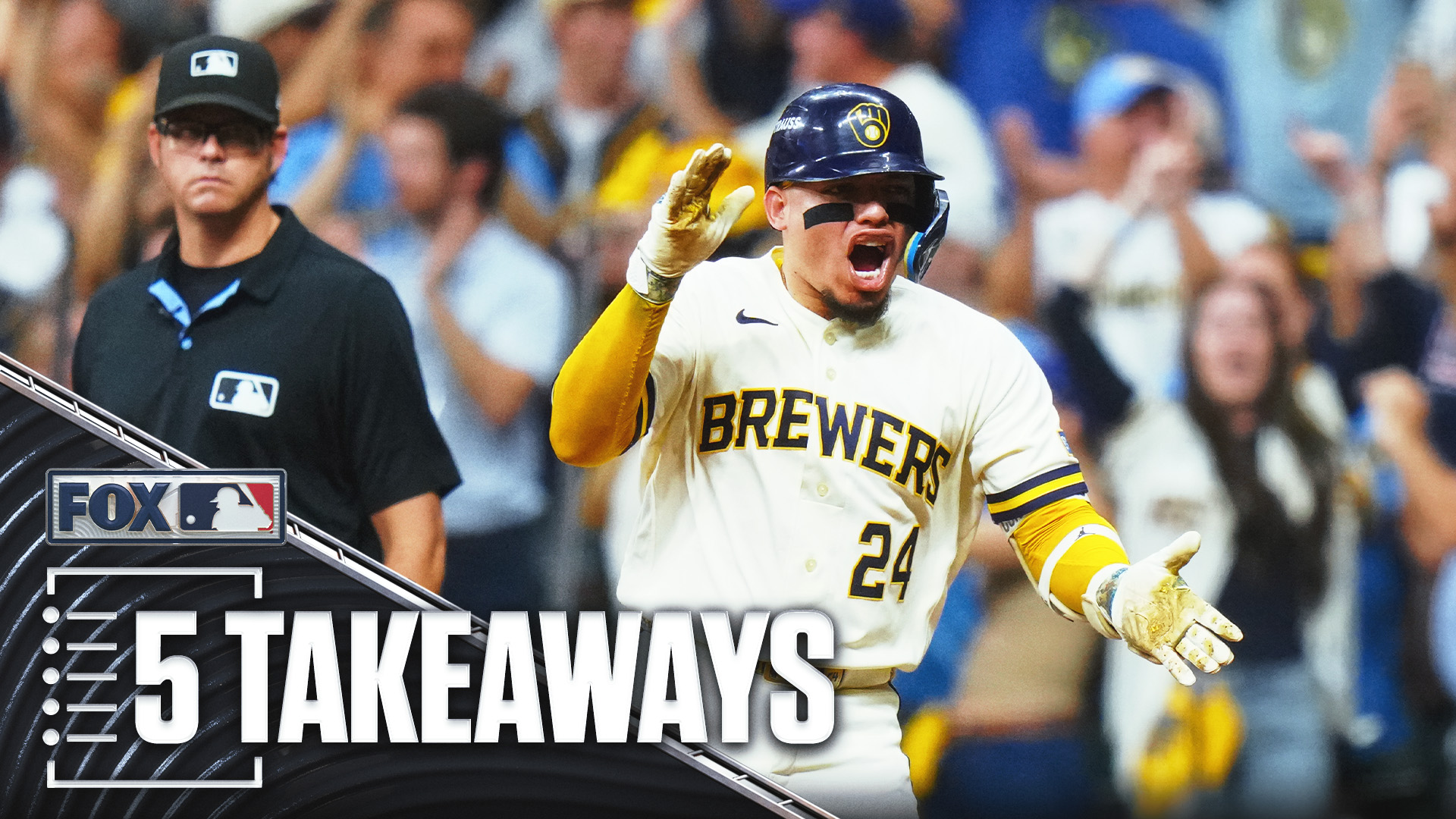
Crew Puts The Dodgers On The Ropes: 5 Takeaways From The Brewers’ NLCS Game 2 Win

AMERICAN FAMILY FIELD (Milwaukee) – In Game 1, the Brewers defeated the defending two-time American League Cy Young Award winner. In Game 2, they exhausted the reigning World Series MVP. And as the National League Championship Series moves to Los Angeles, the Brewers have the reigning champions on the ropes with a 2-0 series lead after a 7-4 Game 2 win. Here are my takeaways: The longest plate appearance of Jake Bauers’ career lasted 7 minutes, 15 seconds, long enough for Alex Vesia to start warming up in the Dodgers’ bullpen and be warm by the time Bauers walked to first base after taking pitch No. 12 from Yoshinobu Yamamoto. The runners at first and second, who were on the move in a full count, looked exhausted. They were granted only a momentary break in the middle of the battle, when there was a mound visit to try to fix Yamamoto’s PitchCom device. Otherwise, it was a constant sprint and retreat. Bauers fouled off three four-seamers, a curveball, a cutter and a splitter from Yamamoto, who threw the kitchen sink at the Brewers’ first baseman hoping he would eventually swing and miss. He did not. After a constant barrage of foul balls to the left and the right, Bauers finally took a curveball in the dirt to accept his base on balls, complete with a well-deserved bat flip. “It was a blast, honestly,” Bauers said. “Any time you can get that locked in doiong anything, it’s, to me, one of the most enjoyable experiences I think a human being can have.” Yamamoto had built a reputation for dominating on this October stage, where last year he fired a complete game in his lone start against the Brewers in Game 2 of last year’s NLCS. That was the first of five straight playoff appearances in which Yamamoto allowed no more than one run, a streak that ended Monday at American Family Field. The Dodgers led 2-1 after the two-out walk to Bauers to load the bases. They had a southpaw in Vesia warming, but they also had their reigning World Series MVP on the mound as lefty Christian Yelich stepped to the plate. The Brewers’ captain was not in the lineup for Game 1 against left-hander Tarik Skubal, a move that manager Pat Murphy said might not happen again going forward. Dodgers manager Dave Roberts left Yamamoto in to face Yelich, who delivered a two-run single on a hanging curveball to put the Brewers ahead and end Yamamoto’s day at 2 2/3 innings. It was the shortest outing of Yamamoto’s postseason career and his shortest outing in any game since July 7, 2025, when he failed to escape the first inning. That start was also against the Brewers and was the last time he had fewer than five whiffs in a game until Monday, when he got just four swings and misses on his 73 pitches. “Tonight, he just didn’t have it,” Roberts said, “which is very rare.” The Dodgers had grown so accustomed to watching Yamamoto excel this time of year that it was hard for them to witness. “But he’s a human being, too,” said Mookie Betts. “I think everyone is so used to him being a robot that if he didn’t go eight innings with no hits or whatever, then it wasn’t Yamamoto. It shows that he’s a human being, and it’s playoff baseball. It’s part of it.” With Jackson Chourio’s heroics in the NL Division Series against the Padres and Brice Turang’s big swing in Game 1 of the NLCS, William Contreras’ positive contributions might have gone overlooked to start the postseason. “Whatever people think about him,” Murphy said, “he’s underrated.” After his second three-hit game of the playoffs in Game 2 of the NLCS, that should no longer be the case. Contreras homered in Game 1 of the NLDS, had three hits, including a home run, in Game 3 of the NLDS and went deep again Monday night while guiding Milwaukee’s comeback offense. On Monday, Contreras tied the game with a single in the first inning and then again with a solo homer in the fifth — the fifth of his postseason career, tying him with Chourio for the most in Brewers postseason history. In the sixth, he came through with the go-ahead single that gave Milwaukee the lead for good. “He’s the fire of our team,” Yelich said. “He just likes the moments, like the big moments, and we’ve got all the confidence in the world in him when he’s out there.” The dogged Brewers would pour it on from there, winning the bullpen battle the rest of the way. Including the postseason, the Brewers have a winning record this year when the opponent scores first. Four of their five wins this postseason have come in comeback fashion. As difficult of a time as Yamamoto was having against an unrelenting Milwaukee offense, he also didn’t get help from his catcher. In the first inning, Will Smith did not challenge what would have been strike three to Brice Turang, who then doubled in the at-bat and came around to score the game-tying run. In the third inning, which Yamamoto failed to finish, it happened again. The Brewers had one out and a runner on second base when a full-count cutter from Yamamoto to Turang caught the outer edge of the plate. It was called a ball. Yamamoto tentatively tapped his head, almost as if to try to convince Smith to challenge it. He did not. “I thought about it,” Yamamoto said through a translator. “But that was too fine a line on the strike zone, so I just didn’t know.” Smith said he didn’t want to burn a challenge that early in the game on a pitch that could have gone either way. Ultimately, no challenge was granted, and Turang would come around to score again after Bauers’ marathon plate appearance. After the Dodgers’ first game of the playoffs, center fielder Andy Pages had his ABS privileges taken away after a bad use of one in Game 1 of the NLDS. On Monday, the Dodgers’ unwillingness to challenge early came back to bite them and played a role in Yamamoto’s early departure. The Brewers’ bullpen entered Monday night with a 0.38 ERA this postseason. That was before their latest act of dominance. After Edman reached on Henderson’s error in the fifth inning, the Dodgers did not get another baserunner all night. They went 15 up, 15 down against the Brewers’ indomitable bullpen, one night after mustering just two hits over 4 2/3 scoreless innings against Milwaukee’s relievers in Game 1. “They all throw 100 from different angles,” said Freddie Freeman, explaining what makes them so difficult. The five perfect innings from the bullpen Monday night were the most by a relief unit ever in a postseason game. In 28 2/3 innings this postseason, Milwaukee’s bullpen has allowed just one run. The Dodgers entered Game 2 with a different game plan against Logan Henderson than they had the night before against Jacob Misiorowski. In Game 1, they were hoping to let the ball get deep in the zone, foul off pitches and make Misiorowski work, which they did. “To think you’re going to catch him out front and pull it in the air is bananas,” Roberts said. Against Henderson, though, power was the plan. The Dodgers hoped to catch the ball out front, “take some shots,” according to Roberts, and feature more of their power in Game 2. Only, it did not play out that way for a Dodgers team that still hasn’t homered in the series. Henderson’s low-release fastball creates a rising effect, one that clearly played tricks on the Dodgers early on. Through two innings, the Dodgers had already whiffed five times on their 10 swings against Henderson’s fastball — the same number of times they swung and missed all of Game 1 against Misiorowski’s heater. But while they couldn’t capitalize by slugging Henderson, they found another way to pressure the standout rookie. Henderson didn’t look rattled while throwing to home plate. Fielding his position was another story. And he wasn’t alone. The Brewers’ typically sound defense made multiple blunders in the third inning, which began with a Tommy Edman single. Edman was nearly erased one batter later when Mookie Betts drilled a one-hopper to shortstop, but rookie Cooper Pratt, who had three errors in the NLDS — the most of any player this postseason — couldn’t handle it. Instead of another double play for the Dodgers — who grounded into three of them in Game 1 — it was two on, no out. After a spectacular catch from Sal Frelick on a deep drive from Freeman, Henderson then tried to pick behind Betts at first base with runners at the corners and threw the ball away, allowing a go-ahead run to score. It wasn’t the plan, but small ball was the Dodgers’ only hope Monday night. After the Brewers knocked out Yamamoto in the bottom of the frame, another Henderson error followed in a go-ahead fifth for the Dodgers. Kyle Tucker doubled to start the frame, and Edman followed with a sacrifice bunt. Henderson airmailed the throw, allowing Tucker to score a game-tying run, ending Henderson’s night. Only two of Henderson’s four runs allowed were earned, but it was the first time all year he surrendered more than three runs in a start. Ultimately, it would not matter. 5 ½. What’s Next? Of the 27 teams to go up 2-0 in the NLCS, regardless of series length, 23 have won the pennant. Of the 18 clubs who have carried a 2-0 advantage into Game 3 of the NLCS in its current best-of-seven format, 15 have advanced to the World Series. The Dodgers clearly have their work cut out if they want to three-peat, but they’ll send another former Cy Young winner to the mound for Game 3 in Blake Snell. “I know Blake has a bad taste in his mouth from that last outing against the Braves,” Roberts said. “So you’re going to see a locked-in, focused Snell. On the other side of things, we’ve got to support him offensively too.”​Latest Sports News from FOX Sports

Categories
Sports Fox

Top-10 CFB Showstoppers From Week 6: Georgia’s Offensive Line Shines vs. Alabama

I played offensive line for eight seasons in the NFL, and before that I spent my Saturdays in Autzen Stadium in Eugene, Oregon, blocking for guys who ended up on lists like this one. So when I watch college football now, I watch for the stuff that signaled to me in the huddle whether a guy was for real. I’m picking the 10 players who impressed me most during the previous weekend. Not just the gaudiest stat lines, but the performances that hold up when you turn the tape on. Some weeks, that’ll be an edge rusher wreaking havoc. Other weeks, it’ll be a lineman you’ve never heard of who didn’t lose a rep all afternoon. I have a soft spot for those guys. Let’s take a look at this week’s group. If you’re in the mood to watch someone be an ass-kicker on offense then I’d watch No. 99 for the Utes. Semi is a TE and backup defensive tackle who plays a fullback/second tight end role for the Utes offense. He’s like a flex player. He will line up attached to the tackle. He will also align in a wing or in the backfield. He’s a monster in the run game and this weekend against Kansas, he caught a one-yard touchdown pass. Taulanga is so much fun to watch. Another game, another Oregon State impressive offensive output behind this remarkable freshman. Ten catches for 191 yards, three touchdowns with a long of 71 yards. Legree is up to 38 catches with 932 yards and 12 touchdowns in just six Beavers games. This page may contain affiliate links to legal sports betting partners. If you sign up or place a wager, FOX Sports may be compensated. Read more about Sports Betting on FOX Sports. Gio Lopez continues his fantastic season for Wake Forest. His Demon Deacons offense is 11th in points per drive this season. He threw for 303 yards and three touchdowns against in-state rival North Carolina State this past weekend. He’s completing 67%of passes this season with 13 touchdowns to just one interception. Watch out for the Demon Deacons with him under center. Iowa put up an impressive rushing performance against Washington on Friday night that was led by Moulton. He forced a whopping 16 missed tackles, including what felt like 11 on his long touchdown run. The senior had 26 carries for 208 yards and two touchdowns in a dominant 41-24 vs. Washington for the Hawkeyes. The Nebraska quarterback was a fun watch this weekend, as the Huskers almost pulled off the upset against Indiana. He wasn’t as efficient throwing the football as other quarterbacks on this list, but he was able to move the ball when needed. He also added 17 carries for 47 yards with a long of 39 for a touchdown. Oregon was upset by UCLA, but it wasn’t from a lack of effort or play from the Ducks defense. The front seven was outstanding and Matayo was a big factor. He had four pressures, two sacks and an important run-stuff on the goal line. He’s difficult to block for an offensive tackle in pure pass protection situations. This guy will play on Sundays. Wayne Knight has been the focal point of UCLA’s offense, powering the Bruins to a 5-0 start. His 10 rushing touchdowns are tied for third in college football, while his eye-popping 7.7 yards per carry ranks third among running backs with at least 50 carries. With starting quarterback Nico Iamaleava out for the season, the Bruins will need to lean on Knight even more going forward. CJ Baxter put Kentucky on his back in the 35-34 win over LSU. Baxter rushed for 123 yards and two touchdowns and has now rushed for 120+ yards in two of his last three games. His eight rushing touchdowns are also tied for seventh in the entire country. Peyton was in the right place at the right time to catch the duck that Texas quarterback Arch Manning threw into the air. Bowen was able to secure the interception and then run 42 yards for the touchdown. Bowen was also second on the Oklahoma defense in tackles (seven) in their upset win. This group was outstanding against Alabama on Saturday. They controlled the line of scrimmage which helped them control the game. The Dawgs put up 200 yards on the ground and allowed just two pressures the entire game. Let’s not forget, entering the game, Alabama’s offensive was averaging a whopping 49.6 points per game along with 186.4 rushing yards per outing. This was an absolutely incredible performance by Kirby Smart and Glenn Schumann’s group.​Latest Sports News from FOX Sports

Categories
Entertainment

Who Supplies Aldi-Brand Frozen Chicken Products?

Everyone loves its prices, but Aldi can be a bit secretive about who produces its store brands. When it comes to frozen chicken, these are the suppliers.

​Mashed – Fast Food, Celebrity Chefs, Grocery, Reviews

Categories
Alaska News

Alaska candidates for governor address growing gap in childcare

Children’s bicycles are parked outside of the Interior Alaska Center for Non-Violent Living in Fairbanks, Alaska on September 14, 2023. (Photo by Claire Stremple for the Alaska Beacon)

One of the many issues before the next governor of Alaska will be the growing gap between available providers and the demand for childcare, which some advocates are calling a “childcare crisis.” 

Many Alaska families are grappling with finding reliable care due to a lack of childcare facilities and workers that contributes to fewer slots, long waitlists and rising costs for families. 

An estimated half of Alaskan families cannot fully participate in the workforce because they lack access to childcare, according to thread, a statewide childcare resource and referral organization. The organization estimates that’s more than 25,000 Alaskans that could be more active in the workforce. 

The average cost to Alaska families is estimated at over $14,000 per year, thread estimates, sometimes surpassing the monthly cost of rent.  

Advocates say a patchwork system of federal, state and local funding is insufficient in providing Alaska families with adequate childcare, with childcare providers reporting struggles to complete licensing requirements to open new facilities, provide competitive wages to workers and keep daycare operations going. 

Democrat Jonathan Kreiss-Tomkins and Republicans Dave Bronson and Treg Taylor said they would seek to reduce state regulations for childcare providers and promote incentives for employers to provide childcare, if elected.

Kreiss-Tomkins and Bronson also said they would support recurring state funding for childcare. 

The three are among four candidates running for governor in the November election, along with Republican Bernadette Wilson. Wilson’s campaign declined to comment on her platform on childcare issues after numerous calls, texts and emails over the course of a week. 

Kreiss-Tomkins, Bronson and Taylor said their administrations would prioritize expanding access to childcare, especially in rural Alaska. 

Bronson called childcare “essential infrastructure” for the state’s economy. “I would work with local communities, tribes, employers, school districts, and existing providers to expand the options that fit each community. So whether that’s a licensed center, a home-based provider, a cooperative, or an employer-supported program,” Bronson said. “Rural Alaska needs solutions designed locally, because a model that works in Anchorage may not work in a village.” 

Kreiss-Tomkins also said he would support opening smaller, home-based providers and for childcare workers in rural areas, which would also boost rural employment opportunities. “Making training available to providers creates jobs for people who already live and work in rural communities and lets parents go to work, go hunting, or back to school,” he said.

Currently, only some Alaskan families receive childcare assistance based on available funding and eligibility. The non-profit thread estimates that 23% of children receive a subsidy from the government or employer.  

Kreiss-Tomkins cited a true cost study commissioned by the Dunleavy administration in 2024 that showed a wide gap between childcare assistance and the cost of care — which is significantly larger in rural areas — in his support for boosting state childcare funding.

“Besides direct investment in programs like Child Care Assistance at the state level, I think one aspect we should clearly do more with is investment in the child care workforce, and partner with unions, tribes and universities to make those investments,” Kreiss-Tomkins said. 

Bronson also said he supports recurring state funding, as well as “targeted employer partnerships” and pursuing federal grant programs.

But Taylor disagreed, saying before more state funding he would look to federal funding and tax credits for families and employers. “Any state support would come from the existing budget, not new taxes, and be tied to one result: more open slots for Alaska families,” he said.

All three candidates said they would pursue state incentives, like tax credits, for employers to provide childcare. 

The three candidates split in views on expanding statewide childcare through implementing a statewide “universal” pre-Kindergarten program. Currently some Alaska school districts provide preschool and early education programs, but not all. 

Kreiss-Tomkins said it would be a long-term intention of his administration to “get to a place where pre-K is something all parents in Alaska can count on.” 

“That’s a lofty goal, and maybe a ways away, but I want to bring local governments, the state government, and other partners to the table to work toward it,” he said. Kreiss-Tomkins said he would also aim to expand paid family leave to reduce the demand for infant childcare.

Bronson and Taylor said they do not support a statewide pre-K program. Bronson said instead he supports families’ choices for public, private, tribal and community-based options. Taylor said he supports existing pre-K for children who qualify and choices for families, including homeschool programs. 

Likewise the Democratic and Republican candidates split on their approaches to supporting childcare worker recruitment and retention. 

Kreiss-Tomkins said he would support childcare workers through loan forgiveness programs, and “robust” apprenticeship programs. Bronson also said his administration would “work with employers and  training institutions to recruit and prepare new workers.” Taylor said his administration would “lower barriers to entry” by reducing credential and education requirements for childcare jobs. 

The Trump administration has announced plans to roll back regulatory requirements for Head Start programs, which serve children ages three to five years old, including changing provider ratios to allow more children per adult.

Bronson said he opposes an increase in ratios “as a quick fix,” citing safety. Kreiss-Tomkins did not say directly that he was in opposition of a ratio increase, but said he wants to be “thoughtful” with changing staffing ratios. “I think for infants, especially, there should be reasonable ratios on the number of infants any one caregiver is responsible for,” he said.

Taylor said he supports increasing staff ratios, in order to expand childcare programs, “with safety as the line I won’t cross,” he said. “The bigger threat to providers today is rules that make it impossible to staff a room or make the business pencil out. More flexibility helps them stay open.” 

All three candidates who responded to the Alaska Beacon expressed support for reducing regulations for childcare providers licensed under the Alaska Department of Health to help ease barriers and help expand new childcare centers. 

Wilson also indicated at an October candidate forum in Juneau that she would focus on cutting regulations in order to expand childcare capacity.

“For this administration, our first day in office, we’re going to come back and we’re going to roll those pages of bureaucratic regulations off the books. If they shouldn’t have been there, and the governor’s got the ability to do it, then by God, we’re going to get in there, and we’re going to do it,” she said. “We’ve got to roll those back and get them out of the way.”

SUPPORT: YOU MAKE OUR WORK POSSIBLE