Categories
Uncategorized

Are American voters actually gloomy about the economy, or is something else going on?

Economic pessimism among Americans in both political parties is deepening ahead of the November midterm elections, amid factors such as high energy prices and cost-of-living pressures. AP Photo/Jeff Chiu

Polling is looking grim for Republicans ahead of the U.S. midterm elections on Nov. 3, 2026, due in large part to deep pessimism among the public about the economy.

At first glance, this might seem surprising. With the exception of inflation, many economic measures remain strong, including gross domestic product growth. But consumer sentiment continues to languish.

This has prompted a debate over whether mere “vibes” are in play, or whether these long-used metrics are no longer capturing something fundamental to Americans’ economic well-being.

This debate matters politically because voters are placing an overwhelming priority on the economy as an issue in the midterms. A Pew Research survey in early October 2026 found that 84% of registered voters said the economy was very important to their vote, and the concern is bipartisan. Among the issues in that Pew survey, for example, “the economy” was the least polarizing, with 82% of Republicans and 88% of Democrats ranking it as very important.

Meanwhile, the overall drop in voters’ economic outlook has largely been driven by growing pessimism among Republicans. While Democrats remain much gloomier about the economy than Republicans, the gap is narrowing.

These trends help explain why Democrats are expected to make significant gains in Congress: This election will likely be seen as an indictment of how well the economy is working for ordinary Americans under President Donald Trump and the Republican-controlled Congress, despite strong macroeconomic measures.

So what is going on?

As a scholar of financial markets and global inequality, I believe the relationship between how people see their own finances and their view of the broader economy is also changing on a more fundamental level. And this shift will affect how they judge the next class of lawmakers in power.

Reality versus ‘vibes’

When scholars try to understand how people judge the economy – and how they separate their own personal circumstances from the broader economy – one of their key reference points is the University of Michigan’s consumer sentiment index. It asks respondents about their personal finances, their short-term and long-term economic outlook, and whether they think it’s a good time to make major purchases.

This gauge has historically tracked key economic measures of consumer spending and inflation: The state of the broader economy usually shapes the way people think about their own financial well-being.

But in recent years, these have diverged. By many measures, the economy is doing well, but people feel they’re falling behind. And this has only become more pronounced ahead of the midterms.

Despite strong consumer spending, robust business investment and low unemployment, consumer sentiment keeps slipping and is now 10% below where it was a year ago, according to the Michigan index.

Some commentators point to ongoing inflation as the reason for gloom. It has remained stubbornly above the Federal Reserve’s annual 2% target rate due to drivers like tariffs, energy price hikes stemming from Middle East turmoil, and massive amounts of investment in the artificial intelligence build-out.

But what’s really happening is that consumer sentiment data and inflation data have become untethered. Inflation has actually dropped sharply from its 21st-century peak of 9.1% in June 2022 after the pandemic to 3.7% in September 2026, but consumer sentiment is lower now than it was even then.

What about wages? Here, too, the data also doesn’t fully explain this disconnect. While inflation makes consumer goods pricier, it also lifts pay. Inflation-adjusted wages actually increased between 2022 and the first half of 2026, all while consumer sentiment remained weak. What has changed in recent months is that inflation-adjusted wages are now falling – which could help explain the darkening outlook among voters.

Inequality versus growth

One possibility is that deeply entrenched inequality explains this divergence.

Compared with other eras of moderate-to-high inflation, the U.S. economy today is much more unequal. Income inequality has increased over the past 20 years, narrowing only during the 2008 and 2020 crises before quickly widening to prior levels.

This trend is important for understanding which consumers are shelling out cash. The Fed has consistently cited strong consumer spending in its economic assessments, but the richest 10% of Americans account for half of that spending today. Meanwhile, spending by the bottom 80% of earners has fallen behind inflation.

In other words, the strong total consumer spending figures reported as official data are being driven by very wealthy Americans and fail to reflect the experience of typical consumers who are the bulk of the electorate.

This trend of increasing inequality has been particularly acute in terms of wealth: The top 0.1% of American households together own five times as much wealth as the bottom 50%. Much of this reflects the uneven gains of the stock market boom and how wealth is taxed.

In short, Americans’ economic malaise might be driven by concerns over income and wealth that conventional measures don’t fully capture.

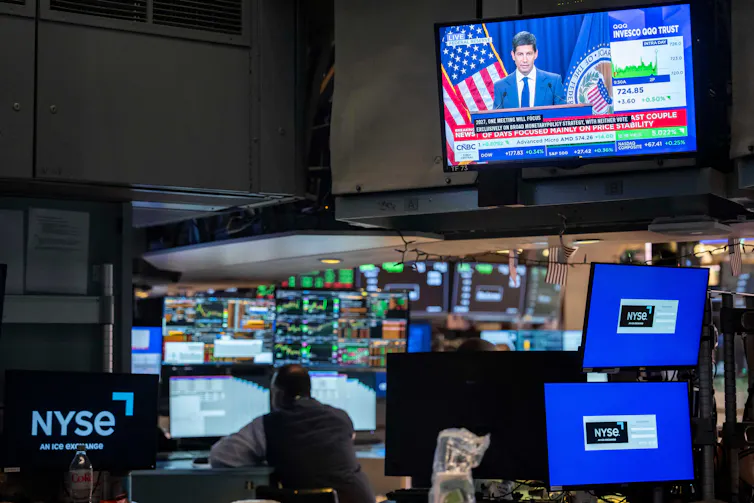
A screen over the floor of the New York Stock Exchange displays a news conference by Federal Reserve Board Chairman Kevin Warsh, Oct. 28, 2026.
A surging stock market in 2026 helped boost Americans’ retirement accounts, but it hasn’t translated into greater consumer confidence.
AP Photo/Yuki Iwamura

It’s not just about me

When it comes to consumer surveys like the University of Michigan index, economists generally assume that the answers reflect the personal experience of respondents.

But I agree with other scholars who argue that sometimes these answers may be based less on people’s own circumstances and more on how they view the economy as a whole. This assessment could reflect, for example, concerns like equity, equality of opportunity and economic justice.

When responses are driven by a concern for collective well-being rather than just personal material self-interest, social scientists refer to such perceptions as “sociotropic.”

This last point isn’t just theoretical. Research suggests voters tend to weight their perceptions of the economy more heavily than their personal financial circumstances when deciding whether to vote for the incumbent party.

Trade is one good example. Americans’ preferences for trade policy are driven less by how a particular measure, like tariffs, would impact them personally and more by how they think it would affect the country as a whole.

If consumer sentiment follows a similar path, that could explain the divergence between generally strong economic trends and weak consumer sentiment. People are thinking not just about their own conditions but those of the U.S. as a whole, and it’s possible that their understanding of “the economy” includes its relationship to inequality.

Understanding the disconnect between the economic data traditionally used to assess the economy’s health and Americans’ perceptions of that economy is important not just to the scholars trying to make sense of it – it could also help set an agenda for the incoming Congress. If economic insecurity punishes the governing party at the polls, the next Congress will be expected to do something about it once sworn in.

Voters generally back the incumbent party when the economy is doing well and the out-party when it’s not. But how they judge the health of the economy is not straightforward, and the past six years suggest that improving headline measures of economic health – without regard to Americans’ lived experience and their concerns about what kind of economy is being built – may not be enough to assuage voters’ concerns.

The Conversation

Erin Kay Lockwood does not work for, consult, own shares in or receive funding from any company or organization that would benefit from this article, and has disclosed no relevant affiliations beyond their academic appointment.

​Politics + Society – The Conversation

Categories
Uncategorized

Fascism mixed into cringey online content is easy to mock – but no less dangerous

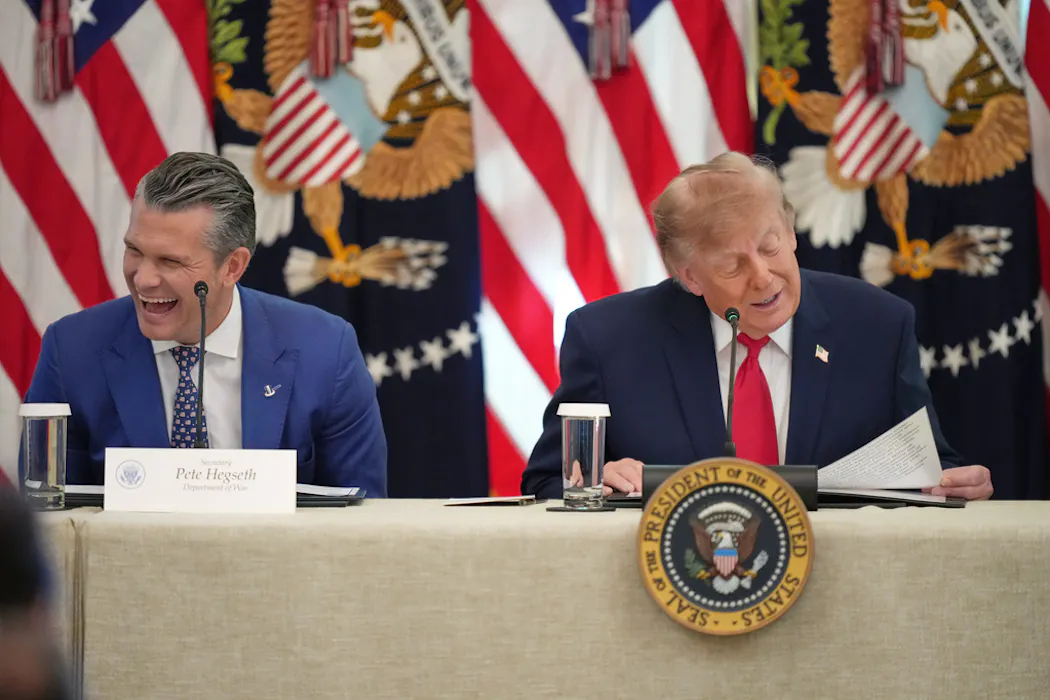
President Donald Trump speaks at a roundtable event at the White House on Oct. 21, 2026, as Defense Secretary Pete Hegseth laughs. AP Photo/Alex Brandon

Against the backdrop of an unpopular war in Iran, Secretary of Defense Pete Hegseth announced on July 15, 2026, that the Pentagon would begin testing male service members 30 and older for low testosterone. That, the department later said, would include assessing symptoms of low testosterone such as “reduced libido, loss of spontaneous morning erections, erectile dysfunction, diminished energy and physical performance, impaired concentration, reduced muscle mass, and depressed mood.”

The combination of aggressive masculinity and militarism with the implications of testing for something like “spontaneous morning erections” as necessary for war fighting is emblematic of the administration’s tendency to combine fascist ideas and symbols with outright embarrassing messaging, or what I call “cringe fascism.”

For some time there’s been a contentious debate among writers, historians and public intellectuals over whether Donald Trump’s presidency could be considered “fascist.” Some have argued that such claims are hyperbolic or inaccurate, while others say it is a useful and accurate ideological label.

Either way, it would be difficult to deny that the Trump administration frequently draws from the well of fascist imagery and symbolism in its official messaging.

And that’s where the concept of cringe fascism fits in. In online parlance,“cringe” is a kind of embarrassment by proxy when someone posts something that should be embarrassing but which doesn’t seem to be to them.

For their part, members of the Trump administration have relied on language and symbolism that borrows from the fascist or authoritarian playbook while doing so in a way that commenters often mock as patently ridiculous or embarrassing – or cringe.

But the purported silliness of these ideas, as with Hegseth’s testosterone policy, hides a much more serious – and to some critics, fascist – reality. That, moreover, is why the deployment of cringe can be effective: It can generate enthusiasm among conservative voters by trolling the left while reducing deadly serious policy debates to the level of online memes.

As Americans prepare for the midterms and a surely contentious presidential election in 2028, such considerations of Trump’s authoritarian tendencies are being put to the test. That’s especially true as he consistently threatens the integrity of elections, deploys immigration and other federal law enforcement officers on American streets in a highly contested manner, and attempts to target the press and restrict its access.

Recasting fascist iconography in the internet age

As a scholar of conspiracy theories, I have been amazed at some of the more blatant efforts to repurpose fascist imagery by members of Trump’s inner circle.

An mock up image of a military uniform.
An apparently AI-generated mock-up of U.S. Space Force uniforms posted by President Donald Trump to his Truth Social account on Sept. 8, 2026.

Consider, for example, the use of ethnonationalist and fascist imagery of “blood and soil” in sloganeering by the Department of Homeland Security, or encouraging U.S. Immigration and Customs Enforcement recruits to “Defend the Homeland.”

And then there are the attacks on the press as the “enemy of the people,” echoing past totalitarian leaders, followed by Trump’s banning of mainstream media from the White House and the launch of Trump TV as the state channel. Critics view such moves to attack and restrict the press as hallmarks of fascist methods.

Borrowing more obviously from fascist tropes was Trump posting on social media a mock-up of a potential new Space Force uniform. The post claimed to draw inspiration from Paul Verhoeven’s “Starship Troopers,” in which the soldiers are deliberately modeled on the fascist aesthetic and ideology of the Nazis.

The rise of cringe fascism

Alongside the authoritarian and fascist tropes, the Trump administration cannot seem to avoid “cringe.”

Recent examples include the White House tweeting images of Trump as a videogame character on a select screen with sleeveless blue suit and bulging muscles, or sharing an AI parody of the new Legend of Zelda: Ocarina of Time game with an awkward video of a pixelated Trump running around the White House lawn. Or consider the post depicting Trump as Green Lantern, using his magic ring to raise a spectral border wall, launch a military attack and fix American industry.

On the one hand, the Trump administration seems determined to keep his party in power and enact a transformative MAGA policy agenda. On the other hand, Trump seems incapable of avoiding cringey riffs such as his digressions on men’s bodies in ways that seem strikingly at odds with his tough-guy persona. To see the commander in chief waxing poetic about Ohio Sen. Jon Husted’s rear feels deeply surreal.

Trump’s seemingly incongruous comments occur at the same time that the secretary of defense is advocating hypermasculinity in the military through testosterone testing, reflecting a heady mix of masculinity and military supremacy that has long been a hallmark of fascism. Such a policy is also at odds with how the professional military has presented itself under previous administrations.

Cringing our way to the midterms

The mixture of fascist aesthetics with cringe posting underscores the internal contradictions of the Trump administration.

It is difficult to see critics’ view of Trump’s second term as “fascist” when observers get such awkward online displays of silliness. And when official communications from the White House and federal agencies are equal parts tough talk, trolling and cringe, the underlying policies can get lost in the shuffle.

Is is hard to know whether this flood of cringe is always intentional, but it is certainly confusing and hilarious to both Trump’s supporters and his opponents. But that belies what many critics have decried as authoritarian actions by this administration, and these comparisons with fascism continue to animate public discourse.

Masked ICE agents continue to operate with some legal protections from the White House in their sometimes-deadly efforts to pursue and round up people it broadly accuses of being in the country illegally.

Likewise, the DHS announced that ICE agents could be deployed to polling locations, while the agency has reportedly attempted to get access to voter information to investigate alleged voter fraud through increased surveillance.

The deployment of cringe might seems like a ridiculous, even unconscious, exercise by an administration that – as with the five-day tenure of former press secretary Katie Zacharia shows – regularly exposes itself to derision and satire. Yet that’s why the use of such a concept can be so strategically effective: It turns potentially deadly serious policy consequences and ideological choices into a game of memes and online gamesmanship.

The Conversation

Matthew N. Hannah does not work for, consult, own shares in or receive funding from any company or organization that would benefit from this article, and has disclosed no relevant affiliations beyond their academic appointment.

​Politics + Society – The Conversation

Categories
Uncategorized

Presidents of both parties defended libraries as allies of democracy for a century – until Trump

President-elect Franklin D. Roosevelt stands with a Queens book bus in 1932. MCNY/Gottscho-Schleisner/Archive Photos via Getty Images

On March 31, 2026, President Donald Trump was asked about plans for his presidential library, the archive that presidents build to house their administration’s records.

His was most likely going to be a hotel, he said, with “a beautiful building underneath and a 747 Air Force One in the lobby.”

“I don’t believe in building libraries or museums,” he told reporters.

Trump’s comments reflect how he has diverged from the customary and expected presidential attitude toward libraries of all types. As an information science professor, I have analyzed statements by 17 presidents, beginning with Calvin Coolidge.

Combing their speeches, proclamations, messages and letters in the Public Papers of the Presidents, the American Presidency Project, the Federal Register and the American Library Association’s archives and publications, I have found that Trump has broken with a century-old tradition. Nearly all presidents of both parties since 1923 have described libraries, whether public, academic or presidential, as a prerequisite to a healthy democracy and as crucial to sustaining an informed citizenry.

Trump, however, has rarely spoken of libraries at all. When he has, he has dismissed them.

Libraries and democracy

In the 1920s, Republican Calvin Coolidge said that public libraries were “within the reach of almost everyone” and contained “the best books and authorities on any subject.” By using these institutions, he said, citizens could evaluate “current proposals for political improvement.”

Democrat Franklin D. Roosevelt took up that theme as the U.S. edged toward World War II. In 1941, he opened his own presidential library, the first in what would become the National Archives’ system. At the dedication, FDR argued that libraries proliferated in democracies where citizens refuse to accept “so-called information as may be handed out to them by certain types of self-constituted leaders who decide what is best for them.”

The Cold War reinforced the emphasis on libraries as foundational to self-government.

Republican Dwight D. Eisenhower feared censorship during the Red Scare and urged a 1953 audience, “Don’t join the book burners.” He also set a precedent for federal library aid by signing the Library Services Act of 1956, which authorized up to US$7.5 million a year for developing public library services for rural Americans. Eisenhower’s successor, Democrat John F. Kennedy, likewise believed that “libraries should be open to all – except the censor.” Kennedy’s budgets continued funding public libraries.

In 1976, Democrat Jimmy Carter said libraries were fundamental to democracy and in 1980 he said they strengthened the First Amendment, which protects free speech, a free press and the free exercise of religion. Eight years later, Republican Ronald Reagan said that a free society “must prize its libraries just as it values its liberties.”

That view outlasted the Cold War, which ended in 1991.

In 1992, Republican George H.W. Bush said libraries provided the lifelong education each American needed “to remain a fully productive and fully participating citizen.” Campaigning for the Democratic Party’s nomination for president that same year, Arkansas Gov. Bill Clinton argued that libraries’ provision of equal access to information helped safeguard democracy.

As president, Democrat Barack Obama said in 2009 that “an informed and educated citizenry is essential to the functioning of our modern democratic society” and said libraries “can help separate truth from fiction and signal from noise.” Democrat Joe Biden subsequently called library services “essential to the well-being, health, vitality, and democracy of our Nation” in a 2022 executive order.

While presidents from Eisenhower onward had tied libraries to the freedom to read, Obama and Biden carried that tradition into the fight over banning books, often by or about people of color or LGBTQ people, especially in school and public libraries.

“Freedom begins with our capacity to share and access ideas, even ideas we may disagree with or find deeply offensive,” former President Obama wrote during 2022’s Banned Books Week.

During National Library Week in 2023, Biden thanked librarians and vowed to “stand with teachers and parents against politicians who try to score political points by banning books.”

“In America, we do not ban books,” he declared in 2024.

A black-and-white photo of a man seated at a desk signing a document as a crowd of people in suits stands behind him.
President Lyndon Johnson signs a 1964 law expanding federal aid to libraries.
Cecil W. Stoughton/The American Library Association Archives

The break

One of Trump’s rare public comments on libraries came during his first term at a January 2019 Cabinet meeting. Complaining about U.S. allies’ contributions in Afghanistan, he ridiculed Indian Prime Minister Narendra Modi for “constantly telling (him) he built a library in Afghanistan.”

“A library! That’s like five hours of what we spend,” Trump said. “Don’t know who’s using (a library) in Afghanistan.”

Since returning to office, Trump has taken a series of actions affecting libraries. Just days after his second inauguration, in 2025, the Department of Education eliminated its so-called “book ban coordinator” position. The Biden administration had appointed that coordinator in the Office for Civil Rights in 2023 to address book bans in schools and provide guidance on when removing books from school libraries might violate civil rights. The Trump administration rescinded that guidance, ending what it called “Biden’s book ban hoax.”

Like fellow Republicans Richard Nixon and Reagan, Trump asked Congress every year in his first term to eliminate federal library aid. Congress rejected each president’s requests.

In March 2025, however, Trump took an unprecedented step: He bypassed Congress altogether, signing an executive order to dismantle the Institute of Museum and Library Services, the chief federal funder of libraries and museums. Since 1996, the institute has run the library grant program that descended from the legislation that Eisenhower signed into law. A federal court blocked the order to dismantle the institute.

Two months later, Trump fired Librarian of Congress Carla Hayden, the first woman and first African American to hold the position. Asked why Hayden was fired, then-White House press secretary Karoline Leavitt pointed to “quite concerning things she had done at the Library of Congress in the pursuit of DEI and putting inappropriate books in the library for children.”

Hayden, for her part, had made the Library of Congress into what she called “a library for everyone,” winning a $15 million Mellon Foundation grant to bring underrepresented communities into its collections.

“We like to say as librarians, ‘Free people read freely,’” Hayden said after her dismissal. “There’s been an effort recently to quelch that.”

At the September 2026 Republican midterm convention, Trump again mentioned libraries, this time alleging that some Democratic candidates want “to put the books of Lenin … and Stalin in every library for all our young children to read and study.”

The Conversation

Alex H. Poole does not work for, consult, own shares in or receive funding from any company or organization that would benefit from this article, and has disclosed no relevant affiliations beyond their academic appointment.

​Politics + Society – The Conversation

Categories
Entertainment

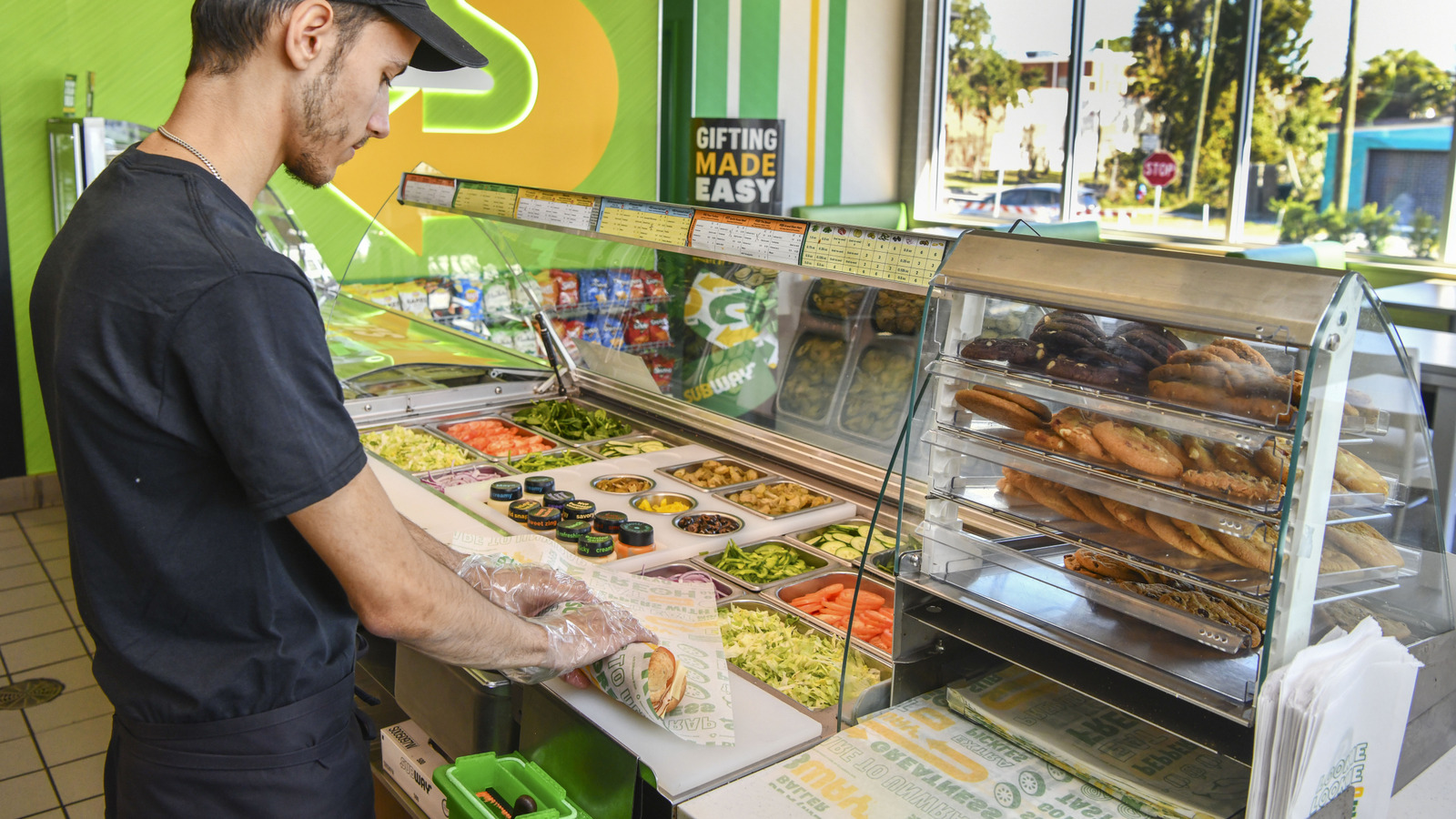
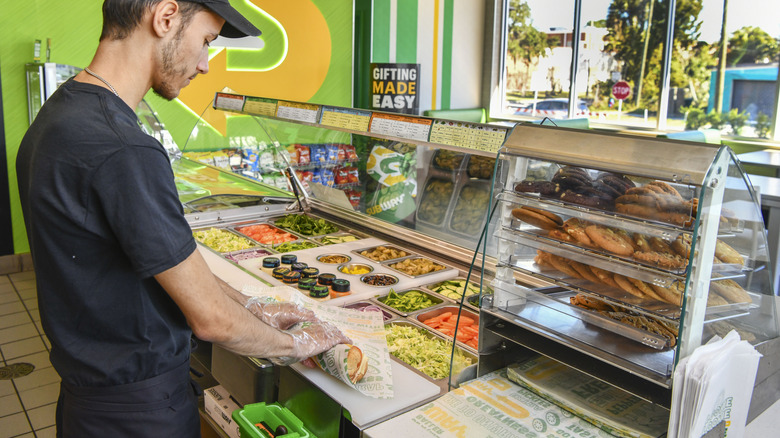
Why Doesn’t Subway Taste Like It Used To?

Subway made a mark on the fast food world with its “Eat Fresh” slogan, but fans say the chain’s sandwiches don’t taste as good as they once did. Why not?

​Mashed – Fast Food, Celebrity Chefs, Grocery, Reviews

Categories
Sports Fox

2027 NFL Draft Big Board: 6 QBs Rank Among Top 50 Overall Prospects

The hope at the beginning of every college football season is that good players will improve to become great and that previously undiscovered talent will make a draft class that much better. The reality, however, is that some players regress. And with today’s liberal transfer policy and the allure of NIL dollars, players are more hesitant than ever to enter the NFL before exhausting their college eligibility. We won’t know for certain which prospects will make up the Class of 2027 until mid-January. But if the 2027 NFL Draft were to take place tomorrow, here is how I would rank the top prospects. NFL Player Comp: Tytus Howard, Browns Size, power and positional versatility are awfully important boxes to check when evaluating offensive tackles, and Heard possesses all of those. At 6-foot-5, 325 pounds, with vines for arms and experience playing both right and left tackle following tours at Tennessee and LSU, Heard has the frame and game that scream NFL starter. NFL Player Comp: K’Lavon Chaisson, Commanders NFL teams are hesitant to invest early picks in specialists, but Wilson offers one of the best combinations of burst and bend of this year’s edge rushers. Teams will pry into his reasons for transferring from Georgia to Missouri to Miami over the past three seasons but his production at every stop is undeniable. NFL Player Comp: Quay Walker, Raiders Say what you will about Oregon’s collective struggles this season, their individual talent will be recognized by the NFL soon enough. A runaway freight train with true knockdown power, Jackson is blessed with an exceptional combination of size and speed and will be one of this year’s flashiest at the Scouting Combine. NFL Player Comp: Jaylen Waddle, Broncos The 5-foot-11, 180-pound Alexander is significantly slighter than most of the other receivers on my Big Board and has more drops in traffic than I’d prefer. He is lightning fast, however, offering the breakaway element every NFL team is looking for in a deep threat. NFL Player Comp: DeVonta Smith, Eagles Durability and drops are concerns, but the flashes with Coleman-Williams are so bright that I had to include him on my list. He’s a proven playmaker, averaging 16.4 yards per catch with 18 touchdowns in two and a half seasons of SEC football. He also won’t turn 20 until February. NFL Player Comp: Bradley Chubb, Bills It has become an annual tradition: I find a pass-rusher I seem to be higher on than my peers. A year ago, it was Gabe Jacas. In 2024, it was Nic Scourton. Uiagalelei has size, agility, power, instincts and eye-popping production. Oh, and he’s just 21 years old. What’s not to like? NFL Player Comp: Mack Wilson, Cardinals Highlighted a few weeks ago as one of the fastest rising players in this class, Omosigho personifies an unbeaten UCLA squad meriting more attention. The Oklahoma transfer is a runaway freight train as a hitter, generating rare explosive power with a knack for producing fumbles. NFL Player Comp: Alim McNeil, Lions A double transfer who also spent time at Georgia and USC, Alexander lives up to his nickname, using an exciting blend of initial quickness and long-armed power to rag-doll would-be blockers. His tape features more lapses than I’d prefer, but the talent is there. NFL Player Comp: Kevin Zeitler, Packers Smith has played a critical role on the blindside for the defending national champion Hoosiers, but he lacks ideal arm length and has the orneriness and physicality that project really well inside at guard. He is an iron man, having started the past 49 consecutive games (and all of them at left tackle). NFL Player Comp: Malik Mustafa, 49ers He’ll take risky angles in pursuit, but teams looking for a safety who can run the alley and generate collisions like a linebacker will love Bolden, a three-year starter with excellent speed and proven ball skills. NFL Player Comp: Frankie Luvu, Commanders Viliamu-Asa isn’t the most technically sound defender in this class, but he might just be the most violent, which is an excellent baseline for an NFL linebacker. He is a heat-seeking missile who seems to thrive on contact. NFL Player Comp: Kolton Miller, Raiders At a solid 6-foot-7, 310 pounds, with broad shoulders and a trim middle, Prongos looks the part of a modern NFL tackle. He’s quick, powerful and versatile, having started at guard and right tackle for UCLA prior to transferring to Stanford. His best football may still be ahead, considering he didn’t begin playing football until his senior year of high school. NFL Player Comp: Jermaine Johnson, Titans An FCS transfer from South Dakota with 14.5 tackles for loss and 8.5 sacks over a season and a half in the SEC, Humphrey-Grace is a name to learn. He is surprisingly nimble at 6-foot-4, 271 pounds, and he uses his length and strength well as a bull rusher. NFL Player Comp: Robert Hunt, Panthers Green stars at left tackle for the Tigers, but I like his burly frame and power better inside at guard, where he started 13 games as a true freshman for Oklahoma back in 2024. While he’ll need to learn to play with better knee bend and keep his legs driving through contact, I see a future longtime starter. NFL Player Comp: Keion White, 49ers A USC transfer some once compared to former Trojan Leonard Williams, Thompkins’ calling cards are his unique blend of size (6-foot-5, 300 pounds) and versatility. Alabama lines him up all over the defensive line and even as a stand-up rusher. As you’d expect with his size, Thompkins is powerful, but he’s also quite agile. NFL Player Comp: Milton Williams, Patriots Echoles has struggled to live up to expectations so far this season, generating just 21 tackles, including four for loss and 1.5 sacks over the first seven games of the year after posting 68 stops, 11.5 TFL and five sacks a year ago. He’s quicker than his square-ish frame suggests and pairs his hands and feet well, but he needs to ramp up the production if he hopes to earn a high grade from the NFL’s Advisory Committee. NFL Player Comp: Quentin Johnston, Chargers Coleman looks the part of a future NFL star, teasing with a rare combination of size (6-foot-3, 200 pounds), acceleration and body control. There are some concerning peaks and valleys to his game, however, with ugly drops against Oklahoma and Mississippi raising questions about his concentration. NFL Player Comp: Budda Baker, Cardinals With Caleb Downs now a member of the Dallas Cowboys, I expected there to be a fairly dramatic drop-off for the Buckeyes at the safety position. Instead, McClain has emerged as a legitimate playmaker in his own right while also emerging as one of the nation’s surest open-field tacklers. NFL Player Comp: Rashawn Slater, Chargers Viewed as a possible top-10 pick prior to the season, Goosby suffered a season-ending knee injury against Mississippi last weekend. He’s a gifted pass blocker when healthy but had extensive medical concerns even prior to this injury, including open-heart surgery in high school. Whenever he chooses to enter the NFL, his medical evaluation will ultimately determine where he’ll be drafted. His talent is undeniable. NFL Player Comp: Jared Goff, Lions With an FBS-best 81.4% completion rate, 22 touchdown passes and just one interception so far this season, Mensah is my midseason pick to win the Heisman Trophy. He relies more on anticipation than arm strength on outbreaking routes, however, and could struggle to duplicate this success in the NFL. NFL Player Comp: Tucker Kraft, Packers Like a lot of the Ducks, this season has not gone as well as expected for Johnson, but scouts will look past the middling production and recognize his upside. The transfer from Louisville offers an exciting combination of size (6-foot-5, 257 pounds), agility and soft hands that should translate into greater success in the NFL than he’s ever had at the collegiate level. NFL Player Comp: De’Von Achane, Dolphins After leading the country with 335 touches a year ago, the 5-foot-11, 205-pound Lacy has struggled with nagging injuries this season. When healthy, he’s truly dynamic, pairing vision with elusiveness, speed and underrated leg drive. NFL Player Comp: Josh Hines-Allen, Jaguars He isn’t the twitchiest edge rusher of this class, but the 6-foot-5, 260-pound Heldt’s length, strength and tenacity stand out against the run and the pass. He anticipates the snap count well and is surprisingly effective in chasing down ballcarriers from behind, showing great hand-eye coordination to trip up opponents seemingly out of his grasp. NFL Player Comp: Nik Bonitto, Broncos The NFL is willing to pay a premium for speed rushers, and Umanmielen is among the best in this class, generating 17.5 sacks over his past 23 games. He is a legitimate QB stalker with the initial burst and lateral agility to make tackles look silly trying to corral him. NFL Player Comp: Joey Porter Jr., Cowboys Jones will have plenty of doubters because there just aren’t many 6-foot-4 cornerbacks in the NFL, but four years of impressive tape in the SEC doesn’t lie. Like any long-levered defensive back, Jones can’t change direction quite as fluidly as some of the shorter corners, but his long arms crowd receivers at the stem and the catch point and his lengthy strides allow him to accelerate in a flash. NFL Player Comp: Derick Hall, Seahawks Edge rushers selected in the first round typically have great twitch and bend. Pierre’s game, on the other hand, is power, which he uses to violently beat blockers to impact the run and pass. NFL Player Comp: Laiatu Latu, Colts Complementing his burst and power, Traore is among the more polished edge rushers of this class, incorporating Euro steps and compact spins to leave pass blockers in his wake. He is a big-play magnet with 21.5 tackles for loss and 14 sacks over his college career, as well as five forced fumbles, two interceptions and two TD returns. NFL Player Comp: Kyle Pitts, Falcons A knee sprain kept Green out for four games earlier this season, so the lack of production (19 catches for 272 yards and two touchdowns) has allowed him to fly somewhat under the radar. When healthy, the 6-foot-6, 237-pounder is a proven mismatch who projects as a dynamic weapon in the NFL. NFL Player Comp: Kenneth Grant, Dolphins With just half a tackle for loss in seven games this season, some analysts won’t be as high on Washington as NFL teams will. The 6-foot-3, 330-pounder’s value lies with his rare combination of initial quickness and girth. Critics who suggest that he doesn’t impact the passing game fail to recognize his 15 (and counting) career pass breakups, proving his ability to collapse the pocket. NFL Player Comp: Nnamdi Madubuike, Ravens One of this year’s flashiest breakout stars, Gilliam might have the quickest first step of any DT in the country. He explodes off the ball, wrecking plays with penetration. With 11.5 tackles for loss (including six sacks) so far this season for the Vols, Gilliam has nearly as many stops behind the line of scrimmage as he had total tackles (16) during his first two years at Penn State. NFL Player Comp: Olu Fashanu, Jets A consensus five-star recruit from IMG Academy who started the first 22 games of his college career at Colorado, Seaton has all the traits to eventually become a premium left tackle, including initial quickness, balance and size. He’s 21-years old and while he hasn’t surrendered a sack this season, he needs to get stronger and polish up his technique before making the NFL leap. His upside, however, warrants a first-round investment. NFL Player Comp: Jonathan Taylor, Colts At nearly 6-foot-1, 225 pounds, Baugh looks like your traditional downhill runner. But he complements his power with impressive elusiveness and breakaway speed. Baugh is a bit of a throwback as a true workhorse. NFL Player Comp: Kirk Cousins, Raiders It has been 20 years since the last Notre Dame quarterback (Brady Quinn) was selected in the first round. Smart, poised and an accurate deep ball passer, Carr has a chance to end that streak for the Irish. NFL Player Comp: Tyler Linderbaum, Raiders Pieper plays right guard for the Hawkeyes but projects even better to center in the NFL. His initial quickness, balance and hand placement are exceptional. He is among the better zone-blocking interior linemen to come down the pike in years. NFL Player Comp: C.J. Stroud, Texans Moore is the most precise passer of this class and that fact may earn him a top-10 selection in the 2027 draft, even if he hasn’t always played his best in big games. But Moore will first need to prove that he is healthy. Oregon coach Dan Lanning recently announced Moore is unlikely to return to the field this season after suffering a concussion following a late hit against USC in late September. The redshirt junior has another year of college eligibility remaining, should he want to use it. NFL Player Comp: Chris Lindstrom, Falcons Lauck is the latest star left tackle at Iowa, but his short arms may push him inside to guard in the NFL. Regardless of where he ultimately lines up at the pro level, his initial quickness, balance and core strength suggest a long and distinguished career. NFL Player Comp: Christian Watson, Packers Hoosiers teammate Charlie Becker, understandably gets much of the hype, but Marsh is a first-round caliber receiver in his own right, boasting an even more exciting combination of size and athleticism. I expect the Michigan State transfer to rise throughout the draft process, as he’ll put up eye-popping numbers at the Scouting Combine. NFL Player Comp: Frank Ragnow (retired) At 6-foot-6, 325 pounds, Johnson offers rare size for a guard and would be among the larger centers in NFL history. He’s starred at both positions over four seasons with the Gophers and will give his future NFL team a lot of flexibility on the inside. NFL Player Comp: Denzel Ward, Browns Some cornerbacks just move differently. Robinson is so smooth it almost seems as if his backpedal, transition and acceleration should be naturally paired with music. Cornerbacks with his man-to-man cover skills don’t last long on draft day. NFL Player Comp: Justin Herbert, Chargers No quarterback in this class offers a better blend of traits than Manning, but this position requires more than just physical tools. While Manning’s frequent turnovers in high-pressure situations is an undeniable red flag, it’s one that I believe can be cured with time and patience. NFL Player Comp: Patrick Surtain Jr., Broncos Statistics don’t always tell the story with a prospect, but consider this one: Hampton has forced nearly as many incompletions (30) as he’s given up first downs (36) in his two and a half seasons of action at Clemson. Boasting prototypical size at 6-foot-2, 205 pounds, Hampton plays a highly aggressive and physical brand of ball that could have him pushing for top-10 consideration. NFL Player Comp: Josh Allen, Bills It is easy to get excited by Mestemaker’s dizzying ascent from high school backup to premium NFL prospect. His prototypical size, mobility and live arm will draw plenty of comparisons to Josh Allen in the pre-draft process. It is easy to forget now how raw Allen was coming out of Wyoming, however, and there are similar concerns about how quickly Mestemaker will adjust from the Air-Raid scheme he’s played in with the Cowboys and previously at North Texas. NFL Player Comp: Ronnie Stanley, Ravens The top-rated offensive tackle on my board, Paige has dominated blanked pass-rushers over his career, allowing just two total sacks in 27 career starts (all at left tackle). He’s not only quick and agile in pass protection, the 6-foot-7, 315-pounder also shows aggression and leg drive as a run blocker. NFL Player Comp: Russell Wilson (retired) Between his compact frame, mobility, arm and poise, Chambliss possesses everything needed to project as a future franchise quarterback — except height. But NFL teams won’t repeat the mistake they made with Wilson by letting Chambliss slip to the third round. NFL Player Comp: Larry Fitzgerald (retired) I’ll admit, I’m late to the party on Becker, previously typecasting him as “just” a big-red zone target. Upon closer inspection, however, Becker plays with grace and body control uncommon for a receiver with his 6-foot-4, 208-pound frame. He almost hovers with the ball in flight and uses his long arms and strong hands to create quite the catch radius. NFL Player Comp: Fred Warner, 49ers Remember the rise Arvell Reese enjoyed a year ago as a part-time starter at Ohio State before becoming the No. 5 overall selection by the New York Giants? Cole is on a similar trajectory for Georgia. There is still some polishing that needs to happen, but he’s a remarkable athlete at 6-foot-3, 235 pounds, with a chance to ultimately become the best defender in this class. NFL Player Comp: Brian Burns, Giants Stewart promises to be one of the most heavily scrutinized players this year because while his tape is fantastic, the production is lacking. Stewart has 13 sacks in 28 career games with a notable drop in production over each of his three seasons. The traits are worth gambling on, however. Stewart has twitch, bend and underrated strength. If he commits to his craft, he should become an annual 10-plus sack a year player in the NFL. NFL Player Comp: Christian Gonzalez, Patriots After recording five interceptions during an All-American campaign a year ago, opponents have wisely ignored Moore’s side of the field this season. Moore pairs rare agility and smooth acceleration with prototypical size (6-foot-1, 197 pounds), as well as instincts and physicality. A likely top-10 selection, Moore is among the cleaner cornerback prospects in years. NFL Player Comp: Micah Parsons, Packers A recent high ankle sprain might keep Simmons sidelined for weeks, but that won’t stop a lucky NFL team from making him the first defensive player drafted this spring. In two and a half seasons, Simmons has proven himself to be nearly unblockable, recording a staggering 45.5 tackles for loss, 31.5 sacks and eight forced fumbles. The current injury and a troubling track record of penalties push Simmons to No. 2 on my board, but the gap between him and No. 1 is razor thin, with the Longhorns defender understandably ranking as the top overall prospect for some. NFL Player Comp: Julio Jones (retired) Far and away the best offensive player in this class, Smith offers a combination of size, speed and strength that only comes around every decade or so. I see a lot of similarities to Julio Jones — except Smith is even further along in his route-running at this point in his career.​Latest Sports News from FOX Sports

Categories
Entertainment

How Cowboys Managed To Satisfy Their Sweet Tooth On The Trail

The rugged wranglers of the Old West liked to sweeten their days in edible ways. Treats on the trail were economical and in some respects comical.

​Mashed – Fast Food, Celebrity Chefs, Grocery, Reviews

Categories
Politics

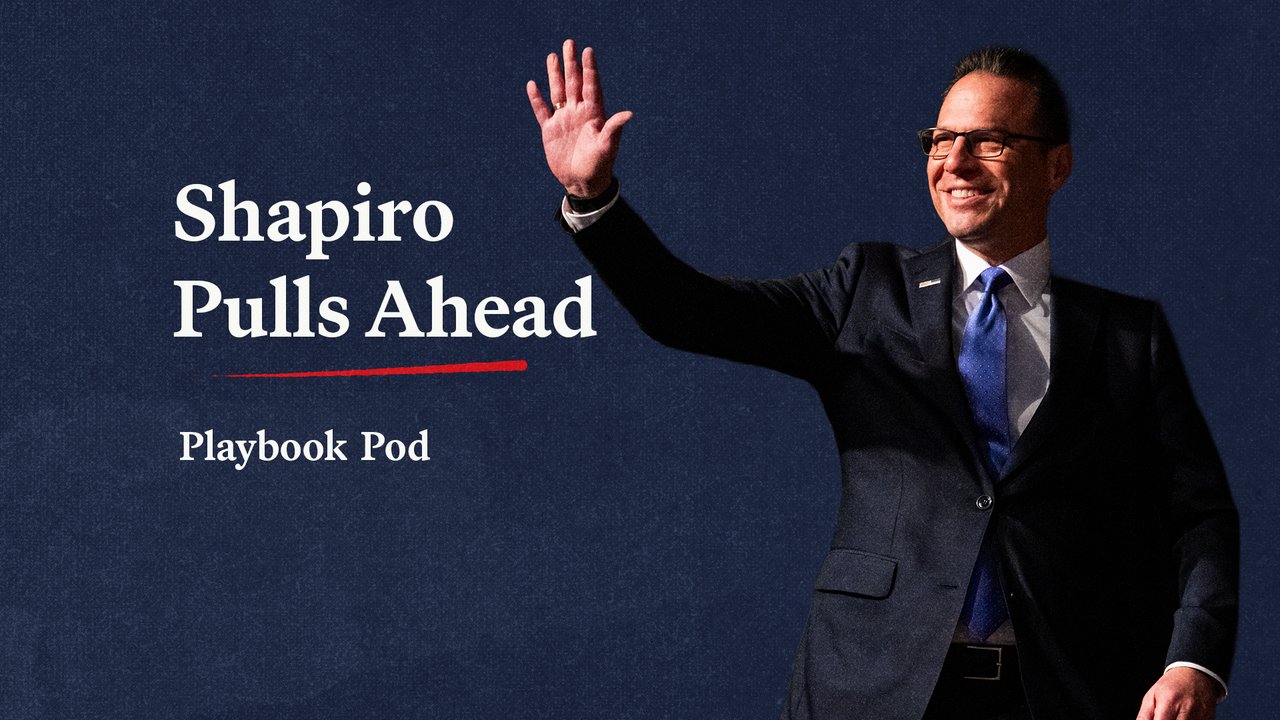
Josh Shapiro aims for a strong finish in a campaign with 2028 implications

POCONO RACEWAY, Pennsylvania — High up in the starting stand of a famed race track, Josh Shapiro waves a black-and-white checkered flag with an unmistakeable meaning: It’s over.

The metaphor isn’t entirely accurate.

“We may have a lead, but you’re coming down this home stretch. People are nipping at your heels,” the Pennsylvania governor told POLITICO. “You’ve got to run hard.”

Shapiro, the potential 2028 contender and 2024 veepstakes short-lister, does have reasons to be optimistic — and careful.

He’s threatening a double-digit blowout over Stacy Garrity, a candidate backed by President Donald Trump, in the most important swing state in the nation.

He’s also putting his coattails to the test.

None of the other potential 2028 Democratic candidates has more at stake in their own backyard on Tuesday than Shapiro. He doesn’t have California Gov. Gavin Newsom’s map-breaking Proposition 50, designed to beat back the GOP redistricting, nor his platinum email list. He doesn’t have Illinois Gov. JB Pritzker’s billions or Arizona Sen. Mark Kelly’s deep bench of donors or former Transportation Secretary Pete Buttigieg’s large map or the red-state credentials of Kentucky Gov. Andy Beshear.

Shapiro is on the brink of flipping four hotly contested congressional seats — and guaranteeing Democrats the House. Pennsylvania Democrats could also take control of the state Senate, including some heavily gerrymandered seats, giving the party a governing trifecta for the first time since 1992.

“I’m not thinking about this as a victory for me,” he told POLITICO during a swing through the state. “I’m thinking about this as a victory for our country.”

All of which paves the way for him to pass a $15 minimum wage and a raft of other measures that could buttress a 2028 presidential bid.

Shapiro is very much following the Ron DeSantis theory of a presidential primary campaign: demonstrate dominance at home before branching out nationally — a strategy, it should be noted, that didn’t pay off for the Florida governor.

“I think what really hurt DeSantis was that he decided he wasn’t going to announce until after his legislative session, and that was May,” political strategist David Axelrod said. “Time is at a premium. If that’s his plan, that would be a miscalculation.”

Will we see him venture beyond Pennsylvania’s boundaries before the end of the year?

“I don’t know what my plans are,” Shapiro said.

The day had the feeling of both an ending of one campaign and the beginning of another. Even as he urged a midday audience of about 100 people to vote for Paige Cognetti, the Scranton mayor running against Rep. Rob Bresnahan, and Brian Wrightson, the state Senate candidate challenging Sen. Rosemary Brown, he is nationalizing his rhetoric.

“Don’t let Trump take away your hopefulness,” he told people gathered at East Stroudsburg University. “Don’t let him make you feel pessimistic. Don’t let him feel like change can’t come or that we have to look in the rearview mirror for answers. The answers are always straight ahead.”

Then there’s his set piece about the “American dream slipping away.”

He’s broadening out his message beyond the commonwealth.

“I think the work I do here in Pennsylvania, the confidence I give them about their government here can hopefully restore some of their faith in democracy, and I want in our democracy, and I want them to feel like they’ve got power to be able to shape the future of that American dream,” Shapiro told us.

A few hours later, Shapiro materializes inside Salerno’s, a tavern in Old Forge known for its American cheese-topped pizza. He sets a room in which patrons already have had a few too many Rolling Rocks and pumpkin martinis abuzz.

On the televisions, his own ad for Wrightson is playing on TV. He grips and grins and backslaps his way through the room.

At the end of the bar, he picks up five pizzas for the road, ducks out the door and boards his bus for another Cognetti rally.

Shapiro’s gubernatorial reelect isn’t drawing the buzz of some of the more razor’s-edge, online Senate races in the waning days of election season. But his project is no less remarkable.

“If we can win enough seats here in Pennsylvania to change the balance of power in Washington and be a check on Donald Trump, then we can both hold the president accountable and get stuff done in Washington,” Shapiro says. “Likewise, here in Pennsylvania, if we can win a trifecta for the first time since Bill Clinton’s election, I can raise wages almost immediately for tens of thousands of Pennsylvanians who are at or below minimum wage and raise wages for others. That’s a concrete thing that we can accomplish.”

At the raceway, he has just finished cutting a video racing around the Pocono Raceway’s Tricky Triangle when he flashes a grin.

“I’ve got a surprise for you,” he says, inviting POLITICO to the starting stand above the storied three-turn NASCAR track in the Pocono foothills.

Up the stairs, the burnt-orange fall foliage dances on the Pennsylvania horizon. It’s a vantage point Shapiro, as a NASCAR fan, has taken in many times.

Despite the apt setting, he deflects when asked if he’s ready to announce the launch of his campaign.

“If this is a metaphor,” he says, “it’s for finishing the race strong.”

There is just one wrinkle: Before he brandished the black-and-white flag, he picked up a green one, waving it vigorously.

“I think you mis-saw that,” Shapiro said with a smile. “I was waving a checkered flag to finish the governor’s race.”

Like this content? Consider signing up for POLITICO’s Playbook newsletter.

​Politics

Categories
Entertainment

We’re Treating You to a Roundup of Heidi Klum’s Halloween Costumes

Heidi Klum, 2024 HalloweenWith mere hours until Heidi Klum’s annual Halloween costume reveal, we’ve got problems. And I don’t think we can solve ’em. 
The holiday’s undisputed queen made a real deep cut when she revealed…
​E! Online (US) – Top Stories

Categories
Politics

Shapiro takes the inside track

Shapiro takes the inside track

lead image

​Politics

Categories
Uncategorized

Best WordPress MCP Plugins in 2026 (Free and Paid, Compared)

WPShout hero illustration: a toolbox of different plugs, one lifted out beside a check mark, under Pick your MCP pluginPicking a WordPress MCP plugin? Four got the same two prompts, and all eight are compared on price, free caps and defaults. Find which fits your job.