Per research, when one person in a relationship becomes diagnosed with a serious illness, it can either strengthen or deteriorate their bond with their partner.
Health Digest – Health News, Wellness, Expert Insights









Per research, when one person in a relationship becomes diagnosed with a serious illness, it can either strengthen or deteriorate their bond with their partner.
Health Digest – Health News, Wellness, Expert Insights
Reading Time: 3 minutes
Words said in anger can come back to haunt you.
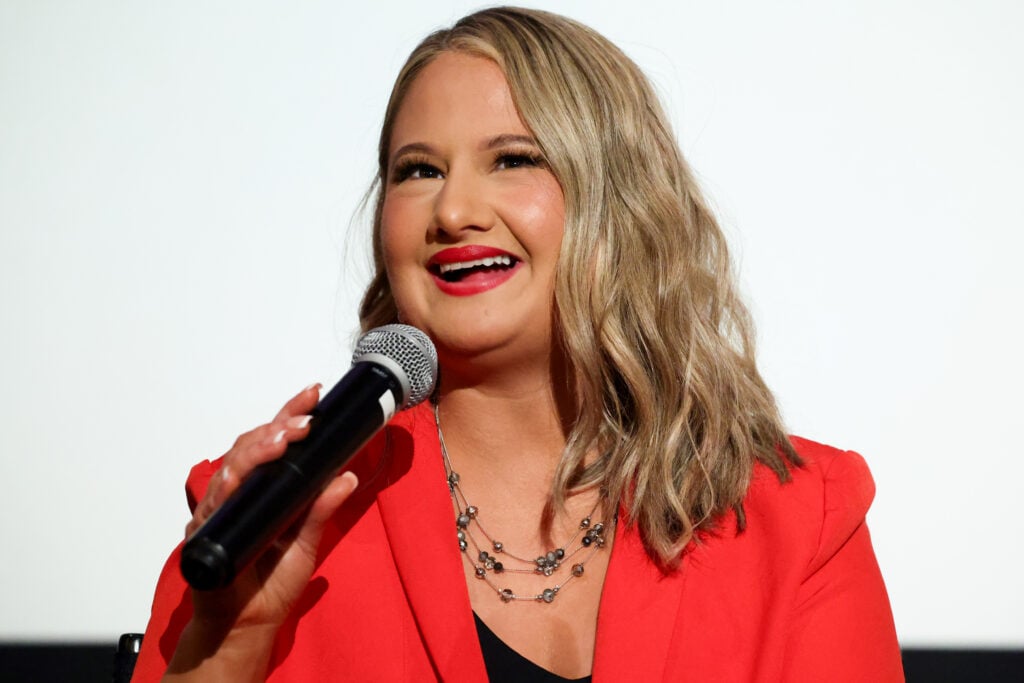
In a recorded call, Gypsy Rose Blanchard admitted to telling Urker that she “hoped” that he would overdose.
It is believed that he died precisely that way earlier this month, on his birthday.
What was she thinking?
The Daily Mail obtained audio from when Blanchard, now 35, was still unjustly in prison.
In December 2020, she spoke to now ex-boyfriend Ryan Anderson, telling him that she and Urker were over.
“Next thing you know, he gone,” Blanchard described of her ex. She and Urker had connected in 2017, but had split.
“No, even after I told him he could overdose and all that, like, he still kept himself on my email,” she told Anderson.
“Like, he never took himself off no matter how bad we got into it,” she described, “or how bad it seemed like we were at odds.”
Gypsy Rose Blanchard told TMZ she believes her ex-fiancé Ken Urker died of an apparent overdose, after an unidentified substance was found where he died
He was found dead on his 34th birthday, and his death remains under investigation https://t.co/kPp1rk514V
— internet hall of fame (@InternetH0F) October 2, 2026
Anderson seemed uncomfortable with the discussion and asked to change the topic.
However, past entanglements came up again during a 2021 conversation, while Blanchard continued to remain behind bars due to our backwards legal system.
At that time, she was discussing how she would refuse to allow a romantic interest to ignore her, even suggesting that she’d show up and throw cans at the person’s car if necessary. Anderson found that alarming.
Blanchard and Anderson went on to marry while she was still behind bars.
After her release, their marriage fell apart. She ended up reconnecting with Urker and even welcoming a child together. Aurora was born in December 2024.
Unfortunately, Ken Urker did ultimately die on October 1, the day of his 34th birthday.
Initial reports say that it was an overdose, as investigators found evidence suggesting as much near his person.
However, authorities are still waiting on his toxicology reports. Someone can die surrounded by alleged paraphernalia but still die by another means, such as natural causes.
Blanchard did not publicly divulge that she knew that he had an alleged history of substance abuse.
Instead, she emphasized to outlets that she would remember Urker as a very intentional partner and father.
Why would Blanchard have said such a thing?
Sometimes, people lash out in anger. It’s human. That doesn’t make it okay, but it happens.
In Blanchard’s case, she was raised by an abusive mother — who can no longer harm her or anyone — and kept socially isolated and not allowed to make normal friendships. She was drugged and mutilated as her mother conspired to keep her dependent.
Then, almost the moment that she was finally free, she was locked away in prison as if she had done something wrong. It was a gross perversion of justice.
Emotional regulation, relationships, role models … these are not automatic. Blanchard had — and still has — a lot to learn about being an adult and navigating life.
It is a tragedy that words spoken in anger over half a decade ago turned out to be so prescient. But it doesn’t mean that she’s now in a celebratory mood.
Gypsy Rose Blanchard told Ken Urker She Hoped He’d ‘Overdose’ in … was originally published on The Hollywood Gossip.
The Hollywood Gossip
With Election Day 2026 just weeks away and control of Congress hanging in the balance, the results will almost certainly hinge on voter turnout, just as they did in 2024.
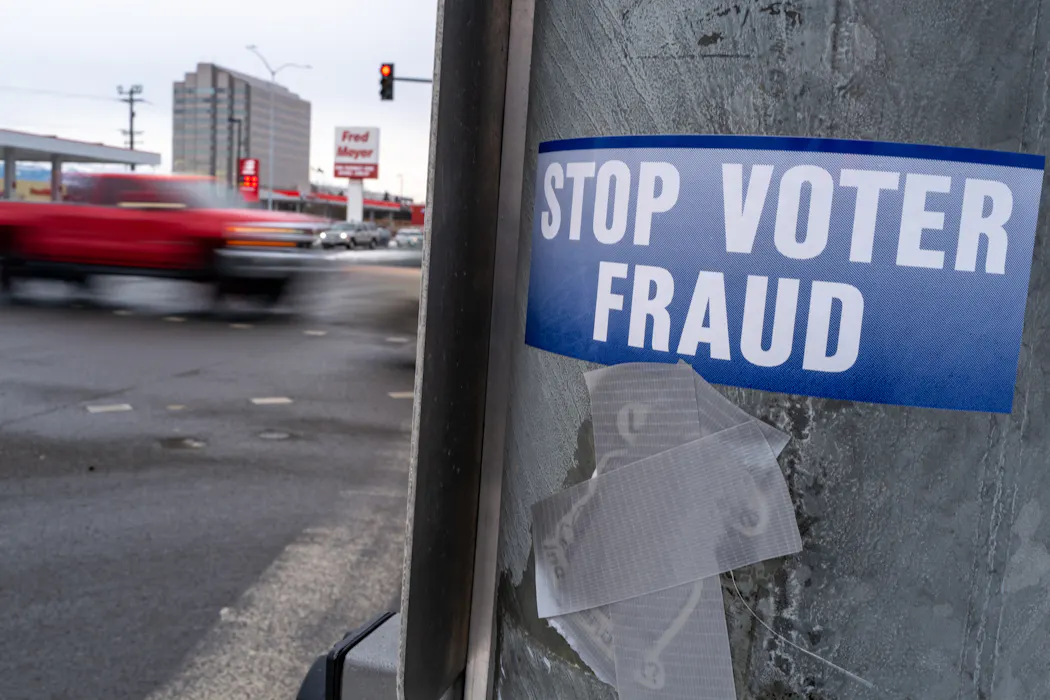
Given that genuinely undecided voters are scarce — as little as 5% to 7% of the electorate, according to major polls — both Democrats and Republicans must look to mobilize their rank-and-file supporters. To do so, the Republican Party has bet strongly this year on a strategy of convincing people that voter fraud is rampant.
As a scholar of U.S. politics, I see this as a high-risk strategy for Republican candidates and American democracy. That’s because reduced trust in election integrity can reduce motivation to vote – even if based on flawed information. But it’s not at all clear which Americans are most likely to stay home in November.
Voter fraud is not a real problem in the United States. Study after study, by public officials and think tanks, has shown that voting by noncitizens and other ineligible voters happens only at minuscule, statistically insignificant levels.
Nonetheless, rhetoric from the Trump administration about voter fraud has been pervasive. Consider the recent claim by Homeland Security Secretary Markwayne Mullin that Nevada had nearly 16,000 noncitizens on its voter rolls – a number reduced to 185 when state authorities pressed for details, and reduced to zero when the state investigated the names provided.
There is comparable behavior from Congress. My own research on political communication has shown that a substantial number of members of Congress, strongly skewing Republican, make frequent use of rhetoric that undermines democratic norms and delegitimizes political institutions.
The strategy ties readily into President Donald Trump’s persistent false claims that he won the 2020 presidential election. It also ties into his administration’s strongly anti-immigrant agenda, which spreads fear of noncitizens corrupting U.S. politics.
How does this uncertain political environment influence voters?
There is clear data showing that voter confidence in elections has fallen across party lines: Only 65% of Republicans, 64% of Democrats and 57% of independent voters are very or somewhat confident that the 2026 vote count will be reliable. Conventional wisdom suggests such discouraging numbers would depress turnout.
It’s not as simple as that, however.

Extensive research confirms the axiom that a sense of civic duty is the strongest predictor of whether someone will vote. It supersedes trust, partisanship and policy preferences.
Any campaign’s quest to mobilize additional voters, therefore, must find them among citizens without a strong sense of civic duty. But among these people, diminished trust in democratic processes can play out in counterintuitive ways.
Recent research on German voters is relevant to the U.S.: It shows that among more passive voters – those following cues from political elites – reduced trust in elections can depress motivation to vote. That’s because there’s no trustworthy result that voters are seeking to affirm.
Conversely, among voters with greater skepticism about elite messaging, reduced trust can motivate increased turnout as an attempted corrective for a flawed system.
What does this mean for potential voters in the U.S.? Among Republicans, it appears that the party’s strategy carries a strong risk of backlash.
Findings from MIT’s Election Lab confirm that cues from political elites are a powerful factor in voter behavior. Specifically, cues setting expectations of a disappointing or untrustworthy result will reduce motivation. Why vote if you don’t expect it to help achieve the desired result?
The same study finds Republican voters broadly inclined to believe GOP leaders’ cues about voter fraud and to frame their expectations accordingly. And once they’ve made that shift, they cling firmly to the belief, even in the face of contrary empirical evidence or messaging from within the party.
In the current election cycle, 50% of Republicans surveyed distrust mail-in voting, and 51% fear voting by noncitizens. They expect election results to be fraudulent. This likely won’t mobilize them, as there’s no positive result they can expect to affirm. The Republican Party’s messaging has painted its voters into a corner.
Democrats, meanwhile, are less inclined to believe claims of voter fraud. But they are more inclined to be concerned about attempts to undermine the midterms by political elites making such claims. Examples include the Trump administration’s efforts to sow doubt about voting by mail and about alleged noncitizen voting.
These efforts increase motivation to vote among Democrats. Unlike GOP voters, they see the capacity to correct for the system’s vulnerabilities – the potential and urgency to overwhelm attempts at voter suppression through higher turnout.

Opponents of Trump and the GOP may find these diverging effects encouraging. No matter the results this November, however, we’re left with a precarious dynamic. Increasing numbers of voters lack trust in elections and make their decisions to vote – or not – based on limited or flawed information.
Fortunately, there are signs of hope.
Although voters in general are poorly informed about how elections are conducted, they can and do respond to clear information familiarizing them with election processes.
I’ve seen this myself over the years, working with nonpartisan efforts to register young adults and train them as poll watchers. And in the current election cycle, there have already been widespread efforts to broaden public awareness about the fact that state officials, not federal ones, have authority over voter rolls and election security.
Meanwhile, fewer Americans are expected to vote by mail this year – whether due to fear of fraud or fear of the Post Office. If they instead vote in person, a silver lining is that positive personal experiences with poll workers are also associated with increased voter trust.
Looking beyond November, what Americans can hope for is a cycle in which clear election outcomes provide an opportunity to inform voters of how and why the system works. That’s the way to motivate more political engagement and voter turnout in the future.

Christopher Miller does not work for, consult, own shares in or receive funding from any company or organization that would benefit from this article, and has disclosed no relevant affiliations beyond their academic appointment.
Politics + Society – The Conversation
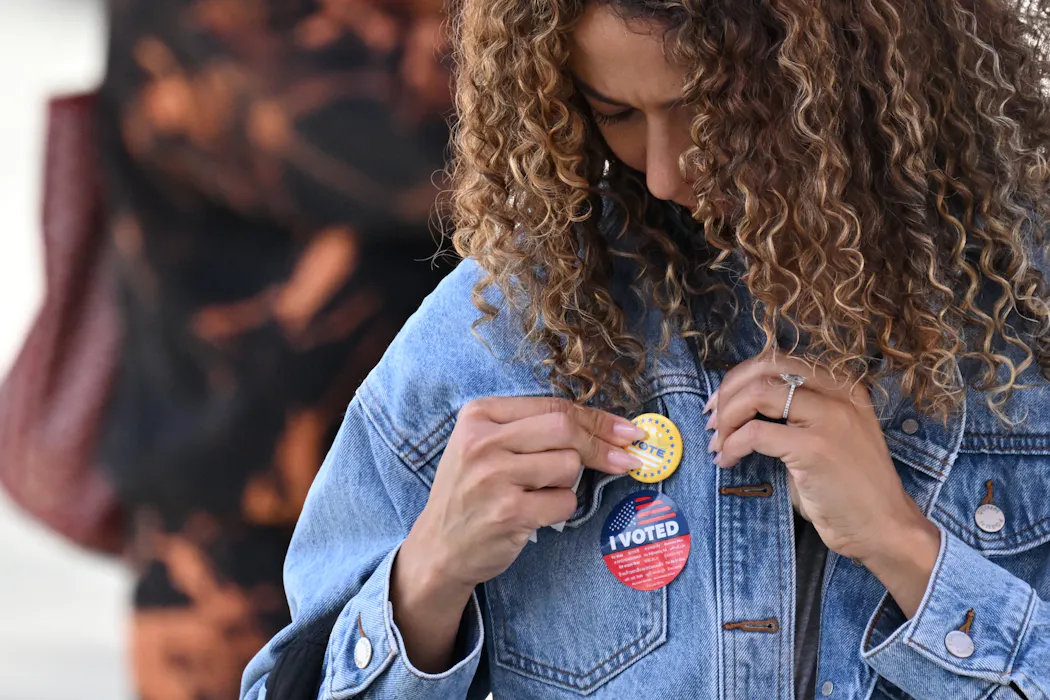
Nearly 50 million Americans ages 18 to 29 are eligible to vote in the upcoming midterm elections, and about 60% say they plan to. If they follow through, it would break midterm turnout records for voters under 30.
Gun control is an issue these young voters care about more than the public at large does, and it’s easy to understand why: In their lifetime, mass shootings have been a recurring part of American life.
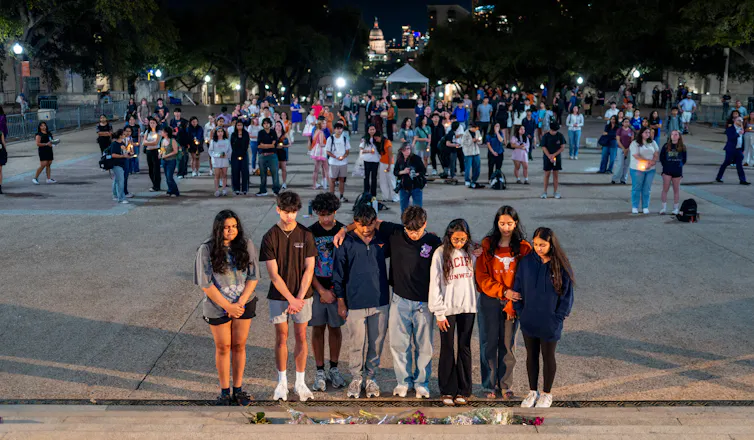
Directly experiencing a mass shooting is rare, yet some young people have survived two before turning 25. When a gunman opened fire at Brown University in December 2025, at least two students on campus had already experienced a school shooting before they got to college. The same thing happened in April 2025, when students who lived through the 2018 Parkland, Florida, shooting at Marjory Stoneman Douglas High School found themselves caught in another shooting at Florida State University. As one of them put it: “This is America.”
Researchers have called today’s young adults the “massacre generation.” They’re the first group to grow up entirely in the post-9/11, post-Columbine High School shooting era, with routine lockdown drills, heightened security in schools and nonstop media coverage of mass violence.
As criminologists who study the impacts of victimization and gun violence among young people, we wanted to know how growing up with the threat of mass shootings has shaped young adults’ views on gun legislation. In a recent study, we surveyed nearly 1,700 young adults, ages 18 to 29, across the country to find out. We found that fear of mass shootings pulls this generation apart along political and gender lines: It pushes some toward wanting stricter gun laws and others in the opposite direction.
Mass shootings account for about 1% of gun deaths in the U.S. Still, they profoundly shape how safe millions of Americans feel. In a 2019 survey by the American Psychological Association, nearly 80% of Americans said the possibility of a mass shooting stressed them out, and a third said they avoided certain places because of it. The fear has become so common that clinicians now have screening tools to assess and treat people with anxiety over mass violence.
Young adults have also grown up watching the same heated gun debates play out after every tragedy. Gun control advocates call for stricter firearm restrictions to prevent the next mass shooting, whereas gun rights advocates push back with the “good guy with a gun” argument, a phrase made popular by the National Rifle Association. Supporters of the latter view say more armed citizens are needed to stop active shooters, so more people should be able to buy and carry guns with fewer restrictions, such as carrying in public without a permit or on college campuses.
Researchers have known for a long time that more guns don’t necessarily mean less violence. A 2021 study found that mass shootings were more common in states with higher rates of gun ownership, and gun homicides were more common in states with looser concealed carry laws. Yet even after decades of mass shootings, federal gun policy has barely budged. Even where individual states and local governments have passed assault weapons bans, including Connecticut and Cook County, Illinois, they’ve faced Second Amendment challenges that are now before the Supreme Court.
Young people have become some of the loudest voices in this debate, most notably through March for Our Lives – an organization started by Parkland survivors that focuses on ending gun violence – and other youth-led groups across the country. And because pro-gun views tend to be more common among older Americans, many political observers assume stricter gun laws will follow as young people gain voting power.
This fall, voters will choose members of Congress and state lawmakers who can shape gun laws, and in a few states they’ll weigh in on gun policy directly. In Massachusetts, voters will decide whether to keep or repeal a 2024 law that, among other things, requires gun owners to register their firearms with the state, expands safety training for people applying for a gun license and broadens the state’s ban on assault-style weapons. In Arkansas, they’ll decide whether to change the state constitution to more strongly protect gun rights, including the right to own ammunition and gun parts. If young adults turn out in record numbers, their views could help determine outcomes like these.
So where do young adults stand? We’ve found that a shared fear of mass shootings does not necessarily lead to shared views on guns. Our survey asked young adults to rate on a scale from 1 to 3 – from “not at all” to “a lot” – how much they fear that they or someone they love will become a victim of a mass shooting. More than 60% reported moderate or high levels of fear, including about 17% who fell in the high-fear range.
In general, about two-thirds of young adults said people should need a permit to carry a gun in public and that guns shouldn’t be allowed on college campuses. About 6 in 10 disagreed that owning more guns makes people safer, and a similar share disagreed that gun control laws are unconstitutional.
We found that young adults who worried more about mass shootings tended to be more supportive of gun control. But this pattern didn’t hold for young men, Republicans or those who were politically conservative. For these groups, the opposite was true: The more they feared mass shootings, the less they supported gun restrictions. Young adults are divided on gun control, and those divisions are sharpest when fear runs high.
In the coming years, the massacre generation is on track to become part of the largest voting bloc in the country. Most young adults share a fear of mass shootings, but they disagree on what to do about them. And with each new mass shooting, that divide may only deepen.

Jillian Turanovic has recently received research funding from the National Institute of Justice, the National Collaborative on Gun Violence Research, the Bureau of Justice Assistance, and Arnold Ventures, none of which are responsible for this content.
Kristin Lloyd has recently received funding from the Bureau of Justice Assistance, who is not responsible for this content.
Politics + Society – The Conversation

 There’s nothing like a royal welcome.
Almost two months after Prince Harry and Meghan Markle moved back to the U.K. with their kids Archie, 7, and Lilibet, 5, the couple made their first official…
E! Online (US) – Top Stories
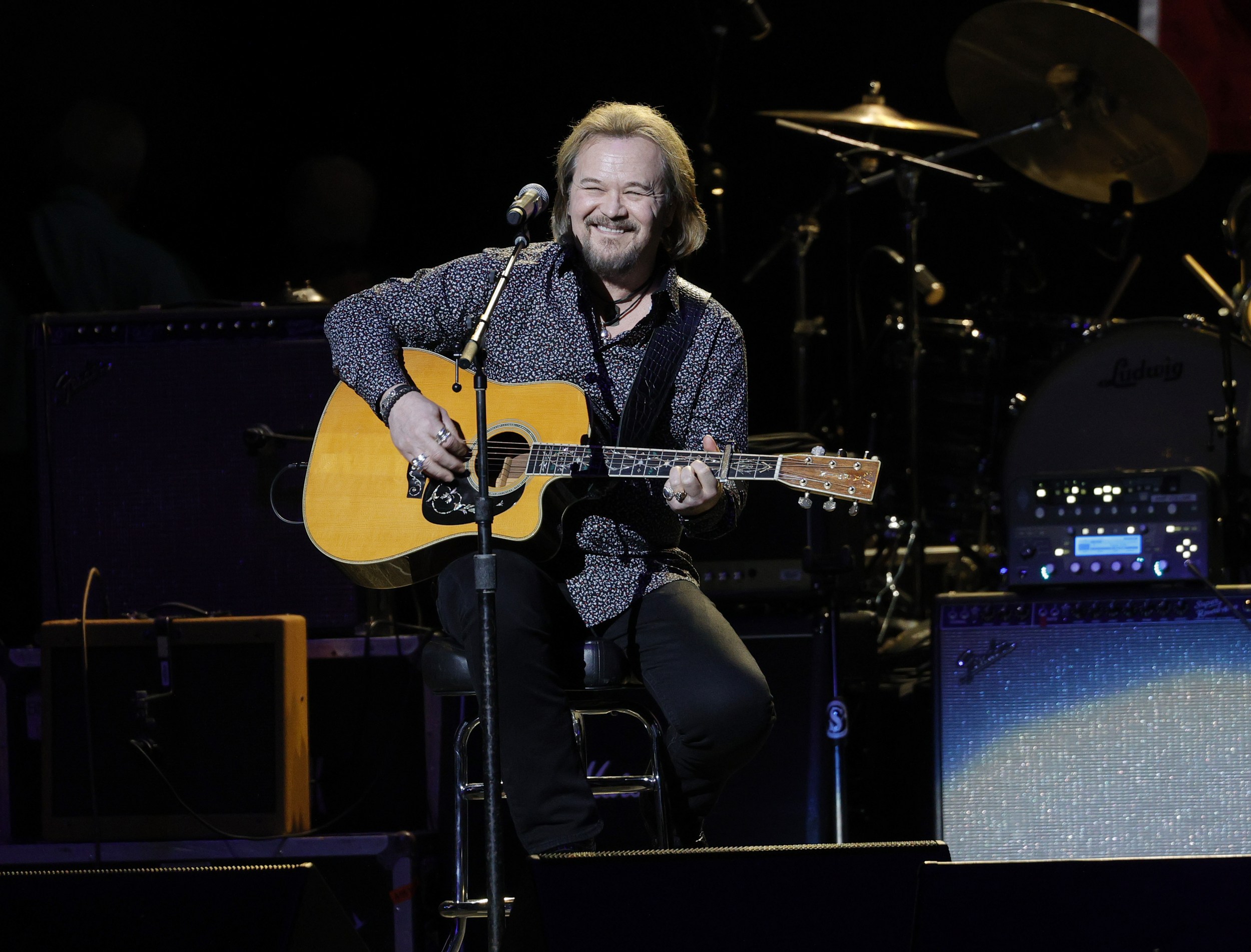
Travis Tritt’s back on stage after beating pneumonia. The country star is ready to hit the road again following weeks of recovery. Continue reading…Country Music News – Taste of Country
Travis Tritt’s back on stage after beating pneumonia. The country star is ready to hit the road again following weeks of recovery. Continue reading…The Boot – Country Music News, Music Videos and Songs
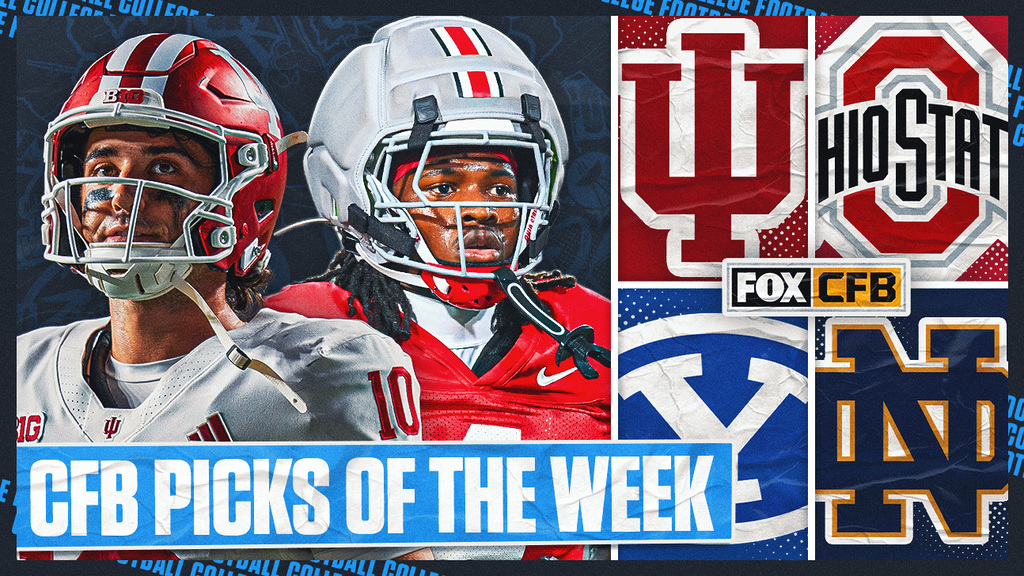
Can No. 4 Ohio State avenge its Big Ten championship game loss to No. 5 Indiana on “Big Noon Kickoff”? Will No. 6 Alabama bounce back against No. 14 Tennessee after a loss to No. 1 Georgia? Elsewhere, a College Football Playoff spot could be on the line when No. 2 Notre Dame visits No. 8 BYU. Austin Simmons leads No. 13 Missouri against his former team, No. 9 Ole Miss. With six matchups between Associated Press Top 25 opponents, Week 7 of the college football season might feature the most exciting slate of the season. We’re breaking down our straight-up picks and the matchups to watch closely throughout the weekend. When: Saturday, noon ET (FOX)Where: Memorial Stadium, Bloomington, IndianaLine: Ohio State -3.5 RJ Young: Ohio StateThe best player in the sport is Jeremiah Smith, and Ohio State coach Ryan Day should not be shy about reminding Indiana about that. Laken Litman: Ohio StateThis is my answer for nearly every Ohio State game: The Buckeyes have Jeremiah Smith and Indiana doesn’t. Ben Portnoy: IndianaOK, fine, this is probably a bit of a homer pick. I took the Hoosiers to win the Big Ten at the start of the season and I can’t stray from that, right? Right. Give me Curt Cignetti’s squad in the biggest home game in the history of Indiana football. When: Saturday, noon ET (ESPN)Where: Tiger Stadium, Baton Rouge, LouisianaLine: LSU -14.5 Young: LSUMississippi State quarterback Kamario Taylor won’t be 100% healthy even if he plays on Saturday. Advantage, LSU. Litman: LSUThe Tigers will rebound at home after an upset loss to Kentucky in overtime last week. Plus, Mississippi State quarterback Kamario Taylor’s status is still uncertain. Portnoy: LSUKamario Taylor is still on the mend and while the spread feels pretty big for a matchup of two top-25 teams, I have a hard time seeing the Bulldogs pull this one out. I’ll take LSU quarterback Sam Leavitt to get right against what’s been just a mediocre Mississippi State defense. When: Saturday, 3:30 p.m. ET (ABC)Where: Neyland Stadium, Knoxville, TennesseeLine: Alabama -7.5 Young: AlabamaThe Crimson Tide have the better quarterback and wide receiver room. Tennessee must run the ball well to win. Litman: AlabamaEven after last week’s loss to Georgia, Alabama looks like a team that could win it all. The Crimson Tide are not going to lose two in a row, especially not against a Tennessee team led by backup quarterback George MacIntyre. Portnoy: AlabamaNothing complicated about this one. Tennessee has real problems at quarterback and absolutely nothing the Vols put on tape last week against Arkansas makes me think they’re up for this challenge. Bama rolls big. When: Saturday, 3:30 p.m. ET (FOX)Where: Galaxy Stadium, Lubbock, TexasLine: Texas Tech -14.5 Young: Texas TechTexas Tech has flirted with disaster enough to make me feel nervous, but I think the Red Raiders have an answer for ASU running back Cardae Mack. Litman: Texas TechIn a heated Big 12 race, Texas Tech stays unbeaten with a decisive win over an inconsistent ASU team. Portnoy: Texas TechArizona State and quarterback Cutter Boley have had their moments and I still think Texas Tech is hardly a shoo-in for the Big 12 title, but the Red Raiders are just the more talented team in this one. When: Saturday, 3:30 p.m. ET (SEC Network)Where: Vaught-Hemingway Stadium, Oxford, MississippiLine: Ole Miss -5.5 Young: MissouriRunning back Jamal Roberts has rushed for at least 200 yards in back-to-back games and quarterback Austin Simmons is good enough to exploit Ole Miss’ leaky secondary. Litman: MissouriThe Tigers surprise Ole Miss on the road and further cement themselves as a legit SEC contender. Portnoy: Ole MissI know Ole Miss got run by Florida a few weeks back, but I still think quarterback Trinidad Chambliss is one of the five best players in the sport this year. Austin Simmons has been awesome for Missouri and I think he’ll find success against a bad Rebels defense, but Chambliss will make one more play down the stretch to win a shootout. When: Saturday, 7:30 p.m. ET (ABC)Where: LaVell Edwards Stadium, Provo, UtahLine: Notre Dame -10.5 Young: Notre DameBYU will play its biggest game of the season without star tailback and 2025 Big 12 Offensive Player of the Year LJ Martin. I’ll take Notre Dame. Litman: Notre DameIn both of these teams’ first true test, Fighting Irish quarterback CJ Carr outduels the Cougars’ Bear Bachmeier and removes any doubt that Notre Dame is a real threat to compete for the CFP title. Portnoy: Notre DameSimply put, I don’t think BYU has enough firepower without running back LJ Martin to get over the hump here. Notre Dame has been a touch shaky in spurts this fall, but I expect the Irish to handle the Cougars relatively comfortably in this one. When: Saturday, 7:30 p.m. ET (SEC Network)Where: Memorial Stadium, Norman, OklahomaLine: Oklahoma -6.5 Young: KentuckyThe Sooners can’t consistently move the ball offensively, and Kentucky has shown it can win close games late. Litman: KentuckyThis is a letdown game for OU after a massive win over Texas last week, while coach Will Stein and Kentucky earn a third SEC road win. Portnoy: KentuckyOklahoma might have won the “Red River Rivalry”, but that had far more to do with the horrific play of Texas quarterback Arch Manning down the stretch than anything the Sooners did. Kentucky has won its last two by the skin of its teeth, but the Wildcat offense is simply a far more effective operation right now. When: Saturday, 7:30 p.m. ET (FOX)Where: TDECU Stadium, Houston, TexasLine: Houston -4.5 Young: Oklahoma StateThe Cowboys are just too explosive, and the Cougars can’t win a shootout. Litman: Oklahoma StateIn a game with huge Big 12 standing implications, Oklahoma State quarterback Drew Mestemaker gets the better of Houston’s Conner Weigman and the Cowboys win their fifth consecutive game. Portnoy: Oklahoma StateDrew Mestemaker has come on strong following whatever it is Oklahoma State did when it lost to Tulsa earlier this year. Houston should keep this close down to the wire, but I’ll take the Cowboys offense to be the difference. When: Saturday, 7:30 p.m. ET (NBC)Where: Rose Bowl, Pasadena, CaliforniaLine: UCLA -2.5 Young: WisconsinThe Badgers have won four game in a row and will play a UCLA team that needed seven turnovers to win by two points against an Oregon team that started its backup quarterback last weekend. Litman: UCLABruins quarterback Nico Iamaleava is reportedly expected to miss the rest of the season with a knee injury, but backup Ty Dieffenbach does enough to keep the offense rolling. UCLA remains undefeated. Portnoy: UCLAI know Nico Iamaleava is out for the season, but I’m not altogether sure how much that will matter for a UCLA offense that has lived and died by running back Wayne Knight. Wisconsin is riding a high and I like the pieces Luke Fickell has compiled, but I’m giving coach Bob Chesney’s bunch the benefit of the doubt. When: Saturday, 11:00 p.m. ET (FOX)Where: Autzen Stadium, Eugene, OregonLine: Oregon -7 Young: NebraskaWith quarterback Dante Moore ruled out, Nebraska has the edge. Litman: NebraskaNebraska had Indiana on the rails last week before the defending champs pulled away in the fourth quarter. The Huskers will rebound from the loss against a reeling Oregon team that’s trying to keep its season alive. Portnoy: NebraskaDylan Raiola was a disaster last week against UCLA and considering what Nebraska showed against Indiana, I like the Huskers defense to be disruptive in this one. Matt Rhule finally gets a marquee win.Latest Sports News from FOX Sports

Don’t judge a book by its cover – or a mug by its coffee stains. Navy sailors have their reasoning, so you can go ahead and pour another cuppa.

Mashed – Fast Food, Celebrity Chefs, Grocery, Reviews
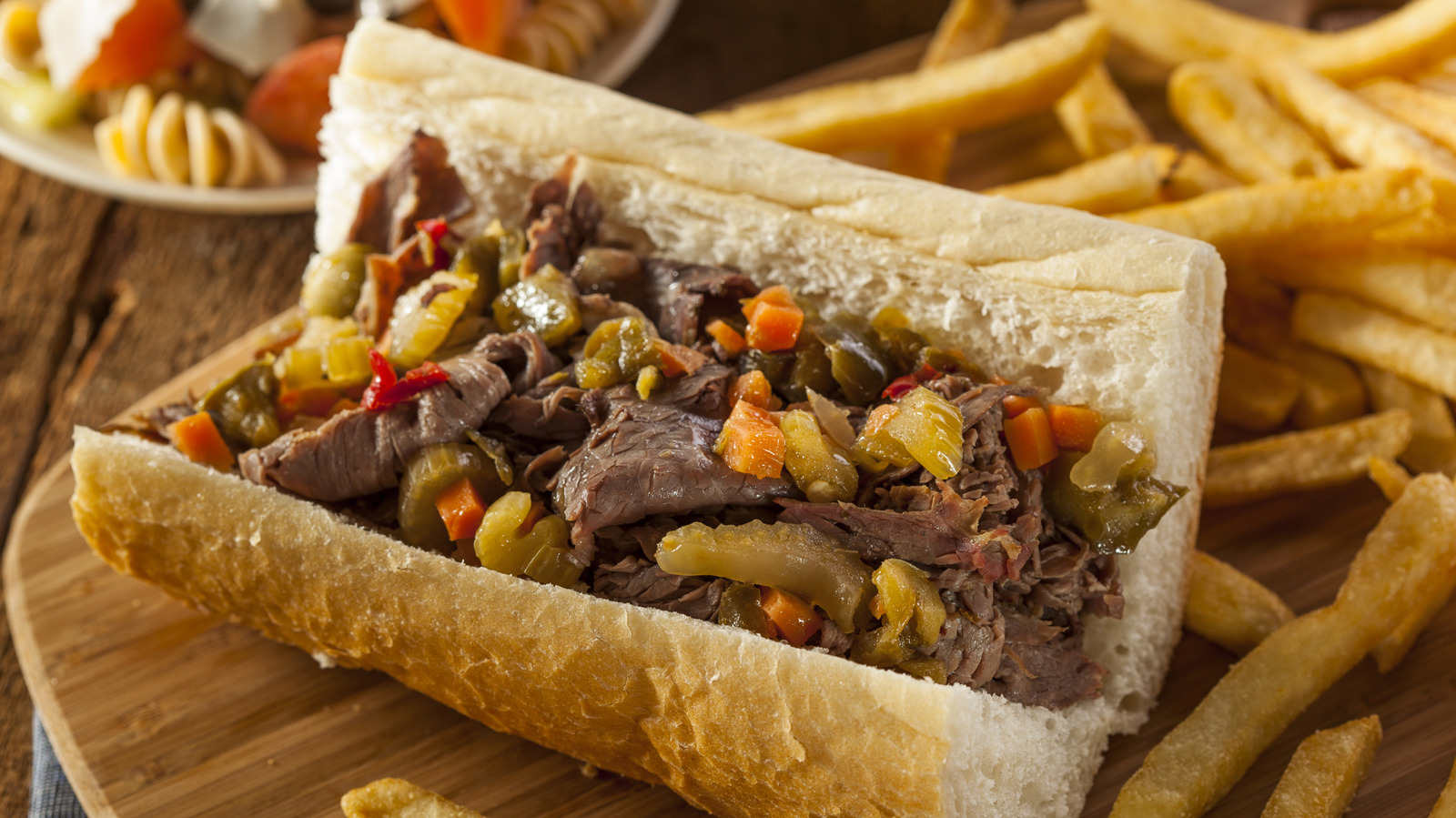
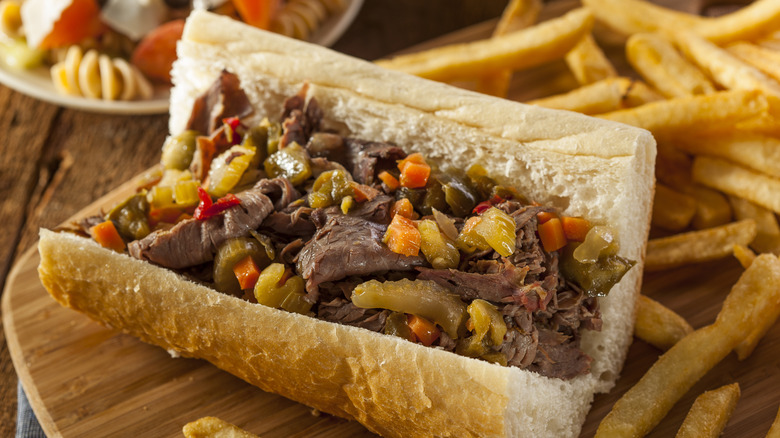
A good Italian beef sandwich isn’t difficult to find in Chicago, but what about the rest of the U.S.? Check out these beef sammies in Chicagoland and beyond.
Mashed – Fast Food, Celebrity Chefs, Grocery, Reviews