Capital City Fire/Rescue’s Hazardous Materials Team responds to a suspicious envelope received by the U.S. Postal Service in Juneau on Saturday, Oct. 17, 2026. (Capital City Fire/Rescue photo)
A suspicious envelope addressed to the Alaska Division of Elections in Juneau was intercepted by a hazardous materials response team and turned over to the FBI on Saturday, in what is believed to be part of a large number of mailings to congressional and election officials nationwide, according to Capital City Fire/Rescue Chief Tom Hatley.
The FBI notified CCFR on Friday the envelope was expected to arrive in Juneau on Saturday, and at about 9 a.m. Saturday the fire department was notified by U.S. Postal Service officials at the downtown Juneau facility it had arrived, Hatley said in an interview. CCFR Hazardous Materials Team responded and retrieved the envelope.
“At this time, the contents of the envelope have not been confirmed. Our response is being conducted out of an abundance of caution,” CCFR stated in a post on its Facebook page at 12:30 p.m. Saturday.
Juneau Police Department officials blocked the street outside the delivery entrance to the postal facility at the federal building on Glacier Avenue during the hazmat team’s response.
The Associated Press on Friday reported federal officials are investigating letters with suspicious substances mailed to congressional and election offices nationwide and are urging recipients to treat the mailings as “potentially hazardous.”
“Some of the letters contained an unknown substance and we are working closely with our law enforcement partners to respond to each incident,” a statement by the FBI notes. “We are also working with our partners to identify the individual or individuals responsible for the letters.”
Saturday morning’s response by CCFR occurred shortly before and a few blocks away from a “No Kings” protest whose organizers were urging people to vote early in the Nov. 3 midterm elections due to concerns that include questions about handling of mailed ballots. Early voting in Alaska begins Monday.
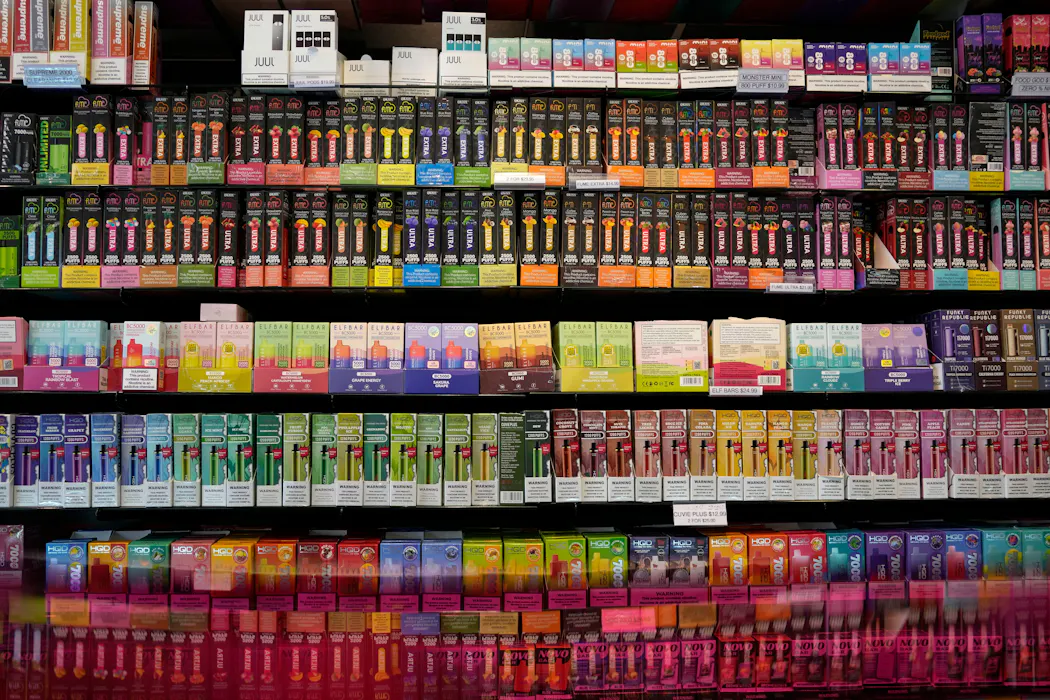
The new law allows Pennsylvania businesses to sell products from just six vape manufacturers, but that list includes some of the most popular brands. AP Photo/Rebecca Blackwell
Many popular nicotine vapes are now banned in Pennsylvania, with only six companies approved to sell their products in the state after a legal ban went into effect on Oct. 19, 2026.
Here’s how Pennsylvania’s new law works and what to expect as enforcement begins – especially in Philadelphia, where proximity to states with different laws might pose some challenges.
Banned products
The products in question include e-cigarettes, vapes and other electronic nicotine delivery systems, commonly known as ENDS.
In recent years, a growing body of research has studied the health impact of ENDS use, particularly among younger smokers. These studies have raised concerns not only about long-term addiction to nicotine but also exposure to potentially carcinogenic or otherwise harmful chemicals. In 2018, the U.S. surgeon general declared youth vaping an epidemic.
Vapes dispense an inhalable aerosol that contains nicotine and other chemicals, including flavoring agents. E+ Collection/Getty Images
Some popular brands can still be sold
The new law requires the state attorney general to maintain a registry of ENDS approved for sale in Pennsylvania. If a product is not listed in the directory, businesses that sell them will face fines.
The directory currently includes products from just six manufacturers: Juul Labs, R.J. Reynolds Vapor Co., Blue Nine, Custom Technologies, NJoy and Schwartz E-Liquid. However, these manufacturers produce several of the most well-known brands of ENDS, and many of the products included in the directory are extremely popular, such as Juul vaporizers. The reason the new law allows these specific products to continue to be sold is that they have been evaluated by the FDA.
The directory does exclude some very popular products as well, including many brands of disposable vapes and vape juice. The law was designed to specifically ban products that have not been evaluated by the FDA.
Penalties for businesses
If a business sells or offers to sell a product that is not in the directory, the consequences can be severe.
For first-time violations, there will be a fine of up to US$500 per product. A second violation within a year will trigger a fine of $1,000 per day per product until the product is either removed or appears listed in the directory. It will also lead to suspension of the license to sell tobacco products for at least 14 days. A third violation within a year will raise the fine to $1,500 per day per product, coupled with license revocation.
Attorney General David Sunday says his office will focus on “targeted enforcement.” What exactly targeted enforcement means is unclear, but the new law authorizes unannounced inspections. In addition to the premises, inspectors can also examine books and records.
Illegal products that are offered for sale will be subject to seizure and forfeiture, as well as destruction at the business’s expense.
The new law does not impose penalties on consumers who purchase banned products.
What to expect in Philadelphia
Philadelphia was an early adopter of a restrictive approach to the sale of vaping products due to concerns about the youth vaping epidemic. In 2019 the city banned the sale of certain flavored ENDS that were especially popular among adolescent and teen smokers.
Pennsylvania as a whole, however, has been less assertive than some of its neighbors, such as New York, in trying to stop youth vaping. The American Lung Association rates Pennsylvania in the D to F range for its tobacco control policies, below nearby New Jersey, New York and Delaware.
While the Pennsylvania law will reduce the number of products that can be legally sold in the state, it will still be relatively easy for a consumer in Philadelphia to travel to New Jersey or Delaware and buy some of the products banned under Pennsylvania law, including popular brands of disposable vapes.
But additional tobacco control measures may be underway, especially in Philadelphia. On Oct. 15 a member of the Philadelphia City Council introduced a bill that would amend zoning laws in a way that would effectively prevent new businesses selling tobacco and vaping products from opening in many areas of the city.
Ana Santos Rutschman does not work for, consult, own shares in or receive funding from any company or organization that would benefit from this article, and has disclosed no relevant affiliations beyond their academic appointment.
Richard Riehle — the actor best known for his work in the iconic 1999 comedy Office Space — has died.
He was 78 years old.
Actress/ producer Jamie Bullock poses with Richard Riehle, actor at the Los Angeles Film Festival premiere Of the “The Beach Party At The Threshold Of Hell” held at the Crest Theatre on July 1, 2006 in Westwood, California. (Photo by Frazer Harrison/Getty Images)
Riehle accumulated dozens of film and television credits over the course of his decades in the industry.
Some of his most high-profile film projects included Casino, Fried Green Tomatoes, The Fugitive, Mysterious Skin, Fear and Loathing in Las Vegas, Transformers: Age of Extinction, and The Man from Earth.
On television, Riehle also apppeared in episodes of such popular TV series as One Life to Live, Dragnet, Quantum Leap, The Golden Girls, Roseanne, Ally McBeal, Buffy the Vampire Slayer, The West Wing, ER, Modern Family, The Mindy Project, NCIS, and The Middle.
He was a regular on the Fox sitcom Grounded For Life, and he appeared on every episode of the short-lived TV adaptation of Ferris Bueller’s Day Off as the title character’s antagonist, Principal Ed Rooney.
He played Santa Claus in numerous projects, including A Very Harold & Kumar Christmas and episodes of Two and a Half Men and The League.
While he may have never reached household name status, the breadth of Riehle’s work, along with the incredible length of his career, made his face recognizable to film and TV fans from several generations.
The cause of Riehle’s death is unknown. We will have further updates on this developing story as new information becomes available.
Our thoughts go out to Richard Riehle’s loved ones at this difficult time.
Toby Keith turned a plastic cup into one of country music’s most unexpected party anthems, and the song’s success created real problems for the manufacturer. Continue reading…Country Music News – Taste of Country
Toby Keith turned a plastic cup into one of country music’s most unexpected party anthems, and the song’s success created real problems for the manufacturer. Continue reading…The Boot – Country Music News, Music Videos and Songs
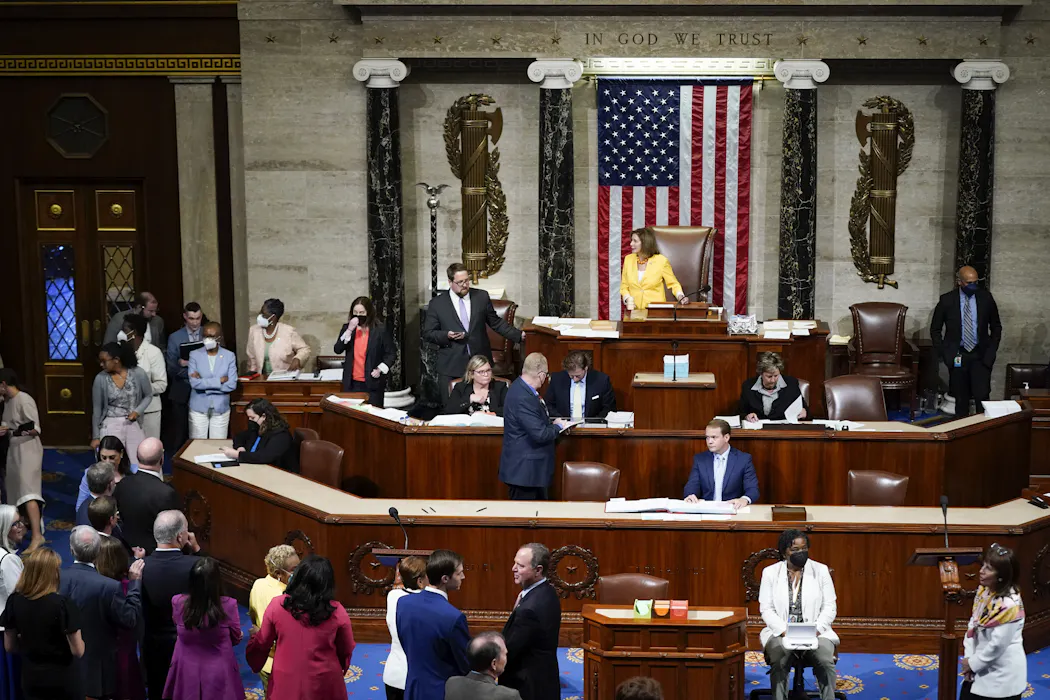
The U.S. House of Representatives votes on the Inflation Reduction Act in August 2022.AP Photo/Patrick Semansky
A massive federal spending effort to combat climate change passed in 2022 without a single Republican vote in the U.S. Houseor the Senate. But the billions of dollars it authorized benefited Republican and Democratic politicians alike – so long as they were already in the House of Representatives – according to an analysis I conducted with several fellow researchers. The results suggest that incumbents can still reap electoral rewards when federal money reaches their districts, even if they opposed the bill that provided it.
Before the 2024 election, over $204 billion had been spent on clean energy projects around the country, through a combination of private investment and federal incentives.
While Republicans opposed the legislation, 79% of the law’s investment went to Republican congressional districts.
Even when Republicans vote against climate legislation at the national level, at least some favor investing in clean energy technology at the state and local level, because those investments bring local economic benefits. Many Republican districts, which are often large and more rural, are well suited to these kinds of projects.
Benefits of federal investment
Elected officials are sometimes accused of “pork barrel politics,” seeking to direct federal taxpayer spending to their own congressional districts. In part that’s because voters see federal investment as creating local jobs and stimulating economic growth.
Although no Republican voted for the Inflation Reduction Act in 2022, some Republican lawmakers began defending parts of the law as investments reached their districts. In August 2024, heading into the election, 18 Republican House members urged House Speaker Mike Johnson to preserve the law’s clean energy tax credits, which they said “created good jobs in many parts of the country – including many districts represented by members of our conference.”
That support continued after the election. In March 2025, after Republicans retained control of the House and party leaders began considering cuts to the law’s programs, even more Republican House members called for preserving the clean energy tax credits, which could be used, for example, to finance a large wind energy project or construction of a battery factory. The lawmakers argued that repealing the credits while major projects were still under construction would jeopardize investments already underway and the jobs tied to them.
A Toyota battery-manufacturing plant in Liberty, N.C., received billions in support through the Inflation Reduction Act. Logan Cyrus/AFP via Getty Images
During the campaign, both Democrats and Republicans highlighted benefits of the investments funded by the act. Republicans usually used language like “economic development opportunities,” while Democrats directly mentioned the act itself.
Some districts got nothing, and one got nearly $8 billion. Some of the largest investments were in Republican-held districts in North Carolina and Georgia to expand capacity at electric vehicle plants already under construction. These companies were eligible for corporate tax breaks from the law and hoped to benefit from increased consumer demand because of the law’s tax credit for people purchasing electric vehicles.
In Mississippi’s 2nd Congressional District, which got $588 million in funding from the Inflation Reduction Act, Rep. Bennie Thompson, a Democrat, received 61.8% of the vote in 2024, up from 60% in 2022. In Michigan’s 5th District, which got almost $2 billion under the law, Rep. Tim Walberg, a Republican, received 65.7% of the vote in 2024, up from 62% in 2022.
We found that the more money a representative’s district got from the Inflation Reduction Act, the more the candidate improved their electoral performance in 2024 over how they had done in 2022.
When we conducted our statistical analysis, we accounted for multiple factors that could influence election results, including the district’s support for Trump, the incumbent’s previous vote share, campaign spending and district demographics. Using statistical methods to isolate the effects of Inflation Reduction Act funding, we found that doubling the amount of federal investment in a congressional district led to about a 0.9 percentage-point increase in the incumbent’s 2024 vote share relative to their 2022 result.
Our analysis showed that both Democratic and Republican incumbents saw electoral benefits from Inflation Reduction Act investment, even though Republicans in Congress had universally opposed the legislation. While some incumbents still lost votes or their seats, the data showed that greater Inflation Reduction Act investment helped them perform better than they otherwise would have.
These results indicate that voters may respond more to the money coming into their districts than to the underlying purpose of that funding.
While previous federal spending projects helped incumbent House members in elections, we found no direct evidence that district economies improved between 2022 and 2024. Instead, it’s more likely that incumbents claiming credit for the investments on the campaign trail explained why election results improved with Inflation Reduction Act funding. The lesson is that voters pay attention to actual or promised investments that might come into their areas.
President Donald Trump signs a major tax cut and spending cut bill on July 4, 2025. Samuel Corum/Getty Images
This evidence indicates that presidential priorities can outweigh even direct benefits to House members on highly polarized issues. The fact that some climate-related tax credits remained even after passage of the big budget bill does indicate that economic development policies may remain appealing to Republican leadership.
These electoral benefits indicate voters may reward investments even when the policies that created them remain politically contentious. Economic investments in fighting climate change can generate local political benefits across party lines, even if those benefits are not enough to overcome national divisions over climate change.
Kayla Morton does not work for, consult, own shares in or receive funding from any company or organization that would benefit from this article, and has disclosed no relevant affiliations beyond their academic appointment.
The Alaska Industrial Development and Export Authority, which shares offices with the Alaska Energy Authority, is leading development of the Ambler mining road. (Nathaniel Herz/Anchorage Press)
Amid a global spike in fuel costs, the tiny Northwest Alaska villages of Shungnak and Ambler reported some of the most eye-watering prices at the pump in the past few months — more than $25 per gallon for gas in both communities, located on the Kobuk River.
Enter the Alaska Industrial Development and Export Authority, or AIDEA. That’s the state-owned economic development corporation that hopes to build a mining road across the remote area where the villages are located, over the objections of conservation groups and some regional grassroots opposition.
In recent weeks, the authority has written $25,000 assistance checks to Shungnak, Ambler and a third village in the area, Kobuk, according to documents obtained by the Anchorage Press through a public records request.
The city government of Ambler, population 275, will discuss how to allocate the cash at a council meeting this week, the city clerk said Wednesday. In Shungnak’s case, the contribution went toward buying each household 42 gallons of gas or heating fuel, said Billy Lee, a member of the village’s tribal council, the entity that accepted the check.
That’s a little less than a small rural home might use during a month in the winter.
Up until AIDEA’s donation, Lee said, gas prices were so high that “none of us could even leave town to do any hunting or fishing or anything like that — we were kind of landlocked.”
“People were able to go out and get some fish and maybe a moose or two,” Lee said in a phone interview. “The feeling that I get is it was a real good gesture on AIDEA’s behalf.”
Lee said he didn’t know whether the contribution was initiated by AIDEA or a request from Shungnak. Fuel prices in the village have fallen sharply in recent weeks after a barge delivery, he added.
In Kobuk, a resident said the assistance money was divided between 33 households. Each received a credit for some $750 in fuel; diesel stove oil in the village is currently $15.45 a gallon.
Lawmakers, during Alaska’s annual legislative session earlier this year, took action to blunt the impact of higher fuel prices, offering support to school districts and $200 in supplemental oil-wealth payments to each resident.
Nonetheless, communities across the state beyond Kobuk, Ambler and Shungnak are facing painfully high prices and elected leaders have saidthey’re worried residents may struggle to get through winter.
Lower on the Kobuk River, residents of the village of Kiana pay $8.76 a gallon for gas and $9.53 a gallon for heating fuel, according to data collected by the Northwest Arctic Borough; villages farther south, in the Bristol Bay region, have reported fuel prices as high as $15 a gallon.
An AIDEA spokesperson said the agency’s executive director, Randy Ruaro, was traveling Wednesday, and he didn’t respond to emailed questions from the Press — including about who decided to issue the payments. The agency is a self-funded state corporation, meaning that while its assets belong to the public, its finances are technically separate from Alaska’s main operating fund and the Legislature’s budget process.
Information in the documents released by AIDEA to the Press shows that the money for Kobuk and Ambler came from an agency account dedicated to development of the mining road; that account data was not included in the payment records for Shungnak.
News of the assistance from AIDEA rippled across Northwest Alaska in recent weeks, in part because of the narrow scope and broader political implications of the donations from an agency with a statewide mandate.
Ambler, Shungnak and Kobuk are the three villages in the area of the upper Kobuk River — a remote region that happens to hold rich deposits of copper, zinc and cobalt. Mining companies have eyed the area for decades and one, Ambler Metals, earlier this year applied for a key permit to build a $1.3 billion mine.
The project is proposed in an area that’s more than 150 miles from Alaska’s road system.
Getting its valuable copper and zinc concentrate to market would require construction of a new 200-mile haul road across undeveloped land and part of Gates of the Arctic National Preserve — connecting Alaska’s Dalton Highway with the Upper Kobuk region.
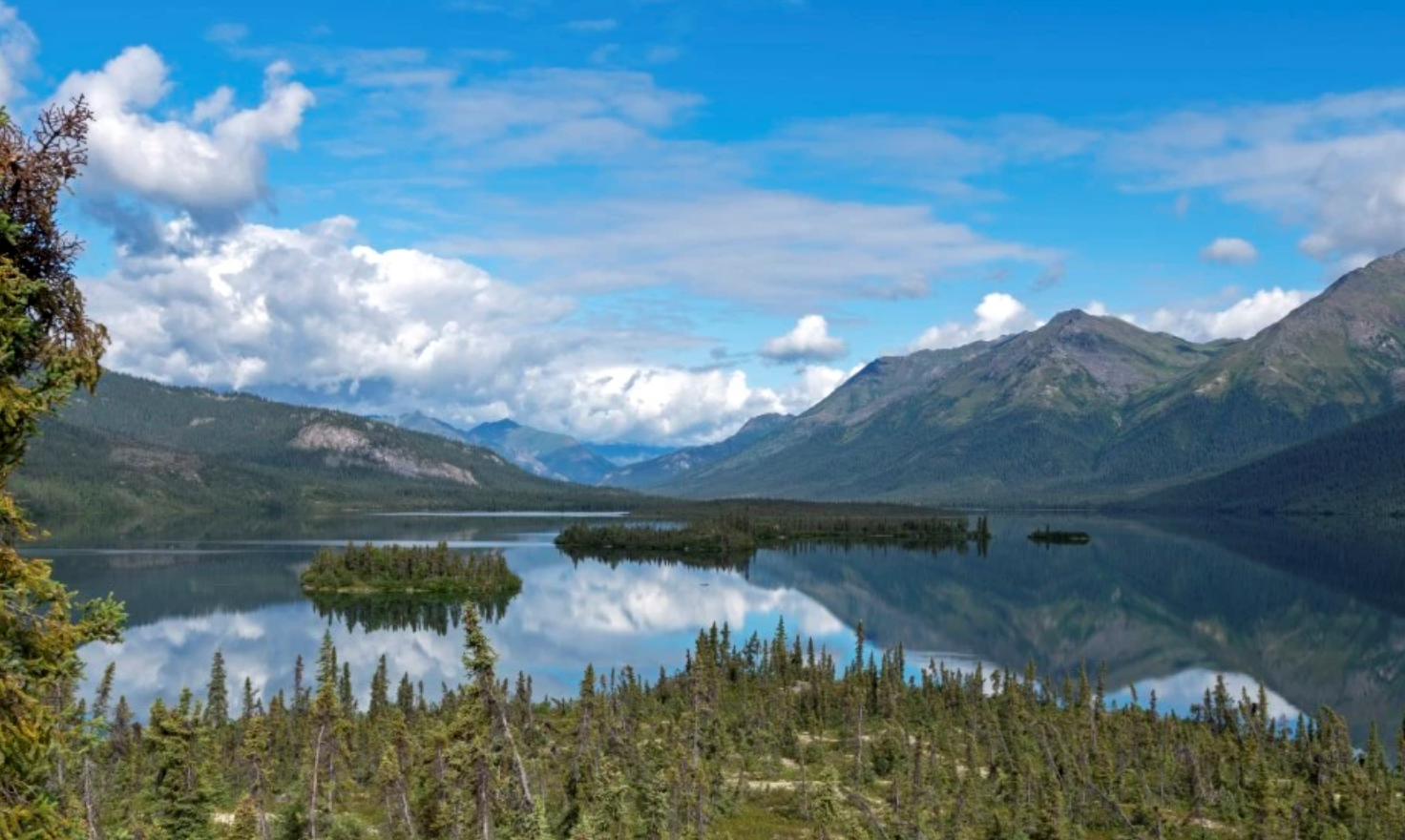
Walker Lake sits at the headwaters of the Kobuk River. The proposed Ambler road project would pass just south of the lake. (R.D. Karpilo Jr., National Park Service)
AIDEA is leading development of the road project and spent the summer doing fieldwork to collect environmental data; construction has not started and litigation over permitting has been ongoing for years.
Its development efforts have support from the administrations GOP Alaska Gov. Mike Dunleavy and President Donald Trump, who mentioned the road at a Tuesday rally in Wasilla. Proponents say the project would bring employment and cash income to an area where full-time jobs are otherwise scarce — and could also lower prices of shipped-in goods like groceries and fuel.
Across the Northwest Arctic Borough, which extends 150 miles west of the Upper Kobuk to the Chukchi Sea coast, residents’ and elected leaders’ opinions about the road and mining projects are mixed and often nuanced — balancing potential economic benefits against risks posed by road construction and possible spills to the region’s longtime culture of subsistence harvests.
There are also strong pockets of grassroots opposition, with multiple local, Indigenous and conservation groups that have fought AIDEA’s plans for the road.
Observers who learned of AIDEA’s assistance contributions to the Upper Kobuk villages in recent weeks said the political implications were obvious.
“I’m sure there’s goodwill that’s intended to be built, but I’m fine with that,” said Craig McConnell, the borough Assembly president. “If the opposing side wants to make a contribution, they can do so and build the same goodwill. My interest is: Let’s help our people.”
While the whole borough is facing steep prices for fuel amid the global crunch, McConnell said the three Upper Kobuk villages are among those that most urgently need support — though he noted a fourth community, Noatak, could use help, too.
Noatak, population 570, is in a different watershed from the Upper Kobuk villages and wouldn’t be directly affected by the proposed road and mine. But its gas price is just as high: It was $24.95 a gallon this week, according to an employee at the store where it’s sold.
The village has not received any assistance from AIDEA, according to Tristan Ashby, Noatak’s tribal administrator. Community members there recently learned the agency had supported the other villages, Ashby said.
The high prices in Noatak, he added, have meant that some people who typically hunt in the fall haven’t been able to go out — or have waited to hunt by snowmachine instead of by boat so that they’ll use a little less gas.
“There are other villages that are in crisis,” Ashby said. “If there’s any assistance, we greatly appreciate that for reducing the cost or assisting those in need.”
Max Graham contributed reporting.
This story was originally published in the Anchorage Press. Subscribe here.