 Olivia Rodrigo wishes this discourse would drop dead.
Nearly three months after the “Stupid Song” singer stepped out with Julian Croonenberghs, a finance associate, she addressed the speculation…
E! Online (US) – Top Stories









Olivia Rodrigo wishes this discourse would drop dead.
Nearly three months after the “Stupid Song” singer stepped out with Julian Croonenberghs, a finance associate, she addressed the speculation…
E! Online (US) – Top Stories

Reading Time: 3 minutes
Joy-Anna Duggar has found herself in hot water.
For someone who didn’t really know how to bathe herself until she was married, many fans would say that she’s done okay as a mom.
But even Joy’s diehard supporters are calling her out for endangering her 3-year-old.
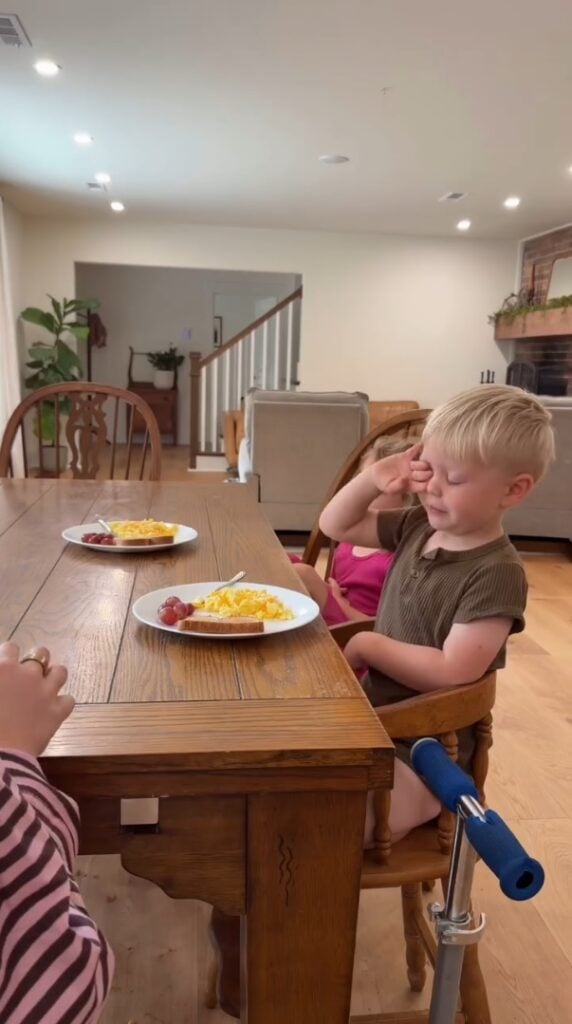
A look at her life showed little Gunner with a pretty infamous choking hazard. What is Joy thinking?
Joy-Anna Duggar, who is pregnant with Baby #4, shared a “morning in my life” video.
This was a supercut showing the less-than-glamorous first couple of hours of her day.
Most of the morning routine was fully anodyne. If anything, it served as a warning to people who romanticize parenthood that their lives will no longer be their own.
But we see Joy making breakfast for her kids. Scrambled eggs, toast, and grapes are pretty normal foods.
If you’re a parent yourself, you may have already spotted where Joy went wrong here.
Eggs, toast, and some sort of fruit are very generic breakfast foods. They’re not for everyone, but they’re usually fine unless there’s an allergy.
But Gunner is only three years old.
As Joy’s fans and critics alike across social media are calling out, grapes are a choking hazard for toddlers and preschoolers.
Children develop more experience eating as they grow, and they also develop larger throats. At 3, though, many children could more easily have a grape go down their windpipe — turning a snack into a health emergency.
Even the CDC advises cutting grapes for little kids to make eating safer for them. (For now; if RFK Jr. gets wind of it, they’ll probably just recommend replacing grapes with smallpox-infected roadkill or something like that.)
Obviously, there are people who will always raise a stink about anything that Joy-Anna Duggar or any of her siblings do.
This isn’t always unreasonable. People who grew up in an abusive cult will often get things wrong, especially when they have not actually left said cult.
But even people who are normally Joy’s fans — people who know, for example, that Gunner has choked before — called her out here.
Critics pointed out that there are other risks, like kids not wearing helmets or being photographed around guns.
Point is: nobody wants to see a toddler choke to death when there are plenty of grape slicers on the market for exactly this situation. (Also for making chicken salad. Seriously, find firm, crisp grapes and slice them and they will transform the meal.)
We would be remiss if we did not acknowledge that it is possible that Jinger Duggar was throwing shade at her sister and podcast co-host.
On her own Instagram page, Jinger shared “mom hacks” — and one happened to be a grape slicer.
It’s possible that she hadn’t seen Joy’s blunder and just happened to post this.
At the same time, maybe she wants to make sure that fans know that she takes precautions with the health and safety of her children.
We hope that Joy’s kids continue to be “lucky” — as much as someone born into the Duggar or Forsyth families could possibly be, anyway.
Joy-Anna Duggar Accused of Endangering 3-Year-Old With ‘Choking Hazard’ was originally published on The Hollywood Gossip.
The Hollywood Gossip
There are many reasons why people might opt out of using deodorants. These entertainment A-listers have been open about their disdain for such products.
Health Digest – Health News, Wellness, Expert Insights
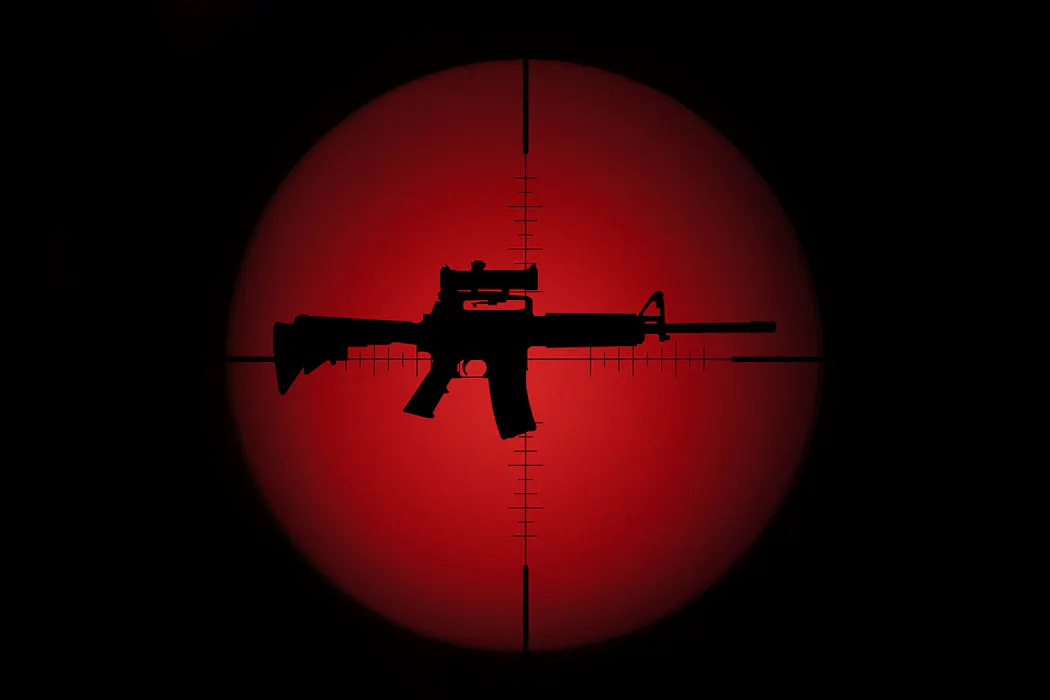
In June 2026, the U.S. Supreme Court agreed to hear appeals of two lower court rulings that challenged assault weapons restrictions. The high court will decide whether the Second and 14th amendments protect the right to possess semi-automatic rifles like the AR-15. This marks a reversal for the court, which for years has declined to consider such challenges.
Two lower court rulings followed the Supreme Court announcement. On July 9, the U.S. Court of Appeals for the 7th Circuit upheld Illinois’ assault weapons ban. And on July 17, the 33rd Circuit struck down New Jersey’s ban on semi-automatic assault weapons, making it the first federal appeals court to so rule.
Some analysts suggested that these decisions had an eye on the Supreme Court’s fall review.
As a gun policy scholar, I believe this flurry of legal activity brings to a head the multi-decade dispute over restricting assault weapons that extends far beyond legal arguments. The source of the conflict ranges from elements of gun culture identity to the technical characteristics of these weapons. Much of this controversy remains misunderstood, including conflicting claims about the weapons’ origins and definition.
Where the court ultimately stands will have to do with its answers to these tough questions. Is an assault weapon a weapon of war or a sporting rifle? Is it a machine gun or simply a tricked-out hunting rifle? Does it really pose a risk to the public compared to other guns?
Assault-style weapons – particularly the AR-15 – date to the late 1950s, when they emerged as a next-generation battlefield weapon.
According to Jim Sullivan, one of the AR-15’s designers, the weapon was “designed for full automatic military use. It wasn’t really designed as a sporting rifle.” The U.S. military adopted the weapon during the Vietnam War and designated it as the M16. The gun could fire in automatic or semi-automatic fashion.
As military demand for the M16 declined, a semi-automatic version, the AR-15, was sold to the domestic civilian market. But consumers took little interest until the late 1980s, when cheap imports began to flood the market.
Then in 1989, an assailant attacked an elementary school in Stockton, California, using an assault rifle to kill five people and wound 29, prompting public outcry and calls to restrict such weapons. Other mass shootings in Killeen, Texas, in 1991 and San Francisco in 1993 followed.

Outrage over these shootings led Congress to pass the 1994 Federal Assault Weapons Ban, a 10-year ban on specific types of assault weapons. But the ban lapsed in 2004 because the law included a sunset provision. Repeated efforts to resurrect it have failed.
Today, 15 states have enacted assault weapons restrictions. Most of these laws ban their manufacture, sale or transfer.
Opponents of these laws note that the weapons available to civilians fire only in semi-automatic mode, making them functionally no different from traditional semi-automatic hunting rifles.
However, even in semi-automatic firing mode, the assault weapon is destructive and usually retains other military features. Battlefield experience has found that semi-automatic firing – a single round for each pull of the trigger – is often more effective, as it improved targeting and wasted less ammunition.
It’s also worth noting that the term “assault weapon” predates 1989 and the era of mass shootings. Gun manufacturers used the term before the 1980s, when the rifle’s military provenance was a major selling point.
Opponents of these restrictions argue that assault weapons have become the nation’s highest-selling guns, with sales increasing after the federal assault weapons ban lapsed in 2004.
Much of this market has been driven by politics. Assault weapons buyers increasingly view such purchases as a way to make a political statement – to register their objection to gun regulations. The gun industry refers to these purchases as “political sales.”

Supporters of assault weapons restrictions propose a different calculus: These weapons represent a small percentage of the total number of guns in the country while accounting for an inordinate number of mass shooting casualties. There are no precise counts of assault weapons, but if a 2022 estimate of 20 million is divided by a total of some 400 million guns in the U.S., assault weapons represent only about 5% of them.
Opponents of assault weapons restrictions are correct in pointing out that such weapons are rarely used in crimes committed with guns. Indeed, nearly 80% of those weapons are handguns.
On the other hand, assault weapons pose three specific safety threats.
First, they are increasingly the gun of choice for mass shooters. Handguns are used in roughly two-thirds of all mass shootings, but assault weapons are appearing with increasing frequency – nearly 40% of these events in the past decade.
Moreover, they result in greater harm. That’s because of their ability to use large-capacity ammunition magazines, which can hold up to 100 rounds. And their muzzle velocity – the speed at which the bullet leaves the barrel – means rounds travel farther and cause more harm.
A 2019 study of public mass shootings found that over 85% of fatalities from those incidents were from assault rifles. And in the past 10 years, the 10 highest-casualty mass shootings were committed with assault weapons.
Second, assault weapons are disproportionately more likely to be used in the shooting of a police officer.
Third, they are increasingly guns of choice for gang-style violence and extremist political groups.
When the Supreme Court takes up the assault weapons cases this fall, it will apply its history standard to determine whether assault weapons restrictions are “consistent with this Nation’s historical tradition of firearm regulation.”
As I mention in my book, if the history of weapons regulation shows anything, it is that weapons deemed dangerous by the public and state and local governments or otherwise incompatible with civilian use have been widely restricted. That includes everything from Bowie knives and certain types of clubs to the notorious Tommy gun of the 1920s.
Despite this extensive regulatory past, experts generally expect that the court will strike down assault weapons restrictions. If so, it will be hard-pressed to justify the result as consistent with America’s extensive history of weapons regulation.

Robert Spitzer is a member of the National Rifle Association and of Brady United Against Gun Violence
Politics + Society – The Conversation
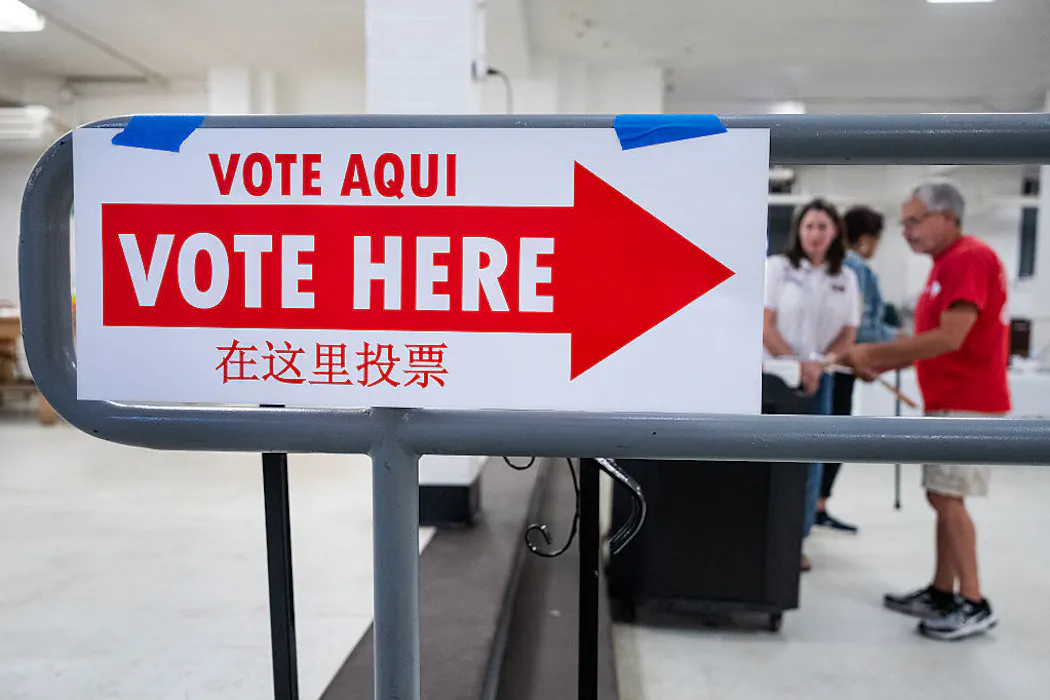
After high-level Trump administration officials said they might send armed officers to the polls during the upcoming midterm elections, and after months of administration efforts to wrest control of some aspects of voting from state officials and limit how people vote, there’s a lot of fear that armed federal officials will disrupt voting and even seize ballots. A number of civil rights and voter advocacy groups and labor unions have filed lawsuits against the Trump administration to bar any such presence, with one suit claiming that “threatening messaging and violent enforcement actions” by administration officials “have created a climate in which voters, especially voters of color, are intimidated and fearful of engaging in the democratic process.”
The Conversation asked scholar Danielle Friedman, legal director of the State Democracy Research Initiative at the University of Wisconsin Law School, to answer four fundamental questions about the law protecting voters’ rights at the polls as well as the protection of their ballots.
Federal law directly prohibits federal troops or armed officers, including federal law enforcement agents, from appearing at polling places during an election.
Other federal laws, which more broadly prohibit any intimidation of, or interference with, voters may also be applied to keep armed officials from appearing at polling places.
Despite these clear restrictions, some federal officials have suggested publicly that they still may deploy armed federal officials to polling places during the upcoming midterm elections.
For that reason, it is important to remember that state laws also likely prohibit armed officials from appearing at polling places. The specific law in each state varies, but all states have some restrictions on behavior at or near polling locations that are intended to ensure that voters can cast a ballot free from intimidation.
Similar to federal law, some states have laws directly prohibiting armed officials at polling places. Others have more broad statutes prohibiting any kind of intimidating behavior.
Many states also prohibit any person from having a firearm at or near a polling location. These laws may apply to armed officials in the same way that they apply to other individuals.
The answer to this question will depend on state law. But in many cases, local police may only be at a polling location if a local election official has specifically requested the presence of law enforcement.
That may happen if, for example, there is an emergency at the polling place and local police are called to help de-escalate the situation. In many states, when the local police are called to assist with a situation, they are required to follow the orders of the local election officials when they arrive.
If a voter sees armed officials at a polling place, they should alert the election officials at the polling place right away. Election officials have specific procedures to follow to report the situation and have it appropriately handled in an efficient manner.
Depending on the nature of the situation, the voter may also want to document the behavior that they see and provide that information to the election official at the appropriate time.

There are many laws that may ultimately apply to the seizure of ballots, but the most critical are the very specific laws in every state about the chain of custody of ballots.
Chain of custody refers to rules that make clear who can have access to ballots both before an election and after each ballot has been cast. The reason for these rules is obvious: Ensuring that only certain individuals have access to the ballots used in an election protects the integrity of that election and ensures that there is no interference from outside actors in the ultimate result.
A seizure of ballots by law enforcement would likely violate these chain of custody laws and could undermine the integrity of the election results that they are intended to protect.
A recent case in California helps to illustrate these issues. A sheriff in Riverside County seized hundreds of thousands of ballots cast in connection with a special election, claiming that there were anomalies in the results that had not been fully explained.
This action by the sheriff was challenged by, among others, voters in Riverside County who argued that it violated the state’s chain of custody rules. The California Supreme Court agreed.
Importantly, the state Supreme Court also noted that this does not mean that there is nothing to be done about allegations or issues related to an election. The law in California, and in all states, provides many options for citizens or officials in those cases – seizure of ballots by law enforcement officials is simply not one of them.
The seizure in Riverside County was in connection with a past election, but the case provides an important road map for courts that may be confronted with these issues in the context of an ongoing election in November. Adherence to the chain of custody laws is even more critical before an official result has been certified, and legal experts have encouraged judges to scrutinize warrant applications for ballots especially closely.

Danielle Friedman does not work for, consult, own shares in or receive funding from any company or organization that would benefit from this article, and has disclosed no relevant affiliations beyond their academic appointment.
Politics + Society – The Conversation
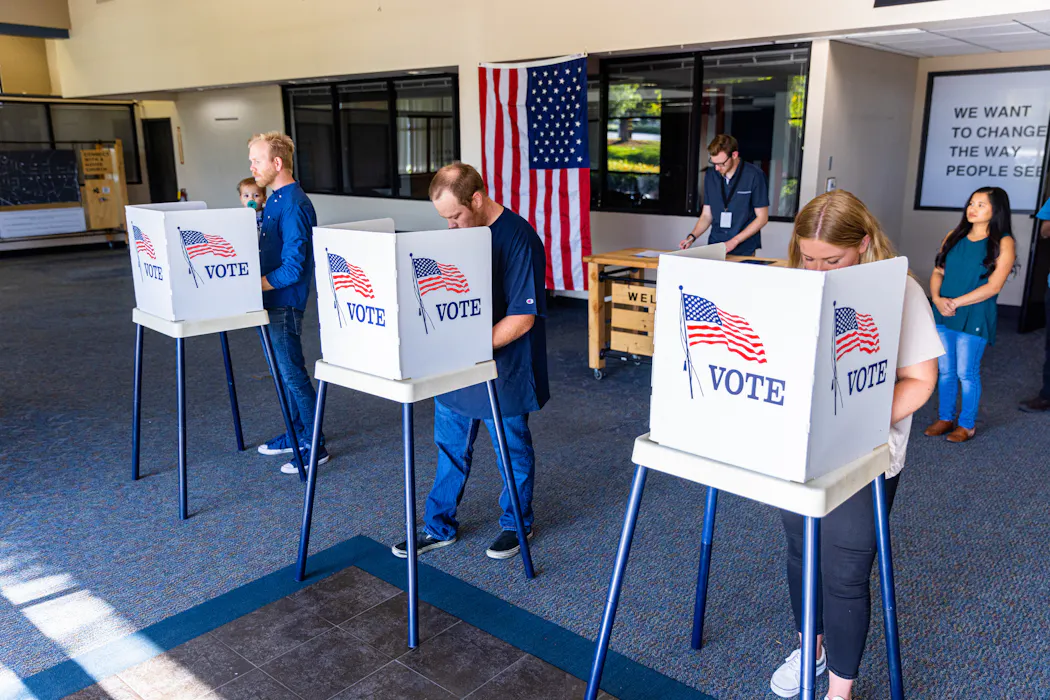
As midterm elections near, Democrats enjoy advantages in national “generic ballot” polling, suggesting they may secure majorities in the House of Representative or Senate, if not both chambers.
But the reality is that partisan control on Capitol Hill will be determined by just a handful of competitive House and Senate contests. The Cook Political Report currently classifies only 22 House campaigns and only seven Senate campaigns as toss-ups, where either the Democrat or the Republican has a genuine chance of winning.
By definition, neither party enjoys a clear advantage in these contests, so both will look to augment their base support with the votes of independents.
As a political science scholar focused on voting and elections, I believe that in the last few weeks before Election Day, those voters will feature prominently in campaign strategies.
Midterm congressional elections serve as a referendum on the president’s performance.
Presidential approval polls and surveys about the economy indicate that independents do not favor President Donald Trump or the Republican Party.
A September 2026 YouGov survey found that only 23% of independents approve of Trump’s job as president, compared with 79% of Republicans and 2% of Democrats. This continues a steady drop in independents’ approval of Trump throughout his second term.
Independents have also soured on Trump’s handling of the economy, with 73% in a September Fox News poll saying that Trump has made the economy worse, a sentiment also expressed by 95% of Democrats and 26% of Republicans.
Independents have also registered their discontent with the war in Iran. Only 22% of independents think the war has been worth fighting, a view expressed by 63% of Republicans and 8% of Democrats. And 83% of independents do not think the Trump administration has a clear plan for ending the war.
Across these policy questions and performance assessments, Democrats and Republicans express clear and consistent support for their party’s positions and candidates. Independents, not surprisingly, stake out something of a middle ground.
But on key predictors of vote choice, especially presidential approval and economic evaluations, the opinions of independents appear to be closer to those of Democrats than to Republicans. Independents’ current pro-Democratic slant is not dramatic, but it could be significant in crucial toss-up contests.
One prominent Republican pollster, David Winston, has sounded an alarm about “unhappy independents” and their threat to continued GOP control of Congress.

In closely fought House and Senate contests, both parties need to make inroads with independent voters, which poses some challenges.
First, independent voters’ turnout in midterms usually lags behind that of party members. So motivating and mobilizing independents will likely require added effort.
It’s worth noting, however, that a recent Emerson College poll showed 70% of independents were very excited about voting in the midterms. That’s on par with the level of enthusiasm expressed by Republicans and Democrats.
A second challenge for candidates is to develop campaign messaging that can connect with independent voters. For almost any candidate running for office, a top priority is to mobilize the party base. This is especially critical in toss-up contests such as the Michigan or Texas Senate races, where the base alone won’t guarantee victory.
But the themes that motivate the party faithful may not sit well with independents, who tend to recoil against partisan rancor.
For instance, Republican voters in Michigan’s 10th Congressional District might applaud Mike Bouchard’s pledge to combat “radical socialism,” but independent voters might find it a bit overdone. By contrast, independent voters do appear to be responsive to the more substantive policy priorities of congressional candidates.
In other words, congressional candidates, especially those in highly competitive races in Texas, Nebraska and Kansas, will need to employ sharply partisan rhetoric to fire up their base while also offering more sober, policy-based appeals to independents.
Striking that balance might be especially difficult for Republican candidates.
Trump clearly wants the midterms to be a referendum on his record, and he wants voters to imagine that he is on the ballot. It’s an effort by the White House to increase turnout among so-called low-propensity Trump voters. These are people who have voted for Trump in presidential elections and continue to support the president, but who often do not vote in midterms.
Putting Trump center stage might well excite this segment of Trump supporters, but it might also remind independents of their deepening reservations about the president.
Democratic congressional candidates will also need to be careful about balancing partisan messages to their base with more measured appeals to independent voters. But Democrats don’t have to share the spotlight with the president, so their balancing acts are not as delicate as those confronting their Republican opponents.
At this point in the campaign, it appears that the Trump administration’s record on issues that matter to Americans is pushing independents – in some cases gently, in some cases more decidedly – in a Democratic direction.

Julio Borquez does not work for, consult, own shares in or receive funding from any company or organization that would benefit from this article, and has disclosed no relevant affiliations beyond their academic appointment.
Politics + Society – The Conversation

Learn how Bob Dunn chose to create a AI Transparency Report for the Open Channels FM Podcast Network.
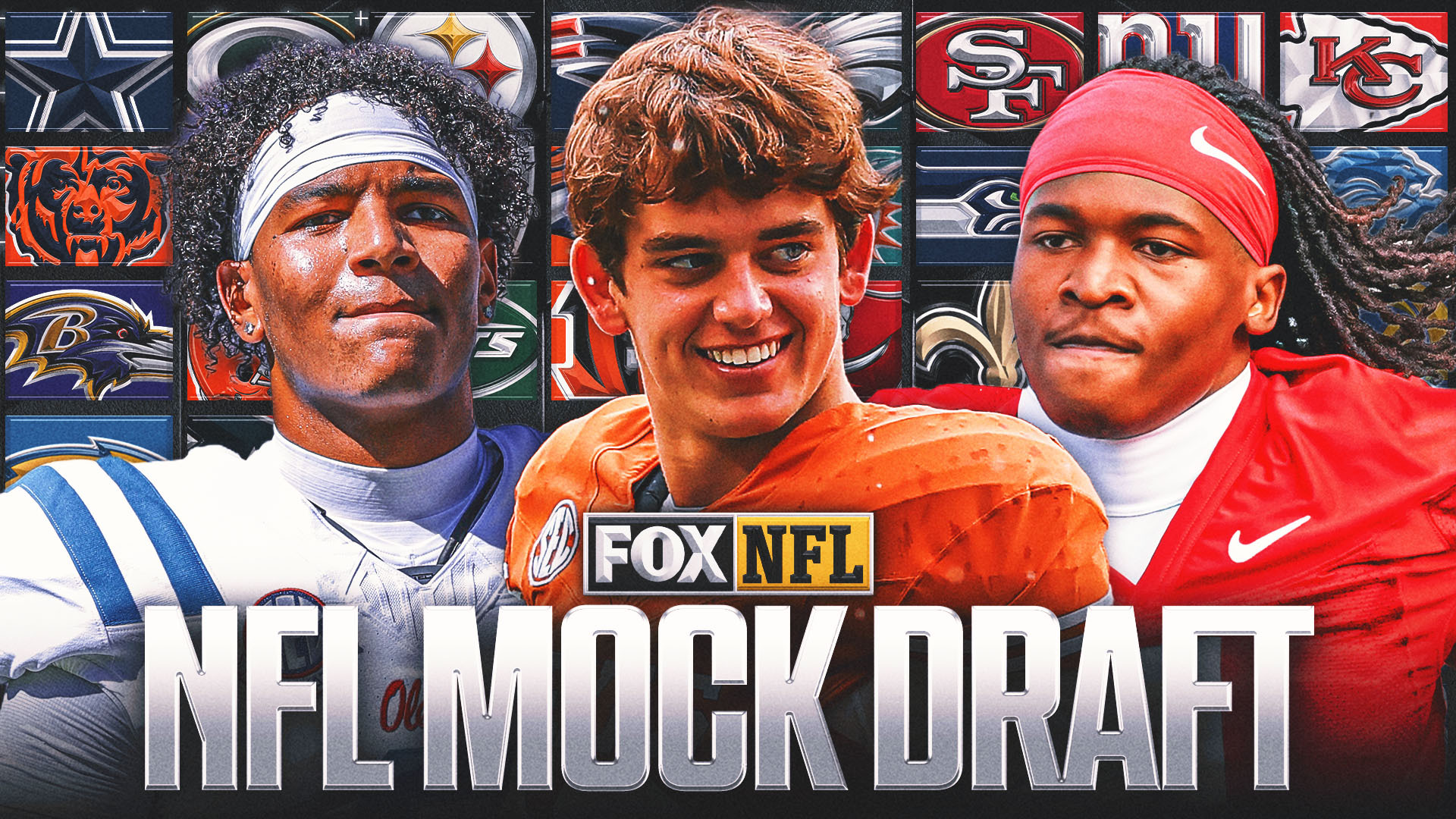
The 2027 NFL Draft is still more than six months away, but offseason priorities are starting to bubble after a full month of the regular season. Granted, there are a few winless teams that never would have expected to be in the position they’re in. Moreover, a quarterback class that looked like it could be an all-timer before the college season has underwhelmed. So a lot can and will change between now and late April. But take this early mock draft as it is intended to be: a guide of today’s top prospects as well as a forecast of the biggest positions of need for each NFL franchise. *Draft order set by current standings We all know that the value of quarterbacks could push one up to No. 1 overall, but I’m old enough to remember that this franchise once shocked the world by selecting Mario Williams over Reggie Bush in 2006. Put simply, Smith is the best prospect in this class. The Texans already have a talented receiver corps on paper, but injuries at the position have held the franchise back for too long. Odds to be drafted 1st overall: +230 I was surprised when Robert Saleh and the Titans opted to take wide receiver Carnell Tate over off-ball linebacker Sonny Styles this past April, but Tennessee can boost a sagging pass rush with an even twitchier edge rusher in Simmons. Odds to be drafted 1st overall: +6500 Even with Baker Mayfield extended on a three-year, $165 million dollar deal, I wouldn’t put it past longtime general manager Jason Licht to draft a quarterback here, should he see one of this year’s candidates as a future franchise signal-caller — especially if Jalon Daniels doesn’t impress in his spot duty while Mayfield recovers from a thumb injury. Nabbing Moore — one of the cleanest cornerback prospects I’ve seen in my nearly 30 years of scouting — would be a helluva consolation prize. Odds to be drafted 1st overall: +8000 Khalil Mack will one day be enshrined in Canton as one of the great pass-rushers of his generation, but young reinforcements are needed. As long as Jim Harbaugh isat the helm, adding talented big men along the line of scrimmage is always going to be the priority. Odds to be drafted 1st overall: +8000 It isn’t fair to blame Malik Willis for the winless Dolphins’ struggles. But with only one touchdown pass over Miami’s first four games, he has hardly proven a difference-maker, either. Manning hasn’t dominated at Texas, but he has the physical traits and intangibles that project to becoming a franchise quarterback. With Willis under contract for two more seasons, the Dolphins could be patient with Manning. Odds to be drafted 1st overall: +420 Geno Smith has proven to be a much better investment for the Jets with an impressive 5:0 touchdown-to-interception ratio over the first quarter of the season. But that has not resulted in wins, outside of a Week 1 victory over the hapless Titans. The Jets need a young quarterback to excite the fan base (and teammates), and Chambliss has the talent, poise and backstory to inspire. Odds to be drafted 1st overall: +950 On the heels of the Saints surrendering five rushing touchdowns to the division rival Falcons, adding a run-stuffer might seem like the smarter move. But in reality, adding true difference-makers to any level of the defense should be the top priority for general manager Mickey Loomis. Pierre’s explosiveness and violent playing style has made him a favorite among many scouts this season, legitimizing top-10 projections. It doesn’t much matter whether it is Jayden Daniels or Marcus Mariota at quarterback if the Commanders don’t add more playmaking to their receiving corps. Becker was overshadowed by Fernando Mendoza during Indiana’s title run a year ago, but he’s a star in his own right, boasting an impressive combination of size, body control and strong hands to project as a future difference-maker. Unless the Cardinals see Carson Beck as their future, it will be hard for general manager Monti Ossenfort to pass up the opportunity to pair a surgical passer such as Dante Moore with Mike LaFleur. Moore might be the most gifted thrower in this class, but he hasn’t always played his best football under the brightest lights and is coming off a scary concussion. Odds to be drafted 1st overall: +2200 The Bengals will have big decisions to make at cornerback after this season with four impending free agents at the position, including standout DJ Turner. Cincinnati has historically been willing to gamble on elite athletes, and Robinson is certainly that, boasting rare agility and ball skills for the position. Currently ranked 25th in the NFL in rushing yards allowed, the Jets need to retool the interior of their defensive line after trading away Quinnen Williams a year ago. It would be fitting to replace him with Echoles — the top defensive tackle of this class — with the selection acquired from the Cowboys. Jets general manager Darren Mougey might be tempted to take the same approach outlined a pick earlier and use this selection on a cornerback to replace Sauce Gardner, but I think Cole could have an even greater impact. He offers a prototypical blend of size, speed and explosiveness. It has been more than 20 years since the Steelers invested a first-round pick on a wide receiver, relying instead on their ability to develop. It’s been a tried-and-true strategy for them. But Coleman would come ready-made. Tall, fast and possessing the ability to make circus catches look easy, he boasts a similar skill set as former Steelers star George Pickens. The Cowboys have historically avoided true off-ball linebackers in the first round, investing in just one (Leighton Vander Esch in 2018) in the past 20 years. But given their talented defensive tackles, adding a linebacker with sideline to sideline range would make sense — especially considering how much the running game is featured in the NFC East. Compelled to release former first-round pick Terrion Arnold following an offseason arrest, the Lions have since struggled in coverage and acknowledged they were in on Joey Porter Jr. trade talks. With Porter now in Dallas, Detroit may have little choice but to wait until next year to patch the position. Hampton has the size and agility to project as a future star in the NFL. Eagles general manager Howie Roseman has shown a willingness to gamble on elite athletes in the past, and with Philadelphia currently struggling in the passing game, adding the 6-foot-7, 242-pound Green would make a lot of sense as a matchup nightmare for opposing defenses. Jake Matthews could very well return in 2027 for his 13th NFL season, but if the Falcons aren’t sure, head coach Kevin Stefanski may push for a similarly built and durable left tackle to keep the Falcons’ resurgent running game humming. Lauck lacks elite arm length but checks every other box. The Broncos face a big decision at offensive tackle at the end of the season with veterans Garett Bolles (34 years old) and Mike McGlinchey (32) on the books for over $50 million. Sean Payton had a history of investing first-round draft picks on blockers in New Orleans, and he may see the opportunity to get younger and cheaper at the position as just too good to pass up. Seaton began his college career at Colorado prior to transferring to LSU. Excitement is growing in Carolina with Bryce Young and Tetairoa McMillan silencing critics with their stellar play this season. Unfortunately, the news hasn’t been as good in the running game, where 2024 second-round pick Jonathan Brooks has yet to pan out. Baugh is a bulldozer with breakaway speed and has emerged as the consensus choice to be the top running back prospect. Drake Maye’s struggles early in the season dominated the headlines, but the Patriots’ run defense has also withered thus far in 2026. New England has surrendered an uncharacteristic four rushing touchdowns in four games. Washington has the girth and strength to improve this with pocket-collapsing potential as a pass-rusher as well. Maybe Deshaun Watson really is resurrecting his career. Maybe one of Shedeur Sanders, Taylen Green or Dillon Gabriel will prove to be the future in Cleveland. But with two first-round picks and a quarterback class as rich as this one still figures to be, general manager Andrew Berry shouldn’t waste the opportunity to fix the Browns’ biggest worry. Mestemaker’s upside could warrant a gamble earlier by another team, but he’ll likely need time before seeing the field. Odds to be drafted 1st overall: +650 A big reason for the Browns’ impressive play this season has been the steady, veteran presence of a retooled offensive line. However, with right guard Teven Jenkins on a one-year deal and center Elgton Jenkins’ contract up a year later, Cleveland might want to boost its front with one of the safest prospects in the draft. The Raiders are one of this year’s most pleasant surprises, with veteran Kirk Cousins (and his NFL-best 11 touchdown passes) leading the way. Cousins’ success is all the more remarkable given the Raiders’ relatively ho-hum receiving corps. Coleman-Williams isn’t big, but he plays with the suddenness and savvy that could make him an excellent fit in Klint Kubiak’s scheme. DeMarcus Lawrence has already stated that he anticipates this being his final season and fellow edge rusher Uchenna Nwosu is in the final year of his deal. The Seahawks were wise to extend Derick Hall prior to the season and are using Nick Emmanwori off the edge, but reinforcements will likely be needed. Though Uiagalelei is sometimes overshadowed by the rest of the talent on Oregon’s roster, he plays with the instincts and physicality Mike Macdonald demands. The Jaguars have a massive free-agent decision looming with Arik Armstead, who remains a difference-maker in his 12th season. Even if the Jaguars bring him back, adding some youth to the rotation would make sense. Scott could be a promising option who happens to reside just a few hours south. I’m old enough to remember Jim Leonhard as an undersized but instinctive and hard-hitting safety at Wisconsin prior to becoming a coach. Now, in his role as the Bills’ defensive coordinator, he might push for a young safety, especially with three veterans (C.J. Gardner-Johnson, Damar Hamlin and Geno Stone) as pending free agents. Cam Skattebo is one of the most punishing and exciting runners in the NFL today, but he plays such a physical brand of football that some question how long he’ll last. With 21 pending free agents, John Harbaugh is going to be making plenty of changes to this roster. I suspect he’ll add to the Giants’ backfield if a proven playmaker such as Lacy were to fall into his lap. I limited myself to five Risers (and five Fallers) in a recent article, with McKinney falling just outside the former list. He excelled a couple of years ago in Boulder playing opposite Travis Hunter, and he’s been even better at Notre Dame alongside Leonard Moore. Long, athletic and confident, McKinney has the look of a quality NFL starter. The Bears could be looking for one given that they have four pending free agents at cornerback, including Tyrique Stevenson. The Ravens have the oldest defensive line in football but could get a lot younger very quickly with Calais Campbell (40), John Jenkins (37) and Broderick Washington (30) all pending free agents. Adding some youth up front could be a priority, and the 6-foot-7, 260-pound Heldt plays with the combination of power and relentlessness that have long personified the Ravens. It is truly a testament to just how disruptive the Vikings’ defense has been this season that the club is undefeated. The offense, in fact, has generated a total of six touchdowns through four games. Maybe Kyler Murray will figure things out with Kevin O’Connell. If not, new general manager Nolan Teasley will be looking to put his own stamp on the team with his first draft, and there could be plenty of quarterbacks to consider. Carr’s stock has improved of late thanks to his poise and downfield precision. Travis Kelce remains one of the NFL’s best tight ends, but he’ll turn 37 this month, so the Chiefs will soon need to identify his successor. Johnson would be an intriguing candidate. Like Kelce, he possesses legitimate size to handle in-line blocking duties. But it is his exceptional hands and suddenness as a downfield target that have scouts particularly excited about his future. Veteran Jake Brendel has proven himself to be a quality center in the NFL, but he’s a pending free agent and 34 years old. While Pieper plays right guard at Iowa, his undersized frame, quickness and smarts have scouts convinced his NFL future is at center. He’s a future decade-long starter who won’t get out of the first round.Latest Sports News from FOX Sports

 Milania Giudice is grateful for family.
The 20-year-old daughter of Teresa Giudice and Joe Giudice expressed her appreciation for her mom over a month after the pair had a tense exchange at an…
E! Online (US) – Top Stories
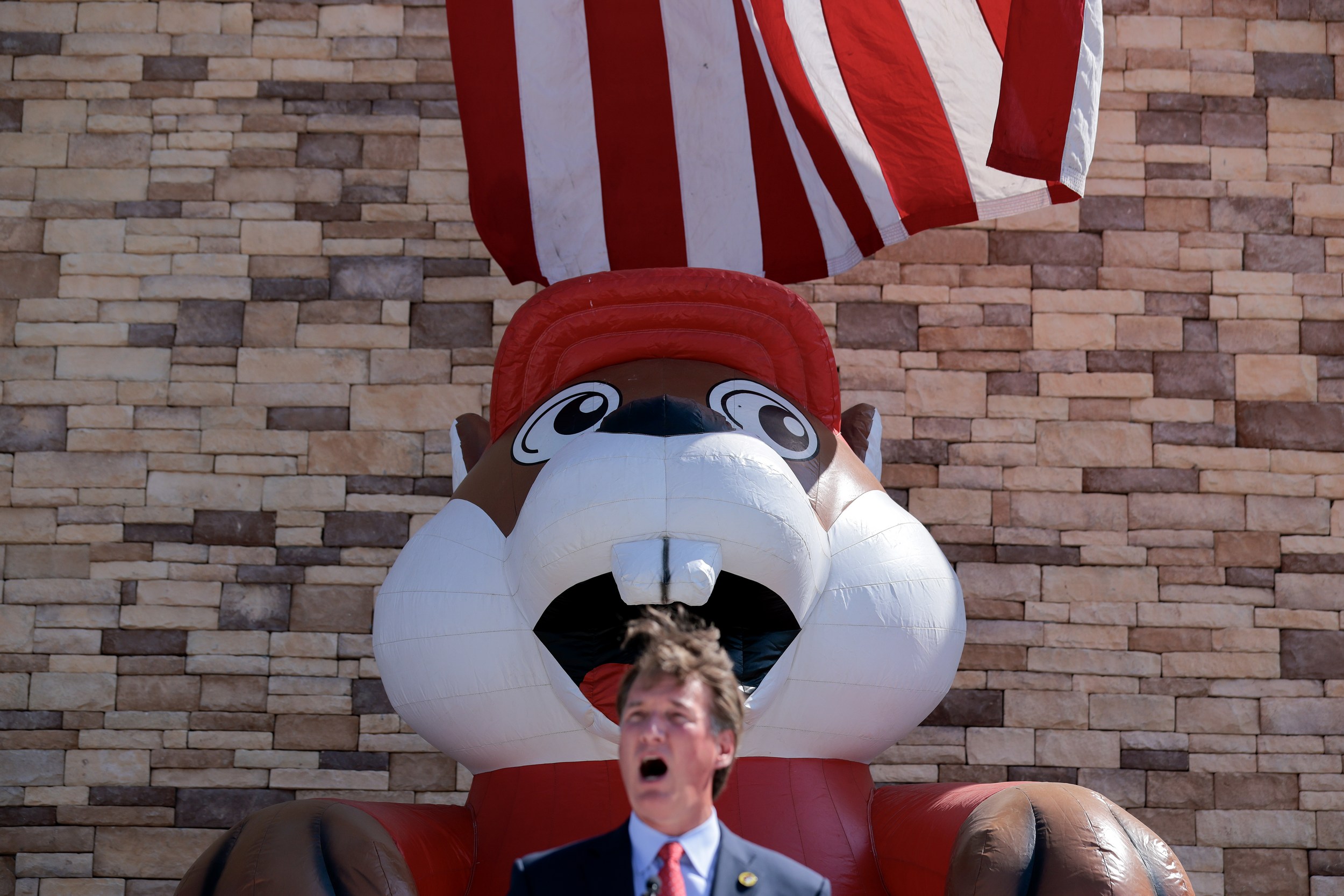
Bucees just dropped two spots in the national satisfaction rankings, and its beaver nuggets apparently aren’t enough to keep customers fully happy anymore. Continue reading…Country Music News – Taste of Country