Even though it’s a popular brand, many grill lovers don’t love the Blackstone. Here are a number of reasons why grilling purists don’t adore Blackstone.

Food Republic – Restaurants, Reviews, Recipes, Cooking Tips









Even though it’s a popular brand, many grill lovers don’t love the Blackstone. Here are a number of reasons why grilling purists don’t adore Blackstone.
Food Republic – Restaurants, Reviews, Recipes, Cooking Tips

 Amazon’s Prime Day deals are your chance to get the best prices of the year on Dyson’s best-selling devices, including 30% off viral stylers—yes, the pink Airwrap (at its lowest price of the year)…
E! Online (US) – Top Stories

 Heidi Klum’s daughter Lou is having a Parisian birthday.
Ahead of her and Seal’s youngest daughter celebrating her 17th birthday Oct. 9, the supermodel stepped out at the Vivienne Westwood show…
E! Online (US) – Top Stories

Reading Time: 4 minutes
Once again, Donald Trump has said something shocking and unbecoming — but not surprising.
At a rally, the tariff enthusiast and pardon purveyor defended his Iran War and the resulting price in gas and most consumer goods.
Taking aim at Los Angeles and San Diego, he baselessly claimed that Iran could annihilate these cities.
He called the hypothetical screaming deaths of millions of Americans a “small price to pay,” in his estimation.
On Monday, October 5, Donald Trump spoke at a Nebraska political rally where he arguably sank to a new low — if that is even possible.
There, America’s Mad King briefly acknowledged that his needless Iran War has caused a global rise in fuel prices.
He characterized this as American drivers having to pay a “little bit” more at the pump. That is only one small part of the price increases, as almost all goods — including food — are transported using fuel.
Trump claimed to the crowd that Iran, whose military he has repeatedly claimed to have destroyed, has the firepower to annihilate an American city.
He did not choose to provide any evidence of this claim, which seems dubious at best.
Trump: “With the war, it’s just artificial. It’s a little bit high. It’s a small price to pay … let them take out Los Angeles, let them take out San Diego. This is a very small price to pay.”
— Aaron Rupar (@atrupar.com) October 5, 2026 at 7:44 PM
Trump’s sick idea of a punchline soon made itself apparent.
He suggested that Iran might destroy California’s two most populous cities.
“Let them take out Los Angeles,” Trump told the crowd. “Let them take out San Diego. That — that’s a very small price to pay.”
Even if such fiery destruction were restricted to city limits, that would result in the deaths of millions of Americans. If the carnage extended to LA County and San Diego County, as would be the case in a nuclear attack, we’d be looking at the screaming deaths over 13 million Americans.
He once again announced that the war is almost over, a claim that he has been making all year. Anyone who believes him, then or now, likely owns NFTs.

Condemnation for Donald Trump’s vile-yet-unsurprising joke about the incineration of millions of Americans did not go unanswered.
Los Angeles Mayor Karen Bass tweeted: “The role of a president is to protect the country, not to actively threaten it and encourage attacks on American lives.”
Meanwhile, San Diego Mayor Todd Gloria tweeted: “San Diego is not collateral damage. We are not expendable.”
Gloria continued: “And we are never a ‘small price to pay.’ Keep our city out of your reckless war talk.”
That’s the general consensus. Whether or not Trump was “joking” really doesn’t matter. His intentions are malicious, and this would be a horrific thing to say even if he were a private citizen — which he is not.

What is Trump thinking? For the past decade, but especially in more recent years, that question sounds a little like when people wonder if their dogs know if it’s their birthday. They don’t.
Similarly, Trump isn’t really thinking in a traditional, coherent sense. Much of what he says seems to be stimulus response, like a baby or a plant — lashing out when angry, fawning when happy.
However, even before his obvious cognitive decline, Trump has always been a person who values people who like him and loathes people who do not. His sole issue with Hollywood and celebrities is that most abhor him.
Now, Trump is suggesting letting a foreign adversary kill millions of Americans simply because most are not his supporters. (There’s also a pretty sizable naval base in San Diego, but at this point, there’s probably nothing that Trump could do or say to alienate military service members more than he already has.)
If you want to be liked, you do good things and are nice to people. Trump appears to be fundamentally incapable of both, and then he lashes out like this when people do not support him.
He chose to be this way long before his dementia. He will continue to get worse.
Donald Trump Talks Letting Iran Nuke American Cities: ‘Let Them Take Out Los … was originally published on The Hollywood Gossip.
The Hollywood Gossip

Reading Time: 2 minutes
Jim Bakker, the controversial televangelist who built a massive Christian television empire with his first wife, Tammy Faye Bakker, has died. He was 86.
Bakker died Monday, his second wife, Lori Bakker, announced.
A cause of death has not been revealed.
Lori described her husband as a “pioneer of Christian television” and said she was honored to have spent so many years alongside him.
For millions of Americans, Jim and Tammy Faye were once among the biggest names in religious television.
The couple launched The PTL Club in the 1970s, with PTL standing for “Praise the Lord.” The program eventually became the centerpiece of an enormous ministry that included the Heritage USA Christian theme park and resort in South Carolina.
At its height, The PTL Club reportedly reached as many as 13 million viewers, while the ministry brought in more than $100 million annually. Jim preached an upbeat message while Tammy Faye became famous for her singing, flamboyant personality, and, of course, her heavy makeup.
Their seemingly unstoppable empire came crashing down in 1987.
Bakker resigned after admitting to a sexual encounter with church secretary Jessica Hahn. The scandal was followed by an investigation into PTL’s finances, and Bakker was eventually indicted on charges of mail fraud, wire fraud, and conspiracy.
In 1989, he was convicted on all 24 counts and initially sentenced to 45 years in federal prison.
The sentence was later reduced, and Bakker ultimately spent about five years behind bars. Prosecutors accused him of defrauding followers through the sale of lifetime vacation packages connected to Heritage USA.
Tammy Faye remained publicly supportive of Jim during his trial, but their marriage ultimately ended. She divorced him in 1992 while he was still incarcerated. Tammy Faye died of cancer in 2007.
Jim was released on parole in 1994 and married Lori in 1998. The couple eventually returned to television with The Jim Bakker Show, which launched in 2003 and was later filmed near Branson, Missouri.
But Bakker’s controversies were far from over.
In 2021, he and his production company agreed to a $156,000 settlement over allegations that he falsely promoted a product called Silver Solution as a treatment for COVID-19.
Despite the scandals that defined much of his later life, Bakker continued preaching and broadcasting until his death.
His legacy is a complicated one: He helped transform Christian television into a powerful entertainment and fundraising machine, only to see his empire collapse spectacularly before rebuilding his career decades later.
Jim Bakker is survived by Lori and his children.
Jim Bakker Cause of Death: Disgraced Televangelist Was 86 was originally published on The Hollywood Gossip.
The Hollywood Gossip

 Taylor Swift and Travis Kelce met up for dinner and a glass of wine.
But instead of Tuesdays, this time the married couple stepped out on a Monday night to ring in Kelce’s birthday, dining at the…
E! Online (US) – Top Stories
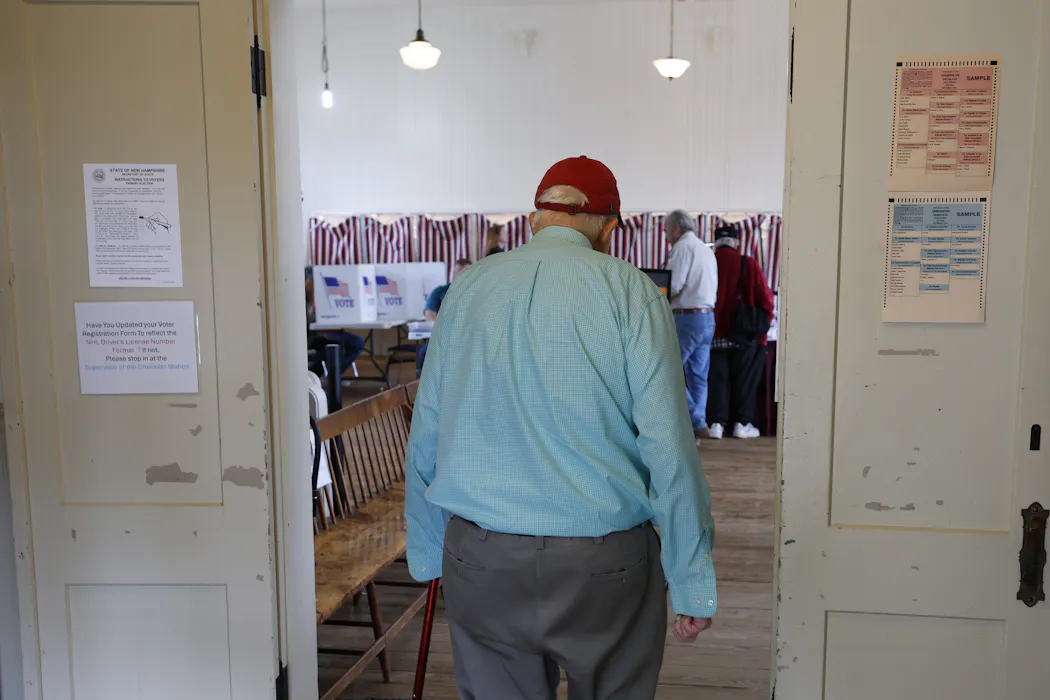
The last 2026 primary elections were held on Sept. 15 in Delaware. Although totals are not yet available, there is evidence that turnout was higher than in most prior election years.
This year’s primaries were also the most competitive in recent history; 13 congressional incumbents were defeated, the largest number since the 1950s other than the years when redistricting forced some incumbents to run against each other.
Primary competition is often a predictor of general election competition. In wave election years, as this year is expected to be, the party that gains seats in Congress often had more competitive primaries, a consequence of the increase in candidates seeking nomination and the enthusiasm of voters. This year, that competition bodes well for Democrats.
The story the 2026 primaries tell about democracy, however, is less rosy. The 2026 primaries were held on 21 dates, from March to September. State turnout levels varied substantially, and in many states it appears that politically moderate voters stayed home. Some states, such as Maine and Michigan, had heated battles in marquee races, while other states, such as Connecticut, had virtually no competition.
From my perspective as a political scientist, each of these facts represents a problem for democracy. If the purpose of primaries is to allow each party’s voters an opportunity to choose candidates, the 2026 primaries – like primaries in most years – did not achieve those goals. In fact, their outcomes represented the views of a small group of people who turn out inconsistently and often do not even represent the views of the parties’ voters, to say nothing of the general public.
My recent book, “The Problem with Primary Voters,” co-authored with Caroline Tolbert and Nathan Micatka, documents these problems. Here they are, and how they undermine democracy.

In the past three midterm elections – 2014, 2018 and 2022 – primary turnout averaged approximately 20% of the voting age population.
Turnout varies according to competition at the state level, state primary rules and state political culture. Western states such as Montana and Washington average slightly over 30% turnout, while Connecticut, New York and Virginia average less than 10%.
Because so few general election races are competitive, a tiny sliver of voters effectively choose most of Congress through their votes in the primary.
If primary voters looked like everyone else, low turnout might not be a problem. But they don’t.
They are much older, somewhat better educated, less racially diverse and wealthier than other eligible voters. Most importantly, the representativeness of primary voters does not increase when primary turnout goes up.
In Massachusetts, for instance, turnout increased by half from 2014 to 2022 – from 14% to 21% of the voting age population. Yet turnout among the very wealthy more than doubled, while turnout among the least wealthy actually decreased, leaving the electorate less representative, by income, in 2022 than it had been in 2014.
We studied data about more than 3 million American voters for our book. We found that fewer than half of primary voters in any given year voted in the primary four years earlier.
This creates a problem of representation, and this lack of consistency, we found, is a particular challenge for U.S. House or state legislative candidates: They cannot know who will actually show up in the primary. And even if they try to represent their party’s voters, the voters who show up are unlikely to be there because of them.
In 2026 this problem was made worse by the mid-decade redistricting prompted by the Supreme Court’s Louisiana v. Callais decision, along with the decisions by governors in Louisiana and Alabama to postpone their states’ primaries. No one has studied voter awareness of primary dates, but surely many eligible voters do not know when their states’ primaries are held, especially in states without a competitive primary for governor or U.S. Senate, or where dates have recently changed.
Low primary turnout can also lead to unexpected results – and these results can create misleading perceptions of the election.
In 2026, for instance, upset victories by Democratic Socialist candidates in New York, with an 11% turnout, and Colorado, with a 34% turnout, led to a spate of news stories about the success of socialists. But these candidates’ victories were the result of small shifts in particular districts, not major changes in the Democratic electorate.
Many reform advocates who are concerned about political extremism have proposed changing primary election laws.
The reforms include adopting a top-two nonpartisan primary, such as those in California and Washington, or a top-four nonpartisan primary with a ranked-choice general election, as is used in Alaska. In each of these cases, a specific number of candidates chosen in a nonpartisan primary go on to the general election.
Others have proposed mandating open primaries, where any voter can request the ballot of either party.
These reforms can have targeted, albeit limited, effects – they can increase competition in lopsidedly partisan districts and give members of the minority party more of a voice.
However, these reforms are unlikely to solve the turnout problem. Increasing turnout by 5 percentage points or so will not necessarily make the electorate more representative or encourage people to vote more consistently.
To increase the participation, representation and consistency of primary voters, I believe it is necessary to consolidate primary dates. One way to do this would be to establish a national primary day. If all states voted on the same day, we expect turnout would increase in part because people would know when to vote, and those who vote based on a sense of duty, as opposed to partisanship, would be more likely to show up.
If this seems too far-fetched, reformers could still push states to consolidate their primaries on fewer days – to create a set of regional primaries.
Some scholars have argued that political parties should exert more control over nominations, and that strong parties may not need the input of voters in order to offer voters clear and responsible choices about public policies.
It is true that most democratic countries do not use primaries at all. Yet there is no chance that America will get rid of primaries any time soon. If we are going to have them, and they are to fulfill their purpose, it is important that they be predictable – that politicians know who the voters will be and that the voters look like the population.
Otherwise voters, nonvoters and politicians risk learning the wrong lessons from the primaries.

Robert Boatright does not work for, consult, own shares in or receive funding from any company or organization that would benefit from this article, and has disclosed no relevant affiliations beyond their academic appointment.
Politics + Society – The Conversation
U.S. Sen. Ed Markey is 80 and has served in Congress for half a century. His Democratic primary challenger in Massachusetts, U.S. Rep. Seth Moulton, is 47 and made generational change a centerpiece of his campaign. Markey won the Sept. 1, 2026, primary anyway by nearly 30 percentage points.
He’s not the only octogenarian to prevail in a competitive primary in 2026. Eleven won their primaries and are on the ballot for the 2026 midterm elections. The oldest primary winner was Sen. Jim Risch of Idaho, an 83-year-old Republican.
It seems to be an issue both major political parties agree on: For many candidates, age is just a number, even when it starts with an 8 or a 9.
My colleagues and I study succession in family-run businesses and other occupations where leadership, identity and longevity can become deeply intertwined. Whether someone is in charge of a company or is a lawmaker, their work does not only keep them busy. It provides status, an identity and a sense of mission. Letting go means giving up more than a job.
When business leaders or politicians linger for too long, it can be costly for their companies or constituents because potential successors may become frustrated by waiting and decide to move on.
When any kind of leader remains in their role for decades, underlying reasons can range from a genuine love for what they do to not knowing what they will do – or who they will be – once they leave. However, waiting too long can mean they’ll have to hand off their responsibilities in crisis mode.
In family businesses, my research team found, the people closest to their leaders – including relatives, employees and longtime supporters – may go quiet rather than press the issue.
This dynamic is not limited to the business world. It also applies to many of the older members of Congress.
A closer look at the large numbers of legislators who continue to serve during their golden years reflects two trends.
First, many are elected for the first time when they’re middle-aged. New House members were about 50 years old and new senators around 55 in 2025.
Second, although the median age of House lawmakers is now about 60, and 66 in the Senate, there’s a small group of long-serving members who remain in office into and past their 80s and keep running for reelection.
Every lawmaker can have a reason to say “not yet.” So can their staff members, who may be loyal to them and their missions and professionally invested in the work they have built together.
Political parties value the electoral advantages of incumbents, while constituents may value the seniority, relationships and influence that come with having spent decades serving in Congress. And incumbents can sincerely believe important work remains unfinished.
However, unusually prolonged service in any position increases the possibility that illness, cognitive decline or death will lead to an unplanned and probably rocky transition.
What’s more, when politicians serve into their late 70s, 80s or beyond, they are breaking with ordinary employment patterns.
The typical American retires in their early 60s, with two-thirds of U.S. workers exiting the labor force before their 65th birthday.

There are examples of long-serving politicians choosing to plan their exit closer to standard retirement age.
One is Barbara Boxer. After more than three decades in Congress, the 74-year-old California Democrat announced in January 2015 that she would not seek reelection to the U.S. Senate the following year. “There is a time when you want the next generation to step in and step up,” she said.
Boxer’s early decision gave prospective successors nearly two years to organize and voters the opportunity to choose among them. Kamala Harris won the seat but stepped away to serve as President Joe Biden’s vice president.
This departure offers a striking contrast with that of Boxer’s longtime colleague, Sen. Dianne Feinstein, who remained in the Senate through a lengthy health-related absence in 2023. Feinstein, also a California Democrat, died in office that September. She was 90 years old.
She served on the influential Senate Judiciary Committee, which considers federal judicial nominations, including Supreme Court nominees. During her nearly three-month absence, the committee was deadlocked on dozens of Biden nominations after Republicans refused to let the Democrats appoint a temporary replacement for her and she refused to step down.
The tragic way Feinstein’s storied political career ended illustrated what can go wrong when lawmakers keep saying “not yet” until it’s too late.
That turned out to be the case with Biden, who reluctantly ended his presidential reelection campaign in July 2024. However, several books published since then include details about how his inner circle initially advised him to run again.
A rushed attempt at succession followed Biden’s abrupt withdrawal from the race. Harris became the Democratic nominee without participating in any of the 2024 primaries.
When change finally came, it arrived under duress rather than by design. And Harris lost the election to Donald Trump.

U.S. Rep. Kay Granger, a Texas Republican, announced in 2023 that she would not seek reelection the following year. It soon became clear that severe health problems were preventing her from serving her constituents.
The former House Appropriations Committee chair didn’t cast a vote in her final six months in office for a good reason: She had dementia and was staying in a Texas assisted-living facility that provided memory care services to some residents. Granger died in August 2026 at 83.
U.S. Sen. Mitch McConnell, a former Senate majority and minority leader, has announced that he will step down when his current term – the Kentucky Republican’s seventh – ends in January 2027. But a fall, hospitalization and subsequent stint in a rehabilitation center in mid-2026 prompted renewed public scrutiny of the 84-year-old’s health and ability to complete his term.
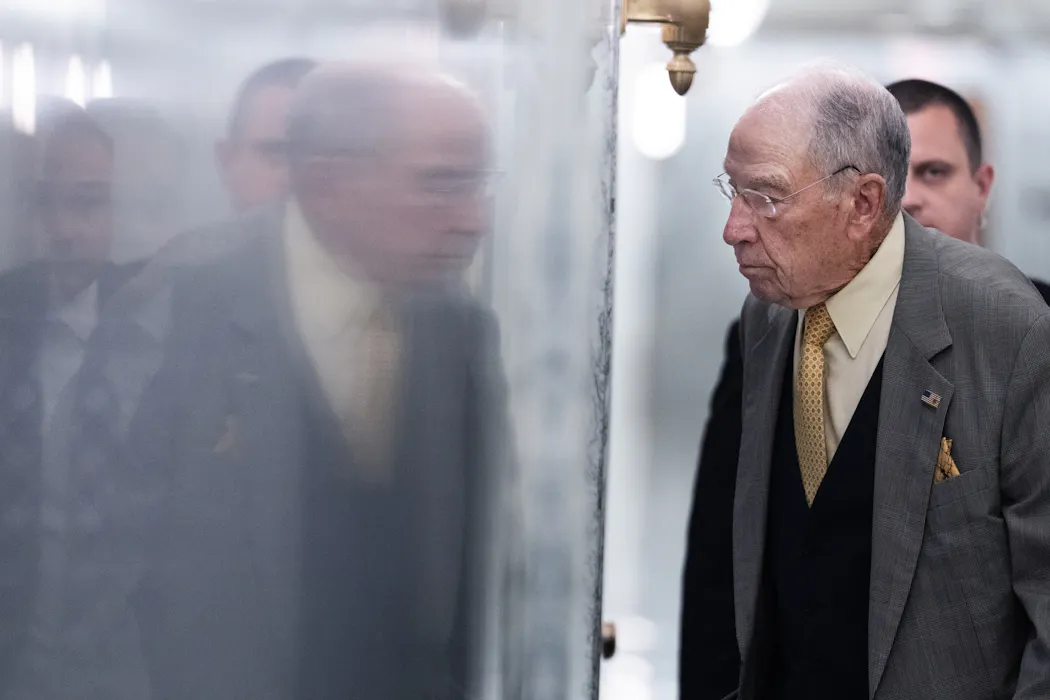
U.S. Sen. Chuck Grassley of Iowa, who turned 93 on Sept. 17, 2026, and appears to be in good health, has not yet said whether he’s running for a ninth six-year term in 2028. But the Republican, who is the oldest person serving in Congress, has urged his constituents to vote for a Republican for governor.
“I don’t plan on dying in office, but if I did, I don’t want a Democratic governor choosing my successor,” Grassley said at a political event in Des Moines in late September 2026.
My colleagues and I found an unlikely way to think differently about leadership transitions: considering lessons about letting go from palliative care.
Leaving political office or another leadership role, of course, is not the same as dying. But, as is true before someone develops a terminal medical condition, advance planning is most useful while people can still articulate what matters to them and exercise meaningful choices about what comes next.
I’ve learned that it’s a mistake to treat succession as something to discuss only when a leader must move on for health or other reasons. So, in addition to my work as a management professor, and to inform my research, as well as the workshops I hold for aging business owners and members of their inner circles, I have been trained as an end-of-life doula. I decided to do this because I lacked the vocabulary and tools that facilitated difficult conversations and decisions about their legacy and what is important to the leader as they let go.
Palliative care supports the act of letting go long before death – the same challenge confronting business leaders and the companies they run.
When voters consider whether to vote for an aging incumbent, they may wonder whether that lawmaker is already too old for their demanding job or soon will be. But that may be the wrong question. It might be better to ask whether the legislators who represent you, no matter their age, have a plan for letting go.

Nancy Forster-Holt does not work for, consult, own shares in or receive funding from any company or organization that would benefit from this article, and has disclosed no relevant affiliations beyond their academic appointment.
Politics + Society – The Conversation

Tanqueray and Bombay are two of the most famous gins in existence. These brands prove there’s more than one way to make a quality bottle of spirit.

Mashed – Fast Food, Celebrity Chefs, Grocery, Reviews

 Abbey Yung is well known on TikTok for creating the Abbey Yung Hair Method, a multi-step hair care process that took the internet by storm.
But the certified trichologist is also known for her…
E! Online (US) – Top Stories