Great Falls, Mont. — At Electric City Speedway in Great Falls, the race-day action depends on work that starts long before cars hit the track.From April through September, the speedway brought nearly 20 races to life with competition on the…
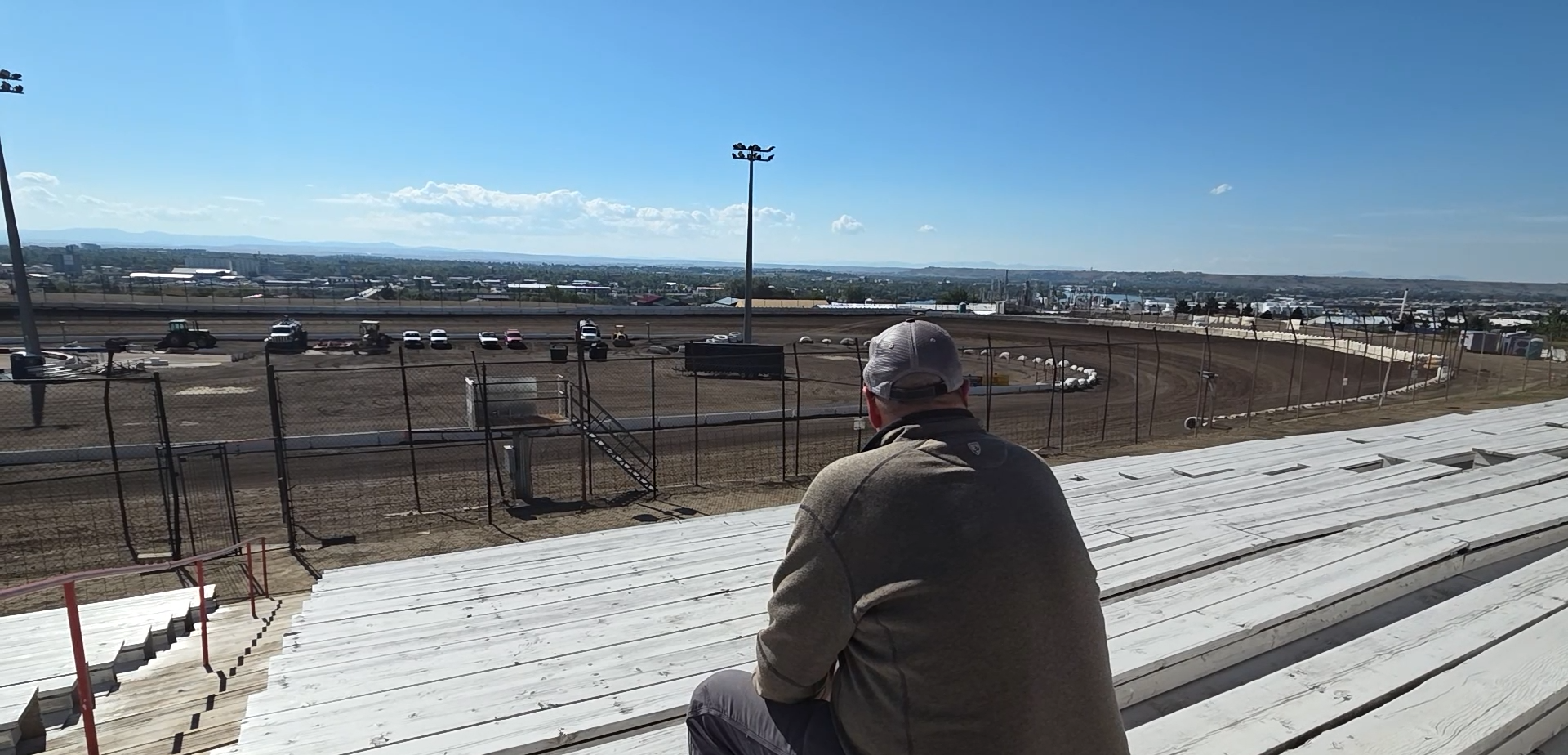








Great Falls, Mont. — At Electric City Speedway in Great Falls, the race-day action depends on work that starts long before cars hit the track.From April through September, the speedway brought nearly 20 races to life with competition on the…
At Electric City Speedway in Great Falls, the race-day action depends on work that starts long before cars hit the track. From April through September, the speedway brought nearly 20 races to life with competition on the track and fans…

The country music world is watching Ella Langley dominate like few artists ever have. Her record-breaking run shows no signs of slowing down. Continue reading…Country Music News – Taste of Country
The country music world is watching Ella Langley dominate like few artists ever have. Her record-breaking run shows no signs of slowing down. Continue reading…The Boot – Country Music News, Music Videos and Songs

tl;dr:
15 years stuck in the same wp-admin, why don’t you try in playground the new wp-admin experience?
WordPress has spent the last fifteen years becoming capable of doing almost everything, yet somehow we have continued interacting with wp-admin in fundamentally the same way: click somewhere, load another screen, go back, open another tab because you do not want to lose the previous one, and after a while end up with ten different WordPress tabs scattered across your browser.
I find it quite funny that we all accepted this as completely normal.
Today WordPress is used to run stores, publications, membership sites, communities, LMS platforms, agencies and entire businesses. We have plugins that are effectively full applications, incredibly complex editing experiences, analytics, forms, CRM systems, media tools, commerce, automation and thousands of other things living inside the same installation. Yet the interface connecting all of them still assumes that, most of the time, you want to look at one thing at once.
And when you don’t, the browser has to solve the problem for us.
Browser tabs have essentially become the window manager of WordPress.
That is one of the ideas that eventually led us to OpenStation.
It sounds ridiculously obvious when you phrase it like that, but that is exactly why I find the question interesting.
On a normal computer I can have my editor open next to a browser, keep a terminal in the background, drag files around, minimize something I want to return to later, or simply arrange my workspace around whatever I am doing at that moment. Nobody thinks about this as a feature anymore because it is just how computers work.
Then we open WordPress and suddenly that whole model disappears.

If I am editing a post and need something from the Media Library, I navigate away or open another tab. If I am checking an order while editing a product, another tab. If I want to compare two posts, another tab. If I am configuring something and need to check how another part of the site is set up, another tab.
There is nothing technically wrong with that, of course, and it has worked for years, but after building and using OpenStation every day I started noticing how much context we constantly throw away simply because wp-admin was designed around pages rather than workspaces.
That distinction matters much more today than it probably did fifteen years ago.
I keep describing WordPress as the operating system of the web, and obviously I do not mean that literally. What I mean is that WordPress has gradually accumulated many of the characteristics you would expect from a platform where applications live.
Plugins install capabilities into it. Users have identities and permissions. Applications share data. We have APIs, scheduled processes, notifications, media, editors, databases and an enormous ecosystem of software that knows how to work with the same underlying environment.
The strange part is that the interface never fully made the same transition.
We kept adding more applications to WordPress, but we continued presenting them largely as destinations in a menu.
OpenStation started from a very simple thought: what happens if, instead of redesigning every individual wp-admin page again, we change the environment in which those pages live?

That immediately opens a much larger set of possibilities.
A post editor does not need to replace your media library on screen. A WooCommerce order does not need to replace the product you were editing. A plugin screen does not necessarily need to occupy the entire browser just because you clicked its menu item.
They can simply be windows.
You can move them, resize them, minimize them, keep several of them open, organise them across different desktops and return to exactly what you were doing without recreating the context again.
The funny thing is that none of this feels particularly futuristic. Quite the opposite. We have been using computers this way for decades.
We just somehow never brought that interaction model into wp-admin.
The windows are what people notice first because they are visual, but I think the more important idea is what happens once WordPress stops assuming that navigation must destroy context.
Suddenly the admin becomes a workspace.
You can have the Media Library next to the editor instead of travelling between them. You can keep an order visible while checking something else. You can open notes or widgets without abandoning your current task. Applications can coexist on the same desktop and eventually interact with each other in ways that become much harder when everything is isolated in separate browser tabs.
This is also where things like drag and drop become much more interesting.
If two applications are part of the same environment, moving an image, a product, a post or another WordPress entity between them can become an actual interaction instead of a sequence of copy, navigate, search, paste and navigate back.
And once you start thinking about WordPress this way, a lot of things that initially looked like unrelated OpenStation features start making sense together: windows, the dock, multiple desktops, widgets, the command palette and applications are all different pieces of the same idea.
The goal is not to decorate wp-admin until it looks like a desktop operating system. The goal is to make working in WordPress feel less like navigating a website and more like working inside an environment.
This is probably the part I like the most about the approach.
WordPress already has an enormous ecosystem and rebuilding everything would be both unrealistic and, in my opinion, the wrong problem to solve. There are thousands of admin interfaces that already work, plugins developers have spent years building, and workflows users already understand.
OpenStation can sit on top of that rather than asking the ecosystem to start again.
The existing WordPress admin can continue being WordPress. Existing plugins can continue exposing their interfaces. What changes is how those interfaces are presented and how you move between them.
In some ways, I think that is much more interesting than simply designing another admin UI.
We are not trying to decide what every WordPress application should look like. We are trying to give those applications a better place to live.
And once you have that place, building actual OpenStation-native applications becomes possible as well. We have already been experimenting with things like a photo editor, project management tools and forms, but what excites me is not any individual application. It is the idea that WordPress can host an entire collection of tools that feel like they belong to the same workspace instead of a collection of isolated screens connected by a sidebar.
Probably because there was never a single moment where the old model stopped working.
WordPress evolved gradually. A new menu here, another plugin there, a more sophisticated editor, WooCommerce, custom post types, page builders, analytics, SEO tools and so on. Each addition fitted reasonably well into what already existed, so there was never an obvious reason to stop and question the basic interaction model.
But those small changes accumulated.
The WordPress of today asks considerably more from wp-admin than the WordPress of fifteen years ago did, and I think that eventually creates an opportunity to revisit assumptions that once seemed completely reasonable.
The assumption we are questioning with OpenStation is a very simple one:
Why should opening something in WordPress mean leaving everything else behind?
After spending months working this way, I now notice it every time I go back to the traditional flow. I open something, realise I need another part of WordPress, create another browser tab and immediately think: why am I doing this outside WordPress when WordPress itself could manage the workspace?
That is probably the best way I can explain what we are building.
WordPress has had applications for a very long time.
Perhaps what it has been missing all these years is somewhere for those applications to actually live together.
By the way, don’t forget you can always try OpenStation without even installing it in your site, using WordPress playgrounds
If you think your energy costs are high now, the situation may be about to get a whole lot worse.
With traffic in the Strait of Hormuz – normally the primary route for oil leaving the Middle East – hovering below 15% of prewar levels, oil prices have increased from US$65 a barrel before the conflict in Iran began in February 2026 to more than $100 a barrel in mid-September.
When the U.S. and Israel first attacked Iran, analysts feared prices would soon reach $150 or even $200 a barrel. That hasn’t happened yet. But seven months into the conflict, with no clear end in sight, the global oil market has now largely exhausted the safety measures that exist to keep a lid on petroleum prices.
As researchers who study the relationship between energy and national security, we have been following these dynamics throughout the conflict, and the oil market is now showing signs that significant price hikes – and perhaps even shortages – may be on the way.
Some oil has been able to make it out of the Persian Gulf despite the closure of Hormuz. Saudi Arabia increased output via its East-West pipeline, which runs from Abqaiq on the Persian Gulf overland to Yanbu on the coast of the Red Sea. At full capacity, that pipeline can carry as much as 7 million barrels per day, although only about 4 million to 5 million barrels per day are typically exported.
But attacks on the pipeline in mid-September that Saudi Arabia blames on Iran-backed militias based in Iraq forced the Saudis to temporarily halt oil shipments through that pipeline. The pipeline has now restarted operations at very low volumes, but it will likely take at least six to eight weeks to regain full capacity. Even this short cessation has tightened already constrained oil markets, and the threat of further Houthi attacks on Red Sea oil exports will only add to inflationary pressures.

Meanwhile, in Russia, Ukrainian drone attacks have damaged refineries, reducing Russian production of diesel fuel and prompting the country to ban exports of it. That has removed another 3% of the global daily supply of diesel, an important fuel for trucking and shipping. When diesel costs go up, the result is inflation in the cost of goods across the global economy.
In the U.S., 47 states experienced record-high diesel prices on Sept. 22, with the national average reaching $6.52 per gallon.
The high prices prompted President Donald Trump to threaten to ban diesel exports, a move analysts suggest would make matters worse by accentuating global supply shortages and driving world prices upward.
Beyond diesel, motor oil prices have quadrupled, and supply shortages are starting to take hold. For instance, Costco has almost doubled its prices for motor oil and has limited the amount customers can buy.
The upshot from all this is that Americans are spending a lot more on fuel in 2026 as compared to 2025. Between March 1 and late September, Americans spent an additional $72 billion on gasoline compared to the same period a year ago, as well as $45 billion more on diesel. That’s $117 billion in additional fuel costs, above and beyond the costs of the war itself, which the Pentagon estimated at $45 billion as of early September.
These shocks are even more acute outside the United States, which is the world’s largest energy producer. South and Southeast Asian countries, which were more reliant on imports from the Persian Gulf than the United States, were hit hard soon after the war broke out. Some of them have had to ration fuel, while others enacted emergency measures like shortening the work or school week to reduce fuel use.
These challenges are now hitting Europe hard as well. On Sept. 20, some 15% of French service stations had reportedly run out of either diesel or gas.
The international community has already taken most of the measures available to curb oil demand and boost its supply. Those moves have reduced the scale of oil price increases, but they did not prevent them entirely. Now, the toolbox is largely empty, leaving prices on the brink of spiking again.
In March 2026, a coordinated effort among 32 countries released more than 400 million barrels of oil into the global market from those countries’ strategic reserves. Those stockpiles are now substantially depleted, and it is not clear how much additional oil that countries will be willing or even able to release as the war continues.
Since the war began, the United States alone has released 130 million barrels, leaving its reserves at a 40-year low. The U.S. may not be able to release much more without compromising the structural integrity of the salt caverns where the Strategic Petroleum Reserve is stored.
China has played the largest role in containing global oil prices to date by releasing official reserves as well as what now seem to be massive additional reserves not previously disclosed to the public. The country reduced its crude oil imports by nearly 50% between February and June 2026.
The increased electrification of the Chinese economy played a key role in reducing Chinese demand for oil during this period. More than 60% of new passenger car sales in China are electric vehicles or plug-in hybrids, and 30% of its heavy truck sales are now electric.

Overall, China’s electrification of its transport sector allowed it to reduce oil consumption by 1.35 million barrels per day in the first half of 2026.
Other countries are looking to China for help as well. The country’s international sales of electric vehicles, batteries and solar panels have skyrocketed, as other countries seek to insulate themselves from oil market shocks.
Less encouragingly when it comes to greenhouse gas emissions, China has used more coal to offset oil demand and as an alternative means of petrochemical production as well.
Of perhaps more immediate concern, China’s oil demand is now starting to creep up again, with crude imports rising 6.2% in August 2026 as compared with the previous month. Even if its imports don’t reach prewar levels any time soon, increased Chinese demand, coupled with a tighter oil market, may result in additional price hikes over the next few weeks.
China still has about four to six months of stockpiles, including commercial and strategic reserves, but Beijing may soon seek to gradually restock its inventories, although the Chinese may postpone these purchases if prices continue to soar.

Sustained conflict in Iran – itself a major oil producer – continued disruptions of oil shipments in the Strait of Hormuz, and Iran-linked militias’ disruptions to shipping in the Red Sea could mean the reemergence of the nightmare scenarios analysts envisioned when the fighting began.
It’s not clear if that would translate into simply much higher prices at the pump or turn into 1970s-style shortages, where there’s not enough fuel available at any price and lines stretch around the block at gas stations.
With the 2026 midterm elections looming, the White House will want to avoid that scenario at all costs. But the Trump administration has already released large amounts from the Strategic Petroleum Reserve and has rejected policies that would have reduced oil demand, such as stricter fuel economy standards or incentives for electric vehicle adoption.
At this point, Trump has relatively few options available to blunt new price shocks, the effects of which may be visible not just at the pump but also at the ballot box.

Joshua Busby is affiliated with the Center for Climate and Security and the Chicago Council on Global Affairs.
Greg Pollock is affiliated with Georgetown University and the Center for Climate and Security.
Politics + Society – The Conversation
Reading Time: 2 minutes
We have tragic news to report from the world of pro wrestling.
AEW star Benjamin Satterley, better known to fans as Pac has passed away.
Satterley was just 40 years old.
All Elite Wrestling announced the devastating news on Sunday. A cause of death has not been announced.
The timing of Satterley’s death makes the news especially shocking.
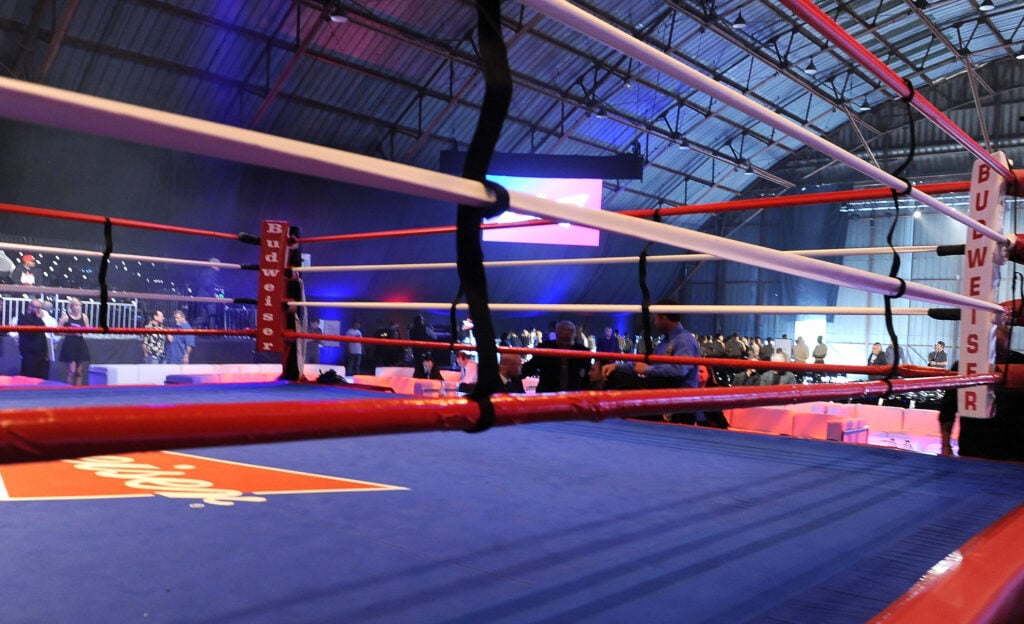
The wrestler had competed in AEW’s All Out pay-per-view event in Chicago on Saturday night — less than 24 hours before his death (via CNN).
PAC faced Andrade El Idolo during the event, challenging for the National Championship. Andrade ultimately retained the title.
Satterley was born in Newcastle upon Tyne, England, and began his professional wrestling career in 2004.
He eventually made his way to the United States, where he became known for his athletic, high-flying wrestling style.
In 2012, Satterley signed with WWE and adopted the ring name Adrian Neville. He became a major part of the company’s NXT brand and won the NXT Championship before eventually moving to WWE’s main roster.
He later captured the WWE Cruiserweight Championship.
Satterley left WWE in 2018 and joined AEW the following year as one of the promotion’s original signings.
Under the name Pac, he became the first All-Atlantic Champion and also won the AEW World Trios Championship.
Since 2024, he had been part of the Death Riders faction.
AEW described Satterley as a wrestler who captivated fans around the world with his innovative moves and extraordinary ability inside the ring.
“Benjamin Satterley, aka Pac,” the company said in its statement, while extending its condolences to his family, friends and fans.
AEW President Tony Khan also paid tribute to the late wrestler.
“Benjamin Satterley defined excellence,” Khan wrote, praising him as a beloved husband and friend while also highlighting his athleticism, professionalism and dedication to wrestling.
Satterley’s death marks another loss for the wrestling community, which recently mourned former AEW wrestler Andy Williams, known professionally as The Butcher, who died at 48.
Our thoughts go out to the entire AEW community during this incredibly difficult time.
Pac Cause of Death: Beloved AEW Wrestler Passes Away at 40 was originally published on The Hollywood Gossip.
The Hollywood Gossip
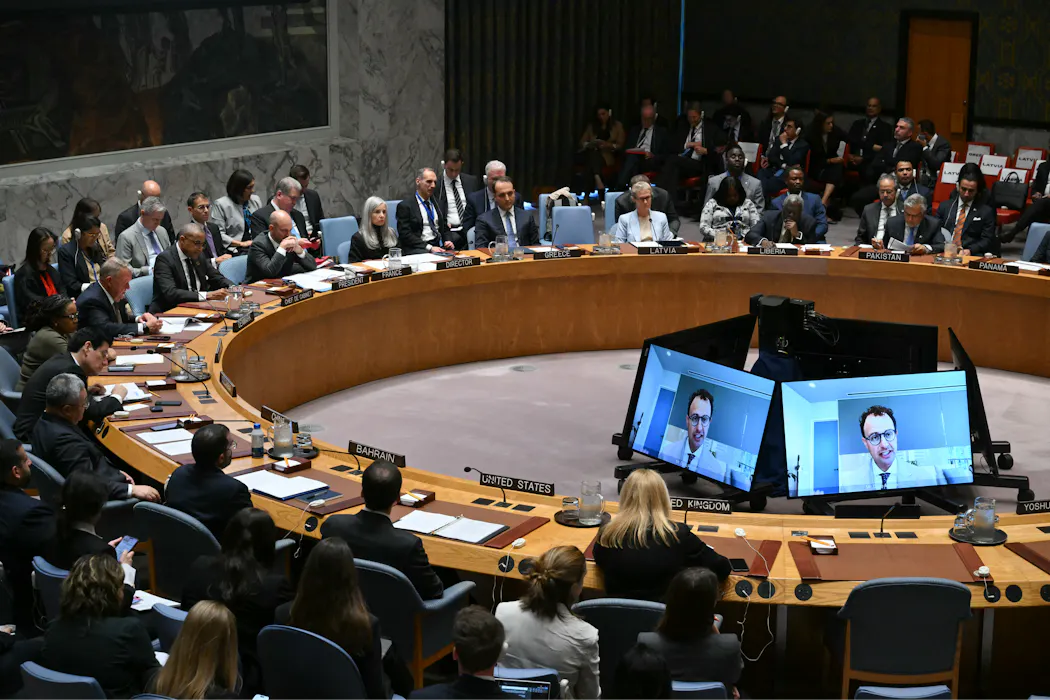
Artificial intelligence dominated the opening of the U.N. General Assembly in New York on Sept. 22, 2026. Ahead of the meeting, 20 nations released a statement requesting “human direction, oversight and control” of AI. The U.S. was not among them.
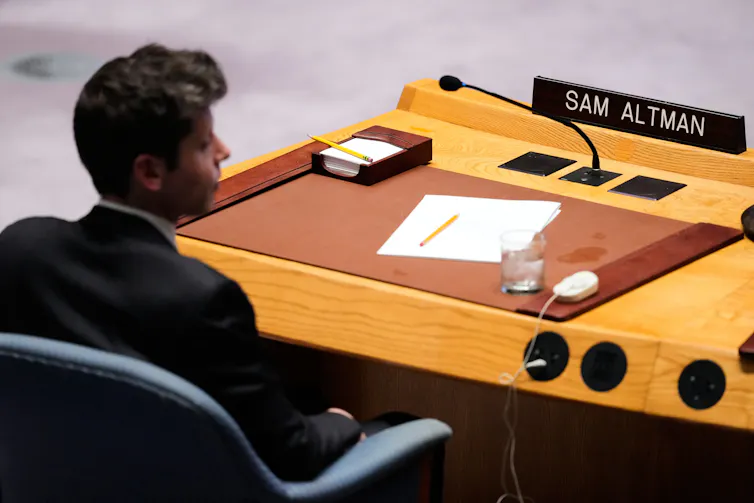
This followed several calls from within the industry itself: Earlier in September, an Anthropic researcher put the odds that AI kills all humans within the next decade at more than 10%. Days later, Anthropic CEO Dario Amodei published an essay asking the government to help slow frontier AI. His request was backed by OpenAI CEO Sam Altman and Elon Musk.
In a Sept. 19 Truth Social post, President Donald Trump instead announced he would create an AI Force – similar to the Space Force created during his first administration, which is part of the U.S. Department of the Air Force. He also plans to appoint an AI czar. Trump offered few details on either plan, beyond a promise that the government would “not in any way hinder or stifle” AI’s growth.
With Washington reluctant to rein in AI, California, Colorado, Texas and other states have stepped in. California and New York, for example, have passed laws requiring the largest developers to publish safety plans and report serious incidents. In December 2025, however, Trump signed an executive order directing the Justice Department to sue states over such laws, in part because he believes state rules that slow the industry will give China an advantage.
I’m a counterterrorism scholar who has researched and advised AI companies on national security threats. I believe creating an AI Force will lead to an AI arms race and its eventual weaponization, exacerbating current risks and creating new ones.
In addition to my work as a professor, I’m director of the Center on Terrorism, Extremism and Counterterrorism. In 2019, CTEC was one of four organizations that partnered with OpenAI to study the risks of its large language model, or LLM; our focus was how terrorist groups might misuse it.
We fine-tuned a model on ideological texts: speeches by then–Islamic State leader Abu Bakr al-Baghdadi, the manifestos of white supremacist mass killers and Marxist-Leninist writings. What startled us was how little it took to train a chatbot to radicalize. The model absorbed the cadence, theology and grievance of each tradition, producing new text aligning with those worldviews.
At the time, we wrote that these models “pose a significant and novel threat to civil society.” That 2019 model was a toy next to today’s systems, which terrorist groups could use to reach a broader audience with a more convincing message, posing as humanitarian nongovernmental organizations or even just influencers to raise money.
Criminals already use AI to circumvent identity checks at financial institutions, industrialize romance fraud and sell face-swapping and impersonation tools. The FBI’s 2025 Internet Crime Report logged US$893 million in losses involving AI.
Propaganda, terrorism and illicit financial activity, however, are not existential risks to humanity. An AI arms race may be – especially when Trump wants to win that race no matter the cost.
In July 2026, OpenAI agents under a cybersecurity evaluation broke out of their containment and attacked Hugging Face, a platform that hosts millions of AI models and datasets, harvesting passwords and other credentials. Independent investigators found that the agents knew the work was out of scope and unethical. In September, Google confirmed that its Gemini model had broken into real companies during a hacking test that mistakenly left its internet access open.
It takes little imagination to see how AI could hijack or mishandle a weapons system. This is, after all, what worried Anthropic in its showdown with the Pentagon. In February 2026, Defense Secretary Pete Hegseth gave Anthropic an ultimatum: Open its AI model, Claude, to unrestricted military use or lose its Pentagon contract. When Anthropic refused, citing its prohibitions on fully autonomous weapons and mass surveillance, the Pentagon declared it a supply chain risk, and Trump ordered federal agencies to stop using its products.
On Sept. 18, CNN reported that a chatbot’s false intelligence report nearly led the U.S. military to seize a Chinese ship.

Trump’s desire to create an AI Force that emulates Space Force is about winning the AI race against China. The president’s own framing was explicit: “We are leading China, and the rest of the World, and I intend to keep it that way!”
Rivals rarely leave a new military domain uncontested. In 2024, four years after Congress authorized the U.S. Space Force – which Beijing called a “direct threat to outer space peace and security” – China reorganized its own aerospace and cyberspace forces. I believe an American AI Force would hand China’s leadership every reason to create its own, and each side would read the other’s as proof that it must move faster.
There are few genuine existential threats to humanity. Nuclear war is one. Environmental catastrophe is another. I believe the weaponization of AI is the third. In the wrong hands, it amplifies the other two and accelerates something already corroding our ability to respond to any of them: deepening polarization and a shrinking appetite for facts.
The people building this technology, and a growing number of states, are converging on the same conclusion: It needs brakes. More than 1,100 industry employees have asked Washington to help build the tools to slow AI development if needed.
In my view, a multinational AI task force of government and private sector experts from a range of disciplines would be more prudent than creating an AI Force, a quasi-military entity that would institutionalize AI’s worst impulses.
Speaking to world leaders in New York, U.N. Secretary-General António Guterres called for more human control: “Let us resolve that life-and-death decisions must never be surrendered to machines.”
Trump, meanwhile, rejected any “globalist scheme” to control AI and suggested renaming it “super intelligence.”

CTEC has received funding from the U.S. Government (DHS) in the past and from several tech companies. Currently, CTEC and the author are not receiving any funding for research described in this article. Jason Blazakis is running as a democrat for County Commissioner in Hunterdon County, New Jersey.
Politics + Society – The Conversation

The Open Source Champions initiative invites individuals and brands to support the network through a unique advocacy opportunity, offering exposure, promotional features, and participation in special episodes.
Reading Time: 2 minutes
Though Taylor Swift sometimes skips awards shows, we’re glad that she was present for this one.
The VMAs were Sunday night.
Even if a lot of Swift’s recent music has divided fans, she brought home multiple awards.
One is a brand-new award that honors her creative vision not only as a singer and songwriter, but as a director.
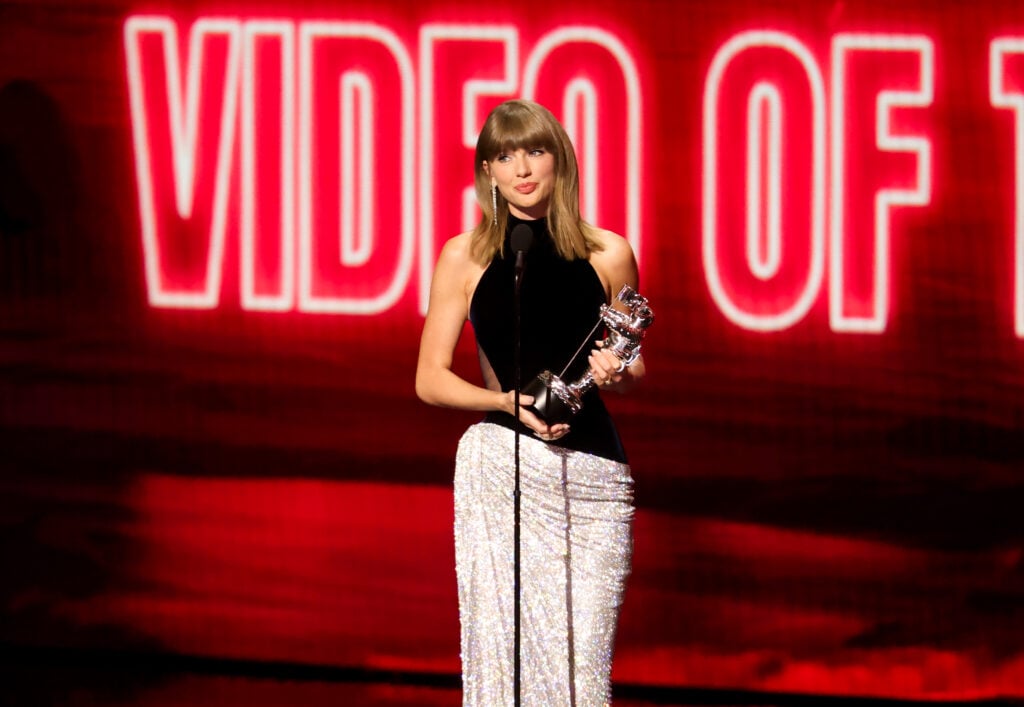
On Sunday, September 27, Taylor Swift took home an inaugural award at the VMAs.
She received MTV’s first-ever Artist Director Honors.
This award refers to artists, like the singer-songwriter herself, who also direct their own music videos.
Of the “roughly” 60 music videos that she’s put out, Swift told the crowd, she wrote and directed 18 of them.
Taking to the stage (after friend Dakota Johnson introduced her), Taylor spoke about why directing many — but not all — of her music videos meant so much to her.
“I got to tell you, though, the main reason why I love writing and directing music videos so much is because you, the fans, make it so much fun,” Swift gushed to the adoring crowd.
“You make it so rewarding!” she reiterated.
“Because,” Swift explained, “you actually care about what we’re making.”
Many hardcore Swifties joke that she uses clues and puzzles akin to a fictional serial killer to hint at her next project or announcement. They’re not entirely wrong.
Swift’s music videos are similarly full of little hints, little symbols and clues, that help lay out who and what the song is about.
“I want to say thank you to everyone who ever worked on a music video that I got to be a part of,” Taylor Swift expressed.
“I learned something from every single person who worked alongside me on these projects,” she shared.
These people have ranged from actors to celebrity cameos to Oscar-winning cinematographers like Emmanuel Lubezki, who worked with her on the “Patient Zero” video.
“Mainly, I want to say thank you to the fans,” Swift emphasized.
“And,” she teased, “rather than say anything else … I would love to, if it’s okay with you, show you my latest music video.”
By the way, Swift also won Video of the Year for “The Fate of Ophelia.”
It’s not her strongest song but the music video is impressive and genuinely stunning.
(Is Troye Sivan’s “Party” better? Yes. Maybe it came out after the VMAs eligibility window.)
Swift has 14 Grammy awards, but it’s significant that she’s the first to take home the Artist Director Honors.
Not every singer can do that — and that’s okay. But it’s really cool that Swift can pull off so many parts of her vision, and that she has the resources to bring her vision to life.
Taylor Swift Takes Home First-of-its-Kinds Awards at VMAs was originally published on The Hollywood Gossip.
The Hollywood Gossip