Riley Green’s joining ‘The Voice’ as a coach, and he jokes about how he’s already figured out the winning formula to be successful on the show. Continue reading…The Boot – Country Music News, Music Videos and Songs
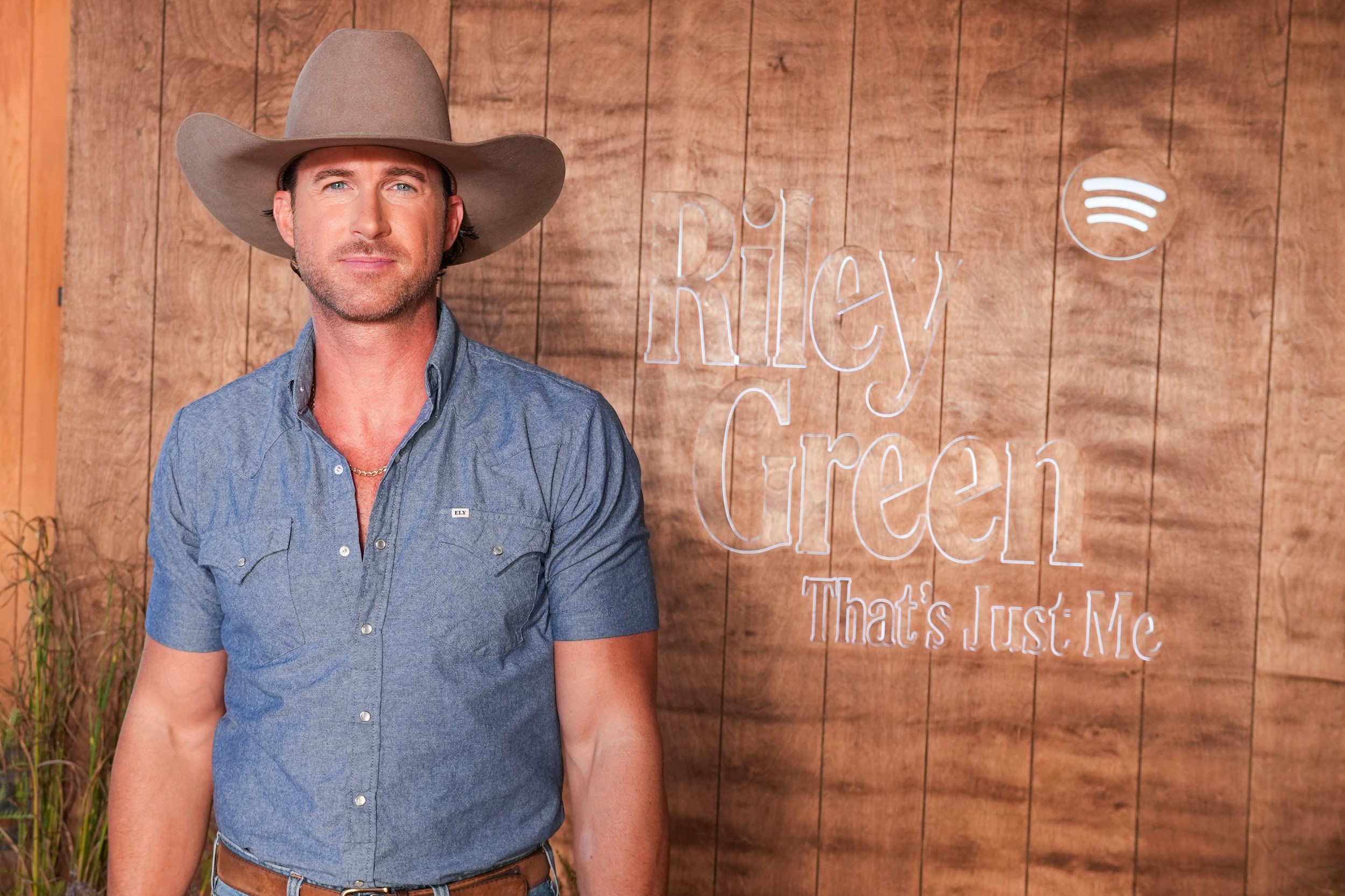








Riley Green’s joining ‘The Voice’ as a coach, and he jokes about how he’s already figured out the winning formula to be successful on the show. Continue reading…The Boot – Country Music News, Music Videos and Songs

A grassroots revolt against automated license plate readers, or ALPRs, has gained momentum across the United States.
ALPRs are AI-powered cameras that capture images of all passing vehicles. The camera systems turn details into datapoints searchable by anyone with access to the information.
Today, there are more than 130,000 ALPRs on U.S. streets. And more than 5,000 law enforcement agencies use cameras produced by a single manufacturer, Flock Safety, which says its cameras have helped law enforcement agencies identify and arrest criminals and reduce crime.
But some members of those police departments have abused the data gathered by ALPRs. A police officer in Kansas was sentenced to 18 months probabtion in April 2023 for using Flock camera to stalk his estranged wife. A Florida police officer was fired and arrested in March 2026 for using data gathered by ALPRs to stalk a woman he had previously harassed on a TV set. And activists filed a lawsuit against California police departments in October 2021 for illegally sharing information collected from ALPRs with out-of-state and federal agencies, including U.S. Immigration and Customs Enforcement.
Due to public outcry, cities across the U.S. have rejected and canceled contracts with Flock. In September 2026, Florida’s Department of Transportation revoked permits for ALPRs on its highway system.
That has not been enough to quell growing backlash over the cameras. In at least 36 states, opponents of the technology have taken matters into their own hands, destroying or impairing ALPRs rather than wait for local governments to step in.
As a historian of the American Revolution, I see parallels between Americans’ revolt against ALPRs and colonists’ destructive and often violent pushback to late 18th-century British rule.
If this summer’s celebrations marking the 250th anniversary of the nation’s founding failed to inspire widespread patriotism, the increasingly bipartisan revolution against ALPRs suggests Americans have not entirely lost their rebellious spirit.
From the start, the English colonists of North America proved to be a thorn in the side of the government. Despite British hopes that investing in American colonies would enrich England, these ventures proved to be more costly than they were profitable. Colonists bore much of the blame.
When the British Parliament passed laws meant to regulate trade in the 1660s, colonists across the Eastern Seaboard turned to smuggling rather than comply.
American merchants and consumers preferred to trade directly with both their fellow English colonists and merchants in the French and Dutch colonies rather than have that trade controlled by ministers in London.
The British government had little ability to enforce the law.
That changed in 1763, after British forces vanquished the French Empire from North America at tremendous cost. A new prime minister, George Grenville, led a series of reforms aimed at making the colonists pay for their own military protection.
Many Americans often believe that the Revolution began as a revolt against higher taxes. But most of the reforms coming from London actually lowered taxes to make smuggled goods less appealing.
What colonists really resented was the imperial government’s growing influence in their lives.
In 1767, Parliament passed a series of laws that allowed Britain to raise revenue to pay the salaries of colonial governors, attorneys general and judges. At the same time, Parliament sent troops to cities such as Boston to protect its officials. Competition for work and strained community relationships often led to violence between British soldiers and colonists.
The same year, angry colonists in Boston, New York and Philadelphia began boycotting British goods. Prominent Americans, including Benjamin Franklin and John Dickinson, endorsed these nonviolent protests.
But more radical leaders believed colonists needed to take more decisive action.
On the night of Dec. 16, 1773, members of the paramilitary group the Sons of Liberty dumped nearly £10,000 – almost US$2 million in today’s dollars – worth of privately owned tea into Boston Harbor.
A few weeks later, the Sons of Liberty struck again. This time they attacked fellow colonist and British supporter John Malcolm, covering him in tar and feathers. For five hours, they beat him and paraded him through the streets. Similar instances of destruction and violence occurred across the colonies.

The British responded harshly. In May 1774, Gen. Thomas Gage arrived at Boston as the colony’s new military governor. He implemented the so-called “Coercive Acts,” which closed the port of Boston and disbanded local government, among other measures.
By early 1775, Boston was besieged. Around 5,000 British troops roamed the streets, directed by Gage to gather information on the Sons of Liberty and arrest leading dissidents.
Gage hoped heightened surveillance would quell unrest. But it only pushed more citizens into the radicals’ camp. On the night of April 18, 1775, a discrete network of watchmen eluded British surveillance and famously hanged two lanterns from the steeple atop Christ Church. These beacons signaled that Gage’s troops were crossing the Charles River, on their way to seize colonial stores of gunpowder and ammunition, setting in motion the events that would begin the American Revolution.
In response to the widespread pushback to ALPRs, Flock Safety CEO Garett Langley appealed to history. In June 2026 he authored a post on the company’s website, arguing that detractors misunderstand Ben Franklin’s famous 1755 quote, “Those who would give up essential liberty to purchase a little temporary safety deserve neither liberty nor safety.”

In an August 2026 interview, Langley referenced the auto industry, noting that rather than ban cars after an uptick in collision fatalities, legislatures mandated seat belts and airbags. Drawing parallels to the contemporary debate around ALPRs, Langley suggested Americans should again prioritize safety and hoped Americans would be willing to “compromise” on issues of privacy.
Samuel Adams, one of the most prominent leaders of the Sons of Liberty, had his own opinion on compromise. Writing in June 1771, he explained that although Americans had “disagreed among themselves in one mode of opposition to arbitrary measures,” they were “united in the main principles of constitutional & natural liberty.”
Adams believed that, when threatened, American colonists would come together to defend their liberties. Clearly, Adams’ opinion resonates today.

G. Patrick O’Brien does not work for, consult, own shares in or receive funding from any company or organization that would benefit from this article, and has disclosed no relevant affiliations beyond their academic appointment.
Politics + Society – The Conversation
Reading Time: 2 minutes
Is Martha Stewart going from ultimate lifestyle guru to ultimate OnlyFans GMILF?
Well, no.
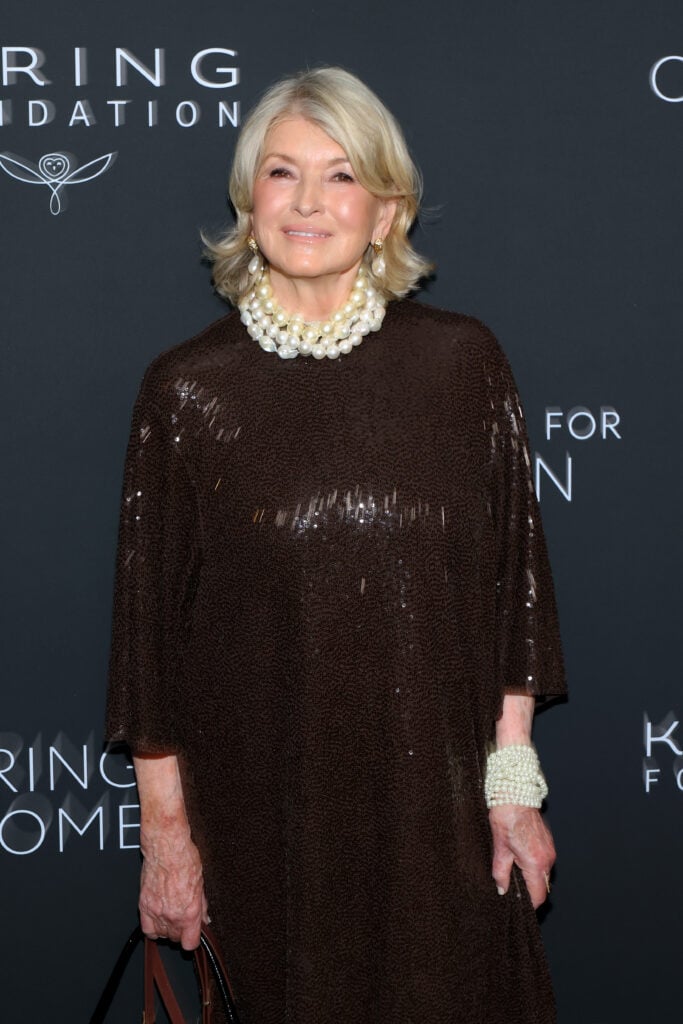
However, the American icon is openly discussing her nudes … and whether she’ll release them.
Perhaps her Sports Illustrated Swimsuit cover was just the beginning.
On Monday, September 14, Martha Stewart dropped a major tease of exciting things to come.
First, she shared a sultry photo on Instagram.
The snapshot is a selfie of the lifestyle influencer, showing a closeup of her face.
Martha turned 85 last month.
Looking at her, you’d never know it.
It was, however, the incendiary caption that caught people’s attention.
“I’ve been thinking about releasing my nudes,” Martha wrote with a seemingly casual air.
Her comments almost immediately filled with words of encouragement — be it horny, professional, or both.
From Bachelor Nation hottie Tyler Cameron to RHONY alum Jenna Lyons to Playboy, people were cheering her on.
Which may mean that those folks are now left feeling the bitter taste of disappointment.

If you’ve seen as many of these teasers as we have, you might have paid extra attention when Martha Stewart mentioned her “nudes.”
Diction matters, after all.
Though “nudes” could refer to Martha’s body in all of its glory, makeup — such as lipstick — can also fall under the “nude” classification.
Martha’s pursed lips in the photo feels like the knowing iykyk wink at her fans and followers.
Sure enough, that’s exactly what she meant — calling her deception a “con.”
“My ‘nudes’ are just a ‘ploy,’” Martha admitted in another Instagram post.
The video showed her applying lipstick.
“They are actually fabulous lip serums to wear day and night,” Martha raved, “to keep your lips as lustrous and soft as your skin !!!!!”
Most people will describe their own product in the most favorable light, so we can take that with a grain of salt.
That said … if Martha ever decides to bare it all for real, she should know that she has a ready and eager audience.
Martha Stewart: I’m Thinking About ‘Releasing My Nudes’ was originally published on The Hollywood Gossip.
The Hollywood Gossip
News stories about campaign finance are frequent in any election season, and this year is no exception.
In Ohio, for instance, NBC reported in August 2026 that there had been over US$130 million in outside spending in the state’s U.S. Senate race. The story also summarized how much money the two candidates had raised from different categories of supporters, such as the proprietors of nursing homes, labor unions and small donors.
It can be hard for the average person to think about these things. It’s hard to know what a normal amount of money is, what it means for a candidate to receive money from particular kinds of donors, or what the impact of this money has on elections.
Money is an essential part of elections, yet many Americans view campaign finance as a sign of corruption. They may have a point – but it is still important to understand the nuances of our system in order to decide what is corruption and what is just regular politics.
Campaign funding has changed dramatically in the past two decades. In the most competitive races, spending by outside groups – organizations other than candidates or parties – has increased from a small percentage of spending in the early 2000s to an amount that exceeds what candidates themselves spend. Super PACs or “dark money” groups can spend millions of dollars quickly, putting pressure on candidates to raise more money just in case.
I’m a political scientist who studies and writes about campaign finance laws and practices. As confusing as campaign spending may appear to be, there are still some basic rules anyone can use to understand information about money in elections. While most of my examples here are about federal elections, these rules apply to state and local campaigns as well.

This is partly a matter of inflation, but the cost of the average campaign has grown at a rate even faster than inflation. According to the Center for Responsive Politics, a nonpartisan group that tracks money in politics, $9.5 billion was spent on congressional elections in 2024, compared with $8.8 billion in 2020.
This looks like an increase, but when you adjust for inflation, it’s not. But if you compare elections over the past decade, overall spending has nearly doubled, from $5.1 billion – adjusted for inflation – in 2014 to $9.5 billion in 2024. The decline in the number of congressional seats that are truly competitive in the general election means that this money is now concentrated in far fewer races than it was in the past.
If you compare the candidates in each of the 468 or so congressional races, the candidate with the most money wins over 90% of the time. But most of these races feature a popular incumbent who is almost certain to win. Such candidates tend to raise respectable sums of money, but they don’t win because they have raised more – they raise more because they are certain to win. Who would want to give money to a candidate who is doomed to lose?
If you consider the most competitive races, it becomes clear that the candidates who raise the most money overall are usually the ones who need it most. In the case of incumbents, these are the ones who face the toughest reelection challenges and are the most likely to lose.
These are the races that draw the most money from out of state or from outside groups. In the most expensive races – the ones where both candidates raise a lot – it matters a lot less who has raised the most than in the less competitive ones. It’s one thing to outraise your opponent by $500,000 or more in a race where neither of you has raised more than $1 million. But it’s another thing to outraise your opponent by a similar amount in a race where each of you has raised $20 million or more.
If a candidate has raised a lot of money from interest groups or from wealthy residents of another state, that is helpful to their campaign, but those people cannot vote for the candidate.
Conversely, if a candidate has raised that money from people in their community, the contributions are a sign that those same people will likely vote for them, campaign for them, and tell their friends to support them. The total value of these contributions, then, is less important than what they signify.
Some candidates will boast about receiving much of their money from small donations. U.S. Rep. Alexandria Ocasio-Cortez, a New York Democrat, proudly says that her average contribution is $21.
Candidates who can do this – attract support from regular people who give modest sums – tend to be more progressive or conservative than the average candidate, or to have some sort of feature that makes them stand out to people across the country.
Just as importantly, the types of people who make small contributions also tend to be more ideologically extreme than the average voter. Many of these donors do not reside in the district where the campaign is happening, but are mobilized by emails or other online communications.

Super PACS are political committees that engage in advocacy about candidates but cannot give money to candidates or communicate directly with them. Many news stories compare candidate fundraising to super PAC support.
To an extent, it’s better for a candidate to have money in their own campaign fund than to have super PAC support. That’s because candidates know better than outside groups the best way to spend money, they have an easier time spending money on grassroots campaigning, and their money comes from a larger number of people – and therefore it is a sign of broader support.
But it is not difficult for super PACs to learn how they can help candidates even though their staff cannot speak directly with them.
A careful look at a candidate’s webpage or candidate advertising can tell groups what a candidate wants to talk about and who the candidate is trying to reach. Because super PACs can raise unlimited amounts of money from a single donor, they can jump into a race and spend millions of dollars quickly. Even though they may not get more bang for the buck, they can change a race with a large advertising buy.
The Supreme Court recently abolished limits on coordinated spending by political parties for candidates. Because they do not always know local politics as well as their candidates do, parties cannot spend money quite as efficiently as candidates.
However, they tend to have larger, more experienced staffs than super PACs, and therefore they know more about how best to help their candidates than super PACs do. Parties also have access to voter information that super PACs do not. Parties and candidates also can now receive discounts on advertising expenses that outside groups do not.
The Federal Election Commission requires people who give more than $200 to a federal candidate to disclose their employer.
Some analyses will report the money that candidates get from the employees of particular companies. This is misleading – just because someone is employed in a certain business or company doesn’t mean they are giving to help their employer.
The University of California, for instance, has many reasonably well-paid employees, and some of them give money to candidates. This doesn’t mean the University of California has any role in the election.
Similarly, the most common occupations of donors are often “retired” and “self-employed.” Campaign contributors tend to be older than other Americans, but beyond this, there is little to be gained from knowing this employer information. And the “self-employed” include such a wide range of people – from consultants to landscapers – that this category is similarly meaningless.

Robert Boatright does not work for, consult, own shares in or receive funding from any company or organization that would benefit from this article, and has disclosed no relevant affiliations beyond their academic appointment.
Politics + Society – The Conversation

(The Center Square) – The Trump administration continues to crack down on visa fraud and human smuggling involving agricultural workers.

Nine in 10 business travelers said their hotel room is the only place they’re truly “off the clock” during a work trip in a recent travel survey. The poll of 2,000 Americans who regularly travel for work found that for…
(Photo by Vitaly Gariev via Unsplash)
These 15 casseroles bring slow-cooked flavor without keeping you at the stove all day. Expect creamy layers, browned cheese, tender potatoes, savory fillings, and plenty of oven time.The post 15 casserole recipes that taste like someone’s been cooking all day…

Swapping in a new protein to chili adds flavor, texture, and richness. Read on to discover the best meats to try in the classic dish other than ground beef.

Mashed – Fast Food, Celebrity Chefs, Grocery, Reviews

Subway prides itself on its fresh ingredients, but what happens to the leftovers? Unfortunately, managing food waste doesn’t seem to be a company priority.

Mashed – Fast Food, Celebrity Chefs, Grocery, Reviews