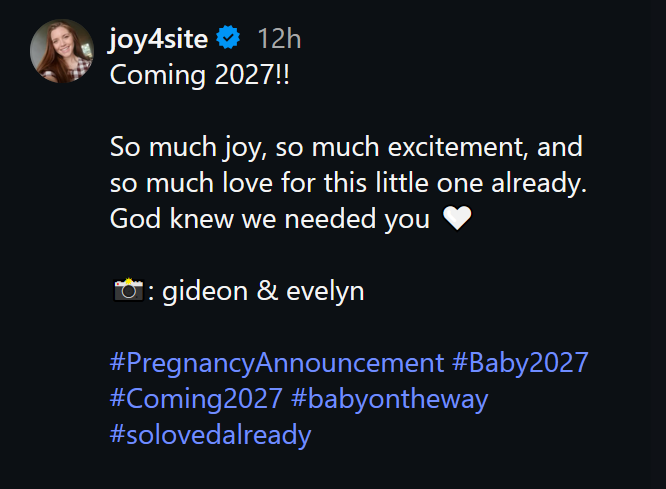
And the Duggar family is still counting on as more and more grandchildren build out the next generation of the family — and, in many cases, the next generation of the cult.
Joy-Anna and Austin are likely about to have their hands full.
On the plus side, Gideon and Evelyn are already growing up. By the time that Baby #4 is a toddler, Gideon probably won’t need much in the way of supervision.
That’s a good thing. Especially with the number of possible family babysitters growing smaller each year.
Dancing With the Stars is sharing who is ready to jive for season 35.
Indeed, the ABC reality series revealed 12 additional celebrities who will be competing for the Mirrorball Trophy alongside… E! Online (US) – Top Stories
Pack one last picnic before Labor Day with 13 recipes that travel well, from Italian Sub Pinwheels and Turkey Sliders to coleslaw, deviled eggs, brownies, and a creamy feta dip at the park.The post 13 picnic recipes to pack for…
(The Center Square) – North Carolina Republican U.S. Rep. Chuck Edwards apologized to family and staff from the floor of the House of Representatives on Tuesday ahead of being censured for ethics complaints on his behavior.
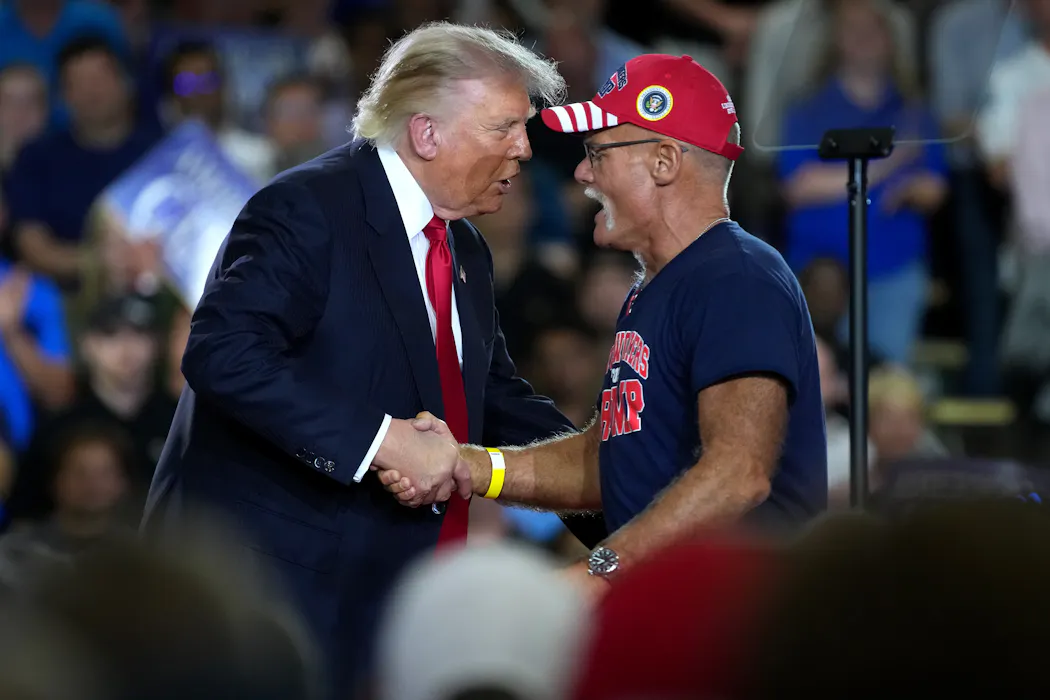
President Donald Trump greets a retired UAW autoworker while speaking at the General Motors Milford Proving Ground on July 27, 2026, in Milford, Mich.Andrew Harnik/Getty Images
When union workers and their families gather this Labor Day, some may ponder Ronald Reagan’s memorable refrain, “Are you better off now than you were four years ago?”
All workers – unionized or not – are dealing with higher prices for food and gasoline.
For America’s unionized workforce, the overall state of the economy is bleak. Threats from AI and robotics abound. Pledges by U.S. and international corporations to invest in new plants remain largely pledges. The roughly 400,000 federal job cuts during President Donald Trump’s second term have disrupted lives. Many of these jobs were previously represented by labor unions.
As a labor studies scholar, I believe weariness and wariness will accompany blue-collar voters to the polls in November. As such, the candidates who have practical ideas for turning the economy around and exhibit empathy for Americans worried about how to pay their bills could receive the bulk of the union vote.
The 2024 presidential campaign was no exception. The majority of union members voted for Democratic candidates, but at a far lower rate than in the 1960s.
Why does this matter in 2026?
Union voters play a bigger role in Michigan, Pennsylvania and Nevada, three swing states where the share of voters who belong to unions is above the national average of 10%. In closely contested House and Senate races, even a small shift in union votes could influence the outcome.
In 1983, 20.1% of U.S. workers were represented by a union. In 2025, the rate was 10.0%, or 14.7 million people. Union membership among public sector workers (32.9%) is more than five times higher than that of private sector workers (5.9%). In close elections, the volatility of these voting blocs matters.
As the midterm elections approach, I believe the president’s performance on these issues in the eyes of union voters will determine which party controls the House and Senate. And the signs are not promising for Trump, with recent polls indicating the president’s support among union households is eroding.
Michigan Democratic gubernatorial candidate Jocelyn Benson greets voters during a campaign event at the UAW hall on Aug. 3, 2026, in Woodhaven, Mich. Scott Olson/Getty Images
Manufacturing jobs and inflation
The U.S. economy has lost 75,000 manufacturing jobs since January 2025, a 0.6% decline. These jobs have steadily declined since the 1980s, so Trump’s policies are not solely to blame.
Furthermore, Trump’s off-again, on-again tariffs may help some U.S. manufacturers. That’s because tariffs can erase the advantages of low-cost overseas labor. As economist Laura Veldkamp noted in July 2026, Trump’s tariffs “made it more profitable for American manufacturers to set up and produce here.”
The bigger problem, though, is that even if some manufacturing returns to the U.S., the work will likely be done with the latest manufacturing technologies, which tend to reduce the need for workers. That does not bode well for significant job creation.
In July 2026, Moody’s financial analyst Mark Zandi told Marketplace that more manufacturing output “doesn’t translate into jobs.” He explained that there has been more activity in the tech sector and in the defense-aerospace industries, but “these factories just don’t employ a lot of people.”
Additionally, Trump has not established a clear plan to lower inflation. The U.S. Department of Agriculture reports that food prices in July 2026 were up 3.0% from July 2025. This increase is slightly above the historical average.
This kind of generational suffering can show up in the voting booth in a big way. And I don’t think voter surveys and polls are able to measure the depths of this rage.
In response, the American Federation of Government Employees condemned the action in an email to its members, saying the Trump administration was “illegally strip(ping) collective bargaining rights from hundreds of thousands of federal workers.”
Whether unionized industrial workers support their public sector counterparts remains to be seen.
Robert Forrant does not work for, consult, own shares in or receive funding from any company or organization that would benefit from this article, and has disclosed no relevant affiliations beyond their academic appointment.
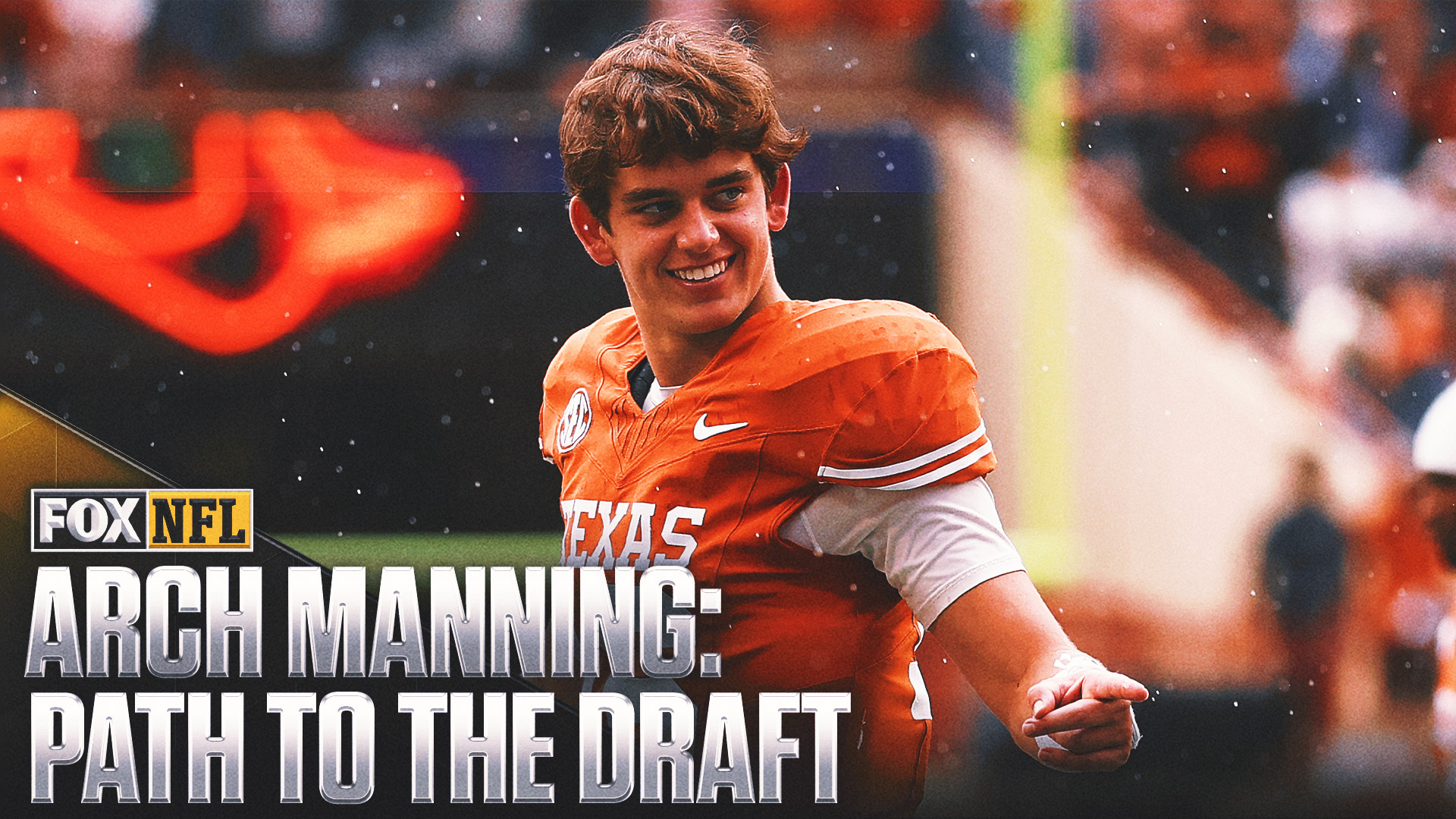
Texas quarterback Arch Manning enters his redshirt junior season as the most celebrated and scrutinized quarterback in the country and thus is the most intriguing NFL prospect. But he’s not a shoo-in to be the No. 1 overall pick of the 2027 NFL Draft. There is no denying Manning’s appeal. He’s supremely talented, boasting an ideal blend of size, arm talent and mobility with the Hall of Fame bloodlines every QB-needy NFL franchise would seemingly love to build its team around. But is it as simple as Manning, whose 2026 season kicks off Saturday against Texas State, “just staying healthy” before earning the distinction of being the top pick next spring? To put it bluntly, no. In a class this gifted, no one can afford to simply rest on their résumé. Not Manning nor Ohio State phenom receiver Jeremiah Smith nor any of the top QBs. But, if Manning can improve in three particular areas, I believe he will follow in his famous uncles’ footsteps and hear his name called first on draft day. 1. Improve In The Quick Game Like most quarterbacks drawing attention from NFL scouts, Manning will ultimately get drafted because of his ability to accurately throw the football long distances. It is easy to assume that if a quarterback is accurate on longer passes, he’ll also be precise on shorter throws. That was not the case with Manning last year, however. In fact, he was arguably at his worst on the shortest throws — a flaw that simply must be corrected if he is to earn an early first-round selection next spring. The so-called quick game — i.e. slants, bubble screens, pop passes — is as fundamental to the modern era of football as shooting 3-pointers is to modern basketball. These routes have gained importance in recent years with today’s elite pass-rushers and all the exotic scheming and blitzing done to pressure quarterbacks immediately. Signal-callers absolutely must be able to get the ball in and out of their hands efficiently. When operating out of the shotgun — as Manning typically did in 2025 — quarterbacks are taught to first secure the snap and then simultaneously turn their feet in the direction of the intended receiver while spinning the ball to allow their fingers to grip the laces. Once the ball is comfortably in their grasp, a quick, strong throw should be out long before the pass rush has any chance to get home. Experienced quarterbacks can make these throws seem like little more than extended handoffs, collecting and distributing in one fluid motion. Manning is as quick as you’ll see in this regard. In fact, he’s quicker than most. However, his technique was off and therefore so was his accuracy. Manning didn’t consistently pair his upper and lower body last season, failing to either grip the laces or turn his feet properly (or both), resulting in the ball spraying erratically. These issues were further exacerbated by a sloppy sidearm release that left potential pass-catchers struggling to pick up the ball in flight. With less distance for the ball to cover, receivers had a hard time locating and corralling throws that came in at the head or knee level just as often as they did near the chest, as intended. Manning’s inconsistent accuracy forced receivers to adjust, contributing to a whopping 22 charted drops by Texas receivers, per PFF. It also disrupted opportunities to create yards after the catch. Fortunately, this is a coachable skill that a lot of young quarterbacks struggle with. Manning did improve in this area over the course of last season, eventually showing both greater poise and precision. I expect he will be even better in his second year as the Longhorns’ starter. 2. Work Through His Progressions Better Too often last year, Manning stared down his primary target and either tried to throw him open or resorted to scrambling. While he was fairly successful at improvising, the competition will be much better in the NFL. It is difficult to convey Manning’s struggles in this area with statistics, but consider this: Per Pro Football Focus, Manning had 10 passes batted down at the line of scrimmage last year. Of all the quarterbacks selected in the NFL Draft in April, only fellow first-year starter Ty Simpson had this many throws knocked down — and that’s with the 6-foot-1 Simpson attempting 69 more passes at Alabama last year than the 6-foot-4 Manning did for Texas. It is the same story if we compare Manning to the rest of this year’s loaded quarterback class. There were four other quarterbacks to make the first round in my way-too-early 2027 mock draft from April, and none of them cracked double-digits in this category. The same goes for Notre Dame’s CJ Carr (four), Miami’s Darian Mensah (seven) and Oklahoma State’s Drew Mestemaker (eight), who are also receiving first-round buzz heading into this season. Now, just as Manning’s receivers deserve some of the criticism for the aforementioned drops, at least partial blame for batted down passes belongs to his blockers. But Manning greatly contributed to these deflections at the line of scrimmage by too often telegraphing his throws. This allowed rushers to time their leaps and, sometimes, tip his passes for their teammates to potentially intercept. Part of Manning’s appeal to NFL teams is his prototypical height and lightning-quick release. Frankly, there is only one excuse for a quarterback of Manning’s size and arm talent to have this many passes knocked down in Steve Sarkisian’s shotgun-based offense, and that is inexperience. NFL teams will forgive Manning’s “rookie mistakes” if they were, indeed, just that. But to be the No. 1 overall pick next spring, Manning must prove he can scan the entire field, efficiently moving from his primary target to second or third options while protecting the ball. 3. Just Win, Baby (Including On The Road) Fans would be amazed at how much value NFL teams place on wins as a starting QB. It isn’t that professional scouts fail to recognize the impact that a leaky defense, turnovers by others or a porous offensive line might play in determining the outcome of a game. They know that football is the ultimate team sport and, while quarterback is the most important position on the field, he’s still just one of 22 players in a given play. But a QB meriting strong consideration for a first-round pick — especially No. 1 overall — must demonstrate the ability to uplift his teammates. Never mind the Heisman hype; he simply needs to be great when the lights shine brightest. Manning will surely be under that spotlight (and microscope) while trying to lead a Texas program to its first national title in 21 years. A lot of Fernando Mendoza’s skeptics quieted down last year once he guided the Indiana Hoosiers past Ohio State in the Big Ten title game, much less past Alabama, Oregon (for a second time) and Miami in the College Football Playoff. Mendoza completed 70.0% of his passes with 10 touchdowns against just two interceptions in those five games. For the year, he completed 72.0% of his throws with 41 touchdowns against six interceptions. In other words, his performance was largely the same all year long, regardless of opponent. Now contrast that with Manning, who was picked off in all three of Texas’ losses last year and completed 58.8% of his passes against Oregon, Florida and Georgia with a 4:4 touchdown-to-interception ratio. (It is worth noting that each of those losses came on the road.) He threw 22 touchdowns with just three interceptions while completing 62.2% of his passes in his 10 other starts. Manning won’t have many opportunities this fall to slay any perceived road demons, at least not during the regular season, making his performance in a select few contests that much more important. Only three games on the Longhorns’ schedule — at Tennessee, at Missouri and at LSU — are outside the state of Texas. That’s not to say UT’s schedule will be comfortable, however. Matchups against fellow preseason top-10 teams such as Ohio State, Oklahoma, Texas A&M and Ole Miss are sure to challenge Manning and Co. How he responds will not only define the 2026 Longhorns but very likely the top of the 2027 NFL Draft.Latest Sports News from FOX Sports
One final Labor Day cookout is worth doing right. These 17 recipes cover smoked meats, grilled chicken, fresh sides, pasta salads, appetizers, and late-summer desserts for a full holiday spread.The post 17 Labor Day recipes worth the effort for one…
It looks like Danny Booko and Nia Sanchez will be staying in Santa Clarita.
The couple announced that the recently-completed third season of The Valley will be their last, confirming they did not… E! Online (US) – Top Stories










 Dancing With the Stars is sharing who is ready to jive for season 35.





 It looks like Danny Booko and Nia Sanchez will be staying in Santa Clarita.