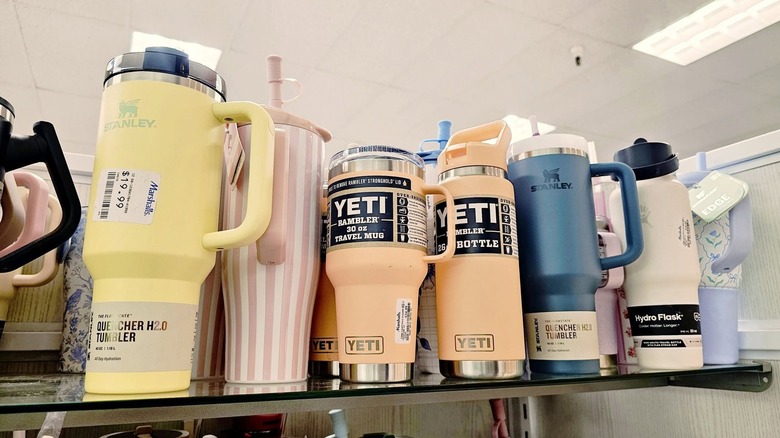
Yeti and Stanley are two of the biggest names in the water bottle game, so you might wonder what sets them apart when shopping for your next vessel.
Food Republic – Restaurants, Reviews, Recipes, Cooking Tips








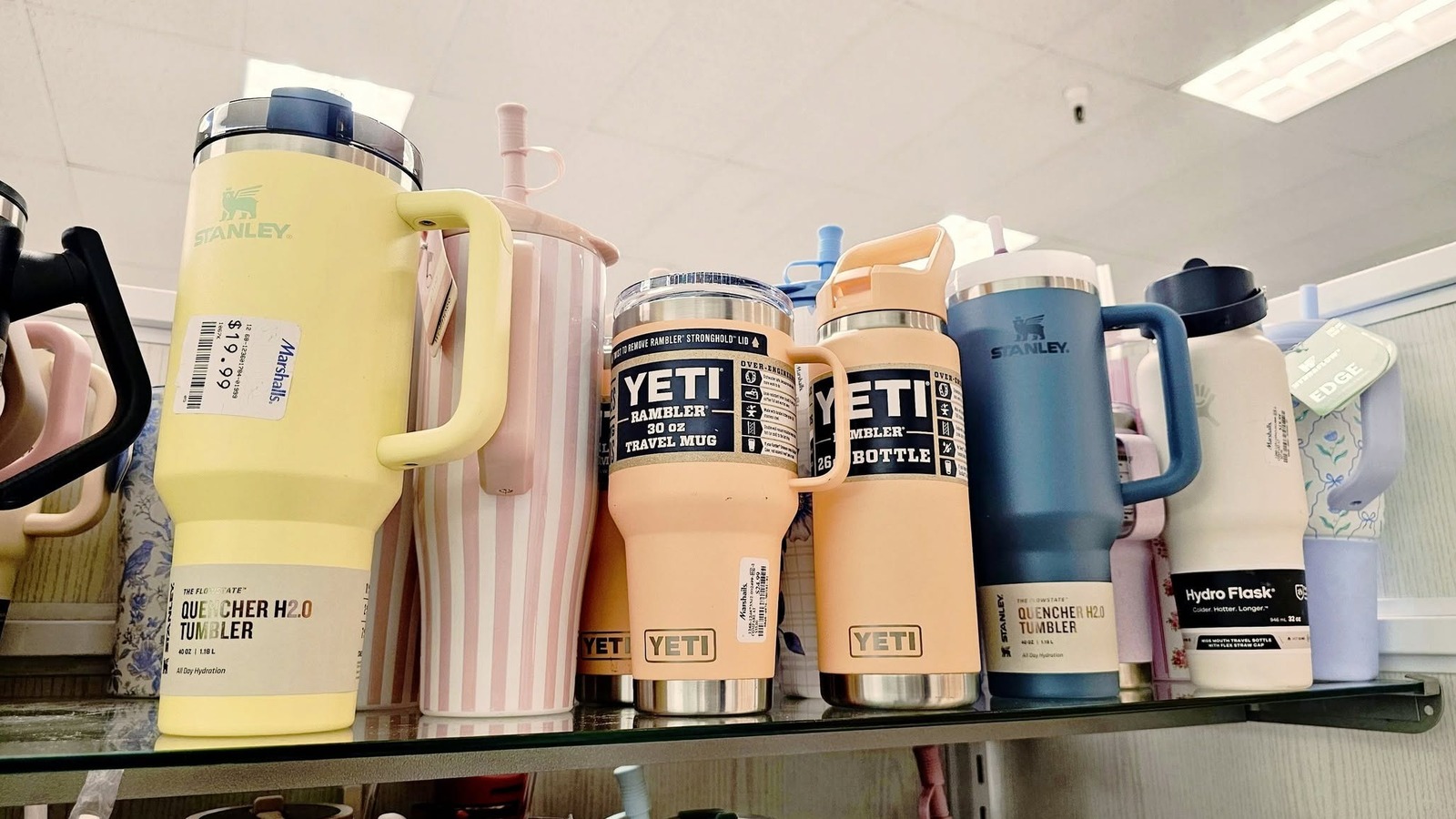
Yeti and Stanley are two of the biggest names in the water bottle game, so you might wonder what sets them apart when shopping for your next vessel.
Food Republic – Restaurants, Reviews, Recipes, Cooking Tips

Like a child with a sandcastle finally built and ready to show it off to a parent who (secretly) couldn’t care less, we made it! Like a grown man tossing free weights at his local gym for the first time in months after hearing the words, “I just think of you as a friend,” we’re back, baby! Like a player who could not make a 53-man roster in the NFL, so he sues the NCAA for the right to return to LSU, we are the main character once more. That means the scoreboard matters, the results come with consequences and there’s no hiding from your record, which is a direct reflection of who your team is here and now. TCU and North Dakota State are Week 0 reflections of what awaits teams playing their first games of the season on Thursday to kick off Week 1. TCU did not look like or play like a top-25 team in its season debut. The Horned Frogs not only lost, 15-10, to the same North Carolina program they beat by 28 points last season, but they also committed enough unforced errors to make me believe they’ll absolutely struggle against Big 12 competition if both the offense and defense don’t improve in a hurry. TCU committed 11 penalties, allowed a safety because its punter couldn’t catch a wet ball and played 11 straight drives without a score. Meanwhile, North Dakota State looked every bit like a program expecting to win a lot in the FBS following its resounding 33-7 win over Jacksonville State 7 at the Fargodome on Saturday. The Bison looked like they have for the last decade: a team that plays fundamentally sound football, doesn’t make a habit of beating itself and knows how to finish in the fourth quarter. Their 26-point win is what I’d expect from a top-25 team against an unranked opponent in its weight class. Now, with the knowledge that TCU is 0-1 against a team I ranked at 100 in the preseason and the Bison were knocking on the door of the top 25, it’s time to make the first change of the season to my rankings. I expect we will see more movement by Labor Day’s end. 2025 Record: 12-1 Nathan Hayes has the honor of being the only quarterback to play four years of FCS football without a start and then make his first career start as a member of an FBS program — and against FBS competition. That’s what NDSU is now, an FBS program, and it’s hit the ground running. I believe the Bison have everything they need — including a favorable schedule — to earn an invitation to the College Football Playoff in their first season in the FBS. Win total odds: Over 8.5 (-150), Under 8.5 (+125)Odds to win Mountain West: +245 (first) 2025 Record: 8-5 Tennessee head coach Josh Heupel has built a program capable of staying competitive and successful in the tumultuous NIL era. But this season, he has tabbed five-star phenom Faizon Brandon as the starting quarterback when the Vols take the field against Furman in Week 1. Getting this decision right could be the difference between a College Football Playoff berth and a second straight loss to — gasp — Vanderbilt. The Vols have a tough schedule, but they also get Alabama, Texas and LSU at home this season. Keep an eye on running back DeSean Bishop, who I think could be another Dylan Sampson. Bishop rushed for 1,076 yards and 16 touchdowns on 182 carries last season and should be a valuable weapon for Brandon in 2026. Win total odds: Over 7.5 (-125), Under 7.5 (-105)Odds to win SEC: +2000 (eighth) 2025 Record: 11-2 Utah was preparing to make Morgan Scalley its head coach in everything but name by 2026 anyway. Kyle Whittingham’s move to Michigan simply forced the timeline up. The team’s defense will once again be fierce. What remains to be seen is how good quarterback Devon Dampier can be without offensive coordinator Jason Beck calling plays and Kevin McGiven helping direct the offense. Dampier has totaled 33 rushing touchdowns in 33 career games. With Dampier returning and 900-plus-yard tailback Wayshawn Parker next to him, I don’t see why Scalley’s Utah squad can’t challenge for the Big 12 title again in 2026. Scalley is just the fourth head coach at Utah since 1990 and the second-straight hire made from the previous year’s coaching staff. And that’s for good reason: It ain’t broke, so they don’t fix it. Win total odds: Over 8.5 (-150), Under 8.5 (+125)Odds to win Big 12: +650 (third) 2025 Record: 9-4 SMU quarterback Kevin Jennings has his issues, but he’s good enough for the Mustangs to remain in this top 25 all season. Jennings led the ACC in interceptions last season (13) but also put together another season of at least 3,200 passing yards and 23 passing touchdowns. However, losing 90% of the pass rush from what was a bad defense in 2025 is coach Rhett Lashlee’s real problem to solve in 2026. The Mustangs have gone 22-2 over the last three years in the ACC, and now, they’ve added former five-star wide receiver Jordyn Adams, who is 26 years old and a former first-round MLB Draft pick. Win total odds: Over 8.5 (-136), Under 8.5 (+115)Odds to win ACC: +650 (second) 2025 Record: 9-4 In 2025, I compared Washington quarterback Demond Williams Jr. to Kyler Murray, and he still looks every bit the dynamo. If the Huskies can develop a wide receiver as productive as Denzel Boston was one year ago, they can win double-digit games in the toughest league in the country. This also is Year 3 of the Jedd Fisch experience in Seattle, and, if his Arizona tenure taught us anything, it’s that this is the year his teams tend to break through. Linebacker Jacob Manu is the best player on the Huskies’ defense. He has notched 241 tackles in 37 games, which ranks first among Big Ten defenders returning this season. Win total odds: Over 7.5 (-170), Under 7.5 (+140)Odds to win Big Ten: +2400 (seventh) 2025 Record: 4-8 Florida coach Jon Sumrall might have pulled off his best recruiting win by convincing prized running back Jadan Baugh to stay another year. Having a tailback who accounted for 1,380 yards from scrimmage and 10 touchdowns on a 3-9 team is impressive enough. Sumrall has reached a conference championship game in every season of his head-coaching career. I’m betting on Sumrall’s record as a head coach and Baugh’s ability to carry the offense here. But I’m also betting on former Georgia Tech offensive coordinator Buster Faulkner — who has the most SEC name of any coach in the country — and his ability to make his offense work with transfer quarterback Aaron Philo and budding wideouts Dallas Wilson, Eric Singleton and Vernell Brown III. Win total odds: Over 7.5 (+130), Under 7.5 (-156)Odds to win SEC: +2500 (ninth) 2025 Record: 10-3 Forget Willie Fritz’s 14-11 record through his first two years in Houston. You live long enough and you cover this sport long enough, you’ll come to realize Fritz is one of the 10 best living coaches in college football. His résumé includes two junior college national titles, two FCS national title game appearances, leading Georgia Southern to a 9-3 record in its first-ever season of FBS play, two American Conference Coach of the Year awards and all the piss-and-vinegar that comes from playing football in “The Jungle” at Pittsburg State. (If you know, you know.) If Houston offensive coordinator Slade Nagle — football name! — and former five-star quarterback Conner Weigman can take the leap, look for the Cougars to be a force in Fritz’s Year 3 in H-town. He’s also got one of the nation’s most prolific tailbacks in his backfield in Makhi Hughes. Despite redshirting last season at Oregon, Hughes is the second-leading returning rusher in the sport with 2,849 yards in 32 games. Win total odds: Over 8.5 (+130), Under 8.5 (-156)Odds to win Big 12: +1600 (fifth) 2025 Record: 8-5 Eli Drinkwitz’s team returns the best tailback in the sport in Ahmad Hardy and one of the nation’s most intriguing transfer quarterbacks in former Ole Miss signal-caller Austin Simmons. Simmons beat out Trinidad Chambliss during the 2025 camp competition before an early season injury made way for Chambliss to take over. That alone is enough reason to believe Simmons could emerge as one of the nation’s top signal-callers in 2026. Add in Hardy’s 1,649 rushing yards and 16 touchdowns from last season, and the Tigers have the makings of one of the SEC’s most dangerous offenses. The one concern is Hardy’s availability. He sustained a gunshot wound that will delay the start of his season, leaving Jamal Roberts to shoulder much of the workload early. Win total odds: Over 6.5 (-120), Under 6.5 (+100)Odds to win SEC: +3200 (10th) 2025 Record: 7-6 Matt Campbell brought the best of Iowa State with him to Happy Valley, building his reputation on doing more with less while turning the Cyclones into a Big 12 contender. At Penn State, he’ll get his first opportunity to do more with more. The result should be a drastic turnaround from the Nittany Lions’ disastrous 2025 season. Campbell also has the luxury of avoiding Ohio State, Indiana and Oregon in his first season. Iowa State transfer quarterback Rocco Becht is the second-leading returning passer in the sport with 9,274 yards in 42 career games, and that experience should help ease Penn State’s transition into Matt Campbell’s first season with the Nittany Lions. Win total odds: Over 8.5 (-166), Under 8.5 (+130)Odds to win Big Ten: +2100 (sixth) 2025 Record: 12-2 I didn’t expect quarterback Bear Bachmeier to have a breakout season as a true freshman, nor did I expect BYU to lose to just one team — twice — in 2025. But after a 12-2 season and some recent turbulence for reigning Big 12 reigning champion Texas Tech, Kalani Sitake’s Cougars are now a solid bet to win the Big 12 title and earn a trip to the College Football Playoff. The Cougars face Utah and TCU on the road and host Notre Dame this season. If those games are close in the fourth quarter, BYU should like its chances. The Cougars trailed by double digits in seven games last year and came back to win five of them. I expect this team will know how to finish, too. The Big 12 conference featured just two 3,000-yard passers last year, and Bachmeier was one of them. Win total odds: Over 8.5 (-150), Under 8.5 (+125)Odds to win Big 12: +550 (second) 2025 Record: 9-4 Kyle Whittingham has everything he needs to reach the CFP for the first time in his career at a program that has made it three times in the last five years and won a national title just two years ago. If offensive coordinator Jason Beck can develop quarterback Bryce Underwood into the player his talent suggests, Michigan should remain one of the Big Ten’s elite teams. That’s the good news. Now the bad. First, the man who brought the former Utah coach to Ann Arbor, Warde Manuel, is (in)voluntarily stepping down on December 31, leaving behind a scandalous tenure. Looking to the field, Whittingham has already messed up the messaging of just how much the Wolverines’ rivalry with Ohio State means and should mean for its head coach and team. And then, Michigan’s schedule does it no favors. Not only do the Wolverines face a top-15 Oklahoma team in Week 2, but they also take on five Big Ten teams ranked inside the top 25 — including Indiana, Oregon and Ohio State. Win total odds: Over 8.5 (+140), Under 8.5 (-180)Odds to win Big Ten: +1600 (fifth) 2025 Record: 12-2 Well, quarterback Brendan Sorsby certainly complicated the math on Texas Tech. Following his admission that he gambled on his own team while at Indiana, the legal wrangling that followed and his decision to forgo a fight for eligibility in 2026, the Red Raiders have been forced to move on. Backup Will Hammond is expected to be ready for Week 1. The good news for Hammond is that the supporting cast remains loaded. Cam Dickey and Quinten Joyner give the Red Raiders one of the better backfields in the conference, while the defense should be as devastating this season as it was last season. Linebacker Ben Roberts is like a real Bobby Boucher tackling machine, recording 280 tackles in 40 career games, the most among returning FBS linebackers. Win total odds: Over 10.5 (-200), Under 10.5 (+160)Odds to win Big 12: -105 (first) 2025 Record: 11-4 Alabama head coach Kalen DeBoer will start a third different quarterback in as many years, with sophomore Keelon Russell under center. Russell will have to build a quick rapport with wide receiver Ryan Coleman-Williams, who has the tools to be the best wide receiver in the SEC with enough accurate service. And that connection will have to come fast. The Tide are also trying to avoid losing in Knoxville for a third straight time, while the Vols try to achieve that first since 2000. It’s easy to forget that Alabama was the home team in the SEC championship game against Georgia, and that the Tide became the first program to win a CFP game on the road. DeBoer’s job in 2026 is to create a memorable season rather than just a few memorable moments. Win total odds: Over 8.5 (-120), Under 8.5 (+100)Odds to win SEC: +850 (third) 2025 Record: 13-2 Following Lane Kiffin’s departure, Ole Miss head coach Pete Golding answered questions about just how good he can be with the two biggest wins in school history — beating Tulane and Georgia to make the College Football Playoff semifinals — all while Kiffin raided the Ole Miss roster and staff. Star quarterback Trinidad Chambliss will return for a sixth season after putting together a Heisman-caliber year in 2025. Golding will have his first chance to prove he’s a better coach than Kiffin on September 19 when LSU shows up to Vaught-Hemingway Stadium in Oxford, Mississippi. It’s not overselling it to call LSU-Ole Miss the most highly anticipated SEC game of the season. Win total odds: Over 7.5 (-166), Under 7.5 (+130)Odds to win SEC: +1100 (sixth) 2025 Record: 10-3 The Sooners barely had a run game last season but still managed to win 10 games and earn a home CFP game. If quarterback John Mateer improves his accuracy, offensive coordinator Ben Arbuckle becomes less predictable in his play-calling and head coach Brent Venables, again, fields one of the stingiest defenses in the sport, Oklahoma has a real path to the playoff. The Sooners also have a chance to make a statement early on, traveling to Ann Arbor on September 12 to face Michigan for a second straight year. And that’s just the start: Oklahoma plays Georgia, Missouri, Texas and Florida away from home. Win total odds: Over 7.5 (-156), Under 7.5 (+130)Odds to win SEC: +1150 (seventh) 2025 Record: 9-4 Yes, head coach Lincoln Riley is great. Yes, QB Jayden Maiava is good. But Gary Patterson is one of the best defensive play-callers the sport has ever seen, and he’s running the defense at USC in 2026. That alone is enough for me to believe the Trojans can make a real run at a CFP appearance. The more I think about this team, the more I believe the Trojans have the best offensive strategist (Riley) and defensive coordinator (Patterson) of any team in the country. That includes Indiana and Ohio State. In order to achieve the lofty expectations I’ve set for the Trojans, they’ll have to go through Ohio State, Oregon and Indiana — or, in other words, two of the last three national champions and two of the last three Big Ten champs. Sheesh. An impressive 42-point offensive explosion against San Jose State in Week 0 was a good start. Win total odds: Over 8.5 (+115), Under 8.5 (-136)Odds to win Big Ten: +1500 (fourth) 2025 Record: 11-2 Texas A&M head coach Mike Elko seems to believe most coaches in his position are one bad season away from getting fired if they don’t reach the CFP. Well, with the Aggies, he might actually have a point. The good news is that the Aggies did just that in 2025 (losing to Miami), but they also crashed out against rival Texas with a chance to make the SEC title game. Eleven wins doesn’t mean much in College Station without one coming at the expense of the Longhorns. That reality has to change for Elko to feel secure at the end of the season. Offensive coordinator Holmon Wiggins and quarterback Marcel Reed must take a major leap if Texas A&M is going to chase its first conference title of any kind since 1998. Reed is one of just two returning SEC quarterbacks to throw for 3,000 yards and rush for at least 550. The other is Ole Miss quarterback Trinidad Chambliss. Ampersand U better come ready. It faces LSU, Alabama and Oklahoma — all on the road. Win total odds: Over 8.5 (+100), Under 8.5 (-120)Odds to win SEC: +1000 (fifth) 2025 Record: 7-6 Hoo boy! If I told you 2026 LSU looks like 2025 Texas Tech with a little seasoning, you’d probably understand what I mean: The Bayou Bengals have decided money ain’t no problem. LSU made Lane Kiffin one of the highest-paid coaches in the sport and the highest-paid ever without a championship on his résumé. They also gave him the resources to bring in former Arizona State quarterback Sam Leavitt, Colorado offensive tackle Jordan Seaton and Ole Miss defensive end Princewill Umanmielen. For a program that hasn’t won a national title since 2019, LSU fully looks built to change that. Win total odds: Over 8.5 (-115), Under 8.5 (-105)Odds to win SEC: +900 (fourth) 2025 Record: 13-3 Quarterback Darian Mensah broke his contract with Duke to join the Hurricanes after leading the ACC in passing yards (3,973) and passing touchdowns (34). And he did all that while guiding the Blue Devils to a wildly improbable ACC championship on the strength of a 7-5 regular season and the most preposterous tiebreaker protocol in college football history. Now, he must follow Cam Ward’s No. 1 overall selection after a 2024 season in Coral Gables and Carson Beck’s run to the national title game in 2025. Along with Mensah, running back Mark Fletcher and wideout Malachi Toney could give the Canes the best quarterback-running back-wide receiver trio not just in the ACC, but in the entire country. Win total odds: Over 10.5 (-110), Under 10.5 (-110)Odds to win ACC: -140 (first) 2025 Record: 10-2 Notre Dame’s schedule isn’t a joke this year, but that’s only because the punchline in 2024 was Northern Illinois walking out of South Bend with a victory and depositing $1.4 million for the effort. Coach Marcus Freeman’s Fighting Irish won’t face anything resembling a ranked opponent until October 17 against BYU, and they shouldn’t lose before then — if they lose at all. Miami is the toughest team on the schedule, and I don’t rate the Hurricanes higher than Notre Dame. But don’t let that stop you from believing Notre Dame will lose and then refuse to play in the postseason. Win total odds: Over 11.5 (+160), Under 10.5 (-190)(Notre Dame is independent and does not have conference odds.) 2025 Record: 10-3 Last season was coach Steve Sarkisian’s first at Texas without a 1,000-yard rusher. So he traded his running backs out. Former Arizona State running back Raleek Brown and former NC State running back Hollywood Smothers enter the fold, as well as former Auburn receiver Cam Coleman. They should help the most bankable player in the sport, Arch Manning, propel the Longhorns to what they hope will be their first national title appearance since 2009. Just last year, Texas began the regular season ranked No. 1 and lost it after falling to Ohio State in Week 1. The Longhorns later lost to a 4-8 Florida team, which essentially ruined their chances of making the College Football Playoff. Texas will get its shot at revenge against Ohio State, September 12 in Austin. It certainly will help that the Longhorns return edge rusher Colin Simmons, who has more career sacks (21) than any other player in the FBS. Win total odds: Over 9.5 (+120), Under 9.5 (-142)Odds to win SEC: +310 (second) 2025 Record: 13-2 The Ducks are dealing with new offensive and defensive coordinators in the same season for the first time since Dan Lanning took over as head coach, as they promoted Drew Mehringer and Chris Hampton from within. Still, Lanning returns quarterback Dante Moore, dynamite wideout Dakorien Moore — who long-jumped 24 feet, 6.5 inches (7.48 meters) at track and field’s Oregon Team Invitational just for giggles — and wide receiver Evan Stewart, who is back from injury. Provided Oregon runs the ball and plays defense the way it did a year ago — and it should — there’s no reason the Ducks can’t win the first national championship in program history. The schedule, however, is anything but a cakewalk. Oregon must travel to USC, Ohio State and Michigan while also navigating games against a rising Boise State, a refreshed Oklahoma State and a retooled UCLA. Returning cornerback Brandon Finney Jr. and transfer safety Koi Perich should form the backbone of one of the nation’s best secondaries. The Big Ten is Oregon’s for the taking if the Ducks’ new coordinators can coach like the last two. Win total odds: Over 10.5 (+100), Under 10.5 (-120)Odds to win Big Ten: +260 (third) 2025 Record: 12-2 The SEC still belongs to Georgia. The Bulldogs have lost just once at home since 2019, but they still haven’t won a CFP game after earning a first-round bye in the 12-team era. That’s why so much of this season centers on returning quarterback Gunner Stockton. If Georgia fans will be happy with Stockton becoming Stetston Bennett 2.0 — 34 total touchdowns and just five interceptions — then so be it. Georgia fans can be forgiven if, in the course of shuffling the aisles at Walmart or waiting on an open table at Waffle House, they’ve uttered aloud, “Just, what the hell, Kirby?!” to no one in particular. This is because they’ve seen their program win back-to-back SEC titles while also watching their former starting quarterback lead Miami to the national championship game and Indiana winning the whole thing. The expectation is to become the first program since Florida’s 1993-96 run to win three straight conference championships — and then bring another national title back to Athens. The defense should help. Safety KJ Bolden and cornerback Ellis Robinson IV look like future All-Americans. The question is whether enough pieces emerge around them in the secondary to give the Bulldogs another national championship-caliber defense. Win total odds: Over 9.5 (-180), Under 9.5 (+150)Odds to win SEC: +260 (first) 2025 Record: 12-2 Look, I’ve said it for two years, and I don’t mind repeating myself for a third: Ohio State wide receiver Jeremiah Smith is the best player in college football. He should’ve had a chance to become the first two-time winner of the Biletnikoff Award for the nation’s best receiver last season, but those voters had other ideas. Regardless, the good news for Ohio State is that replacing NFL talent becomes a lot easier when the sport’s most dominant player is lining up on your side. And if Buckeyes fans really are Viltrumite refugees temporarily stranded on Earth like in Robert Kirkman’s “Invicible,” then 2026 is the year they reclaim the throne. A win over Michigan. A Big Ten championship. A national championship. Ohio State hasn’t completed that triple crown since 2014, but the pieces are in place to make it happen. That doesn’t mean the road will be easy. The Buckeyes must replace 11 NFL Draft picks, including three first-round selections, while also breaking in a new offensive coordinator. Arthur Smith — who came from the Pittsburgh Steelers to be Ohio State’s newest offensive coordinator — has a track record of designing physical, effective rushing attacks in the NFL, and should be a welcome addition to a ground game that struggled against Power Four competition at times last season. Win total odds: Over 9.5 (-180), Under 9.5 (+150)Odds to win Big Ten: +180 (first) 2025 Record: 16-0 Lost in the shuffle of quarterbacks — a third new starter in as many years — and the rather exhausting list of talent and veteran leadership that departed Bloomington are a few important facts. 1. Curt Cignetti is still the head coach. 2. The best record in the sport over the last two seasons (27-2) belongs to Indiana. 3. The Hoosiers are the reigning national champions and the first team since 1894 to finish 16-0. In the college football universe, Indiana has become the Arrakian prophecy from “Dune” personified. As Paul Atreides once said, “I’m pointing the way.” He could have been talking about Cignetti. TCU transfer quarterback Josh Hoover is a big reason why Indiana remains as formidable in 2026 as it was during last year’s title run. The nation’s leading returning passer has thrown for 9,629 yards in just 36 career games. With Charlie Becker and Nick Marsh catching passes, the Hoosiers have the firepower to make another run at the top of the sport. Win total odds: Over 10.5 (+105), Under 10.5 (-125)Odds to win Big Ten: +255 (second)Latest Sports News from FOX Sports
Reading Time: 2 minutes
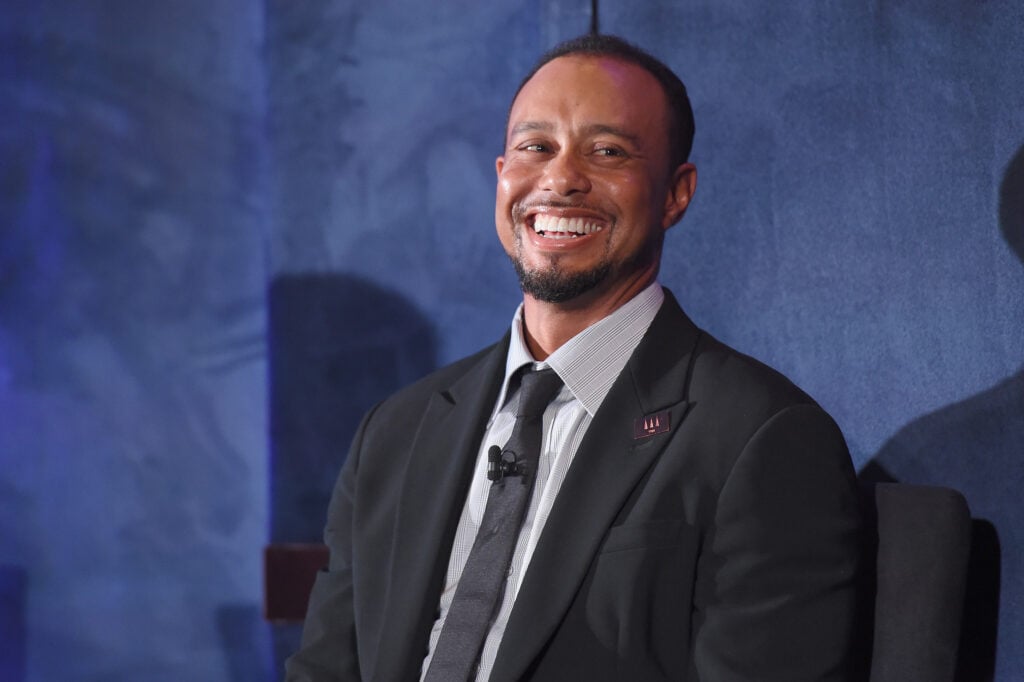
When Tiger Woods was arrested on DUI charges back in March, it looked like the golf legend — who was not a first-time offender — might wind up behind bars.
But in a Florida courtroom Wednesday morning, Woods accepted a plea deal and once again avoided jail time.
As part of the deal, Woods pleaded no contest to a reduced charge of reckless driving and also resolved a charge related to refusing to submit to a lawful test. He was additionally found guilty of careless driving.
The biggest consequence is that Tiger will be without a driver’s license for the next five years.
He also agreed to pay fines totaling $1,500, according to ESPN.
Woods arrived at the Martin County Courthouse with his girlfriend, Vanessa Trump, and his attorney, Doug Duncan. The 15-time major champion kept a low profile during the hearing, saying little as the case was resolved.
The legal saga began on March 27, when Woods was arrested following a rollover crash near his Florida home.
His SUV clipped a trailer being hauled by a truck before rolling onto its side. Woods was not seriously injured, and no one else was reported hurt.
According to the arrest affidavit, Woods told authorities that he had been looking down at his cellphone and changing the radio station when he failed to notice a truck slowing down.
Deputies who responded to the scene reportedly observed signs they considered concerning, including Woods allegedly sweating heavily and moving in a “lethargic and slow” manner.
Woods initially pleaded not guilty to DUI and refusal to submit to a lawful test.
That strategy has now changed considerably.
Under Wednesday’s agreement, the DUI charge was reduced to reckless driving, while the testing-related charge was resolved separately. The five-year license suspensions attached to the charges will run concurrently, meaning Woods isn’t facing a decade-long driving ban.
Still, five years is hardly a minor inconvenience.
The judge also made clear that Woods can’t simply decide the rules don’t apply to him. He made it clear that driving while his license is suspended will result in additional legal consequences, including jail time.
For one of the most famous athletes on the planet, the situation represents another difficult chapter in a life and career that have been marked by spectacular highs and very public lows.
And now, apparently, Tiger Woods has one more thing to work on: finding a chauffeur.
Tiger Woods Pleads Guilty, Gets License Suspended For 5 Years as Judge Threatens Jail Time was originally published on The Hollywood Gossip.
The Hollywood Gossip
[00:00:19] Nathan Wrigley: Welcome to the Jukebox Podcast from WP Tavern. My name is Nathan Wrigley.
Jukebox is a podcast which is dedicated to all things WordPress. The people, the events, the plugins, the blocks, the themes, and in this case, navigating WordPress security in the era of AI.
If you’d like to subscribe to the podcast, you can do that by searching for WP Tavern in your podcast player of choice, or by going to wptavern.com/feed/podcast, and you can copy that URL into most podcast players.
If you have a topic that you’d like us to feature on the podcast, I’m keen to hear from you and hopefully get you, or your idea, featured on the show. Head to wptavern.com/contact/jukebox and use the form there.
So on the podcast today we have Aaron D. Campbell.
Aaron is a seasoned veteran in both the internet and WordPress space. With over 25 years of experience spanning agency work, security products, hosting giants like GoDaddy and Newfold, and now his role at Monarx, a company focused on malware detection and remediation, particularly for web hosts. He’s led, the WordPress Security Team, has been involved deeply in shaping security practises, and remains tightly connected to the WordPress ecosystem.
We talk about the rapidly changing landscape of WordPress security, specifically how the advent of AI has escalated the speed, scale, and complexity of attacks, moving the security game from a battle of wits to a battle of compute power. Aaron discusses how attacks that once required human ingenuity are now orchestrated by AI agents, capable of chaining vulnerabilities that humans would struggle to conceive.
We get into the shift from a reactive to a proactive security posture across the WordPress ecosystem. Aaron explains how both attackers and defenders are now deploying AI leading to an arms race, where AI is used to combat AI, and where collaboration among security teams is just as crucial as information sharing among adversaries.
Which chat about the motivators behind attacks, spoiler, it’s almost always money. And the specific vulnerabilities WordPress faces as the most popular CMS on the web. Of interest is the narrowing window between when vulnerabilities are discovered and when they’re exploited, how supply chain attacks are on the rise, and what the WordPress “Protect the Shire” innovation means for plugin security.
Towards the end of the episode, we explore practical security advice for everyday WordPress users, with Aaron, recommending actionable tips on updates, choosing security minded hosts, and monitoring for Compromise credentials.
If you are concerned about how AI is reshaping the WordPress security landscape, and want to know how the community is responding, this episode is for you.
If you’re interested in finding out more, you can find all of the links in the show notes by heading to wptavern.com/podcast, where you’ll find all the other episodes as well.
And so without further delay, I bring you Aaron D. Campbell.
I am joined on the podcast by Aaron Campbell. Hello, Aaron.
[00:03:43] Aaron D Campbell: Hello, nice to be here.
[00:03:44] Nathan Wrigley: Yeah. Thank you for joining me. We’re in a corridor. I should say that at the very beginning. We’re in a corridor at WordCamp US, and so if background noise becomes a problem, we’re just going to have to cope with it. So apologies. But thank you for joining me in a corridor.
[00:03:57] Aaron D Campbell: Absolutely.
[00:03:58] Nathan Wrigley: We’re going to talk today a little bit about WordPress security, and particularly about the advent of AI, and the way that certainly in the more recent past, it appears to have upended what once was normal, I think it’s fair to say. I think things are happening at a rate of knots that perhaps a year or two ago we wouldn’t necessarily have predicted.
Do you want to just give us a little bit of background about yourself in terms of where you have worked, where you currently work, and what it is that you do for a living?
[00:04:25] Aaron D Campbell: Sure. So I guess I have worked in the internet space for a very long time at this point. I guess 25 years-ish. Ran my own agency for a long time and then into security product in the WordPress space, and over into hosting at GoDaddy, at Newfold, at hosting.com.
During that time I ran the WordPress security team for a couple years, have continued to be involved with it along the way, and now I am over at Monarx. We do malware detection and remediation, and have some security tooling for web hosts. So I’m still very tightly tied into that space on a few fronts.
[00:05:09] Nathan Wrigley: Is Monarx a new company? Because it’s not one that may necessarily come into mind when we talk about security online, WordPress security specifically.
So if you’re willing, could you just give us a little bit of a potted history of Monarx and what specifically you do in the WordPress space? I think it’s perhaps more related to hosting companies than it might be to end users. Just flesh that out a little bit.
[00:05:33] Aaron D Campbell: Yeah. Monarx has been around probably longer than you expect, six or seven years. The name’s may be not as recognisable, because a lot of times we are a white label in the background. Hosts run us, and you may not know that.
We protect more than just WordPress, but obviously WordPress is a big part of that. And we help hosts keep their users, their end users, safe and secure and malware free by monitoring the files, the runtime, having a WAF layer, protecting it several different layers along the way.
[00:06:08] Nathan Wrigley: So is this kind of like a white label solution? You are in talks with hosts, many of which I’m sure we’ve heard of, but their purchase of the products and services that you sell is white labelled.
[00:06:20] Aaron D Campbell: Yes, they may sell us as their own security product. They may also just include us in higher end hosting packages so that the malware detection and remediation and all that kind of stuff is included in your package. It varies from host to host, but most of the time you’re not seeing the Monarx name out in front, but you’re benefiting from our services anyway.
[00:06:40] Nathan Wrigley: So does that allow you to, because you are cross platform in terms of hosting company, hosting company X, hosting company Y, hosting company A, B, and C. Does that give you a larger depth of knowledge for want of a better word? So you can see that hosting company A’s got this Linux set up, and these kind of things are happening.
[00:06:59] Aaron D Campbell: Yes, it does. It’s less about their specific setups. I think the most valuable thing of being across many hosts like that, is that we see attacks, or new and novel malware, or those kinds of things happening in pockets and can often then protect against it globally, even though maybe it first started at host A.
By the time it spreads to host B X or Y in your example, we’ve already been able to understand what that is and block it across the whole realm. So we get a bigger picture, which is super useful. Especially as we start talking about some of the AI stuff and how fast it moves. That’s really necessary to stay ahead of that curve.
[00:07:42] Nathan Wrigley: Okay, so let’s move into that a little bit. And I think if we were having this conversation, let’s go for four years ago, that seems like a long enough period of time where AI was not really on anybody’s menu.
And now we seem to be in the era where the human is really being surpassed in almost everything logical, let’s go with that word. If it can be achieved with some kind of logic then AI seems to have surpassed humans.
And, especially recently, there seems to have been an uptick, not just in the WordPress news cycle, but also just in the general news cycle about, okay, we need to be a little bit more mindful about the products and services that we buy. We need to be more mindful about the security and logging in and credentials and all of that.
But specifically in the WordPress space over the last three or four months, I’ve heard story after story, which was unlike anything I’d heard before. These kind of chained attacks where, something that a human probably would never have conceived and pulled off is now possible. You spend 25 US cents on an AI agent, wait for six hours, and it’s come up with these 14 overlapping things, and it can hack WordPress Core and various other things.
So just paint the landscape of how alarming it is, and then presumably you can paint the landscape of how not alarming it is, because how you can mitigate against that.
[00:09:00] Aaron D Campbell: That’s fair. Let’s explain the reality and then let’s hopefully, help comfort people at least a little. It can be pretty scary. You’re absolutely right. AI has dramatically changed the game. And the way I like to explain it is it hasn’t changed the absolute core realities of the game in that there’s still a bit of cat and mouse. They’re trying to surpass us. We’re, trying to stay ahead of them.
But the scale and the speed and the complexity at which it is able to happen now is nothing we could have imagined four years ago. Honestly, even two, two and a half years ago. It has moved that fast. And what that looks like are, a few different things.
One, the speed at which AI can find issues in code, potential exploits, vulnerabilities, et cetera, is so much faster than any human. Like the compute power of it doing those logical bits rather than humans doing those logical bits, makes that move so fast. So the number of things being found, and being either reported or exploited, or both, the volume has just gone up dramatically.
And then on the complexity side of it, you are right. A simple example of that, one of the WordPress Core reports that I looked at recently, I needed to print it out and mark it up with a pen to wrap my brain around all these steps that it was taking. When I printed it out, it was 11 pages. 11 pages of like steps and instructions for an actual vulnerability that turned out to be real.
If four years ago that had existed in your piece of software, you would consider your software absolutely secure. No human’s ever going to find that. No one would ever know about it. And now AI is able to chain all those steps together into something that it can then write scripts to go automate and exploit.
And so those two things have both really shifted the game in a way that feels like it can put software owners, software managers, SaaS services, all these things on their back foot. There’s just such this flood, and such a complex flood coming at you.
[00:11:10] Nathan Wrigley: So I guess also the problem is that these things never sleep. So four years ago, every human, maybe they could put 10 hours in at the computer and then they would have to rest. So you get a, breathing space, and and the human can do this one thing.
But that’s not the case here. With an AI, presumably it could have 10, 50, a hundred, a thousand, the sky is the limit, things happening simultaneously. Just testing absolutely every permutation of everything conceivable. And then coming back with something. I don’t even know how we compete against that. And obviously we can get into that in a moment.
Is this a moment of despair or is there genuinely a way of getting out ahead of it? Or is it always going to be a case looking into the future where you are going to be reactive instead of proactive? In other words, when you wake up in the morning and you print out the 11 and then next year, the 30, and then the year after that, the 80 page document, how does that make you feel? Are you sanguine or is it just a prophecy of doom.
[00:12:08] Aaron D Campbell: I think it is a time of overwhelm, but hopefully not despair. Which is different. And I think that as big technology shifts hit, which AI is a big technology shift. There is often a significant adjustment. And we are at that time, and I am even one that maybe would say, I think it might get a little bit worse before it gets better, but it’s definitely going to get better.
And I see the path there in some of the foundations that we’re laying in things that we’re learning right now during this time of overwhelm, where we’re feeling flooded like this, is going to put us in a place to start getting into that curve where everything gets better.
And I think that, what’s the right way to put this? I think that the path there is apparent, but takes some time. And part of that’s because we have to shift from the being reactive to the being proactive all the time. Because agents move so fast to 24 hours a day, seven days a week. And the second they find a thing, they can immediately, automatically start trying to exploit it.
We have to shift to being ahead. Because there is no longer a gap in between when a thing is found and when it’s exploited, for us to fix the thing. We have to get ahead.
[00:13:36] Nathan Wrigley: So, you are obviously deep in the weeds of this, and it sounds like you’ve got an intuition that at some point in the near to midterm future, you feel like you are going to reach a point where things start to improve. That was the implication, I think of what you said.
What is that intuition? How do you come to the conclusion that there is an opportunity for things to improve. Even if you need to go into the weeds a little bit. I’m curious as to how it’s not a prophecy of doom, and how you believe that a moment will arrive where, I can’t answer that for you. I’ll just open it up.
[00:14:06] Aaron D Campbell: Yeah. So I think that some of this comes from historical experience, right? We’ve had these kinds of experiences where say, a certain type of hash that we used for security became a thing that hackers could break with the level of computing power that they finally had access to.
And that felt doom and gloom. But also we created better hashing algorithms. We created better things that were able to counteract that. We were able to shift to those, and we were also able to learn from them and think further forward.
So now some of the algorithms that we’re using aren’t just better enough to handle current computing, but better enough that we think they’re going to last a decent ways into the future.
I think that there are similar things with AI now. Where we are leveraging the same kind of tools now that these bad actors are, and we’re learning how to use them not just to protect against the way the bad actors are using them, but to get ahead enough to stay ahead of them.
And the way that looks, because that sounds maybe too vague to be realistic I guess, is we’re not just running those same algorithms against our code, or those same models against our code and hoping that we find the stuff before they find it. We’re instead also looking at how can we push to a different part of the stack? How can we protect against things that we’ve never seen? How can we start to recognise these patterns so that we can look at behaviours and protect against those, rather than just flaws that need to be patched. It’s shifting our thinking some, but I think in a way that’s going to help us get ahead in this game.
[00:16:03] Nathan Wrigley: Okay. That’s really interesting. I have a question surrounding how this kind of stuff happens, and I’m thinking about it from the adversarial’s point of view. What is that like? Because I have a notion that a decade ago it was individuals, perhaps offices, that’s probably the wrong word, but, collections of people sitting in a space, but there would be a finite number of them. There may be 10 in a room, one in a room, a hundred in a room.
But I don’t know if that’s still the case. Do the adversaries that you are dealing with, do they have a collaborative approach to hacking? Do they share information? And then the flip side of that is do you also, in the industry that you work in, do you share information?
If you discover something, does Monarx treat that like it’s your intellectual property? Or is there a, a whole system of sharing that amongst the community so that everybody benefits from the work that you do? You’re giving away the hard work that you’ve done. If that’s the case.
[00:16:59] Aaron D Campbell: So, first let me just say personally, one of the most important things to me is to raise the level of security across the whole internet, because that is better for humanity that relies on it so much, for all kinds of things in our daily lives, and for sharing information and making progress forward as people.
I think that I’m not alone in the space. Like I think that a lot of us that were drawn to this security space are drawn to it because it is a way to improve life for everybody. Will there be some intellectual property for individual companies? Yes, but I think it’s a lot more in how we approach the thing, and less we’re not going to tell people about this new vulnerability, or this new method that we found. Because we do want to be able to see the end user protected. Like that is the way we’re going.
Backing up to your, how do the adversaries work? It’s been a long time, I think since they sat in rooms together. They’re now virtual rooms, right? They can be spread all over the world, but still be working together. And they definitely do. They share information around. For us to be able to keep up with that, we have to share information around too. That is super important.
Simple example of that, the WordPress Security Team. Let me step back from Monarx and talk more of the space in general. The WordPress Security Team. You talked about how for the last few months you’ve seen maybe more security releases going out from WordPress and stuff. The way that the WordPress Security Team treats those, when we find out about them, and we triage them, and we realise that they’re real, and we start figuring out what our approach is to patching them. We then have a whole private Slack channel that has other people in it that can help us get protection out. Broader, wider by sharing some of that information sooner.
Cloudflare can maybe put some rules in place, and protect tonnes of people before the WordPress release goes out. So can some of the big hosts. So can some of the security groups. And so not only do we share that information, we’ve built it into our processes as a must, because that’s the only way to really do it right, and really protect as many people as possible. Because our adversaries are doing that. And so we have to as well. And we’ve just realised that, learned from it and made that the right way to do it.
[00:19:26] Nathan Wrigley: I’m just going to flip back to the comment that you made a moment ago where you said that you woke up and you printed out this summation. Let’s go with that. And it was 11 pages, and presumably that took a certain amount of your day to parse and understand.
How likely is it that that process will begin to run away from humans’ capacity to actually do it? So as an example, let’s say that a year from now that thing that you print out is 50 pages or 80 pages. Just the reading of it would be a whole morning, let alone the understanding of how those layers, and the stacks and the way that they’re overlapping and reliant upon each other.
Have we now, or have you now as an industry, have you almost handed the responsibility to figuring that stuff out, figuring out what the adversaries are doing? Has that gone to AI from your part as well? So is it AI versus AI basically, which seems very dystopian.
[00:20:18] Aaron D Campbell: We definitely pit AI against AI. It’s an extremely useful tool to combat itself essentially. And yeah, even for that 11 page one. Yes, I had to read through it and figure it out. but I did use AI to help summarise that. What are the steps that I need to do? Where does this actually track to in the code base?
I use it as an assistive tool in getting through that. And I do think that the longer the reports get, the more that’s going to be necessary. And now I personally, and several other people that I work with, have built testing rigs in AI, in various models, that are purpose built to help with this.
I can give it a report, in the repository and it can check its viability. It can see if that’s simplified. Check certain things. Is this a thing that requires some level of authentication, all these things that we use to have to do manually. And now we’re sharing around these sort of test rigs, or assessment rigs, that use this so that we can all use them, and grow them faster and make them better and make them more efficient. Because we are pitting AI against AI in many ways.
And as human, I think that it’s still important for the human to guide the process in a way that’s ensuring the fix is forward thinking enough, and that it’s in the right place and whatnot. Because in the end, the software is largely used by humans. But, in order to scale to the level that AI is pushing us to scale to, the human needs to be the decision maker, and possibly the opinionated one on form, and function, but not the logical power behind any of it now.
[00:22:01] Nathan Wrigley: Do you get the sense that WordPress itself is the target, or is WordPress just a bit of collateral damage? Are these adversaries of yours, are they specifically targeting WordPress because it’s got this giant footprint? Or is it more a case of this is just the adversaries just spraying and scatter gunning, and it just so happens that every so often they stumble across a WordPress thing.
[00:22:23] Aaron D Campbell: There is spray and scatter gun, just not running WordPress, or running your own bespoke thing is not enough to get away from AI trying to break your thing. But the bigger you are, the bigger the potential benefit from finding an exploit in you. And therefore, the more you are, like the bigger you are, the target is on you.
So WordPress has a big target, but it’s not just WordPress. Some big hosting companies also have a big target on their infrastructure in the same way that they’re targeting WordPress, their targeting, maybe a Hosting or a GoDaddy or a Blue. Someone big that has many people on it, not because they think their security is lax, or that they have some reason to suspect that there’s vulnerabilities, but because the payoff of finding a vulnerability there can be big. And so there’s a big focus there.
So yes, the bigger you are, the bigger the target. But that doesn’t mean that the scattershot isn’t also happening. And that they’re not also hitting small targets.
[00:23:24] Nathan Wrigley: Yeah. I suppose there would’ve had to have been a lot of joined up thinking in the past from a human to discover that, “Okay, this thing with Linux over here, okay we’ll just store that somewhere. But then there’s a PHP thing over here. Oh, and then curiously, there’s a PHP thing in WordPress, which,” that would’ve all had to have been conjured up by a human. And the memory of that would be difficult to maintain over time. But presumably the AI can just remember that forevermore. Store that PHP thing for the next decade and suddenly whip it out when it’s happens to coincide with some other thing. It’s fairly bleak.
Okay, so in terms of WordPress specifically, what is the incentive specifically? Why would somebody, let’s say somebody was coming after WordPress. What is it that they gain? What could they possibly have that benefits them off the back of a, let’s go for WordPress Core vulnerability which is, I don’t know, you can successfully log in as an admin or whatever it may be. What do they actually gain?
[00:24:17] Aaron D Campbell: It really comes down to money in end, if I’m honest. WordPress Core powers tens of millions of sites all over the web. Some of those have valuable stuff on them. Many of them frankly don’t. But that doesn’t mean that they’re worthless. They can be used, you’ve seen pharma ads and stuff showing up on a site, and it’s a pay per click kind of thing. And someone’s making some money off of putting not great ads your site. Even if you don’t get a lot of traffic, they’re making something. And when you’re looking at the potential of this vulnerability could apply to tens of millions of sites, you don’t need to make much per site.
But also, you could use that site as a way to have broad compute power to attack some other site. You’re using tens of thousands of sites to do it. Each one of them is on some separate IP. So now you have a distributed attack that’s harder to block than if you were doing the same attack from one place.
But you’re only doing that because it costs a lot to buy your own distributed power from everywhere. So you’re essentially stealing it and it’s making it, there’s some sort of worthwhile monetary value from it.
And so you may think, they can’t make anything off my site. They don’t have to. Your site’s one small bit in a huge array of sites that they’re trying to get, to get some monetary benefit in the end.
[00:25:40] Nathan Wrigley: So there’s no one size fits all. But money is essentially the broad overlapping thing?
[00:25:46] Aaron D Campbell: I mean, there are exceptions to that, where people are doing it for some political reason. Or some moral directive that they have or whatever. But the vast majority can be traced back to there’s money in it somewhere.
[00:25:59] Nathan Wrigley: I wonder curiously, because you mentioned about things like, pay per click style, you take oversight and you flood it with, I don’t know, nonsense about the thing that you’ve got and you want the world to notice. I wonder if curiously, people’s adoption of AI and that different way that we’re searching for things will actually impoverish that way of monetizing, because simply nobody’s actually looking on a search, well, increasingly people seem to be relying less and less on a search engine, and so maybe that kind of bit of it will dry up. Who knows?
[00:26:27] Aaron D Campbell: I love the optimism there. And I would like to think that those ads specifically probably will at some point. But the root of how those work is, I’ve broken into a site and I can inject some JavaScript ad, or some something like that.
And if those ads stop being valuable, then maybe I can inject some AI directives so that when an AI agent of some kind hits that site, it’s getting some sneaky thing snuck into its memory, or pulled in as a skill, that can then use that AI agent for nefarious purposes in the future.
I think that we can’t lower our guard against those things, because our adversaries will pivot and reuse it for something else. And so we will continue to protect against it.
[00:27:13] Nathan Wrigley: I’m going to peel back the contents of your head a little bit here. Because I’ve often wondered what the characteristic is of somebody like you who constantly facing this tidal wave of things. You’ve got to get up every morning, and every morning you could potentially wake up to the next big thing.
How do you just remain calm in the face of all of it? It’s a peculiar question, I realise, but tomorrow could be the next big thing. The day after that could be the next big thing. I’m imagining on most days now there is not necessarily the next big thing, but there’s a thing. It’s like you’re a fireman or something, except that there’s a fire going off in every district of town, and you are constantly busy and you never get to put the fire hose down. You’re just constantly at work.
[00:27:52] Aaron D Campbell: Some of us love that little consistent regular shot of adrenaline, and we get it in different ways than the firemen. But, honestly, I love complex problems solve. I love the challenges. Do I get exhausted and burnt out at times when they really do come every day for X amount of time? Sure, I’m human, I need to sleep, et cetera. But I think that it’s because I enjoy figuring out those really difficult problems, that I enjoy being in this space. And even specifically on this side of the space, the white hat side.
[00:28:26] Nathan Wrigley: Yeah. I suppose it’s like playing a good opponent at chess. You enjoy the chess game, even though it’s a hard thing and it stretches your brain. You play the chess over and over again because it’s a pleasurable thing to have your brain exercised in that way.
[00:28:39] Aaron D Campbell: And it’s like the more you do it the better chance you have at winning at chess. And I think it’s the same way in our game, right? Like the more you’re doing it, the more ways you’re finding to outmanoeuvre and to essentially win, and keep people safe online. And that’s, that’s exciting.
[00:28:56] Nathan Wrigley: You get the fist pump moment do you, there’s once in a while where you literally figure something out and you’re like, I nailed that.
[00:29:04] Aaron D Campbell: You absolutely do.
[00:29:04] Nathan Wrigley: Okay. Yeah. That’s really interesting. Your bio reads like an open source manifesto. I know that open source has been the thing for you throughout your career. I imagine that you could have gone into proprietary security and all of that.
But how does open source, particularly WordPress, how does that approach to developing software, how does that benefit the position that we can take and the security posture that you can take, and the reliability that you can have in things like WordPress going forwards? In your head, does it offer a superior model for fighting the adversaries?
[00:29:35] Aaron D Campbell: Yes, in my opinion it offers a superior model for fighting the adversaries. And the reason is actually still the same as it was 20 years ago when I started doing this. And I’ll explain why in just a second, but first, the reason is because we are able to benefit from many intelligent people, many more than any single company could with their source code.
Looking at our source code, and finding the weaknesses and even pitching in to help fix them. Hundreds of thousands, or millions, of people around the world are looking at our source code, finding those issues, and able to help pitch in and fix them, or report them to us so that we can, by having all that out there, it’s sort of like a building’s not less likely to collapse because no one saw the crack. It’s actually better that people are inspecting it, and finding those things and making sure it’s done right.
Now, that has shifted a little bit now, where in the past our adversaries looked at our source code too, right? They would immediately look at our repository when new things went out. As a matter of fact, when I ran the security team, I stopped committing stuff for a while, because it turned out that was a tell that this thing was probably a security issue, and people would look at that and try to figure it out.
So now the adversaries are using AI to watch our source code, which is also open to them, 24 7 and really look deep at it. But so are those many thousands of people using our source code for good. And so it’s still true that we have so many people on our side in helping us out, because our source code is out there because we’re open source, and it outweighs the bad. We find things faster because of that, and ultimately end up with more secure software more rapidly.
[00:31:36] Nathan Wrigley: Is there ever going to become a time where the amount of time that a vulnerability is available becomes moot? So in the past, a six hour window, where something wasn’t patched in WordPress Core, that’s a thing, but it’s not really a big thing. Maybe a month where something’s unpatched, that’s a big, I’m just wondering if in the future with the nature of the adversaries that you described and the tooling that they can bring to bear, if even like a three or five second window is going to become a thing.
[00:32:05] Aaron D Campbell: That is possible. We’re not at the three to five second window yet, so that’s good. I’ll let everybody relax a little bit. But the time from vulnerability disclosure to exploitation has shrunk dramatically over the last few years.
We did in fact used to have weeks, and then eventually days where it was okay to find out about the vulnerability, and responsible people, or responsible hosts, or responsible software companies could see that disclosure, patch the problem before there was much exploitation at all. And that’s now hours for major vulnerabilities.
As a matter of fact, we did a Monarx in conjunction with Patchstack, did like a year in review, thing looking back at last year. And we saw that for the more major vulnerabilities, it was about five hours. That’s not enough time for, you know, what happens if it happens in the middle of the night for a host who’s constantly monitoring that, immediately patching it, that’s difficult. And I do think that it will continue to shrink. And that that time that causes risk will be shorter and shorter.
And, we saw that with the recent wp2shell WordPress exploit. Once we released the patch, and everything was out there, the spike of exploitation that we as Monarx saw, like monitoring stuff happened within 30 minutes. Honestly, even a little bit faster than that. But the big spike started coming in about 30 minutes later, and that is just really fast.
But on the flip side, all that coordination that I talked about that WordPress did, had many millions of people already protected by then. And that’s how we have to look at it. We have to say, this is eventually going to get down to three to five seconds being a problem. How do we get ahead of it? And that’s what we’re trying to do.
[00:34:03] Nathan Wrigley: So a timely thing at the moment is this new innovation in the WordPress space called Protect the Shire. And Protect the Shire is the, a time bound moment where a plugin that has an update, it can’t be updated at the moment, I believe it’s standing at something in the region of six hours. On the face of it, that seems like a really excellent posture. But then there’s the flip side of that. If an exploit becomes discovered, and nobody can update their plugin for six hours, then that’s a big six hour window we’ve just painted. in the future where milliseconds may count. What do you think about that? It’s a interesting innovation. It’s something new. It was worth a try. Do you think that’s the way forward?
[00:34:41] Aaron D Campbell: I think it, was not only worth a try. I think it was a really good choice, and I think it will continue to be. We are seeing that a lot of current attacks are essentially supply chain attacks. How can we compromise whether it’s some package, an NPM package or something like that. Or whether it’s a plugin that’s gotten sold to a nefarious person, or even just hacked into and taken over by a nefarious person. That is happening more and this six hour gap helps protect against that.
But it can’t be a hard and fast, locked in stone, can never have exceptions, rule. And the truth is, it’s not. If there is a vulnerability in your plugin, or especially in a major plugin, reach out to the WordPress Security Team because we can coordinate a faster release, we can make an exception to that rule when it’s necessary.
And I think that for security fixes that are clearly security fixes that exception iss an easy one to make, because we do want to protect immediately. But slowing things down enough to make sure that there’s not been some sort of supply chain issue that is actually going to cause a vulnerability rather than fix one, is smart.
And so I think that it will find the right balance there as we continue to move forward, and figure out how to make better processes around this, to make it easier to do the right thing all the time, and know exactly which of those right things. But I think at the moment we’re in a pretty good place there and continuing to find the exact right place.
[00:36:18] Nathan Wrigley: It feels from the outside as if security’s fairly binary. On the one hand, adversary on the other hand, good guys. On the one hand hacked, on the other hand, not hacked. It’s black and white. But it seems from everything that you’ve been talking about today, that you are occupying a really grey area. You’re just trying to figure out what the path is forward. You’re constantly staring into the future trying to figure out what the adversaries are doing. Trying to patch, trying to make sure that everything is as good as it possibly can be. And I hadn’t really thought about it in that way. It’s not, there is no destination here where everything’s white. It’s a journey and every day’s going to be a bit grey. There’s going to be a bit of black and a bit of white, but a lot of grey in the middle.
[00:36:58] Aaron D Campbell: I don’t really look at it as grey, but I can see where you’re going there. But I think that there is this black and white, and then there’s sort of the cloudy. The further forward you look, the more difficult it is to know exactly where the black and white are always going to be. And some of that sort of comes across as grey. It’s a little blurry. You can’t quite figure it out.
But you’re right. there’s some prediction. There’s some, we think that moving this way is going to cause more white and less black. And that’s what we’re, that’s what we’re constantly aiming for. But you can’t just say turning right always makes things more white. Because sometimes there could be black over on that side somewhere, right? You’re really trying to be predictive, but not just randomly predictive, right?
Many of the people like myself that are trying to help guide this path forward, and even more than me, some of the people like Matt, who instituted that wait policy and some of the people that are running the WordPress Security Team, we have decades of experience watching this, that’s helping to inform our predictions. And so it’s not, we’re not just willy-nilly guessing. And I think that’s important to point out to the people that rely on us, to help guide them to the right space going forward.
[00:38:02] Nathan Wrigley: Yeah. Okay. So my schooling in chemistry was pretty basic, but I know that if I want to understand chemistry, my quickest way to do that is to rely on an expert, is to go and find a chemist who has years of experience. And, the same would be true here. I think most of us have probably not got the capacity to actually get a hold of what you’re saying. We, understand that your expertise is what we need to be listening to. But I’m just wondering for a typical WordPress user of whom many listen to this podcast, they have a WordPress site, but they’re not really interested in security, other than how it may impact their business.
So I’m going to ask for some very basic advice here. What would be the 1, 2, 3 things that somebody using WordPress with no security credentials whatsoever. What would be the few things that you would advise them to either go and read, or go and do, or go and think about?
[00:38:51] Aaron D Campbell: Yeah, so I think the biggest thing that I would encourage them to do, is essentially position themselves in such a way that they are relying on the experts, right? You’re not an expert and that’s okay. No one can be an expert in everything. But there are some things you can do to position yourself such that you’re benefiting from those experts.
One of those is updating as fast as possible. So WordPress auto updates turned on, those kinds of things. This WordPress Security Team that I’m talking about that has so much expertise in the area, and their whole focus is trying to make sure that WordPress is always secure. That lets you rely on them to help keep your site secure.
I think in similar ways, you want to find the right host that is also doing those security focused things for you, so that you don’t need to. And maybe that’s asking your host, what do you do to keep me safe? We talk about security, like the best security is layered security. It’s almost like having a gate at the complex, but also having a lock on your door, right? Those kinds of things. You can ask your host, what do you do to protect me in a layered way?
And maybe that question doesn’t make sense to you, and maybe even their answers don’t make sense to you, but if they have an answer, that’s good for you. It means that you can rely on their expertise.
And then stepping out of the obvious space to give a third thing that people should be doing. And this is, this may sound out in left field, but you should get some form of dark web monitoring for yourself, for your own credentials. And whether that’s going to someplace like, Have I Been Pwned, and looking at your own email address, and passwords and seeing if they’ve been in some breached data from somewhere, and are now being sold on the dark web. Or whether that’s using some service that offers it. I think that’s important, more so now than it’s ever been.
Because one of the other things that AI is doing that it’s particularly good at is collecting all this massive amount of breach data that’s happened over the last couple decades, that’s being sold on the dark web. Collating it all and saying, oh, we see that, gosh, 15 years ago, an account that Aaron had was in a breach. And we now know one of his passwords.
And granted it’s 15 years old, but it’s very easy for that AI to then say, where is Aaron now? What’s he doing? What can we learn about him? He works at Monarx. I wonder if this password works for his Monarx account. I wonder if this password works for the bank that he’s at. Or this other tool that we see that he uses. Let’s try all his social media accounts.
And so knowing whether that’s out there and being able to, you can’t get rid of that data, but being able to do things to protect yourself because you now know it’s out there is more important than it’s ever been.
[00:41:47] Nathan Wrigley: I hope you take this in the spirit in which it’s offered, but I really do wish to live in a world where you don’t have a job.
[00:41:55] Aaron D Campbell: Me too.
[00:41:56] Nathan Wrigley: But, am glad that we live in a world where you do, somebody like you does have a job. So I hope that landed correctly.
[00:42:02] Aaron D Campbell: If I could work to the point where I could work myself out of a job, I would find a new career and I would feel so accomplished, you couldn’t even imagine it. I’m okay with that.
[00:42:12] Nathan Wrigley: Yeah. Good. Aaron, just before we wrap up, is there a place where you hang out online where people could poll you if they’ve got a question, or any thoughts about what we’ve talked about?
[00:42:21] Aaron D Campbell: Yeah, if you’re looking for me professionally, you can find me Monarx.com, M-O-N-A-R-X.com. I also have aarondcampbell.com if you want some of my own more personal takes on security and things. And you can find me on Bluesky or the WordPress Slack. Those are probably the biggest places I’m at.
[00:42:40] Nathan Wrigley: What I will do, dear listener, into the show notes, if you go to wptavern.com and you search for the episode with Aaron Campbell, you’ll be able to find the links. I will dig out the Bluesky, and the various social links and the Monarx website and what have you, so you don’t have to hunt around too much. Go there wptavern.com. And Aaron, thank you so much for chatting to me today.
[00:43:01] Aaron D Campbell: Thank you. This was a really fun talk.
On the podcast today we have Aaron D Campbell.
Aaron is a seasoned veteran in both the internet and WordPress space, with over 25 years of experience spanning agency work, security products, hosting giants like GoDaddy and Newfold, and now his role at Monarx, a company focused on malware detection and remediation, particularly for web hosts. He’s led the WordPress Security Team, has been deeply involved in shaping security practices, and remains tightly connected to the WordPress ecosystem.
We talk about the rapidly changing landscape of WordPress security, specifically how the advent of AI has escalated the speed, scale, and complexity of attacks, moving the security game from a battle of wits, to a battle of compute power. Aaron discusses how attacks that once required human ingenuity are now orchestrated by AI agents capable of chaining vulnerabilities that humans would struggle to conceive.
We get into the shift from a reactive to a proactive security posture across the WordPress ecosystem. Aaron explains how both attackers and defenders are now deploying AI, leading to an arms race where AI is used to combat AI, and where collaboration among security teams is just as crucial as information-sharing among adversaries.
We chat about the motivators behind attacks, spoiler, it’s almost always about money, and the specific vulnerabilities WordPress faces as the most popular CMS on the web. Of interest is the narrowing window between when vulnerabilities are discovered and when they’re exploited, how supply chain attacks are on the rise, and what the WordPress “Protect the Shire” innovation means for plugin security.
Towards the end of the episode, we explored practical security advice for everyday WordPress users, with Aaron recommending actionable tips on updates, choosing security-minded hosts, and monitoring for compromised credentials.
If you’re concerned about how AI is reshaping the WordPress security landscape, and want to know how the community is responding, this episode is for you.
Monarx and Patchstack’s State of WordPress Security In 2026
WordPress wp2shell Exploitation Grows as Public Exploit Fuels Mass Scanning

Reading Time: 2 minutes
The reactions to the Tate McRae Calvin Klein ads aren’t overwhelmingly positive.
Yes, the singer looks incredible — and hot.
The dance looks a little awkward, however. (There’s a reason for that.)
And the memes? The memes are a little unkind.
Calvin Klein is featuring Tate McRae for their Fall 2026 advertisements.
Like most worthwhile clothing ads, the campaign seems to be more about hiring a really hot person than anything that the clothing is doing.
(That is not a criticism! Obsessing over clothing models is an adolescent rite of passage for a reason.)
In the ad, you can see McRae very clearly wears jeans. They’re not even low-riders, but hey also don’t need to be.
She dances around to “Groove Is in the Heart” by Deee-Lite.
As you can see, McRae’s dancing looks a little awkward.
In her defense, that is likely because she reportedly only had about 20 minutes to learn the dance for the ad.
(Learning choreography is challenging! We learn best by practicing, especially if we get to sleep between practices in order to better internalize our experiences.)
Critics have said that it shows. Another flavor of critics have asked why other dances that they’ve seen appear to be nearly as awkward.
That’s not to say that the ad has been universally panned. Numerous people have come out of the woodwork to express their, well, lust after watching her dance.
Gary the Snail: pic.twitter.com/Ka2i89ao08
— miz irri (@miz_irritating) August 28, 2026
In response to the ad, some are lampooning Tate McRae.
(It seems that Calvin Klein is not bearing the brunt of the blowback.)
Some have compared her to Gary the Snail, a fan-favorite character from Spongebob Squarepants.
Others have likened her to sea creatures or to cryptids like the Loch Ness Monster.
Simply put, some found the perhaps-flattering contortions of her body to be so unnatural that it felt cringe.
Tate McRae’s assistant choreographer Mauro Johannes recreates her “Feel the Fit” choreography for Calvin Klein. pic.twitter.com/NjFH8YNo9v
— Tate McRae Crave (@TateMcRaeCrave) August 27, 2026
We can understand why some recoil from this ad’s somewhat hamfisted efforts to be alluring.
It reminds us a little, at times, of over-the-top comic book poses that women, including superheroes, sometimes strike in order to best display their curves to the reader.
At the same time … sometimes memes look a lot like bullying because they seem mean-spirited and excessive.
McRae looks great, as always. She was a sensible pick for the ad.
Hopefully, next time, she’ll have more time to learn choreography so that it can look a little more natural.
Tate McRae Clowned as ‘Gary The Snail’ After Cringe Calvin Klein Ad was originally published on The Hollywood Gossip.
The Hollywood Gossip

(The Center Square) – American voters across the political spectrum are divided on whether the rise of Democratic Socialists within the Democratic Party is a sign of positive change or creeping extremism, new polling shows.
President Donald Trump has invited a group of GOP lawmakers including Republicans in competitive races to dine with him Wednesday night at the White House as many in the party press the president to unleash his massive war chest ahead of the November elections, according to five people with direct knowledge of the matter.
They, like others, were granted anonymity to discuss private planning. Wisconsin Rep. Derrick Van Orden confirmed the event in a brief interview with POLITICO.
“Of course,” Van Orden said when asked if he would go to the dinner.The White House plans to hold the dinner in the Rose Garden, according to two of the people who know about the invitation.
Other House Republicans in tough races who were invited and plan to attend include Rep. Tom Barrett (R-Mich.) and Georgia Senate nominee Rep. Mike Collins, along with a wider group of GOP lawmakers.
The White House invited at least several dozen lawmakers, according to two people familiar with the invitation list. The dinner also comes ahead of next week’s GOP midterm convention in Dallas, though attendance from Republican lawmakers is expected to be mixed. Barrett, for example, said in an interview Tuesday he is not planning to attend the convention and will instead campaign and spend time with his family. A White House spokesperson did not immediately respond to a request for comment.
Republicans are facing mounting electoral headwinds from the war in Iran, higher gas prices and new tariffs as they fight to hold onto their narrow congressional majorities in November.
GOP incumbents are also eager for new infusions of resources to help dull Democrats’ attacks over voters’ cost-of-living concerns. Speaker Mike Johnson recently met with GOP megadonor Elon Musk, who has said he will spend millions to back the GOP again this cycle.
Trump’s political operation, MAGA Inc., has used little of its $400 million war chest to support GOP lawmakers. But he recently helped boost Sen. Darline Graham over the line in her heated primary, with the group spending more than $800,000 on phone calls and texts for the political newcomer.
Senate Republicans are eager for Trump to start spending for Ken Paxton in Texas as he has thus far been outspent on the airwaves by Democrat James Talarico and his allies.
The scheduled dinner comes the same day Securing American Greatness, the nonprofit arm of Trump’s operation, is launching its first major ad buy of the general election.One ad features UFC President Dana White praising Trump along with a clip from Trump’s State of the Union address in February.Another ad touts the tax cuts passed through Republicans’ domestic agenda bill last year, including “no tax on tips.” The ads are part of a nearly $1 million national TV reservation running over the next two weeks, per data tracking firm AdImpact.Both ads come as Trump advisers are reportedly planning to use his political organization to try and boost the president’s approval ahead of the midterms.
Erin Doherty, Aaron Pellish and Andrew Howard contributed reporting to this article.
Politics
September can be one of the best months at farmers markets in many parts of the country, and the reason goes beyond variety. Cool overnight … Read moreThe post There is a scientific reason September produce tastes different, and it…

A candid conversation on contributor day turned hackathon, Cloudflare, product pivots, and the realities of founder-led sales.

 Travis Kelce is unleashing more details about his and Taylor Swift’s pup.
After the Kansas City Chiefs tight end introduced the newlywed’s white Samoyed during his Tommy Hilfiger’s Fall 2026…
E! Online (US) – Top Stories