Categories
Uncategorized

After Supreme Court setback, Trump again targets immigration by expanding definition of birthright citizenship

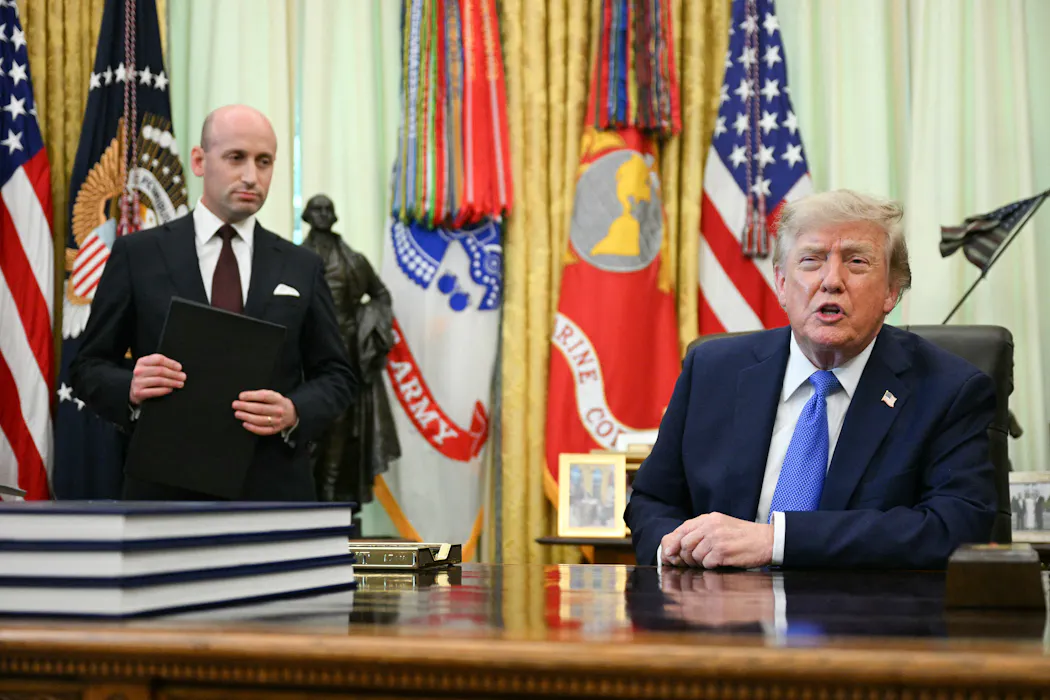
White House Deputy Chief of Staff Stephen Miller holds an executive order on birthright citizenship as President Donald Trump speaks before signing it at the White House on Aug. 6, 2026. Jim Watson/AFP via Getty Images

Since his return to the White House, President Donald Trump has issued over 270 executive orders.

That includes two orders issued in August 2026 addressing birthright citizenship, a subject seemingly settled by the U.S. Supreme Court’s recent decision. In June, the high court struck down Trump’s effort to deny citizenship to children born to foreign parents who are unlawfully in the United States.

One order directs federal agencies not to recognize U.S. citizenship for children of certain foreign national parents. They include the children of an “alien enemy,” meaning citizens of a foreign country that is at war with the United States, and children of parents who are employees of a foreign government – such as ambassadors, for example.

The second executive order calls on federal agencies to curtail so-called “birth tourism,” which it defines this way: the “entry of any foreign national into the United States via a nonimmigrant visa for the purpose of giving birth on American soil.”

As someone who has studied citizenship law, I found the two birthright executive orders eye-catching. At first glance, they seemed to defy the Supreme Court’s birthright citizenship decision. But on closer examination, the picture is not so clear. That’s because the orders target aspects of birthright citizenship that the Supreme Court did not address in its June decision.

The Supreme Court decision

On the first day of his second term, Trump issued an executive order directing federal agencies to stop recognizing birthright citizenship for babies born in the U.S. if neither parent is a citizen or lawful permanent resident.

In June 2026, the Supreme Court struck down the order. Chief Justice John Roberts wrote: “Children born in the United States to parents unlawfully or temporarily present are … citizens at birth under the Fourteenth Amendment’s Citizenship Clause.”

Roberts noted that the only people excluded from that clause are people who are exempt from U.S. jurisdiction, despite living on U.S. soil, such as ambassadors’ children and members of Native American tribes. The number of people covered by that exception is, as law scholars have noted, “trivial and easily administrable.”

Roberts’ opinion said nothing about birth tourism. That omission seems to have left room for Trump to craft his new executive orders.

While Georgetown law professor Steve Vladeck argues that the president is defying the court, I believe Trump is doing something different. He is engaged in what tax lawyers call “avoidance.”

The president is using lawful methods to identify loopholes in the court’s decision. Some scholars call it “legalistic noncompliance” – that is, getting around the court’s birthright citizenship decision while pretending to follow it.

A man sits in the back seat of a black limousine.
Trump departs the Supreme Court on April 1, 2026, after attending oral arguments in the birthright citizenship case.
Andrew Harnik/Getty Images

Trump v. Hawaii

One way for a president to avoid the implications of an adverse court ruling is to claim a new action is authorized under a rule not discussed in the decision.

Stephen Miller, Trump’s deputy chief of staff, explained the legal basis of the new executiue orders this way.

“Section 215 (a) of the Immigration and Nationality Act gives the president this authority,” Miller told reporters.

Nothing in the Supreme Court’s June birthright citizenship ruling touched on the president’s authority under the Immigration and Nationality Act.

However, the 2018 case Trump v. Hawaii did.

Decided during the president’s first term, after the so-called Muslim ban that suspended entry into the U.S. for people from some Muslim-majority countries, the Supreme Court held that the president “lawfully exercised the broad discretion granted to him… (by) the Immigration and Nationality Act … (to) suspend … the entry of aliens into the United States.”

The emphasis here is on “broad discretion.” As Roberts wrote in the majority opinion, the Immigration and Nationality Act allows the president to make “decisions whether and when to suspend entry … and on what conditions.” It is left to the president to figure out when “the entry of the covered aliens would be detrimental to the interests of the United States.”

The language in Trump’s birth tourism executive order reflects Roberts’ understanding of the scope of the authority granted to the chief executive by the Immigration and Nationality Act.

“Birth tourism,” the order says, “undermines the integrity of the Nation’s immigration system by enabling foreign nationals to exploit their temporary admission to obtain permanent immigration-related benefits. Birth tourism also … impairs the executive branch’s ability to protect the national security.”

Protection of national security was one of the grounds Roberts specifically cited in Trump v. Hawaii as a basis for the president to prevent foreign nationals from entering the United States. The president’s new executive orders try to circumvent the court’s birthright citizenship case by invoking a law not discussed in that case.

‘Ending it a different way’

During the Oval Office signing ceremony for his two new executive orders, the president was not subtle about his intentions regarding birthright citizenship. With Miller at his side, he called the Supreme Court’s June ruling “very unfair” and said that with new orders “we’re ending it a different way.”

In its Trump v. Hawaii ruling, the Supreme Court charted the route for him to do so.

But, as Vladeck argues, even if the president does not succeed in getting the court to approve the administration’s new effort to end birthright citizenship, it will continue to “try to muddy the waters when it comes to describing categories of non-citizens” and make the definition of citizenship not depend on where a child is born.

Instead, Vladeck says, an immigrant child’s status in this country would depend on “whether officials can pin a disqualifying label on her parent.”

That would leave the court’s birthright citizenship decision undisturbed, while hollowing out its practical effect.

The Conversation

Austin Sarat does not work for, consult, own shares in or receive funding from any company or organization that would benefit from this article, and has disclosed no relevant affiliations beyond their academic appointment.

​Politics + Society – The Conversation

Categories
Uncategorized

What Luigi Mangione’s celebrity says about Gen Z

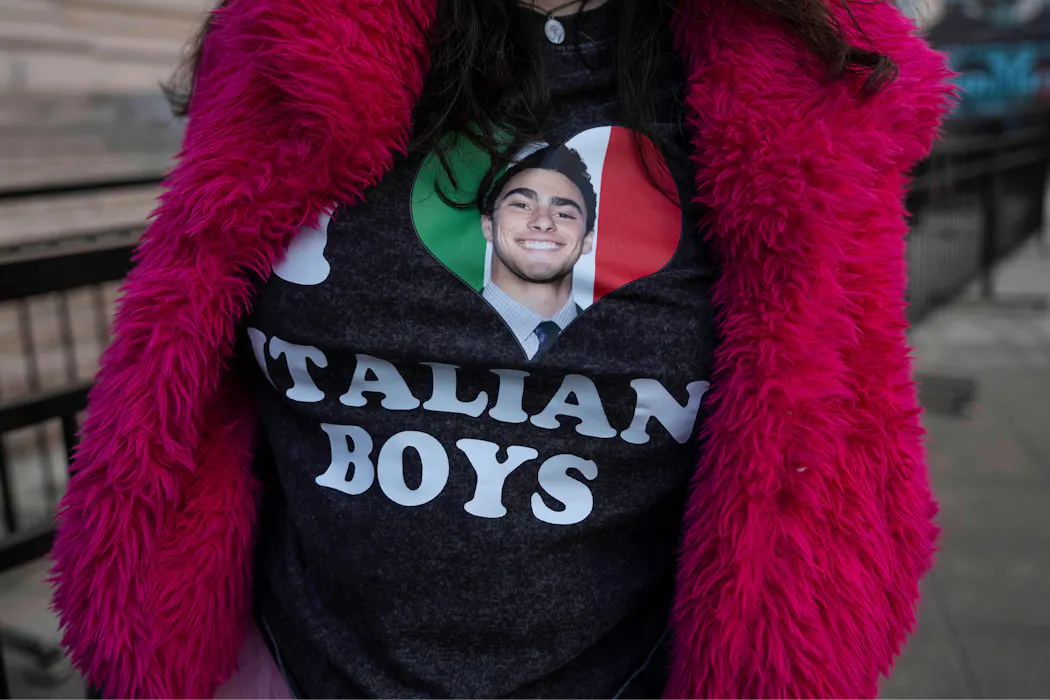
A supporter waits outside a federal courthouse in New York ahead of a January 2026 hearing for Luigi Mangione. AP Photo/Yuki Iwamura

After Luigi Mangione was arrested in December 2024 in connection with the killing of UnitedHealthcare CEO Brian Thompson, the internet did what it often does: It turned something serious into a joke.

Nearly two years later, on Aug. 14, 2026, Mangione pleaded guilty to federal stalking charges and admitted to shooting Thompson. He’s now contesting second-degree murder and related charges in New York state, where his trial is on hold while his attorneys argue much of the case should be dismissed, saying his federal guilty plea means New York would be punishing him twice for the same conduct.

After Mangione’s plea, U.S. Attorney Jamie McDonald said “there can be no celebrity in assassination.”

Nonetheless, Mangione has become a celebrity.

Viral memes, in 2024 and now, have romanticized him as a popular – and incredibly attractive – man of the people who made corporate elites within the American health insurance industry afraid.

Some of these memes adhered to conventional forms of political satire. One, for example, quoted a speech from the movie “A Bug’s Life,” in which a villainous grasshopper argues for the need to punish the movie’s ant protagonist to keep the other ants in line. In this meme, the political point was clear: Elites preserve power by making examples of insignificant ants who dare to challenge them.

The point was less clear with other memes, including celebrations of Mangione’s fashion-forward shackled ankles in court and mock Burger King advertisements referencing the fact that a McDonald’s employee had been the one to call law enforcement on him: “Burger King: We won’t turn you in to the Feds.” Rather than being ironic, they are unserious.

Nonetheless, memes like those received serious reactions from social commentators and political pundits who interpreted them as evidence that America’s young adults are nihilistic and morally indifferent.

As an experimental psychologist who studies moral judgments about real-world controversies, I have examined these attitudes toward Mangione and the humor surrounding him online.

I believe these reactions are better understood not as a rejection of values but as a refusal to participate in conversations that feel selective and disconnected from young people’s broader economic and political frustrations. In my assessment, Gen Z’s dark and nonsensical humor does not show a lack of moral values, but it’s instead the product of its desire to engage in more authentic conversations about what they believe.

Alienation, not indifference

Research shows deep levels of alienation among Gen Z, or young people born between 1997 and 2012. Having grown up with smartphones and social media, this generation has come of age in an increasingly online world. Despite the internet’s capacity for instantaneous interaction, followers have proved a poor replacement for friends.

Gen Z is among the most socially isolated and psychologically distressed generations on record. Compared with prior generations, fewer friendships and romantic relationships have left many young adults craving connection and solidarity. This alienation is also evident in their skepticism toward institutions and traditional narratives about values.

Many are pessimistic about achieving the American Dream and question the value of higher education. What was once considered the optimal vehicle for living a better life is instead viewed as a barrier.

If the American Dream feels out of reach, and college seems like an expensive obstacle, calls to take them seriously may feel inauthentic, alienating and absurd.

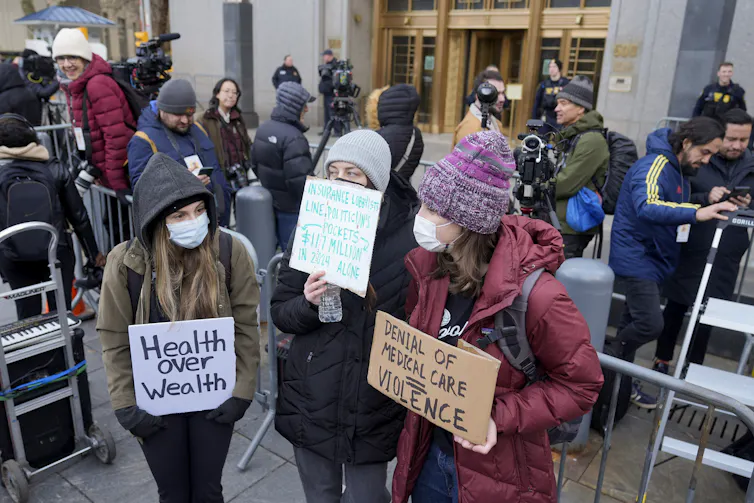
Demonstrators wearing face masks stand outside court holding signs that read 'health over wealth' and 'denial of medical care = violence'
Demonstrators stand outside the Manhattan federal courthouse in New York shortly after Luigi Mangione, the suspected killer of UnitedHealthcare CEO Brian Thompson, arrived for a hearing in December 2024.
AP Photo/Seth Wenig

When seriousness gets suspended

Discussions about values require some seriousness if they are to resonate with their audience.

If, for example, a commencement speaker praising the value of artificial intelligence is met with jeers from graduates – as former Google CEO Eric Schmidt was in May 2026 – the speaker’s message is immediately rendered inert.

These students’ jeers fell short of offering an argument against the speaker’s claims; instead, they created an atmosphere that prevented those claims from receiving consideration. For graduates pessimistic about AI’s implications for the labor market, claims professing its value feel inauthentic.

Together, their jeers not only provided an escape from what felt like an alienating and inauthentic message about the value of AI, but they also created a sense of solidarity through a shared suspension of seriousness.

A supporter outside court wears eyeglasses, a black face mask and a green hat with an 'L' logo
A supporter of Luigi Mangione wears the Nintendo character Luigi’s green hat outside a New York courthouse in February 2025.
AP Photo/Stefan Jeremiah

Humor offers an escape

Far from being unique to Mangione, this suspension of seriousness recurs throughout online meme culture.

The OceanGate implosion prompted similar memes, including one depicting a pod of orcas with the caption “The water is safe, send more billionaires.”

Even Charlie Kirk’s assassination became material. In a trend known as “Kirkification,” users superimposed his face onto images ranging from the Mona Lisa to women in bikinis, transforming a grim event into a shared absurdity.

In my assessment, Gen Z’s creation and circulation of memes offers an escape from otherwise serious conversations – for example, conversations about the value of the UnitedHealthcare CEO’s life. This may be especially true when demands to condemn Mangione appear to ignore inequities within an American health insurance system perceived as corrupt and unjust.

Although commentators often dismiss Gen Z’s humor as nonsensical or nihilistic meme slop, scholarship suggests that it acts as a collaborative coping mechanism, driven by a desire for authenticity.

Memes about Mangione, or even campus lookalike contests centered on him, fall short of offering a precise moral argument in favor of largely suspending seriousness.

This style of humor can be seen in Mangione’s decision to leave a backpack containing Monopoly money in Central Park. It was seen, too, on shell casings recovered after Kirk’s killing, which included video game commands, a sexually suggestive internet saying and “if you read this you are gay lmao.”

Miscast explanations of nihilism

With the help of approximately a dozen undergraduate students, I examined the psychological and situational factors associated with Gen Z’s reactions to Mangione and other events – like Kirk’s assassination and the Kamala Harris is “Brat” phenomenon during the 2024 presidential election – in two studies currently under review.

Our findings indicate that favorable attitudes toward Mangione were associated not only with superficial factors, such as his perceived attractiveness, but also with higher levels of political cynicism.

Perceived systemic bias in the American justice system, for example, was addressed in a meme depicting Mangione walking into court with the text “You can kill dozens of kids and get a lesser sentence because their lives don’t matter as much as a CEO’s.” Federal prosecutors were seeking the death penalty against Mangione for a charge a judge dismissed in January 2026.

Casting Gen Z’s reactions as nihilistic obscures the values and institutional distrust connected to them and fails to appreciate their egalitarian and pragmatic ideals. Dismissing them may deepen the alienation that allowed the death of a father of two to become a joke.

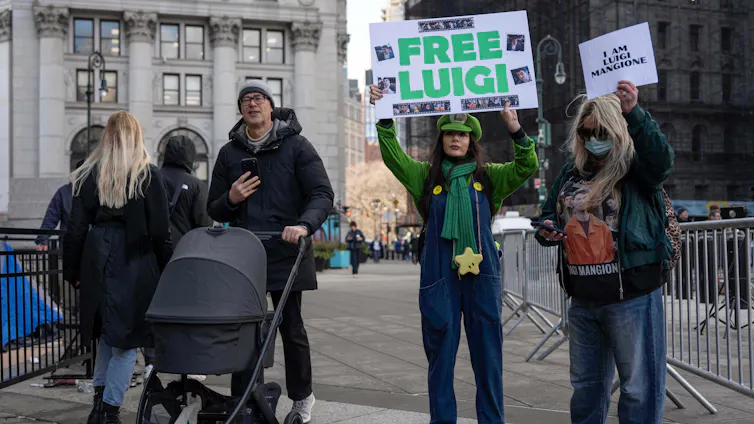
One person dressed in a green Luigi costume holds a 'FREE LUIGI' sign, while another holds a sign reading 'I AM LUIGI MANGIONE.'
Supporters of Luigi Mangione raise signs outside the Manhattan federal courthouse in New York in January 2026.
AP Photo/Yuki Iwamura

Why simple moral messages alienate

Although political commentators disagree about how to interpret the response to Mangione, many accept a seemingly basic principle: Killing should never be justified.

Yet decades of research on moral judgment shows that people do not apply that principle consistently. Instead, in certain situations, like in the famous “trolley problem,” people frequently judge killing to be morally permissible – especially when that killing is expected to promote the well-being of others.

Simplistic and sweeping moral injunctions not only fail to appreciate people’s actual moral attitudes, but they also eliminate the possibility of having authentic and nuanced conversations.

Those conversations need not end by endorsing Mangione as a sympathetic figure. However, an open and authentic conversation about Mangione cannot be realized in spaces that require all discussion of the event to be reduced to affirmations that, as has been advocated by some, “Murder is bad. Period.”

Such requirements can make conversations about significant moral issues – even controversial ones, like the morality of Mangione’s actions – little more than demands for conformity. In this case, those boundaries risk ignoring and, thus, further alienating Gen Z.

Reactions to recent coverage illustrate this concern. A popular Reddit post published just after the guilty plea complained that “media corporations are not reporting his entire statement,” pointing to Mangione’s account in court of UnitedHealthcare answering his email within an hour when he posed as a prospective investor – a contrast, he said, with his previous dealings with insurers. In my assessment, these reactions are revealing: Users were not necessarily upset that Mangione was portrayed negatively but that information they considered relevant to understanding his motivation was excluded from the conversation.

Time will tell whether Mangione is remembered, as his critics expect, as little more than a morally bankrupt flash in the pan or, by those sympathetic to him, as a martyr who reinvigorated a long-standing debate about healthcare in the U.S.

I believe that outcome will depend not only on Gen Z’s values, but also on how young people experience the conversational spaces in which Mangione’s crime, motives and punishment are discussed. If those spaces are perceived as selective or inauthentic, continued alienation may leave them laughing when seriousness is most required.

Utah Valley University undergraduate student Sebastian Trias contributed to this research.

This is an updated version of a story that was first published on Aug. 6, 2026.

The Conversation

Evan Clarkson does not work for, consult, own shares in or receive funding from any company or organization that would benefit from this article, and has disclosed no relevant affiliations beyond their academic appointment.

​Politics + Society – The Conversation
Categories
Entertainment

Janelle Brown Has a New Man! Christine Totally Approves!

Reading Time: 2 minutes

Congratulations to Janelle Brown!

It’s been about four years since the Sister Wives star followed Christine out of the toxic marriage to Kody.

Though Christine famously remarried, Janelle had sounded more reticent about moving on.

Now, that has changed — and she’s introducing her new man to the world.

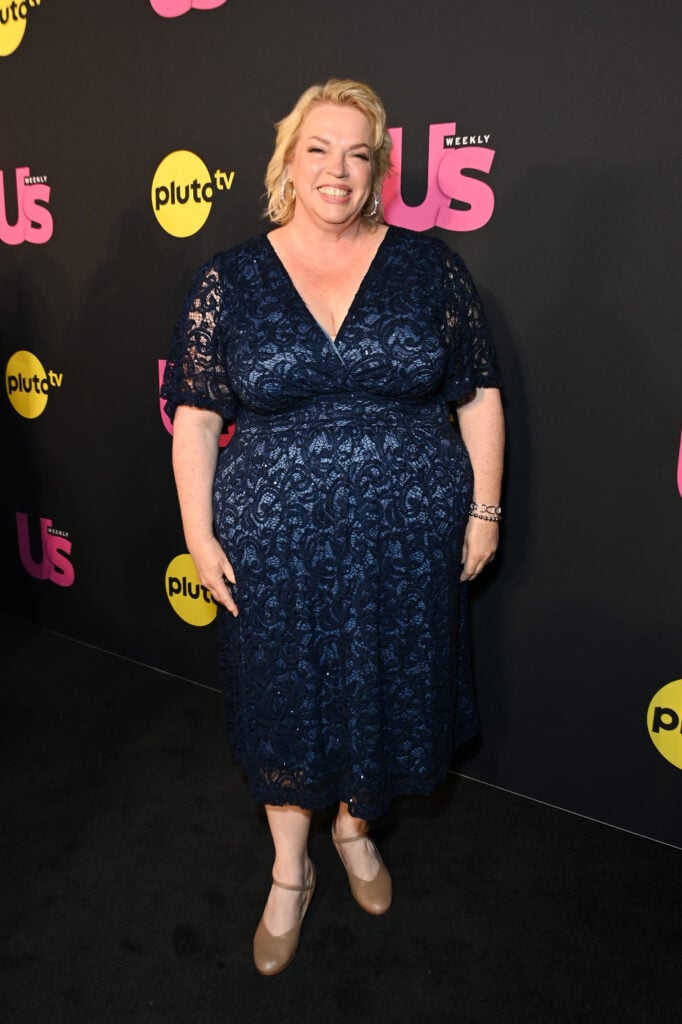
Janelle Brown in late 2024.
Janelle Brown on October 10, 2024. (Photo Credit: Jon Kopaloff/Getty Images)

‘Exactly what I didn’t know I needed’

On Tuesday, August 18, Janelle took to her Instagram page to share a photo of herself and a man.

“Some chapters are meant to unfold quietly before they’re shared,” she began her caption.

“I wasn’t looking,” Janelle clarified.

She added, addressing the man in question: “I certainly wasn’t expecting you.”

Janelle continued: “And somehow, you turned out to be exactly what I didn’t know I needed.”

“And it has been pretty wonderful,” Janelle wrote.

She included a pink heart emoji.

“Everyone,” she addressed her fans and followers, “please meet Pete.”

As far as anyone knows, this is Janelle’s first man since she ditched Kody to pursue a better life for herself.

At the very least, Pete is the first guy she’s dated enough to want to introduce him to the world.

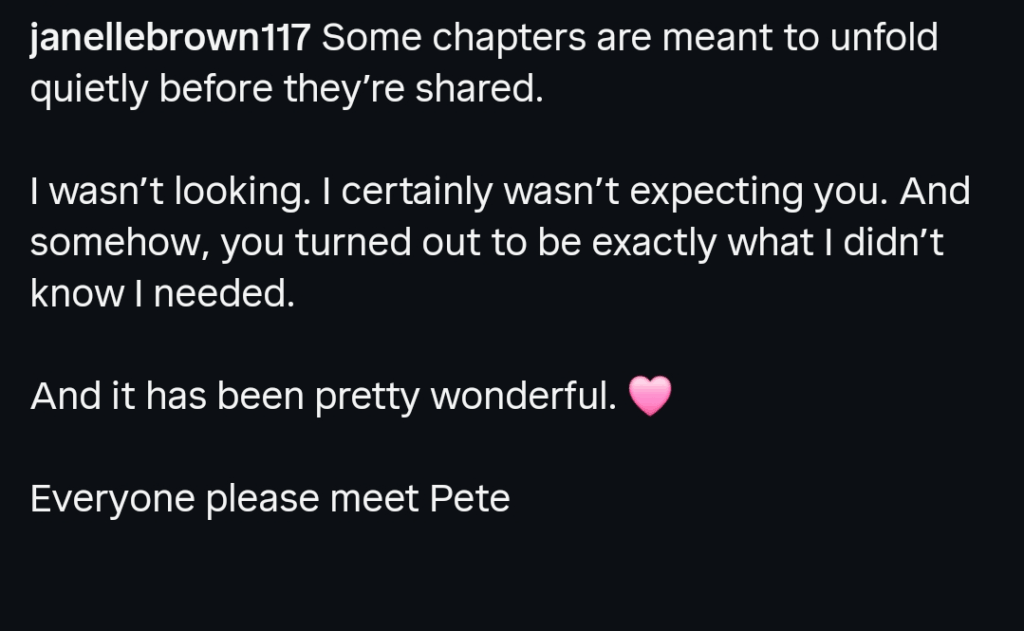
A dark mode Instagram screenshot of Janelle Brown's August 2026 caption.
On August 18, 2026, Janelle Brown introduced fans to her man. (Image Credit: Instagram)

‘They are so cute together’

Janelle Brown is not the only one who is a fan of Pete!

Obviously, numerous people complimented and congratulated her. One of them was Christine.

“He’s such an awesome guy!!” she praised of Pete.

“They are so cute together,” Janelle raved, “and he’s a construction worker like David!”

Christine is referring to her husband, David Woolley.

A dark mode Instagram screenshot of Christine Brown's August 2026 comment.
In this Instagram comment, Christine Brown shared a little about Pete — nothing but praise. (Image Credit: Instagram)

Though Christine split from Kody in 2021, ending her “basement wife” life for the unknown, Janelle was next.

In 2022, Janelle ditched Kody. She has since relocated to North Carolina (and is notably not the only Brown to do so).

We do not yet know how or where she and Pete met.

Odds are pretty good that, from her caption and past comments, Janelle wasn’t going on dating sites or using an app.

As always, we continue to wish her well as she navigates this new chapter.

Janelle Brown Has a New Man! Christine Totally Approves! was originally published on The Hollywood Gossip.

​The Hollywood Gossip

Categories
Music

Gary LeVox Still Can’t Believe Artists Look Up to Rascal Flatts

Rascal Flatts helped pave the way for many of today’s stars. But the trio’s frontman Gary LeVox still has trouble wrapping his head around the fact that they’ve been around that long. Continue reading…​Country Music News – Taste of Country

Categories
Music

Gary LeVox Still Can’t Believe Artists Look Up to Rascal Flatts

Rascal Flatts helped pave the way for many of today’s stars. But the trio’s frontman Gary LeVox still has trouble wrapping his head around the fact that they’ve been around that long. Continue reading…​The Boot – Country Music News, Music Videos and Songs

Categories
Entertainment

Phoebe Bridgers Hospitalized With Appendicitis on Her 32nd Birthday

Phoebe BridgersPhoebe Bridgers is on the mend—and cool about it.


The “Chelsea” singer, who is currently in the midst of her Lost Tour after releasing her third solo album, shared she was hospitalized after…
​E! Online (US) – Top Stories

Categories
Entertainment

Why Beer Prices Are So Cheap At Costco

Part of Costco’s global success comes down to business strategies that keep the chain’s prices consistently low, including in the beer section.

​Mashed – Fast Food, Celebrity Chefs, Grocery, Reviews

Categories
Alaska News

All incumbents appear likely to advance in Alaska House and Senate primaries

Poll workers pose for a photo at the polling site at the Mat Su Fire Station 5-1 in Palmer on primary Election Day on Aug. 18, 2026. (Photo by Corinne Smith/Alaska Beacon)

Primary voters have not removed any of the Alaska Legislature’s incumbent lawmakers, according to preliminary, incomplete vote tallies published late Tuesday by the Alaska Division of Elections.

Of the 40 state House and 10 state Senate races on ballots across the state, only five had more than four candidates. 

That matters because the top four vote-getters advance to the general election, and if a race has four or fewer candidates, the primary eliminates no one. 

Vote-counting is expected to continue through Aug. 28, the deadline for absentee ballots to arrive by mail and be counted. 

Candidates who qualify for November may still withdraw before the general election. The deadline to quit is Aug. 31.

Success in the August primary doesn’t always equal success in November: Two years ago, Sen. Scott Kawasaki, D-Fairbanks, received fewer votes in the August primary than his Republican challenger, Leslie Hajdukovich, in a head-to-head race. 

Just three months later, Kawasaki reversed that result and remains a member of the Senate today.

House District 37 – Bristol Bay

In southwest Alaska, three candidates were on course late Tuesday to be eliminated from contention for House District 37, where Speaker of the House Bryce Edgmon, I-Dillingham, is not seeking re-election.

With 20 of 35 precincts reporting at 12 a.m. Wednesday, Republican candidate Brenda Wilson led with 29.5% of the vote. The district leans Democratic, but there were two Democratic candidates and four independents, which likely split Tuesday’s vote. 

Democratic candidate Dennis Robinson was second, with 23.8% of the vote, followed by nonpartisan Mark Smith (15.4%) and Democrat Evelynn Trefon (14.5%). 

On track for elimination were Kim Johnson (6.7%), Peter Angasan (6.2%), and Cade Woods (4%). 

Senate District S – Southwest Alaska

After Sen. Lyman Hoffman, D-Bethel, announced his retirement, five candidates signed up to replace the longest-serving member of the Alaska Legislature. Among them is Edgmon, who had 33.1% of the vote with 27 of 59 precincts reporting results at 12 a.m. Wednesday. 

Republican candidate Darren Deacon (24.7%) was in second, with nonpartisan candidate Richard “Rick” Robb (17.1%) in third and Democratic candidate Wassilie Guy (16.8%) in fourth. 

In fifth place and on track to be eliminated was undeclared candidate Wayne Morgan, with 8.3% of the vote.

House District 23 – Eagle River

In Eagle River, Republican Rep. Jamie Allard faced four challengers in Tuesday’s primary vote. On Wednesday morning, with all precincts reporting results from election day, Democratic candidate Lee Hammermeister had just 5.8% of the vote and was on track to be eliminated. 

That would leave Allard, who had 41% of the vote, to face two other Republicans — Nick Capozzi (9.1%) and Ruby Jones (13.3%) — as well as one Democrat, Jim Arlington, with 30.9% of the vote. 

House District 29 – Eastern Mat-Su

Gov. Mike Dunleavy appointed Republican Garret Nelson of Sutton to represent this district after its former Representative was selected to fill a vacancy in the state Senate.

Now, Nelson is running for a term of his own and facing five challengers.

On Wednesday morning, with all precincts reporting results, Nelson had just 23.7% of the vote, behind Republican challenger Steve Menard, with 40.5%. Also in the top four were Democratic challenger Kimberly Slone, with 21.6% and nonpartisan challenger Jessica Kusner-Kalarchik, with 7.7%.

On pace to be eliminated were Libertarian Candice Frisby (4.5%) and undeclared candidate Amber Hansen (2.1%). 

House District 30 – Big Lake

Republican Rep. Kevin McCabe is an outspoken member of the Alaska House’s minority caucus and faced four challengers — three of whom are Republicans — in Tuesday’s primary.

With 12 of 12 precincts reporting results, McCabe led the field with 33.2% of the vote. Democratic challenger Sandra Loomis was second with 27.2%, followed by Republican Doug Massie (20.9%) and Republican Doyle Holmes (13.9%).

Republican Mike Alexander, with 4.8% of the vote, was on course to be eliminated. 

Other races to watch

While no other candidates will be eliminated in the primary election, the statewide trend in the primary was favorable for Democrats. No incumbent Democrat trailed a Republican on election day, but several incumbent Republicans trailed Democrats. 

In Anchorage, with all election day precincts reporting, Democratic candidate Denny Wells led Republican Rep. Mia Costello by 57 votes out of 3,651 cast in the race for House District 15, Sand Lake. 

Wells narrowly lost to Costello two years ago and had an even closer loss to former Republican Rep. Tom McKay in the same district in 2022. 

In Fairbanks, nonpartisan candidate Joy Cottle led Republican candidate Harmony Tomaszewski by four percentage points in a district where President Donald Trump won over 58% of the vote two years ago.

Tomaszewski is the spouse of the incumbent, Republican Rep. Frank Tomaszewski, who is running for Senate this year. 

In Homer, nonpartisan candidate Brent Johnson had 55% of the vote, compared to 45% for incumbent Republican Rep. Sarah Vance. 

The lone incumbent Democrat trailing on election day, Rep. Nellie Unangiq Jimmie, was trailing another Democrat, CJ McCormick, who held the seat until Jimmie won it two years ago.

With just 7 of 24 precincts reporting in House District 38, Jimmie had 24.2% of the vote, while McCormick had 41.7%. Republican candidate Willy Keppel had 23.3% and nonpartisan candidate Joseph Amik had 10.8%. 

In all of these races, the results could be different in November, when the same candidates are scheduled to run against each other again.

SUPPORT: YOU MAKE OUR WORK POSSIBLE

Categories
Alaska News

Eat your dog’s food? 40% of owners say they would

Would you eat your dog’s food? According to new research, four in ten dog parents would. A survey of 2,000 dog owners found that 23% would try their dog’s food without hesitation and 16% would try it “only once, out…

Categories
Alaska News

james-lacy-5w3oIN-0Lzs-unsplash

(Photo by James Lacy via Unsplash)