Categories
Politics

Chicago passed on the World Cup but has other sports plans

CHICAGO — The United States’ third-largest city felt confident passing on this year’s World Cup in part because the city’s sports loyalty was well-scripted. The Bears owned Sundays. The Cubs and White Sox divided baseball fans. And the Bulls still carry the glow of the Jordan dynasty.

But a whole new generation of sports teams is betting Chicago’s appetite for sports is bigger than its traditional loyalties — and that fans are ready for something different.

The WNBA’s Chicago Sky is preparing to host the league’s All-Star weekend July 23-26. The Chicago Stars are trying to build a women’s soccer franchise in a city with deep youth participation and a growing appetite for the sport. And the Chicago Fire are planning a new privately financed stadium in the South Loop and are investing heavily in youth development and facilities.

The timing is notable.

The city’s newest teams are making their pitch at the same moment two of Chicago’s oldest franchises are asking for help building new homes.

The McCaskey family continues to pursue public assistance for a new Bears stadium, whether in Illinois or Indiana. White Sox owner Jerry Reinsdorf has sought public support for a proposed South Loop ballpark. Those requests have triggered a familiar debate: whether taxpayers should help finance stadium projects for billion-dollar sports franchises while governments struggle with schools, transit and other basic services.

The newer teams are offering a different message. Chicago Fire owner Joe Mansueto, another Chicago billionaire, privately funded the team’s $750 million stadium, though the Chicago City Council earlier this week approved a $425 million tax subsidy to fund the surrounding infrastructure. Their pitch is not built around nostalgia but around investing in communities.

At a sports and business forum at the Obama Presidential Center this week, Fire Chief Marketing Officer Dan Moriarty described a shift in how soccer is being consumed in Chicago. The sport’s audience is younger, more diverse and increasingly global, he said, with fans who already follow international clubs now looking for a local connection. He pointed to a simple sign of change: at Chicago farmers markets, soccer jerseys are increasingly common — even if many of them still carry the names of European clubs.

The challenge, he said, is turning those fans into supporters of Chicago teams.

“Soccer has this lifestyle aspect,” former U.S. women’s national team goalkeeper Alyssa Naeher said during the discussion. “It brings people together.”

That may be soccer’s biggest advantage in Chicago. The city is already a global crossroads, with neighborhoods shaped by generations of immigrants and communities that have long embraced the sport. The Fire are betting that global stars can accelerate that connection. The club recently signed Polish striker Robert Lewandowski, one of the world’s most accomplished players, as part of a broader effort to raise the team’s profile.

Women’s sports are riding a similar wave.

“Women’s sports generally, and particularly soccer, has seen an evolution in this country,” said Laura Ricketts, who is a bridge to the old and new in sports. She’s a co-owner of the Chicago Cubs, an investor in the WNBA’s Chicago Sky and executive director of the Chicago Stars women’s soccer team.

“What we’re now seeing [is] an explosion, especially in the NWSL,” she said of the National Women’s Soccer League. “We’re growing, and the best way [to see it is] our fan base is growing.”

She compares women’s soccer today to the NBA or Major League Baseball of the early 1980s. “There’s just so much opportunity,” said Ricketts. Women’s soccer, she said, has benefited from decades of investment in youth leagues and college programs. That foundation is now translating into a professional audience.

The growth is not just about attendance. It is about loyalty. Women’s sports fans, Ricketts said, tend to be younger and highly engaged, with a strong connection to the brands and communities supporting the teams.
With World Cup interest, “We’re just seeing the tip of the iceberg for soccer in this country.”

She said there’s been similar investment into basketball and she hopes Chicago sees the benefits of that as it hosts the WNBA All-Star weekend, marking three decades of the league.

“The momentum continues right here in Chicago,” Sky co-owner Nadia Rawlinson said, describing the event as a celebration of how far women’s basketball has come — and how much further it can go.

None of this means the Bears, Cubs, White Sox or Bulls are losing their place in Chicago’s sports hierarchy. But newer teams are making a case for a place alongside them.

​Politics

Categories
Sports Fox

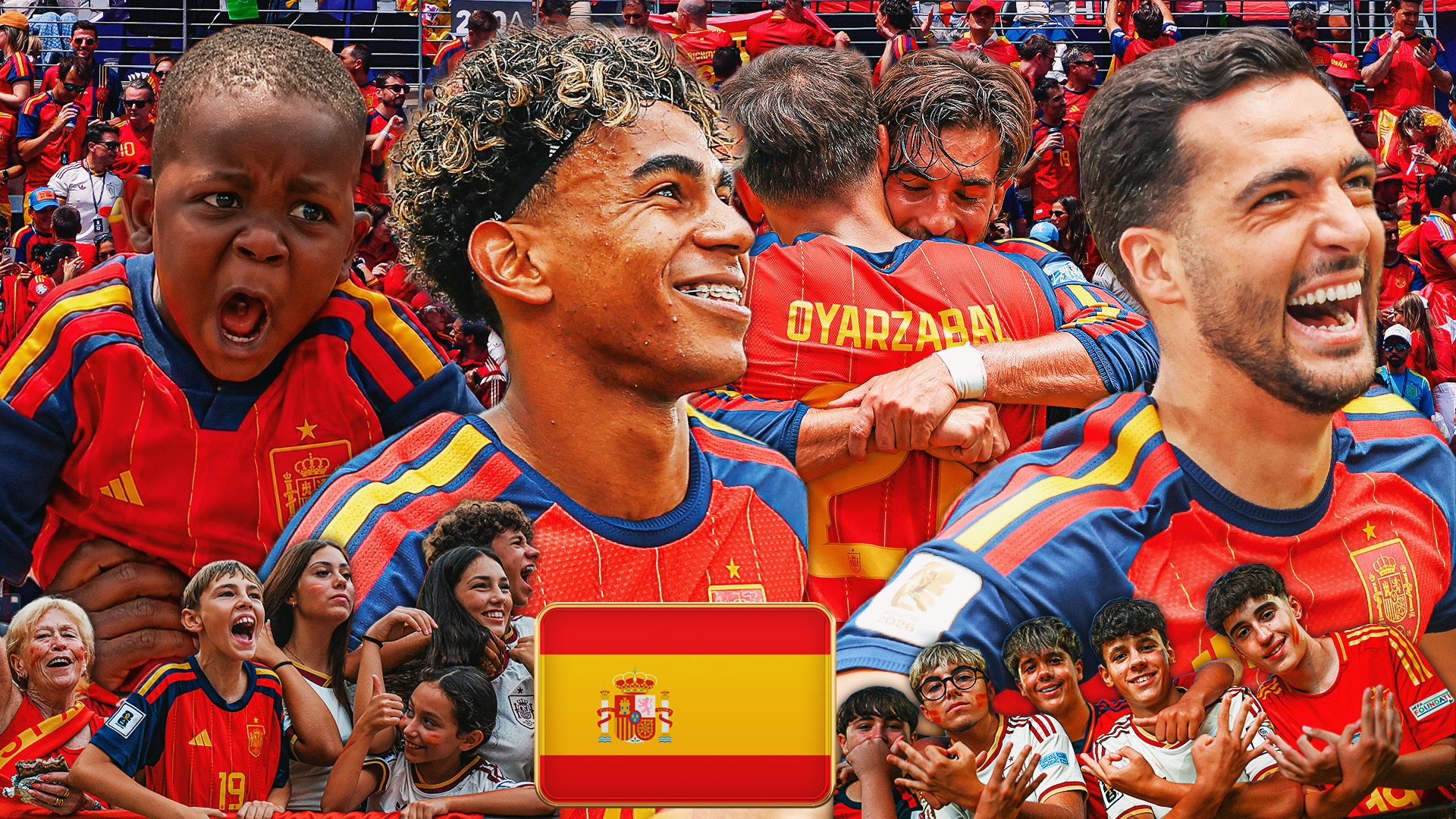
Spain Is The Last World Cup Team That Knows Exactly Who It Is — And How To Win

El Fútbol won on Sunday. Spain beat Argentina, 1-0, in New Jersey to win its second World Cup, and the scoreline is the least descriptive stat of the night. Try this one instead: the defending champions, with Lionel Messi on the field for 120 minutes, did not register a single shot on goal. Not one. Spain had 65 percent of the ball, took 20 shots, made Emiliano Martínez produce a World Cup final record 11 saves, and when Ferran Torres swept in Nico Williams’ header across the box in the 106th minute, it wasn’t a breakthrough. It was the inevitable finally coming to fruition. This was total domination disguised as a tight final if you only look at the score. Spain finished the tournament unbeaten, conceded one goal in eight matches and suffocated the best attacking players on earth — France, then Argentina — in consecutive games. La Roja pass you to death, sure. But they also press you into panic the instant they lose the ball, and they defend with an organization that borders on choreography. This is a complete team. And more importantly, it is a completely legible team. Which raises the question worth mulling over: why is Spain the one nation you can identify instantly by its playing style? Because we live in soccer’s most unified era. Globalization has sanded down national styles. Brazilian kids grow up in European academies. Every federation hires the same journeymen. Turn on a random international match, and you’ll see the same shape, the same buildup patterns, the same borrowed ideas. This summer, we saw Brazil playing Italian catenaccio, while Japan brought the beauty. Imagine predicting that decades ago. National identity in this sport is mostly a nostalgia act now. Except in Spain, where it’s a curriculum. Walk into almost any Spanish academy, and you’ll find 8-year-olds playing rondos before they’re old enough to spell “tactics.” The keep-away circles look like warm-up games. They’re actually the entire national philosophy in miniature: receive on the half-turn, know your next pass before the ball arrives, make the field a geometry problem the opponent can’t solve. Positional play isn’t taught in Spain as a system. It’s taught as a language, the way kids elsewhere learn multiplication tables. And the pressing is drilled just as young. The moment possession is lost, the nearest players swarm to win it back. The academy gospel says the ball is the whole point, and living without it is unacceptable. Then the federation does the part almost nobody else does. Every Spanish youth national team, from the U-15s up, plays the same way. Same principles, same patterns, same demands. By the time players reach the senior side, they’ve been rehearsing this exact play for a decade. Pau Cubarsí and Lamine Yamal didn’t need to learn Spain’s style at 17. They were raised inside it. The man lifting the trophy is the proof. Luis de la Fuente isn’t some outside hire with a vision. He spent years inside the federation coaching Spain’s U-19s and U-21s to European titles — coaching many of these exact players as teenagers. The pipeline didn’t just produce the squad. It produced the manager. That’s why the ghosts of 2008 to 2012 don’t haunt this team; they were simply the foundation. Xavi Hernández and Andrés Iniesta retired, but the idea never did. It just went back into the academies and waited for new bodies. Rodri conducts where Xavi conducted. Pedri, Dani Olmo and Fabián Ruiz are distinctly Spanish in the way they take care of the ball. The names change. The structure doesn’t. Every other football power should be taking notes, and most won’t, because this can’t be copied in a hiring cycle. It’s a 30-year commitment to teaching children your identity and then trusting it at every level. Spain made that commitment decades ago and never flinched, through golden runs – and early exits – alike. Sunday brought the reward for their consistency: a World Cup won by a national team that knows exactly who it is, in an era when almost nobody else does. La Roja play fútbol. Everyone else plays catch-up.​Latest Sports News from FOX Sports

Categories
Entertainment

Kylie Jenner, Timothée Chalamet Enjoy PDA-Filled Outing at World Cup

Timothee Chalamet, Kylie JennerKylie Jenner and Timothée Chalamet are proving they’re sole-mates.
Indeed, the couple showed off some PDA while attending the 2026 FIFA World Cup final match between Argentina and Spain at MetLife…
​E! Online (US) – Top Stories

Categories
Politics

Did World Cup permanently change ticket-price politics?

Stories of fans left outside stadiums, duped by “ghost tickets” on resale platforms, were everywhere at this year’s World Cup. But advocates are hopeful the near-endless stream of negative headlines and angry supporters will spur long-sought-after laws to outlaw the practice of speculative ticket selling, when resellers put tickets they don’t yet have on the open market.

At the state level, it would seem they’re right.

Illinois, North Carolina and Washington, D.C. have all passed legislation banning speculative ticket sales since the beginning of the World Cup. Connecticut, Oregon and Vermont have also enacted ghost ticket bans this year. And Massachusetts Gov. Maura Healey announced her intention to file a bill prohibiting ghost tickets — among other consumer-friendly initiatives — on Thursday.

“It’s definitely raising eyebrows in the state of politicians and legislators to really ban ghost ticketing, speculative ticketing,” said Scott Friedman, podcast host and co-founder of the Ticket Talk Network. “When you have it happen at this scale, that not just affects the United States, it’s a global tournament for heaven’s sake. Absolutely, change is coming.”

“You see dozens of these bills percolating around the country,” said John Breyault, vice president of public policy, telecommunications and fraud at the National Consumers League. “Most of which have some kind of ban on speculative tickets.”

There’s action at the federal level, too. Though advocacy groups aren’t exactly aligned on a path forward in Congress. Breyault and the NCL have been active in promoting the TICKET Act, which passed the House in April and moved through the Senate Commerce Committee in June.

Proponents say the bill would ban speculative ticket sales and safeguard consumers against fraudulent ticket websites.

“In this environment, where Republicans and Democrats can’t agree that the sky is blue on some days, that’s a rare occurrence,” Breyault said.

But Stephen Parker, the executive director of the National Independent Venue Association, said the “you could drive a Mack Truck” through the TICKET Act’s ghost ticketing provisions. Music groups, too, have panned the bill, arguing it would still allow speculative ticket sales by permitting sellers to advertise ticket procurement services for tickets they do not yet possess.

For now, Parker said, the most encouraging action is happening in the states.

“This is happening across the country, and ultimately, what we are seeing is state legislators from both parties saying enough is enough. If Congress isn’t going to do something, we are, and we couldn’t be more grateful for their work.”

​Politics

Categories
Politics

New York, New Jersey to examine whether World Cup funds were money well spent

New York and New Jersey planned to spend roughly a half billion dollars hosting eight World Cup matches, including today’s final. But once it’s over, lawmakers in both states want to know if they got their money’s worth.

In New York City, Councilmember Virginia Maloney, who leads the chamber’s committee on economic development, is going to lead that examination.

“First I want to make sure we recouped our cost,” she said in an interview on Friday at a coffee shop in her Manhattan district, which includes the Upper East Side. “I’m not confident we can say that.”

She said data seems mixed on how well hotels did because of the World Cup. Bookings initially appeared low, but it seems like hotels recovered closer to the matches. However, it’s not clear if that’s because of the World Cup or the other major events happening this summer in the city, including the July 4th festivities and the Knicks’ championship win — which means an analysis will have to try to untangle what economic activity happened because of the World Cup and what would have happened anyway.

“What is irrefutable is that bars and restaurants were seeing a lot more activity and action in New York, and that translates into real economic benefit for New Yorkers,” Maloney said.

Maloney attributes that to a lot of things, including a law signed by Gov. Kathy Hochul to temporarily extend hours for bars and restaurants.

One report from the Queens Chamber of Commerce found a 30 percent increase in businesses for people going out to drink and eat.

“The economic benefit was not necessarily people who were going to the World Cup, but just people participating in the summer of New York, going to all five boroughs to celebrate or be out together,” she said.

The host committee released a study last summer predicting $3.3 billion in economic impact across New York and New Jersey, including about $432 million in state and local tax revenues.

Maloney worried about rosy projections from FIFA and its boosters compared to the reality on the ground. A preliminary study by the host committee of just the group stage found $1.2 billion in direct economic impact, Bloomberg reported.

Maloney views the experience as a learning opportunity for other big events the city puts on, including future political conventions and the 2042 Olympics, which the state and city are exploring a bid for.

“It should be something that you can make a playbook out of, not where you’re starting from scratch every time there’s a major event,” Maloney said.

​Politics

Categories
Food

What’s In The World’s Most Expensive Sandwich?

When you think about the world’s most expensive sandwich, you might think of something European or Asian, but it’s an American classic right in NYC.

​Food Republic – Restaurants, Reviews, Recipes, Cooking Tips

Categories
Sports Fox

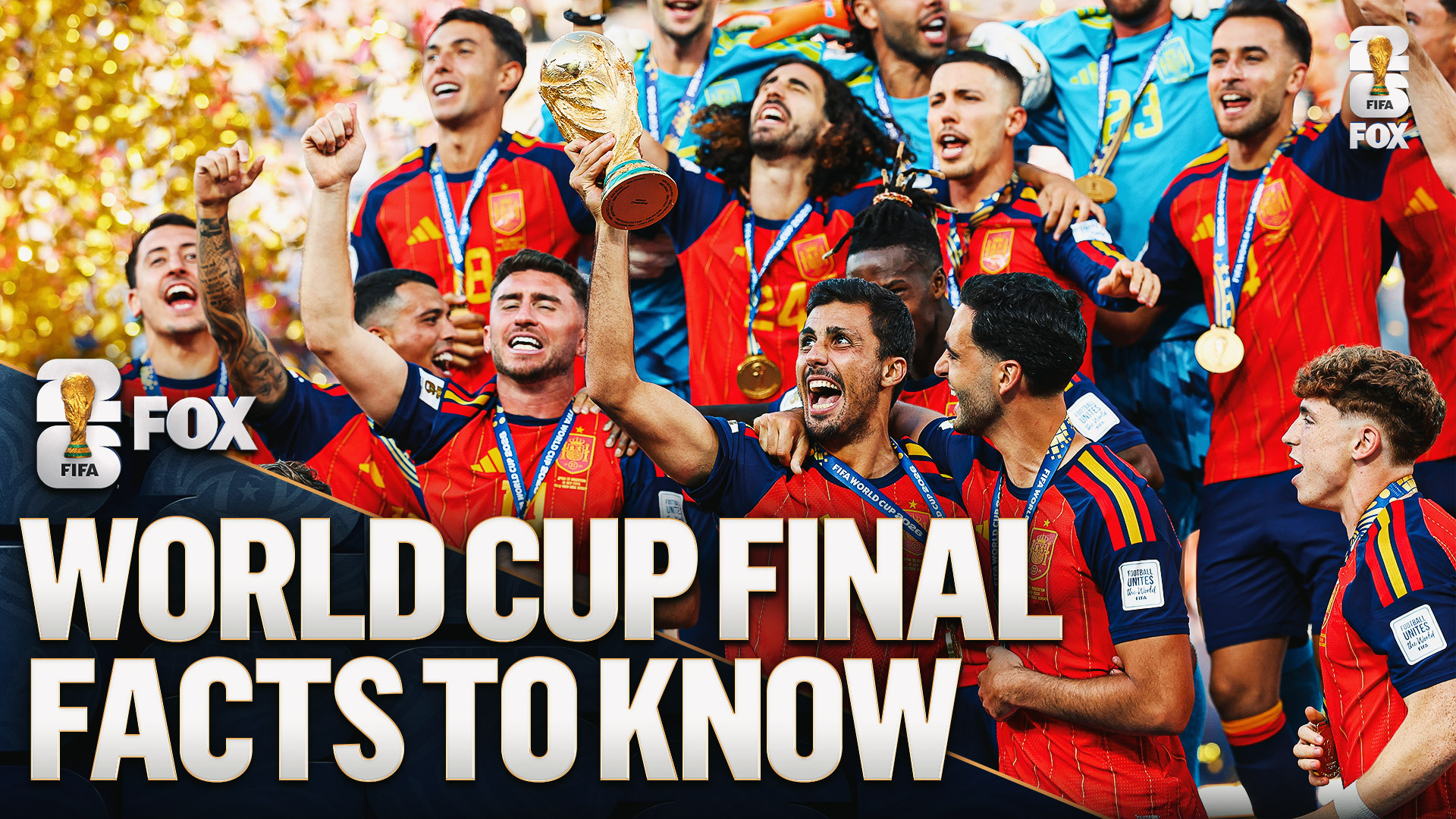
Spain vs. Argentina: The Best Facts From The 2026 World Cup Final

For the second time ever, Spain is the world champion. This time, it was in much more dominant fashion than back in 2010. Argentina was not much of a threat to score for most of the 120 minutes, with Spain in complete control. Ultimately, the game had it all, from a red card to a dramatic winner and then some. Here are the five best facts from the 2026 FIFA World Cup final. 1. Argentina Makes History With No Shots In Regular Time Of the 900 World Cup games since 1966, only three teams have attempted zero shots during regular time (90 minutes). Costa Rica did that in 1990 against Brazil and in 2022 against Spain. The third team: Argentina in the final on Sunday. This wasn’t just because Argentina finished the game with 10 men. Spain dominated proceedings from the get-go, remaining patient in attack throughout the game before finally breaking through on its 20th shot. Argentina’s first shot finally came in the 117th minute, when Messi got possession on the right wing and sent a laser right into the face of Spain midfielder Mikel Merino. 2. First World Cup Final Red Card Since 2010 Enzo Fernández was sent off for a second yellow card during the first half of stoppage time when he sent Spain defender Pau Cubarsí flying. Fernández is the first player to receive a red card in a World Cup final since Dutch defender Johnny Heitinga in 2010. That game, also against Spain, saw midfielder Nigel de Jong infamously cleat Spain midfielder Xabi Alonso in the chest without punishment. Overall, Fernández’s red card was the sixth ever in a World Cup final. 3. Argentina Goes To Extra Time Again This was the third time Argentina has gone to extra time at this World Cup. That’s the first time a team has gone to extra time three times in the same tournament. Impressively, Argentina has not faced a penalty shootout at this tournament. This was the 14th time in its World Cup history that Argentina has had a game go to extra time. Impressively, it advanced in 11 of the first 13 games. 4. Martínez Makes History In Argentine Goal It took a lot for Spain to finally beat Emiliano Martínez in the Argentina goal. Martínez made 11 saves against Spain, which is the most in a final on record (since at least 1966). He was seriously tested on a couple of occasions, including the last attempt of regular time, which saw Lamine Yamal put a free kick on target from about 20 yards away from goal in the middle of the field. Martínez was the hero in the 2022 final, which saw Argentina beat France in a penalty shootout. He has become a key figure for Argentina since becoming the starting goalkeeper in 2021. 5. Spain’s Well-Timed Goals In Extra Time Spain has played nine World Cup matches that have gone to extra time, but it has only scored two goals. Those two goals: Andrés Iniesta in the 2010 final and Torres on Sunday in the 2026 final. Torres also became the fifth substitute to score in a World Cup final. He’s the first to do so since Mario Götze for Germany in 2014, a goal that was also a winner in the second half of extra time.​Latest Sports News from FOX Sports

Categories
Entertainment

Strangely, Ice Cream Once Used Whale Poop As Flavoring

Ice cream and sperm whale waste don’t often appear in the same sentence, let alone the same bowl, but this historical recipe thought they’re a great match.

​Mashed – Fast Food, Celebrity Chefs, Grocery, Reviews

Categories
Food

Dolly Parton Brilliantly Skips This Baked Potato Step Every Time

Looking for the best baked potato ever? Follow Dolly Parton’s tried-and-true oven cooking method that’s even easier than how you may be making them already.

​Food Republic – Restaurants, Reviews, Recipes, Cooking Tips

Categories
Sports Fox

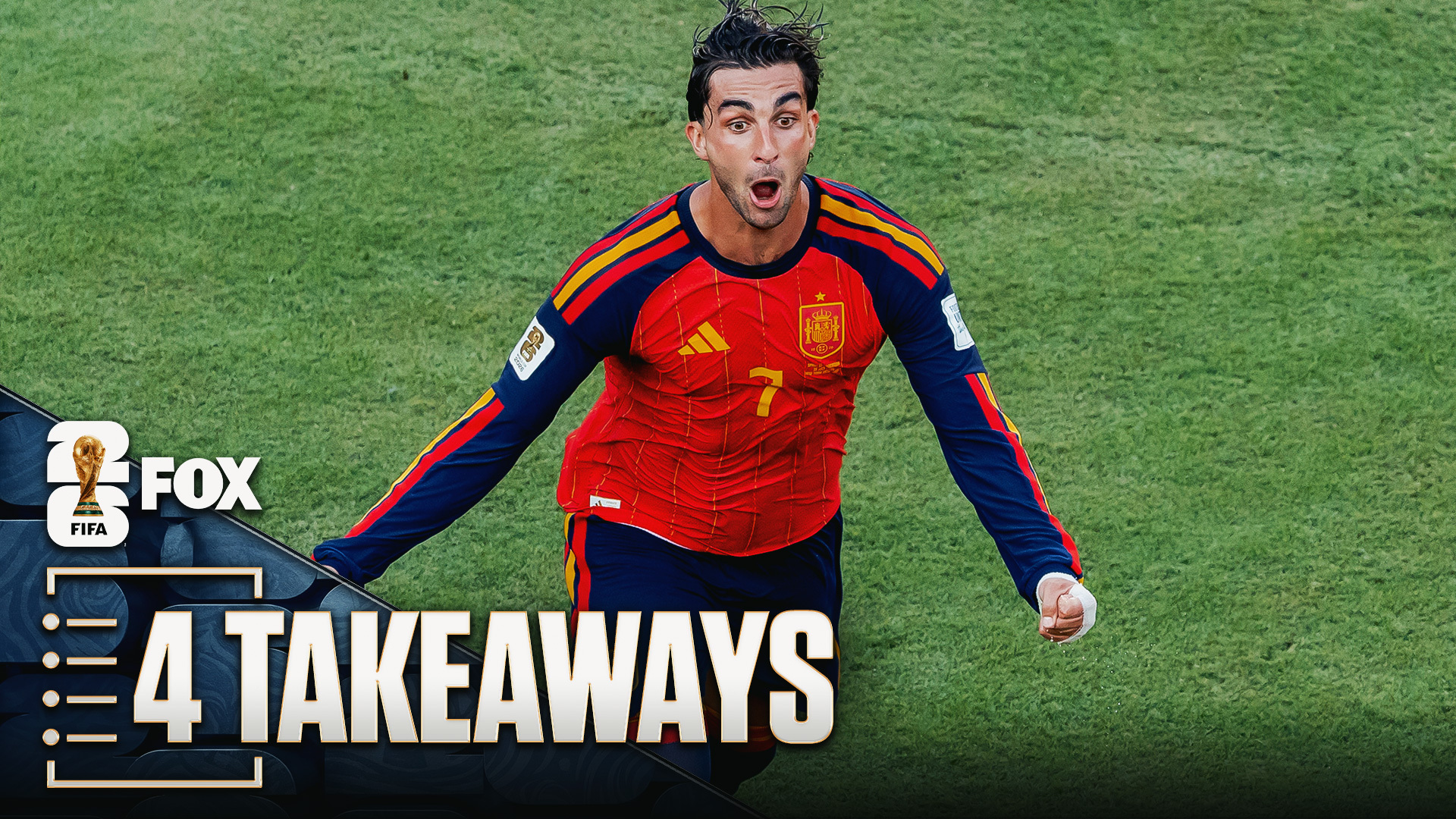
4 Takeaways After Spain Beats Argentina In Extra Time To Win 2026 FIFA World Cup

NEW YORK NEW JERSEY STADIUM — Spain stands alone on top of the world. La Roja won their second World Cup title on Sunday — Spain’s first since 2010 — by defeating Lionel Messi and 10-man Argentina on Ferran Torres’s goal in the second half of extra time following a scoreless first 90 minutes. Spain denied La Albiceleste’s bid to become the first country to repeat as World Cup champions since Pelé led Brazil to back-to-back titles in 1958 and 1962. Spain dominated the match from start to finish. It outshot the Argentines — who lost Enzo Fernández to a second yellow card before the additional 30 minutes began — by an astounding 20-0 and forced keeper Emiliano Martínez to make 11 saves, a new World Cup final record. Yet it took Torres’s goal in the 106th minute to defeat the defending champs — and probably end Messi’s career on the biggest stage in sports. Here are my takeaways from Sunday’s dramatic World Cup final: 1. Spain’s Triumph Richly Deserved As they did against England in last week’s semifinal win in Atlanta, Argentina’s fans badly outnumbered Spain’s among the 80,663 who attended Sunday’s finale. Most neutral supporters in attendance and watching across the globe probably wanted to see Messi win another World Cup, too, further cementing his legacy as the greatest soccer player of all time. Although they ended up disappointed, La Roja thoroughly deserved to win this World Cup. The pre-tournament favorites were never flashy over their five-plus week stay in North America. They didn’t have the panache of France, or the pure star power of other nations — even though they fielded teenage sensation Lamine Yamal. Spain was, nevertheless, the best team at this World Cup. It showed that by rendering France toothless and eliminating Les Bleus with relative ease to reach Sunday’s decider, where it also thoroughly outplayed Argentina. The score was close, but the stats weren’t; even before Fernández was sent off in stoppage time with a second yellow card, Yamal & Co. had controlled nearly two-thirds of the possession. 2. Lionel Messi’s Last World Cup Game? Almost certainly, yes. The GOAT turned 39 during the tournament. He’ll celebrate his 43rd birthday when Argentina, Morocco, Paraguay, Portugal, Spain and Uruguay co-host the centennial World Cup in 2030. (As things stand now, the South American nations will get just one match each.) Messi may be superhuman, but he’s human nonetheless. Surely he won’t still be scoring almost at will at the highest level four years from now. Right? Although if there’s anyone who can, why not him? Messi was at the height of his powers this summer, eclipsing the career-best seven goals he scored in leading his country to the 2022 title. He’d said he would retire after that World Cup, only to change his mind after Argentina prevailed. After coming so close to winning a second title, could he try to climb that mountain again? After all, Cristiano Ronaldo was 41 this summer and still scored three goals in Portugal’s five matches. And because Messi’s game doesn’t rely as much on physicality, he could surely stick around a little longer if he wants to. 3. La Roja’s Own Dynasty Is Just Beginning So much of the talk in the lead-up to Sunday’s grand finale a few miles west of New York City was the opportunity for Argentina to do something unprecedented by becoming the first national team ever to win four consecutive major titles, snapping a tie with the legendary Spanish side of the early 2010s. In ending that dream for the 2022 World Cup champs, this generation of Spanish players asserted themselves as worthy successors to both of those dynasties. Under coach Luis de la Fuente, Spain has won three trophies in the last three years; Sunday’s triumph capped the European Championship La Roja claimed in 2024 and the UEFA Nations League crown it claimed a year earlier. (They narrowly lost the Nations League final last summer, to Portugal.) With another Nations League to play for next year, Euro 2028 set for the following summer and a home World Cup two years after that, Spain — with the fifth-youngest roster among the 48 squads at this World Cup — will have a chance over the next few years to go down as the most decorated national team of them all. 4. What’s Next For Argentina? Messi isn’t the only regular who might not be back even for the 2028 Copa América, let alone the next World Cup. Coach Lionel Scaloni could leave; the architect of the most successful Argentina team ever is out of contract and hasn’t said whether he wants to return. Eight players besides Messi are also already 30 or older. With an average age of almost 29, they were one of the grayer teams in this World Cup. So even if Messi and Scaloni stay, change is coming for the runner-up. And if both Lionels leave? A whole new batch of fresh faces led by young holdovers like Valentín Barco and Nico Paz, both 21, and Giuliano Simeone, 23, will be asked to grab the baton from the vets. They’ll have an awful lot to live up to.​Latest Sports News from FOX Sports