Good things come to those who wait. Perhaps that’s why Culver’s fans have sometimes had to go entire years without seeing this award-winning burger on the menu.

Mashed – Fast Food, Celebrity Chefs, Grocery, Reviews









Good things come to those who wait. Perhaps that’s why Culver’s fans have sometimes had to go entire years without seeing this award-winning burger on the menu.
Mashed – Fast Food, Celebrity Chefs, Grocery, Reviews
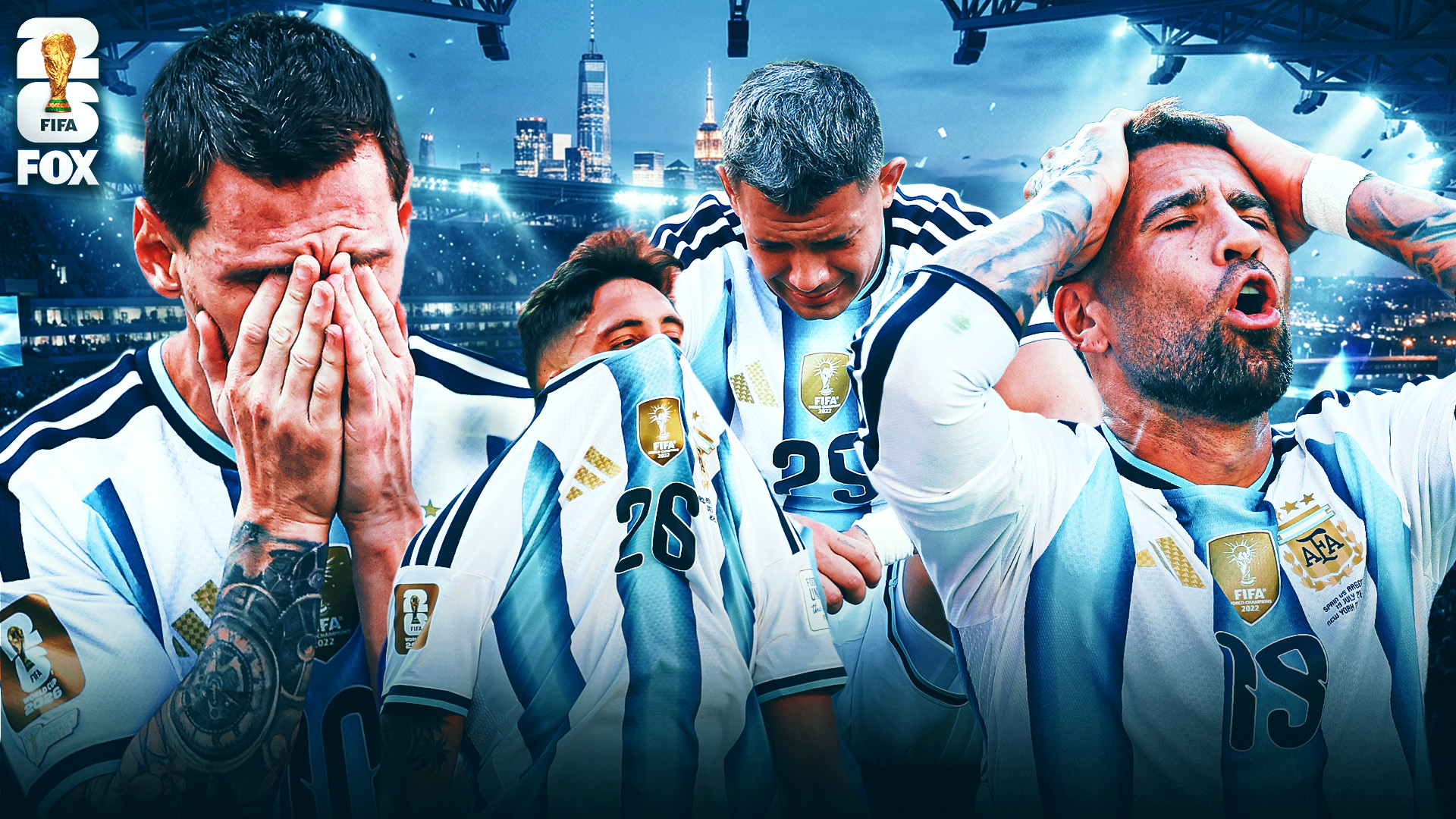
NEW YORK NEW JERSEY STADIUM – After what seemed like every player from Spain came over to shake his hand, Lionel Messi sat alone on the pitch. Argentina’s superstar took off his cleats and shinguards and plopped his legs out in front of him, leaning back on his arms. As FIFA volunteers assembled the stage for the trophy presentation, one of them waved in his direction. Messi looked past him, instead scanning the stands for his family. Spain had just defeated defending champion Argentina 1-0 to win its second-ever World Cup behind a goal from Ferran Torres in the second half of extra time. Messi and his La Albiceleste had arrived in pursuit of history, hoping to become the first nation since Pelé’s Brazil to successfully win a second consecutive World Cup title. No such luck. Argentina finished with zero shots on goal. Spain had 12 and one went in. “We’re sad,” Argentine manager Lionel Scaloni said in his press conference after the match. “We feel extremely grateful to all our fans, all those people who just needed that energy that we were lacking. We managed to go all the way to the end when the match was so open, and it just couldn’t be. In the end, they deserved the victory. That’s reality. We need to accept it. “But these are the moments to bounce back stronger. We need to reset and start again.” Argentina’s reign is officially over. It entered this summer on an unprecedented high as the two-time defending Copa América champion, having won the tournament in 2021 and 2024 with the 2022 World Cup sandwiched in between. It was also Argentina’s third World Cup final appearance in the last four editions. For Messi, there was an added layer of symbolism as he spent much of his life in Spain, where he became a global icon playing for Barcelona. So, will this be the last time the soccer world sees Messi on its biggest stage? Who knows. Regardless of what he decides, the 39-year-old defied age over the past 39 days. He opened the tournament with a hat trick in Argentina’s 3-0 victory over Algeria, scored a stunning equalizer in the round of 16 against Egypt and delivered two defense-splitting assists in the semifinal against England. He finished with eight goals and four assists, narrowly missing out on the Golden Boot after France’s Kylian Mbappé scored twice in Saturday’s third-place match to finish with 10. Sunday was different. With Spain controlling possession for long stretches, Argentina was chasing rather than dictating and Messi didn’t have opportunities to influence things the way he had throughout the tournament. An already exhausted La Albiceleste was forced to play with 10 men for more than 30 minutes after Enzo Fernández was shown a red card just before extra time. Goalkeeper Emiliano Martínez, the 2022 Golden Glove winner, had to make a World Cup final-record 11 saves with a broken finger just to keep La Roja at bay. “I do have to be thankful for this group because they were warriors and that is the truth,” Scaloni said. After the game, Scaloni was asked repeatedly about Messi’s future. “It’s crystal clear to me that he will play up until he decides not to,” said Scaloni, who had not yet spoken with Messi before addressing the media. “I hope everyone is proud of what he’s achieved because he’s the best football player ever to step foot on a pitch. I have no doubts about this. What he did this World Cup is incredible.” As the trophy presentation stage came together, Messi rose from the turf and led his teammates to the left side of the pitch where Spain’s players were celebrating. He didn’t appear to say a word. Instead, he stood quietly, taking it all in. His hands rested behind his back, the captain’s armband still wrapped tightly around his left biceps. Every so often, a photographer stepped in front of him, capturing another image that would soon be seen around the world. There was criticism, mostly throughout the knockout stage, that FIFA wanted Argentina to keep advancing. In reality, no matter what Egypt or England fans might say, Argentina was a resilient team. Time and again, they’d find themselves trailing only to respond with remarkable late comebacks. They embraced the suffering and the chaos and just knew they’d find a way to win. In the end, only Spain – the most complete squad in the entire 48-team field who only conceded one goal the entire tournament – could stop them. La Roja are now unbeaten in 38 consecutive matches. “It really hurt in our soul not being able to take the trophy with us,” Scaloni said. “But we feel so proud of having competed like this. We could have been in better shape towards the end. But still, even so, we were very close to competing and making it and we’re so proud of our players. And that’s all we can ask for is Argentina players to give it their all until the end and that’s what they did.” Scaloni, whose contract as manager expires in December, said he “cried my heart out in the locker room” and grew visibly emotional again toward the end of his press conference while talking about the success he’s experienced in this job, a post he’s held since 2018. “I never in my life would have thought, bear with me,” Scaloni said, pausing to compose himself. “I never could have imagined that we would be in this place. In order to continue, you need a great deal of things, especially resetting your mind, rebooting, creating a group like this again. “That is very difficult. It’s really painful.” Messi took a deep breath and guided his team through a tunnel of Spain players onto the presentation stage where FIFA president Gianni Infantino and President Donald Trump placed silver medals around their necks. Argentina then walked past the World Cup trophy that they hoisted four years ago, across the stage and over to the south end of the stadium where thousands of devoted supporters draped in blue and white were still chanting and singing. The video board zoomed in on Messi’s face, tears welled in his eyes. After a while, he led the team off the field and through the tunnel. Perhaps for the last time.Latest Sports News from FOX Sports
Before the final whistle blows on the 2026 World Cup, a familiar tension is already bubbling ahead of its next two installments.
Morocco, which will co-host the 2030 World Cup alongside Spain and Portugal, criminalizes same-sex sexual activity. And in Saudi Arabia, host of the 2034 tournament, homosexuality is understood to be illegal under Islamic law.
Both countries submitted plans to address the potential human rights risks associated with hosting the tournament as part of their bids, but human rights advocates say the nations must guarantee that queer fans are not prosecuted under those laws. And they say FIFA, which has an ostensible commitment to fighting discrimination in football, should play a role in securing that.
“It doesn’t mean that FIFA is the world police and somehow has the power to tell countries what to do with their laws,” said Steve Cockburn, Amnesty International’s head of labor rights and sports. “But it can certainly engage and use its leverage to put in place measures that would be protective of that.”
The debate over what role FIFA should play in promoting human rights, and how far it should go to do so, is familiar to most fans of international soccer.
FIFA drew criticism from international spectators when it announced ahead of the 2022 World Cup in Qatar that it would deliver a yellow card to team captains who donned the multi-colored “OneLove armband,” while the Qatari Emir said that all would be welcome so long as they respect the country’s culture.
Critics also drew attention to Russian laws prohibiting so-called gay propaganda ahead of the 2018 contest.
Morocco’s human rights strategy document notes that its independent human rights committee and the Moroccan Football Federation would “encourage both the parliament and the government to ratify key international conventions,” broadly referring to widely understood human rights standards, though the document did not explicitly mention discrimination on the basis of sexual orientation.
Saudi Arabia’s proposal similarly makes no explicit mention of addressing discrimination on the basis of sexual orientation, but asserts that the federation would “continuously verify that our legislations and practices align with our commitments to various international agreements pertaining to anti-discrimination and implement any required enhancements.” The nation’s tourism ministry says on its website that it welcomes all people, but it asks visitors to “respect our culture and traditions and follow our laws as they would when visiting any other country in the world.”
“Like other governments around the world, visitors are not required to disclose their personal information and we will respect visitors’ right to privacy,” its tourism FAQs site continues.
The FIFA Congress, made up of its member federations, approved both uncontested bids. FIFA and the Saudi and Moroccan embassies in Washington, D.C., did not respond to requests for comment.
Cockburn, whose organization authored a 2022 report slamming both the Moroccan and Saudi human rights strategies, said FIFA must go to greater lengths to guarantee that queer fans are protected while attending the games. That’s on top of the slew of concerns directed specifically at Saudi Arabia over workers’ rights and a lack of a minimum wage, contained in its report.
Countries regularly guarantee bits of policy to FIFA during negotiations to host World Cups, including special tax arrangements and altered visa protocols.
“There needs to be a bit more of an upfront, honest, grown up conversation about this, so that everyone’s clear, that it’s not fudged and that fans are not left guessing about what the situation is and how to look after themselves,” Cockburn said.
The arrival of the world’s most watched sporting event in those two nations can contribute to “a fair degree of, sort of, cynicism or general, sort of, distrust” among some LGBT-rights advocacy groups that FIFA sometimes doesn’t take this issue on in a systematic way that we would all like to see, said executive director of FIFA’s anti-discrimination partner Fare network Piara Powar.
“They just seem very kind of cautious around it and sadly it’s just not really taking us anywhere,” Jon Holmes, spokesperson for the group Football v Homophobia, said of FIFA.
If history is an indication, however, it’s possible that such concerns over human rights at the World Cup could fade once the international drama of the tournament begins. Such was the case in the U.S., where concerns over potential ICE raids, overwhelmed logistical systems and more — which did cause some to boycott the games — largely faded away amid a wildly successful tournament.
“We all kind of get lost in the event, and the narratives, and the storylines, and the athletes, and the beautiful game, and the cultures all coming together,” said Ryan Turcott, an associate professor at Gonzaga University who studies the politics of international sports. “But we lose track of the impact and the legacy when it comes to improving human rights.”
CORRECTION: A previous version of this report misspelled Ryan Turcott’s name.Politics
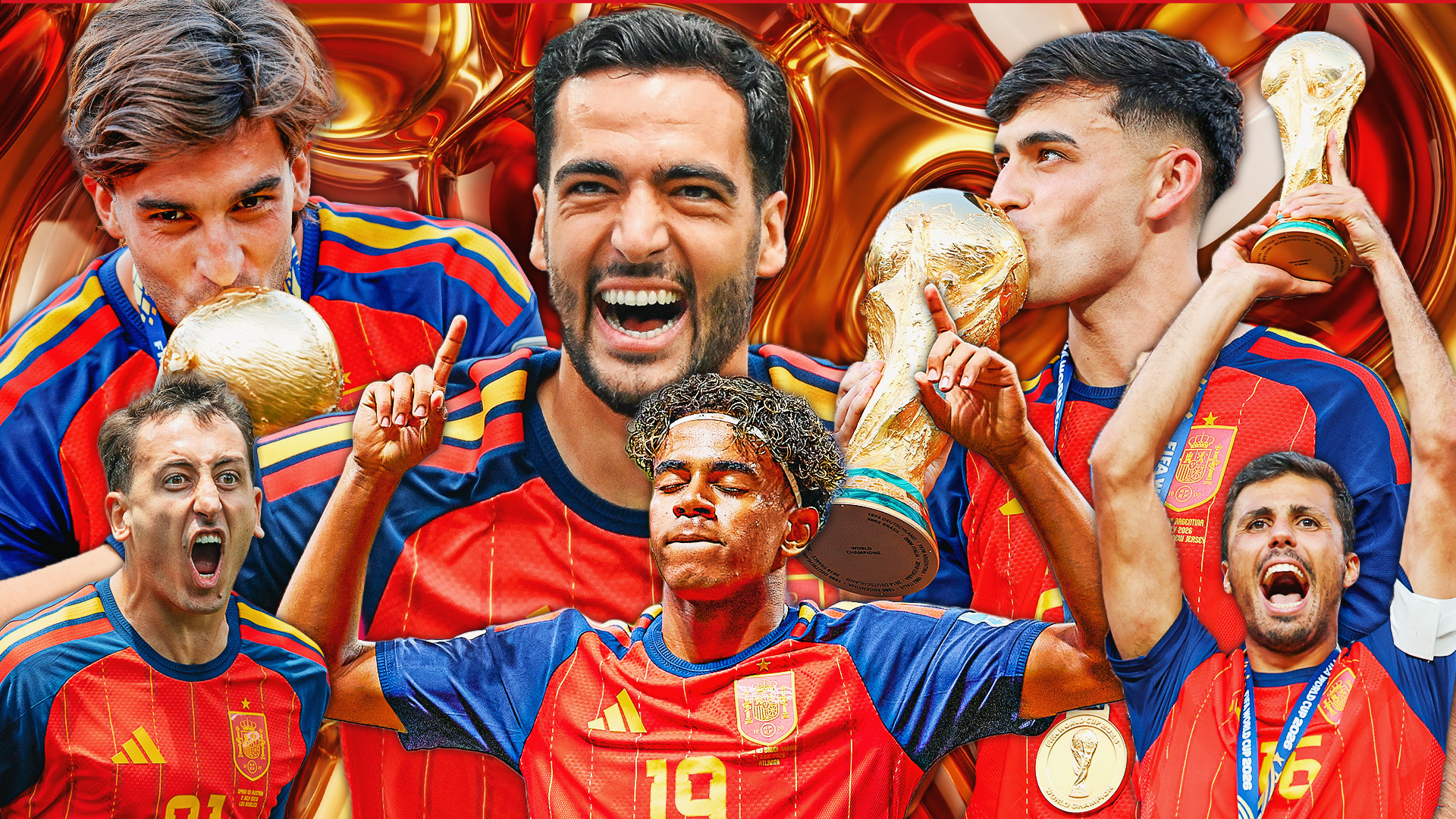
NEW YORK NEW JERSEY STADIUM — After Spain’s support staff had laid out the game plan, explained the tactics, told the players how they would best position themselves to make this Sunday one they’d never want to forget as opposed to one they’d never be able to, coach Luis de la Fuente addressed his team. “Gentlemen, we have an appointment with history,” the 65-year-old manager told his players before extra time began. “We want to be there first, and then in the extra time, I just said, ‘Look, we are doing a great job. The match is controlled, but this is a final, and we are up against Argentina. So, if we are not careful, we might concede a goal. And we kept our focus up until the last minute.’” As a result, Spain is the World Cup champion. For 120 minutes under the midday sun, La Roja were the better team. In some ways, they were the only team, holding Argentina — the 2022 winners — without an attempt at goal for all of regular time and extra time, and then scoring on their 20th shot, when Ferran Torres finally beat Albiceleste keeper Emiliano Martínez. Yet heading into the additional half-hour following a scoreless tie, and with the possibility of penalties looming, the game was still anyone’s to win. And the other side still had Lionel Messi, the architect of Argentina’s late two-goal comeback victory over England in last week’s semis. “The first idea was to keep Messi at bay, but also the other players,” de la Fuente said. “We wanted to keep them away from our goal.” Did they ever. But they still had to finish the job. They needed a hero to do it. On a team full of bigger names — teenage sensation Lamine Yamal, former Ballon d’Or winner Rodri — Torres stepped up and became immortal, joining 2010 icon Andrés Iniesta in Spanish lore as a World Cup-winning goalscorer. “I didn’t think too much,” Torres said afterward. “I saw the ball coming to me, and I shot it with the power of all the Spanish people.” “I’m so happy for him to have scored this goal,” de la Fuente added. “He will make it into history. He has already made history, and he deserves it.” The breakout game many suspected Yamal might have in this final never materialized. The Barcelona ace, who turned 19 during the tournament, had a quiet World Cup, though he came close to scoring on a late free kick on Sunday, only for Martínez to snare it. No matter. Yamal is still a world champion in his first appearance on soccer’s grandest stage. And while his efforts only resulted in one goal over La Roja’s eight games en route to glory, his contributions didn’t go unnoticed by his teammates. “I would like to express my sincere gratitude for his play,” the coach said of Yamal. “This [World Cup] will help him to mature and be even better in the future. He’s really sacrificed for the greater good, and this is very important in our sport.” So is winning — especially at this level. De la Fuente, who began his post-game press conference by thanking God for Spain’s triumph, never wavered from his belief that his players would come out on top. “Today, we were convinced that this was our final,” he said. “I think it was a very complete game. If it wasn’t for the keeper, maybe we would have had a larger margin, a larger win.” He’ll take it. All of Spain will. It’s just the second World Cup title for the country despite its dominance of Europe at club level, though La Roja has been doing lots of celebrating since de la Fuente took charge in 2022. They’ve now claimed three titles since then, winning the UEFA Nations League in 2023 and the European Championship two years ago. Now they’ve capped it with the biggest prize of all. “We’ve won everything, in all the categories, and we came to the conclusion [today],” de la Fuente said. “Once we finished the game, one of the players who’s been here the longest, said, ‘Coach, now what else is there to win?’”Latest Sports News from FOX Sports
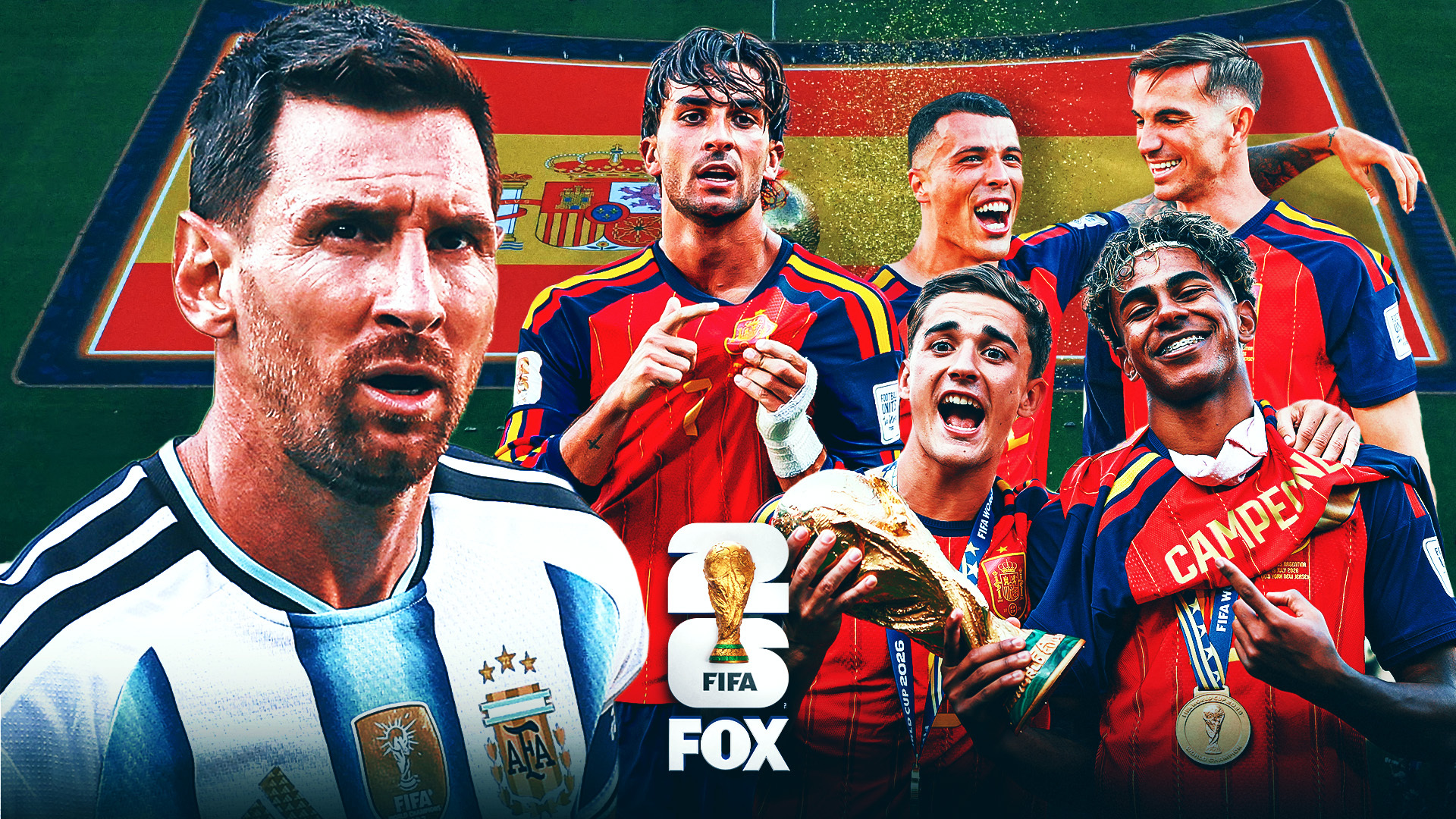
NEW YORK NEW JERSEY STADIUM – In Sun Tzu’s The Art of War, one of the biggest takeaways is how success needs to be determined even before you enter battle. In war, the key assets of preparation will always outdo any reactionary tactics, because knowing the entire blueprint doesn’t just make you better prepared, it makes you omnipotent. To win is to also know about timing. To be perfectly engaged in knowing when – and how – to engage so when the actual battle comes, you have already designed your own outcome. Victory, therefore, is not about perfection, but perfect planning. And this is how I see Luis de La Fuente’s Spain side, a team so perfect in its planning that to defeat it – even with the greatest player on your side – is almost an impossible task. In essence, Spain already knows what you want to do before you even do it. And that’s what Sunday’s World Cup final and this entire tournament showed us with this magnificent team. A Spanish side that knows you better than you know yourself. It’s why La Roja came out victorious with a 1-0 result against Lionel Messi’s Argentina thanks to a 106th-minute winner from Barcelona’s Ferran Torres. Spain stifled any hopes for Argentina and its chances of a title defense and claiming its second World Cup trophy since 2010. Spain also broke a record for 38 matches without losing a game, surpassing Italy. It was also Spain’s seventh clean sheet of this World Cup, becoming the first men’s team in World Cup history to win while only conceding one goal. Sun Tzu also tells us about winning without the need for conflict. In Spain’s case, this is done by possession and recovery of. The victors had nearly 70% possession and 762 passes. Argentina didn’t break 400. It also failed to register a single shot on target. But the most impressive part of Spain’s game plan is that it suffocates you. It is the Darth Vader of football where you, the opponent, float in the air, lost and devoid of oxygen. Spain loses the ball and, like a piranha addicted to the scent of blood, rapidly swims to get it. It happened throughout the afternoon against Argentina. Lionel Scaloni didn’t have a solution and neither did his players as they continued to become more frustrated, hence Enzo Fernández’s red card and Leandro Paredes’s antics. And Messi? He was a mortal today. He barely mattered. And I want you to know this is a difficult thing for me to say – because I admire the man more than you’ll ever know. And to watch him weep at the end of the game, knowing this is his curtain call at the World Cup, pains me to my very core. But he had no chance today. Nobody on Argentina did. Spain is a monster. No, actually. I take it back. It is an android army, hidden inside a Picasso painting. Its spine is a wonderful dichotomy of youth and experience. From the magnificent Pau Cubarsí who, just like Lamine Yamal, is 19 years old, to the Golden Ball winner Rodri who simply rolled back the years in the tournament. The Manchester City midfielder, who won the Ballon d’Or in 2024, needed time to find his way after his ACL injury. And my goodness did he. Rodri didn’t score a goal at the World Cup, but that’s not what his game is about. He is the general who commands the midfield with grace, control and tenacity. He became the 11th man to win the World Cup, the Champions League and the aforementioned Ballon d’Or. I was at the final at New York New Jersey Stadium. I saw a very energetic Argentinian fanbase looking to do everything in its power to encourage its team to victory. But minute by minute, they realized what we were all seeing, which was a Spanish side which was breaking away their spirit. And what about de la Fuente? A man who loves quotes and historical references just as much as me. Let me tell you about him. This is a man who comes from Spain’s proud Basque Country, who fully believes in grassroots football and needs his teams to represent the people, the community, the culture of the nation. He won the U-19 and U-20 Euros before taking over the senior side and once he took the helm, he brought this philosophy with him. It is a full belief in youth culture too, as most of these players who have just won the World Cup have been with him from the very beginning. “I come from a grassroots background,” he once said before winning the Euros in 2024. “Our commitment, to the people we trust in the youth system, is not a pose, it is a conviction.” And you see it in this team, which is just a representation of Spanish football. Again, watching them play live is a joy to behold. It passes the ball with ultimate accuracy, but what makes it different from any other side — and I would say Pep Guardiola’s Barcelona or Vicente Del Bosque’s 2010 World Cup winning team — is that this side does it with that word again: conviction. There is a sword behind every pass. A will and an intent. Argentina, frustrated, angry and lost without an idea, could not handle it. Marc Cucurella, for example, was outstanding in this tournament, including Sunday. So was Pedro Porro. Yamal, who wasn’t even that strong today when comparing it to his own standards, was excellent off the ball. And this is Spain – an army of one who makes you look very weak and fully represents my final quote from Sun Tzu: “Opportunities multiply as they are seized.” That’s España. A team who loses an option and immediately creates another. And with a thousand cuts, it turns you into confetti, including the one and only Lionel Messi. There was never a better team than Spain at this World Cup. It wasn’t even close. But just like Picasso’s Guernica – it requires a closer, deeper sense of understanding to fully appreciate its complete grandeur.Latest Sports News from FOX Sports
FIFA is expecting record-breaking revenue from the 2026 World Cup. But it’s still leaving a lot of money on the table — or more specifically, Chinese yuan.
Despite the expanded field in this year’s tournament, China’s men’s national team still failed to qualify. FIFA is now talking about expanding again to 64 teams in 2030, with the implicit hope of pulling in the Chinese team and its massive market of soccer-obsessed fans. The running joke in Chinese online soccer forums is that the men’s national team may still not qualify, says Hong Kong University Professor Xu Gouqi, who wrote a 2008 book on the role of sports in China.
“Chinese are not allowed to discuss many things in social media,” Xu noted in an interview. “But you can criticize the Chinese men’s football team with no consequences. It’s still a safe place.”
In fairness, the men’s team has not given its fans much reason for optimism over, well, the last century. The squad was an Asian powerhouse back in the 1930s, but has only qualified for the World Cup once, in 2002, when it failed to score a goal in losing all three of its games.
It’s not for lack of trying. Xi Jinping rode to power in China fresh off helming the wildly successful 2008 Beijing Olympics, and he’s keenly aware of how sports are intertwined with China’s sense of identity on the world stage, says Xu. One of Xi’s early promises: rebuilding the men’s national team to put it on a path to winning the World Cup by 2050, which is aligned with the Chinese Communist Party’s long-term blueprint for turning the country into a fully-modernized global superpower.
So far, it hasn’t been going great.
In the Asian qualifying tournament for the 2026 World Cup, the Chinese men’s team got pummeled 7-0 in one game against regional power Japan, while losing to Indonesia and tying Singapore (neither of which qualified, either). There are currently no Chinese men’s players playing in the top tiers of any of Europe’s professional leagues, a key metric of elite talent.
Experts detail a number of reasons for the failures, including corruption and the CCP’s top-down approach to athletics. At a fundamental level, it comes down to the lack of grassroots participation, says Rowan Simons, a U.K.-born, Beijing-based author of a book on soccer in China and founder of ClubFootball Beijing. “China still needs to concentrate on building the football culture that is shared by all nations playing in the World Cup finals. This is built on large numbers actually participating in the game,” Simons said in an e-mail. As it stands, registered youth soccer participation in China is still just a fraction of countries with far smaller populations, like England.
Xu agreed that while there is “a world class football fan base” in China, “you don’t get kids kicking the ball around” for fun the way you would see in say, South America or Europe. Parents view it as a waste of time “because the chance isn’t that great to succeed,” he said. Going to the best university is viewed as a more assured path.
But unlike Simons, Xu is optimistic that the Chinese men’s team can not just qualify but win the World Cup in the coming decades, which he says would bring out a whole new level of soccer obsession in the country of 1.4 billion — a FIFA marketer’s dream.
The answer, he says, lies in an approach China recently used to achieve Olympic success. Call it the Eileen Gu model.
Gu, the daughter of a first-generation Chinese immigrant mother, was born and raised in Northern California but competes for China in freestyle skiing. Her gold and silver medals at the Winter Olympics in Milan-Cortina earlier this year made her one of the most decorated freestyle skiers in Olympic history.
“We just simply bring the best and brightest from the kid level” to China from other countries, said Xu. That would represent “not just a major breakthrough in sports,” he argued, but “a major breakthrough in the idea of China.”
Politics
The World Cup final wrapped up today in the portmandu place FIFA calls New York New Jersey.
The two states, which shared responsibilities to host eight matches and the final, did so through an uneasy alliance. There were tit-for-tats over which state should get first billing on signs outside the stadium. Their two governors – both Democrats – released dueling transportation plans.
Now, there is at least some evidence that if there’s a chance for them to work together again, New York may be reluctant to pair up with New Jersey – and if it does, officials may want to iron things out ahead of time.
The two border states are thrown together for major sporting events because New York City is a global tourist destination with plenty of hotels, nightlife and attractions. But it has no major sporting venue that can hold more than 50,000 fans. Neighboring New Jersey has MetLife Stadium, which seats 80,000.
The most public spat between the co-hosts came when New Jersey Gov. Mikie Sherrill said she planned to charge $150 to carry fans to MetLife Stadium for matches, a price she later lowered to $98. She portrayed the high ticket price as an affordability-minded decision to avoid making her residents subsidize World Cup-goers who may have thousands of dollars sitting around to pay for their seats. She also castigated FIFA for refusing to chip in to help pay for transportation.
But New York Gov. Kathy Hochul went the opposite direction and helped lower the cost of a special bus to the matches to $20, viewing affordability in a different framework: how much it cost to get to the match.
At the time, one New York lawmaker, Assemblymember Robert Carroll, who represents Brooklyn, said on X that decisions like Sherrill’s “ensure that the next time New York City hosts the world, partnering with New Jersey won’t even be on the table.”
In June, Hochul tapped Carroll to help evaluate whether New York should bid for the 2042 Winter Olympics.
In an interview before the World Cup final, Carroll said he didn’t anticipate working with New Jersey for the Olympics, because events could take place in the city and in Lake Placid, which has already hosted two Winter Olympics.
Still, Carroll offered a more nuanced view than his social media post. He said the two states are linked for some events. But he remained critical of Sherrill and said things like the New Jersey Transit fares she imposed should be discussed if there is planning for a women’s World Cup, Super Bowl or other major event that involves both states.
“We should not try to harm one another,” Carroll said. “I think that it was very foolish for the governor to kind of put up a punitive tax towards New Yorkers or New York tourists going to World Cup games. And that was a poor decision and I think it shouldn’t happen in the future.”
Sherrill’s office referred a request for comment about Carroll’s comments to her previous remarks, but in a separate interview with POLITICO, the governor accused FIFA of trying not to pay its bills.
There is also at least some thinking in New York that the city will have a place to hold women’s World Cup matches in 2031, when the U.S. is expected to host the tournament.
A 25,000-seat professional soccer stadium, Etihad Park, is set to open next year in Queens.
New York City’s top economic development official, Jeanny Pak, said during a recent event at the French consulate that she’d like to look at hosting the women’s tournament at the new stadium.
“We’re really looking forward to that,” Pak said. “I think we’re really well poised to be the right place for it, so spread the word.”
Politics

Los Angeles leaders are spending billions to make the 2028 Olympics a story of climate and environmental policy progress, reports Alex Nieves.
Transit and community groups want to know whether the investment will be part of the region’s Olympic legacy or just a flash in the pan.
The question of just how enduring their efforts will be was a throughline Tuesday and Wednesday at the Los Angeles Cleantech Incubator’s Road to 2028 summit — an event focused on leveraging the Olympic Games to accelerate clean energy and transportation development in the state’s most populous region.
The overall vibe of the conference was an optimistic one, as Los Angeles County and dozens of cities are hustling to secure hundreds of buses, plant trees and clean waterways before millions of people descend on the region in two years for the Games. But some attendees were already wondering what comes after the two-week mega event is over.
“When we look to the future, if once the games leave and we have not left communities better than the way we found them, then we have all lost,” said Cynthia Mitchell-Heard, CEO of the Los Angeles Urban League, speaking on a panel of grant recipients who’ve received funding from the LA Olympics organizing committee for environmental projects. (The Urban League received $100,000 to create a workforce development program for people affected by last year’s Altadena fire.)
Catherine Baltazar, associate director of advocacy and organizing at Climate Resolve, argued that throwing dollars at infrastructure projects won’t guarantee long-term progress in communities that have historically lacked resources and disproportionately borne the brunt of climate change.
“Investment should not end when the Games end,” Baltazar said. “We know that these communities will continue long after the Games, and so for me, that’s the legacy that I want.”
The focus on the post-2028 future comes in part because of what was seen as a successful test run during this summer’s World Cup. The region hosted eight matches at SoFi Stadium in Inglewood, avoiding any major snafus while seeing a significant spike in public transit use.
While the Olympics will be far larger than the World Cup, the region has structural advantages over many past Olympic host cities, including enough existing venues to house every sporting event. Much of the preparation now is centered on buying and leasing roughly 1,700 buses — including 500 electric school buses — to shuttle fans to and from venues that will be transit-only.
Transit advocates argue that those investments, including recent expansions of Los Angeles’ light-rail system, don’t solve for structural budget deficits that could threaten service cuts — as bus and rail operators have already warned about farther north in the Bay Area.
Los Angeles’ legislative delegation has failed the last two years to secure a boost in the state budget for systems like LA Metro, which faces a $2.3 billion deficit through 2030. Metrolink, a commuter rail line that serves six counties across Southern California, has indefinitely extended a 20 percent reduction in weekday service amid a $30 million deficit.
Matt Petersen, CEO of the Cleantech Incubator, told POLITICO the budget challenge has only intensified under a Trump administration hostile toward clean transportation.
“Local governments are struggling, states are struggling on how to put the resources where they’re needed,” he said. “I think the bottom line is: Without the feds, it’s super hard.”
But he said he still believes that Los Angeles is “well on the way to being ready” for the Games and to leave a lasting benefit for the community.
“That’s really what we’re here to do,” he said. “Ten years after the Games, what will we have seen manifest because of this moment?”
Politics
There was another World Cup victory on Sunday — for one of the nation’s largest transit agencies.
New Jersey Transit, which became infamous for disarray outside MetLife Stadium following the 2014 Super Bowl, carried soccer fans on its buses and trains there and back eight times since the World Cup began — without major incident.
For anyone in the New York City metropolitan area used to experiencing or hearing gripes about New Jersey’s transit system — which a former governor repeatedly promised to fix, even if it killed him — this was as surprising as almost anything that happened on the soccer pitch.
“The curse of Super Bowl 2014 is over,” New Jersey Transit CEO Kris Kolluri said Sunday evening during an interview inside the agency’s command center in the MetLife parking lot.
That Super Bowl featured extreme delays getting American football fans in and out of the New Jersey swamp where the stadium is located.
During this soccer tournament, the agency did end up carrying fewer passengers than expected, and the reasons for that remain up for debate. The agency has blamed the unexpected availability of parking spaces for fans at a nearby mall, as well as a cheaper bus service subsidized by New York Gov. Kathy Hochul. Others blame New Jersey itself because Gov. Mikie Sherrill decided the state would charge soccer fans $98 to get to games.
Whatever the case, the system ran without any major meltdowns during matches despite some extreme weather that threatened to upend plans and affected other service.
Kolluri, who spoke with reporters while surrounded by some of his team that’s been working on the World Cup for several years, turned the interview into a pep talk for the squad. As he spoke, trains were coming and going from MetLife handling the remnants of World Cup fans and, back in New York City — where most people were heading — there was a Yankees game and Bon Jovi concert at Madison Square Garden. Still, a screen over his shoulder with video feeds from bus and train platforms across the region showed things working smoothly.
“The only reason why this worked is because of an extraordinary team who knew we were the underdog, and we were not going to let each other down,” Kolluri said.
The agency is still figuring out how much it cost to provide the special World Cup service, which involved extraordinary measures, including having 80 train cars available to whisk trains away from the stadium.
Politics
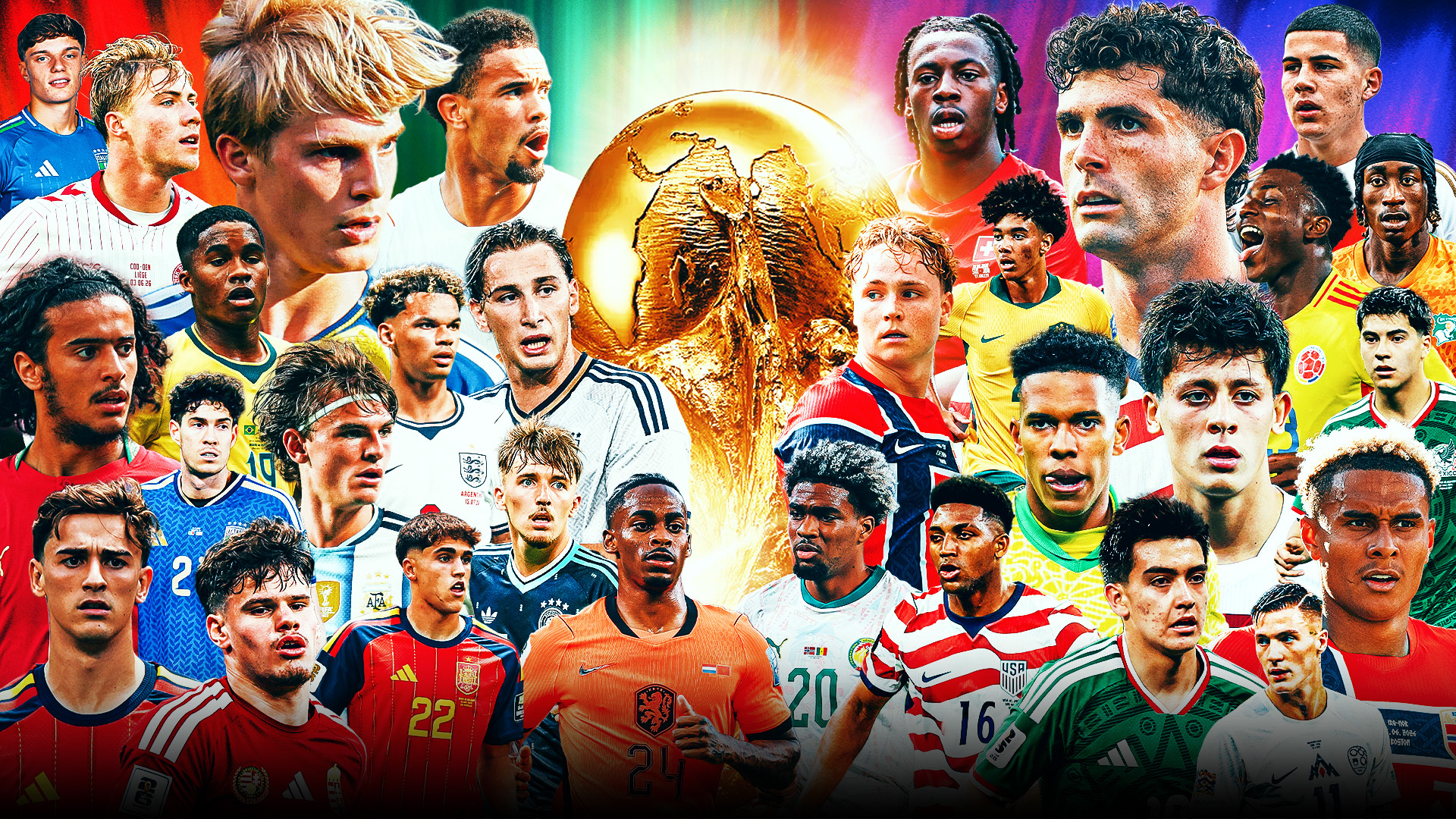
In four years, we’ll be celebrating another edition of the World Cup. We’ll be transfixed on a competition that will span six countries across three continents with possibly 64 teams taking part in sport’s greatest spectacle. More than likely, we’ll be seeing the likes of France’s Kylian Mbappé, England’s Jude Bellingham, Norway’s Erling Haaland, Spain’s Lamine Yamal and many other names who kept us enthralled this summer. We’ll likely not have Lionel Messi or Cristiano Ronaldo in the spotlight, but you can’t count anything out, especially when it comes to the GOAT conversation. It’s never too early to think about which players — whether they already feature in 2026 or are part of teams (e.g. Italy) that should make the cut — in four years’ time. In no particular order, let’s look at who we’ll be keeping tabs on in the run-up to the 2030 World Cup. Sciaretta: It was a World Cup to forget for Pulisic. In fact, 2026 has been brutal for the Hershey, Pennsylvania, native. But it is silly to think that Pulisic is going anywhere. He will be 31 at the next World Cup, and the U.S. team will be looking for the veteran leadership it lacked this time around. It would not be surprising at all if Pulisic turns it around in 2030, like Landon Donovan did in 2010 after a terrible 2006 tournament. Echegaray: It is extremely difficult to single out anyone from this Spanish side. From Lamine Yamal to Pedri, this is a force of nature and full of youthful dynamic talent. But let me focus on Gavi because, despite not being one of the more obvious names to point out from this tournament, I think he will continue to become one of Spain’s most important players. Spain, more than possession, is about recovery of possession, and Rodri is untouchable in this regard. But at 30 years old, there will be a need for a replacement. Gavi, who follows in the footsteps of his Spanish teammate, will grow into that. Bonetti: After winning the Scudetto with Inter Milan, he skied Italy’s first penalty in the playoff shootout against Bosnia and Herzegovina as Italy made it three World Cups without an appearance. He watched this summer from his couch, but by 2030, he’s the redemption story Italy builds around. Echegaray: O’Reilly was magnificent for the Three Lions at this World Cup before losing to Argentina. The fullback/midfielder is versatile, wise beyond his years and already playing at one of the biggest clubs on the planet. So when it comes to mentality and the ability to face any type of opponent? Been there, done that. The fact that he is only 21 is, honestly, too difficult to comprehend because he plays like a veteran at the international level. He will continue to improve and become one of the best players of his position in the world. Of that, I have no doubt. Sciaretta: The teenage Barcelona central defender has had a remarkable year, 31 starts for Barcelona en route to a La Liga title. Now, he’s part of Spain’s elite defense. What he’s doing at this level, at this age and at this position, is remarkable. In 2030, we could be talking about maybe the greatest defender in the game. Bonetti: A Champions League revelation for Real Madrid, who then sobbed through Türkiye’s three-game flameout this summer. Sixty-two shots, zero goals, one apology. José Mourinho’s return to Madrid and whoever is in charge of Türkiye at the 2030 World Cup owe him better. Echegaray: Summerville’s next move this summer will dictate the next few years of his immense potential as he was a key player for the Netherlands at this World Cup. By 2030, he will be in his prime and if the Dutch indeed can finally become a major contender for the tournament, Summerville should play a major role. It all depends on where he will go this summer as West Ham, now in the Championship, knows it has to sell its star. Sciaretta: One year ago, Freeman was only in his first season as a starter for Orlando City. Now, he’s in La Liga and the starter for the U.S. national team. The highly athletic defender has enjoyed a meteoric rise and should be part of the next generation of American players. Bonetti: He was benched for the loss to England in the quarterfinal, then nearly won it coming off of it. Aston Villa is circling at a £43 million move. Norway’s succession plan starts on his left wing. Echegaray: Mora was very impressive in Mexico’s inspiring campaign at the World Cup. At 17, it was incredibly fun to see the young man compete at the highest level and not only did he not look out of place, he showed glimpses of his raw abilities. A move to Europe is almost imperative, but it has to be the right club and the correct timing. One thing is for sure, his path and the chance of becoming a major star for El Tri in 2030 is a major possibility. Bonetti: The heir to Virgil Van Dijk’s throne at Anfield. It wasn’t the best of seasons as he tore his ACL 81 minutes into his Liverpool debut and missed everything, including Italy’s latest playoff funeral. A 6-foot-5 star in the making rebuilt in the gym. Sciaretta: Bouaddi has already shown a ton of class for an 18-year-old central midfielder. It is clear he is going to be sold by Lille for a lot of money sooner than later. Echegaray: The 20-year-old did not feature much during France’s campaign. But that particular cameo against Morocco was impressive, and I feel there’s so much more to come from the midfielder. Something also tells me that he won’t stay at Paris Saint-Germain much longer as he will need another club in order to find more playing time. By 2030, he could be ready just in time to become a major force for Les Bleus. Bonetti: Serie A’s most elegant left foot earned an hour against Jordan and looked like he belonged. Real Madrid holds the buyback. He inherits whatever Lionel Messi leaves behind. Sciaretta: Hungary’s exciting left back is fun to watch at Liverpool. He loves to get forward and plays with a lot of intensity. The question is whether Hungary can get to the World Cup. There is always plenty of room for upsets these days in an expanded World Cup. Echegaray: Mbaye is a tremendous talent but needs to leave Paris Saint-Germain in order to find a brighter role. Selfishly, I would adore him for Aston Villa as I feel Unai Emery could turn him into a superstar. But there are many clubs interested in his services, including Borussia Dortmund, which is reportedly inquiring about him for the upcoming season. For Senegal, it’s clear to see that he’s a special talent, as that wonderful stoppage-time goal against France showed, making him the youngest African male player to get on the scoresheet at the World Cup. Mbaye is a gem, and I can’t wait to see what happens next. Sciaretta: The 20-year-old central midfielder from Alaska did not play much this World Cup, but he is a big part of the Mexican team’s future. His transfer from Seattle to Atlético Madrid has gone smoothly, and he will continue to progress in Spain. Bonetti: Remember the name now. Bundesliga Rookie of the Season, man of the match in his World Cup debut at 19. Only Lamine Yamal outproduced him among Europe’s teenagers. Excellent one-on-one dribbler. Seems to be bound for Paris Saint-Germain, where he could really shine. Sciaretta: Italy’s failure to qualify for the last three World Cups is one of the most baffling stories in the history of the tournament. Even in the Azzurri’s last two appearances (2010 and 2014), the team was grouped. If Italy returns in 2030, all eyes will be on the team as it tries to revive one of the World Cup’s most historically important teams. Bastoni should be front and center of Italy’s efforts in the coming years as he is one of the best central defenders in the world. Bonetti: One heavy touch against Norway on the breakaway is the sad memory he leaves behind in his first World Cup of his career. Eight goals in half a season at Lyon says the talent’s real after a rocky start at Real Madrid. Age is on his side. José Mourinho decides what’s next for him at the Bernabeu. Echegaray: There is definite personal interest and hope from yours truly, but it doesn’t come without context. Pippo Chavez is a promising attacking midfielder, and at 18, the sky is the limit, especially under the guidance of Bayern Munich and playing in a great, nurturing league such as the Bundesliga. Born in Germany to a German mother and Peruvian father, Chavez switched allegiance to Peru back in 2023 and made his senior debut last October in a 2-1 loss against Chile. My hope here is that a.) Peru gets its act together and improves significantly in the next four years whilst b.) Chavez keeps evolving, thus helping La Blanquirroja finally reach a second World Cup in 48 years. Sciaretta: The Danish forward is coming off a great first season in Napoli with 12 goals in 33 Serie A games. He was at the club on loan from Manchester United, and to keep him, Napoli spent nearly $52 million. The 23-year-old forward from Copenhagen also has 13 goals in 35 caps for Denmark. With Højlund in his prime, Denmark should get back to the World Cup and potentially be very good. Echegaray: Karl was sadly another player who suffered an injury in the lead up to the World Cup, but he is an incredible talent who will surely be a very crucial factor towards helping Germany get over a disappointing run in the tournament. If Jürgen Klopp indeed becomes the next manager, I think the Bayern Munich left-footed forward could be a major force in the next few years. Bonetti: Another reason why the future is bright for Norway. He took Antonio Nusa’s starting spot, scored the opener against England, set up both of Erling Haaland’s goals against Brazil. Super-sub no more. A Premier League move feels like a formality. Echegaray: This is definitely a “watch this space” selection. I have high hopes for the Colombian striker, who ended as top goalscorer in last year’s U-20 World Cup as Colombia finished in third place. He recently joined Cruzeiro in Brazil, but I see him leaving next year for Europe. After that? Who knows, but as Colombia’s options upfront are only getting older, Villarreal could be the next man to lead the line. Sciaretta: The Manchester United striker took awhile to heat up for the Red Devils in his first season but was in solid form by the end. Prior to that, he was a star for RB Leipzig in Germany. Slovenia is a tough national team to figure out. It struggled in qualifying but was surprisingly good at Euro 2024. But with continued progress, Slovenia can qualify and Sesko can lead the way. If that happens, he’ll be a highly anticipated player in 2030. Echegaray: The 19-year-old sensation sadly missed this World Cup due to a torn hamstring back in April. But the winger will undoubtedly return, as Brazil once again aims to qualify for the 2030 edition and win the coveted trophy, which by then will be a 28-year drought. It will need more pizzazz and the rebirth of joga bonito. Estevao — who, back in September against Chile, became the youngest Brazilian to score for the national team since Pelé — can be the spark that’s sorely needed. Bonetti: Sweden’s playoff-crashing run ended with France’s 3-0 knockout hammer, but the 20-year-old midfielder belonged. Four more years of Premier League seasoning will make him Scandinavia’s metronome in 2030. Sciaretta: Harrington had a tough ending to his 2026 World Cup when he missed his penalty in Australia’s shootout loss to Egypt. But the 18-year-old central defender was impressive as the youngest starter ever for Australia at the World Cup. He looks mature beyond his years and has had a breakout season with the Colorado Rapids, which will likely sell him soon as interest in Harrington is very high.Latest Sports News from FOX Sports