 Timothée Chalamet and Kylie Jenner’s families have formed an intimate bond.
So much so that the Marty Supreme star’s mom Nicole Flender sent a message to Kris Jenner about her late mother MJ…
E! Online (US) – Top Stories









Timothée Chalamet and Kylie Jenner’s families have formed an intimate bond.
So much so that the Marty Supreme star’s mom Nicole Flender sent a message to Kris Jenner about her late mother MJ…
E! Online (US) – Top Stories

Here’s a look at 10 inspiring fast food chains that were once on the brink of going out of business, but are now making surprising comebacks.

Mashed – Fast Food, Celebrity Chefs, Grocery, Reviews

Megan Moroney just casually signed the entire alphabet in about four seconds — and nobody even knew she could do that until now. Continue reading…Country Music News – Taste of Country
Megan Moroney just casually signed the entire alphabet in about four seconds — and nobody even knew she could do that until now. Continue reading…The Boot – Country Music News, Music Videos and Songs

‘Now just taking stool softeners, which is giving me an urge to go to my mom’s assisted living facility and play bingo with the gals,’ Larry joked. Continue reading…Country Music News – Taste of Country
‘Now just taking stool softeners, which is giving me an urge to go to my mom’s assisted living facility and play bingo with the gals,’ Larry joked. Continue reading…The Boot – Country Music News, Music Videos and Songs

 Carly Simon is shedding light on her personal health struggles.
The “Nobody Does It Better” singer recently shared that she was diagnosed with Parkinson’s disease and skin cancer, noting that she…
E! Online (US) – Top Stories

(The Center Square) — It might cost as much as $5 million to prosecute each of about 50 animal rights activists who attempted to take beagles from a now-defunct Wisconsin breeder accused of abusing them, according to an attorney who…
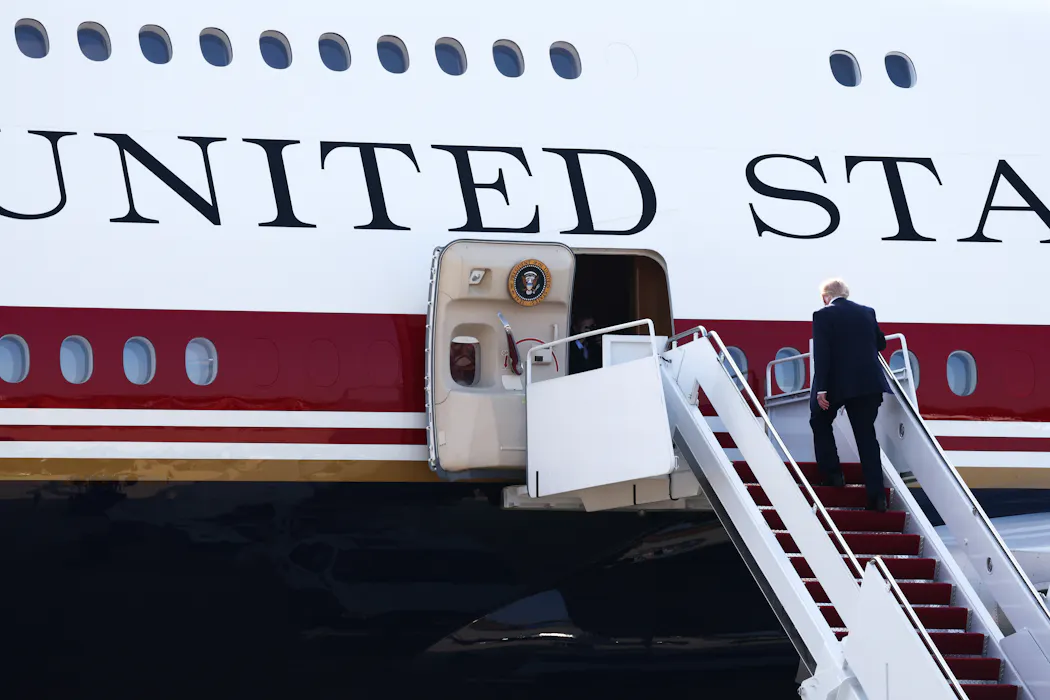
Air Force One used to be a high-flying symbol of American technology, ingenuity and power. For many, it was also a source of national pride.
The current Boeing 747s that serve as Air Force One are a combination transport vehicle, command center, press room, medical center and apartment, complete with bedroom and office for the nation’s chief executive.
Now, to many, Air Force One has become scandalous.
On July 8, 2026, The New York Times reported that the latest version of the presidential aircraft – presented by Qatar as a gift to President Donald Trump – lacks the sophisticated countermeasures that were a ready defense for the 747s that had been in service since 1990. Critics immediately revived earlier claims that the new 747 was a corrupt transaction from the start. Trump later said the plane would be sent to be “maxed out” with upgrades.
This article is not part of that story. Nor is it the standard story of Air Force One that appears in numerous documentaries, which tend to be gee-whiz accounts of the amazing capacities of the president’s airplane.
I am a historian writing a book about the technologies that have shaped the long history of the American presidency, in which Air Force One looms large. I believe it is important to see Air Force One as more than a cool gadget or political flash point. Von Hardesty, a curator at the Smithsonian’s National Air and Space Museum, certainly understood this when he wrote that “by the end of the 20th century, Air Force One had evolved into an essential arm of the American Presidency.”
Put simply, the presidency as we know it today would have been impossible without Air Force One, which has shaped and defined that role for decades.

It was only recently that Americans or their presidents could imagine things this way. When presidents left the capital throughout most of the nation’s history, it was a lengthy, at times arduous, process that severed their connection with government offices.
As a result, presidents rarely traveled while in office and were more likely to depart Washington for extended vacations than for official business. Likewise, no serving president left the United States until Teddy Roosevelt visited the construction of the Panama Canal in 1906. Woodrow Wilson became the first sitting president to cross the Atlantic when he boarded the USS George Washington in 1918 to join the negotiations in Versailles at the end of World War I.
If few presidents got away from Washington to see the country and its residents before 1900, the flip side was also true: Few Americans saw presidential candidates or incumbents in person, especially Americans who lived outside the eastern third of the United States. Instead, the connection between presidents and average citizens was mediated through political parties, the press and eventually through broadcast media.
The first designated presidential aircraft arrived in 1933, but Franklin Roosevelt never flew on it. His first flight as president came in 1943, when American Airlines loaned a flying boat called the Dixie Clipper to ferry Roosevelt to meet with other Allied leaders at the Casablanca Conference. In 1945, Roosevelt traveled to Yalta on a Douglas VC-54C called the Sacred Cow, the first plane specifically built for presidential travel.

Despite these flights to important international meetings, Roosevelt and successors Harry Truman and Dwight Eisenhower made limited domestic use of aircraft, preferring instead to travel by railroad. International trips remained lengthy journeys in loud, propeller-driven aircraft that encountered the greater turbulence of lower altitudes.
All this changed in 1962, when President John Kennedy acquired a brand-new Boeing 707, the first jet-powered Air Force One.
Flying higher, faster and quieter than their predecessors, the jet aircraft used for Air Force One made possible one of the central facets of the modern presidency: The nation’s chief executive could be a ubiquitous player in national politics and world affairs.
Presidential travel increased dramatically, both in its frequency and in the number of stops on each trip. This was not simply the result of the growing use of air travel worldwide. Where Roosevelt, Truman and Eisenhower understood world leadership as their ability to coordinate American power from Washington, Kennedy and his successors sought to make themselves the center of the story.
This seemed particularly important during the Cold War. As the United States asserted its leadership in the struggle against the Soviet Union, American presidents positioned themselves as the symbols of freedom in opposition to communism.
Consider President Richard Nixon traveling to China in 1972 to normalize relations, or Ronald Reagan flying to Iceland for the 1986 Reykjavík conference with Soviet leader Mikhail Gorbachev to negotiate the future of intermediate-range nuclear missiles. The presence of a president at these conferences elevated both the importance of the event and the image of the president as a statesman who was able to quickly pivot back and forth from national to international leadership.
As American presidents struggled to maintain their power and their relevance after the end of the Cold War, their international travel only increased. Bill Clinton, George W. Bush and Barack Obama each made over twice the number of international trips as Ronald Reagan did.
These trips ranged from goodwill visits to maintain old alliances to attempts to build new connections after the collapse of the Soviet empire.
Presidents specifically visited international hot spots, positioning themselves as global peacemakers. The sight of the American president descending the long stairs from Air Force One, smiling and waving along the way, became a symbol of American diplomacy.

If Air Force One enabled presidents to announce themselves as statesmen abroad, it also revolutionized politics at home.
During the 1970s, the two major parties moved from selecting their nominees at national conventions to a system where state primaries decided who would lead the ticket.
This change emerged from demands that political power move from party leaders to party members. But a primary system would have been unimaginable without aircraft to shuttle candidates around the country. That was particularly important for incumbents, as air travel enabled them to be both sitting presidents and active candidates.
Presidents and their handlers learned how to combine official government business, which permitted the use of Air Force One, with campaign opportunities. These moments not only changed how presidents operated; they changed how Americans understood their presidents.
This change began with Kennedy’s use of the jet-powered Air Force One for domestic travel, including the tragic decision to visit Texas in November 1963, where he was assassinated. In just his first year in office, Bill Clinton visited 37 states over the course of 73 days.
Air Force One is a symbol of presidential power, but its problems only reinforce the fact that technology shapes the presidency.
The clearest demonstration was on 9/11. President Bush was in Florida that morning. Air Force One whisked him into the air, delivering him first to the safety of an Air Force base in Louisiana and then to the fortified headquarters of the U.S. Strategic Command in Nebraska, and still had him back at the White House by the end of the day.
It was a grim reminder of the other task for Air Force One: a safe transport for the president during a national crisis or nuclear armageddon. While the aircraft fulfilled its promise to keep the president safe in a crisis, its legendary communication systems faltered. Crucially, Bush struggled to coordinate with senior officials in Washington, leaving him momentarily out of the loop at a terrifying historical juncture.
The role that presidents have assumed at home and abroad, as well as the ways Americans interact with their presidents, have taken form throught the possibilities – and the limitations – of presidential aircraft. Air Force One is not just a great way to travel or a nifty gadget, nor is it peripheral to the presidency. It is central to it.

Peter Kastor does not work for, consult, own shares in or receive funding from any company or organization that would benefit from this article, and has disclosed no relevant affiliations beyond their academic appointment.
Politics + Society – The Conversation
For decades, terrorism researchers have generally distinguished terrorism from other forms of violence by one defining feature: the intention to intimidate a wider audience beyond immediate victims.
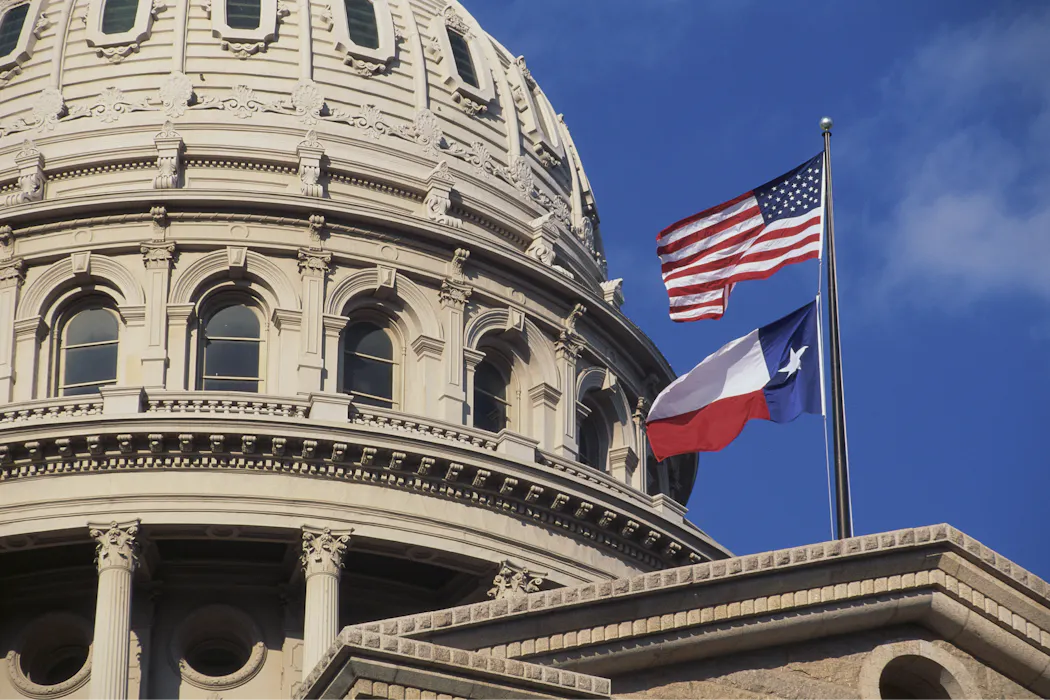
That distinction has shaped both academic research and criminal prosecutions in the U.S. Yet scholars have long debated a deceptively simple question: Is terrorism defined by why violence is committed, or by what the violence is intended to achieve? A new prosecution in Austin, Texas, may test whether that understanding is beginning to change.
The question is now before Texas courts following charges against 17-year-old Cristian Fajardo Mondragon, who, along with two juveniles, is accused of carrying out a two-day series of shootings, vehicle thefts and burglaries across Austin in May 2026. In Texas, 17-year-olds are charged as adults, not juveniles.
According to investigators, the group allegedly fired nearly 150 rounds during 13 separate shootings. They struck homes, occupied vehicles and two fire stations, injured multiple people and prompted shelter-in-place orders.
The case initially involved charges including aggravated assault, deadly conduct and firearm theft. Later, investigators recommended a first-degree terrorism charge, a rarely used offense in a case involving a juvenile suspect.
As a scholar of extremism, I believe this decision reflects a shift in how some prosecutors are applying terrorism laws. Rather than requiring proof of an offender’s political ideology, charging documents often focus on whether the alleged violence was intended to intimidate or coerce a civilian population, create widespread fear or influence government or public behavior.
There is no single federal crime called “domestic terrorism.”
Federal law defines it as dangerous criminal acts intended to intimidate or coerce civilians or influence government policy. However, Congress has never created a standalone federal domestic terrorism offense.
Instead, federal prosecutors generally rely on statutes covering murder, firearms offenses, conspiracy, hate crimes or civil rights violations. In many domestic terrorism cases, terrorism is not itself the criminal charge. Rather, terrorism designations can affect investigative priorities and may have specific legal consequences where particular statutes apply.
As my own research on terrorism and political violence has found, legal definitions of terrorism have never been static. They evolve as governments confront new forms of violence and seek legal tools to address them. The question has always been where to draw the boundary between terrorism and other forms of serious violent crime.
This legal gap has existed for decades. Scholars have argued that while the U.S. developed extensive legal tools to prosecute international terrorism after 9/11, fewer mechanisms exist for prosecuting domestic political violence.
As a result, states have enacted their own terrorism statutes. Texas amended its terroristic threats statute in 2023, expanding the circumstances under which certain underlying offenses can be elevated to a terrorism-related offense. It allows prosecutors to charge individuals who commit specified violent crimes with the intent to intimidate the public or influence government policy through coercion or intimidation.
Unlike traditional conceptions of terrorism that emphasize ideological motivation or affiliation with extremist organizations, the Texas statute focuses on the defendant’s intent to intimidate or coerce the public or influence government through intimidation.
Texas’ approach reflects a shift away from proving ideological motivation, or why someone committed violence, toward proving what the violence was intended to accomplish – for example, public intimidation or governmental coercion. That distinction is central to current debates over domestic terrorism law and may prove crucial in the Austin prosecution.
According to public reporting on the investigation, Texas investigators have not identified a manifesto, ideological writings or evidence linking the suspects to a recognized extremist movement.
One consistent lesson from terrorism studies is that investigators should avoid assuming motive before evidence becomes available. Mass violence can emerge from multiple pathways. They include extremist beliefs, criminal opportunism, interpersonal grievances or thrill-seeking. And distinguishing among them is crucial.
Instead, prosecutors appear to argue that the shootings themselves created widespread fear throughout Austin while disrupting emergency services after gunfire struck multiple fire stations. The alleged terrorism lies less in an established ideological motive than in the prosecutors’ claim that the defendants intended to intimidate the public and disrupt or influence government operations. That approach represents a significant departure from many of the country’s most widely publicized mass shootings.
The 2022 Buffalo supermarket shooting resulted in a New York state conviction for domestic terrorism motivated by hate under a statute specifically addressing certain mass attacks motivated by hatred based on characteristics such as race, religion or national origin.
Likewise, the 2019 El Paso Walmart shooting in Texas, which killed 23 people, involved federal hate crime charges alongside state capital murder charges because investigators alleged an explicitly anti-immigrant motive.
Other mass-casualty attacks – including those in Boulder, Colorado, in 2021; Highland Park, Illinois, in 2022; and Waukesha, Wisconsin, in 2021 – were prosecuted primarily as homicide cases by state authorities despite generating widespread public fear.
Similarly, the Pearl Street Mall firebombing in Boulder was prosecuted at the state level as a first-degree murder case, while federal prosecutors separately charged the defendant with a hate crime to address the alleged bias-motivated nature of the attack. In each of these cases, state prosecutors relied primarily on homicide statutes rather than state terrorism laws, either because no applicable terrorism offense existed or because homicide charges provided the principal support for prosecution.
Unlike Colorado, Illinois and Wisconsin, Texas has a standalone terrorism statute that enhances liability when violent crimes are committed with the intent to intimidate the public or influence government policy. This statutory framework gives Texas prosecutors an additional charging option that was generally unavailable in those earlier prosecutions.
The Austin case tests whether prosecutors can prove the intent required by Texas’ terrorism statute without establishing an ideological or political motive.

Legal scholars have long debated whether terrorism should be defined by motivation or consequences.
In a seminal work on the subject, terrorism expert Bruce Hoffman argues that terrorism has historically involved politically motivated violence intended to communicate a broader ideological message. Brian Michael Jenkins, one of the nation’s leading terrorism scholars, similarly emphasizes that terrorism is violence intended to influence audiences beyond immediate victims.
Others argue that legal definitions should focus less on ideology and more on the deliberate creation of fear.
Former Acting Assistant Attorney General for National Security Mary McCord has argued that the absence of a standalone federal domestic terrorism statute creates inconsistencies. Similar acts of mass violence may be prosecuted differently depending on the perpetrator’s ideology and the available criminal statutes.
The Austin prosecution illustrates this tension.
If Texas courts conclude that prosecutors need only demonstrate an intent to terrorize the public through indiscriminate violence, future cases involving serial shootings, coordinated attacks on infrastructure or prolonged community-wide violence may be prosecuted as terrorism even when investigators never establish a political objective.
The Texas defendants’ ages have also attracted national attention. Juvenile violent crime has declined substantially since the mid-1990s. Arrest rates for homicide, robbery, aggravated assault and other violent offenses remain well below their historical peaks.
At the same time, firearm violence presents a more complicated picture. Firearms have become the leading cause of death among American children and adolescents, and firearm homicide rates among young people increased sharply during and immediately after the
COVID-19 pandemic.
Some researchers have argued that youth violence increasingly involves fluid peer networks, sometimes connected or intensified through social media, rather than only traditional street gangs.
At present, investigators have released little evidence explaining what motivated the Austin shootings. Without additional evidence, it would be premature to classify the case as ideological extremism, organized gang violence or another form of criminal activity.
From the perspective of terrorism research, the most important question may not be whether the Austin defendants are convicted. Instead, it is whether courts accept a legal understanding of terrorism that does not require proof of an ideological motive.
If they do, the Austin case could become an important precedent, encouraging prosecutors elsewhere to consider terrorism charges in cases that previously would have been prosecuted as attempted murder or homicide. That would mark an important example of how state terrorism statutes are being applied to nonideological mass violence.

Art Jipson does not work for, consult, own shares in or receive funding from any company or organization that would benefit from this article, and has disclosed no relevant affiliations beyond their academic appointment.
Politics + Society – The Conversation