Back in the Old West, before chuck wagons and ride-along cookies made eating on the trail easier, cowboys relied on this meaty snack to keep them going.

Food Republic – Restaurants, Reviews, Recipes, Cooking Tips









Back in the Old West, before chuck wagons and ride-along cookies made eating on the trail easier, cowboys relied on this meaty snack to keep them going.
Food Republic – Restaurants, Reviews, Recipes, Cooking Tips

White House budget director Russell Vought speaks with reporters inside the U.S. Capitol on July 15, 2025. (Photo by Jennifer Shutt/States Newsroom)
This story was originally published by ProPublica.
For decades, physicists wrestled with a fundamental mystery of the universe.
They wanted to know why certain particles — like the protons in atoms — have mass, while particles of light do not. Whatever the reason was, it was crucial to understanding the origins of planets, galaxies and life itself.
The leading theory stated that particles got their mass from interacting with an invisible field, later dubbed the Higgs field, but no one had ever been able to prove it existed.
Doing so would require one of the most ambitious international collaborations in scientific history. Starting decades ago, thousands of scientists from dozens of countries worked side by side, even though some of their nations considered one another adversaries. The United States contributed a quarter of the workforce and hundreds of millions of taxpayer dollars.
The investment paid off in 2012, when the team detected the so-called “God particle” or Higgs boson, confirming the half-century-old Higgs field theory. The achievement was so significant that two of the physicists behind the theory won the Nobel Prize.
Under a new rule proposed by the Trump administration, American scientists might be forced to watch similar discoveries from the sidelines. The proposal would restrict international collaboration and give political appointees the ability to decide the most important research to fund, and the power to pull the plug at any time, for any reason.
As soon as he learned about the proposal, one of the U.S. scientists who took part in the landmark project rushed to file his objection with the federal government.
“These experiments take decades to build and require sustained, cooperative international investment,” University of Chicago physics professor David W. Miller wrote in a public comment. “The experiments will continue, without American leadership. … The United States will not just fall behind. It will step aside.”
The rule’s implications reach far beyond physics. Proposed by the Office of Management and Budget, a little-known but powerful part of the White House that guides federal spending, it would give the administration’s political appointees across dozens of federal agencies significant discretion over how grants are awarded and terminated. The appointees don’t have to know anything about science or the subjects of the grants they’re reviewing.
Russell Vought, who runs the office and has made expanding presidential control over federal spending one of his signature goals, has put the philosophy into practice over the past two years, helping to dismantle the U.S. Agency for International Development and, in another controversial move, blocking funds already allocated by Congress. Vought’s decision last year to cancel 284 Department of Energy grants drew renewed criticism after an agency lawyer recently admitted in court records that the terminations were “based solely on the political identity of the grant recipient’s state” — in other words, blue states.
The rule would cover at least hundreds of billions of dollars in federal grants, touching everything from food stamp benefits and housing assistance to small business loans and funding for the arts. Many cities, states and nonprofits rely on federal grants in their annual budgets. Representatives of domestic violence organizations and museums and the attorneys general of 22 states are among those who have objected to the rule.
Vought’s office wants the final version of the rule to take effect on Oct. 1. Before that happens, the OMB must consider the nearly 500,000 public comments that have flooded in since the rule was announced in late May and address or respond to substantive critiques.
An OMB spokesperson told ProPublica that the “proposed rule will ensure spending is aligned with current law, Executive Orders, and agency priorities.” This is “fundamentally about accountability to the American people and ensuring that taxpayer dollars are spent wisely. It will not disrupt major scientific research or supplant the peer review process — any claims to the contrary are based on spurious assumptions.”
But thousands of public comments come from scientists, who warn that the rule, as written, would severely curtail their work treating pediatric cancers, improving maternal health and advancing fundamental research.
The United States’ world-renowned system of funding science entrusts decisions to subject-matter experts who choose grantees based on a rigorous, merit-based peer-review process, with minimum political interference. Physicists vet proposals from other physicists; oncologists, those of other oncologists. Larger projects get steady funding through multiple years, so that researchers can hire staff, design and purchase equipment, and make commitments to other involved institutions or people, such as patients undergoing treatments.
Few discoveries better illustrate what that system made possible than that of the Higgs boson, considered one of the most significant scientific triumphs of the 21st century.
Miller took ProPublica inside the endeavor, highlighting ways the new rule could imperil similar projects in the future.
“The United States built the greatest scientific enterprise in human history on a simple idea: fund the best ideas, chosen by the best experts, and get out of the way,” he said in his public comment. “This proposed rule dismantles that principle entirely, and it does so in ways that will cause immediate, concrete, and in many cases irreversible harm to American science.”
Miller, 43, said he owes his entire career to government investments in research and education.
He grew up in Chicago and went to public schools. Neither of his parents went to college. His mother was the first female paramedic hired by the Chicago Fire Department. His father, a firefighter, did construction work on his days off. Miller liked building stuff in his dad’s workroom. He made shelves for his bunk bed and etched his own circuit board in high school.
At the University of Chicago, where Miller enrolled after winning a full-ride scholarship for students whose parents worked as police officers or firefighters, he chose to study physics and soon became interested in questions such as: Why do things with mass behave differently from light? Why is there more matter than anti-matter in the universe? Miller said his dad used to sit in his firehouse, clipping newspaper stories on dark matter and black holes to send to his son.
As an undergrad, Miller began doing research at CERN, an international physics laboratory near Geneva that was founded after World War II to facilitate ambitious experiments and build bridges between countries that had recently been adversaries. He took a job there after graduation as a research technician.
Working in a cavern 300 feet underground, he crawled through tunnels, connecting power cables and screwing pieces of steel together. He was helping build the machinery needed to test a theory scientists had been chasing since the 1960s.
Physicists had long theorized that an invisible field of energy gives mass to particles like protons while leaving particles of light — photons — massless. To test the theory, the world’s largest particle accelerator, the Large Hadron Collider, would smash hundreds of billions of protons together at nearly the speed of light. Miller had been building one of the massive, intricate cameras needed to detect the Higgs boson created by colliding protons. Later, he worked to disentangle the messy data.

Miller was one of nearly 2,000 scientists from the U.S. who worked on the initiative. Three U.S. national labs built components for the collider in-house before shipping them to CERN. Federal agencies invested $531 million into construction and other services. Additional grants went to individual scientists. Miller’s technician role and support for his research when he earned a doctorate in physics from Stanford University were both funded by the National Science Foundation, one of the main government agencies that supports basic scientific research.
Federal grants can’t be canceled without cause, and the reliability of that funding was crucial, Miller said. But the new OMB rule would allow termination with minimal explanation or opportunities for appeal.
That threat “is a tool for political coercion,” Miller wrote in his opposition to the rule. “It tells every scientist in America: your funding is safe only as long as your work, your institution, or your public statements remain acceptable to the current administration.”
An additional threat comes from the rule’s prohibition of researchers using federal funds to “support certain foreign collaborations involving covered foreign countries or covered foreign entities.” The rule accounts for limited exceptions, including collaborations allowed by federal statute and those in which an agency head “determines that the activity does not pose a risk to national security.” An OMB spokesperson did not provide a list of covered countries or respond to ProPublica’s questions about how the provision would be enforced.
More than 60 nations contributed to the Higgs boson discovery. Engineers from India tested superconducting magnets used in the collider. Russian scientists collected spent artillery shells from World War II to source the huge amounts of brass needed for one of the particle detectors. Various countries are contributing to ongoing upgrades for the collider, including special magnets from China, crystals from Italy and cast-iron shielding from Pakistan.
Some of the scientists working at CERN come from countries like China that the Trump administration has already restricted researchers from collaborating with. And it’s unclear how easily others might find themselves listed as adversaries. Since the beginning of his second term, President Donald Trump has picked public fights with a long list of leaders from U.S. allies, such as the United Kingdom, Italy, Denmark, France, Germany, Spain and Canada.
Strict limits on international partnerships fly in the face of how science has worked for centuries, said Chris Llewellyn Smith, a former CERN director who is an emeritus professor of physics at the University of Oxford. The Royal Society of London, a scientific academy founded in the 1600s, appointed a foreign secretary to correspond with scientists from other countries nearly 60 years before the British government appointed a foreign secretary to oversee international relations, he noted.
Global conflict has already degraded the collaborative atmosphere at CERN, Llewellyn Smith said. After Russia invaded Ukraine in 2022, CERN’s governing body voted to ban scientists affiliated with Russian labs — a move that has harmed the careers of Russian scientists and deprived CERN of the hardware and labor Russia could contribute to future experiments.
If the U.S. also retreats due to limits on working with foreign scientists, Llewellyn Smith warned, it “could jeopardize the whole future of high-energy physics.”
That may feel abstract to many Americans. But the technological developments required to study particle physics lead to unexpected discoveries.
A CERN engineer pioneered a touch screen in the 1970s while building research instrumentation. The World World Web was invented by a scientist at CERN who was trying to share data between different institutions. Smaller particle accelerators are used for manufacturing and cancer therapies.
The practical applications may take generations to surface. Take the GPS technology that powers the maps on our phones, Miller said. It depends on century-old equations formulated by Albert Einstein. “I guarantee you that Einstein wasn’t thinking about your ability to find Starbucks this morning when he wrote down the special theory of relativity and the general theory of relativity.”
The OMB says the rule is necessary to prevent waste, fraud and ideological bias.
The Heritage Foundation, a right-wing think tank whose work the OMB cites, praised the proposed changes in a recent column. Empowering political appointees establishes the “kind of adult supervision” that ensures “the taxpayer is funding the activity that he votes for at election time,” the columnist wrote.
But critics say the changes aim to solve problems that either don’t exist or don’t require such a blunt-force tool.
The rule repeatedly cites “woke” funding decisions under President Joe Biden’s tenure as a reason for reform. “Federal grants were politicized by the last administration to promote a far-left DEI agenda,” an agency spokesperson told ProPublica in an email, referring to initiatives promoting diversity, equity and inclusion.
The rule links to a 2024 report from Senate Republicans that summarized — based on a keyword search of terms like “women,” “diversify,” “segregation” and “Hispanic culture” — $2 billion in National Science Foundation grants they said were supporting “radical political perspectives.” ProPublica’s reporting found that many of the projects simply referenced existing social inequities or involved unrelated terms flagged by the committee’s crude methodology. One was a study of the evolution of mint plants.
Fraud in federal science funding does exist, but it’s relatively rare. Investigators at the National Science Foundation have recovered about $54 million from fraud cases involving universities, nonprofits and small businesses over the past 10 years, according to a spokesperson from the agency’s Office of Inspector General. That’s an average of $5.4 million a year — a tiny fraction of the billions of dollars the NSF gives out in grants every year.
Even if the administration believes those problems warrant reform, legal experts question whether the OMB has the authority to impose this solution. The final rule will almost certainly be subject to litigation, they say.
Lawsuits will challenge the OMB’s ability to prescribe the content of individual grants, said Kali Murray, a law professor at Marquette University who specializes in the intersection of administrative and intellectual property law. “This is a hall of famer move by Russ Vought” to expand the power of that office, as the proposal allows the OMB to override existing congressional statutes that govern agency spending, she said.
For instance, the proposed rule’s prohibition of DEI appears to conflict with a statute that directs the National Science Foundation to broaden “participation of underrepresented populations,” especially women, Black and Hispanic researchers, in science, technology, engineering and math, Murray said. Federal physics funding has been less of a political target than grants related to health disparities, racial inequities and LGBTQ+ communities — areas the administration derides as “woke” or “illegal DEI.” But at least several grants designed to support early-career physicists from underrepresented backgrounds have been terminated.
Any change through litigation could take time; lawsuits can’t be filed until the final text of the rule is published.
The next presidential administration could undo it through a formal rulemaking process. That process, too, could take years.
Pressure from congressional leaders, particularly Republicans, might be the only way to compel the OMB to make serious revisions before it releases the final version of the rule this fall. Democrats in Congress have registered their opposition. So has Republican Sen. Susan Collins of Maine, who sent a letter to Vought asking the OMB to withdraw parts of the rule “that would unduly burden scientific and biomedical research and small communities.”
Collins took particular issue with the provision that would allow political appointees to review grant proposals, noting that it would undermine the goal of awarding funds “based on scientific merit and value, rather than political ideology.”
SUBSCRIBE: GET THE MORNING HEADLINES DELIVERED TO YOUR INBOX.

Reading Time: 2 minutes
As we previously reported, Bryan Kohberger attempted to withdraw his guilty plea with a handwritten court filing on Monday.
Kohberger is currently serving four consecutive life sentences for the 2022 murders of four University of Idaho students.
He pled guilty to the crimes in July of 2025, but is now seeking a new trial on the grounds that he was misled by his lawyers.
According to the New York Post, Kohberger’s attempt to overturn his plea is centering on a single piece of evidence: hair recovered from one of the victims.
In a petition for post-conviction relief, Kohberger argues that unidentified hair found in the hand of victim Ethan Chapin represents potentially exculpatory evidence that was not properly disclosed before he agreed to plead guilty.
Kohberger claims that information could have affected his decision to accept a plea agreement that spared him the death penalty.
Kohberger pleaded guilty in 2025 to the murders of Ethan Chapin, Xana Kernodle, Madison Mogen, and Kaylee Goncalves and was sentenced to four consecutive life terms without the possibility of parole.
As part of his latest filing, Kohberger alleges his attorneys provided ineffective assistance and failed to fully explain evidence that he now says could support his claim of innocence.
He has also argued that he was pressured into accepting the plea agreement through misinformation and false promises.
Retired FBI agent Chris Whitcomb has said the recovered hair did not appear consistent with Kohberger’s characteristics and was never subjected to DNA testing.
Still, legal analysts say the hair evidence is unlikely to be enough on its own to undo Kohberger’s guilty plea.
Whitcomb has suggested that investigators ultimately determined the evidence was not significant to the prosecution’s case.
Other experts have described Kohberger’s latest argument as a long shot, given the extensive evidence presented before his guilty plea.
Court records cited in multiple reports also indicate that a defense-retained DNA expert examined hair evidence and concluded it matched Ethan Chapin rather than Kohberger.
Because Kohberger waived his right to a direct appeal when he entered his guilty plea, legal experts say he now faces a difficult path to obtaining relief.
To succeed, he would generally need to show that his plea was not entered knowingly and voluntarily, that prosecutors improperly withheld exculpatory evidence, or that his attorneys provided constitutionally ineffective representation.
Former federal prosecutor Neama Rahmani told People that post-conviction petitions of this type are common but rarely successful, particularly after a negotiated guilty plea.
A judge has not yet ruled on Kohberger’s petition. Until then, his convictions and four life sentences remain in place.
We will have further updates on this developing story as new information becomes available.
Bryan Kohberger Hopes ‘Clump of Hair’ Found In Victim’s Hand Will … was originally published on The Hollywood Gossip.
The Hollywood Gossip
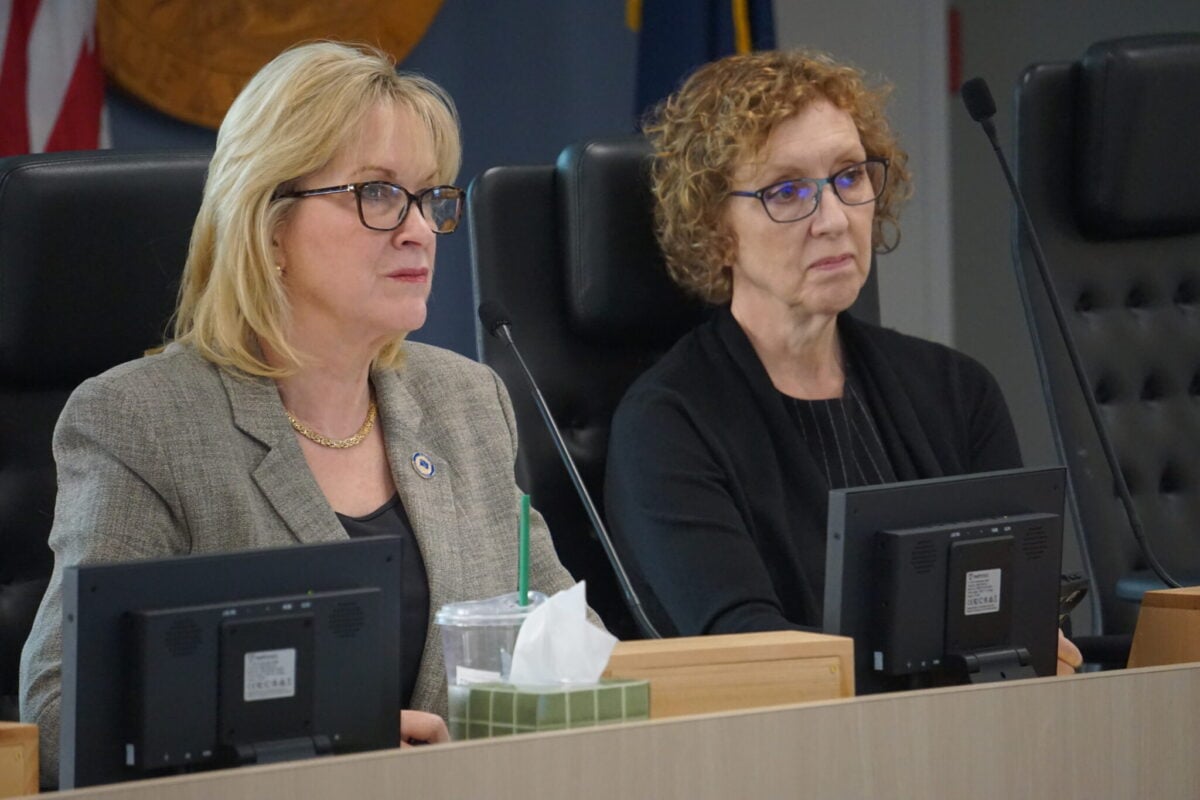
By: Corinne Smith, Alaska Beacon
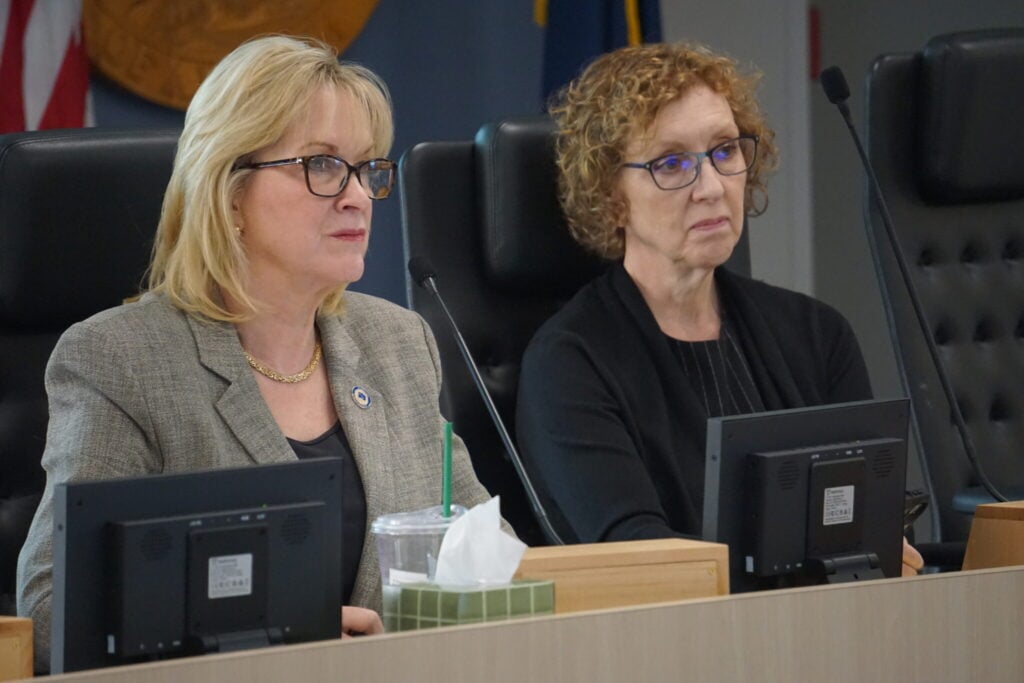
Alaskans will decide whether to overhaul the state’s elections system with a ballot measure that would repeal ranked choice voting, reinstate closed primaries and repeal campaign disclosure rules established in 2020.
Ballot Measure 2, which will appear on the ballots as 24ESEG, is one of two ballot measures that will appear on the general election ballot in November. Ballot Measure 1, which would impose campaign contribution limits, will be on the primary ballot on Aug. 18.
Officials with the Alaska Division of Elections held the first of two public hearings to gather input on the ballot measures Monday, as required by law. Campaign supporters, opponents and Alaskans called in from around the state to the Anchorage Legislative Information Office to share their views at an event chaired by Lt. Gov. Nancy Dahlstrom. A second day of public hearings for public testimony will be held on Aug. 5.
A similar ballot measure to repeal ranked choice voting was voted down in 2024 by 737 votes out of 320,985 cast. Supporters quickly restarted the campaign in 2025 and collected over 34,000 signatures, required to place the issue before Alaska voters again in 2026. The measure’s primary sponsors are Republican gubernatorial candidate Bernadette Wilson, along with Judy Eledge of Anchorage and Ken McCarty of Eagle River.
If approved, Ballot Measure 2 would repeal changes established by a 2020 ballot measure. It would repeal the nonpartisan, open primary system and ranked choice general election.
Currently, Alaska voters of any party affiliation can vote for any candidate in the primary election. If approved, the measure would revert the state’s elections to the closed primary system, where only one candidate from each party advances to the general election, and parties choose who may participate in that party’s vote.
The measure would also repeal some campaign finance disclosure rules. It would repeal limits enacted by the ballot measure passed in 2020 so that individuals and entities who contribute more than $2,000 to candidates or campaigns must disclose the true source, as defined by law. According to the ballot summary from the Division of Elections, the measure would remove spending limits and disclosure rules, including for digital ads, out-of-state donations, undisclosed donations and true source donations. It would also change the definition of “campaign expenditure” and remove some fines for violations.
If passed, the changes would cost the state an estimated $2.6 million to implement, according to the Alaska Public Offices Commission.
Supporters of the ballot measure, called the “Repeal Now” campaign, argue that ranked choice voting is confusing and burdensome to voters, and advocated for returning to the pre-2020 system.
Bethany Marcum, treasurer for Repeal Now, testified at the hearing on Monday, advocating for each voter to have a single vote for a candidate or measure. “Our campaign is about one person, one vote. That’s been the bedrock of the American Republic for the last 250 years,” she said.
Marcum argued ranking choices for candidates is complicated and voters complain about making mistakes. She objected to the tabulation system of counting up to four ranked choices.
If voters do not fill out second, third or fourth candidates, or all their candidates have been eliminated, their ballot is set aside, which Marcum objected to, falsely claiming “ballots were trashed.” But voters’ top choice candidates are counted.
She also blamed ranked choice voting for delaying election results. She said campaign disclosure rules set in 2020 hadn’t prevented “dark money,” or money whose source is secret, from flowing to Alaska, and she said the campaign finance reporting requirements are burdensome to smaller campaigns.
“So, in our opinion, the money overwhelms the disclaimer, and Alaskans recognize this. Smaller campaigns have to spend up to a third more of their money and their ad space on these disclaimers that do nothing to inform the public,” Marcum said.
Opponents of Ballot Measure 2 argue the ranked choice voting system gives voters more choices at the ballot box, and deters extreme partisans while encouraging candidates to appeal to a wider variety of voters. They argued against repealing campaign disclosure rules they say will welcome more Outside, undisclosed “dark money” into Alaska elections.

Scott Kendall testified on behalf of the No on 2 campaign, registered as a group called Protect Alaska’s Elections. He argued the system is not too complicated for voters, and Alaska has implemented ranked choice voting well. He countered that delays in election results are caused by unavoidable delays in the U.S. Postal Service, as nearly a quarter of the state’s precincts must vote by mail.
“The mail system in Alaska is what it is,” he said. “We have to wait for ballots to be brought in from across the state before we can tabulate. Again, that has nothing to do with ranked choice voting, because as those of us who have participated know, the actual tabulation process takes mere seconds. It’s nearly instantaneous.”
Kendall argued repealing campaign disclosure rules would have a larger negative impact on Alaska than repealing open primaries and ranked choice voting.
“Ballot Measure 2 is a bit of a Trojan horse … repealing RCV, that is only a fraction of what the measure does,” he said. “No longer will there be a ban on dark money. In fact, any outside billionaire will be able to give money to another organization, and launder their contributions to that organization. And finally, it lowers or actually removes fines for certain campaign finance misbehavior.”
Kendall also argued returning to closed primaries would give political parties the authority to determine who can vote in their primary elections.
“In a state like Alaska, where two-thirds of all voters do not register with either party, the thought of taking publicly funded elections and allowing the political parties to choke off who can participate in them should be abhorrent,” he said.
Alaskans who called in or testified in person at the hearing on Monday were split, arguing vehemently in support and against the ballot measure.
Several testifiers in support of the measure said ranked choice voting is too complicated.
“We don’t need confusion,” said Mark Spohn, calling in from Willow to testify. “Anytime you have confusion, your elections aren’t as accurate and honest. It’s completely ridiculous. Let’s get rid of the insanity and go back to one person, one vote.”
Testifiers opposing the measure objected to repealing campaign finance disclosures.
Bryan Schroder, a 24-year veteran of the U.S. Coast Guard and former U.S. Attorney in Alaska, urged keeping the current disclosure requirements and ranked choice system to encourage bipartisanship.
“Now, when our candidates campaign, they have to appeal to a majority of voters, not just the hardcore wing of any political party,” he said. “We have a Legislature where more members are willing to work together to do what is best for Alaskans, actively choosing against the do-nothing tribal politics that frustrates so many of us, and as a colleague of mine put it, ‘the workhorses are coming to the front, not the show horses.’”
Several testifiers objected to returning to the closed party system, where voters could have to register with a particular party to vote for their candidate, including Michelle Vasquez of Soldotna. She said that forced her to vote only a Republican ballot, and restricted her from voting for other candidates.
“And that drove me crazy,” she said. “So I was very happy when I changed my party affiliation to unaffiliated like five years ago, so that I could vote however I wished without any confusion or misunderstandings or having to change my voter registration.”
Supporters and opponents of the ballot measure criticized each other at the hearing for taking Outside funding from big donors.
Both campaigns have raised large sums of money since 2025, with contributions from out-of-state political action committees, according to public filings with the Alaska Public Offices Commission and Federal Elections Commission.
The “Repeal Now” campaign supporting the measure has raised $1.1 million to date.
The majority of funds, $846,000, have been donated by the Aurora Action Network, a Super PAC based in Wisconsin whose major donors include finance billionaire Jeff Yass of Pennsylvania.
Other Alaska-affiliated contributors to the Aurora Action Network include Jeff Hildebrand, CEO of Hilcorp; John Binkley, trustee of the Alaska Permanent Fund Corp.; Treg Taylor, Republican gubernatorial candidate and former attorney general, and Deena Bishop, state education commissioner, according to FEC filings.
The opposing No on 2 campaign has raised $5.75 million to date.
The campaign’s largest donor is Unite America PAC, Inc — contributing $4 million to date — a Colorado-based venture fund founded by a professor and advocate Charles Whelan, focused on funding elections reforms, in particular creating open, all-candidate primaries. Its biggest donors include Jason Carroll, a New York financier; Kent Thiry, a Colorado philanthropist who co-chairs Unite America; and David Randolph Peeler, an executive with the private equity firm Berkshire Partners.
The campaign has also received $1.5 million from Voters from the American Center, Inc., a Washington D.C. political nonprofit that supports lobbying “to advance democratic participation and strengthen democracy’s core systems,” according to a philanthropic trade outlet, philanthropy.org.
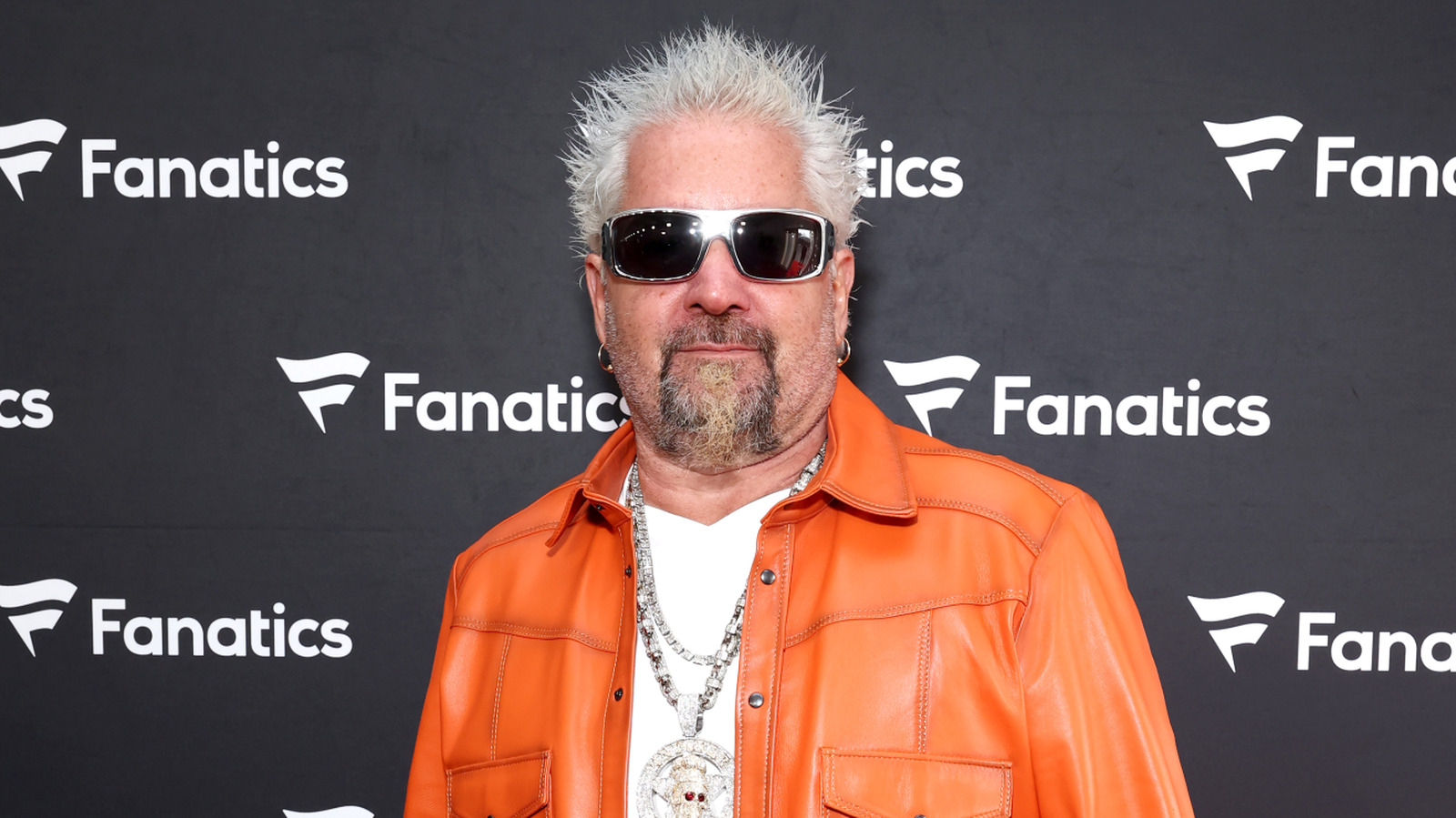
In Kansas, burnt ends are a go-to for barbecue. This restaurant featured on “Diners, Drive-Ins and Dives” has burnt end dishes like soups and sandwiches.
Mashed – Fast Food, Celebrity Chefs, Grocery, Reviews

NOTN- Juneau voters will again decide whether to extend the city’s 3% temporary sales tax for another five years, which city staff say is critical to funding basic services.
The Assembly approved Ordinance 2026-13 Monday night, which places the question on the October 2026 ballot. The measure would continue a 3% tax from July 1, 2027, through July 1, 2032.
City Manager Katie Koester told Assembly members that Juneau’s total 5% sales tax is built from a 1% permanent base tax, a 1% temporary capital projects tax, and this 3% temporary levy that has been in place since 1983.
“The temporary 3% tax is used to fund really the bread and butter of city services. 1% is spent on operations, including police and fire, 1% is spent on streets and drainage projects and we’ve added some utility projects to that list as of late to again keep up with those utility projects. Then the other 1% goes to other needed CIP projects, often parks and playground maintenance, there’s some Eaglecrest funding in there.” Said Koester, “The 3% has been around for decades and really is part of how we’re able to provide basic city services. This ordinance puts 3% on the ballot this fall and I recommend the assembly take public testimony and adopt this ordinance.”
The ordinance passed without objection, sending the renewal to voters this fall.
![<a href="https://tasteofcountry.com/lauren-alaina-breastfeeding-in-public/" target="_blank">Lauren Alaina Opens Up About Breastfeeding in Public [EXCLUSIVE]</a>](https://townsquare.media/site/204/files/2026/07/attachment-untitled-design-2026-07-29t063454-386.jpg?format=natural)
Being a new mom taught Lauren Alaina something she didn’t know about the kindness of strangers. Continue reading…Country Music News – Taste of Country
Being a new mom taught Lauren Alaina something she didn’t know about the kindness of strangers. Continue reading…The Boot – Country Music News, Music Videos and Songs
Talk about personal journeys in web development, the complexities of fame, and the benefits of open source, emphasizing enriching content options for listeners beyond traditional podcasts.

Some of Jason Aldean’s road crew were pretty vocal about their opposition to his song ‘Try That in a Small Town.’ Those people aren’t on his payroll anymore. Continue reading…Country Music News – Taste of Country