Four of these country music divorces involve marriages that lasted more than a decade. Continue reading…The Boot – Country Music News, Music Videos and Songs
![<a href="https://theboot.com/ixp/204/p/country-music-divorces-breakups-2026/" target="_blank">Country Music Divorces and Breakups In 2026 [FULL LIST]</a>](https://townsquare.media/site/204/files/2026/07/attachment-country-divorces-2026.jpg?format=natural)








Four of these country music divorces involve marriages that lasted more than a decade. Continue reading…The Boot – Country Music News, Music Videos and Songs

Alaskans who have been convicted for low-level marijuana possession will be able to apply to keep their records confidential so they do not appear in background checks, under a new law that takes effect in 2027.
The change is part of a wide-ranging omnibus crime package that was approved by the Alaska Legislature and allowed to pass into law without Gov. Mike Dunleavy’s signature in June.
Alaskans are eligible if they have been convicted of possessing less than an ounce of marijuana, were 21 years or older at the time of the arrest, and were not convicted of any other criminal charges in the case.
Individuals must make a request to the Alaska Department of Public Safety that those records be kept confidential on background checks.
Marijuana is legal in Alaska after voters approved its cultivation, sale and recreational use in 2014. Alaskans are permitted to possess up to one ounce of marijuana for personal use in public, and up to four ounces in a private residence. Larger amounts, intent to distribute or large unlicensed cultivation carry a variety of criminal penalties, fines and possible jail time.
While personal use is currently legal, the bill’s sponsor, Rep. David Nelson, R-Anchorage, said those criminal records can still carry stigma and create barriers to opportunities.
“Hardworking Alaskans are still facing barriers to employment, housing, licensing, and volunteer opportunities, leaving them less able to contribute fully to their community,” Nelson told lawmakers at a February hearing. He noted that under the bill Alaskans can keep those records confidential while still allowing government agencies access for background and statistical information.
In 2023, the Alaska Supreme Court ordered low level marijuana convictions to be removed from the public CourtView system, while still being available in courthouse searches and criminal background checks. The move was similarly prompted to help people avoid negative consequences from convictions that took place before marijuana was legalized in Alaska.
Officials with the Department of Public Safety said in a fiscal note the number of requests to keep low level marijuana conviction records confidential “is anticipated to be high.” They said change will require creating a new criminal justice technician position to search thousands of criminal conviction records and restrict their release. They estimated the cost to implement the bill at over $144,000 in the first year, and over $126,000 in the second year of implementation.
The post Alaskans with certain low-level marijuana convictions can keep record private under new law appeared first on Chilkat Valley News.

Sometimes the truth is very different from what the public sees. Continue reading…The Boot – Country Music News, Music Videos and Songs
A few months from now, if developers of the proposed trans-Alaska natural gas pipeline move forward with the project, they will ask Alaskans for something between a few hundred million and a billion and a half dollars.
The request is optional, but if the state doesn’t chip in, Alaska’s 25% ownership of the pipeline will dwindle to a smaller fraction, and any profits will similarly shrink.
Two other requests for cash could come as soon as next year, to first fund a gas treatment plant on the North Slope and then a natural gas export facility on the Kenai Peninsula.
As state lawmakers debate a multibillion-dollar tax break for the pipeline project this week, a confidential memo and legislative testimony show the break won’t be the last financial request from Alaskans.
Keeping the state’s 25% ownership of the Alaska LNG project will cost at least $4 billion, according to estimates from the Alaska Department of Revenue.
If the state spends that money, and if the project is built and sells gas as planned, the department estimates the state will earn more than $21 billion through 2062, almost five times its initial investment.
But there’s a risk: if the pipeline project costs more than expected, the state of Alaska will be asked to pay more.
“We have reserved the option for the state of Alaska to elect to invest or not,” Frank Richards, president of the Alaska Gasline Development Corp., told the Senate Finance Committee on June 4. “The project will proceed forward without the state investment, but we wanted to give the state that opportunity should it elect to, eyes wide open.”
Last year, the Gasline Development Corporation, a state-owned company charged with building the gas pipeline project, sold the lead role in the project to Glenfarne, a private multinational developer.
According to a confidential memo analyzing the deal, Glenfarne agreed to pay $10 million and fund the project’s development until the “Final Investment Decision,” the point at which investors start to put down money and contracts go out for construction.
Glenfarne has 75% ownership of 8 Star Alaska, the parent company of the pipeline project. The state — through AGDC — has 25% ownership. AGDC’s ownership share stays the same regardless of how many new investors come into the project.
But ownership of 8 Star Alaska may not mean much.
The Alaska LNG project includes three separate “subprojects” — a gas treatment plant on the North Slope, the pipeline itself and an export terminal on the Kenai Peninsula.
Each of those subprojects is its own subsidiary company, and not all of the subproject profits will go back to 8 Star Alaska.
“The real value is down in the three subsidiaries of 8 Star,” said Sen. Cathy Giessel, R-Anchorage, in a July 2 podcast interview.
Right now, each subsidiary is subject to the same 75-25 ownership split as 8 Star, but that changes at FID, when other investors put in their money.
At that point, said Matt Kissinger, AGDC’s commercial director, there will be enough money to build each subproject, but the state will have the opportunity to push out other investors and preserve its 25% ownership.
“All the investors will be in; they’ll all be committed, and then we’ll have 180 days for the state to decide to back them out of some of their commitment,” he said.
According to a draft analysis of last year’s Glenfarne-AGDC deal, AGDC has “the right to invest in up to 25%, but not less than 5%, of each sub-project at FID.”
The 5% minimum — if AGDC takes any share at all — was negotiated with Glenfarne, Kissinger said, because if the state is going to push out another investor, it needs to do so for a meaningful amount.
Part or all of the 25% buy-in could be taken by AGDC. The state could buy in directly, or another state-owned corporation like the Alaska Industrial Development and Export Authority, Alaska Railroad or the Alaska Permanent Fund Corp. could do so.
If the state and public corporations don’t reach the 25% maximum, then Alaska residents, Alaska Native corporations and other in-state companies would have a chance to take some or all of the remainder.
On June 25, the AGDC board voted unanimously to approve the creation of a subsidiary that will allow individual Alaskans to invest in the project through AGDC.
“No more funds are required by the State of Alaska to invest for this project to proceed forward, it’s just that we have the option to, and if Alaskans want the opportunity to invest, that’s the structure that we’re going to set up for them,” Richards told the board.
AGDC and Glenfarne expect the pipeline subproject to reach FID this year. The gas treatment plant and the export facility FIDs are expected no sooner than 2027.
Keeping the state’s share of the project at 25% is likely to be expensive. Glenfarne estimated last month that building the pipeline alone will cost as much as $16.9 billion.
In an example scenario AGDC presented to legislators last month, the company suggested developers could take out loans for 70% of that cost.
The Alaska Department of Revenue is independently using that percentage for its baseline predictions, too.
The developers could cover the remaining 30% by selling part of the pipeline subsidiary.
If the state wants to keep 25% ownership of the whole project, that would mean buying 25% of that 30%.
Using some assumptions, “that would result in $4.4 billion in nominal terms that would be required to invest in the project,” said Dan Stickel, the Department of Revenue’s chief economist, on May 21.
The profits could be huge, the department estimates. A 25% equity share could be worth $21.3 billion through 2063.
That’s on top of the tens of billions of dollars in production taxes, property taxes, royalties and fees that the state would receive regardless of whether or not it takes an additional ownership share.
What happens if Alaska doesn’t buy in?
“That (25% ownership) will definitely be diluted. That’s the mechanism that was designed,” Kissinger told state lawmakers.
AGDC’s scenario, presented to legislators on June 4, suggested 8 Star Alaska would keep 35% of the pipeline subsidiary. AGDC would have a quarter of that 35%, or 8.75% of any profits after debts are paid.
If 8 Star Alaska keeps less than that 35%, then the state’s quarter would shrink correspondingly.
While investing in the project increases the potential profits, there’s also a risk, said Sen. Bert Stedman, R-Sitka, on June 16. If the project costs more than expected, the state and other investors would have to pay more money to keep their share of the project.
“If the state wishes to take that risk, and if the state wishes to be a paying member of the project … you would be paying 25% of any of the investment dollars coming in to maintain that,” Kissinger said on June 3.
Current state law allows AGDC to borrow money without legislative approval.
“Right now, under the current statutes, AGDC has extremely broad bonding authority. We can raise revenue bonds — provided there is no recourse back to the state — without any further approvals,” Kissinger said on June 26.
What’s a revenue bond?
The Alaska Constitution severely limits the kinds of government borrowing that the state is responsible for and must repay through taxes. Corporations like AGDC can instead issue revenue bonds, which are repaid by the corporation’s profits. There’s no obligation for the state to bail out a corporation that can’t pay its bond holders.
The current version of the gasline tax break being considered by state lawmakers would limit AGDC’s borrowing power.
Legislators would have to meet within 90 days — possibly in special session — to approve any bonds.
The Alaska Department of Revenue would be required to analyze the investment and make a recommendation to legislators.
Another funding possibility is that the state could offer things instead of money in order to pay for its share of the project.
Earlier this year, the state of Alaska changed its regulations, allowing the state to give away gravel to public-backed construction projects.
“What we’re hoping to do is to utilize state materials, state assets, to be able to provide to the project in lieu of cash,” Richards told the House Finance Committee on May 27. “The gravel that will be used for access road and pipe bedding and pipe backfill and pipe storage yards and camp facilities represents about 20 million cubic yards of material, so that has a value of roughly $60 million and if we are able to then utilize that value and gain equity, then that would be a non-cash option that we would like to exercise for the state.”
In an interview on Tuesday, Richards said the state could also offer the land that the pipeline will use. Instead of paying something like $9 million per year in rent to the Department of Natural Resources, the state could simply deed the land to the pipeline operator and receive a share of the pipeline subsidiary in return.
Lawmakers could also appropriate money directly from the state treasury to AGDC in order to fund the project.
Rep. Andy Josephson, D-Anchorage, said on May 21 that in order to come up with the money for the 25% investment, the state’s independent financial adviser recommended overdrawing the earnings reserve of the Alaska Permanent Fund.
“I know that’s sacrilege to talk about, and it’ll be left for the next Legislature … but $4 billion is something this state could probably borrow or find, I guess,” he said.
“This is such a significant decision for what I call the re-electeds,” said Josephson, who is retiring and not running for re-election. “If they don’t do it, they could be chastised for decades and remembered for not doing it, but if the project has significant cost overruns, they could be chastised for that.”
“I would agree, it’s a very significant decision,” Stickel said.
Speaking June 19 on the floor of the state Senate, Sen. Jesse Kiehl, D-Juneau, said he is terrified of what might happen if the state invests and there is a cost overrun that requires more money to complete the project.
“Does it go bankrupt, and we just leave it? Nobody in this room is that naive. There’s one deep pocket around this project. There’s one entity that’s had a 50 year dream of building the pipe. There’s one place you can go for billions and billions of dollars,” he said.
Left unsaid was the name of the Alaska Permanent Fund.
The post After gasline tax bill, pipeline developers plan to ask Alaskans for a few billion dollars appeared first on Chilkat Valley News.

Member’s Mark products aren’t meant to leave a lasting mark on Sam’s Club members’ wallets. For folks shopping in July, these items will be even cheaper.

Mashed – Fast Food, Celebrity Chefs, Grocery, Reviews

GiveWP is the most popular fundraising and donation tool on WordPress, powering over $500 million in donations. It integrates with Akismet to ensure that spammy or potentially fraudulent submissions get filtered out. Recently, some Give users saw an unusually high level of false positives on their donation forms: legitimate donation submissions that were being marked as spam.
We investigated and found that the donation forms were being sent to Akismet for checking after each step in the donation process: once after choosing an amount, again after the user entered their name, again after they entered an optional message, etc. To Akismet, this looks like sudden repeated submissions from the same user, all with similar content (better known as spam).
Akismet supports rechecking content, but only if the integration includes the recheck_reason parameter. If that parameter is present, Akismet knows not to classify the repeated duplicate (or nearly duplicate) checks as part of a spam attack; however, if recheck_reason is omitted, this kind of consecutive similar content looks very similar to spam, and Akismet blocks it.
We reported the root issue to Liquid Web, and they quickly addressed it and released a fix in version 4.16.0. This kind of collaboration is what makes Open Source great!
We’re planning on bringing automatic integration review to more clients and platforms, so stay tuned for more tips and insights.
WordPress Planet
Laptops and tiny shampoo bottles can now remain in carry-on bags at the airport security checkpoint. But bringing a bottle of water through is still out.
The two screening lanes at Juneau International Airport now have computed tomography (CT) X-ray machines that provide security officers with a manipulable 3D image scan of belongings passengers load onto the plastic totes that are pushed through.
More than 1,150 CT scanners have been installed at nearly 300 U.S. airports as of this month, including Ted Stevens Anchorage International Airport, according to the Transportation Security Administration. Eric Guthier, a TSA spokesperson, said during a visit to Juneau on Monday the machines at JIA were installed in April.
Guthier said the X-ray device in the CT scanners is similar to equipment used in hospitals.
“The camera spins very, very fast, takes lots of pictures, and then when the officer is reviewing the bag for prohibited items they can actually rotate the image to see what’s underneath something,” he said. “So with the older-style machines if somebody looks and says, ‘Hey, I think there might be something there, but I can’t quite tell. We’re going to have to open the bag and look.’ With this, you can rotate the image and look.”

That means people can typically leave items such as laptops computers and travel-size containers with liquids in their carry-on baggage, rather than taking them out and placing them into separate bins that pass through the machine, Guthier said. The bins themselves are also new and intended to be large enough for people to put all of their belongings into it, simplying the identifiction process for screeners and the recollection of items for travelers.
A TSA press release issued Monday about the new machines at Juneau’s airport notes they “have a slightly smaller entry tunnel, and not all larger carry-on bags will fit into the units. TSA recommends that large carry-on items be checked with the airline.”
“TSA officials also encourage travelers to get to the airport early and save time by placing items from pockets such as keys, cell phones, loose change, etc. into their carry-on bags instead of into bins to help ensure there are no items left behind in bins,” the release notes. “Doing so also helps to speed the screening process.”
Amanda O’Dell, a transportation security officer at the airport for the past two years, said Monday the scanned 3D images she sees are the biggest difference she’s noticed with the new machines.
“You actually see everything in more detail versus you’re just looking at blobs that have to get pulled to get checked,” she said.
O’Dell said there’s no clear difference in the speed at which a crowd of travelers make it through screening, since reviewing the 3D images can take longer than the previous machines. But people are definitely noticing the lack of need to remove items from bags.
“They love that,” she said.
This story was originally published by the Juneau Independent.
The post New 3D security scanners at Juneau’s airport lets travelers leave laptops in carry-on luggage appeared first on Chilkat Valley News.
WordPress 7.1 Beta 1 is ready for download and testing!
This beta release is intended for testing and development only. Please do not install, run, or test this version of WordPress on production or mission-critical websites. Instead, use a test environment or local site to explore the new features.
You can test WordPress 7.1 Beta 1 in any of the following ways:
| WordPress Beta Tester Plugin | Install and activate the WordPress Beta Tester plugin on a WordPress install. Select the “Bleeding edge” channel and “Beta/RC Only” stream. |
| Direct Download | Download the Beta 1 version (zip) and install it on a WordPress website. |
| Command Line (WP-CLI) | Use this WP-CLI command: wp core update --version=7.1-beta1 |
| WordPress Playground | Use a 7.1 Beta 1 WordPress Playground instance to test the software directly in your browser. No setup required-just click and go! |
The scheduled final release date for WordPress 7.1 is August 19, 2026. The full release schedule can be found here. Your help testing Beta and RC versions is vital to making this release as stable and powerful as possible. Thank you to everyone who contributes by testing!
Testing for issues is a critical part of developing any software, and it’s a meaningful way for anyone to contribute – whether or not you have experience. Details on what to test in WordPress 7.1 are available here.
If you encounter an issue, please share it in the Alpha/Beta area of the support forums. If you are comfortable submitting a reproducible bug report, you can do so via WordPress Trac. You can also check your issue against this list of known bugs.
Curious about testing releases in general and how to get started? Follow along with the testing initiatives in Make Core and join the #core-test channel on Making WordPress Slack.
WordPress 7.1 will include new features that were previously only available in the Gutenberg plugin. Learn more about Gutenberg updates since WordPress 7.0 in the What’s New in Gutenberg posts for versions 22.7, 22.8, 22.9, 23.0, 23.1, 23.2, 23.3, 23.4, 23.5 and 23.6.
WordPress 7.1 delivers a more complete set of styling controls, a smoother media experience, and a more personalized admin experience. Notes have evolved to add inline notes with @mentions and rich text formatting that make asynchronous feedback feel more powerful. New styling features unlock long requested features to style how blocks look across screen sizes and to style interactive states, all without writing custom CSS. Various client side media improvements means better format support, improved performance, and more resilient uploads when adding media to your site. A new inline cropping tool brings a fresh and more robust experience to editing images. Finally, the admin experience becomes easier to navigate with an ever present admin bar in the editors, improvements to the command palette, and various quality of life improvements. Underneath it all, developers get an expanding set of APIs to build on, and site owners get better support for a truly global audience.
Notes continue to grow into a fuller collaboration experience, making asynchronous feedback between teams faster and more expressive.
Text Formatting: Notes now support inline formatting like bold, italic, code, links and adding emoji; each with a respective keyboard shortcut, so feedback reads clearly without breaking your flow.
@mentions: Type “@” in a Note to pull up a searchable list of collaborators and tag someone directly, so feedback points at the right person without leaving the sidebar.
Leave notes anywhere: Start more than one conversation on the same block instead of folding every comment into a single thread, making it easier to track distinct pieces of feedback.
Inline notes: Leave a note on a text selection instead of on an entire block.
Show more / show less: Long notes now collapse by default with a toggle to expand them, keeping the margin tidy while you write.
WordPress 7.1 takes a major step toward built-in responsive design and interactive styling, letting you achieve looks that once required writing custom CSS.
Responsive styling: Define how a block looks at different screen sizes directly in the editor, for both Global Styles and individual blocks without the need of writing custom CSS.
Viewport breakpoint customization: Theme authors can now define their own responsive breakpoints in theme.json, giving more flexibility for how responsive controls behave on a given site.
Interactive state styling: Style how blocks respond to interaction, like a button changing color on hover or focus, using a standardized set of controls for both Global Styles and individual block instances.
Uploading, editing, and browsing media keeps getting more capable and more reliable.
These meaningful upgrades make the WordPress admin easier to move around in and more consistent with how you like to work.
(Ctrl/Cmd+K) is more refined to make finding what you need even faster! Now results are grouped into Recent, matching and Suggestions sections instead of one flat list.WordPress 7.1 release brings a handful of block refinements that give more control with fewer steps.
WordPress 7.1 continues work to make Core reflect the full diversity of its worldwide community, with progress toward supporting Unicode email addresses so usernames, slugs, and email addresses can better represent users everywhere.
WordPress 7.1 continues to expand the foundation developers build on.
With so much in progress for WordPress 7.1 Beta 1, this is still only the beginning; expect continued refinement with each Beta and RC release ahead of the final release on August 19, 2026.
Seeds of Seven-One,
Notes, styles, media, and tools—
Test, and watch them bloom.
Props to @benjamin_zekavica, @amykamala, @wildworks, @adamsilverstein, @annezazu, @fushar, @jorgefilipecosta, @joedolson for proofreading and review.
WordPress Planet

The nominees for the Nashville Songwriters Hall of Fame (NaSHOF) Class of 2026 have been announced, with country superstars Miranda Lambert and Chris Stapleton among the nominees, along with global superstar Taylor Swift.
The Nashville Songwriters Hall of Fame revealed the list of 12 nominees early Wednesday morning. The nominees represent two of the organization’s five categories and are being recognized for their outstanding contributions as songwriters.
The Contemporary Songwriters Category nominees include Jim Beavers, Shawn Camp, Rodney Clawson, Dallas Davidson, Marv Green, Lee Thomas Miller, Neil Thrasher and Chris Tompkins.
The nominees in the Contemporary Songwriter/Artist Category are Miranda Lambert, Chris Stapleton, Taylor Swift and Phil Vassar.
“Well-deserved congratulations to all the nominees in our contemporary categories,” NaSHOF Executive Director Mark Ford shared in a statement. “We look forward to announcing those who will be inducted this fall as members of our Class of 2026.”
Each nominee has achieved significant songwriting success dating back at least 20 years, highlighting the lasting impact of their work throughout their careers.
From this year’s group of nominees, two songwriters and one songwriter/artist will be selected for induction by members of the Nashville Songwriters Hall of Fame, along with fellow professional songwriters and artists.
The 2026 inductees will be announced in the coming weeks and officially inducted into the Nashville Songwriters Hall of Fame later this year.
A Look at the 2026 Nashville Songwriters Hall of Fame Nominees
Jim Beavers: A Texas native, Beavers has penned hits including Luke Bryan’s “Drink A Beer,” Dierks Bentley’s “Sideways,” and Gary Allan’s “Watching Airplanes.”
Shawn Camp: The Arkansas native’s songwriting credits include Willie Nelson’s “A Beautiful Time,” Brooks & Dunn’s “How Long Gone,” and Garth Brooks’ “Two Piña Coladas.”
Rodney Clawson: A Texas native, Clawson is behind songs such as Jason Aldean’s “Amarillo Sky,” Luke Bryan’s “Drunk On You,” and George Strait’s “I Saw God Today.”
Dallas Davidson: The Georgia native has written several country hits, including Blake Shelton’s “Boys ’Round Here” featuring Pistol Annies & Friends, Lady A’s “Just A Kiss,” and Lee Brice’s “One Of Them Girls.”
Marv Green: A Southern California native, Green’s credits include Lonestar’s “Amazed,” Tim McGraw’s “I Called Mama,” and Carrie Underwood’s “Wasted.”
Lee Thomas Miller: The Kentucky native has written hits including Jamey Johnson’s “In Color,” Joe Nichols’ “The Impossible,” and Trace Adkins’ “You’re Gonna Miss This.”
Neil Thrasher: An Alabama native, Thrasher’s songwriting credits include Randy Houser’s “How Country Feels,” Kenny Chesney’s “There Goes My Life,” and Jason Aldean’s “Try That In A Small Town.”
Chris Tompkins: The Alabama native has written chart-toppers including Carrie Underwood’s “Before He Cheats,” Luke Bryan’s “Drunk On You,” and Morgan Wallen’s “Lies Lies Lies.”

Miranda Lambert: A Texas native, Lambert has written many of her own hits, including “Automatic” and “Over You,” as well as Ella Langley’s “Choosin’ Texas.”
Chris Stapleton: A Kentucky native, Stapleton’s songwriting credits include his own songs “Broken Halos” and “Starting Over,” along with Kenny Chesney’s “Never Wanted Nothing More.”
Taylor Swift: Born in Pennsylvania and raised in Nashville, Swift’s songwriting catalog includes her own hits “I Knew It, I Knew You” and “Love Story,” as well as Little Big Town’s “Better Man.”
Phil Vassar: A Virginia native, Vassar’s credits include his own songs “In A Real Love” and “Just Another Day In Paradise,” along with Jo Dee Messina’s “Bye, Bye.”
The post Miranda Lambert, Chris Stapleton & Taylor Swift Among Nashville Songwriters Hall of Fame 2026 Nominees appeared first on Country Now.
Country Now
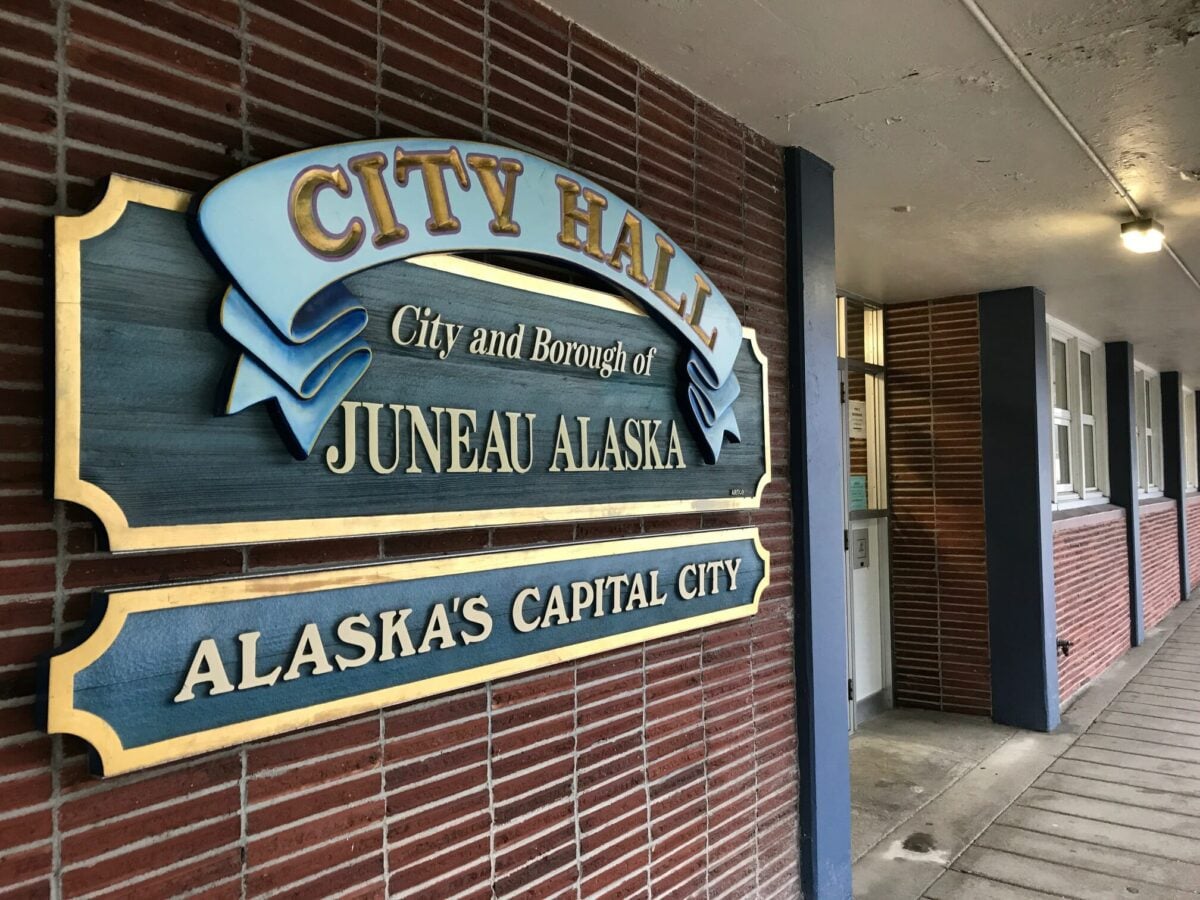
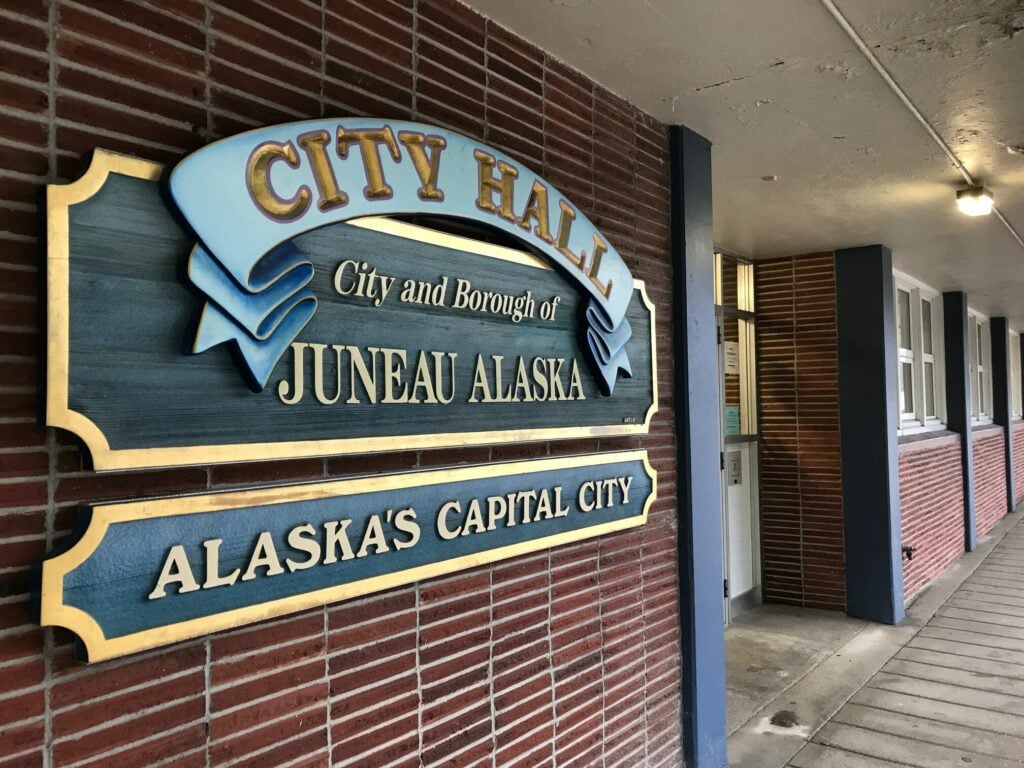
NOTN- City manager Katie Koester told the Assembly of the Whole Monday evening, that the Burns Building renovation, or the new City Hall is delayed and will not allow offices to move out of temporary space by year‑end as planned.
“We are not going to be able to move out of the Marine View building or this building by the end of the calendar year as we had originally hoped, so we have entered into an additional six-month lease with Marine View. We anticipate the project to be complete by May.” Koester said.
Bids are still being received; alternates in the bid package total about $1.3 million for items such as flooring, ceiling work and mechanical controls. The city has signed a six‑month lease extension for its space at Marine View, and Koester warned that lease costs and schedule slippage could draw on project contingency.
Koester said they may request additional funding or transfer from the lands fund if needed and will update the Assembly when bid results are finalized and a construction award is required.
The Assembly also moved forward with two parallel paths to dispose of the current City Hall at 155 Heritage Way after extended discussion.
Members voted to advance an ordinance for a sealed competitive bid sale with a $2.5 million minimum and also directed staff to prepare a negotiated‑sale ordinance for consideration with the Sealaska Heritage Institute’s $1.5 million proposal.
Members cited community and year‑round benefits from a cultural use, but others pushed to test market interest through bids.
“Not everything can be quantified, so I weigh the value of having a known entity being in this space.” Said Assembly member Maureen Hall, “I see the quandary. Do we open it up for a bid and go with the highest bidder, or see what it is and then scale back to an entity that’s going to provide year-round benefit and additional benefit to the community as far as sharing of resources.”
The twin approach schedules both options for the same public‑hearing timeline so the Assembly can weigh competitive offers against a negotiated community proposal.