The show just got a whole lot more country. Continue reading…Country Music News – Taste of Country
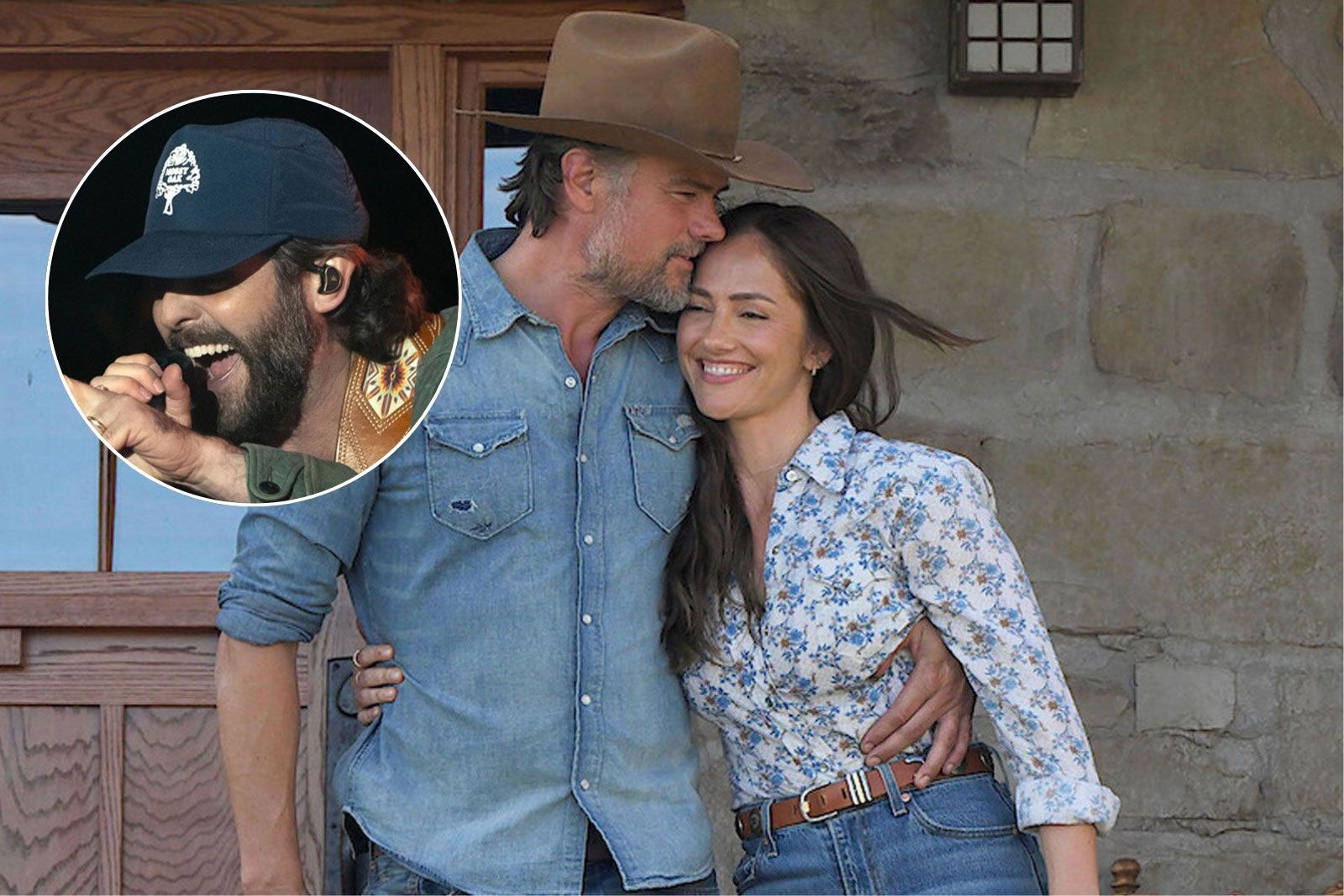








The show just got a whole lot more country. Continue reading…Country Music News – Taste of Country
The show just got a whole lot more country. Continue reading…The Boot – Country Music News, Music Videos and Songs
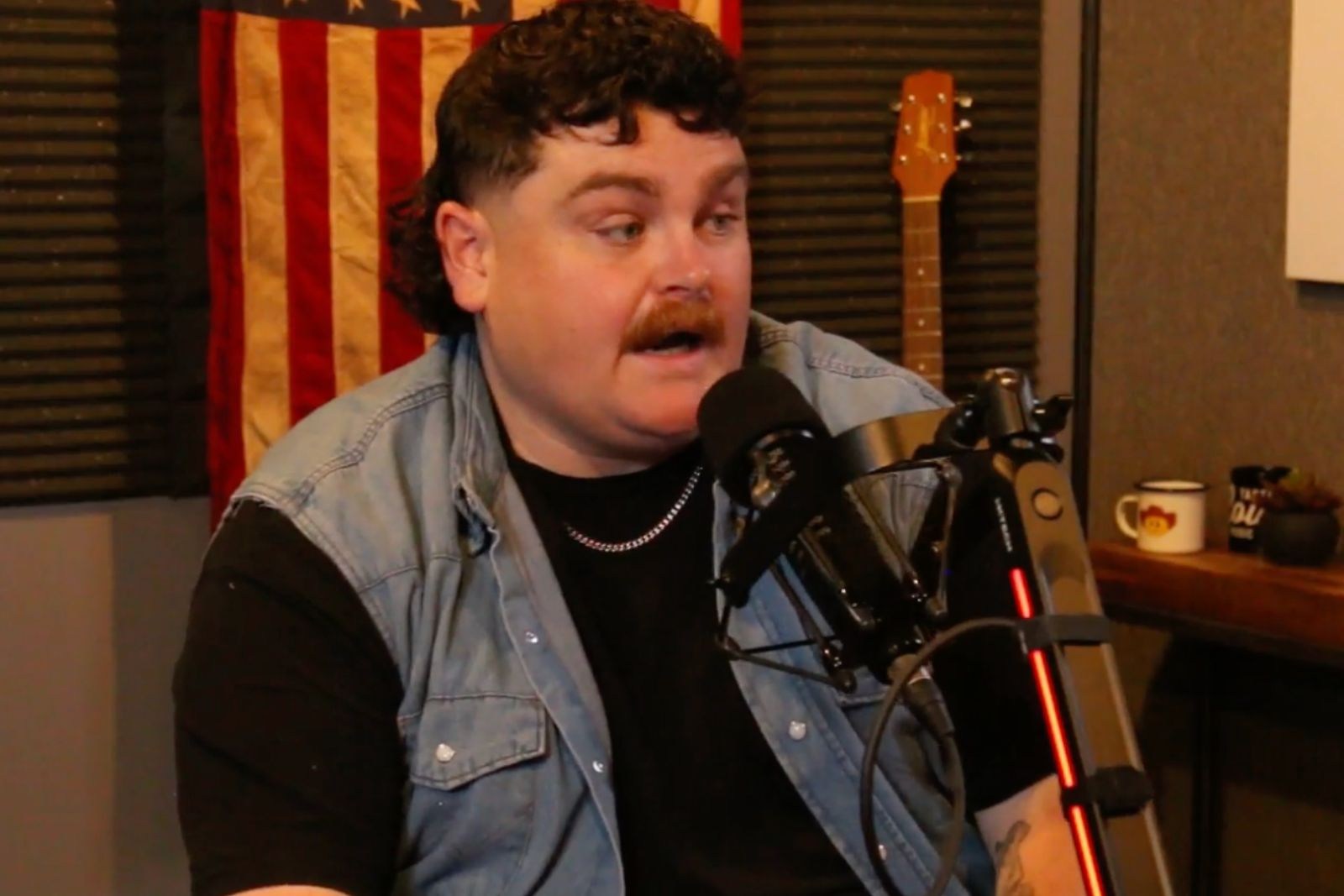
Bryan Andrews wants to play country music’s biggest stages. But if those opportunities come at the expense of his message, then he says it’s not worth it. Continue reading…Country Music News – Taste of Country
Bryan Andrews wants to play country music’s biggest stages. But if those opportunities come at the expense of his message, then he says it’s not worth it. Continue reading…The Boot – Country Music News, Music Videos and Songs

One billion burgers is a lot of burgers, and you may think that number was reached only recently. Here’s the chain that managed it much further in the past.

Food Republic – Restaurants, Reviews, Recipes, Cooking Tips
Reading Time: 2 minutes
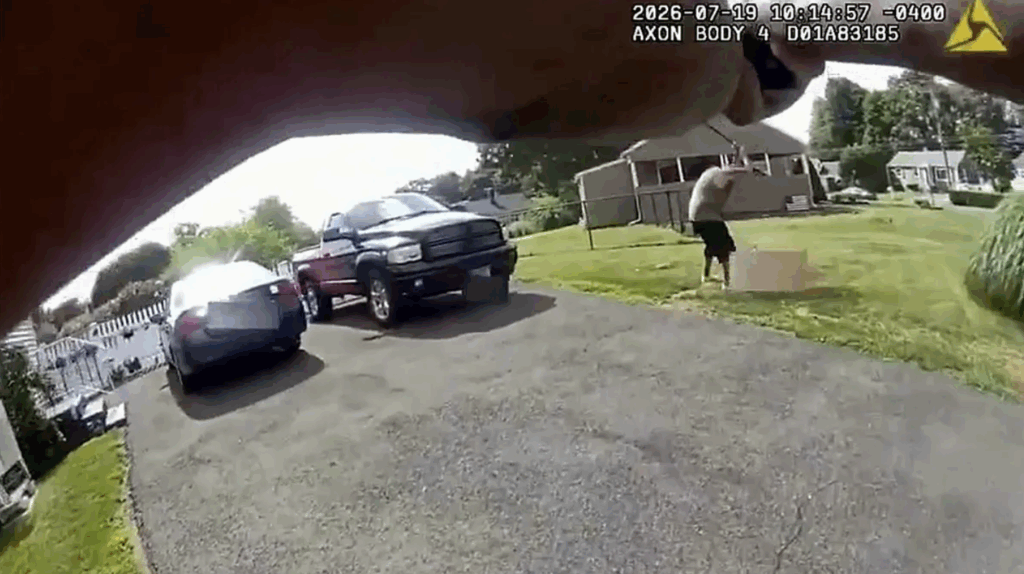
Newly released body camera footage captures the harrowing moments before a Connecticut police officer fatally shot a man who authorities say refused repeated commands to stop attacking another person with a baseball bat.
The incident unfolded on the morning of July 19 in Meriden, Connecticut, after officers responded to reports of an active domestic violence situation at a home on Sagamore Road.
According to investigators, Officer Anthony Offiaeli arrived to find 38-year-old Robert Lee Jenkins III repeatedly striking a motionless man with a baseball bat (via TMZ).
Body camera footage released by the Connecticut Office of Inspector General shows Offiaeli pointing his weapon at Jenkins while repeatedly yelling, “Put the f—ing bat down!”
Authorities say the officer issued the command four times as Jenkins allegedly continued the attack. He also radioed for backup, urging responding officers to “step it up,” before opening fire.
Investigators later identified the victim as 69-year-old Robert Jenkins Jr., the suspect’s father.
According to the preliminary report, Robert Jenkins Jr. suffered catastrophic blunt-force injuries to the head and was pronounced dead at the scene. His death has been ruled a homicide.
Robert Lee Jenkins III was transported to a hospital, where he later died from multiple gunshot wounds. His death was also classified as a homicide under Connecticut’s legal definition for deaths caused by another person.
The released footage is graphic and shows the suspect continuing to swing the bat even after the officer begins firing. Reports indicate Offiaeli discharged nearly 20 rounds before the assault finally stopped.
As is standard procedure following an officer-involved shooting, Connecticut’s Office of Inspector General is investigating the use of deadly force.
A separate investigation into the underlying domestic violence homicide is being handled by Connecticut State Police.
Authorities have not released any information about what may have led to the fatal confrontation between father and son.
The body camera footage has quickly drawn widespread attention online because it documents the officer’s repeated attempts to end the attack before resorting to deadly force.
Officials have not announced when the investigations will be completed.
We will have further updates on this developing story as new information becomes available.
Connecticut Man Beats Father to Death on Camera Before Being Shot Dead By Police was originally published on The Hollywood Gossip.
The Hollywood Gossip

Jason Aldean and Luke Bryan are giving fans an inside look at their history-making night at Sanford Stadium with the release of the live performance video for “Songs About Us.”
The video captures the unforgettable moment the two Georgia natives performed the song together for the first time during their sold-out concert on the University of Georgia campus on April 25.
Viewers see an epic aerial view of the estimated 63,000 fans that packed the stadium before the spotlight shines on Aldean as he delivers the song’s opening verse and chorus. Bryan stands beside him on stage, strumming his guitar before taking over the second verse.
The performance footage is interlaced with various clips filmed throughout the night, starting with the artists’ pre-show ritual, their walk through the tunnel of the stadium and onto the stage and a series of highlights from the unforgettable evening before signing off. Fans can watch the pair celebrate their friendship of nearly two decades as they share laughs, down a few drinks and perform a mix of their biggest hits.
Through it all, their voices continue to effortlessly weave together, delivering a song that feels like the perfect duet for two longtime friends. Serving as the title track of Aldean’s 12th studio album, “Songs About Us” marks a full-circle collaboration between two artists who share similar beginnings, from their Georgia roots and musical influences to the stages they played before finding success.
The sentiment behind the song runs deeper than just the music. It reflects the experiences and stories they have both spent years capturing throughout their careers, making it clear why Bryan was the perfect voice for Aldean to bring on.
Aldean and Bryan’s friendship dates all the way back to when they were both just dreamers, rising through the country music ranks and carving out their paths in the industry. This song and their performance at Sanford Stadium serve as a remind of how far they’ve come individually and how strong their friendship has remained through it all.
The video arrives just days after Aldean celebrated earning his 32nd No. 1 hit on country radio with “Don’t Tell On Me.” He is also in the midst of his Songs About Us Tour, which is set to continue through the end of September, while Luke Bryan is busy with his Word On The Street Tour and upcoming Farm Tour shows.
The pair of artists have more opportunities for fans to catch them on the road together on their Double Down Tour 2026, including stops in Missoula, MT, San Diego, CA, Washington, DC and Las Vegas, NV.
The post Jason Aldean & Luke Bryan Release ‘Songs About Us’ Live Performance Video From Historic Sanford Stadium Show appeared first on Country Now.
Country Now

Next time you’re perusing your supermarket’s freezer aisle, keep an eye out for this chocolatey, nougat-y ice cream candy bar that our reviewer loved.

Mashed – Fast Food, Celebrity Chefs, Grocery, Reviews
The land by the Haines Highway 18 mile marker holds a lot of personal history for Patrick Philpott.
It’s where Philpott, a hunter, got his first kill: “It was a rabbit, and I remember the rifle I used,” he said during borough assembly testimony last week. “It was a Montgomery Ward .410 single-shot bolt action. And the (the rabbit) tasted mighty good. He ate good carrots.”
Philpott also grew up gardening at the spot, on a plot his family cultivated for generations, stretching back to the early 20th century, when they opened a roadhouse near current-day Haines Highway 19 Mile.

“That’s where I learned to make my first dimes,” he said, recalling in his youth shoveling horse manure at the Port Chilkoot Dock to take to the garden as fertilizer.
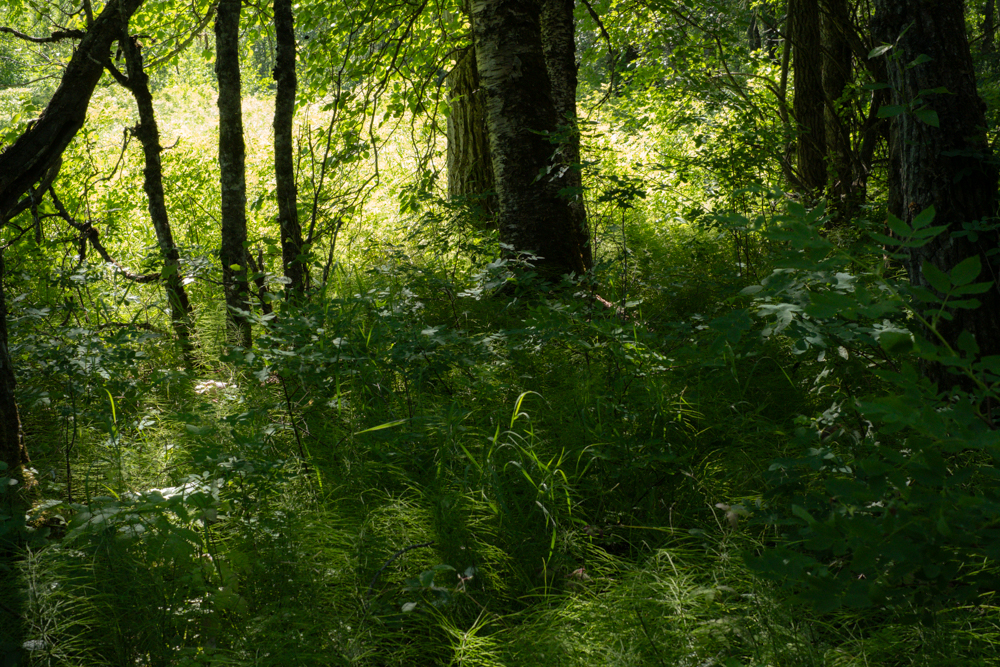
The old garden footprint is now heavily overgrown, save for a small clearing separated by about a hundred yards of dense brush from the highway. Philpott, 71, a retired veteran and elder of the Frog House in Klukwan, is hoping once more to garden on that land — land that is now part of the state’s Alaska Chilkat Bald Eagle Preserve. In his estimation, he’s earned the right to grow one to two acres of vegetables by his and his family’s years spent gardening that very land, and he says state law supports that assertion.
The 48,000-acre eagle preserve was established in 1982 to protect large populations of bald eagles that fish in the Chilkat, Klehini, and Tsirku river confluence late into the year.
In applications to the state’s Division of Parks and Outdoor recreation, Philpott has cited a passage in the state statute creating the preserve which guarantees “continued opportunities for traditional uses of the Preserve at levels and methods and means that are compatible with the protection of the bald eagle population.” The statute, AS 41.21.618, goes on to say those uses include, but are not limited to, “hunting, trapping, fishing, berry picking, other subsistence and recreational uses, operation of motor vehicles and the harvesting of personal-use firewood.”
Philpott’s argument hasn’t gotten much traction at the Division of Parks, which manages the eagle preserve and is part of the Alaska Department of Natural Resources. Parks director Ricky Gease denied his permit application on May 26. Philpott is now appealing the decision to Department of Natural Resources commissioner John Crowther.
So far, state agencies hold that Philpott’s request is a land use distinct from subsistence activities like hunting and berry picking.
In the denial of the application, Gease wrote that a garden would alter the land from its “current use, open and accessible by the public in general, to a private use for a garden.”
That kind of private use, Gease wrote, would require Philpott to officially lease the land, not just use it under a permit.
While the DNR commissioner does have statutory authority to lease Eagle Preserve land, Gease wrote that eagle preserve land has never before been leased, and the agency has no process outlined to do so, specifically for how to solicit public input and consider a lease application.
Division of Parks spokesperson Wendy Sailors wrote in an email this week the decision “was not based solely on potential impacts to eagle use, but on whether the proposed activity was consistent with the statutory purpose of the Preserve and the legal framework governing management and leasing of lands within the Preserve.”
In an earlier email, Division of Parks staff told Philpott a lease application would likely include a $1,200 application fee, a land appraisal running an estimated $3,000–$5,000, and an annual lease fee “based on the fair market value of the parcel.”
In his initial application, Philpott had asked the state to lease him 2.5 acres for $1 a year and said his motivation for the garden in the first place was stretching a limited income.
“The purpose of this garden is personal food production and food security,” he wrote. “My wife and I are senior citizens living at the poverty level and producing our own food is an important step toward self sufficiency. We would rather grow our own food than depend on assistance.”
“I’m not the person to stand there with my hand out,” Philpott later said at the assembly meeting. “I want to be able to do it myself as long as I’m able.”
As Philpott’s appeal remains pending he has the written endorsement of the Eagle Preserve Advisory Council, the Chilkoot Indian Association, Chilkat Indian Village tribal administrator Brian Willard and the Haines Borough Assembly, which voted unanimously last week to write a letter of support.
Currently there are only two active special-use permits — the type of permit Philpott is seeking — in the preserve, said DNR spokesperson Wendy Sailors Monday. One is for U.S. Fish and Wildlife Service forest monitoring data collection sites. The other allows Alaska Mountain Guides to place outhouses at highway pullouts inside the preserve.
The post Philpott Eagle Preserve garden headed to appeal appeared first on Chilkat Valley News.
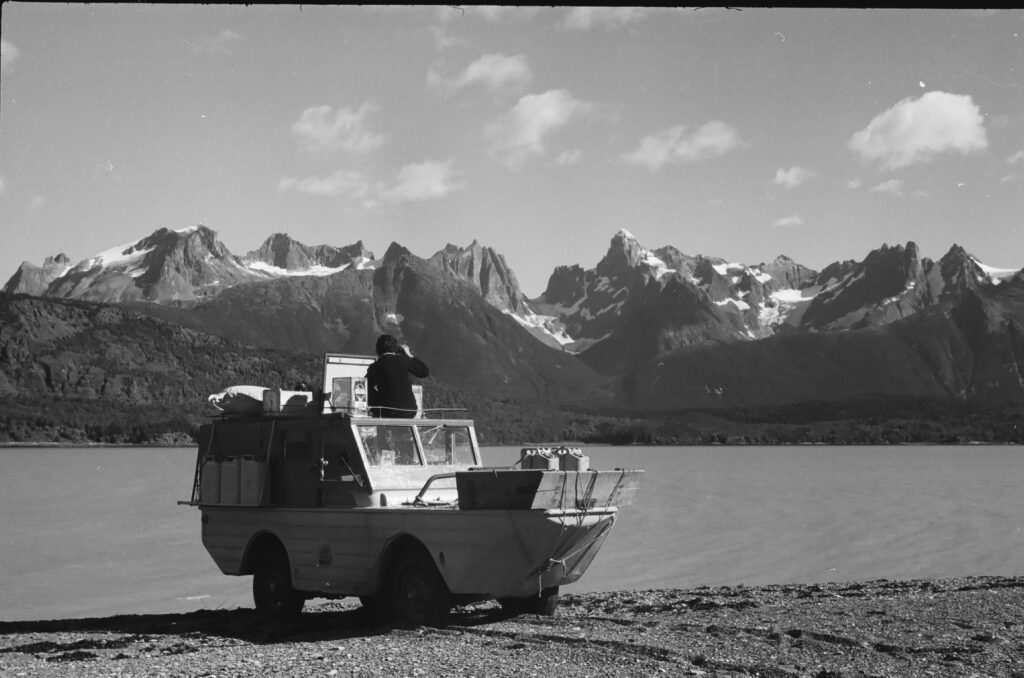
For the past few months, Christiane Leitinger has been hunting down a vehicle previously owned by her parents, named the Ugly Duckling.
The journey took her from Juneau to Haines to Anchorage tracing the path her family took in 1961 when they drove from Florida to Alaska in the World War II-era GMC that is part car, part boat. It took Leitinger’s parents from Prince Rupert, British Columbia up to Haines via the Inside Passage.
So, along with her husband and daughter, Leitinger came up to Alaska from Colorado with some of the nearly 600 negatives of images that she found in her mother’s journal detailing the trip. For Leitinger, this trip was another way to connect with her parents, who died in 2003 and in 2011. The Ugly Duckling was a central character in the stories her parents told when she was growing up.
“I wish I had been more curious as a kid, because I’m sure there would have been amazing stories had I been more curious, but it was just sort of family lore,” Leitinger said.
Leitinger’s parents, Ilse Abshagen and Hans Leitinger, immigrated to the United States from Germany and Austria to attend school, where they met. The couple bought the vehicle in 1957 in Minnesota and went on a trip through Central America, eventually ending in Patagonia. A few years later, they decided to drive clear across the United States. Starting in the summer of 1961 in Jacksonville, Florida, the pair drove to Seattle and followed the coastal mountains in British Columbia. When they got to Prince Rupert, they put the vehicle into the water and boated up through the Inside Passage, stopping in Ketchikan, Wrangell, Petersburg, Juneau and Haines. From Haines, they drove up to Fairbanks and back down to Anchorage, where they ultimately sold the vehicle to Ralph Centoni, who wanted to restore it. The trip from Florida to Alaska included nearly 6,000 miles of driving and more than 500 miles of boating.
In January, Leitinger’s husband Charley Shimanski told her that he would be traveling to Juneau for the Mountain Rescue Association’s summer conference in June. While she does not typically join Shimanski for these meetings, she realized this would be the perfect opportunity to see if she could find the Ugly Duckling. At first, she thought she might find it in Juneau.
“I had sort of this outline, sort of this initial mosaic of a story but sketchy,” Leitinger said. She said that each person who offered her what they knew would sort another part of the mosaic into place. After spending about five weeks researching where the Ugly Duckling ended up, Leitinger and her two daughters made a breakthrough. One of the pictures she has of her parents shows them on a beach with the jeep, overlooking a body of water with beautiful mountains in the background.
Leitinger’s daughter Eva Sophia looked at the photo and used Google Earth to pinpoint the location. She would go to the ground-level view and go up and down the fjords from Juneau, looking at different angles to match the mountains in the photo to a current geographical location. A few days later, Eva Sophia geolocated the photo to a spot on Mud Bay Road.
Once in Juneau, Leitinger made her way to the Alaska State Archives. She looked at microfilms of newspapers across Southeast Before setting off for Juneau, Chrisitiane went through boxes of her parents’ belongings. She found a box that was titled “Alaska” and found her mother’s journal from the trip and around 600 negatives. The journal entries were written in German, so Christiane was not able to comprehensively look through it before heading to juneau because she had to translate it. Instead, she put all of the dates in a spreadsheet, creating the path of their journey. She brought this to the archives, letting her look at the newspaper archives from around the time her parents made landfall. She found articles from Ketchikan, Petersburg, Wrangell, Juneau, Fairbanks and Anchorage.
Leitinger and her husband decided to extend their trip after realizing that one of the photos was taken in Haines – the photo from Mud Bay Road. Joined by their older daughter, the couple took the ferry up to Haines, where they met Martha and Michael Mackowiak. Leitinger began showing the duo her one-inch-thick binder full of photos from her parents’ trip. Leitinger opened to “another beautiful picture of my parents somewhere in Alaska,” and Martha Mackowiak instantly recognized the view, Letnikof Cove, something she sees daily while driving home.
“It’s just interesting to see that side of them that I didn’t really experience ever, it’s very sweet, sort of having a window into that chapter of their life,” Leitinger said.
Some newspaper archives mentioned how the Coast Guard asked Abshagen and Leitinger not to continue their trip.
“Almost every time you see a picture of it in the water, it looks like it could be sinking, it’s so low in the water,” Leitinger said. She said that her parents would only go out on calm water because of how low the boat sat.
Some parts of the historical journey were uncomfortable for Leitinger. During her parents’ trip, the couple were joined by Bob Broward, an architect from Jacksonville, Florida who traveled with them to Juneau. Leitinger said he brought a Confederate flag on the trip. When her parents landed in Juneau, they traded their Confederate flag to Gov. William Egan for an Alaska flag, she said.
Leitinger said finding the flag in pictures with her parents was difficult as it does not align with her values or what she would want to fly on a vehicle she’s bringing into a new place like Alaska. Her guess is that had her parents known what the flag symbolized, they would have not flown it. Abshagen’s father, Leitinger’s grandfather, was a part of the resistance against Hitler during World War II.
“That’s always the opportunity for human beings, to reflect deeply and learn from history and not make the same mistakes as others did in the past,” Leitinger said.
While looking through articles in the Alaska State Library in Juneau, Leitinger came across a story on the front page of the Ketchikan paper titled “Confederate Invasion.” The article read “the vanguard, the confederacy’s so-called invasion of Alaska, reached Ketchikan Monday, as a war surplus amphibious Jeep, carrying 3 adventuresome Jacksonville, Florida ‘soldiers’ completed a 90-mile water journey from Prince Rupert, B.C. The threesome, 2 men and a girl [my mother was like 36 at that time], pulled into Ketchikan Monday afternoon with the ‘stars and bars’ flying from the makeshift cabin on the Jeep.”
The article goes on to say that Jacksonville architect Bob Broward, as he set foot on Alaska’s soil, claimed, “ the South hasn’t forgotten,” according to the article. “The other members of the party, Hans Leitinger, an Austrian exchange student now living in Florida, and Miss Ilsa Abshagen, a Jacksonville geography teacher, laughingly told the customs and immigration officers that their mission really was peaceful.”
Leitinger said that reading this news article confirmed her suspicion of the lack of deeper understanding that her parents had about the Confederate flag.
Before showing people photos from her parents’ journey, Leitinger said she warns that they’re going to see the Confederate flag. The couple’s trip occurred three years before the Civil Rights Act was passed, meaning Jim Crow laws were still in effect in the South. Leitinger has yet to go through her mom’s manuscript but wonders if her mother touched on these events in her writing. One entry of her mother’s that she read on the ferry up to Haines described her parents camping on the side of the road in the South. While camped, Abshagen writes, cars would stop and point their headlights at them. Leitinger said that even as a white woman, her mother didn’t feel safe.
“The complicated part of this story of discovery is, what are the layers there of coming over as an immigrant, of coming into a country that has this history, trying to in some ways, escape a history of a fascist, authoritarian government,” Leitinger said.
After trading flags, the couple continued north without Broward.
Initially, Leitinger thought that her parents had sold the vehicle in Juneau, however after finding an online military vehicle forum, she discovered the car now lives in Anchorage. In a post from 2008, current owner of the vehicle Ralph Centoni recalled the couple’s trip. He wrote that the couple put their car on display at a local Anchorage hotel. Centoni’s friend asked Leitinger’s parents if the car was for sale and they agreed on a price.
“They took it over to Lake Hood and swam it across the lake,” Centoni wrote in 2008. The vehicle sat in his friend’s garage from 1961 to 1997, when Centoni purchased it. When he wrote the online entry, he said that he had been working on restoring it since 1997 and was about 85% finished at the time.
After reading the account, Leitinger reached out to the president of the Antique Auto Mushers of Alaska, who helped connect her with Centoni. Leitinger and her family were simultaneously on their way up to Anchorage for her husband’s work, when Leitinger made the connection with Centoni. He welcomed them into his garage, where the Ugly Duckling had been living for the past 29 years. After months of investigation, Leitinger was able to sit in her parents’ old vehicle and touch the car that was a main character in so many of their stories. Sitting in the car, she and her daughter Eva Sophia flipped through the binder of images, comparing dents they saw in person to the dents in the photos.
The vehicle built in 1942 had acquired a few dents during the multiple road trips, which helped Leitinger and her family solidify that it was her parents’ vehicle. She said she was overwhelmed when she first saw and touched the car. She said just putting her hand on it was like going through a space-time continuum, expecting to see her parents there on the other side.
“It was a way of sort of seeing my parents, and touching a little bit of that adventure that they took, and understanding it in a very concrete way,” Leitinger said.
Now, Leitinger has seen the Ugly Duckling with her own two eyes, in addition to having her mother’s detailed stories and photographs. Looking toward the future, Leitinger is unsure if she will publish her mother’s partially completed memoir or if she should write a book telling her parents’ story while also including her own personal discoveries along the way.
“There’s a parallel adventure that we’re on,” Leitinger said. “We’ve found it, we’ve touched it, we’ve sat in it.” For Leitinger, the story has been unfolding in real time.


The post “The story is unfolding in real time” appeared first on Chilkat Valley News.