Categories
Uncategorized

Most Americans support conservation – here’s how the Great Lakes Restoration Initiative got politicians from both parties on board too

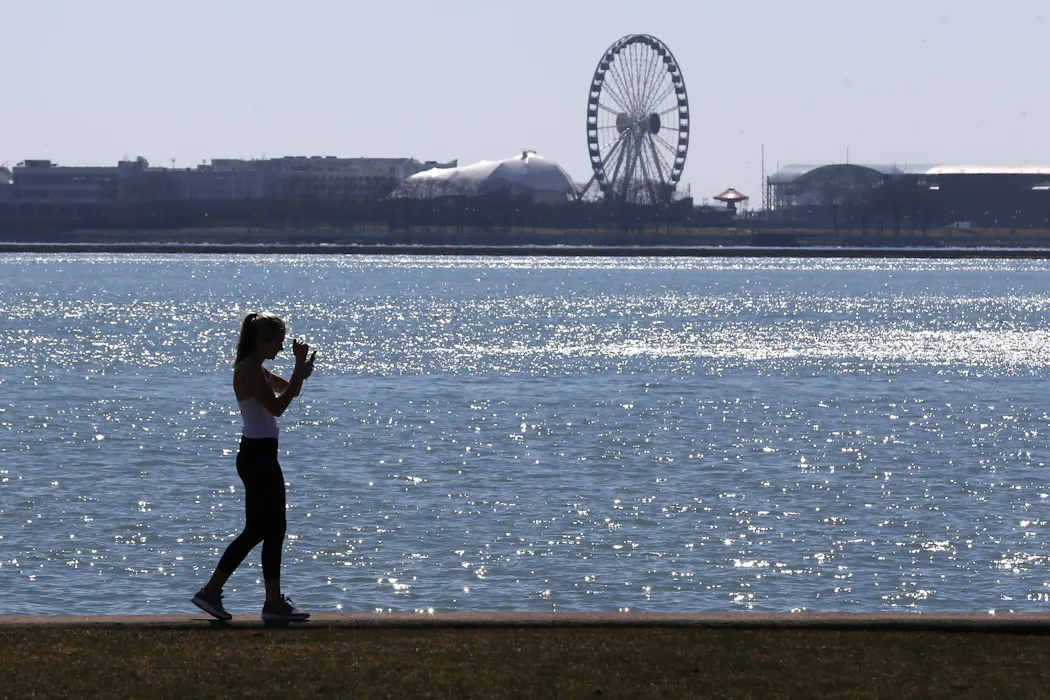
A person walks the trail along Lake Michigan at Chicago’s North Avenue Beach. AP Photo/Charles Rex Arbogast

In a time of political polarization, it’s easy to forget that the vast majority of Americans of all backgrounds and beliefs – 80% or more, depending on the poll – value environmental conservation. However, this support is not easily or often translated into successful, popular initiatives.

One success story is the Great Lakes Restoration Initiative. Since 2010, it has provided over US$5 billion to improve the quality of the region’s environment, with an overarching goal of cleaning up the water in the Great Lakes watershed. And it has survived multiple attempts to reduce its funding or eliminate it altogether.

As a water policy and politics expert and a former leader in the Great Lakes advocacy community who has worked on and analyzed the initiative, I worked with environmental historian and Great Lakes expert Marc Gaden along with a team of graduate students to comprehensively assess the initiative and determine useful lessons learned for other projects in conservation and beyond.

A bit of background

The Great Lakes contain approximately 20% of the world’s available surface freshwater, providing drinking water to over 40 million people in the U.S. and Canada and billions of dollars annually in economic activity and ecological productivity.

Throughout most of the 20th century, the ecosystem in and around the lakes was degraded and contaminated due to raw sewage, industrial waste, invasive species, loss of natural habitats and runoff pollution from development, among other issues.

Many problems remained even after the major environmental and Great Lakes laws of the late 20th century took effect. The Great Lakes Restoration Initiative has funded more than 8,000 specific projects, focusing on cleaning up especially toxic locations, controlling invasive species, restoring natural habitat and educating the next generation of leaders.

Government reports, public opinion polls, economic analysis and many other accounts suggest that the initiative has not only been successfully implemented and popular but has led to positive results for water quality, habitat restoration and wildlife while boosting the local and regional economy.

A close-up of a person's hand holding several small black-and-white shells.
Invasive species, like these zebra mussels taken from Lake Michigan, are just one problem plaguing the Great Lakes region’s ecology.
AP Photo/John L. Russell

Deep connection

But these results didn’t happen by accident, and they weren’t inevitable. Our research team identified converging forces, some unique to the Great Lakes but many broadly applicable, that led to this success.

Underlying each force is the iconic status of the waters themselves. People in the region feel a deep attachment to the lakes and the quality of life they enable, with more than 50% of residents engaging in walking/hiking, swimming, boating or simply being with family and friends along the lakes. As U.S. Rep. Bill Huizenga, Republican co-chair of the Great Lakes Congressonal Task Force, said in mid-July 2026: “The Great Lakes aren’t a Republican issue or a Democratic issue. They’re an economic engine, a source of drinking water for millions of people, and part of our way of life here in Michigan. Protecting them is something we can all rally around.”

A 2024 poll of a random sample of more than 2,500 Americans and Canadians found 96% of the region’s residents think it’s important for governments to invest in protecting the Great Lakes – a level of near-unanimity unheard of for other issues.

A prominent launch

Shared identity and popular support are not enough to launch a major government effort without a spark and a plan.

In 2004, President George W. Bush – in part driven by the swing state electoral power of the Great Lakes region – signed an executive order declaring the Great Lakes to have “national significance” and launching the Great Lakes Regional Collaboration Strategy. Developed over the course of a year through work groups involving more than 1,500 people combined with public input sessions, the strategy laid out common goals for restoration and prioritized a list of needs, such as funding to clean up toxic hot spots and sewage overflows, which was critical to securing congressional support for funding.

A person stands on a flat area and holds a fishing rod out over a body of water with a city skyline in the background.
Fishing, even in cold temperatures, is popular in the Great Lakes region.
AP Photo/Nam Y. Huh

Diverse allies

A plan for restoration – even for an iconic resource – will not garner billions of dollars in federal funding without significant bipartisan support from all levels of government and strong community support.

Those speaking up for the new program were “not simply one group or one voice. It was governors, mayors, the NGO community and tribes,” David Naftzger, executive director of the Great Lakes St. Lawrence Governors & Premiers, which works with all the chief state and provincial executives across the region, told our research team.

Business leaders have been particularly crucial backers. They relay to lawmakers the economic value of restoration projects, providing political cover for a program that increases government spending.

The broad range of support continues today and has helped the initiative weather various efforts to reduce or eliminate its funding.

Most famously, in 2019, President Donald Trump proposed cutting the initiative’s funding by 90%. Three weeks later, while traveling with Trump to a political rally in Michigan, three Michigan congressional Republicans explained how critical the Great Lakes Restoration Initiative is to the region’s identity and economy, and how popular it is. At the rally, Trump reversed course and announced he would support keeping funding levels at US$300 million per year, promising to “make the Great Lakes great again.”

At a Washington, D.C., event celebrating the Great Lakes in 2023, I saw JD Vance, then a Republican U.S. senator from Ohio, and U.S. Sen. Debbie Stabenow, a Michigan Democrat, proclaim that while they may not agree on much, they are united in their support for the Great Lakes Restoration Initiative.

A large round building emerges from the surface of a body of water covered in green algae.
Algae blooms, like this one in Lake Erie in 2014, have been common problems in the Great Lakes.
AP Photo/Haraz N. Ghanbari

Clear communication

Our analysis found that initiative supporters have been organized and disciplined about how they talk about the program and the overall goals. State officials, local leaders, tribal nations, nonprofit groups and businesses all deliver a “coordinated, consistent kind of beating of the drum,” Erika Jensen, executive director of the Great Lakes Commission, told our research team.

This includes not only the many positive stories of success but also the economic benefits. A University of Michigan study that showed the Great Lakes Restoration Initiative boosts the region’s economic output by more than $3 for every dollar of federal spending is used often to make this case.

These coordinated messages allow political leaders to tie the initiative into their priorities and build support across diverse audiences. One key reason for this kind of powerful communication is that the initiative funds work in every congressional district in the Great Lakes watershed, so every member of Congress in the region can say they brought home federal money to make significant improvements in their own districts.

‘Secret sauce’

The Great Lakes Restoration Initiative pays for community-based work on local lands and waterways – it does not regulate industries or tread into particularly controversial territory.

Everywhere has places that need help, cleanup and care. These ecosystems are relatively easy to build support for, and when connected with other projects across a wide region, these smaller efforts can make a significant difference in environmental quality and quality of life while building political and community support for even bigger undertakings.

I believe that many of the core lessons and converging forces that make up the Great Lakes Restoration Initiative’s “secret sauce” can be applied not only to the future of the Great Lakes but to conservation initiatives across the U.S. and the world. And they may even be able to help restore bipartisanship to at least some parts of U.S. politics.

The Conversation

Mike Shriberg previously worked at the National Wildlife Federation, which received external funding from foundations and private donors to work on the Great Lakes Restoration Initiative. The research highlighted in this article is supported by grants from the Wege Foundation and the Joyce Foundation.

​Politics + Society – The Conversation

Categories
Uncategorized

Featuring Trump on US coins and bills would put America in rare company

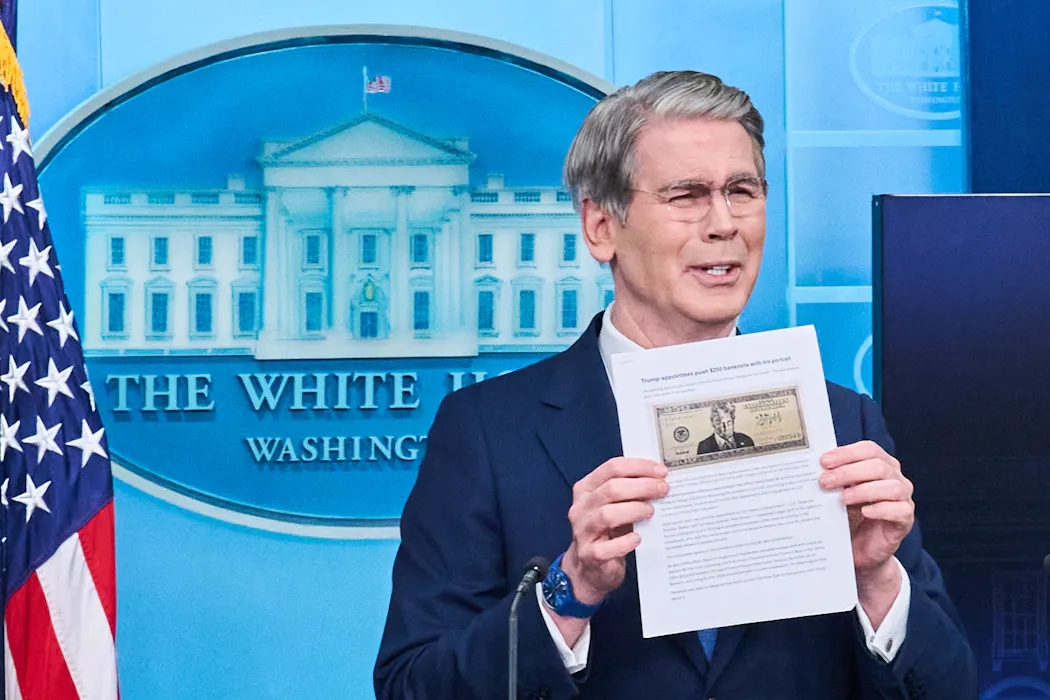
Treasury Secretary Scott Bessent holds up an image of the proposed $250 bill in May 2026. Jacquelyn Martin/AP Photo

A slang term for cash money is “dead presidents.” But now the very much alive President Donald Trump could appear on U.S. coins and banknotes, too.

Ever since Trump returned to power in 2025, his administration has put the president’s face and name on all sorts of things, from federal buildings to national park passes. Putting him on the almighty dollar would be the crowning achievement of these efforts. After all, the value of physical U.S. currency in circulation today stands at over US$2.46 trillion, an all-time high.

If a sitting president’s portraits start appearing on U.S. currency, what would this change say about American political culture?

Treasury Secretary Scott Bessent has said he doesn’t “think that there’s anything untoward” about the idea, while Democratic Sen. Jeff Merkley has said, “President Trump’s self-celebrating maneuvers are authoritarian actions worthy of dictators like North Korea’s Kim Jong Un.”

As a professor of international relations who has studied the global evolution of currency iconography for over 20 years, I take a worldwide perspective on this debate. The data that I have amassed shows that such a choice by the U.S. would be out of step with nearly every other currency in the world.

All about the Benjamins – or the Donalds?

The Trump administration has been incredibly active on the currency front.

In January 2026, Trump’s handpicked commissioners of the U.S. Commission of Fine Arts, a federal agency that advises on design and aesthetics, recommended designs for a circulating $1 coin featuring Trump’s head. The commission later also recommended a different portrayal of Trump for a 24-karat gold commemorative coin that it suggested making “as large as possible.” These coins were supposed to be ready for July 4, but production delays at the U.S. Mint have pushed the release date back.

The administration is also preparing Trump-branded banknotes. In March 2026, the U.S. Department of the Treasury announced a historic first: From now on, the president’s signature will be on newly printed paper dollars.

In April, the Treasury Department abruptly reassigned the director of its Bureau of Engraving and Printing, Patricia Solimene, after she had refused to advance a $250 bill with Trump’s face on it, according to The Washington Post.

“The buck stopped here,” Solimene wrote in a goodbye email to colleagues. But after her reassignment, the buck started again. In May, Bessent publicly displayed a $250 bill design featuring Trump – even while acknowledging that the new bills cannot be printed until Congress changes the 160-year-old law against depicting living persons on U.S. paper currency.

The Donald J. Trump $250 Bill Act, a measure to amend the law, is awaiting further congressional action in the House Committee on Financial Services. Treasury claims it already has the legal authority to mint its Trump coins.

Examining the world’s coins

Putting the sitting president’s face on coins would be a dramatic departure from U.S. tradition. The only previous such instance in the country’s history was a 1926 commemorative half-dollar showing then-President Calvin Coolidge alongside George Washington.

But what about other countries in the contemporary world? How normal is it for their sitting leaders to appear on their coins?

Using the most recent edition of Coin & Mint News’ Directory of Circulating Coins – a standard reference for coin professionals working at national mints and central banks – I counted the images of sitting state leaders on the circulating coins of the world as of 2024. (Note: This data has not yet gone through rigorous peer review.)

Analyzing nearly 1,000 coins from 165 independent countries, I counted only 22 countries – about 13% of the total – whose circulating coins feature their sitting head of state. This number includes coins depicting heads of state who were in office when the coin was originally issued, whether or not they were still there in 2024.

Almost all the sitting heads of state who appear on the circulating coins that I analyzed are hereditary monarchs.

If a country is a hereditary monarchy – whether its political system is democratic, like the United Kingdom, or authoritarian, like Brunei – there is a high chance that its reigning king or queen is on its circulating coins. This is the case for about 62% of the monarchies in my database, or 21 out of 34.

On the other hand, if a country is not a hereditary monarchy, its sitting head of state is almost certainly not on its circulating coins. This is the case for 99% of the nonmonarchy countries in my database, or 130 out of 131.

The lone exception is Samoa, a parliamentary democracy whose circulating coins all feature the country’s head of state as of 2011, the coins’ original year of issuance. However, even Samoa is hardly an exception, as its political culture has many of the trappings of a monarchy: Its head of state is called “His Highness,” and he is traditionally chosen from among the country’s four paramount chieftains.

A view of bank notes – £5, £10, £20 and £50 – issued by the Bank of England, against a white backdrop
Bank notes issued by the Bank of England feature King Charles III.
Gareth Fuller/PA Images via Getty Images

Examining the world’s banknotes

A similar story emerges from my data on banknotes.

Using Bank Note Museum – a free online catalog crowdsourced from a network of banknote collectors – and supplementing that data with information from Greysheet publications’ paywalled catalog The Banknote Book, I created a database of all the circulating banknotes in the world that were newly designed and issued between 2019 and 2024.

According to my data, 84 independent countries issued 340 new regular circulating banknotes during the chosen time frame. Yet only 13 of those countries – about 15% – issued new banknotes depicting their sitting head of state. All but one of the 13 countries that did so are hereditary monarchies.

The lone exception to the rule is Botswana, a democratic republic that has traditionally featured the sitting president’s portrait on its 10 pula banknote denomination. However, Duma Boko, Botswana’s president since late 2024, is still waiting for his 10 pula note.

US currency: Fit for a king?

Today, almost every country that isn’t a hereditary monarchy is declining to issue currency that features its sitting head of state. Since the U.S. isn’t a hereditary monarchy, putting Trump’s face on U.S. currency while he is still in office would be highly abnormal.

The nationwide “No Kings” protest movement has mobilized millions of Americans to march the streets in opposition to what they perceive as Trump’s monarchical ambitions. The global patterns of currency iconography suggest that they might have a point.

University of Southern California undergraduate student Anyi Tan contributed to this research.

The Conversation

Jacques Hymans does not work for, consult, own shares in or receive funding from any company or organization that would benefit from this article, and has disclosed no relevant affiliations beyond their academic appointment.

​Politics + Society – The Conversation

Categories
Uncategorized

How America’s newspapers lost their voice

What happened to newspaper editorials? RapidEye, iStock/Getty Images

Hazel Brannon Smith was almost certainly the most unpopular woman in Mississippi when she wrote an editorial in 1963 lambasting the racist White Citizens Councils in the Lexington Advertiser, a newspaper she owned.

“The hierarchy of rulers in this totalitarian-like organization permit no deviation from its official line – and those who believe in and stand for the traditional American concepts of human liberty, dignity, and decency, do so at their own peril,” she wrote in an editorial that was both poetic and dangerous.

A dark-haired woman wearing a strand of pearls and a dark top, speaking into a microphone.
Hazel Brannon Smith, who won a Pulitzer Prize in 1964 for her courageous editorials crusading against white supremacists in the South.
Bettman/Getty Images

The councils constituted a network of white supremacy groups throughout the South, often with deep ties to prominent local citizens. They had already been targeting Smith with economic pressure, not for being a full-throated integrationist – she wasn’t – but for editorials in which she insisted on adherence to the rule of law, demanded fairness for all and encouraged peaceful race relations.

Smith paid a steep price for her courage.

Death threats, arson in her
pressroom, boycotts and even the firing of her husband
as a hospital administrator did not temper her fight for liberty and justice. She became the first woman to win a Pulitzer Prize for editorial writing, in 1964.

Smith’s story is inspiring, yet by no means an isolated instance. But the long history of newspaper editorials may now be about to end, a casualty of both changing news values and economic pressure.

From calls for reform to partisan attacks

Since the birth of this nation, newspapers large and small have published their own opinion pieces challenging the powerful, calling for reform and demanding accountability. The editorials weren’t always constructive. There were plenty of editorials criticizing Smith, and others were partisan attacks. But many reflected care for the community and calls for a better future.

Editorials – in their ideal form – are essentially letters from the newspaper itself to its readers explaining a problem, outlining the facts and then concluding what would be in the best interests of the community. You can agree or disagree, but the end result is that you gave it some thought, which is what the editorial writer intended anyway. Typically, the opinion is written by one journalist in consultation with the publisher, editor and knowledgeable colleagues, and relies in good part on the newspaper’s own reporting.

In 1841, publisher Horace Greeley pioneered the stand-alone editorial page in the New York Tribune. The innovation, which separated the newspaper’s views from news articles, was widely adopted by other publishers.

Over the past 185 years, newspaper editorials have played a role in virtually every important social and justice movement in American history. William Lloyd Garrison’s call for the abolition of slavery in the Boston-based Liberator and the battle for women’s suffrage spearheaded by Susan B. Anthony and Elizabeth Cady Stanton in The Revolution in New York City presaged and helped inspire similar calls for justice in the pages of local papers across America.

A photo of the top of a newspaper called 'The Revolution' includes the paper's motto: 'Principle, Not Policy: Justice, Not Favors.'
The masthead of The Revolution, the newspaper run by Susan B. Anthony and Elizabeth Cady Stanton, in which they advocated for women’s rights.
encyclopediavirginia.org

And when President Franklin Roosevelt ordered the internment of American citizens of Japanese descent in 1942, just one newspaper – The Bainbridge Review, on Bainbridge Island, Washington – called it out as the unconstitutional act it was. The paper saw the rounding up of citizens in its own community and would not stand silent.

Losing the newspaper’s soul

During my career as editor-in-chief of USA Today and daily newspapers in Wisconsin, Florida and New York, I’ve reviewed thousands of editorials. I can tell you that on the local level, newspaper editorials tend to be about more mundane and yet essential topics like supporting local schools, monitoring the use of taxpayer dollars and calling out ineffective government processes.

In his book “Outrage, Passion & Common Sense” on historic editorials, journalist Michael Gartner began by quoting legendary journalist William Allen White on their importance:

“The editorial is the soul of the newspaper. Maybe the heart and the soul. And on a good newspaper that knows and understands and loves its hometown, or its home country, the editorial is the heart of the town, or nation as well.”

Unfortunately, in a trend that began four years ago, editorials are quickly disappearing. Nominations for the Pulitzer Prize for editorials peaked in 1995 with 101 entries, but declined to just 25 this year, according to Pulitzer Prizes administrator Marjorie Miller. This led to combining editorials with other opinion pieces into a single category moving forward.

Major news companies have backed away

Some news companies have concluded that local editorials aren’t in their interests. Editorials and endorsements have largely been jettisoned, along with the men and women who used their institutional knowledge to look out for their communities.

Gannett, now USA Today Co. Inc. and the largest newspaper company in the U.S., and Lee Enterprises, the third largest, led the scaling back of local editorials beginning in 2022.

“In their place, the (Lee) company distributed to its papers standardized editorial pages consisting of commentary from national columnists and its editorial board, wrote Paul Farhi for Nieman Reports when the change was made. “The change might have been a boon for those seeking yet another opinion about presidential politics, Congress, and international affairs, but it did little for commentary about events occurring down the street from Lee’s 77 daily newspapers.”

Gannett was candid about its reasons, saying that editorials were “frequently cited” by readers as a reason for canceling their subscriptions. Speaking truth to power was affecting the bottom line.

A group of Gannett editors were also quoted as saying, “Readers don’t want us to tell them what to think,” according to The Washington Post.

In my experience, that’s a straw man. Good editorials don’t dictate. They’re actually a balancing of ideas, looking out for a community with the perspective of a longtime and loyal resident who has seen it all. In fact, USA Today pioneered dual editorials, one offering its view, the other a differing perspective.

The front page of The New York Times, featuring an editorial.
An unusual front page editorial in the Dec. 5, 2015, edition of The New York Times, the first time the paper placed an editorial on the front page since 1920.
Paul Richards AFP/Getty Images

The public wants accountability

Granted, local editorials will yield fewer online clicks than major news or sports stories. But recent research indicates that readers remain hungry for the public accountability of government officials.

“As they have for the past four decades, most Americans say criticism from news organizations keeps political leaders from doing things they shouldn’t,” a Pew Research study found in 2024.

Despite the steady decline in daily newspaper editorials, I believe there remain ways for news organizations to restore the spirit of editorials in an economical and high-impact model. Some suggestions for today’s newsrooms:

1. Publish editorials on an as-needed basis. They don’t have to appear daily, but if published only when something absolutely needs to be addressed, the community will take notice. Give them the authoritative local take that no one else can.

2. Create a community editorial board composed of civic-minded residents with distinct and diverse viewpoints and open minds. Identify the most important issues facing your community and ask the board members to explore them, looking for consensus, but acknowledging legitimate points from all sides. Publish an editorial at least once a month and promote it heavily.

3. Collaborate with any other news outlets in your town to reinstate endorsement interviews. In a decades-long tradition, newspapers routinely invited incumbents and those running against them to discuss why they would best serve the community. Ask the tough questions and leave it to each outlet how to use the end product. That could lead to differing endorsements by different outlets or simply a comprehensive Q&A that the entire community sees. Public officials would be hard-pressed to skip the interview if their opponents’ views are getting broad local exposure.

Any one of these approaches would help reinstate the accountability of public officials at a fraction of the costs once incurred by legacy news media.

In 1791, the first generation of Americans demanded that freedom of the press be part of the Constitution, counting on journalists to serve as a check on corruption and the abuse of power. Some debts are never fully paid.

The Conversation

I have no ties to research institutions, foundations or news sources cited in this article. There are two companies cited as leading the phase-out of editorials. I edited USA Today and other Gannett properties, as noted in the column.

​Politics + Society – The Conversation

Categories
Entertainment

Usha Vance, Wife of JD Vance, Welcomes Fourth Child

Reading Time: 2 minutes

Congratulations are in order for America’s second family.

Usha and JD Vance announced over the weekend that they have welcomed their fourth child together, a baby boy named Alec Neel Vance.

The couple shared the happy news in a statement on social media:

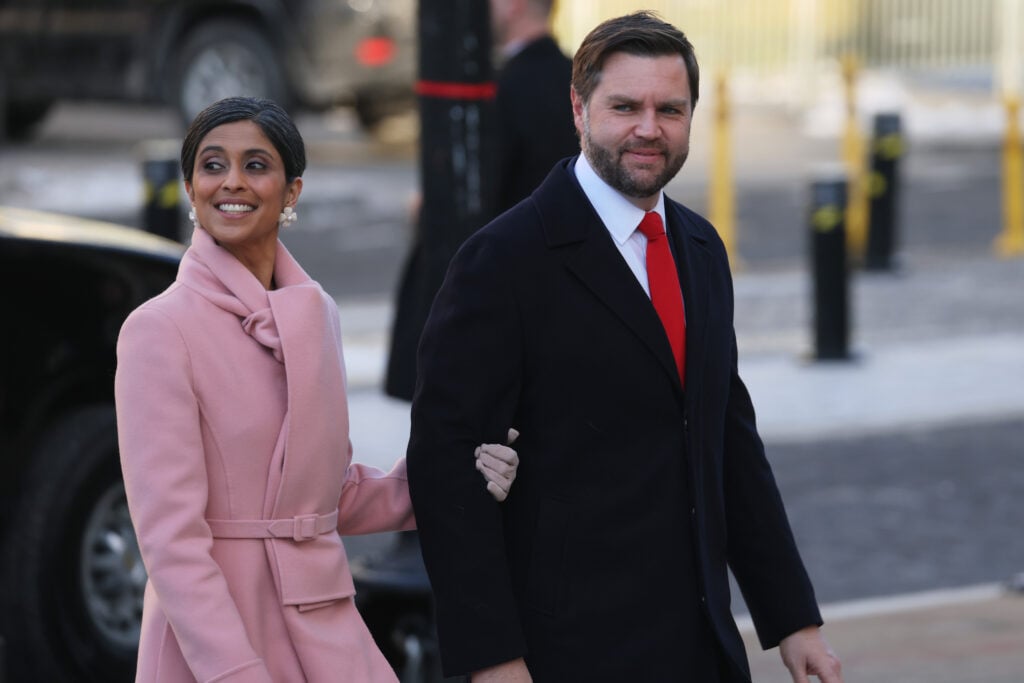
Usha Vance and Vice President-elect, U.S. Sen. J.D. Vance (R-OH) arrive for service at St. John's Church as part of Inauguration ceremonies on January 20, 2025 in Washington, DC.
Usha Vance and Vice President-elect, U.S. Sen. J.D. Vance (R-OH) arrive for service at St. John’s Church as part of Inauguration ceremonies on January 20, 2025 in Washington, DC. (Photo by Scott Olson/Getty Images)

“We are excited to announce that our baby boy, Alec Neel Vance, was born this morning,” Vance wrote.

“Usha and the baby are happy and healthy, and our kids are overjoyed to meet their little brother.”

The vice president also thanked the medical staff at Walter Reed National Military Medical Center and the White House Medical Unit for their care during the delivery.

The newest member of the Vance family joins older siblings Ewan, Vivek, and Mirabel.

His arrival is historically significant, as Alec is the first child born to a sitting U.S. vice president in more than 150 years. The last such birth occurred in 1870 during the tenure of Vice President Schuyler Colfax, who served under Ulysses S. Grant.

JD and Usha first revealed they were expecting another child in January, announcing that their fourth baby was due later this summer. At the time, they said both mother and baby were doing well and that the entire family was eagerly awaiting his arrival.

The birth comes during an eventful first year for the Vances in Washington.

Since taking office as vice president in January 2025, JD Vance has frequently spoken about encouraging family growth in the United States, making support for parents and children a recurring theme in his public remarks.

Despite his demanding schedule, Vance has indicated he plans to spend time with his wife and newborn son as the family adjusts to life as a household of six.

For now, though, politics has taken a back seat to diapers, sleepless nights, and celebrating the arrival of baby Alec.

Congratulations to JD, Usha, and their growing family.

Usha Vance, Wife of JD Vance, Welcomes Fourth Child was originally published on The Hollywood Gossip.

​The Hollywood Gossip

Categories
Food

This Cowboy Dessert Was The Old West’s Version Of A Modern-Day Favorite

Back in the days of cattle drives and cowboys, ranchers lured workers with the promise of real cooks on the trail. With them came this cowboy dessert.

​Food Republic – Restaurants, Reviews, Recipes, Cooking Tips

Categories
Entertainment

Khloe Kardashian Shares Promise Grandma MJ Made Before Her Death

Khloe Kardashian, Mary Jo "MJ" ShannonMary Jo “MJ” Shannon had a message to deliver.


After the mom of Kris Jenner—and grandmother to Kourtney Kardashian, Kim Kardashian, Khloe Kardashian, Rob Kardashian, Kendall Jenner and Kylie…
​E! Online (US) – Top Stories

Categories
Entertainment

The Mexican-Style Egg McMuffin You’ll Find At McDonald’s South Of The Border

McDonald’s has its core items that sell well in the U.S., but it offers other countries regional versions of its popular menu items to cater to local tastes.

​Mashed – Fast Food, Celebrity Chefs, Grocery, Reviews

Categories
Food

How To Order A Dairy Queen Sundae Like It’s The ’60s

Dairy Queen has been around for decades and decades, bringing joy to countless generations. Now, relive the past with this throwback sundae.

​Food Republic – Restaurants, Reviews, Recipes, Cooking Tips

Categories
Music

A First Look Inside Bunnie Xo’s New Mansion After Divorce

Bunnie Xo is giving a tour of the sprawling Tennessee home she kept after divorcing Jelly Roll, complete with an enormous closet, shoe room and glam space. Continue reading…​The Boot – Country Music News, Music Videos and Songs

Categories
Entertainment

Why We Were Happy To See This Trader Joe’s Seasoning Get Discontinued

Most of the time, we want to run to Trader Joe’s to pick up the latest and greatest product, but this particular food item won’t really be missed.

​Mashed – Fast Food, Celebrity Chefs, Grocery, Reviews