Post Content
Categories
Brewer









Post Content
Landon Brewer was selected in the 15th round of the MLB Draft by the Texas Rangers, becoming the first Crimson Tide player drafted out of high school since 2004.

CITIZENS BANK BALLPARK (Philadelphia) — Mike Trout circled this date months ago. Tuesday’s MLB All-Star Game sits 45 minutes from Millville, New Jersey, where Trout grew up rooting for the Phillies and bleeding Eagles green. Getting back here was personal. Staying healthy was the hard part. Trout hadn’t started an All-Star Game since 2019. He hadn’t even been selected to one since 2023. “I’m never taking anything for granted in this game,” Trout told me on Monday. This year, fans voted Trout in as a starting outfielder, a slash line of .237/.390/.473, 18 homers, 39 RBIs, and his most stolen bases (seven) since his 2019 MVP season carrying him there. Then a hamstring strain in mid-June threatened to keep him home again. But, just 17 missed games later, Trout was back in the Angels’ lineup as a designated hitter just days before the All-Star break. He was healthy and headed to Philly. For the 12-time All-Star who has spent a career as the face of this game, it wasn’t just a return. It was a relief. “You don’t know when your last game is,” Trout said. “When an injury can pop up. Especially the last few years, it’s been a little bit tough for me. I’m just excited to start.” It’s easy to see that starting the All-Star Game means a lot to Trout. Trout found it tough to explain just how meaningful it is for him to be leading off for the American League on Tuesday. He slowed down when reflecting on how difficult the past few years have been for him as he dealt with a laundry list of injuries that limited him to playing just 396 games for five seasons from 2021-2025, or roughly 79 games per season. Plus, he didn’t want to let down his family and friends with a big contingent scheduled to make the short trip to Philly this week. “Well, I only have 20 tickets,” Trout said. “I mean, that’s a lot. So I had to cut it down a little bit. I know a lot of people that are coming. It’s been on the calendar for a while.” Trout’s celebrity status runs deep. Besides pitcher Justin Verlander, who announced he’s retiring at the end of this season and is at the All-Star Game as the Commissioner’s Legend Pick, Trout had the largest media scrum among all AL players on Monday. And Trout also has a huge fan in the AL’s All-Star clubhouse, though he’s completely unaware that this player grew up idolizing him years before he became, well, Mike Trout. “I learned a lot from him — and he doesn’t know it,” fellow AL All-Star and Twins outfielder Byron Buxton told me on Monday. “But I learned a lot from him growing up. I even watched him in the minor leagues.” Buxton and Trout share more similarities than their star power. Both players are homegrown, one-team-for-life talents. And both, oddly enough, once wore a Cedar Rapids Kernels uniform. The minor-league franchise spent 20 years as the Angels’ Single-A affiliate before flipping to the Twins in 2013. Trout came first. He played 81 games there in 2010, an 18-year-old outfielder on his way up. Two years later, after a show-stopping big-league debut when Trout recorded the highest WAR (10.5) in MLB, he won the AL Rookie of the Year award, and Cedar Rapids hung his picture at Veterans Memorial Stadium. Buxton followed in 2013, a 19-year-old outfielder playing 68 games in a Cedar Rapids uniform in the same ballpark. “Every day I walked in, I got to see his picture,” Buxton said. “Man, he was on the top of my list as someone I watched all the time.” Even that small similarity with Trout — playing for the same minor-league affiliate as him thanks to a team change — used to remind Buxton that he was on the right path in his baseball journey. Buxton even tried to copy Trout’s physical build. Even though the Twins outfielder debuted in the big leagues in 2015 as a skinny speedster, he added 21 pounds of muscle before the 2019 season to try and add more slug to his game. “Coming up, he played the game 110%,” Buxton said of emulating Trout’s game. “100% down the line. Putting his body on the line, and things like that. It was something that, when I came up, I was like, alright. That’s how I wanna be. Obviously I wasn’t his size, or like the body build that he has. You had to kind of find that the more you played throughout your career. And it’s something that, over the years, I figured out my frame to where I look back and I’m like, alright, I’m like him now.” This is the second time that Buxton has shared a clubhouse with Trout, both having been named All-Stars in 2022 despite Trout not appearing in the game. He would’ve shared a lineup with him if the Minnesota outfielder wasn’t on the injured list with a hip strain. While they’re both in Philly, does Buxton plan on telling Trout how much he influenced his career? “Nah, I’ll let him do his own thing,” Buxton said. “Maybe after he retires. Which is a long time from now for him.” In reality, Trout should be used to being a hero to his peers. Cardinals manager Oli Marmol, who was selected by NL manager Dave Roberts to be a part of his All-Star coaching staff, told me that Trout garners a ton of respect from players of all ages, all around the league, because they admire his tenacity. After dealing with numerous injuries, particularly later in his career, Trout is still playing at an MVP-caliber level when he’s healthy enough to take the field. “He’s had his struggles, but he’s come out on the other side of it,” Marmol said. “He can speak to both sides of handling failure and success, and the longevity that he brings to the table speaks for itself.” Like Buxton, so many of this year’s All-Stars grew up watching the three-time MVP become a staple at every All-Star Game. Royals All-Star shortstop Bobby Witt Jr. was asked multiple times in his media scrum on Monday who he most enjoyed watching growing up, and every time, his answer was Trout. From 2012-2019, Trout had an incredible run of being selected for eight consecutive All-Star Games. Not only was he statistically the best player in the major leagues for the majority of that run, but he also embodied what it meant to play the game the right way. “It’s so cool to share a locker room with him,” Tigers All-Star infielder Kevin McGonigle told me. “Lately, I’ve appreciated the way he plays the game and understanding what it takes to get his body ready to be on the field. It’s a grind, and he’s been doing this a long time.” “He was always the guy I looked up to, just by how he plays the game,” Orioles All-Star catcher Adley Rutschman told me. “His attitude and his ability. It seemed like he played the game right, and in a way that I really admired. Just seemed like he goes about stuff in the right way. And I love that. It’s been awesome to get to know him a little better. Talk with him a little bit. He’s just an awesome guy and a great player.” Trout is too modest to spend any time thinking about how much of an impact he’s made on his peers and baseball fans alike. Still, he understands that part of being a veteran is imparting some wisdom to the younger generation. So, on Monday, he shared some advice with All-Star first-timers. “Just enjoy it,” Trout said. “It goes by quick. So slow everything down. It’s pretty simple. These next two days go by quick, so enjoy every moment. Capture it. Take pictures. Enjoy it with your family. It’s a special honor to be here.”Latest Sports News from FOX Sports

MISSOULA, Mont. — Splash Montana Water Park in Missoula is marking 20 years with a week full of activities, including scavenger hunts, lawn games and safety demonstrations.
The anniversary week also highlighted Splash Montana as a place where Montana families could spend time and swim with lifeguard supervision.
(The Center Square) – Extreme heat and wildfires have defined this summer in the Southwest.

An early voting site is seen on Monday, Aug. 1, 2022, at the State Office Building in Juneau, Alaska. (Photo by James Brooks/Alaska Beacon)
Alaska’s primary election just over a month away, and the deadline to register to vote in that election is Sunday July 19.
Alaska’s primary election is Tuesday August 18, when voters will mark their ballots to choose among candidates for governor, legislators in the Alaska House and Senate, and representatives in the U.S. House and U.S. Senate. A sample of the primary ballot can be found on the Alaska Division of Elections website.
The top four vote-getters in the primary will advance to the general election on November 3.
Residents can check their voter registration at myvoterportal.alaska.gov.
To register to vote in the primary election, eligible voters must be at least 18 years old within 90 days of registering, a U.S. citizen and an Alaska resident. They may not be registered to vote in another state. Voters must be a resident in Alaska and the district in which they seek to vote for at least 30 days before the election.
Language assistance is available with voting information and ballots available in Tagalog, Inupiat, Cup’ik and Yup’ik variations. Language assistance is available at every stage of the voting process, and can be requested from the division.
Naturalized U.S. citizens are eligible to vote, but U.S. nationals and non-citizens are not allowed to vote.
Individuals who have been convicted of a felony involving moral turpitude are ineligible to vote in all elections until the date they are unconditionally discharged. That means they have completed their sentence and are no longer in Alaska Department of Corrections’ custody or supervision, which includes halfway houses, sentenced electronic monitoring, probation or parole. Once an individual is unconditionally discharged, they can re-register to vote if they otherwise meet eligibility requirements.
Residents are automatically registered to vote or their voter registration information is updated when they apply for the Alaska Permanent Fund dividend. Residents have 30 days to opt out if they do not wish to register.
Individuals are considered Alaska residents if they reside in the state and intend to remain a resident or if they leave the state and have an intention to return. Active duty military members and family are exempt from the intent to return requirement and can register and vote by absentee ballot.
Residents can register to vote online, by mail or in-person at regional Division of Elections Offices, Division of Motor offices, Division of Vocational Rehabilitation offices, participating Tribal government offices, Legislative Information Offices, United States Armed Forces Voter Assistance Offices, Division of Public Assistance agencies, city or borough clerk’s offices, participating public libraries, or voter registrars.
Residents need a current Alaska driver’s license or state ID to register or update voter registration. After registration, eligible voters will be issued an Alaska Voter ID card within four to six weeks.
Residents can apply to vote by absentee mail-in ballot by August 8 for the primary, and by October 24 for the general election. Eligible voters can apply by email, fax or in-person. Ballots must be postmarked by election day.
Regional elections offices will open for absentee and early voting in the primary election on Sunday August 16.
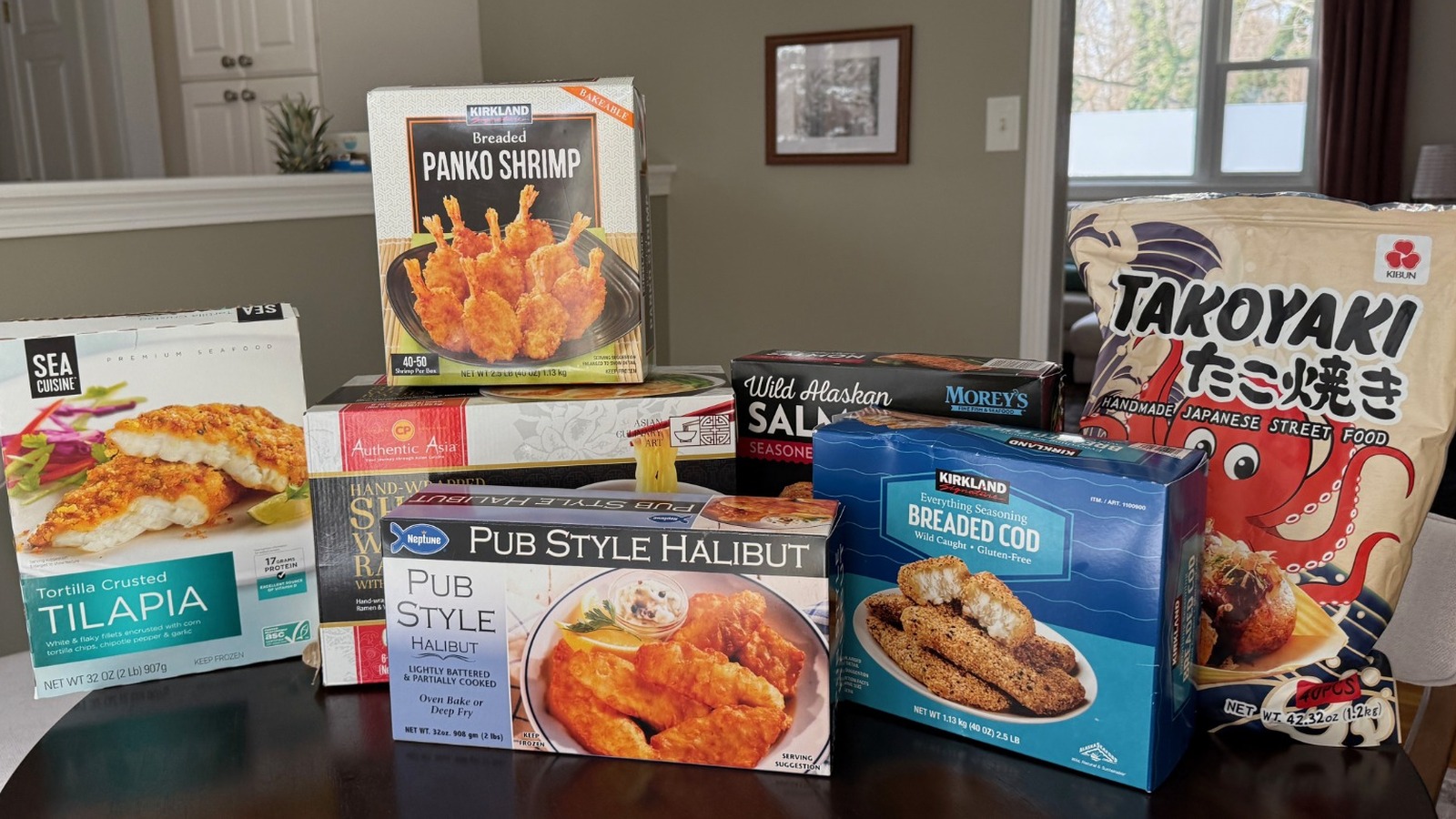
Costco Kirkland Signature holds its own against brand-name products, and this seafood option is not to be missed, whether it’s for a snack or meal.
Mashed – Fast Food, Celebrity Chefs, Grocery, Reviews
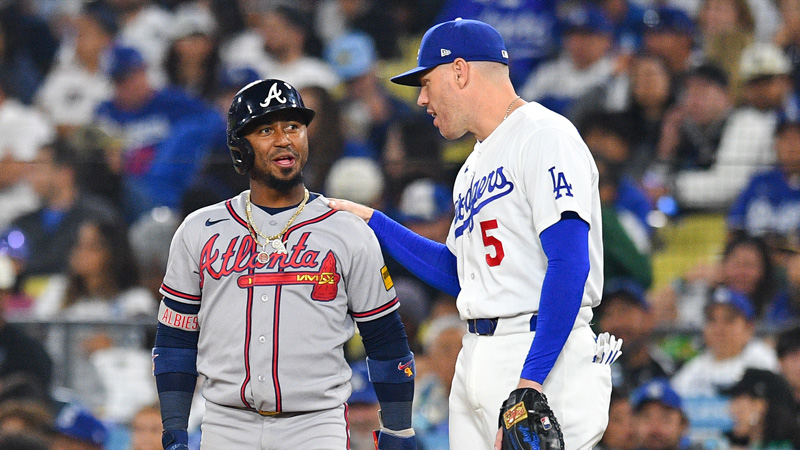
It’s the MLB All-Star break, meaning we have a clear sense of what every team is. With that in mind, here’s one number that defines the first half of the season for all 30 MLB teams (teams are mentioned in alphabetical order by city/state name): Athletics: 20 Athletics’ catcher Shea Langeliers (21) and first baseman Nick Kurtz (20) have each hit 20 home runs. Atlanta Braves: 5 While they lost 19 of their last 29 games before the All-Star break, the Braves stand atop the National League East (55-40) and are sending five players to the 2026 MLB All-Star Game: Drake Baldwin, Ozzie Albies, Matt Olson, Chris Sale and Raisel Iglesias. Arizona Diamondbacks: 10 D-backs star right fielder Corbin Carroll leads MLB with 10 triples. Baltimore Orioles: 90 The Orioles are 46-51, but when they’re connecting with pitches, they’re annihilating them. Baltimore is first in the sport in average exit velocity (90.0 mph) and hard-hit percentage (42.9%), according to Statcast. Boston Red Sox: 85 The Red Sox won their last nine games before the All-Star break, putting them a half-game out of the third American League wild-card seed. With that said, Boston is, remarkably, last in baseball with 85 home runs. Chicago Cubs: 10 The Cubs are in possession of the first NL wild-card seed at 54-42 after a wonky stretch of play. How’s that? They had multiple 10-game winning streaks. The first one came in mid-April, which was later followed by another 10-game winning stretch from late-April through early-May. What happened after the second hot streak? The Cubs had a 10-game losing streak in mid-May. Baseball. Chicago White Sox: 129 The White Sox are the surprise team in the sport (first place in the AL Central at 50-45), and the long ball has been a primary catalyst for their success; they’re fourth in MLB with 129 home runs, with infielders Colson Montgomery (23), Miguel Rojas (21) and Munetaka Murakami (20) accounting for 64 of those homers. Cincinnati Reds: 254 In what’s his first full MLB season, right-hander Chase Burns, who the Reds selected with the No. 2 pick in the 2024 MLB Draft, boasts a 2.54 ERA, 1.11 WHIP, 118 strikeouts, 4.2 wins above replacement and a 173 ERA+ over 102 ⅔ innings pitched (18 starts); Burns is a 2026 All-Star. Cleveland Guardians: 28 Guardians right-handed reliever Cade Smith has totaled an MLB-high 28 saves. He also sports a 2.84 ERA, has totaled 63 strikeouts and is holding opponents to a .229 batting average. Colorado Rockies: 590 Of course, playing half your games a mile above sea level at Coors Field is a challenge, but the Rockies’ starting rotation still boasts a jarring 5.90 team ERA, which is last in the sport. Detroit Tigers: 4 After back-to-back appearances in the AL Division Series from 2024-25, the Tigers are 44-52. Moreover, they’ve lost four or more consecutive games five times this season. Houston Astros: 633 Astros superstar Yordan Álvarez is first in MLB with a .633 slugging percentage, as well as on-base percentage (.426) and OPS (1.059); Álvarez also leads the American League with 31 home runs. Kansas City Royals: 533 The Royals are tied with the Los Angeles Angels for the worst record in baseball (38-59). Meanwhile, their bullpen has the worst ERA in MLB (5.33). Los Angeles Angels: 917 Tied with the Royals for the worst record in MLB, the Angels stand alone with a league-high 917 strikeouts. Los Angeles Dodgers: 61 The defending, back-to-back World Series champions are riding high this season, leading the sport with 61 wins. Miami Marlins: 24 In possession of the third NL wild-card seed at 52-45, the Marlins have tallied an MLB-high 24 triples. Middle infielders Otto Lopez, who’s on the NL All-Star Game roster, and Xavier Edwards have each hit six triples. Milwaukee Brewers: 340 The Brewers’ starting rotation is first in baseball with a 3.40 ERA, an effort highlighted by superstar right-hander Jacob Misiorowski, who has a 1.62 ERA, an 0.76 WHIP, logged 167 strikeouts and held opponents to a .148 batting average (all of those figures lead MLB). Minnesota Twins: 10 The Twins aren’t in the playoff picture, but they’ve been able to entertain with the bats. In fact, they’re top 10 in runs (sixth with 471), hits (ninth with 810), home runs (10th with 120), batting average (ninth at .248), on-base percentage (ninth at .323), slugging percentage (seventh at .415) and OPS (eighth at .738). New York Mets: 303 The Mets, who lead the sport with a roughly $329 million payroll, are tied with the Philadelphia Phillies for 28th in MLB with a .303 team on-base percentage. New York Yankees: 142 The Yankees have hit an MLB-best 142 home runs. Philadelphia Phillies: 45 The Phillies fired manager Rob Thomson after the team’s 9-19 start. Since the move, the team is 45-24 under interim manager Don Mattingly. Pittsburgh Pirates: 516 The Pirates are a commendable 50-47 and tied with the Washington Nationals for the most runs in MLB (516). Pittsburgh has also tallied a league-high 886 hits and sports a league-best .263 batting average. San Diego Padres: 30 Despite being a playoff fixture in recent memory, the Padres are last (30th) in runs (379), hits (709), batting average (.226), on-base percentage (.302) and OPS (.672). San Francisco Giants: 119 It has been another long year for the Giants, who are 41-55. A bright spot has been second baseman Luis Arráez, who is second in the sport with 119 hits and is an NL All-Star. Seattle Mariners: 3 Despite being 48-49, the Mariners are just one-and-a-half-games behind the Texas Rangers for first place in the AL West. The Mariners’ bullpen is keeping them afloat, as they have four relievers who have made at least 20 appearances sporting an ERA below three (Eduard Bazardo, José A. Ferrer, Gabe Speier and Matt Brash). In all, Seattle’s bullpen has a 3.56 ERA, good for fourth in the sport. St. Louis Cardinals: 74 Cardinals right fielder Jordan Walker, who’s a first-time All-Star, leads the sport with 74 RBIs. He has also blasted a career-high 22 home runs, while owning a .294/.354/.532 slash line. Tampa Bay Rays: 322 Rays designated hitter Yandy Díaz leads the AL with a .322 batting average and 111 hits. In doing so, Díaz earned his second career All-Star nod on a Tampa Bay team that has the best record in the AL (56-38). Texas Rangers: 126 The Rangers are just two games over .500 (49-47), but that’s enough to be first in the AL West. Reliever Jacob Latz has been one of the keys to success for Texas, as he’s 18 of 20 in saves situations, boasts a 1.61 ERA and an 0.67 WHIP and is holding opponents to a mere .126 batting average. Toronto Blue Jays: 13.55 The defending AL-champion Blue Jays are slumping, but their premier offseason pickup, right-hander Dylan Cease, has been stellar. Through 17 starts (98 ⅓ innings pitched), Cease sports a 2.56 ERA, 3.6 wins above replacement and 148 strikeouts, good for an MLB-best 13.55 strikeouts per nine innings. Washington Nationals: 27 While they lead the league in slugging percentage (.435) and are tied for the MLB lead in runs (516), the Nationals have blown an MLB-high 27 saves, which has them on pace to shatter the all-time record, which is 37.Latest Sports News from FOX Sports

Matt Kissinger and Frank Richards of the Alaska Gasline Development Corp. prepare to testify to the House Finance Committee on May 27, 2026, in Anchorage. Richards is AGDC’s president and Kissinger is AGDC’s venture development manager. The hearing was conducted as part of a special session called by Gov. Mike Dunleavy. Kissinger and Richards tesified in favor of property-tax concessions sought by Glenfarne, now the majority partner in the Alaska natural gas pipeline project. Dunleavy has argued that the tax concessions are the needed to make the pipeline project viable. (Photo by Yereth Rosen/Alaska Beacon)
Last month, a confidential draft agreement between the Alaska Gasline Development Corporation and Glenfarne leaked. It shows why AGDC is so reluctant to make the details public: The Alaska LNG project could be a financial black hole for Alaska, at a time when the state is struggling to keep schools open and roads maintained.
The document suggests that if Glenfarne fails to develop the tenuous megaproject, Alaska could have to pay to regain control of the asset it’s developed with state funds — a fee based on a subjective assessment of the change in the project’s value under Glenfarne, which could be billions of dollars. That also means if the governor’s proposed tax subsidy boosts the project’s economics, the state’s clawback fee could soar if the company withdraws.
History shows that blank checks and huge tax cuts for outside businesses don’t pencil out for Alaskans. That makes all of the manufactured urgency around Governor Dunleavy’s attempt to force through a massive property tax cut for the LNG pipeline developers this year even more alarming. Glenfarne Group, the company the state gave away development rights to, won’t even have accurate engineering cost estimates for the project until the middle of next year at the earliest. Since the project’s costs will likely escalate, the estimated $16 billion these tax cuts will take from state and borough revenue are likely to be an underestimate too.
Developers’ cost estimates for the project continue to shift, but remain unrealistic and unsupported by data. Through months of legislative hearings, a consultant with AGDC maintained that the decade-old estimate of $46.2 billion was accurate, though another contractor for Governor Dunleavy privately said it was $57 billion. Economists from the Department of Revenue later told legislators that the project costs could range from $46.2 to 92.4 billion. After Senator Stedman called these outdated estimates “complete garbage,” Glenfarne admitted the range could be $44.5 to 54.5 billion dollars.
But according to legislative consultants and a new report on LNG export projects in North America, cost overruns are essentially a guarantee — averaging out to 60 percent higher than projected costs across 20 projects. Applying that to Alaska LNG, the report’s authors found the project could actually cost as much as $104 billion. Accurate cost estimates are essential for legislators to make fact-based decisions around proposed property tax cuts. If they don’t have detailed information, any legislation will be based on false assumptions, and have unquantified consequences.
The developers still haven’t answered basic questions that any lender would ask about the claims project developers are making. Questions like: Why would developers assume that North Slope producers will sell gas to the pipeline for $1.50 per thousand cubic feet (mcf) when gas is currently trading at $3/mcf on the North Slope? Where is the gas going to come from, since the promise of untreated gas from Great Bear Pantheon has already evaporated? What hypothetical industrial customer will anchor ‘Phase One’ of the pipeline by buying the majority of the gas? How much will a Fairbanks spurline cost, and who is going to pay for it? According to recent testimony by Adam Prestidge of Glenfarne, developers think Alaskan consumers should foot that bill. So when promises of affordable gas for Alaskans get thrown around, be sure to read the fine print, and ask, who will pay to build utility infrastructure to use gas in the Interior, or for the thousands of dollars for homeowners to convert their homes to natural gas? What else is in AGDC’s contract with Glenfarne that could cost Alaska millions or billions of dollars?
AGDC has attempted to brush aside these reasonable inquiries from legislators trying to protect Alaskans from inflated energy prices and unknown costs. AGDC board member Dennis Michel recently attempted to joke that legislators are like mosquitoes, calling them “irritating, relentless, and somehow always present,” for asking questions about this project.
In reality, as the leaked draft AGDC-Glenfarne agreement shows, the ever present questions hovering over this project are what crucial information are developers withholding, and what will it cost Alaskans?
SUBSCRIBE: GET THE MORNING HEADLINES DELIVERED TO YOUR INBOX.