Next up for the United States: Belgium. For the second time in its last three World Cups, the USA will take on the Red Devils in the round of 16. Earlier on Wednesday, Belgium completed a stunning comeback to beat Senegal to seal its spot in the round of 16, while the USA took care of business against Bosnia and Herzegovina. The United States received a blow in its win over Bosnia and Herzegovina, though. Striker Folarin Balogun, who scored the winner against the Bosnians for his third goal of the tournament, was sent off in the second half. He will miss the game against Belgium. Here’s everything you need to know about the matchup, which will take place in Seattle on Monday. These teams faced off back in 2014, when Belgium won, 2-1, to eliminate the Americans. The game is remembered for an incredible 16-save performance by then-USA goalkeeper Tim Howard. It went to extra time, when midfielder Kevin De Bruyne and striker Romelu Lukaku scored. USA winger Julian Green found the back of the net in the 107th minute, but it wasn’t enough for the USA. No Americans who were on the 2014 World Cup squad are also in this year’s team. For Belgium, though, there were three players from that squad who started against Senegal: goalkeeper Thibaut Courtois, De Bruyne and Lukaku. There is more recent history between these teams, dating back just to March, when Belgium took care of business in a convincing friendly win over the USA. Five Belgian players started both that friendly in March and the team’s round of 16 win over Senegal. For the USA, six players started that day in March and against Bosnia and Herzegovina on Wednesday. One of those six American players, though, was Balogun. The U.S. led that game at halftime through a goal from Weston McKennie, but Belgium scored three times in the first 15 minutes of the second half en route to a convincing victory. Belgium won Group G, but it didn’t do so in very convincing fashion. The Red Devils opened group play with a 1-1 draw against Egypt and a 0-0 against Iran. From there, Belgium needed to get a result in their final game against New Zealand and delivered. The Belgians earned a 5-1 win to advance to the knockout stage. Then, the chaos really began in the round of 32 against Senegal. It looked like Belgium was going to be knocked out in convincing fashion after going down 2-0 in the first 51 minutes. The Red Devils then rebounded with goals in the 86th and 89th minutes from striker Romelu Lukaku and midfielder Youri Tielemans. Then, late in stoppage time, Belgium was awarded a penalty, which Tielemans converted for the victory. The Key Players Big soccer fans will be very familiar with De Bruyne, who has been one of the best playmakers over the past decade. He spent 10 seasons at Manchester City from 2015-2025, scoring 108 goals with 170 assists in 422 games. He thrives with both feet and was the best passer in the world over an extended period of time. That said, De Bruyne is now 35 years old and past his prime. He just finished his first season with Napoli in Serie A and only played 21 games due to injury. Through four games at this World Cup, De Bruyne has one goal without an assist. The goal came in Belgium’s blowout win over New Zealand. De Bruyne will start, but he has not played 90 minutes in any match yet at the World Cup and only lasted 56 minutes against Senegal. Two players have three goal contributions for Belgium at the World Cup. One is veteran striker Romelu Lukaku, who has only started one of the Red Devils’ first four games. The other is Trossard, who has two goals and an assist, which came against Senegal on Tielemans’ 89th-minute equalizer. The Arsenal winger has started all four games for Belgium on the left wing and has been the team’s most consistent attacker. Striker Charles De Ketelaere has started three games but has no goals and no assists, as does winger Jeremy Doku. Like De Bruyne, Trossard can play well with both feet and is technically very sound. Expect him to be a player who Belgium looks to play through early and often. When And Where Will USA vs. Belgium Be Played? This matchup will take place on Monday, July 6, at Seattle Stadium. Kickoff is scheduled for 8 p.m. ET, and the game can be watched on FOX and streamed on FOX One.Latest Sports News from FOX Sports
Hot summer days call for budge-proof makeup, especially when it comes to mascara. Between the heat and humidity, days spent swimming in the pool or ocean, and sweaty workouts, you need something… E! Online (US) – Top Stories
UPDATE: Tate Paul’s request was denied, per a court order obtained by E! News July 1.
“As Tate himself recognizes, many of his supporting allegations are based upon inadmissible hearsay, without… E! Online (US) – Top Stories
Minimum wage workers across Alaska are seeing bigger paychecks as the state’s minimum wage rises to $14 an hour. The increase is intended to help workers keep pace with inflation, but many say the higher wage still falls short as…
The scorer of the opening American goal against Bosnia, Folarin Balogun, is eligible to play for the United States only because airline employees in New York kept his pregnant mother from returning to London until her son was born.
As our Riya Misra wrote recently, it makes Balogun not only the leader of a reinvigorated U.S. attack but a poster child for a cause validated yesterday by the U.S. Supreme Court: that the 14th Amendment of the Constitution guarantees citizenship to anyone born within its borders.
Read Riya’s story about Balogun and the debate over birthright citizenship here.
Blaise Taylor has learned his fate in the murder trial for his pregnant girlfriend.
The former scout for the Tennessee Titans was convicted July 1 of four felony murder counts in the case of Jade… E! Online (US) – Top Stories
Alan Jackson’s final concert was special for many reasons. Not only did the country music icon bid farewell to an incredible career, he also used the opportunity to raise over $2 million for a cause close to his heart: the CMT Research Foundation.
“It’s genetic that I inherited from my daddy… There’s no cure for it, but it’s been affecting me for years,” Jackson shared during a deeply personal interview with the TODAY show. “And it’s getting more and more obvious. And I know I’m stumbling around on stage. And now I’m having a little trouble balancing, even in front of the microphone, and so I just feel very uncomfortable.”
Alan Jackson; Photo by Country Now
Since revealing his diagnosis, the Georgia native has made a point to support CMT research and has donated proceeds of his ticket sales to the CMT Research Foundation.
With his final show, Jackson helped raise more than $2.25 million for the CMT Research Foundation. A portion of ticket sales from the historic concert was donated to CMTRF, inspiring an outpouring of additional support through fan donations and matching contributions.
Laura MacNeill, CEO of the CMT Research Foundation, reflected on the significance of the funding and awareness generated through Jackson’s final shows, noting the lasting impact it could have on the CMT community.
Alan Jackson Nissan Stadium; Photo by Sam Shapiro Media
“For the three million people living with CMT, this isn’t just a dollar number. It’s momentum. Currently, there are no approved treatments or cures for CMT. Alan Jackson’s Last Call tour introduced thousands of people to CMT who had never heard of it before, and the funding it generated is already moving science forward,” MacNeill shared with Country Now in a statement.
CMTRF will use the funds to support research efforts focused on advancing potential treatments for CMT, a condition that currently has no approved therapies. Fans can find details on the research being supported here.
Photo Courtesy of Alan Jackson
Jackson’s final concert featured the country legend delivering a career-spanning setlist filled with fan-favorite hits, including many of the 35 chart-topping songs that defined his decades-long legacy in country music.
As announced earlier this week, Jackson’s final performance will be preserved as a live album, Last Call: One More for the Road – The Finale (Live from Nashville), set to arrive later this year. The historic show was also filmed for an upcoming NBC special, which is slated to air in December.
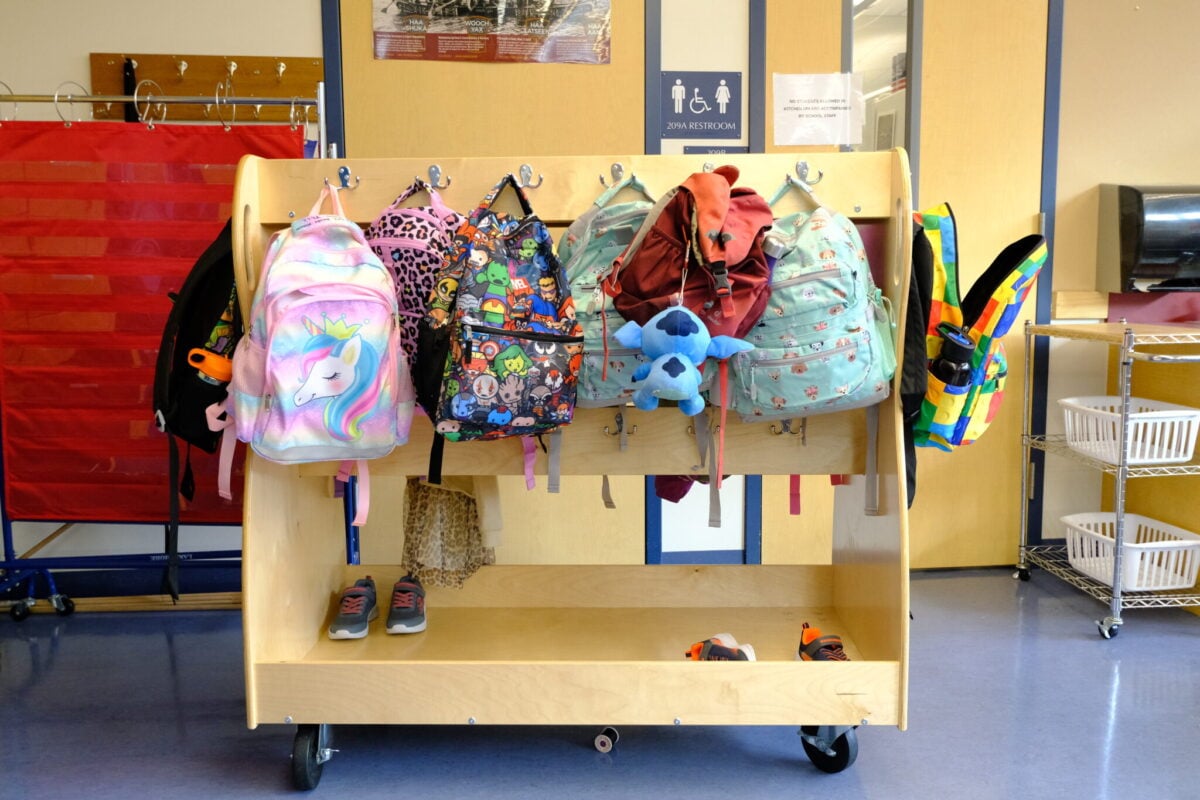
Student backpacks seen on the first day of school at Harborview Elementary School in Juneau on Aug. 15, 2025 (Photo by Corinne Smith/Alaska Beacon)
Content warning: This story contains references to sexual violence and abuse of children.
A new statewide initiative aims to prevent and reduce Alaska’s pervasively high rates of child sexual abuse.
The statewide prevention plan is led by the Alaska Children’s Trust, a non-profit advocacy group focused on supporting children and families and preventing child abuse and neglect.
Trevor Storrs, the president and CEO of the Alaska Children’s Trust, said a coordinated effort among state and community groups, service providers, schools, caregivers and youth is needed to make serious strides in intervening and preventing abuse.
“We should not expect children to fight off these predators. We want them equipped with the tools, but it’s our job, not just as adults, but as a community and society, to make sure kids are safe,” he said.
If you or someone you know has experienced sexual abuse or are healing from a crisis, resources are available:
The StrongHearts Native Helpline: Confidential 24/7 confidential helpline for Native Americans and Alaska Natives dealing with domestic and sexual violence. Call 1-844-762-8483 or use the chat feature.
Child sexual abuse prevention resources provided by the Alaska Children’s Trust can be found here.
AWARE’s list of resources, including housing, medical and financial resources
The plan was developed last year with a variety of statewide groups, including representatives from Child Advocacy Centers, the Alaska Department of Education and Early Development, the Office of Children’s Services, which runs the state’s foster care system, law enforcement, Tribes, health care providers, lived experience experts, faith communities, and the Alaska Network on Domestic Violence and Sexual Assault.
Storrs said the plan focuses on education and raising awareness, as well as preventing harm by developing and strengthening institutions so that questionable behavior is identified and stopped.
“If we don’t keep strong boundaries established, that’s when we start opening the door and predators see their opportunity,” he said. “If we keep those strong and not have those potential openings, it actually prevents the predators from ever accessing, or anybody who’s had even a slight inclination — they’re not being tempted to even try — and that is what our job is.”
The group launched the plan earlier this month and is providing an initial $100,000 in grant funding for prevention work in the three priority areas outlined by the initiative. Nonprofit organizations, tribes, local or state governments, schools and regional attendance areas are invited to apply by July 17.
Alaska has some of the highest rates of sexual violence and rates of child abuse, neglect, and child sexual abuse, in the nation. Many victims delay or never report abuse. A U.S. Department of Health and Human Services’ Child Maltreatment report published this year noted reports of child abuse and neglect have declined somewhat since 2020, but Alaska rates in 2024 were 80% above the nationwide average.
Nationwide, American Indian and Alaska Native children have the highest rates of victimization, and in Alaska national data from the maltreatment report shows rates of abuse among American Indian or Alaska Native children are nearly three times higher than the overall statewide average.
The Alaska Children’s Trust cites a national survey by the U.S. Centers for Disease Control and Prevention from 2013 to 2015 that showed on average one in five Alaska children experience sexual abuse. A 2023 report from the Alaska Children’s Justice Act Task Force showed that an estimated one in seven children will experience an allegation of sexual abuse before their 12th birthday.
“The majority of child abuse and neglect cases that are substantiated are neglect, then it’s physical, and then it’s a small fraction of child sexual abuse,” Storrs said. But sexual abuse can have severe impacts on a child’s development, according to the CDC, with short and long term effects, including chronic health conditions, mental health issues and even post-traumatic stress disorder, or PTSD.
Child sexual abuse is defined as any sexual activity between a child and adult or a child and another child that the child does not fully understand, does not consent to or is not developmentally prepared for and therefore cannot consent to. In Alaska, lawmakers this year changed the law to raise the age of consent to 18 years old.
An estimated 90% of child sexual abuse is perpetrated by someone known to the child or the child’s family, according to the CDC.
Perpetrators can exploit what Storrs calls “natural trust” to get close to a child, including people in positions like a coach, teacher, religious leader or friend of the family, in a pattern of behavior called grooming.
“Grooming is developing that relationship, developing a trust with the family that the child can be left alone with them,” Storrs said. “The trust with the child where their interactions may feel awkward, but are okay. The trust that it’s okay to keep secrets. They really build that trust and build that relationship that then allows them to abuse the child, to do what they do. And you see that in story after story when you talk to a survivor of child sexual abuse, they talk about the relationship.”
Storrs says addressing the stigma to intervene when behavior is inappropriate, also means implementing proper protocols for adults interacting with kids. He said for example, coaches should not text youth individually, but include parents in all communications.
That extends to online safety, he said. Nationally, there are increasing rates of predatory behavior and “sextortion,” a form of blackmail where perpetrators threaten to disclose information or images unless the victims make specific demands. Storrs said caregivers should talk with children and youth about what is and isn’t appropriate, in person and online.
“It’s also making sure that your child understands what the expectations and rules are, as well, of what it’s like to interact with an adult, and what are those boundaries,” he said.
Storrs said in raising awareness of potentially predatory behavior, it’s also important to trust children when they disclose inappropriate behavior.
“A lot of kids don’t disclose that X is happening, what they start disclosing is, ‘I don’t feel comfortable, I don’t want to go. I don’t like hanging out with this person anymore.’ They don’t feel connected,” he said. “That’s a sign.”
The statewide prevention plan likens preventing child sexual abuse to wildfire prevention. That means reducing risks, setting safety codes, educating communities and monitoring high risk situations — to prevent harm.
Three approaches to prevention
The statewide prevention plan has a three-pronged approach: educate and mobilize, cultivate safer environments and act early to prevent harm.
Storrs says all three involve children, families, and community-wide efforts, and the plan calls for local advocacy groups, service providers, schools and governments to gather community input and develop their own child sexual abuse prevention programs and resources best fit around cultural values. The initiative calls for local communities to develop and strengthen systems for children to safely report harm without fear of punishment and family disruption.
The first prong focuses on education: increasing awareness and reducing stigma, and increasing the number of people able to take action proactively. That means training for youth-focused employees like teachers and coaches, and building in protocols for reporting and addressing inappropriate behavior. It also involves providing educational resources for parents and caregivers on healthy boundaries, warning signs, and how to respond to concerns.
The plan calls for education and resources for children and youth on what’s appropriate. Storrs says the plan suggests children receive human development education, not necessarily sex education, so that children develop an understanding of consent, their body anatomy and healthy relationships.
“When you talk to a child about something, it does not give a child permission to engage in something or to act inappropriately,” he said, adding that teaching kids about sex does not give them permission to have it in the same way that teaching kids about car accidents doesn’t give them permission to drive recklessly.
Education is aimed at empowering children to identify when physical boundaries have been violated, Storrs said. “So when a kid needs to talk about any of their private areas or someone is trying to talk about it or touch it, they’re able to know what’s appropriate and what’s not appropriate,” he said.
Similarly, reducing shame and stigma can empower children to talk with an adult or caregiver when they’ve experienced or seen adults behaving inappropriately. Children should know that adults should never ask them to keep secrets, Storrs said, and when inappropriate behavior has occurred they can get help to stop it from continuing.
The second prong, “cultivating safer environments,” calls for state and local governments, Tribes and service organizations to support programs and policies that help families meet essential basic needs to address conditions that put children at risk for sexual abuse.
Storrs noted that children and families with unstable housing, inadequate child care or health care can create circumstances that put children at higher risk.
“Our safety net plays a critical part in keeping kids safe, not just of child sexual abuse, but child abuse in general,” he said. “We know when families have stable housing, food security, all those things, it puts less stress on the family.”
The plan calls for increasing safety of physical and digital spaces where youth spend time, and local community organizations to hold listening sessions in communities to identify risk factors and best prevention strategies.
The third prong aims to prevent harm by increasing access to resources to respond to harmful sexual attitudes or behaviors. That includes addressing people who have harmed or are at risk of harming children.
“I truly believe there’s more gray in our world ever than there is black and white,” Storrs said. “And there are definitely individuals who are 100% predators, and it’s very clear. Then you have individuals that may have some thoughts, but don’t act on it, or it’s controlled internally by themselves and by within the society they are.”
The approach includes responding to harmful and problematic sexual behavior among youth. Storrs said with youth having access to graphic sexual material online, problematic behaviors and attitudes may arise. The plan aims to expand treatment and support services for youth to address harmful behaviors.
“We’re seeing that kids are sexually maturing faster or becoming more hypersexual at a much younger age without the knowledge, skills, supports and resources to then deal with it or understand it,” Storrs said. “And if kids do not have an adult to talk to, or have learned this information, it starts creating hyper sexual experiences, which then can lead to this harmful sexual behavior.”
Alaska has unique challenges with rural and remote communities having less access to services, Storrs said, as well as grappling with legacies of trauma and adversity. He said the initiative aims to push a statewide focus and investment in policies and programs that support children and families that can help prevent harm. The plan is a collaborative effort, he said, and in the first year advocates with the Alaska Children’s Trust will visit communities to discuss the plan, help raise awareness, identify gaps and strengthen protocols and safer environments to prevent abuse.
“What we want to create that’s very clear in our community, in our state, that we as a community are watching and will not stand for any type of inappropriate behavior with our kids,” Storrs said. “And we will say something, we will step in, and you won’t be allowed.”











 Hot summer days call for budge-proof makeup, especially when it comes to mascara. Between the heat and humidity, days spent swimming in the pool or ocean, and sweaty workouts, you need something…
 UPDATE: Tate Paul’s request was denied, per a court order obtained by E! News July 1.

 Blaise Taylor has learned his fate in the murder trial for his pregnant girlfriend.