 Kaley Cuoco is ready for a big change.
The Big Bang Theory alum shared that she and fiancé Tom Pelphrey are expecting a baby girl, who will be joining their 3-year-old daughter…
E! Online (US) – Top Stories









Kaley Cuoco is ready for a big change.
The Big Bang Theory alum shared that she and fiancé Tom Pelphrey are expecting a baby girl, who will be joining their 3-year-old daughter…
E! Online (US) – Top Stories

(The Center Square) – The U.S. Department of Education confirmed a whistleblower’s allegations that the agency violated a federal court order while handling Title IX cases tied to gender identity and sexual orientation, according to the U.S. Office of Special…
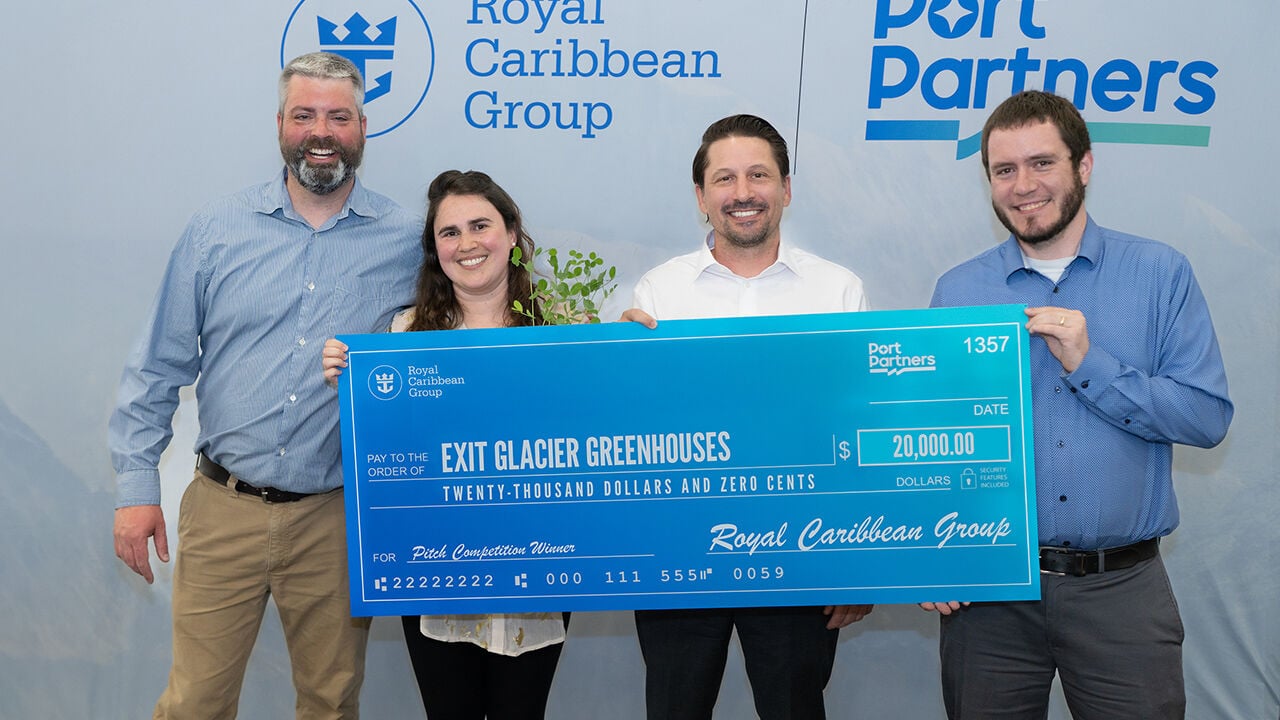
From left to right: Greg Haas, instructor, Alaska Vocational Technical Center; Sydney Singer, founder, Exit Glacier Greenhouse; Preston Carnahan, vice president, Destination Development, Alaska, West Coast, and Pacific; Dr. Cory Ortiz, division director, Alaska Vocational Technical Center.
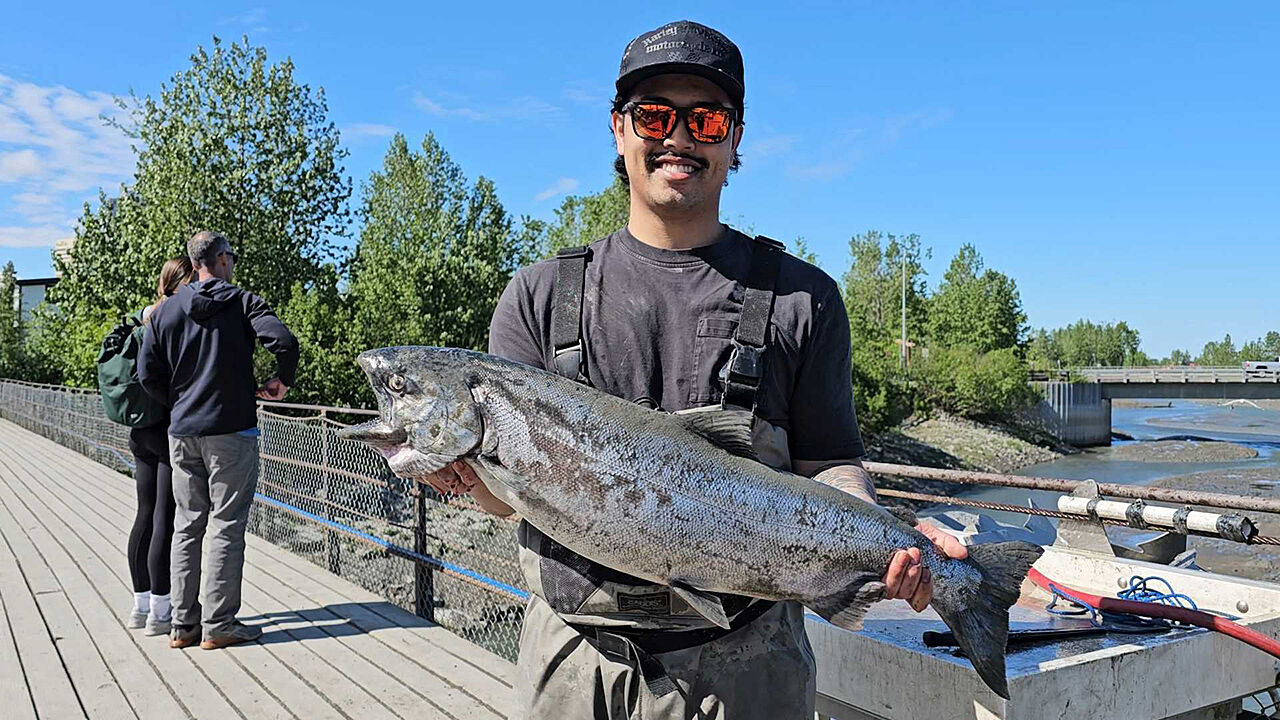
Anglers crowded Ship Creek for the Slam’n Salmon Derby, with one participant landing a 13-pound king salmon as the popular Anchorage fishing event continues.
Anglers crowded Ship Creek for the Slam’n Salmon Derby, with one participant landing a 13-pound king salmon as the popular Anchorage fishing event continues.
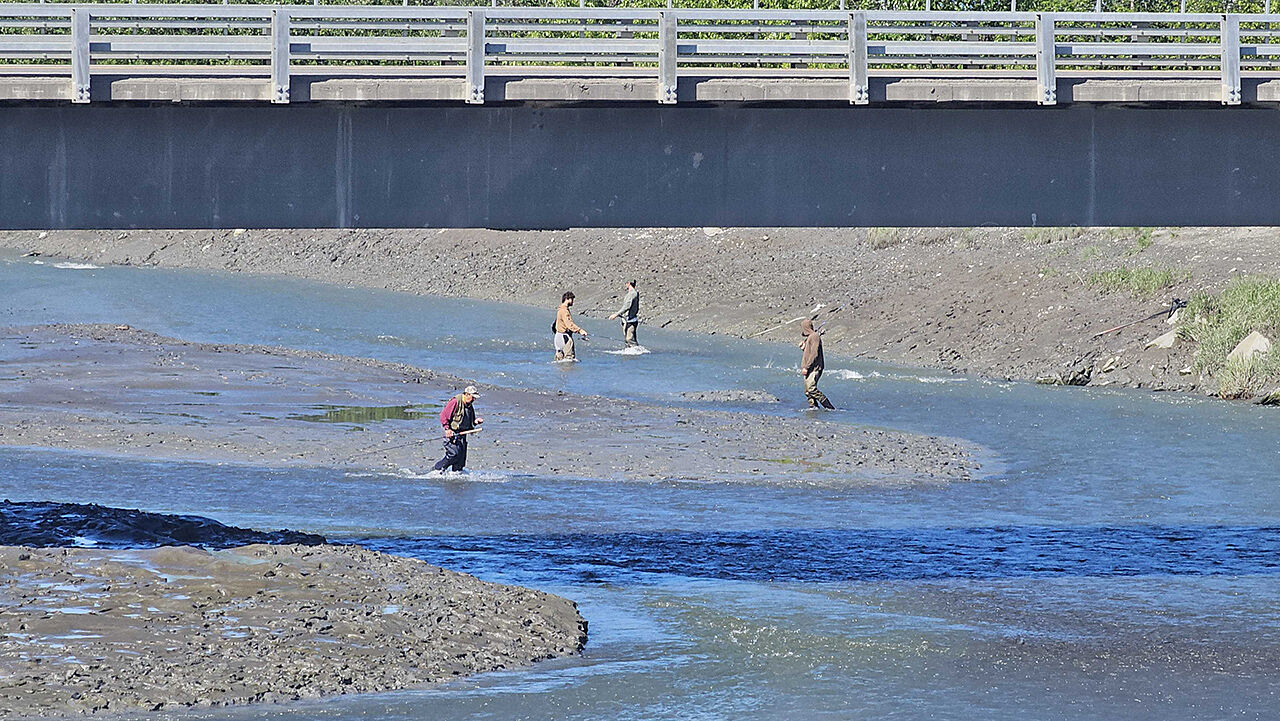
Anglers crowded Ship Creek for the Slam’n Salmon Derby, with one participant landing a 13-pound king salmon as the popular Anchorage fishing event continues.

Democrats aren’t done debating Graham Platner.
Platner’s decisive victory in Maine’s Democratic Senate primary quelled for now any serious discussion that he could be replaced as the party’s nominee in the wake of a recent bout of scandals. The party’s campaign arms were quick to indicate support for him after the race was called Tuesday night. Progressives took a victory lap while arguing their colleagues need to coalesce around the Maine nominee.
But a small yet notable faction of Capitol Hill Democrats still has qualms about the oysterman’s tumultuous past that has rattled some Maine voters — and what it could mean for their chances of defeating Sen. Susan Collins and taking back the upper chamber in November.
On Wednesday, several senators stopped short of outright endorsing Platner when asked by POLITICO.
Sen. Mark Kelly (D-Ariz.), a potential 2028 contender who has kept his distance from Platner so far, said he thought Platner can defeat Collins and that “the path for us winning back control of the Senate runs through Maine.” But he still declined to endorse Platner, saying that he’d yet to meet or speak with the nominee. Asked whether Platner had done enough to address his scandals, Kelly said the oysterman has “got things to explain.”
Sen. Catherine Cortez Masto (D-Nev.), who had previously endorsed Gov. Janet Mills in the Maine Senate race, and Sen. Tammy Duckworth (D-Ill.) also declined to endorse Platner on Wednesday. Cortez Masto rattled off other top Democratic targets in Iowa, North Carolina and Alaska, while Duckworth said she’s “focused on the Midwest.”
And Sen. John Fetterman (D-Pa.), a frequent critic of his own party who has repeatedly raised concerns about Platner, said Maine Democrats have made their choice but “I would never [endorse Platner]. I’ll be a Democrat to refuse to carry water for that.”
Even Sen. Peter Welch (D-Vt.), who said Wednesday he would support all Democratic Senate nominees, suggested the oysterman still has “work to do” to address his scandals.
“The challenge that Platner has is the challenge that any candidate has, and it’s to address in a direct way both personal and political issues that are legitimate questions for the voters. He’s got to do that,” said Welch, who had also met with Platner last week to privately urge him to address voters’ questions head on. “Until the election is over, he’s got work to do, every day in every way.”

Not every senator traditionally endorses in every race. But Democrats’ chances of taking back the Senate hinge squarely on being able to defeat Collins, the only Republican senator seeking reelection this year in a state former Vice President Kamala Harris won in 2024. The party has hoped to knock off Collins many times before only to come up short — and it’s now putting its hopes on Platner, whose campaign has electrified Maine and generated unprecedented grassroots support, but also faced a litany of controversies.
Continued Democratic division could be a boon for Republicans who are already launching into general-election attacks on Platner. Collins has repeatedly won reelection with a coalition that includes a substantial share of independents and Democratic voters, especially moderate women.
Platner’s rise came without the backing of the Democratic establishment: Senate Minority Leader Chuck Schumer (D-N.Y.) recruited Mills, who suspended her campaign in April after poor polling and fundraising numbers.
The political newcomer’s ability to challenge the establishment was part of his appeal to Maine voters, as he argued the Democratic Party had lost its way and needed to return to its working-class roots.
Some well-timed endorsements helped Platner in key moments in his primary campaign. Sen. Bernie Sanders’ (I-Vt.) early backing helped put him on the map. Sen. Ruben Gallego (D-Ariz.) gave his campaign a boost earlier this year as he faced renewed questions about a tattoo resembling a Nazi symbol. And Sen. Brian Schatz (D-Hawaii) even helped him fundraise in the aftermath of the most recent allegations.
The New York Times last week reported that several of Platner’s ex-girlfriends alleged toxic patterns of behavior, including one who said he grabbed her in ways that left marks. Before that, his campaign acknowledged he had exchanged sexual messages with other women while married. Last fall, his uncovered Reddit history included numerous offensive comments. And Platner owned up to having a tattoo resembling a Nazi symbol, although he said he was unaware of its meaning.
Platner has denied being violent with women and has argued that his past poor behavior reflects a difficult time in his life, as he struggled with post-traumatic stress disorder after leaving the military.
“I’ve made mistakes in my life, mistakes that I regret, that I lived with, that I continue to learn from,” he said in a Tuesday night victory speech. “I’m still far from perfect, but every day I wake up and I try to be a little bit better and a little bit kinder than I was the day before.”
Following his Tuesday primary victory, Platner’s Senate supporters urged their colleagues to rally behind him.
“They need to coalesce, they need to coalesce around Platner,” Sen. Elizabeth Warren (D-Mass.) told reporters on Wednesday, arguing Platner has “taken responsibility” for his past actions.
Sanders told reporters on Capitol Hill he was confident that Democrats would come around.
“Platner won a landslide victory last night, and I am quite confident that Democrats who want to regain the Senate will be supporting him as the Democratic nominee,” he said.
At least one lawmaker who had not previously endorsed Platner was ready to support him.
“Here’s a man who said ‘I made mistakes, I apologize for them, I am going to earn the trust of my constituents,’” said Sen. Mazie Hirono (D-Hawaii). “That says a lot in contrast to the president, who never admits doing anything that is untoward, and who just blames everybody else, and who prosecutes people. I think Maine voters have expressed themselves and they’re willing to give him a chance.”
Other Democrats who had been skeptical of Platner’s viability in the general election — and had considered pressuring him to drop out — now appear resigned to him staying in the race.
“It was obviously a strong result for him which I think should quiet some of the immediate anxiety, but that will return if more revelations come out,” said one senior Democratic Senate aide, granted anonymity to discuss the race candidly. “Seems like even his supporters are not really defending the conduct, so [it’s] kind of incumbent on him to try to address more fully and move on.”
Another Senate Democratic aide, also granted anonymity to speak candidly about the race, agreed: “He weathered the storm, but is he out of it? Primary night didn’t answer that question. The next several weeks will determine whether this campaign is a referendum on his personal conduct or Susan Collins aligning with an unpopular GOP agenda that is hurting Mainers.”

Republicans have indicated they will try to make Platner’s controversies central to the race, with the National Republican Senatorial Committee and a pro-Collins super PAC launching ads that highlight some of the Democrat’s past Reddit comments. Platner, meanwhile, in his first general election ad on Wednesday, went after the “Epstein class” but did not mention Collins.
Sen. Elissa Slotkin (D-Mich.) said her thinking on the race had not changed from a few weeks ago, saying she plans to “work with whoever the Mainers elect, period.”
“The way that this president has completely railroaded my Republican colleagues in this body, they don’t deserve to run a separate branch of government,” she said. “And if we want any chance of putting a check and balance on him that involves electing Platner.”
Asked whether Platner needs to do more to address his past scandals, Slotkin simply replied: “I just hope I’m not caught again live on TV answering the same questions about bad behavior.”
Jordain Carney contributed to this report.
Politics

You might think that practically everything that McDonald’s makes comes with a fresh seasoning of salt after it’s cooked, but this isn’t the case.

Food Republic – Restaurants, Reviews, Recipes, Cooking Tips

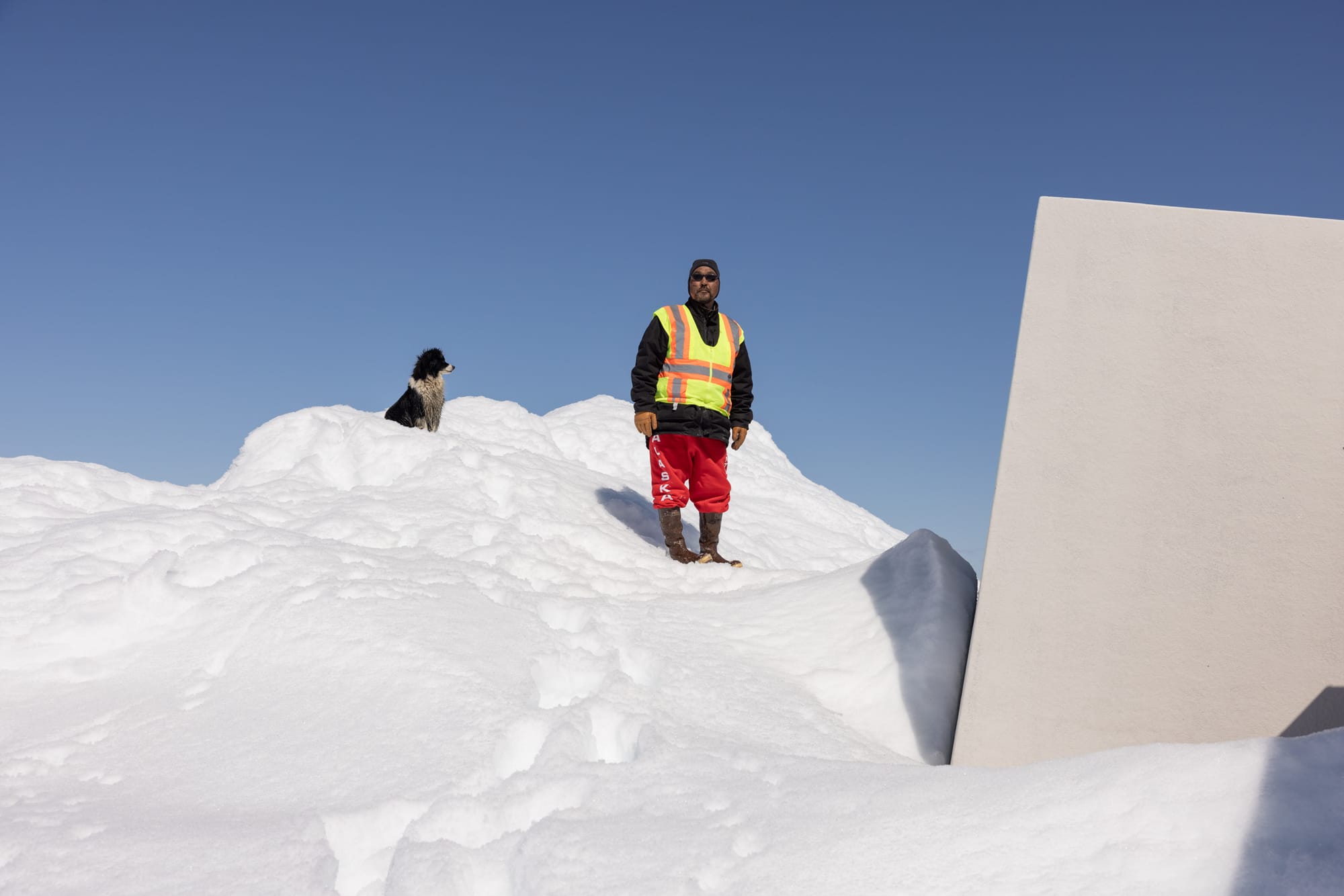
Benjamin Kugtsun, right, gathered melting ice and snow in May from a pond near Kipnuk. His friend and cousin Burt Paul sits at left with his dog Koda. Paul and Kugtsun never left Kipnuk after ex-Typhoon Halong wreaked havoc on the community last fall, and instead decided to stay and rebuild. (Katie Baldwin Basile for Northern Journal)
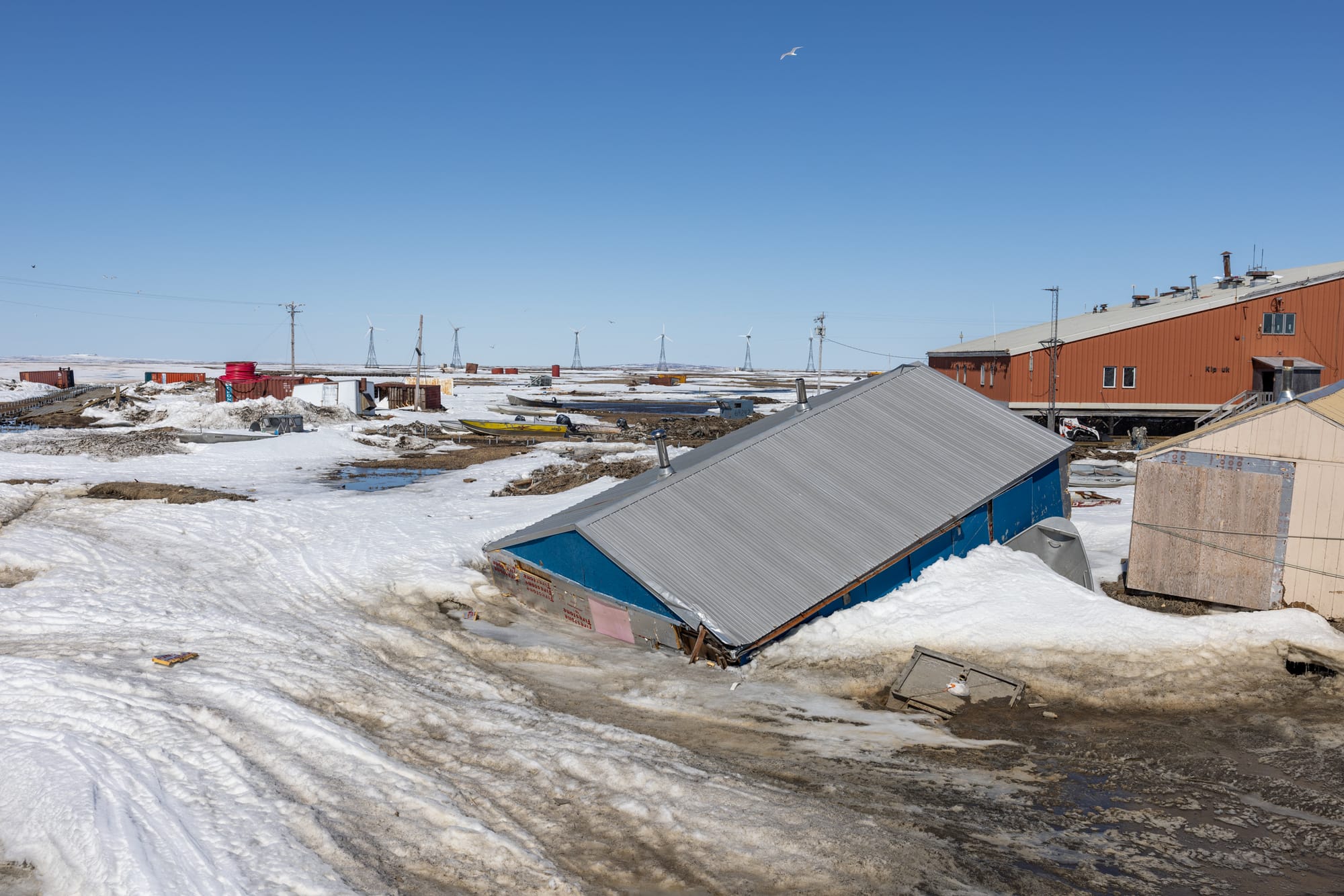
When ex-Typhoon Halong flooded the Western Alaska village of Kipnuk last fall, a mass evacuation followed.
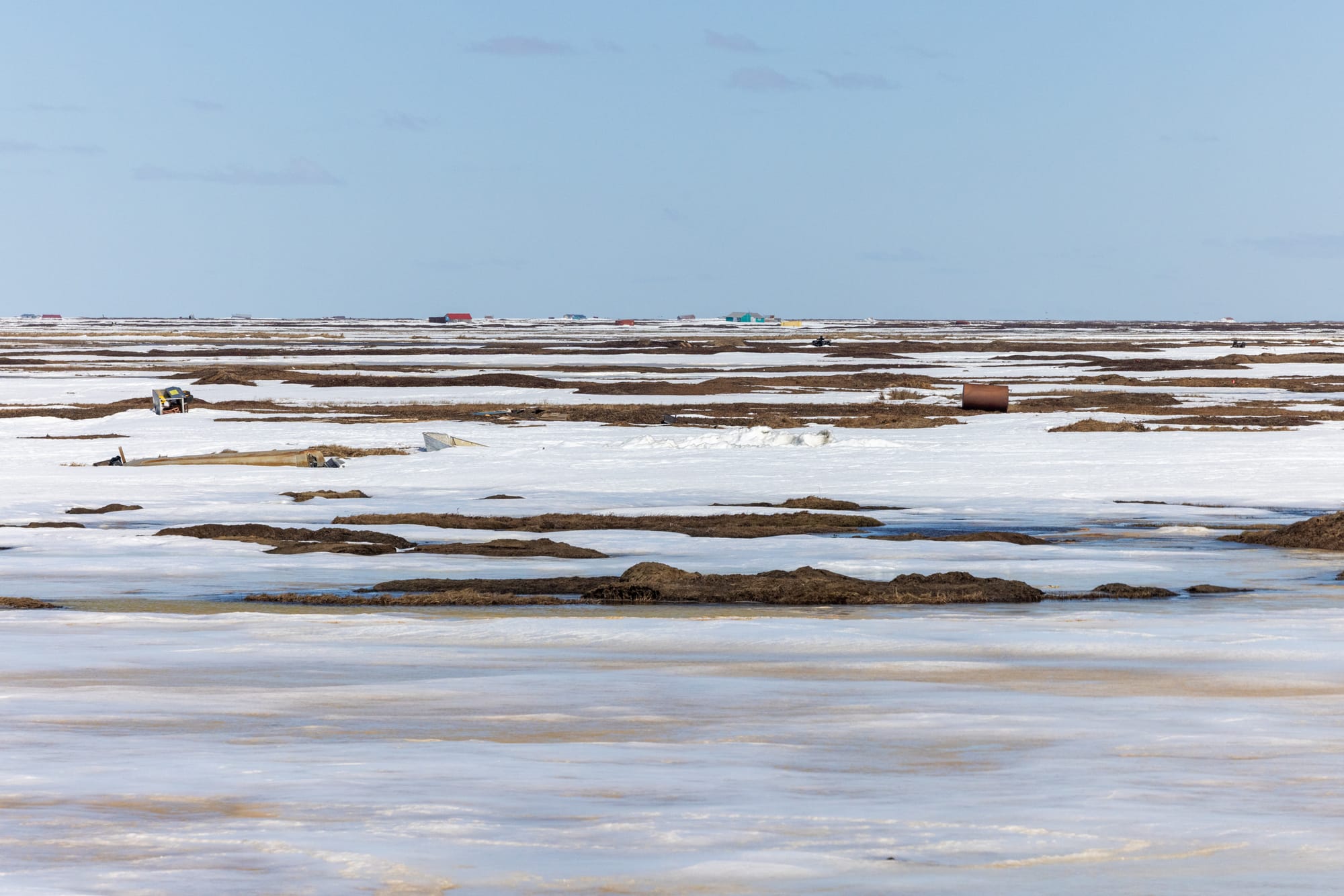
Homes were displaced, with some 90% of the village’s structures destroyed, according to Gov. Mike Dunleavy. Most people made the difficult decision to leave the village.
In the end, 19 people stayed behind, determined to see Kipnuk rebuilt — a tiny fraction of the nearly 1,000 people that tribal leaders say lived in the village before the flooding.
Kipnuk was the hardest hit during the storm, but Halong also caused widespread damage in other communities across Western Alaska, including the village of Kwigillingok.
Burt Paul and Benjamin Kugtsun are two of those who remained in Kipnuk.
Cousins and best friends, the two believe that despite the damage, the village can still serve as an interim home for community members while they wait to relocate to higher ground — a long-term goal that tribal leaders announced in March after a formal vote.
Before Halong hit, Burt was a Yup’ik culture and language teacher at the Chief Paul Memorial School. I visited his classroom May 8 and spoke with him and Benjamin.
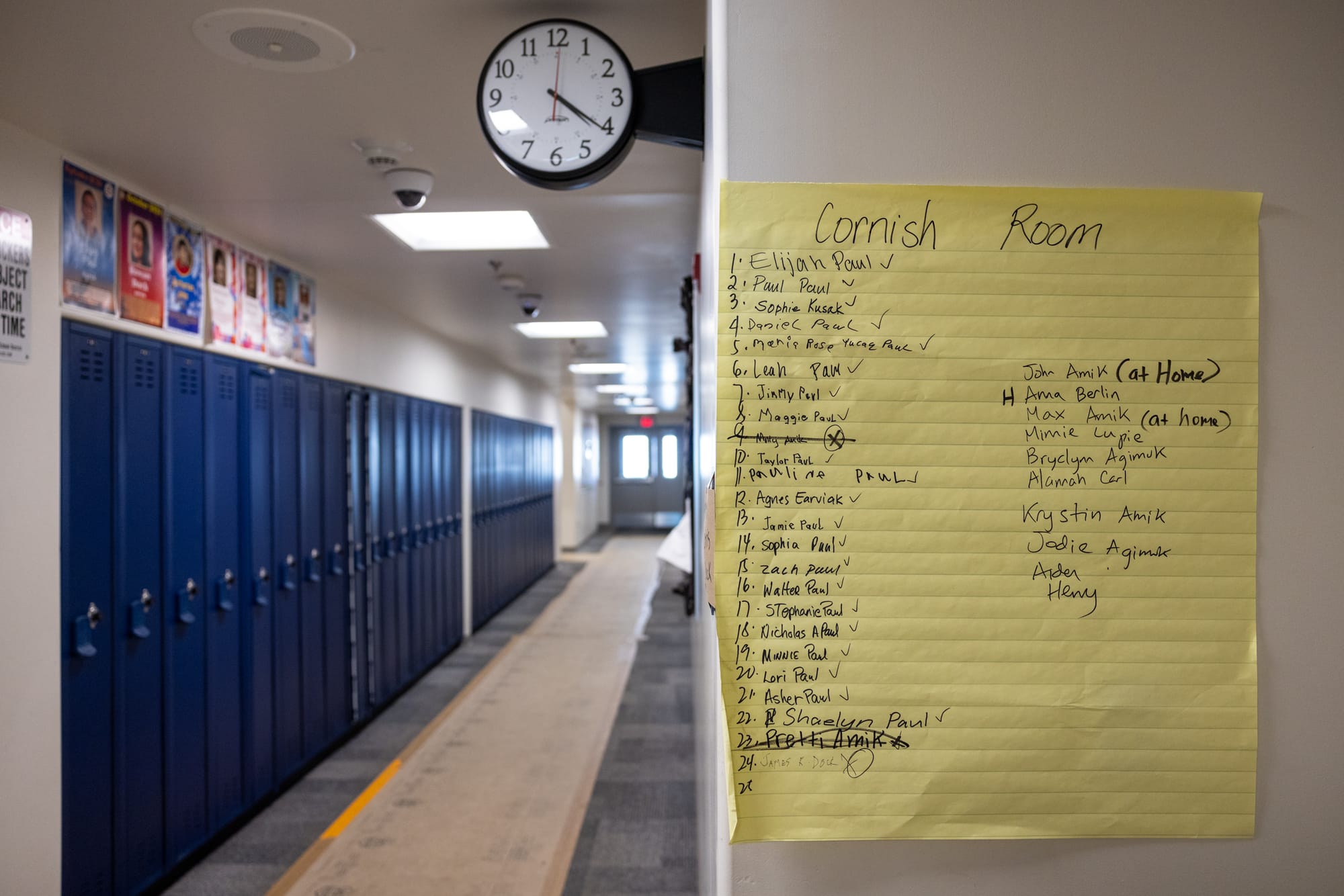
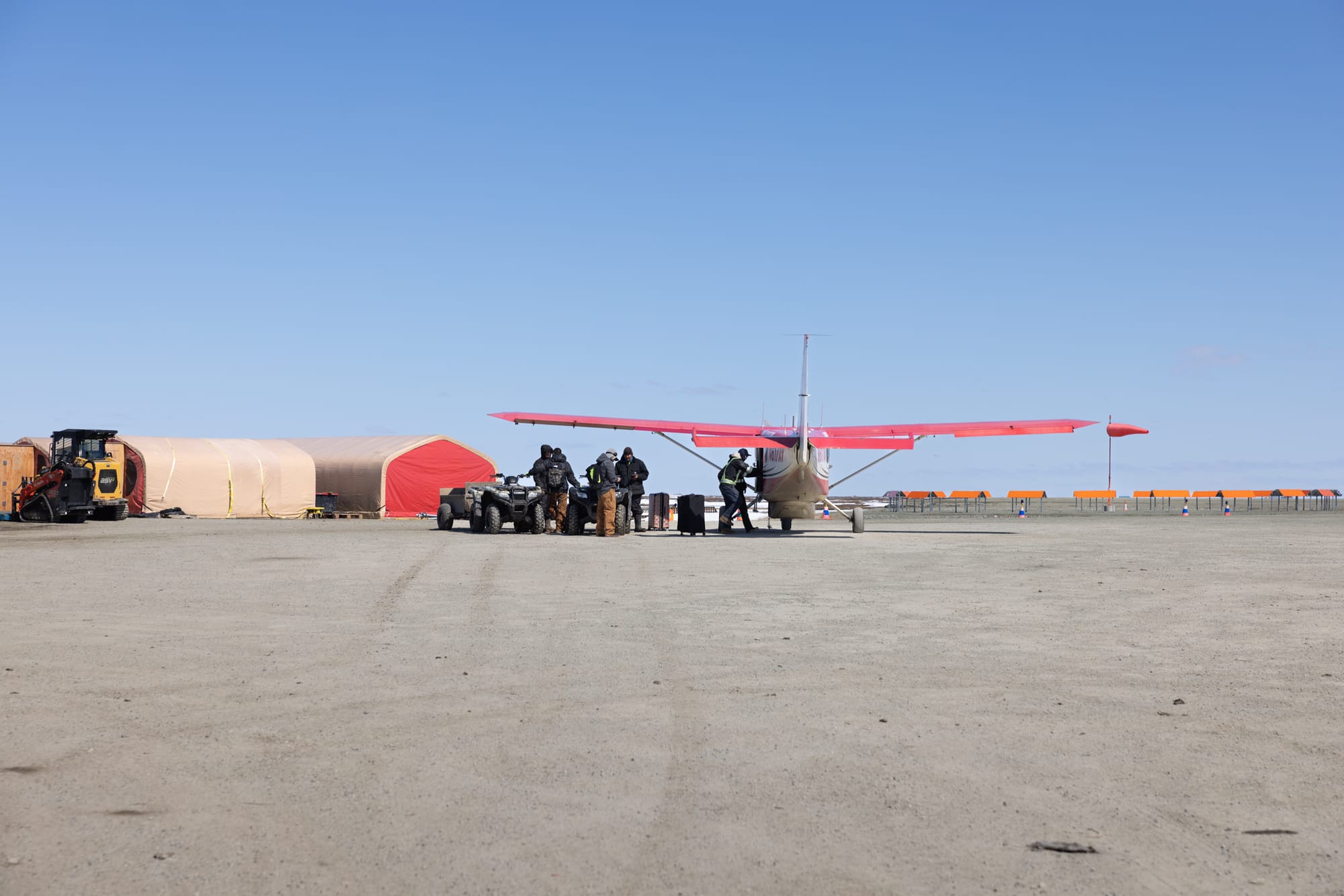
Posters highlighting traditional Yup’ik values and books by regional authors like Elsie Mather and Paul John filled the space, along with a coffee maker, pillows, mattresses and blankets. For the past seven months, the classroom was a dorm room for both men while they worked with contractors to repair homes and village infrastructure.
In this conversation — the first in a series of dispatches on Halong’s survivors — Benjamin and Burt reflect on the difficult night that the storm arrived in October, their lifelong friendship and the reasons they stayed behind.
The discussion has been edited for clarity, and condensed.
Katie Baldwin Basile: Did you ever leave Kipnuk after the typhoon?
Benjamin Kugtsun: No. We stayed here after everybody evacuated, we stayed behind.
Katie: What made you decide to stay?
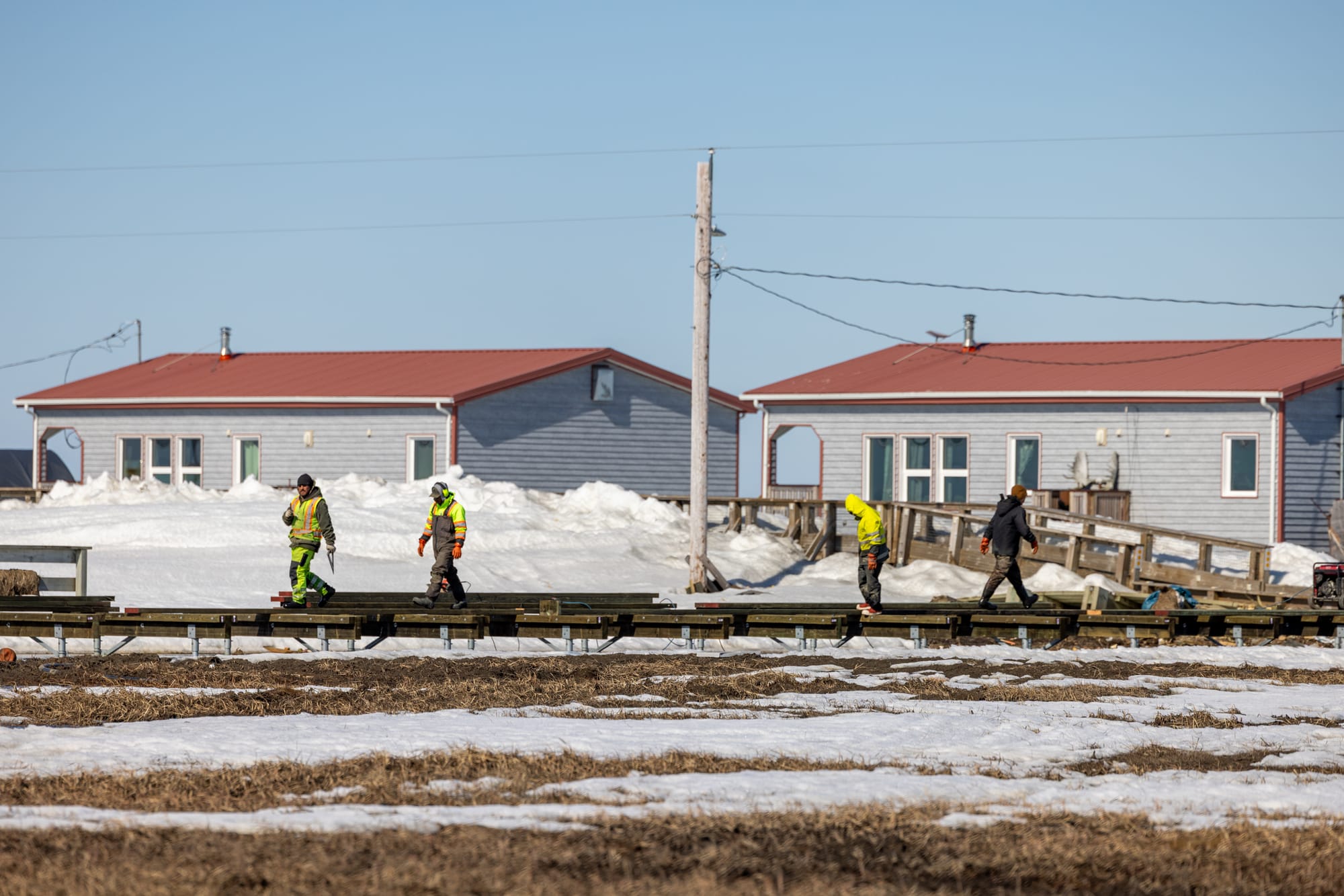
Benjamin: We hoped that it could be a village again. To this day, everything’s going good. Power. Houses are back. There is (some) electricity in houses. It’s livable, it’s getting there.
We worked on foundations. They’re replacing the insulation that got soaked. They’re working at our house that I’m staying in right now. I just need steps, so that’ll be it.
Katie: What made you decide to stay, Burt?
Burt Paul: It’s my hometown, and there’s many reasons that I wanted to stay. One of the reasons: The village was destroyed. I felt that we needed to take care of the village. For example: caskets (that floated away from the cemetery), cleanup. I could name so many things.
With these guys, the 19 men that were staying behind, I had a spark in the hope of rebuilding. And then help (from the state and contractors) started to arrive.
It’s a very hard start. It felt like a new beginning. That very strong hope, and I didn’t want to leave home. Like everyone else, there’s no place like home.
Katie: You guys are cousins and good friends. When it came time to stay or go, did you decide together?
Benjamin: Yeah, we planned. We planned every day: What’s next? What’s got to be worked on? And it worked. And now we can be smiling every day.
People that evacuated are coming back for work, to make money for their family. Pretty soon, Kipnuk people will come back, and the school will be open for the kids — that’s our goal.
Katie: How did you feel when you heard that the village had voted to permanently relocate?
Benjamin: I voted that I’m not going to relocate. Because relocation is — you’ve got to have meeting after meeting to get funding. It’s hard to get there right now. So I said, I’ll stay home, where there’s an airport, school, post office — while they’re standing.
Burt: I also voted to stay, but that vote is weak. Maybe a quarter of the village wanted to stay. But the relocation time estimate is 10 years. [1]
Before that happens, we need this village to operate, to use it for waiting at home, for the new location.
Because not all the people have steady jobs and driver’s licenses. Living in a city is a lot of change for many people. The evacuees are depending on a lot of help — but that help will not always be there. Pretty soon, one is going to be standing alone. Some may be successful with finding a new job, a new home, but not all. [2]
That’s one of the reasons I keep the village running, so (eventually) they can come home and settle-in.
Katie: What was that night the typhoon hit like for you? What do you remember?
Burt: We knew the wind was strong. And then it shifted to the direction of southwest; it pushed the water towards the land. I know it’s flat in Kipnuk, but the elevation is (normally) just high enough. The regular flood that occurs during the fall time usually does not reach my area.
When I started seeing that (Halong) flood coming in, and how strong the current was, I knew it was going to be high.
We started hearing that houses were floating and drifting away, and some people were texting their whereabouts. Seeing and watching a house float by in the dark. Watching my neighbors float away.
All the debris that hit my house made me worried. A couple of conexes hit, but somehow my house stood up, survived.
When I saw water, I prayed to God to hold and keep my house safe. It was a great disaster that changed people’s feelings about coming back to Kipnuk. Who knows if they will change their minds and come back? Some say, after this year’s fall flood (season), they’ll see, because we cannot tell the future. But standing strong and praying for strength is helping a lot, and people’s prayers all over the world. I believe in that.
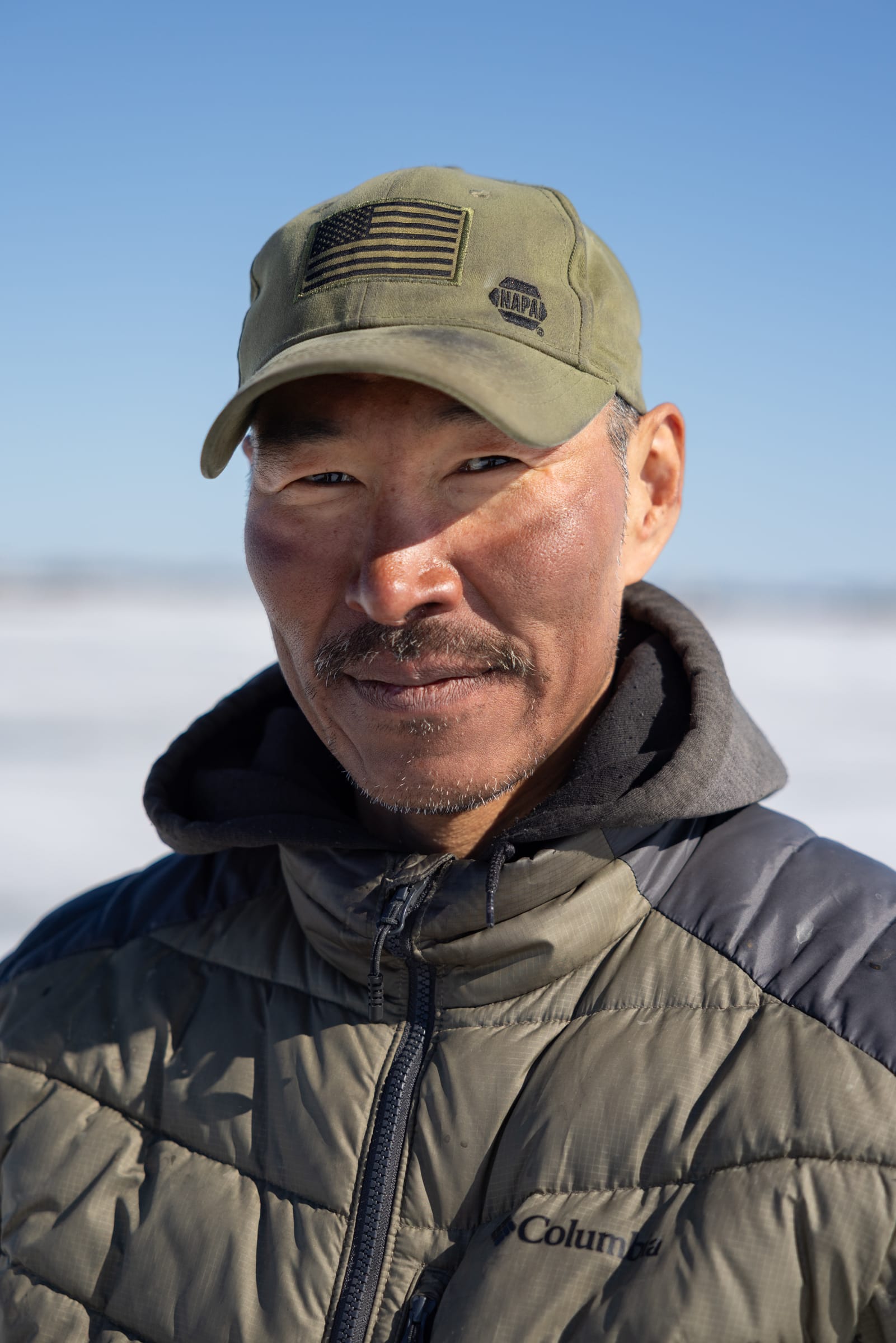
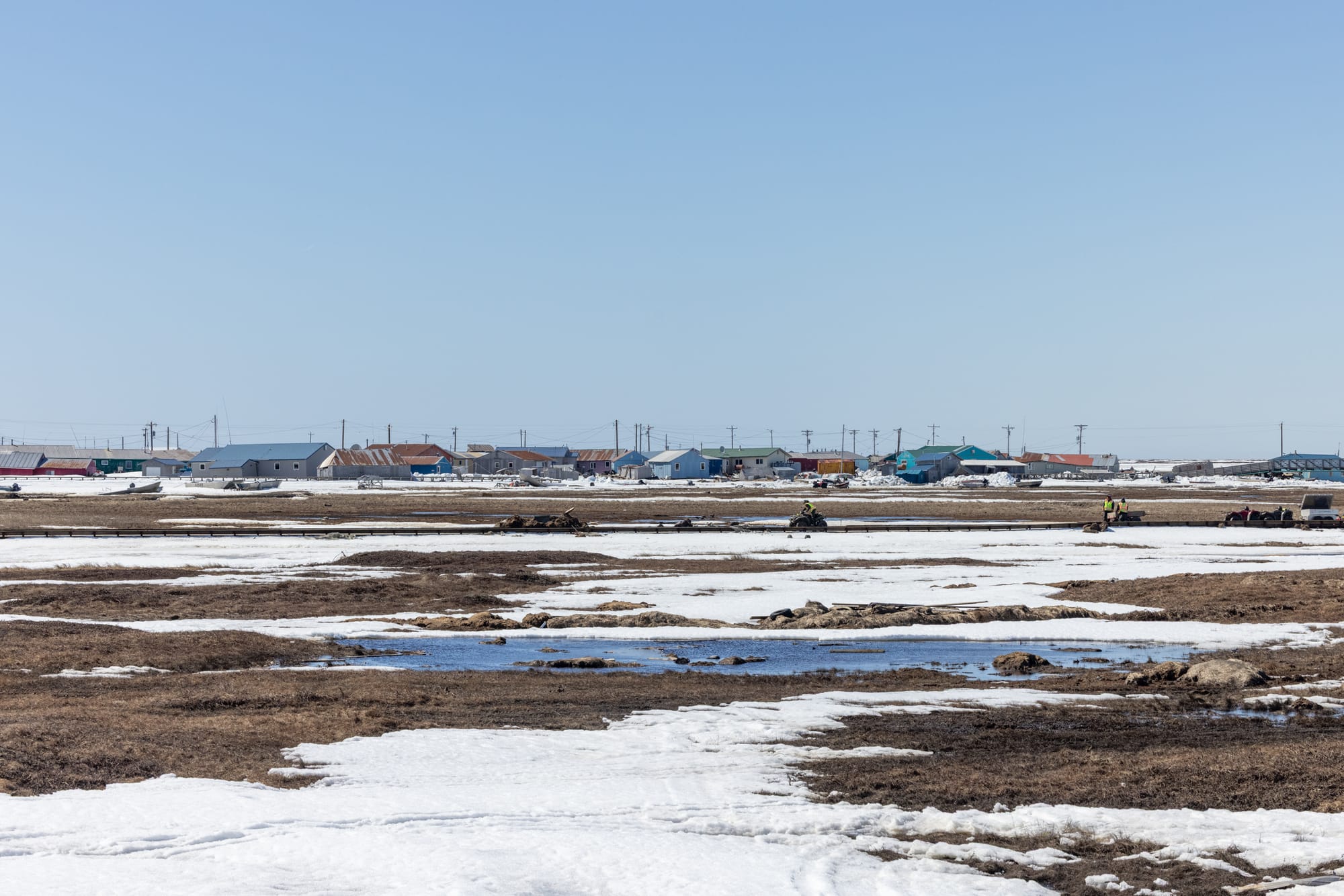
Benjamin: I put three twelve-foot-long boards on my house just in case, so when the water got there, the boards would keep it steady, and not float away. It worked.
When it started floating, those three boards were holding the house in place. But once another house drifted and hit our house from behind, we started floating. If I anchored the house, probably it could have stayed where it was. But I wasn’t ready for that.
We started floating away. Next thing, I looked out the kitchen window with a spotlight, I saw a house coming towards us at about three miles an hour. Man, I yelled at my family, hold on to something.
It hit us and it rocked the house. But good thing, it never broke any windows. It was that close to breaking the window — about two to three inches off. So, we are here.
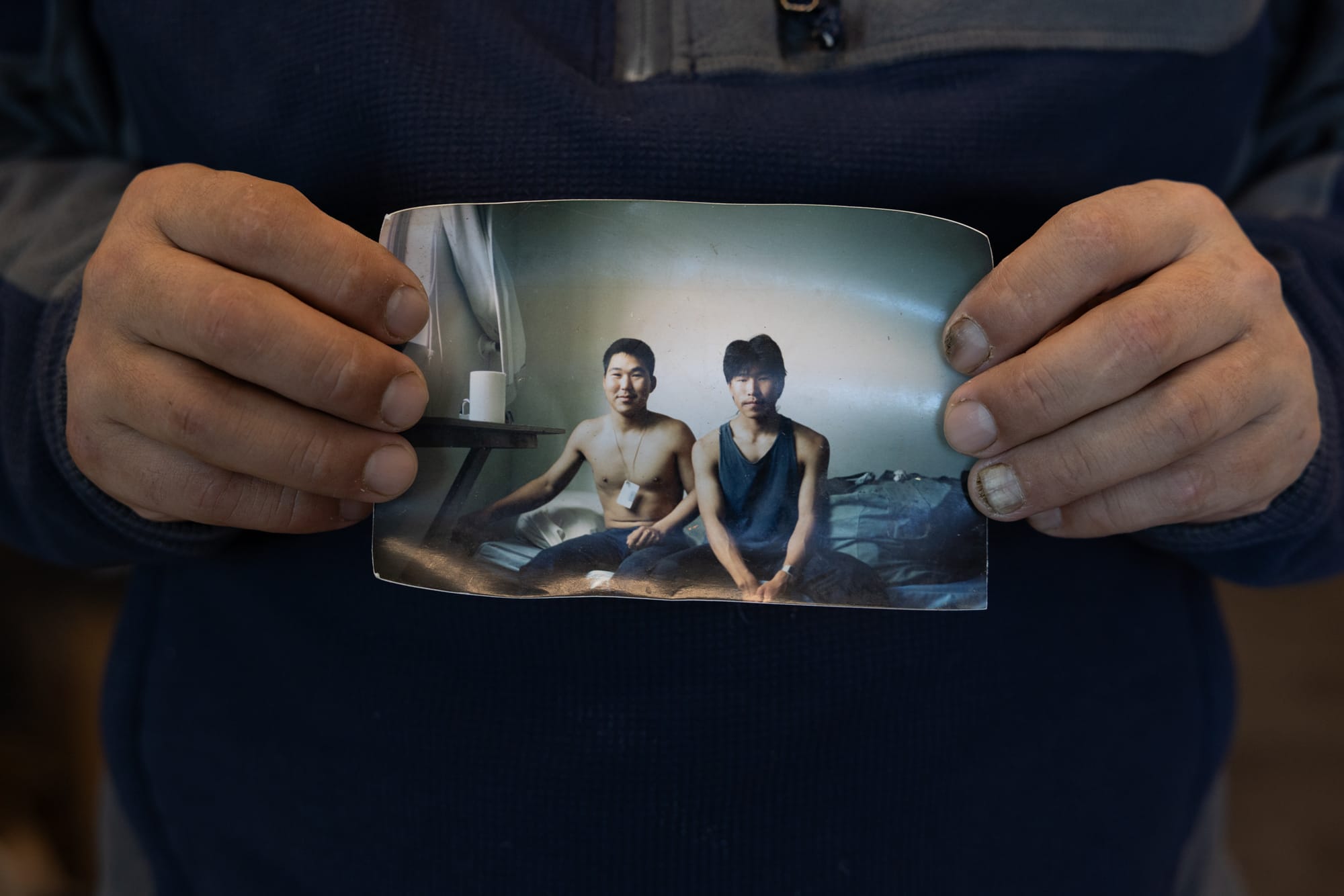
Katie: I’m looking at this photograph of the two of you from when you were much younger, still best friends. Where was the picture that night? And where did you find it?
Benjamin: Oh, the picture of us when we were teens, 18 years old or so.
I had lots of photos that I took out to our old house, because there was no more room and I had to store my stuff. But that old house floated away behind the school where we used to live, and I lost all of the photos.
After the storm, one of the teachers found that picture of us when we were young, on the ground. And when I walked into the school lobby and saw it, I had to take it. And to this day, that picture of us is — we’re still best friends.
Katie: Wow, so this was the only photo of yours that made it through the storm. That’s symbolic, I think, of your friendship.
Benjamin: Now we’re in our 50s or so, still young. We feel like we’re 21.
Katie: Burt, what did you think when you saw that photo?
Burt: It told me that time flies by.
In those younger days, we used to hear from our elders, to expect the unexpected. Because in history, they went through famine, sickness. They went through so much trauma and disaster. I guess this history is ours too.
And they did proceed in success. They would say, you never know what’s coming, but be ready. Be strong. Don’t get comfortable with life’s comforts. Don’t take things for granted.

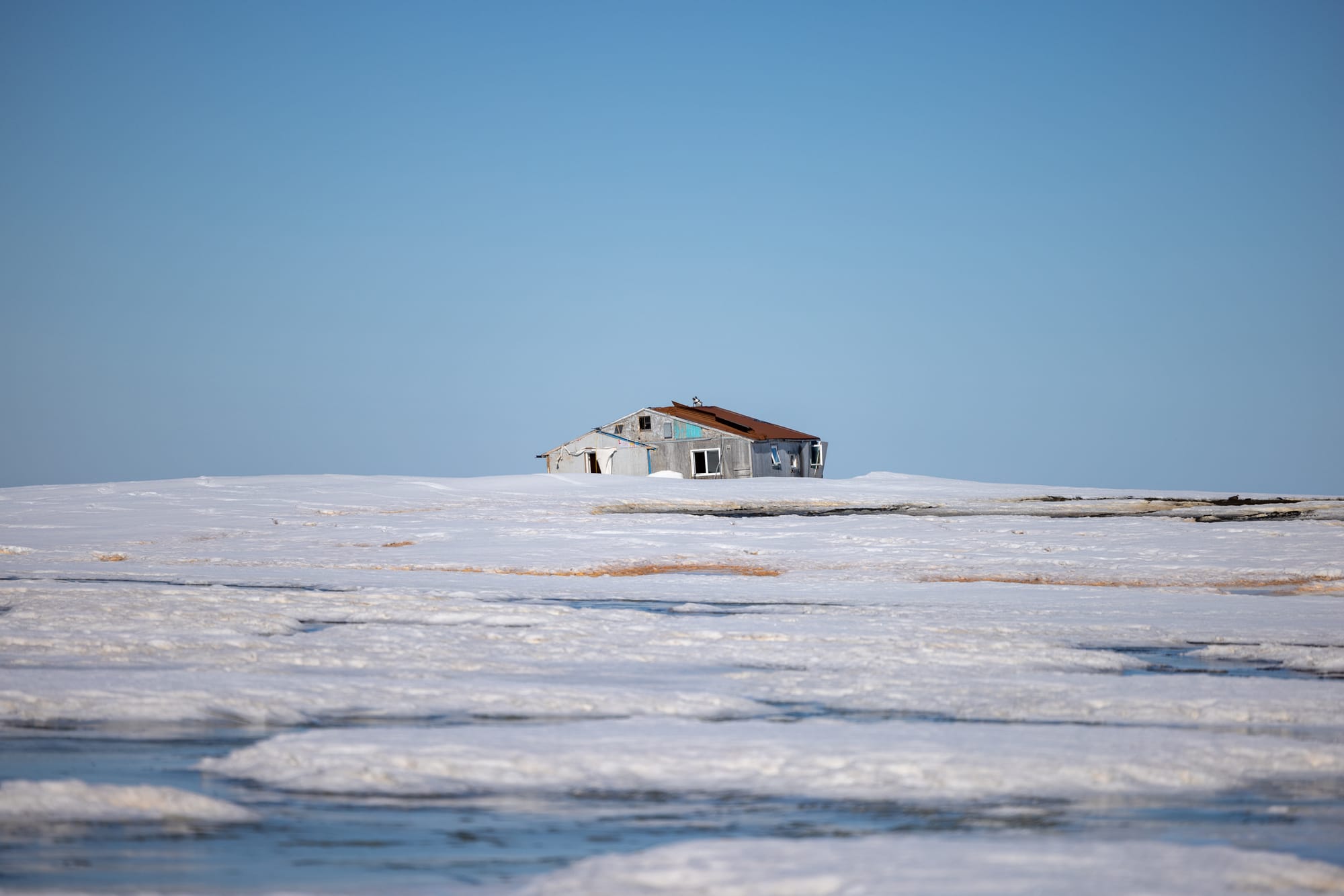
I always remember those things. Wake up early, all those things that elders used to speak of. And be humble. Sometimes thinking too far ahead eats your mind. Like already thinking of relocating. Maybe that day will come. Maybe not, with the world changing.
Yeah, relocating, starting a new life in a good spot, high spot. We have to adjust with the new location. It’s not far. It’s in the same area, 15 miles away. But infrastructure, I don’t know, it will take 10 to 15 years. A new school, airport, laundromat, maybe a road. We’ve got to think of those things before we relocate. We cannot just build a home and expect to live happily ever after. We’ve got to build the infrastructure first.
Katie: Thank you both. Do you want to add anything else?
Benjamin: I’m going to start making Noah’s Ark… (laughter) That’s a joke.
1. Community relocations take decades and there is no specific federally funded program to support them. For example, the community of Newtok recognized the need to relocate their village due to erosion in the 1980s. The Newtok Native Corp. proposed a land exchange agreement with the U.S. Fish and Wildlife Service in 1996. The land exchange was formally signed in 2003. After sixteen years of fundraising and construction, the first families moved to the new village of Mertarvik in 2019. The final families moved there in 2024, nearly 30 years after the initial land exchange proposal.
2. Roughly 680 community members from Western Alaska were living in temporary housing within Anchorage and surrounding areas as of earlier this spring, according to the Alaska Division of Homeland Security and Emergency Management.
This article was originally published in Northern Journal, a newsletter from Nathaniel Herz. Subscribe at this link.

Long before he became the voice of college football Saturdays on FOX, Joel Klatt made a decision that only makes sense to anyone who grew up playing EA Sports College Football. During his freshman season at Colorado, Klatt was given No. 14 as a walk-on quarterback. He eventually had the opportunity to change it before becoming the Buffaloes’ starter the following year. He never did. The reason? He knew the video game would have Colorado’s starting quarterback wearing No. 14. Now, 23 years later, Klatt is the new color commentator in EA Sports College Football 27. We caught up with Klatt to get a behind-the-scenes look at how he became the voice of the game. What’s the story behind you becoming the voice of the new EA Sports college football game, and what was the process like from that first conversation to officially landing the role? The process was actually painless. EA contacted my agency, and they did a great job of fostering that relationship. It was pretty well set before I even knew about it. I was incredibly excited. We had a Zoom with some of the executives at EA, and from that point, we signed the deal and started scheduling recording sessions. You’ve spent years calling college football games. How different is it recording commentary for a video game versus calling a game in real-time on a college football Saturday? It’s so different calling games for the video game. I would spend all day in one recording session just calling touchdowns. You’re not actually calling a game in sequence. You’re just trying to just take each situation for its own and give a line for that situation. Typically, each situation will have variables. You can talk about the defensive perspective, the offensive perspective, or the player perspective. It was very different and very compartmentalized, but it was certainly a cool experience. What was your familiarity with this game and was there a “this is actually happening” moment for you? I’m very familiar with the game. I’ve got three boys — 14, 12 and nine. They play the game. I played the game when it had its previous version. In fact, when I was playing at Colorado, they just gave me the number 14 when I walked on, and I had the option to switch my jersey number before my sophomore year, which was going to be my first year as the starting quarterback. But I didn’t change my number because I knew the game would have my No. 14 as the starting quarterback at Colorado. I’ve loved the game for a long time, and there was certainly part of me that, as I was recording, was thinking to myself, ‘I can’t believe I’m actually doing this.’ What actually went into becoming the voice of the game — from the recording sessions, to the scripting, to trying to make reactions sound natural for so many different in-game moments? We did a lot of hard work. My first question to the folks at EA was if there was going to be AI support. They made it very clear that this was all going to be essentially manual. I would have recording sessions two hours at a time, and since they were based in Orlando, they came out and set up a little sound booth in my house. I would get on Zoom two to three times per week, typically at 6 a.m., and we would go through our sessions. I wanted to get in as many sessions as I could possibly get in before the game went to market. This was a lot of hard work. I think we ended up doing close to 90 hours of recording and thousands of lines, but it was certainly fun. They would send me a script, and the script was basically just situations. I didn’t think I would do well just reading lines, so I started just getting situations. I would talk about the offensive line, the running backs fighting for extra yards and being able to move the chains. And that’s how it went. With everything you learned working on the game, if you had to pick one team right now to win a national title in EA Sports College Football 27, who are you taking and why? From what I know about the game and some of the player ratings after the transfer portal, I know that Ohio State is going to be very good in the game. I think Indiana is going to be very good. I know Oregon is going to be very good, and Texas. Basically, they kind of nailed what a preseason top 10 would look like. So, any of those teams, I think, will have a great chance to win a national championship. Where does becoming the voice of this game rank among the coolest experiences you’ve had in your career covering college football — and did it hit you at any point just how big of a deal this is for fans? I’ve been so fortunate in this career, and done a lot of incredible things, even outside of college football. I got to call the U.S. Open and interview the players after they finished 18 at Pebble Beach. That was incredible. I’ve done studio shows at the Super Bowl when I was a host. I’ve called Big Ten championship games and Michigan vs. Ohio State. I will tell you that this absolutely ranks up there as one of the highlights of my career. It’s such an iconic brand and game. They do such an incredible job honoring college football. They love college football, and to be a part of that team and to further something that is really special in our space is a real highlight. It’s certainly one of the best things that I’ve ever done in my career. This is very cool.Latest Sports News from FOX Sports