At 93, Dame Joan Collins has held onto her youthful looks and attitude in a way that’s fascinating the public, as evidenced by these iconic red carpet looks.

Health Digest – Health News, Wellness, Expert Insights









At 93, Dame Joan Collins has held onto her youthful looks and attitude in a way that’s fascinating the public, as evidenced by these iconic red carpet looks.
Health Digest – Health News, Wellness, Expert Insights

Nearly 1 in 5 felony cases filed in Denver and resolved in 2025 was dismissed with no strings attached.
For misdemeanor cases, the rate was 1 in 4.
A criminal case might be dismissed for a variety of reasons. Sometimes, evidence falls apart. Law enforcement, prosecutor or lab errors can similarly derail a case. Or perhaps prosecutors decide that pursuing it no longer serves the interests of justice. These situations are a normal, inevitable and sometimes even desirable aspect of the legal system.
But other times, cases get dismissed because the system lacks the bandwidth to hold onto them. Heavy caseloads in prosecutors’ offices can lead to more of these dismissals, according to my recent research.
I am a professor who studies prosecutorial policy and decision making. I am also a co-manager of Prosecutorial Performance Indicators, a research and technical assistance project that collaborates with prosecutors’ offices across the country to promote transparency, equity and data-informed policy. Between 2021 and 2024, my research team partnered with elected district attorneys throughout Colorado to produce data dashboards that show statistics on criminal cases and outcomes.
My colleague Don Stemen and I then used data from that project to investigate how prosecutors responded to weekly fluctuations in their criminal caseloads. Weekly caseloads can vary by as much as 15% above or below the average across weeks in a Colorado judicial district, with a mean change of 6%. Our research shows that in weeks when active caseloads are higher, fewer cases get resolved via a plea deal. Instead, dismissal rates rise to compensate.
In other words, as cases pile up, more of them end up getting dropped.
In the American legal system, which relies on plea deals, guilty pleas account for an estimated 95% of criminal convictions across the country. Trials, though constitutionally guaranteed, are rare.
However, a notable share of cases do not result in a conviction at all.
Once a prosecutor has decided to file charges, cases can follow several pathways other than guilty plea or trial. Defendants may be screened for diversion programming, which redirects eligible individuals away from conviction and toward rehabilitative services, such as substance use or domestic violence offender treatment. They may also receive a deferred judgment, in which they initially plead guilty but avoid formal conviction if they can successfully complete conditions such as community service hours, counseling and remaining arrest-free for a set period of time. Other defendants see their cases dismissed outright by either a judge or prosecutor.
Across the half-million cases in our Colorado sample, about 45% were resolved in one of these alternative ways that avoided a criminal conviction.
Our sample includes all felony and misdemeanor cases resolved in 19 of Colorado’s 23 judicial districts between 2021 and 2024. Data was extracted from Action, the case management system used by prosecutors’ offices across the state, and shared by the Colorado District Attorneys’ Council.
Information from individual, public-facing data dashboards in the state show a similar reliance on alternatives to conviction. In the 20th Judicial District, which is Boulder, for example, 34% of felony cases resulted in a dismissal, diversion or deferred judgment in 2025. That was true for 50% of misdemeanors as well.
For misdemeanors in particular, this represents a 10% decline in the conviction rate in Boulder in just five years. It suggests that hundreds of defendants in less serious cases who would previously have been convicted now receive a different outcome each year.
Outright dismissals make up the bulk of misdemeanor nonconvictions in many jurisdictions. In the 18th Judicial District, which includes most of Aurora and Centennial, 56% of misdemeanor cases did not result in a conviction in 2025. Of those nonconvictions, 77% were dismissals.
Colorado’s dismissal rates do not appear to be outliers. Most prosecutors’ offices do not make their data available to researchers or the public, but more than 50% of all cases are routinely dismissed in some urban areas that do, such as Milwaukee and Philadelphia.
Prosecutors’ offices in Colorado are battling staff recruitment and retention shortages, with attorney vacancy rates above 50% in some offices.
Consequently, prosecutor caseloads have more than doubled in jurisdictions such as Golden, Colorado’s 1st Judicial District, where each prosecutor opened an average of four more felony cases or 122 more misdemeanor cases than they closed in 2025.
The rise of digital evidence, everything from body-worn camera footage to social media activity, has further increased the time and technology investment required to prosecute. Monthslong turnaround times for forensic testing create additional trouble, forcing prosecutors to proactively prioritize some cases for lab analysis over others.
Prosecutors’ offices across the U.S. are similarly struggling to hire and keep lawyers as they continue to grapple with technological challenges and case backlogs triggered by court closures during the COVID-19 pandemic.
In Anchorage, hundreds of cases were dismissed because there were not enough prosecutors available to move them toward trial in 2024. In 2019, the passage of Kalief’s Law, which established stricter evidence disclosure requirements for prosecutors, sent misdemeanor dismissals caused by failure to meet trial deadlines skyrocketing from 9% to 48% within five years in New York City.
Case dismissals triggered by a lack of resources could be construed as the recalibration of a historically punitive legal system. Dismissing more cases, especially low-level cases involving defendants with little to no criminal history, may benefit society more than maintaining high conviction rates. After all, it is expensive to be tough on crime, and the evidence that mass conviction and incarceration improves public safety is thin at best.
Even so, these dismissals are symptomatic of a system in crisis. There are too many cases and too few resources to handle them.
If prosecutors’ offices are able to implement more rigorous early case screening, they are likely to eliminate weak cases faster and with less resource expenditure. This may be particularly effective if prosecutors also use their discretion to decline more undeserving cases up front, treating the use of taxpayer dollars on prosecution as something that requires deliberate justification rather than something that happens by default.
Research suggests that greater selectivity at early stages of prosecution reduces caseloads more efficiently than dismissals later on. Selectivity also spares defendants and victims from the prolonged uncertainty of a lingering case. Though moves in this direction would require an up-front investment by prosecutors’ offices, the long-term benefits may be well worth the effort.
Read more of our stories about Colorado.
Rebecca Dunlea receives funding from the Microsoft Justice Reform Initiative and the John D. and Catherine T. MacArthur Foundation.
Politics + Society – The Conversation
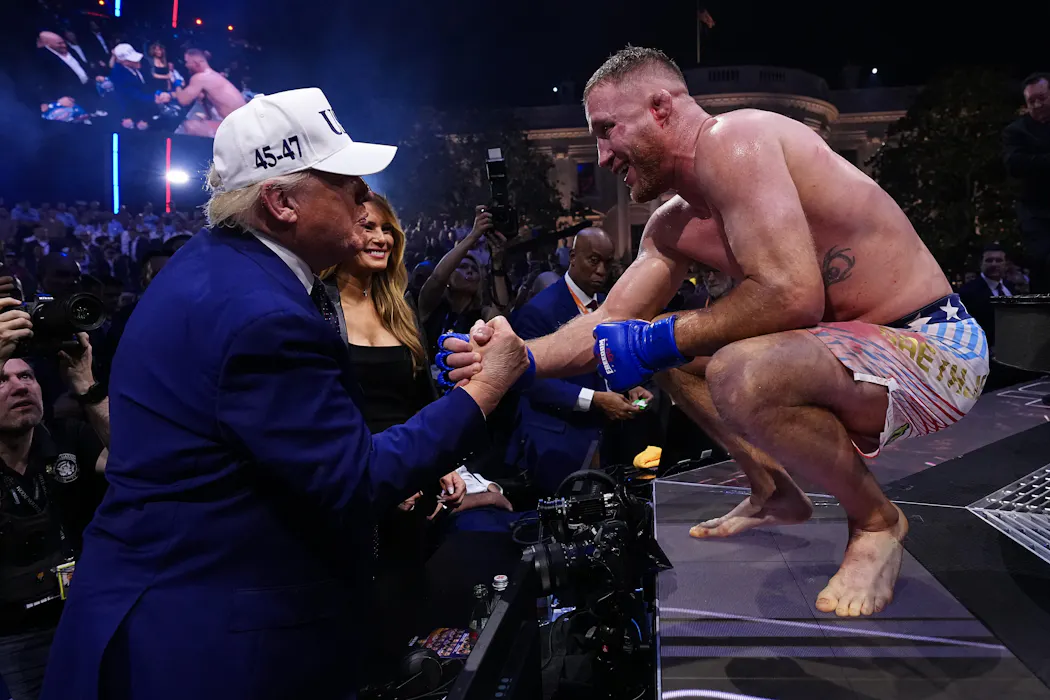
Throughout history, rulers and political movements have used public spectacles of combat to evoke courage, sacrifice, collective strength and national purpose. From Roman gladiator contests to modern mixed martial arts, combat spectacles have served not merely as entertainment but as public rituals through which people experience belonging to something larger than themselves.
When President Donald Trump proposed staging a UFC championship event on the White House grounds as part of America’s 250th anniversary celebration, many observers treated it as another example of his affinity for spectacle and mixed martial arts, or MMA, a combat sport combining striking and grappling techniques from multiple martial arts disciplines. Yet the symbolism runs deeper than a president’s taste for theatricality and combat sports.
I’ve spent decades studying why people are willing to fight, sacrifice and even die for causes, and I see such spectacles illuminating an important psychological process known as identity fusion.
People belong to groups: families, nations, religions, professions, political movements, sports teams. Usually, these identities remain distinct from the personal self.
Identity fusion occurs when that boundary disappears. People do not just support a group – they experience it as an inseparable part of who they are. The group’s successes and failures become personal; threats to the group are experienced as threats to oneself.
The important question isn’t just what happens inside the cage – it’s what such spectacles can do for the audience. Public displays of courage, endurance and sacrifice can strengthen emotional bonds among spectators and deepen identification with the groups, causes or leaders they associate with those displays.
Research with soldiers and other front-line fighters in Iraq and Afghanistan, supporters of Ukraine, Palestinians in Gaza, Taiwanese concerned about a Chinese invasion, and participants in extremist movements shows that identity fusion predicts willingness to endure hardship, accept risk and make sacrifices for a collective cause.
This process does not necessarily produce violence. It can motivate volunteerism, mutual aid, military service and resistance to oppression.
It helps explain how public rituals that celebrate courage, sacrifice and collective strength can deepen commitment to groups, causes and leaders under conditions that appear irrational from a purely material perspective.

One of the strongest pathways to identity fusion is shared hardship. People who endure danger, suffering or intense challenges together often emerge with unusually strong bonds.
Combat sports play into this dynamic. Fighters publicly test themselves against pain, exhaustion, fear and possible defeat. Spectators witness not simply athletic competition but symbolic demonstrations of courage and endurance. The attraction lies partly in how character is being revealed under pressure.
For ancient Romans, gladiators embodied “virtus” – courage, discipline, endurance and willingness to confront death. Their appeal stemmed not merely from violence but from values they represented.
Modern mixed martial arts is often celebrated in similar terms: a proving ground for toughness, resilience and self-mastery.
In both cases, physical contests become moral dramas about sacrifice and human limits.
The significance of combat sports extends beyond professional competition.
Across Europe and North America, mixed martial arts has become a focal point for segments of the contemporary far right. Organizations known as Active Clubs, now found in countries including the United States, Germany, Sweden, France and Britain, combine physical training with ethnonationalist activism, including recruitment, ideological indoctrination, public demonstrations and transnational networking among ethnic – particularly white – nationalist groups.
Gyms provide venues for recruitment and networking, but their deeper significance is psychological. Training and enduring hardship together and testing oneself before peers generates forms of trust and solidarity difficult to reproduce online. Political commitment becomes literal and embodied.
This helps explain why mixed martial arts has acquired unusual importance within transnational, ethnonationalist networks. Activists from different countries may possess distinct national identities, yet they recognize one another through a shared culture of physical discipline, masculine camaraderie and readiness for struggle. Combat sports provide a symbolic language that transcends borders, reinforcing a broader civilizational identity.
In this respect, mixed martial arts performs a role similar to military training camps, revolutionary youth movements and fraternal organizations in earlier eras. It creates bonds simultaneously local and international.
The Roman emperor Nero was unusual not because he sponsored gladiatorial games – many emperors did – but because, as historian Thomas Wiedemann observed, he openly identified with the arena’s culture. Rather than maintaining aristocratic distance, Nero linked his public image to the virtues and popularity of spectacle.
Something similar occurs whenever political leaders align themselves with combat sports. The significance lies less in the sport itself than in what the spectacle symbolizes. A combat event staged as part of a national celebration transforms athletic competition into a ritual of collective identity and public values.
The White House UFC event was especially revealing because it linked a combat spectacle to the commemoration of the American republic’s 250th anniversary and to Trump’s own 80th birthday. Symbolically, it joined nationhood, leadership and martial virtue in a single public performance.
The symbolism also intersects with recent calls by administration officials, including the newly dubbed “secretary of war” Pete Hegseth, to restore a “warrior ethos” to U.S. military and civic life. The warrior becomes not merely a soldier but an ideal citizen: disciplined, courageous, physically formidable and prepared for sacrifice.

Mass rallies, military parades, religious pilgrimages, revolutionary festivals and combat spectacles can all produce moments in which individuals feel absorbed into something larger than themselves.
Such experiences do not automatically lead to political extremism. Most do not. But they help explain why people become deeply attached to groups and causes that provide meaning, belonging and a sense of shared destiny.
Spectacular public rituals – especially those involving violence and pain – often evoke what British political philosopher and politician Edmund Burke called “the sublime”: intense experiences of danger, terror and grandeur that transform fear into exaltation before overwhelming power.
The attraction of combat spectacles lies not merely in violence or entertainment. Their enduring power comes from transforming individual contests into collective stories of courage, sacrifice, identity and purpose. They reveal a fundamental human desire not only for security and comfort, but also for struggle, significance and belonging – as George Orwell observed in 1940 when reviewing the allure of Hitler’s autobiography, “Mein Kampf.”
In an age when established political institutions and movements command diminishing loyalty, combat spectacles provide more than excitement. They create communities of feeling and, under the right conditions, powerful engines of political commitment.

Scott Atran previously received funding for related research from the U.S. Department of Defense, the National Science Foundation, the Carnegie Corporation.
Politics + Society – The Conversation
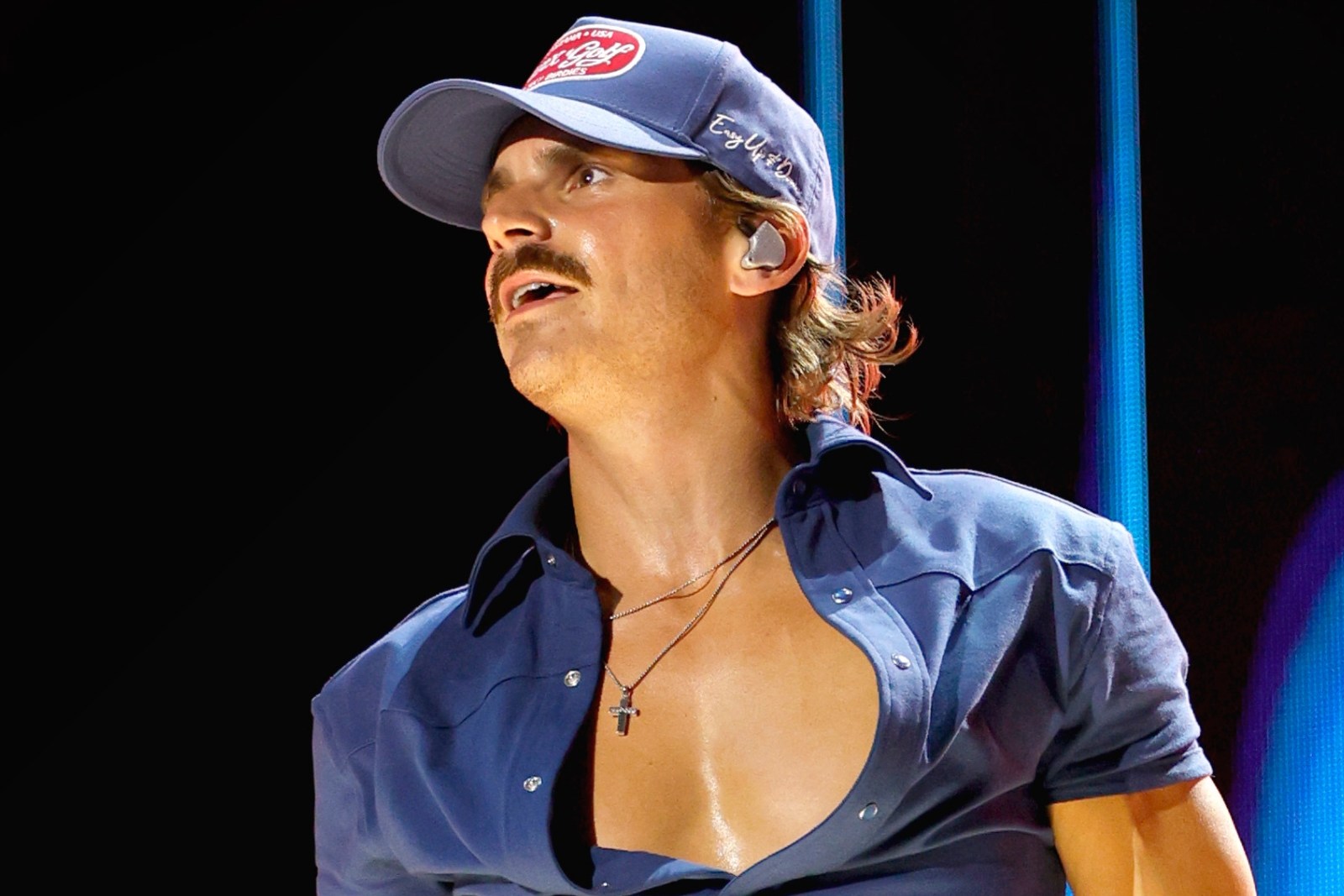
Love Tucker Wetmore? You can thank his mom, and a Subaru Legacy, for getting him to Nashville. Continue reading…The Boot – Country Music News, Music Videos and Songs
Love Tucker Wetmore? You can thank his mom, and a Subaru Legacy, for getting him to Nashville. Continue reading…Country Music News – Taste of Country

If you’re eyeing the burger bar while out to sea, we have two reasons you should skip it altogether. We don’t want you to spend your vacation in the bathroom.

Mashed – Fast Food, Celebrity Chefs, Grocery, Reviews
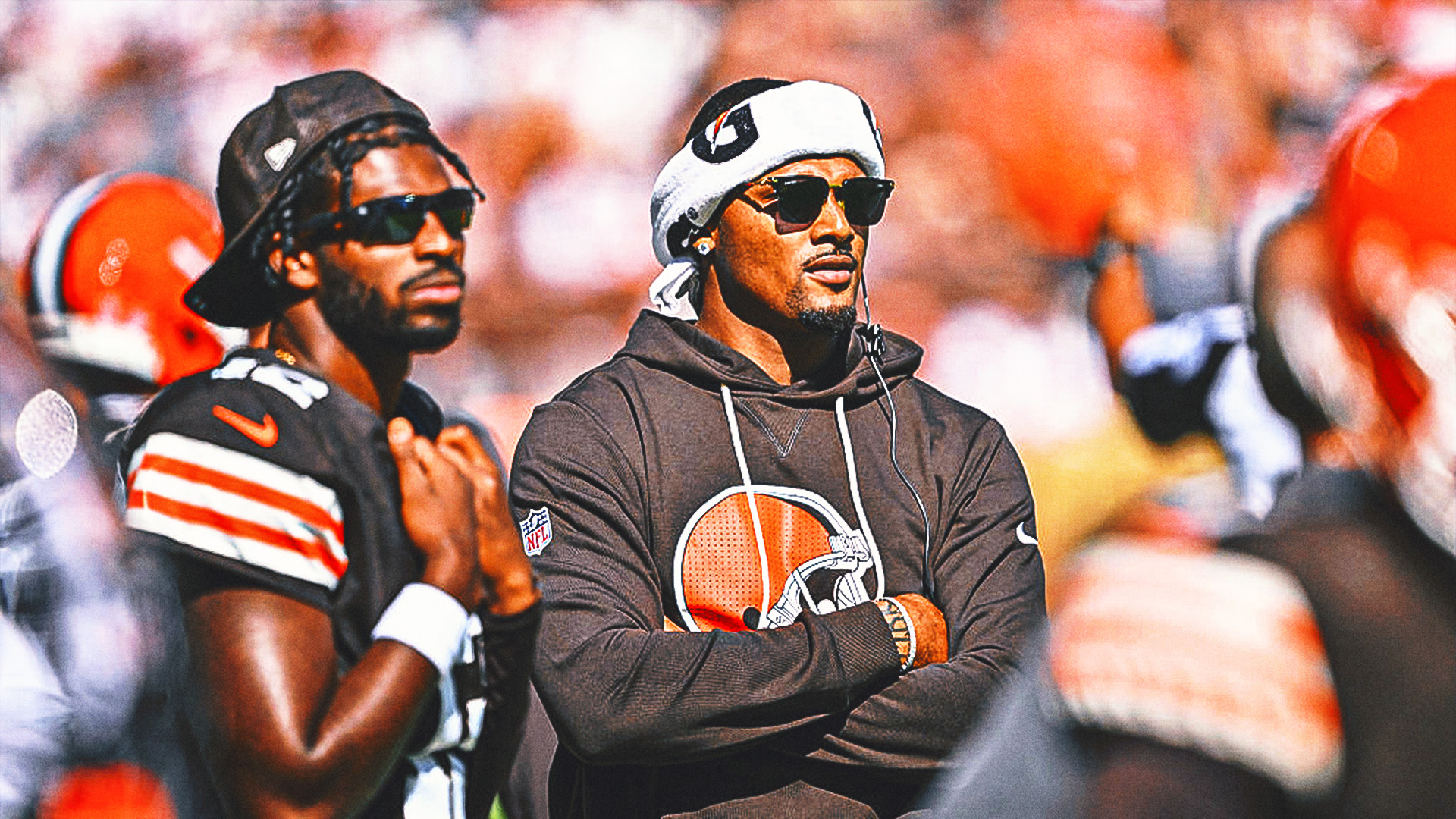
With minicamps wrapping up around the NFL, it’s a fitting time to check in on the most intriguing quarterback competitions. After conducting a deep dive on each situation, here are my thoughts on the league’s best battles. The battle between the former No. 1 overall pick and the Vikings’ intended franchise QB could determine whether the team re-emerges as a title contender in 2026. While Kevin O’Connell has attempted to split the reps evenly to give each player a chance to seize the job, the noise around the Vikings suggests Kyler Murray is the frontrunner heading into training camp, particularly after Justin Jefferson raved about the eighth-year pro’s talent and experience before minicamp. The 2019 Offensive Rookie of the Year is coming off a disappointing 2025 campaign that was cut short by a foot injury, but he has flashed elite potential as a dual-threat playmaker with 20,000-plus passing yards, 3,000-plus rushing yards and 153 total scores on his résumé. J.J. McCarthy has started (and appeared in) just 10 games since his 2024 arrival as the No. 10 overall pick. After missing his rookie season because of a torn meniscus, he posted a 6-4 record last year but completed just 57.6% of his passes for 1,632 yards with 11 touchdowns and 12 interceptions. While those pedestrian numbers do not jump off the stat sheet, McCarthy did flash enough intriguing playmaking potential for the Vikings to remain optimistic about his future as a QB1. The third-year pro has not played enough to deserve an obituary as a player, but his inexperience and immaturity might prevent Minnesota from making a playoff push in 2026. Best Fit: Murray The former Pro Bowler is the most talented quarterback KOC has coached in Minnesota. As an electric dual-threat playmaker, Murray adds an explosive dimension to the offense as a big-play weapon who can produce highlight-reel-worthy plays inside and outside the pocket. With a supporting cast that features a premier WR1 (Jefferson) and a collection of complementary playmakers (Jordan Addison, T.J. Hockenson, Jauan Jennings and Aaron Jones) who will allow him to operate like a pass-first point guard leading a fast break, the Vikings can operate in attack mode with a dynamic athlete at the helm. Moreover, their creative play-action passing game and shotgun “RPO” (run-pass option) package should expand with a twitchy playmaker at the controls. If Murray can shake the injury bug that forced him to miss most of the 2022 (torn ACL) and 2025 (foot injury) seasons, the Vikings have upgraded the position with a more dynamic passer and runner leading the show. The competition between a three-time Pro Bowler and a polarizing second-year pro has the “Dawg Pound” clamoring for an answer before training camp. Although new head coach Todd Monken wanted to wrap up the competition before the preseason kicked off, the strong performances from each player have led to an extended battle that will continue through the first few weeks of training camp. To the surprise of many, Deshaun Watson has a legitimate opportunity to win the starting job after being summarily dismissed by Browns owner Jimmy Haslam a season ago. The veteran has benefited from the arrival of a new head coach who fondly remembers Watson’s spectacular moments in Houston. Given his dominance as a Texan (three-time Pro Bowler with a pair of 4,000-yard seasons), it is easy to see why the grizzled coach is smitten by Watson’s talent despite his struggles in Cleveland. At his best, Watson has been an elite quarterback who has flashed MVP-caliber potential, directing a spread offense that allowed him to push the ball downfield to a collection of speedsters and big-play merchants who thrived at tracking down deep balls. Despite starting his NFL journey at the bottom of the Browns’ depth chart, Shedeur Sanders finished 2025 as the team’s starter following an eight-game run that featured a mix of heroics, highlight plays and humble pie that will keep his supporters and detractors standing firm with their positions. The Pro Bowl alternate finished with a 56.6% completion rate, 11 touchdowns and 12 interceptions, while occasionally sparking a dormant offense with a fearless approach. Although his big-play hunting ultimately led to several negative plays (sacks and turnovers), Sanders also ignited the offense with downfield throws. He will need to improve his risk assessment and management skills to help the Browns improve significantly under his direction. Perhaps more game experience and first-team reps will lead to better individual and team results in 2026. Best Fit: Watson Despite facing long odds and an uphill climb to re-emerge as the Browns’ QB1, Watson is well-positioned to land the starting role based on his experience and schematic fit. As an accomplished quarterback with 72 career starts and a high-arcing deep ball, the 10th-year pro could help the Browns become the big-play machine Monken envisions with a revamped pass-catching corps possessing the size, speed and explosiveness to win their one-on-one battles on the perimeter. If Watson can shake off the rust that has accumulated from his extended layoff due to injuries and a suspension, the veteran could thrive in a collegiate-styled offense that features more spread and “Air-Raid” concepts that showcase his strengths as a quick-rhythm passer with a lethal deep ball. With Kevin Stefanski taking over as the Falcons’ new head coach, the offense will likely shift to more play-action, under-center concepts that complement a dynamic running game with Bijan Robinson as a centerpiece. Michael Penix Jr. was expected to take over as the franchise quarterback based on his anointed status as a top-10 pick in 2024. The left-handed gunslinger has shown promise as a part-time starter with 12 career starts under his belt, but a torn ACL threatens to keep him sidelined until the beginning of training camp. While Stefanski has kept the door open to a quarterback competition, the lack of offseason repetitions in a new system will prevent him from building on the positive flashes (2,757 passing yards, 12 touchdowns and six interceptions) he has displayed as a potential franchise player. Tua Tagovailoa came over on a cheap deal (signed for the $1.3 million veteran’s minimum) after being dumped by the Miami Dolphins following a disappointing 2025 campaign. Despite his recent struggles, the streaky passer has posted the NFL’s second-highest completion rate (68.6%) since 2021, directing a quick-rhythm passing game that helped him sometimes pile up gaudy stats while tossing the ball to a world-class track team on the perimeter. With the Falcons featuring an all-star collection of playmakers on the perimeter, Stefanski is hoping a change of scenery can help Tagovailoa rediscover his magical pocket passing skills this season. Best Fit: Tagovailoa Tagovailoa’s quick release and pinpoint passing skills make him a perfect fit in an offense that prioritizes accuracy and ball placement. The veteran peppers the strike zone with various throws that enable his pass catchers to shine as “catch-and-run” playmakers in a “grip it and rip it” scheme. Although the Falcons will utilize more traditional under-center concepts with various play-action fakes that require Tagovailoa to turn his back to the defense, the veteran’s savvy and experience should make the transition easy for him. Considering he led the NFL in passing yards (4,624) in 2023, the Falcons are well-positioned to shoot to the top of the division if Tagovailoa finds rhythm and confidence early in the season. The Raiders’ quarterback situation is more of an apprenticeship than competition, with Kirk Cousins serving as a mentor to Fernando Mendoza while the rookie acclimates to the pro game. As a former Pro Bowler who has flourished under Klint Kubiak, Cousins is the perfect role model because of his comparable playing style to Mendoza’s and the veteran’s success in the system. Cousins, in fact, enjoyed the best three-year run of his career with Kubiak serving as his QBs coach and then OC from 2019 to 2021. During that span in a Shanahan-style system, Cousins threw for 12,089 passing yards and 94 touchdowns with a 67.6% completion rate. Those eye-popping numbers made it easy for Kubiak to target him as a bridge quarterback to lean on until Mendoza is ready for a bigger role. The rookie is the mature prospect every coach wants to develop into a franchise QB. As a big-game performer with a knack for coming through in the clutch, the 2025 Heisman Trophy winner is built for the bright lights and big stage of the NFL game. History has shown, however, that a patient approach with young quarterbacks often yields solid results, particularly when they can sit back and learn before jumping into the fray as a starter. Given how well the process worked for the Raiders’ minority owner (Tom Brady), it is sensible for the franchise to utilize a similar plan for their QB1 of the future. Best Fit: Cousins The veteran’s success and belief in the system should make him the 2026 starter for the Raiders. Cousins not only played at an elite level for multiple seasons within the scheme but also earned Pro Bowl recognition while leading his teams to playoff appearances during that span. Although the veteran is no longer at the top of his game, his experience, expertise and management skills make him the perfect leader to guide Las Vegas and its future franchise quarterback through the rebuilding process. With Kubiak handpicking Cousins to be the mentor for his young quarterback, the only way Mendoza starts Week 1 will be due to injury or a markedly superior preseason performance from the rookie.Latest Sports News from FOX Sports

Read on to sink your teeth into 15 uncommon Southern food combinations that actually taste delicious. You may even find your new favorite snack or meal.

Mashed – Fast Food, Celebrity Chefs, Grocery, Reviews

Ever crack an egg into a pan only to notice the white looks a little cloudy? It might look a bit strange, but here’s what that actually means.

Food Republic – Restaurants, Reviews, Recipes, Cooking Tips

When a recipe calls for softened butter, but your plans change unexpectedly before you get to mixing, can you salvage the butter for a do-over?

Mashed – Fast Food, Celebrity Chefs, Grocery, Reviews