One of Juneau’s two state House races this year is set to be competitive as four-term Democratic incumbent Andi Story is being challenged for the District 3 seat by Annette Kreitzer, a state administration commissioner under two Republican governors who more recently served as the borough manager in Haines.
Kreitzer’s filing as a Republican for the District 3 seat — which represents the northern part of Juneau as well as surrounding communities including Haines, Skagway and Gustavus — came shortly before the deadline and is listed by the state as pending as of 6:20 p.m. Monday.
Attempts by the Juneau Independent to contact Kreitzer and Story after Monday’s filing deadline were not immediately successful.
Kreitzer has a long career in state government in Juneau, including as a staff member beginning in 1992 for Republican Loren Leman when he was in the Legislature and then lieutenant governor, and then being named administration commissioner under Govs. Sarah Palin and Sean Parnell, according to a Chilkat Valley News profile. She retired from state government in 2012, but was then named Haines’ borough manager in 2021.
She told the newspaper in an October 2021 interview that as commissioner “you’re doing retirement and benefits and all of the inward-looking things, labor relations, personnel issues, those kinds of things, the backbone for the state” — and she hoped to bring that experience to her job as the Haines borough manager.
“When you hear a new idea that will bring change, a lot of times the first reaction is no, because of concerns that you might have about the idea,” Kreitzer said. “I would always tell the folks on my team, don’t say no, just say, how will you handle this challenge? Because a lot of times people can figure out good solutions for the concerns that you have.”
Kreitzer departed the job in August of 2024. She told the Chilkat Valley News in June of that year she was disappointed that she and the Haines Borough Assembly “have not been able to forge a better working relationship.” The newspaper reported her departure came at a time of high turnover among administrative staff in Haines and that the Assembly gave her an evaluation with low marks for communication in January of that year.
Rep. Andi Story, D-Juneau, listens to a closing floor speech shortly before the adjournment of this year’s regular legislative session on Wednesday, May 20, 2026, (Ellie Ruel / Juneau Independent)
Story, who served five terms on the Juneau Board of Education and was president of the Alaska Association of School Boards, was first elected to the House in 2019. Education has been a dominant issue in her campaigns and while in the Legislature, including serving as co-chair of the House Education Committee the past two years.
She announced May 21 she is seeking a fifth term, following speculation she would step down.
“I had heard a couple of people were interested that I thought would do a good job and so I was seriously considering if maybe I should give somebody else the opportunity,” Story told the Juneau Independent at the time. “But anyway, I decided there’s still work I want to do.”
Aldi is known for its rotating inventory, but it’s still tough when a beloved food item disappears altogether. These are a bunch we might not see again.
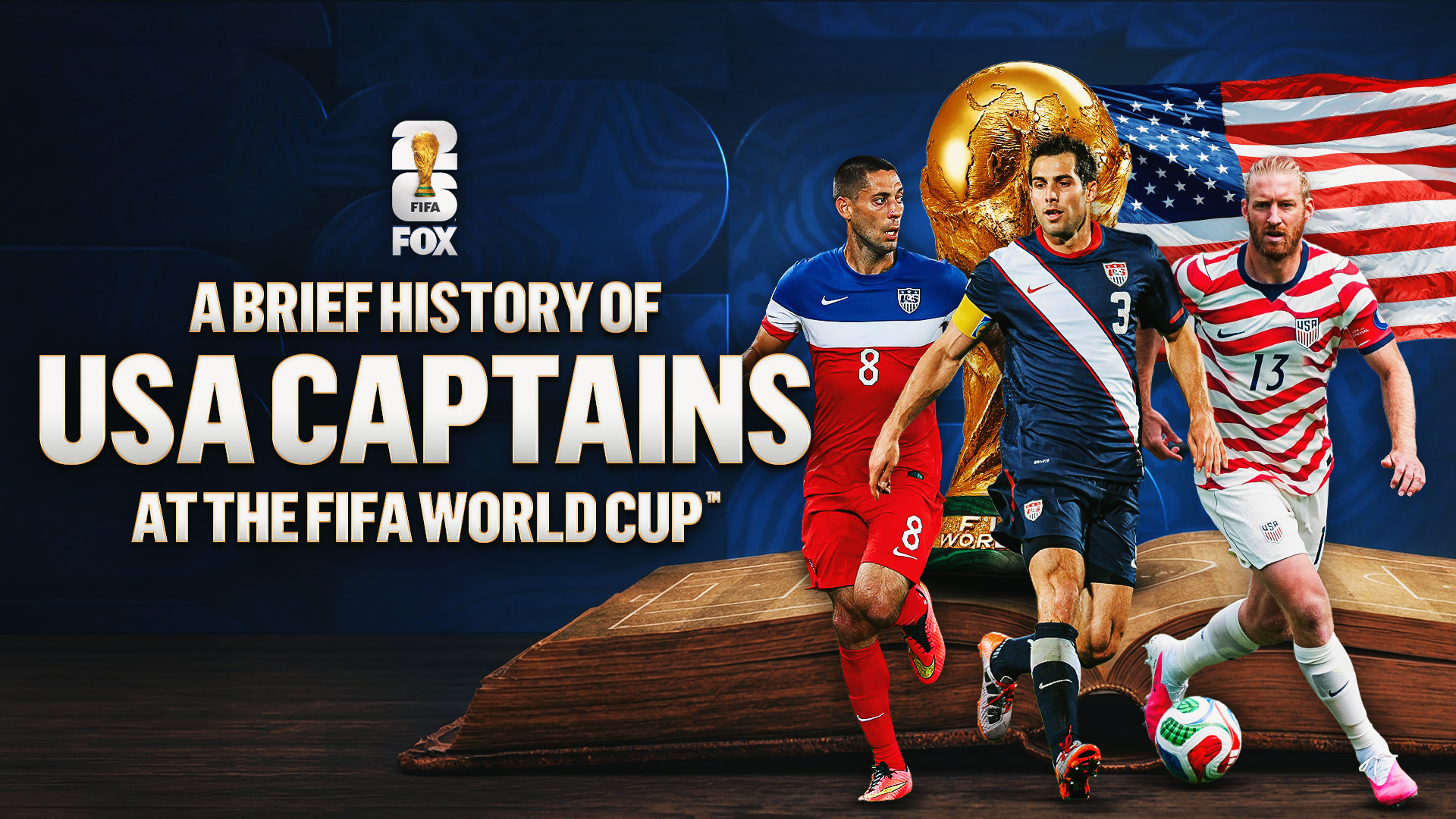
To play for the U.S. men’s national team at the World Cup is a unique honor, but only a handful of players have had the distinction of being called captain. In the modern era, the job entails a lot of responsibilities, such as being the figurehead on the pitch while keeping your teammates composed during high-stakes moments. With the United States co-hosting the 2026 FIFA World Cup, it will be the 12th time the U.S. has participated in the tournament. Aside from the 1950 squad that featured a three-player rotation and Claudio Reyna twice wearing the armband, each appearance by the USA at soccer’s marquee event has had a different player holding the honor. With defender Tim Ream now tabbed as captain for this summer’s 26-man squad, here’s the history of the U.S. World Cup captains, starting with the inaugural edition in 1930. Tom Florie | 1930 World Cup Born in 1897 to Italian immigrants in Harrison, New Jersey, Florie was one of the top American soccer players of the early era. He began his professional career after serving in the U.S. Navy during World War I. In the American Soccer League, he thrived as a forward for Providence FC and the New Bedford Whalers. While he was not named to the Olympic team in 1928, he served as the U.S. national team’s first World Cup captain for the tournament in 1930. In the tournament, he scored in a 3-0 win over Belgium in the group stage and helped the team advanced to the semifinals, which is still its best finish in the history of the tournament. Florie’s final appearance with the U.S. team came in a 7-1 loss to Italy at the 1934 World Cup. George Moorhouse | 1934 World Cup Born in Liverpool in 1901, Moorhouse moved to the United States after serving for Great Britain during World War I. Upon arriving, he played for several clubs in the New York area. He initially featured as the left back for the U.S. team at the 1930 World Cup. The U.S. team did not play any games until the 1934 World Cup in Italy. For that tournament, Moorehouse was named captain. The U.S. team defeated Mexico 4-2 in its lone qualification match. The format of that tournament was single-elimination and in the first round, the U.S. team drew hosts Italy and lost 7-1. Harry Keough, Ed McIlvenny, Walter Bahr | 1950 World Cup The U.S. team rotated captains for its three games at the 1950 World Cup. Two of them, Harry Keough and Walter Bahr, became well-known figures and ambassadors for the sport. Keough was the captain for the U.S. team’s 3-1 opening loss to Spain because he could speak Spanish. He worked for the U.S. Postal Service as a player but then went on to become an influential coach at St. Louis University, leading it to five national titles. Bahr was the captain for the team’s 5-2 loss to Chile in the group stage finale. Bahr would go on to coach Penn State’s soccer team from 1974-1988 and was named the College Coach of the Year in 1979. Of course, the middle group stage game was a 1-0 win over England which still serves as one of the biggest upsets in World Cup history. The Scottish-born McIlvenny was given the honor of captaining the team that day because he was born in Great Britain. His playing career began England at the lower levels where he featured for the now-famous Wrexham before moving to the United States in 1949. The 1950 World Cup would be the only time he played for the United States. Following the tournament, he would move back to England to continue with his career, first with Manchester United, before retiring in 1958. Mike Windischmann | 1990 World Cup Born in Germany but raised in New York City, center back Mike Windischmann played in the youth leagues of the Big Apple before playing college soccer for Adelphi University on Long Island. Upon graduating, Windischmann elected to play for the Brooklyn Italians, one of the most storied semipro clubs in American soccer history. He used his success with Brooklyn to earn a spot on the 1988 Olympic team where he scored in a 1-1 draw with Argentina. Following the success of the Olympics, Windischmann joined the MISL’s Los Angeles Lazers (an indoor club) and later the Albany Capitals of the outdoor American Soccer League. During his only season with the Capitals, Windischmann was selected to be part of the 1990 World Cup team which was competing in the tournament for the first time in 40 years. He started all three games as the U.S. team exited without a point. Following the 1990 season, Windischmann retired from professional soccer while opting to play two more years with the U.S. national futsal team. He helped to a second-place finish at the 1992 FIFA Futsal World Championships. Tony Meola | 1994 World Cup Captaining the U.S. national team in 1994 was a big job as it entailed being the face of a team that was hosting the tournament and was the first time many Americans were watching the team, or even the sport. Meola handled the job extremely well as the pony-tailed goalkeeper made several big saves in the tournament and displayed charisma that made many in the country embrace the team. In fact, he even earned a preseason invite as a placekicker for the NFL’s New York Jets. Meola began playing for the U.S. national team while he was still in college at the University of Virginia and earned the starting job at the 1990 World Cup. He played in the lower levels of the domestic professional game, both outdoor and indoor, that existed at the time. When MLS began play in 1996, Meola became one of the most important players in the league’s early seasons with the Metrostars and Kansas City Wizards. He made the 2002 World Cup team as a third-string backup. He retired from playing in 2008. Thomas Dooley | 1998 World Cup The run-up to the 1998 World Cup was a mess for the U.S. team as head coach Steve Sampson dismissed captain John Harkes from the team for “leadership issues,” but it was later revealed Sampson cut Harkes because he became aware of an affair between Harkes and the wife of teammate Eric Wynalda. To help settle the team, Sampson turned to 37-year-old veteran Thomas Dooley. The German-born Dooley began playing for the U.S. team in the years preceding the 1994 World Cup when U.S. Soccer was scouting for a more professional contingent of players. Dooley was discovered to have U.S. eligibility through his American father who served in Germany while in the Army. Despite being an outsider to the country, Dooley won over the team when he joined with his professionalism and dedication. To this day, he remains the only American player to have ever won the German Bundesliga, which he did in 1990/91 with Kaiserslautern. Unfortunately for Dooley, the 1998 World Cup remains a low point in the history of the U.S. national team as the team lost all three group stage games, including a 2-1 loss to Iran that eliminated the team from the knockouts. Dooley was given a send-off game with the national team in 1999 to finish with 81 appearances. Following his playing days, he turned to coaching and most of his years have been in Asia. In April, he was named manager of the national team of Bangladesh. Claudio Reyna | 2002, 2006 World Cups As one of the most decorated American players of all-time, Claudio Reyna remains the only player to captain the U.S. national team in two World Cups. Early in his career, he became the first American to captain a club in a top European league with Wolfsburg in Germany’s Bundesliga. He became a legend for Scottish powerhouse Rangers when he scored the game-winning goal over Parma to clinch qualification for the 1999–2000 Champions League. But Reyna’s time with the United States was groundbreaking. He was a member of four World Cup teams, although an injury prevented him from playing in 1994. He helped the U.S. team advance to the semifinals of the 1995 Copa América in Uruguay. He captained the 1996 Olympic team and scored against Argentina. In 2002, he captained the U.S. team to its best World Cup finish in the modern era with a run to the quarterfinals. That year he became the first U.S. player to be named to the World Cup all-tournament team. Injuries negatively impacted the final years of his career and a knee injury in a 2-1 loss to Ghana at the 2006 World Cup was his final moment for the team. After the U.S. loss, which eliminated the team after the group stages, he announced his international retirement. Carlos Bocanegra | 2010 World Cup The years following the 2006 World Cup disappointment were successful. When Bob Bradley was hired as coach in 2007, he immediately settled on Carlos Bocanegra to be the team’s captain, and he ended up leading the team to several important accomplishments. In 2007, he wore the armband for the team’s Gold Cup triumph. At the 2009 Confederations Cup, Bocanegra led the team to victories over Egypt and top-ranked Spain before falling to Brazil in the final. The following year at the 2010 World Cup, the U.S. team won its group for the first time since 1930. At the club level, Bocanegra’s long career also was marked by impressive times of leadership. He wore the armband for Fulham in the Premier League, Saint-Étienne in Ligue 1, Rangers in the Scottish Premiership, and he ended his career as captain for Chivas USA in its final MLS season before folding in 2014. A native of California, Bocanegra finished his international career with 110 caps. Clint Dempsey | 2014 World Cup As one of the most popular and successful American players of all time, Clint Dempsey was Jurgen Klinsmann’s choice to captain the 2014 World Cup team in Brazil after he had been serving in that role since 2013. The lead up to that tournament was dominated by the story of Klinsmann’s controversial decision to cut the team’s all-time leading scorer Landon Donovan. But Dempsey immediately delivered an important goal just seconds into the first game as the U.S. team came away with a crucial 2-1 win over long-time nemesis Ghana, who eliminated the U.S. team from the two previous World Cups. Dempsey played in three World Cups and scored goals in each tournament. He finished his career tied with Donovan as the all-time U.S. national team leading scorer with 57 goals. He wore the armband a total of 20 times. At the club level, Dempsey enjoyed tremendous success with Fulham. His best season came in 2011-12 when he scored 23 goals for Fulham in all competitions, including 17 in the Premier League. In 2010, he scored a memorable goal against Juventus in a Europa League knockout victory that is sometimes considered the most important goal in Fulham’s history. Tyler Adams | 2022 World Cup After failing to qualify for the 2018 World Cup, the U.S. team went with a youthful approach throughout the cycle leading to the 2022 World Cup. Head coach Gregg Berhalter settled on Adams, just 23 years old, as the captain shortly before the World Cup began. After the Americans advanced to the Round of 16 before losing to the Netherlands, Adams was named U.S. Soccer’s Male Player of the Year for 2022. In a club career that saw him begin as a homegrown player for the New York Red Bulls, and then progress to Europe with RB Leipzig, Leeds United, and now AFC Bournemouth (which he helped to a sixth place finish this season and a spot in the Europa League next year), Adams is part of the generation that reset the program following the embarrassing failure to qualify for the 2018 World Cup. Adams is still a key part of the U.S. national team program under Mauricio Pochettino, but he was not selected to captain the 2026 World Cup team as the position was given to Tim Ream. Tim Ream | 2026 World Cup When Tim Ream made his United States national team debut in 2010, few expected it would be the start of a remarkable international career that has continued for over 15 years — and has the center back now serving as the USA’s captain at the 2026 FIFA World Cup. At 38 years old, he will be the oldest player to ever serve as the USA captain at a men’s World Cup. Now with MLS club Charlotte FC, the St. Louis native had a solid career in the English Premier League, most notably with Fulham. He joined an elite group of American players who have worn the armband in a Premier League game (others including Brian McBride, Carlos Bocanegra, Claudio Reyna, Clint Dempsey and Tim Howard).Latest Sports News from FOX Sports
That didn’t take long. Rip and Beth’s plan after last week’s tragedy begins during Ep. 5 of Dutton Ranch. Continue reading…The Boot – Country Music News, Music Videos and Songs
That didn’t take long. Rip and Beth’s plan after last week’s tragedy begins during Ep. 5 of Dutton Ranch. Continue reading…Country Music News – Taste of Country
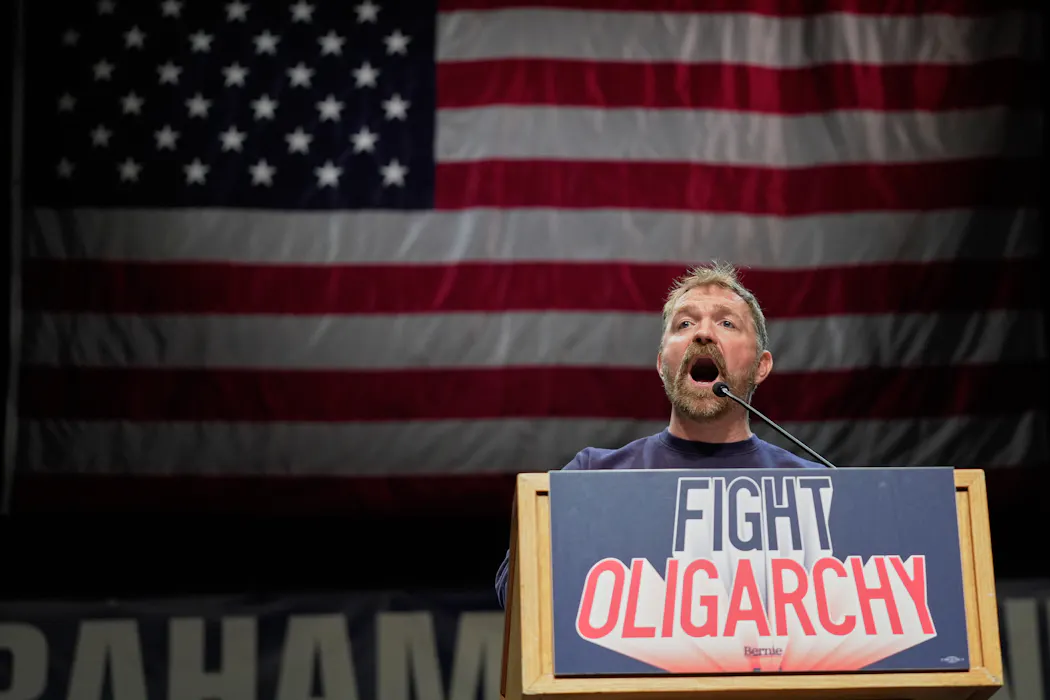
Graham Platner, Democratic candidate for U.S. Senate, speaks at an event hosted by U.S. Sen. Bernie Sanders in Orono, Maine, on May 24, 2026. AP Photo/Robert F. Bukaty
Or it’s Connecticut Sen. Chris Murphy, who after the 2024 election declared, “Democrats must reclaim our identity as the party of the working class.”
Or the answer comes from a new generation of candidates – tattooed veterans, mechanics, bartenders – whose biography is supposed to do the political work that policy has not.
Graham Platner, the Maine Senate candidate who has become the left’s latest blue-collar savior, put the theory in its most unguarded form.
“We are in a form of class war,” he says. “And if the Democratic Party is going to have a future with working people, it needs to pick the side of working people.”
The theory is all the same: Somewhere out there is a latent working-class majority, held together by shared economic grievances, waiting to be politically reassembled to vote for Democrats. The New Deal did it – Democrats can do it again.
I’m a political scientist who has written extensively about rural and working-class communities. I believe it is an open question whether these reformist Democrats are really interested in understanding working-class voters on their own terms. Because working-class voters, as they tell us themselves, are not simply waiting to be activated by the right program, the right messenger, the right phrase. “Fight the oligarchy” probably isn’t going to do it.
Working-class voters have a worldview. For 50 years, it has been growing less compatible with the Democratic Party’s – not because working-class voters changed, but because Democrats did.
Working-class identity
Since the early 1950s, the American National Election Studies has asked respondents whether they think of themselves as members of the working class. This article uses my analysis of that data.
While a larger proportion of the electorate has obtained a college degree and household incomes have risen, the share of Americans who consider themselves working class has remained remarkably stable: roughly 35% of voters for the past 70 years, 38% in 2024.
Working-class identity is something more durable and culturally grounded than a description of who isn’t a billionaire. It is a specific way of looking at the world.
There are conventional ways to define the working class, but they often miss how people understand their own place in society. In the 2024 American National Election Studies, for example, 21% of those who identify as working class have a college degree, only 5% belong to a private-sector union, and 37% own stocks. Conversely, most Americans without a college degree do not identify as working class.
Working-class voters have never been a predominantly Democratic group – not even at the height of the New Deal coalition. Based on the American National Election Studies self-report measure, the working-class share of the Democratic coalition peaked around 56% in 1960 and has fallen more or less continuously since, sitting at just about 30% today.
Meanwhile, the share of working-class voters who identify as Democrats has been declining for half a century: A majority did so in 1958, but not since.
Working-class voters have not become Republicans. Only in 2020 and 2024 – the first time in the survey’s history – did more working-class voters identify as Republican than Democrat, and even then by narrow margins.
The data shows a working class that is politically homeless: estranged from the Democrats, not captured by the Republicans, stuck in the middle with diminishing attachment to either party.
Trade is where the argument is strongest. In 1988, roughly 74% of both Democrats and working-class voters groups favored limits on imports to protect American jobs.
By 2024, only 26% of Democrats favored limits, while a majority – 54% – of working-class voters continued to do so.
In 1984, Democrats and working-class voters broadly agreed that treating people more equally would mean fewer social problems. A divergence opened after 2008 and accelerated after 2016, with Democrats now 28 points more likely than working-class voters to think we should worry more about equality.
In 1986, half of mainstream Democrats and a slightly smaller percentage of working-class voters agreed with the idea that Black Americans don’t succeed because they don’t try hard enough. By 2024, Democratic agreement had collapsed to 13%. Working-class voters declined too, but to 32%.
The gap that opened between them is not primarily a story about rising working-class racial resentment. It is a story about the Democratic Party’s rapid post-2008 shift toward a worldview that places far greater explanatory weight on structural barriers and far less on individual effort and personal responsibility.
Working-class voters, who historically have understood their own lives through a framework of hard work and earned reward, did not shift so dramatically.
Alignment becomes division
On cultural questions, the pattern persists: Working-class voters did not move right in reactionary revolt. Democrats moved left.
In 1986, similar levels of Democrats and working-class voters agreed with the statement “This country would have many fewer problems if there were more emphasis on traditional family ties.” By 2024 a 25-point gap emerged.
On whether religion is an important part of their life: a near-zero gap through the early 1990s, but 17 points by 2024. On abortion, a 3-point gap in 1980 became 30 points in 2024. Regarding whether immigration levels should be increased, the two groups were virtually identical in 2000 – around 8% support – but by 2020 Democrats were at 48%, working-class voters at 24%.
But even where working-class voters nominally agree with a Democratic policy goal, they don’t trust the institution being asked to deliver it – a distrust decades in the making.
How the ‘system’ plays
In 1958, working-class voters and Democrats were within 5 points of each other on whether government wastes a lot of tax money. By 2024 that gap reached 27 points – not because working-class voters lurched toward anti-government extremism, but because mainstream Democrats became dramatically more trusting of government as an instrument of social change.
Working-class voters are 17 points more likely than Democrats to say people like them have no say in what government does. In 2024, 88% of working-class voters and 75% of Democrats said government is run by a few big interests. Both groups agree the system is captured.
Yet the Democratic policy response, invariably, is to expand the system.
On support for expanding government – from healthcare to jobs to environmental programs – Democrats and working-class voters have diverged dramatically since the 1980s. By 2024, there were approval gaps of between 20 and 30 points on providing government health insurance, environmental spending and a guaranteed jobs program.
On every major plank of the progressive economic agenda, Democrats are now substantially to the left of the workers they claim to champion.
Not all class war
Working-class voters have been telling pollsters for 60 years that the political system doesn’t hear them. Democrats, over the same period, have grown more comfortable with the institutions working-class voters have increasingly less faith in.
To be fair, this is precisely what the new crop of reform candidates say they want to fix. The argument that the right candidate can move the needle is not crazy. Candidate quality matters. Personal trust can substitute for institutional trust, at least at the margins.
But economic grievance politics is a very small slice of what working-class voters are telling us. The data documents a comprehensive, decades-long divergence in how working-class voters and mainstream Democrats understand fairness, government, personal responsibility and social change.
Reducing that to class war jams working-class voters into a prefabricated progressive agenda rather than taking seriously what they are actually saying.
Nicholas Jacobs does not work for, consult, own shares in or receive funding from any company or organization that would benefit from this article, and has disclosed no relevant affiliations beyond their academic appointment.