Kyle Busch leaves behind his wife, Samantha, and their two young children after his death at age 41. Continue reading…The Boot – Country Music News, Music Videos and Songs










Kyle Busch leaves behind his wife, Samantha, and their two young children after his death at age 41. Continue reading…The Boot – Country Music News, Music Videos and Songs
Kyle Busch leaves behind his wife, Samantha, and their two young children after his death at age 41. Continue reading…Country Music News – Taste of Country

 If you’ve been tempted to try out one of the many TikTok viral beauty trends you’ve seen all over your FYP, consider this your sign to finally take the plunge. Amazon’s quietly slashed prices on…
E! Online (US) – Top Stories

 Emily Flippen has no qualms with her celebrity alliances.
In fact, the Survivor season 50 contestant—who previously placed seventh on season 45—thought the celebrity cameos from the likes of…
E! Online (US) – Top Stories

If you’re not a confident baker and want to elevate your store-bought red velvet cake mix, don’t worry: The internet is full of handy tricks.

Food Republic – Restaurants, Reviews, Recipes, Cooking Tips

Two-time NASCAR Cup Series champion Kyle Busch died Thursday, following his hospitalization this week with a severe illness. He was 41. One of the most successful NASCAR drivers of all time, Busch made his Cup Series debut in 2004 and had 63 career victories, putting him ninth on the all-time wins list. He competed in the Cup Series for Joe Gibbs Racing for 15 years before moving to Richard Childress Racing after the 2022 season. The news of his sudden death shocked the NASCAR and motorsports worlds, along with Rowdy Nation, and the tributes to one of the best and most competitive racers began pouring in.Latest Sports News from FOX Sports
Matt Heilala, a Republican and a podiatrist, says he’s running to be the next governor of Alaska, and he’s put up real cash to back it up: He’s invested more than $1 million of his own money in his campaign.
But officially, Heilala isn’t a candidate. And he won’t be until he’s found someone to join his ticket as a candidate for lieutenant governor. That’s because state law requires a running mate before filing an official declaration of candidacy for governor.
With the June 1 filing deadline looming, Heilala is not alone. Of 18 candidates who say they’re seeking to succeed GOP Gov. Mike Dunleavy, who is termed out, just five have announced running mates — leaving more than a dozen candidates with just two more weeks to find one.

Heilala said that at one point, he’d secured a “high-profile” Republican who initially agreed to join the ticket before backing out weeks later, just before an announcement. Others have volunteered who just haven’t been the right fit — one who, Heilala said, was “kind of lazy,” and another with “kind of a sordid background as a politician.”
Heilala, who’s never held elected office, said he’s looking for a running mate with “new and young energy.” But, he added, it’s been hard to find someone who will settle for the $140,000 lieutenant governor salary, when people in their 30s and 40s are in their “prime earning years.”
“They come back and say, ‘You know what? This would be a $50,000 to $70,000 pay cut for me,’” Heilala said. “You don’t want someone as a running mate where the worst-case scenario is that we win.”
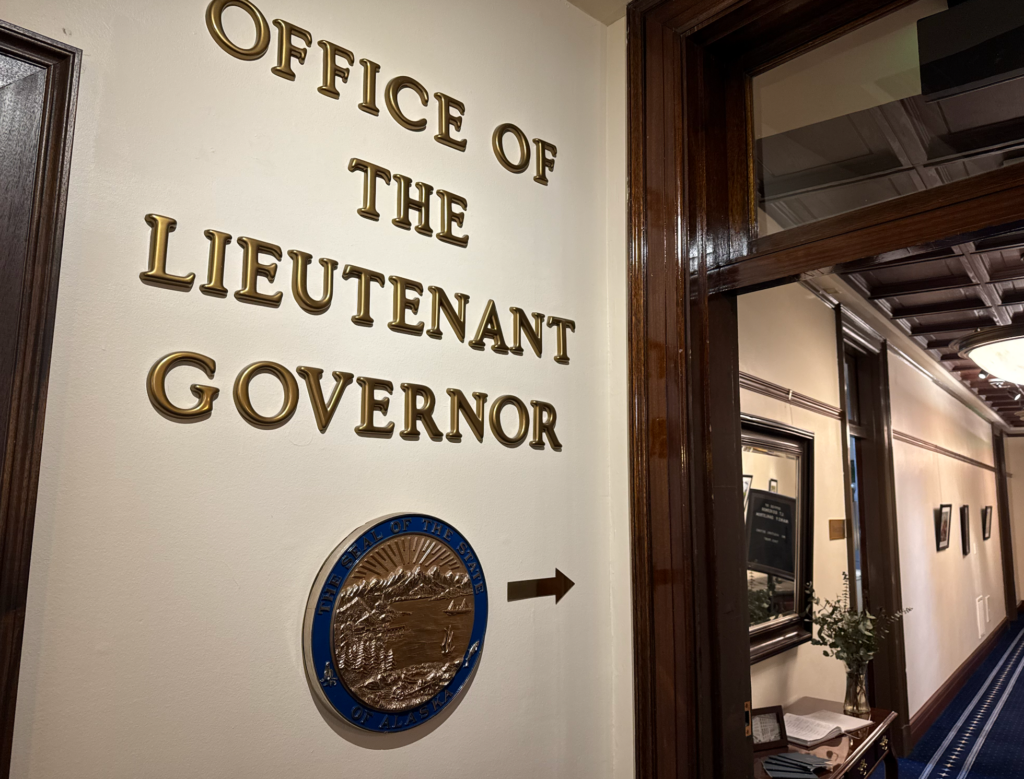
The job of Alaska’s lieutenant governor involves supervising the agency that runs state elections and regulating use of the state seal; they also finish out a four-year term if a governor resigns or dies.
The current matchmaking process is a relatively new development in Alaska politics. It’s an artifact of a successful 2020 citizens initiative that redesigned state-level elections to include a nonpartisan primary, plus the use of ranked choice voting in the general election.
Prior to that initiative, gubernatorial and lieutenant governor candidates ran in separate party primaries, with the winners merging their campaigns for the general. The 2022 gubernatorial election was the first in which candidates paired up before the primary — but with Dunleavy seeking re-election, the field was far smaller, without much jockeying for running mates.
This time, 12 Republican candidates have said they’re running, plus three Democrats and three independents.
None of the Democratic candidates — former state Rep. Jonathan Kreiss-Tomkins, former state Sen. Tom Begich and current state Sen. Matt Claman — have announced a running mate.
On the Republican side, longtime political operative and activist Bernadette Wilson, one of the party’s frontrunners, picked former state Sen. Mike Shower as her running mate in September.
Former state Sen. Click Bishop recently announced that he’s running with Greta Schuerch, an independent who works in a leadership position for the company that runs Red Dog, one of Alaska’s largest mines. Former state Sen. Shelley Hughes last month said that she’d picked a retired U.S. Air Force brigadier general, Blake Gettys, as her running mate.
But several other top GOP candidates, like former attorney general Treg Taylor, former revenue commissioner Adam Crum and current Lt. Gov. Nancy Dahlstrom, have yet to announce their selections.
At this point, with so many candidates in the race, recruiting is “tricky,” said Suzanne Downing, a conservative political writer who’s highlighted the running mate-less candidates on her website.
“Anybody who’s qualified for that job and smart enough is probably going to say, ‘Gee, 18 people in the race,’” Downing said. “It’s a big risk for anybody to put their name in the hat.”
One Republican who found himself on the end of multiple recruiting efforts was Rick Whitbeck, a former vice chairman of the state party who recently left a job as state director for U.S. Rep. Nick Begich III.
“I got three calls in less than three weeks,” Whitbeck said in a phone interview. By calling him, he quipped, the gubernatorial hopefuls were “going deep into their bag of candidates.”
The calls were exploratory more than they were outright job offers, Whitbeck said.
“You know, ‘What do you think my chances are? What do you think you could add to the ticket?’” he said. “They were good conversations — I would say they were serious, but I don’t think they were looking for an answer or offering the position outright.”
Whitbeck ended up taking a job with a trawl fisheries nonprofit, leaving the GOP lieutenant governor recruiting pool even smaller.
With two weeks to go, political observers say that one logical outcome is for some of the running mate-less candidates to combine their campaigns.
“In both parties there are credible, capable candidates who, if they pair up before June 1, can probably strengthen their ticket,” said Mead Treadwell, who served as lieutenant governor under Republican Sean Parnell between 2010 and 2014. “I would say that’s the race right now, for combinations that can consolidate votes.”
Meda DeWitt, a traditional Tlingit healer who’s running for governor as an independent, said she’s been asked by “a few of the other candidates” to be their running mate. DeWitt says she’s amenable to the idea, but her allies don’t want her to take a back seat, she said.
“People who are around me, who are advising me, who are supporters and have their ears to the ground say there’s a good buzz around me being an Alaska Native person at the top of the ticket,” DeWitt said. “They would not have the same excitement if it was same old, same old at the top of the ticket.”
DeWitt said her own recruitment process is ongoing.
Her “shining star” pick for a running mate had work commitments they couldn’t abandon, she said. In a meeting with her advisors last week, they together picked three other top options whom DeWitt now plans to ask.
“What I’m looking for isn’t just an appendage,” she said. “What I’m looking for is someone who can actually be a teammate who can dig in, because there’s so much work to do.”
Heilala acknowledged having his own conversations about merging his campaign with other gubernatorial candidates — including one he said he had with Taylor, the former attorney general. But after a discussion about becoming Taylor’s lieutenant governor running mate, Heilala’s own advisors thought he would make the better gubernatorial candidate, he said.
“I hate to use phraseology, but I’m the change agent. I’m not the status quo guy. And I bring a very different skill set,” Heilala said. “I can’t be coaching them along from the backseat with things that I bring to the table.”
A spokesman for Taylor, Evan Lee, responded to an interview request about lieutenant governor recruitment and Heilala’s comments with a prepared statement saying that “we’re excited about the momentum behind the campaign and the team coming together for the fall.”
“We’ll share more on the ticket in due course,” Lee said. “Right now, Treg is focused on the fundamentals of winning a statewide race: communicating a clear message, raising the resources to compete, and earning voters’ trust across Alaska.”
Begich, one of the leading Democrats in the race, said he’s also been asked by another candidate about his interest in merging tickets and running as lieutenant governor. His answer: “I’m not looking for any job. I’m looking for this job.”
Begich said that after direct conversations with five different people, he’s chosen a running mate. He’ll reveal their identity, he added, in an announcement May 27th.
If you value public interest journalism like this, please consider a voluntary paid membership to Northern Journal. If you’re already a paid member, many thanks.
The post For Alaska’s gubernatorial candidates, a sprint to find running mates appeared first on Chilkat Valley News.

More than a century after a fatal shipwreck on Eldred Rock in northern Lynn Canal, a famous restored lighthouse will commemorate its 120th anniversary on Friday at Forbidden Peak Brewery. The Eldred Rock Lighthouse Preservation Association hosts the event.
It was a dark and stormy night in February 1898 at the height of the Klondike Gold Rush when the ship Clara Nevada departed Skagway and crashed onto the rocks protruding like daggers from dark Eldred Rock in the middle of Lynn Canal.
The fatal shipwreck spurred construction of lighthouses in Alaska. Today, the oldest existing Alaska lighthouse now shines in restored fashion on the site of the notorious and mysterious wreck. Thousands of ferry and cruise ship passengers have seen the building’s distinctive octagonal shape en route to Haines and Skagway.
Before the lighthouse was completed in 1906, Eldred Rock was a barren, windswept 2.4-acre island in the middle of Lynn Canal, 35 miles south of Haines and 55 miles north of Juneau.
The Clara Nevada was one vessel among a ragged flotilla of questionable seaworthiness resurrected to transport frenzied stampeders to the Klondike in 1897 and 1898. Demand outstripped available berths, so clever businessmen secured ships of all conditions to sail a thousand miles north from Seattle to the head of navigation at Skagway and Dyea. That was the easy portion of the journey to the goldfields.
Hiking over the mountains and drifting another 500 miles on the Yukon River after building one’s own boat were the tricky segments. Packing a ton of required survival supplies made the trek more challenging.
But on the stormy night of the Clara Nevada’s last voyage, the ship had already delivered its first load of fortune seekers to the headwaters of Lynn Canal. The ship was returning to Seattle to pick up more adventurers when it grounded on the reef protruding from isolated and dark Eldred Rock.
Witnesses at nearby Point Sherman on the eastern mainland reportedly observed a ship on fire, then an eruptive fireball. Speculation suggested a cargo of unlawful dynamite had exploded. It was illegal to carry dynamite and passengers together. Apparently the explanation was the dynamite was initially destined for Treadwell Mine on Douglas Island, but failed to be offloaded when the Clara Nevada briefly docked in Juneau on its northbound trip.
Mystery surrounds the incident. Questions arise about whether or not some men escaped, took Klondike gold with them and assumed secret lives elsewhere. Only one body was recovered: purser George Foster Beck. The captain — or a man of the same name — seems to have bought a Yukon riverboat a couple of years later, casting doubt on the fate of the Clara Nevada crew. Ten years after the wreck, the story got more complicated.

The wreck of the Clara Nevada made bold headlines around the Pacific Northwest and far beyond. Despite its poor condition in 1898, it had been a noble ship for nearly 25 years, serving as the U.S. Coast Survey vessel USS Hassler. It was built in 1871-72 at Camden, New Jersey. Its purpose was to research the underwater fauna, flora and geology along the West Coast. On board were sailors and scientists led by renowned Harvard scientist Louis Agassiz.
The Hassler had an unusual double-bottomed hull made of iron plates. Initial construction techniques eventually resulted in deterioration and rust of the plates, which led the government to decommission the Hassler in 1895. Three years later, the Pacific and Alaska Transportation Company bought the ship, renamed it Clara Nevada and put it into the gold rush fleet.
The initial voyage of the sail-equipped steamship Clara Nevada seemed doomed from the start.
Departing the dock at Seattle, the ship backed into a government revenue cutter. During a stop at Port Townsend the ship struck hard against the dock and damaged her bowsprit. In Juneau, the ship was delayed for boiler repairs. Northbound passengers recalled unruly and drunken crew members. Nevertheless, the ship offloaded passengers and freight as intended in Skagway, then departed for the south in a wind-driven blizzard that proved to be the fatal end to the ship and its occupants.
The incident spurred Congress to establish aids to navigation along the American Inside Passage. Although well after the Yukon and Nome gold rushes had died down, the first two lighthouses were lighted on the same day in March, 1902: Five Finger Light south of Juneau and Sentinel Island Light north of Juneau.
Eldred Rock, site of the Clara Nevada grounding, received its octagonal light station on June 1, 1906. With its more weather-resistant concrete lower level, the lighthouse was not replaced like other wooden structures that deteriorated due to weather. The harsh northern Lynn Canal conditions battered the concrete Eldred Rock lighthouse, but it still stands today and is Alaska’s oldest lighthouse.
A bizarre incident occurred ten years after the Clara Nevada disappeared. The event is recorded in the keepers’ records and preserved in an article written by Lewis and Clark College historian Stephen Dow Beckham, grandson of the first Eldred Rock lighthouse keeper, Nils Adamson.

Professor Beckham writes in the 2001 Oregon Historical Society Spectator publication:
“On March 12, 1908, a wild gale swept across the waters. Blinding snow obscured the view, waves pounded the rock and sea foam blew against the boathouse. At dawn, when the wind died down, (Assistant Keeper) Currie went outside. To his horror and that of Adamson and (assistant keeper) Silander, he found the Clara Nevada and the remains of dozens of the crew and passengers lying on the rocky margins of the north end of the small island. Then the storm returned, washing away the cadavers: the Clara Nevada settled back into her watery grave” (Profile, Nils Peter Adamson, Light Keeper, page 22).
In 1910 the two assistant lighthouse keepers disappeared after a short boat ride to a nearby settlement. The loss of Currie and Silander haunted the sole man left on the rock: head keeper Nils Adamson. He was tormented for the rest of his life by the disappearance and likely drowning of his associates. Adamson had been similarly traumatized at seeing the human and ship remains on the rocks in 1908 and asked for a leave of absence at that time, but was denied. He finally departed Eldred Rock in 1911, married in Oregon and spent the next 24 years in the navigation light service in Coos Bay, Oregon.

Modern technology brought significant changes to the nation’s lighthouses 50 years ago. Eldred Rock was staffed by the U.S. Coast Guard until 1973, when many U.S. lighthouses were automated and subsequently unmanned. Today, the light remains functional, powered by solar panels, and maintained by the Coast Guard. Without volunteers, however, the building and thousands of other unique American lighthouses would be gone.
During the years of Coast Guard occupation the lighthouse was known as a particularly desolate and isolated duty station. Bleak and treeless, in 1963, guardsman Gordon Huggins transplanted a small spruce tree he dug from the mainland east of the lighthouse. In 2001, he returned to Eldred Rock in a PBS documentary titled Legendary Lighthouses of Alaska.
The spry older gentleman recounts his story of adding the first tree to the windswept rock. In the video, the spruce is fully grown and towers over Huggins as he looks up toward its crown. Sixty-three years after the three-foot spindly tree took root, it still filters the north wind that blasts the rocky site of Alaska’s oldest lighthouse.
Curiosity led to an underwater survey of the Clara Nevada/Hassler wreck in 2006-07 by federal and Alaska archeologists, divers, scientists and maritime historians as one of five sites in the Lynn Canal Shipwrecks Project. A series of project reports can be found on the National Oceanic and Atmospheric Administration’s website.
“The archeological remains of the Hassler are considered to be one of the most significant submerged heritage sites in the modern history of Alaska and in the evolution of the Coast Survey as a federal agency dedicated to oceanic and coastal research,” states the NOAA website titled “The 2007 Hassler Expedition” in National Marine Sanctuaries.
“The Hassler rests in a place of spectacular beauty but constant danger,” the report notes.
Over four days, divers and remotely operated vehicles mapped and delineated the ship’s remains. Covered in sea growth and broken apart by subsequent storms, the Clara Nevada is dissolving into the ocean.
The ship name Hassler did not die when the old survey vessel became the gold rush Clara Nevada. In 2012, a new NOAA research ship was commissioned as the USS Hassler to perform surveys on the east coast. It is a catamaran filled with advanced technology unimagined when the first Hassler rounded Cape Horn in 1872.

Preserving America’s treasured lighthouses has been an important role for civic organizations. In 1975, Eldred Rock was added to the National Register of Historic Places. In 2000, an act of Congress allowed the nation’s deteriorating lighthouses to be leased to qualified nonprofits for care, preservation and eventual public use. A group of volunteers from Haines received authorization.
The Eldred Rock Lighthouse Preservation Association has been actively repairing the building for several years. It’s been restored, renovated and cleaned inside. The exterior has been repainted by a crew of professional specialized lighthouse painters. Photos and drone videos are available on the nonprofit’s website. The group’s volunteer keeper program continues to seek participants for upkeep and maintenance. Interested volunteers may contact the association at eldredrocklighthouse@gmail.com.
To celebrate the completed restoration and structure’s 120th anniversary, the association will hold a Juneau grand opening celebration Friday from 5 to 7 p.m. at Forbidden Peak Brewery in Auke Bay. Announcements and door prizes will be given every half hour. The association plans to offer lighthouse cruise tours from Haines or Skagway starting in June.
On May 30, aboard a private cruise from Juneau, descendants of Nils Peter Adamson, the first lighthouse keeper, will step ashore onto Eldred Rock and walk in their great-grandfather’s footsteps, joining a special ribbon-cutting ceremony.
• Contact Laurie Craig at lauriec@juneauindependent.com.
The post Clara Nevada, Eldred Rock and the light that guides the way appeared first on Chilkat Valley News.

 The NASCAR community has said goodbye to a legend.
Kyle Busch, the two-time NASCAR Cup Series champion and one of the winningest drivers in the sport’s history, has died at 41, according to the…
E! Online (US) – Top Stories
Alaska lawmakers approved an additional $144 million in one-time funding for K-12 schools next year, plus a batch of education policy changes that garnered bipartisan support particularly aimed at boosting teacher retention and offsetting districts’ energy costs.
The Alaska Legislature has been divided, and at odds with Gov. Mike Dunleavy, over the level of state funding for public education — even as districts across the state face significant budget deficits and declining enrollment, forcing steep cuts and school closures.
Rep. Andi Story, D-Juneau and co-chair of the House Education Committee, acknowledged the strife of school districts and said the policy changes and one-time funding are a step in the right direction.
“It doesn’t meet the need, but it moves the dial in the right way,” she said.
Last year, lawmakers passed a historic increase to state funding for K-12 schools and added millions in sustained per student funding, known as the base student allocation — but only after multiple vetoes by Dunleavy, and an equally historic veto override by the Legislature in a special session in August restoring the funding increase.

This year, in the second year of the 34th Legislature, lawmakers seemed to have less appetite for taking on another education funding battle with Dunleavy — particularly amid competing priorities in the Senate and House multipartisan majorities to pass elections reform and revive a state pension system. Both items were vetoed by Dunleavy. The governor has focused on pressing lawmakers to approve a property tax break for a proposed trans-Alaska gas line, and called a special session on that topic beginning on Thursday.
But Alaska schools will see some additional funding next year as the U.S. war on Iran and global oil shock has driven up state revenues from the rise in oil prices.
In addition to the $144 million in one-time funding in the operating budget for K-12 schools, including $29 million for offsetting rising energy costs next year, lawmakers also approved a pared-down education package. It establishes a student loan forgiveness program for teachers, an adjustment to state funding for districts in local municipalities and a plan for the state to fund school districts energy costs — beginning in 2028, and subject to future Legislatures funding it.
“I’m thrilled,” said Story on Wednesday after the vote. She authored the underlying bill establishing the loan forgiveness program for teachers, which is aimed at recruiting and keeping young teachers in Alaska.

“It’s an incentive to keep continuity, keep your teachers employed, and that’s great for kids — whenever they can have the same teacher in the building, that always makes a difference,” she said.
If approved by the governor, the bill would establish a new student loan forgiveness program for teachers of up to $15,000 over three years. It’s focused on teachers specializing in English as a second language, special education, science, technology, engineering and math. The program is expected to serve up to 120 teachers next year.
Senators also included a provision from another bill to cap local municipalities’ contributions to school districts. The provision says the contribution may increase by no more than 4% from the previous year. The cap is intended to provide relief to boroughs with rapidly rising property assessments, which informs how much they contribute to their local schools as part of the complex funding formula with state and federal dollars.
Sen. Jessie Bjorkman, R-Soldotna spoke in favor of the policy change, as much of the Kenai Peninsula region is seeing rising property values. “Our current law does shift significant cost from the state to local municipalities,” he said. “We accept as local municipalities that we have some skin in the game… we’re okay shifting some cost, but not so much.”
In addition to the $29 million lawmakers allocated for K-12 schools’ fuel costs next year, they approved a provision in the education package that would initiate the state covering school districts’ fuel costs beginning in 2028 and subject to future lawmakers approving the funding.
Alaska districts have reported rising fuel costs in recent years to keep schools warm and facilities running, especially in rural and remote areas — estimated at $90 million statewide this year.
If approved by the governor, the state would annually reimburse districts based on the average of the past three-years of fuel costs. Districts are asked to make a reasonable effort to manage fuel use and costs, to not exceed the usage from the previous year and report how much they’re spending on fuel to the Alaska Department of Education and Early Development.
Fuel costs are expected to skyrocket this year with the onset of the U.S. war on Iran, and districts are facing bulk fuel orders in the millions. Officials with the Lower Kuskokwim School District report an 80% expected increase in fuel costs next year for its nearly two dozen village schools in Western Alaska.

On Wednesday, Sen. Rob Yundt, R-Wasilla, said he’s watching three schools close in his district in the Matanuska-Susitna Borough and expressed enthusiasm for the plan on the Senate floor: “I cannot tell you how excited I am. My district last year spent between $6.4 million on natural gas and electricity alone. Those have been rising every year for our community.”
“I do look forward to the day that the state pays for the energy related to all of our schools,” he said.
The bill also includes provisions for homeschooled students to keep textbooks, equipment and other supplies when they leave a school district, to allow regional resource centers to hire former teachers while keeping their defined benefit retirement benefits and to allow school board members to be hired as substitute teachers.
It also changes the statute so that schools that are closed during school consolidation can be reopened in four years instead of seven years.
This year, members of the House and Senate advanced various education bills that failed to garner bipartisan support.
They included more targeted and ambitious funding increases with millions for energy costs, transportation, reading instruction and career and technical education programs, as well as policy changes related to tribal compacting for public schools, homeschool programs and math instruction.
Story authored another bill to help stabilize school districts’ budgeting process by redefining the student counts that passed the House last week, but failed to advance in the Senate. “It costs $113 million and they had already put one time funding in there for districts,” she said, referring to funding in the current operating budget. “And I think there was a fear that the governor would veto that.”
Story said she plans to reintroduce the proposal if re-elected next year.

After adjournment Wednesday night, leaders with the Senate Majority caucus praised the 34th Legislature’s wins for education in a news conference, but acknowledged they were hard fought, and that districts are continuing to struggle amid budget cuts.
“This has been probably the most anti-education governor in the history of our state,” said Sen. Bill Wielechowski, D-Anchorage, and criticized Dunleavy for repeatedly vetoing funding increases for schools.
“It’s been an absolute battle,” he said. “So people wonder why schools are closing, because we haven’t kept pace with inflation. But part of its revenue, a huge part of its revenue, we’ve got to figure out (and) we’ve got to stabilize our revenue going forward. It’s going to be tough conversations going forward.”
The post Alaska lawmakers approve one-time funding for K-12 schools, plus energy relief appeared first on Chilkat Valley News.