 It would be a big mistake—huge—to miss Euphoria.
Not only did the HBO show’s May 24 episode see a major character killed off in the most gruesome way, but it also contained quite the steamy sex…
E! Online (US) – Top Stories









It would be a big mistake—huge—to miss Euphoria.
Not only did the HBO show’s May 24 episode see a major character killed off in the most gruesome way, but it also contained quite the steamy sex…
E! Online (US) – Top Stories

 We don’t know about you, but we’re feeling blonde-curious this summer. There’s something about the heat, the sun, or maybe even that upcoming Legally Blonde prequel series, that has us…
E! Online (US) – Top Stories

Supporters will be living and dying with every touch this summer at the 2026 FIFA World Cup. The tournament will feature intensity and passion in the stands that American sports fans won’t be used to seeing very often. Zlatan Ibrahimović and Tom Brady sat down ahead of the tournament this summer and covered a variety of topics, including how fans support their teams. Soccer fans around the world are extremely passionate and will be very vocal with their satisfaction — or dissatisfaction. Brady found a parallel in American sports, comparing how fans in Europe are born into supporting a club or country to supporting a college team. “I always describe European soccer as more college fanaticism because if you go to that college, you love that college forever. You’re born into that,” Brady said. “You chose that college, you’ll forever support that college. That’s, to me, what being born into one of the environments in Europe. You pick your team, and you’re with them forever. “In America, yeah, you’re with [a professional team] forever. But you also say, ‘Hey, I kind of like that team because I really like that player.’ And if you’re a LeBron James fan, wherever he went, you’re going to ultimately like that team.” The atmospheres at games in Europe are also very different. Obviously, soccer clubs are treated very differently than in Major League Soccer, but the attitude extends to other sports, as well. “I truly believe the American athlete would enjoy differently in Europe with those fans, especially your world,” said Ibrahimović, who played with LA Galaxy of the MLS for two seasons and spent the majority of his professional career in Europe. “… I mean, I know when I went in a duel with a player head-to-head, the fans wanted to come in and play one side vs. the other side.” Ibrahimović mentioned that he wonders how even a top basketball player like LeBron James would face an extremely different atmosphere in Europe. “I know basketball, you talk about LeBron with the Lakers fans and that I’ve been there, but I’ve been also in Belgrade and see a basketball game there,” Ibrahimović said. “Whoa, that’s a little bit scary compared [to the NBA]. That’s why I think that the American athlete, if he would go through there, I don’t know if he would become better. “It would be different.” In terms of how the Swedish national team was supported throughout his career, Ibrahimović had nothing but positive things to say. He appreciated how positive the Swedes were, regardless of results, although he didn’t necessarily agree with their attitudes. “Our fans in Sweden were amazing,” Ibrahimović said. “Win or lose, they were supporting you, which I find strange because when you lose, they shouldn’t support you.”Latest Sports News from FOX Sports

 Eva Longoria has no desire to revisit Wisteria Lane.
Not only did the Desperate Housewives alum not check out the ABC drama during its eight-season run, she confessed that she has still not…
E! Online (US) – Top Stories
 Jennifer Lopez used to have a little, now she has a lot—the most important of which is family.
The Maid in Manhattan star enjoyed the Memorial Day 2026 holiday weekend alongside her 18-year-old…
E! Online (US) – Top Stories
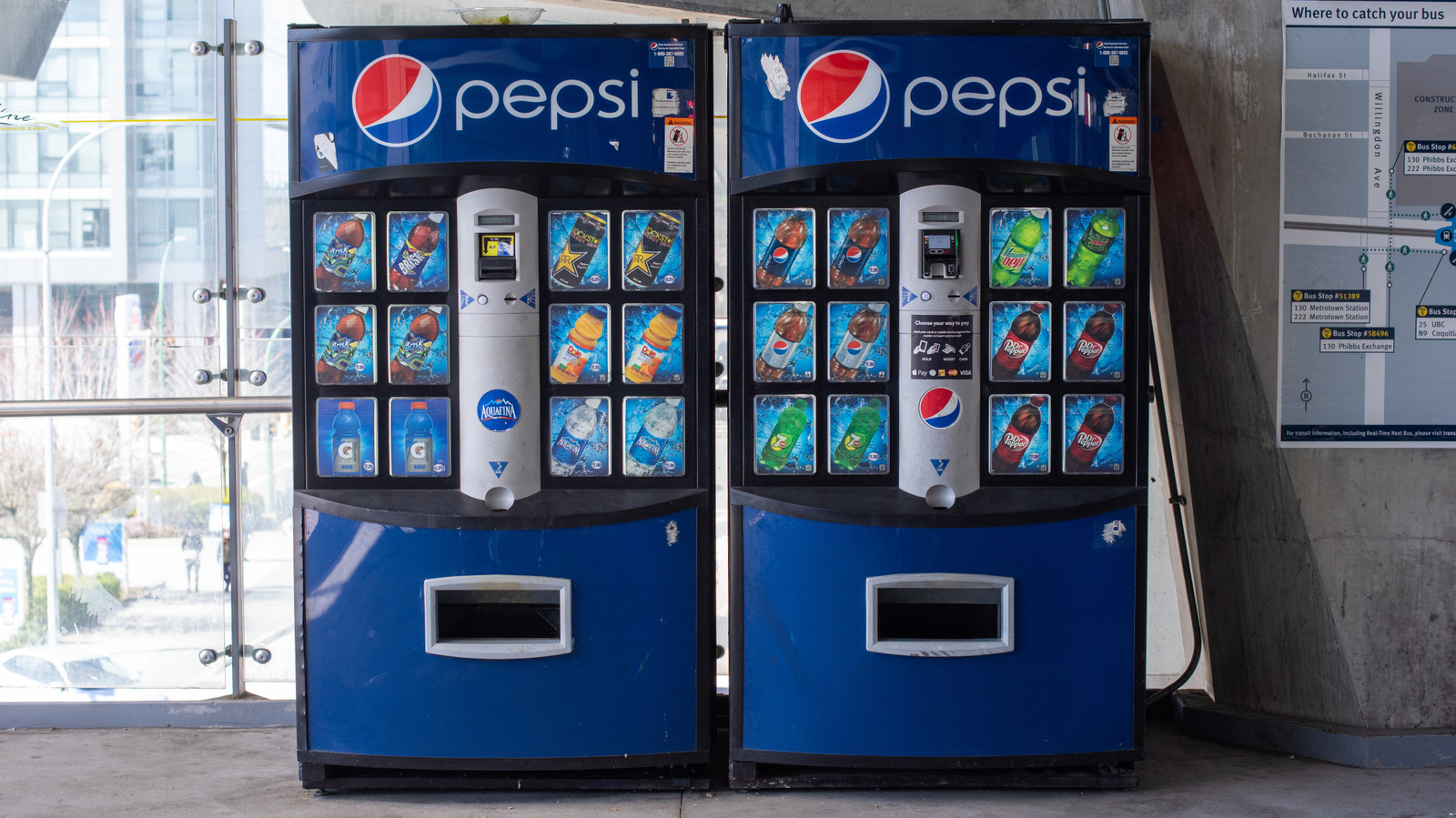
It’s hard to top the uniqueness of a late-1990s PepsiCo release, when the brand packaged this popular vending machine snack in a colorful soda can.
Food Republic – Restaurants, Reviews, Recipes, Cooking Tips

Reading Time: 2 minutes
Even if you don’t watch Euphoria, by now you’ve probably heard about Sydney Sweeney’s OnlyFans storyline.
Showrunner Sam Levinson obviously knew that he would get a ton of free publicity by writing scenes in which the most famous sex symbol of the 2020s strips down in increasingly outrageous scenarios.
But Cassie Howard’s efforts to become the queen of adult content are now drawing criticism from an unexpected source — actual OnlyFans creators.
Speaking with Page Six, OnlyFans creator and podcast host Gracie Canaan stated that she thinks there’s “danger” in “romanticizing this job as overnight wealth.”
Canaan noted that her line of work is not for everyone, explaining that online sex work “can be just as dangerous as in-person.”
She noted that when creators share explicit photos and videos, they’re “out there” in the world.
“People can use it to blackmail you,” she said, before quipping, “Wow, I sound like a ‘don’t do drugs’ PSA!”
She also noted that it’s not as easy to rise to the top of the profession, as Cassie’s storyline might lead some to believe.
“It is running a business. It is marketing, it is sales, it is strategy. I think people don’t understand the business savvy required,” she said.
Gracie also criticized the fact that Cassie’s new career created conflict in her marriage, noting that many creators “are partnered, or married, or have kids.”
“This is another job. It can be really fun and rewarding . . . But, people don’t realize the mundanity,”
Canaan also addressed the fact that celebrities such as Shannon Elizabeth have been launching OnlyFans pages in recent months.
She notes that such big-name creators might be taking money away from people who rely on OnlyFans to put food on the table.
“The downside can be that it feels like celebrities are playing make believe in what is a lot of people’s very serious livelihoods,” she explained.
Well, in that sense, we guess Canaan can’t fault Ms. Sweeney — her nudity is bringing more attention to OnlyFans, and it’s not costing anyone any thing more than their HBO subscription!
Sydney Sweeney Blasted By OnlyFans Creator Over ‘Dangerous’ Euphoria Scenes was originally published on The Hollywood Gossip.
The Hollywood Gossip

DAYS THE BUDGET IS LATE: 56
GETTING TO 200K: Mayor Zohran Mamdani released a wide-ranging housing plan today that he said will usher in the “largest municipal housing transformation this country has ever seen.”
The blueprint lays out how Mamdani plans to address the single biggest driver of the city’s affordability crisis, the central focus of the mayoral campaign that propelled him into City Hall.
While the plan lays out ambitious targets that would surpass past mayors if achieved — including the planned creation and preservation of a combined 400,000 affordable homes over a decade — it also illustrates how Mamdani is not reinventing the wheel on many housing issues, but rather leaning into or expanding policies pursued by his predecessors.
The plan seeks to tackle a range of coinciding crises: the severe shortage of available housing; a public housing system that’s crumbling and facing massive capital needs; and a rental housing stock that is experiencing growing distress as operating costs skyrocket.
“If the absence of good government created the conditions we now face, the presence of good government can build the solutions we now need,” Mamdani said in a speech announcing the plan in Brooklyn’s Gowanus section, where a city-led rezoning enacted nearly five years ago has spurred a residential building boom.
Mamdani is already encountering the limits of some of his campaign promises and moderating costly plans as his administration grapples with a strained municipal budget. On the campaign trail, the mayor said he would create 200,000 publicly-subsidized homes over a decade, tripling current rates of production. He is standing by that goal, while also pledging to preserve another 200,000 affordable homes.
“Scaling to these levels of affordable housing production will not be easy and cannot be done overnight,” the blueprint states. The administration is aiming to create some 14,000 affordable homes in fiscal year 2027, which starts July 1, while ramping up to 21,000 units per year by fiscal year 2031.
Under the blueprint released Tuesday, Mamdani’s housing department plans to finance 8,000 new affordable homes in fiscal years 2027 and 2028 — which would grow subsidized housing by more than 35 percent from the prior two years. But the plan does not spell out specifically how the administration will produce roughly 12,000 remaining units annually to get to Mamdani’s 200,000-unit goal.
Much of that additional affordable housing will rely on zoning, tax and other financing tools rather than direct city subsidies. And it would require the private sector to embrace those tools. — Janaki Chadha

‘BIG UGLY’ VOTE: The Legislature spent the better part of today plowing through votes on the budget’s “big ugly” bill, which contains most of the hot-button issues in this year’s spending plan.
“This bill has some really good stuff in it and some really bad stuff,” said Assemblymember Jeff Dinowitz, who cited Tier VI pension plan changes when speaking about his “yes” vote. “I look forward to seeing the positive impact it’s going to have on many, many state workers.”
That was the common theme that emerged among Democratic during today’s debate — they hate the rollbacks to the climate law, but they’re also supportive of the inclusion of what Republican Assemblymember Michael Fitzpatrick dubbed “the mother of all pension sweeteners” that they reluctantly voted yes. That line of reasoning appeared especially common from members who, like Dinowitz, have Democratic primaries in four weeks and stand to face attacks for being weak on the environment.
“This is not an easy vote for me,” said Assemblymember Grace Lee, who’s running for an open Senate seat and wound up backing the bill because of Tier VI.
“I am voting yes because I refuse to deny hardworking union members and retirees the retirement security they have worked years to achieve,” Assemblymember Jessica Gonzalez-Rojas said.
Gonzalez-Rojas also took time to slam the climate law changes.
“Communities like Jackson Heights, Corona, East Elmhurst, Elmhurst, LeFrak City have already experienced the consequences of environmental injustice,” she said. “Climate change is not theoretical for our communities. It is personal.”
That might be another indication of just how much budget season has blended into primary season. Not all of those neighborhoods fall within Gonzalez-Rojas’ district — but they’re a perfect description of the Senate district where she’s challenging fellow Democrat Jessica Ramos next month. — Bill Mahoney
MEANWHILE, IN KNICKS WORLD: Mamdani appeared to indicate today that watch parties will be back outside Madison Square Garden during next month’s NBA finals.
“They will be there,” Mamdani said with a laugh when asked at an unrelated press conference if the partying will resume outside the iconic arena next month when the Knicks play their first NBA finals in nearly three decades.
But a Mamdani spokesperson told Playbook that the mayor wasn’t referring to official watch parties. Rather, the spokesperson said he was talking about how Knicks fans inevitably gather outside the Garden during and after games to celebrate or mourn — oftentimes in rather raucous fashion.
Whether official watch parties — replete with massive screens showing the games — will be back outside the Garden during the finals, the Mamdani spokesperson wouldn’t say, adding that plans are still being finalized.
“It’s not a question of if there will be watch parties but where,” spokesperson Dora Pekec said.
The issue could become a bone of contention for Knicks fans.
Last week, the city pulled MSG’s permit to hold its usual large-scale parties outside the arena during Knicks games due to concerns from the NYPD about public drinking and other debauchery. During one of the Knicks’ Eastern Conference Finals games against the Cleveland Cavaliers last week, six people were arrested in connection with the outdoor watch party.
The NYPD’s decision to put the kibosh on the parties may infuriate Knicks fans who are ecstatic about their team making it to the NBA finals for the first time since 1999. Mamdani, an avid Knicks fan, is already facing tension with NYPD Commissioner Jessica Tisch over how to police this summer’s World Cup, as previously reported by POLITICO, and an MSG dispute could drive a further wedge.
With the outdoor party permit scrapped, MSG hosted a watch party at Radio City Music Hall for the Knicks’ clincher against the Cavs last night.
No matter what, Mamdani said at today’s press conference that Knicks fans will be able to cheer on their team at a variety of watch parties across the city during next month’s finals.
“We’re looking forward to making sure that it is a time for New Yorkers to celebrate, it’s a time that they’re also safe,” he said. “We’re going to have a number of different kinds of watch parties, and we’ll get back to you as we keep going through those plans.”
The Knicks will face either the San Antonio Spurs or Oklahoma City Thunder in the finals next month. The first game in the series is set for June 3. — Chris Sommerfeldt

DEBATE-A-PALOOZA: Got plans in June? How about a congressional primary debate — or six?
After forums galore across the city’s competitive primaries, a slew of televised debates are on the books ahead of the June 23 election: two each for the races to replace retiring Reps. Nydia Velázquez and Jerry Nadler, and another two for Rep. Dan Goldman’s primary challenge from former City Comptroller Brad Lander.
All debates will be live at 7 p.m., with the exception of the first NY-07 debate on June 3, which will be prerecorded earlier that day and air at 7 p.m. Here’s when to block off your schedule:
— June 1: Goldman and Lander will be facing off for their first televised debate, hosted by Spectrum News NY1. NY1’s Errol Louis and Courtney Gross will moderate the program.
Goldman’s campaign has frequently criticized Lander for not agreeing to partake in seven debates.
— June 3: State Assemblymember Claire Valdez, Brooklyn Borough President Antonio Reynoso and City Council member Julie Won will take the stage as they vie for Velázquez’s seat. The debate will be hosted by NY1 and moderated by Louis and Gross. Public defender Vichal Kumar is also on the ballot, though he did not qualify for the debate.
— June 4: The four leading candidates looking to succeed Nadler will meet in a PIX11 debate: state Assemblymembers Micah Lasher and Alex Bores, Kennedy scion Jack Schlossberg and anti-Trump commentator George Conway. It will be moderated by Dan Mannarino.
— June 9: Another NY-12 debate will be hosted by NY1 and WNYC. Louis and WNYC’s Brian Lehrer and Brigid Bergin will moderate. This debate is set to feature Bores, Conway, Lasher, Schlossberg and public health practitioner Nina Schwalbe.
Schwalbe, a progressive candidate who has struggled to break through in the crowded field, has frequently criticized media coverage and events for not including her. A handful of other lesser-known candidates are also on the ballot next month.
— June 10: Valdez, Reynoso and Won will partake in a PIX11 debate, with Mannarino moderating.
— June 15: PIX11 will host Goldman and Lander for another showdown, moderated by Mannarino.
Early voting starts June 13. — Madison Fernandez
MUM-DANI: Mamdani is noncommittal about getting involved in the competitive race in what is now his home district.
When asked by PIX11’s Henry Rosoff who he’s voting for in the Democratic primary to succeed Nadler, Gracie Mansion’s newest resident laughed and said he hadn’t made a decision but is “following the race as a keen constituent.”
“At this time, I would say that I’ve focused on the two decisions I’ve made thus far,” Mamdani continued, referring to his endorsements for Lander and Valdez.
Bores recently said he would “love” to have Mamdani’s backing. Lasher, meanwhile, is getting campaign help from political strategist Morris Katz, an architect of Mamdani’s win last year. A recent Emerson College/PIX11 poll found that Mamdani has a strong approval rating, at 66 percent, among Democratic primary voters in the district. But a Mamdani endorsement could also turn off some Jewish voters — a prominent constituency in the district — who are not fans of the mayor.
“It was a pleasure to serve with both of them in Albany,” Mamdani said of Bores and Lasher. — Madison Fernandez
ENDORSEMENT CORNER: Abundance New York rolled out its voter guide on Tuesday, highlighting candidates in competitive races who the group’s executive director Catherine Vaughan said in a statement are “willing to actually build the things New York needs.”
They include Reynoso and Lander, as well as a dual-endorsement for Bores and Lasher. (The group said that between Bores and Lasher, it “cannot recommend one over the other at this time, but we may revisit as the race continues.”)
The endorsements aren’t exactly all glowing. In the rationale for Reynoso, it states that his “record has not always supported our agenda, but we have decided to take his evolution at face value and to commit to holding him to his word.”
The blurb about Lander acknowledged that the group has “concerns about [his] record and some of his current stances,” including opposing some rezonings during his time on the Council and supporting a ban on what the group described as “investor-owned ‘build-to-rent’ housing.” The guide also states that the group is “dismayed at his demand that Brooklyn Marine Terminal development be delayed; this is a NIMBY stance that seems cynically targeted at Goldman’s leadership on the issue.” Despite that, Abundance New York pointed to Lander’s “record on housing production, transit, and the local land-use machinery in this district” and said it thinks he “would prioritize the built environment issues that we champion more strongly.”
The group is also backing Drew Warshaw — the affordable housing nonprofit executive who’s one of two primary challengers to state Comptroller Tom DiNapoli — along with a handful of candidates in the state Legislature and City Council member Carl Wilson. — Madison Fernandez
— THINGS GO SOUTH: Mamdani-backed congressional candidate Claire Valdez, who has called to abolish ICE, is facing scrutiny over her father’s work for a firm involved in Texas border projects. (New York Post)
— WHAT’S IN A NAME: Internal renderings for the Penn Station overhaul project show a presidential seal featuring Donald Trump’s name alongside a redesigned train hall. (Gothamist)
— ACROSS THE AISLE: Brooklyn’s Park Slope Food Co-op is split over a looming vote to boycott Israeli products from the socially conscious grocery store. (The New York Times)
Missed this morning’s New York Playbook? We forgive you. Read it here.
Politics
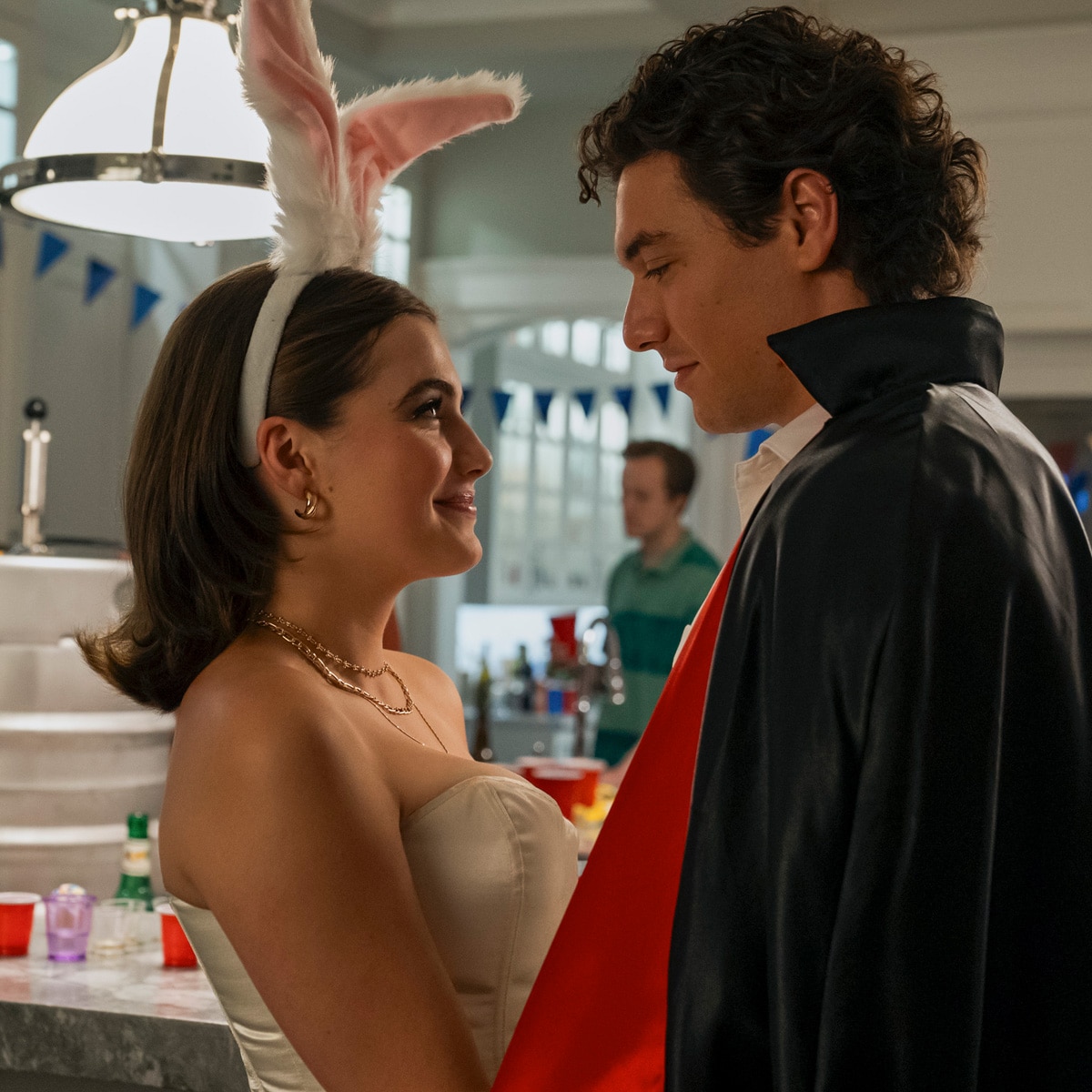
 Warning: This story contains sudsy spoilers about the first season of Off Campus.
The buzzer has sounded on the first period of Garrett Graham and Hannah Wells’ ultimately epic romance in Off…
E! Online (US) – Top Stories

Look out for these light and refreshing beers that are perfect for the summer season. These will stand out at picnics, BBQs, and everything in between.

Mashed – Fast Food, Celebrity Chefs, Grocery, Reviews
