Toosii has released his new single “Proud of Me” and its music video via South Coast Music Group/Capitol Records. The song arrived May 1, 2026, as the multi-platinum artist prepares to enroll at Louisiana State University and join the school’s football program.
The “Proud of Me” video was directed by City James and shot in Baton Rouge, where Toosii’s next chapter is set to begin. The clip places the song in the city that now connects his music, education, and football ambitions. Toosii will also donate a percentage of proceeds from “Proud of Me” to youth organizations in Baton Rouge.
Click to load video
The song follows weeks of fan anticipation online and centers on Toosii’s path from early doubts to the next stage of his career. Its autobiographical theme matches the timing of his LSU move, which brings him back to football after years focused on recording and touring. Toosii played wide receiver in high school before his music career became his primary focus.
The release follows JADED, the project Toosii issued on October 4, 2024, featuring Gunna, Kehlani, and Muni Long. The 2024 project included “Fuk U Mean” and “Champs Élysées,” a Gunna collaboration. In October 2024, Toosii joined Rod Wave’s Last Lap Tour as a special guest, with Moneybagg Yo, Lil Poppa, and Dess Dior also on the bill. In 2025, Toosii released “Even Then” and joined YoungBoy Never Broke Again on “Please Don’t Go.” In 2025, Toosii also supported YoungBoy Never Broke Again on the MASA Tour, which grossed more than $75 million. Toosii’s 2023 album NAUJOUR included “Favorite Song,” which reached No. 5 on the Billboard Hot 100. The 2023 single was one of Toosii’s defining crossover moments before he began publicly pursuing a return to college football.
Allegheny County, Pennsylvania, is experimenting with a policy that has drawn national attention and local skepticism: providing cash compensation to people confined in the Allegheny County Jail in the city of Pittsburgh. The funds include monthly disbursements to all those incarcerated and additional pay tied to work assignments and participation in educational programming.
At first glance, the policy may sound counterintuitive. Why pay people who are in jail, especially when many law‑abiding residents are struggling to afford housing, food and transportation? That reaction is understandable. But it often reflects a misunderstanding about who is held in the Allegheny County Jail, the amount of the disbursements and what the county is trying to accomplish.
Allegheny County Jail is experimenting with a new policy that compensates incarcerated people. AP Photo/Gene J. Puskar
Over the course of two decades, I have partnered with Allegheny County on policy relevant to justice research and served on the advisory board of the Allegheny County Jail Collaborative, a nationally recognized initiative launched in 2000 to better coordinate jail, health and community-based services. Long before many places began using data to rethink criminal justice, Allegheny County was already analyzing data from multiple sources to develop and test new approaches. With that history in mind, this policy may come as less of a surprise – though it still deserves scrutiny.
Most people in jail haven’t been convicted
Understanding the county’s rationale for compensating people in jail begins with understanding the jail population itself. Jail confinement is primarily about custody and court processing, not punishment after being convicted of wrongdoing.
According to county data, only about 8% of people housed in the jail have been convicted and sentenced to jail time. These individuals are serving a maximum incarceration term of less than two years for misdemeanor or lower-level felony convictions. Roughly half of those incarcerated at the Allegheny County Jail, or 46%, are awaiting trial and have not been convicted of a crime. Another 36% are detained based on an alleged probation violation. The remaining 10% are either on a legal hold placed by an outside agency – such as federal authorities or a correctional facility in another state – are awaiting transfer to a different facility or are ordered to be incarcerated for allegedly violating family court orders.
While jails provide food, clothing and basic hygiene items, those provisions often fall short of what people actually need. Commissary purchases make up the gap, yet many people in jail have little to no money. When even basic necessities, such as ramen noodles, toothpaste and tampons, become scarce, bartering can take place. Commissary items become currency. Debt, theft, intimidation and power imbalances emerge, leading to conflicts that can cause serious or fatal injury. Staff must manage these threats, sometimes at risk to their personal safety.
The county’s compensation policy addresses this reality in concrete ways. Since 2022, the Allegheny County Jail Oversight Board has approved monthly payments of about US$100 to every person housed in the jail through the Incarcerated Individuals Welfare Fund. The fund is financed by proceeds from jail commissary, phone and tablet contracts. These funds can be used for commissary items, phone access, fees, or to accrue savings for post-release needs.
$5 a day – and the research behind it
In addition, in March 2026 the county began compensating people confined in jail approximately $5 per day for voluntary work assignments, as well as for participation in some types of vocational and educational programming. Some of this compensated work is labor that keeps the jail running – including cooking, cleaning and maintenance – and benefits the institution directly. Some of it includes education and vocational training. Paying for it signals some level of fairness and respect. It is also pragmatic: When people perceive systems as legitimate, they are more likely to follow rules and less likely to engage in misconduct.
Offering compensation for education may also boost enrollment, much like how earned credits toward early release encourage participation in federal programs through the First Step Act. This may better prepare them for reentry into society while also reducing idle time, which is linked to misconduct.
Another reason for compensation comes at the point of release. People often leave jail with no cash and limited access to transportation. Providing even limited financial resources can help people make better choices during a well-documented critical transition period that can make or break successful reentry intro society.
Still experimenting
None of this means the policy will work as intended. Increased access to resources could shift, rather than eliminate, forms of conflict among those incarcerated. And the financial incentives may not meaningfully change behavior for everyone.
This makes rigorous, transparent evaluation essential. Research should measure both intended and unintended effects of this policy, including on institutional safety, program participation, reentry outcomes and overall cost effectiveness.
Paying people in jail is not about rewarding crime. In Allegheny County, it is a pragmatic experiment grounded in local data, institutional realities and a clear-eyed commitment to public safety. Whether it ultimately improves safety inside the jail or stability after release remains to be seen. But asking the question and measuring the answer is exactly what evidence-based justice policy should look like.
Nancy La Vigne does not work for, consult, own shares in or receive funding from any company or organization that would benefit from this article, and has disclosed no relevant affiliations beyond their academic appointment.
A Harper’s Weekly image of the first reading of the Declaration of Independence outside Independence Hall in Philadelphia on July 8, 1776. MPI/Getty Images
As the nation observes its 250th birthday, historians can help settle one present-day dispute: Is the United States a democracy or a republic?
Yet the question itself is misleading. It assumes that the categories constructed by political theorists neatly describe actual practice.
As a historian of early America, I know this nation has always been unwieldy, its institutions hammered out from conflicting ideals and the pragmatic lessons of lived experience. Just as Britain today is both a monarchy and a democracy, so the U.S. has always been a hybrid.
Ideals of both republicanism and democracy have shaped the nation. To understand how requires a history lesson.
No purity
James Madison’s essay, known as Federalist X, was published under the pseudonym ‘Publius’ in the New York Daily Advertiser on Nov. 22, 1787. Library of Congress
Let’s start with a famous definition. Here is the often-quoted “Father of the Constitution,” James Madison, urging Americans to ratify the new frame of government proposed by the Constitutional Convention in 1787.
One was a “pure democracy,” which he described as “a society consisting of a small number of citizens, who assemble and administer the government in person.” A New England town meeting might qualify for this definition, where voters assembled to choose town officers and approve local bylaws.
That seems cut and dried. Surely no one thought the entire population of 13 states could work like a town meeting.
But Madison here was saying only that the possibility of a “pure” democracy was impractical. He was by no means banishing all democratic ideas and institutions.
As the French theorist Montesquieu had noted, republics were of varying sorts. Some republics were aristocratic, controlled by a relative few who were set above the rest. Other republics were democratic, engaging many more in the ongoing affairs of government.
What was at stake in the U.S. in 1787 wasn’t a “pure” democracy nor a “pure” republic. The issue was how aristocratic – and how democratic – the American scheme of representation would be.
Who would be represented – the many or the few?
‘Actual’ representation
America had never been the home of an aristocracy in the British sense. Besides, the Revolution had discredited the very idea of hereditary power. There would be no House of Lords, filled with titled men born into political power and a special set of legal privileges denied to ordinary people. The people alone would be sovereign, and all authority to govern derived, directly or indirectly, from them.
Even so, the problem of aristocracy remained. After all, it had been the lower house of Parliament – the House of Commons, not of Lords – that had sparked the imperial debate when it tried to tax and legislate for the Colonists.
But the Colonists watched the Commons ignore American grievances while favoring private interests – East India Company shareholders, for example – that served wealthy British gentlemen such as themselves.
In contrast, “patriot” Americans pointed to the legislative assemblies established in each colony soon after its founding.
Needing to attract British settlers, and following the British model, each colony established an elected house of the legislature to provide a check to governors and upper houses that were appointed by the king or a wealthy Colonial proprietor.
Law and custom required that delegates to these assemblies live among their constituents. Although they were men of some fortune and standing in their districts, assemblymen might plausibly “actually represent” their lesser neighbors.
In the lead-up to the Revolution, patriots used new measures to ensure their representatives’ fidelity: They called for vigilant popular oversight of government decision, publicized those decisions in the press, wrote constituent instructions for legislators and winnowed out noncompliant officeholders at election time.
Individual and collective liberties
With independence, Americans created a patchwork of new, representative state governments. South Carolina empowered its wealthy planter elite by setting a high property-holding requirement for voters and a higher one for officeholders. Pennsylvania and Vermont adopted unprecedentedly democratic systems that allowed a large proportion of the white male population to participate in government.
By 1787, some Americans thought there was too much popular democracy – too much power given to nonelite members of society, especially within state governments.
Equally important, the ratification process produced a consensus that a bill of rights was necessary to protect ordinary people’s rights and liberties from government overreach.
These first 10 amendments would defend individual rights but also collective rights of the people, such as their right to assemble, to petition the government or even to change it.
Within a few decades, the common phrase for the American system became “democracy.”
Madison had been inconsistent in how he used the term. In the 1790s and 1800s he called himself a “Democratic Republican,” in opposition to the allegedly aristocratic party, the Federalists.
Decades later, Madison was frustrated when pushed to define the U.S. government more precisely. Ordinary “political vocabulary” fell short, he wrote. The American system was “so unexampled in its origin, so complex in its structure, and so peculiar in some of its features” that it was best understood as something new.
How aristocratic? How democratic? The question of 1787 has returned repeatedly to face Americans.
Elites with aristocratic aspirations have repeatedly tried to build permanent governing hierarchies. American history is partly the story of these contests – Free-Soilers against a slaveholding elite, reformers against wealthy “barons” of the Gilded Age, critics of inequality against billionaires who shape government policies today. In such cases, Americans have often turned to more and better democracy, their necessary resource for pressing their political leaders to actually represent the people.
Following Madison’s advice, Americans today can refuse to be misled into describing the U.S. in a single, inadequate term.
They might prize both of these historic commitments: to a republic that insists on the people’s right to be represented rather than ruled, and to a democracy that ensures that ordinary people might collectively make it so.
Barbara Clark Smith does not work for, consult, own shares in or receive funding from any company or organization that would benefit from this article, and has disclosed no relevant affiliations beyond their academic appointment.
Luke Bryan and Jason Aldean are not just making music; they’re bringing their friendship to the stage with a tour that promises plenty of laughs. Continue reading…Country Music News – Taste of Country
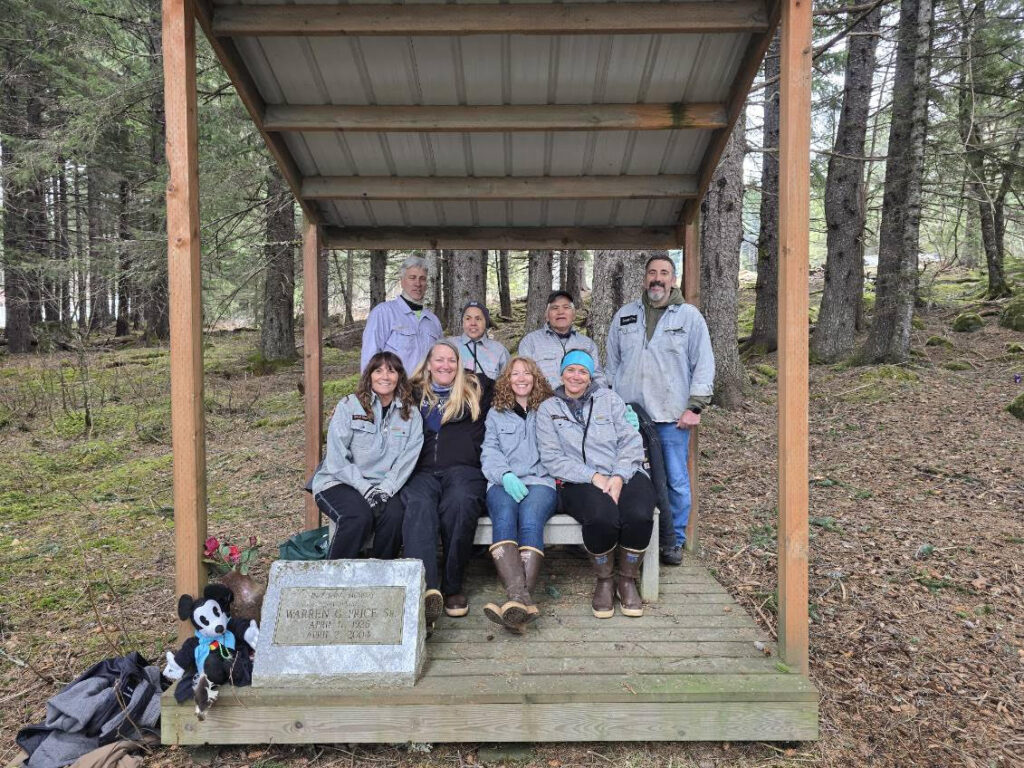
(Courtesy/Nadine Price) Relatives of Warren G. Price gathered to celebrate his 100th birthday, following instructions he left before he died 22 years ago.
Samantha (Sami) Mallon married Martin Duncan in Shelton, Washington on April 20 with close family and friends in attendance, including Mallon’s mother Martina Larsen. Their officiant was Lex Schillinger. Dakotah Kindle and former Haines resident Austin Woodard were groomsmen. The bridesmaids were Lisa Hosley and Makayla Jessie. The newlyweds will be enjoying their honeymoon on the beaches of Oregon before returning to Haines in early May, by way of a legendary road trip on the Alcan with their dog Diesel.
Warren G. Price walked into the forest 22 years ago but left instructions for his children about what to do on his 100th birthday on April 17, 2026. They were to travel to the Price property where his bench is located, smoke cigarettes, have a shot of whiskey and talk about memories of Dad. All eight of his remaining children did just that. Nadine Price said some may have used candy cigarettes and mocktails but a good time was had by all.
Robin Beaudry’s 2001 Subaru went silent as she drove toward town and through the construction zone on Friday, right before the car burst into flames. Moments earlier Beaudry was waved through the traffic by flagger Helena Muench. Muench was just ending her flagging shift and ended up driving a fire truck that responded to the incident, according to Beaudry. The fire was unfortunately not in cellphone range, making a call to the fire department a bit more challenging. In the end, the car-b-que was extinguished by the water truck working the construction zone.
The Haines Chamber of Commerce Community Clean-up collected a heap of trash. Executive director Amanda Brandon made a scavenger hunt for trash collectors, adding a little bit of a thrill. A vape pen and a shoe were the only items not found on the scavenger hunt. The biggest, most awkward item dropped off was a canoe. Tessa Tersteeg and Rhylen Tersteeg picked up trash for their second year in a row. This year they chose Lutak Road. They collected two full bags and some larger items that could not fit in the banana-yellow bag. Sophia Armstrong and husband Reilly Kosinski were crowned 2026 queen and king of trash. The past two years Joan and Pete Degen walked away as the winners. While she was collecting trash, Armstrongfound an Elks coin from 1998 that entitles her to a free drink. The next time she is in Skagway, she says she will try to claim that drink. The Armstrong family brought in multiple car-loads of trash. Their enthusiasm and dedication to community clean-up is appreciated.
The American Contract Bridge League (ACBL) held their annual bridge tournament in Haines last weekend. Thirty-three participants from Juneau, Whitehorse, Anchorage and Haines participated in the event held at the ANB/ ANS Hall. Local participants included Dr. Stan Jones, Frank Holmes, Ann Quinlan, Joseph Orlando, Gregg Bigsby, Fred Shields, Debra Schnabel and Jim Wilson. Nearly all placed among the top three scorers in each event. The Saturday evening feast was king salmon, provided by Don Nash, and barbecue ribs prepared by Gordy and Julie Olson. The bridge tournament started with one casual warm-up and was followed by five competitive games during the weekend. Following the games, individual results were tabulated for each player. The high scorers were ranked. Canadians Jourdain Patchett and Chris Bookless tied for first. Local Jim Wilson came in second. Mark Davey from Whitehorse came in third with the Fred Shields and Roger Schnabel team tied for fourth place.
Watershed Weekly is a paid commentary written by the Takshanuk Watershed Council.
By Derek Poinsette
The Cambridge English Dictionary defines migration as “the process of animals traveling to a different place, usually when the season changes.”
Biologists use the term specifically for large-scale movements of populations of animals over relatively long distances and between different habitats. For example, a bear moving up onto the mountainside to snooze during the day, and then back down to the river to feed on salmon at night, is not technically a migration. This behavior would instead be called a diel (or daily) activity pattern.
An example of a proper, and quite impressive, migration is the arctic terns that breed here on Glacier Point and then spend our winter months on the ice surrounding Antarctica — an annual round-trip of 50,000 miles, give or take.
Animals are able to expend large amounts of energy migrating because there is a significant benefit for them to do so. In other words, something about that behavior has increased the animal’s chances of survival and reproductive success over time.
Evolutionary biologists call this concept fitness. The migrating animals are able to take on a significant risk in seasonally moving long distances because the grass actually is greener on the other side. In doing so, they are increasing the chances of passing genes to future generations, even while many individual animals do not survive the journey. If this was not the case, if there was not this high-level benefit to the animal and to the species as a whole, they would just stay home.
Down on a more flesh-and-bones level, animals migrate for a few different reasons. Large schools of herring and hooligan start moving into the Upper Lynn Canal from the outer coast in the middle of April to spawn and reproduce. They come here because thousands of years of evolution have indicated that this is a good place to do that, and the chances are good that their offspring will survive and thrive.
Following closely behind these forage fish (herring and hooligan) are sea lions, seals, whales and piscivorous (fish-eating) fish like Chinook salmon and halibut, all of whom are migrating here not to spawn, but to feed. So, although the herring and hooligan are being gobbled up by the millions on the journey to get here, it is still worth their collective effort over a long, multi-generational, time frame. The same cost-benefit equation applies to all migrating animals, including humpback whales that are burning lots of calories and exposing their newly born calves to a gauntlet of predators, in swimming more than 3,000 miles from Hawaii and Mexico.
Tens of thousands of birds also stop here in the spring to take advantage of the hooligan and herring runs, and other resources as well, like mollusks and aquatic invertebrates. Gulls may be the most abundant and noticeable avian migrant, followed by surf scoters. A recent study found that as many as 18% of the entire world’s population of surf scoters could be coming to the Upper Lynn Canal every spring.1 That’s an astounding number, given that surf scoters are relatively common throughout North America, on both the Atlantic and Pacific coasts from arctic Canada down to Florida and Mexico.
For most winged creatures, the Upper Lynn Canal is not their final destination, but is instead a convenient refueling station to propel continued migration to summer breeding grounds farther north. The Chilkat Valley is particularly critical to this phenomenon, as it provides for the migrants an abundance of food and a safe and efficient flyway up and over the ice-covered mountains to the interior. Like the schools of forage fish out in the fjord, the gulls, terns, ducks, geese, shorebirds, cranes, loons, song birds, woodpeckers and hummingbirds are constantly being pursued, and fed upon, by migrating birds of prey: eagles, hawks, falcons, ospreys and owls. The benefits provided to these creatures by the geography and the ecosystems of the Upper Lynn Canal must be great indeed to be worth such a price.
There is a concept of ecology called the ecotone. It occurs where two or more different ecosystems meet and overlap, usually resulting in relatively greater biodiversity. The entire Upper Lynn Canal area could be conceived of as a large ecotone. It is situated at a geographic nexus of geology and biology, where the temperate maritime ecological zones to the south and west meet and are linked via migratory corridors with interior sub-arctic and boreal forest ecozones north and east.
For both birds and terrestrial animals (including humans), a small handful of mountain passes provide connectivity, and allow for relatively quick passage between a number of very different ecosystems and biogeographic regions.
For these reasons, the Upper Lynn Canal is one of the most biologically productive and diverse places in Alaska, and the annual spectacle of spring migration is a direct result of this complex interaction of geography and biology.
From the perspective of the resident organisms, including us, this connectivity and ecological viability is an extremely valuable and precious attribute, as is attested to by the abundance of migrants who fly and swim great distances to visit us each and every spring.
A promotional photo from the new season of “Alaska State Troopers” premiering in January shows a Palmer Police squad car. (Photo courtesy of A&E)
An Alaska woman is accusing the Alaska Department of Public Safety, two Alaska State Troopers and the A&E Television Network of compromising her privacy and safety as a confidential informant after they filmed an arrest without her consent.
The woman, identified in the filings as Jane Doe, says that she received death threats after she was a confidential informant whose information led to an arrest that was filmed and later aired on the Alaska State Troopers reality show.
The woman’s attorney, Jeff Barber, declined to comment on the case and said that he plans to file a motion to make the case confidential for her safety.
In court filings, Barber argued that the defendants had a duty to protect the confidential informant from harm. Barber wrote, “the defendants were motivated by fame, fortune or financial gain,” and they exploited Jane Doe’s “life and safety for profit and/or personal gain.”
The television show followed troopers in the Matanuska-Susitna Valley, Fairbanks, Western Alaska and Valdez in 2025. A&E Television Network aired nine episodes of the show between January and March 2026.
The lawsuit names Alaska State Troopers Scott McAfee and Lucas Altepeter, the Alaska Department of Public Safety, the show’s executive producer Anna Rodzinski and her company Anusia Films LLC, and A&E Television Networks LLC as defendants. Jane Doe is suing each defendant for $100,000.
According to a complaint filed in state court on April 23, Jane Doe assisted the Alaska State Troopers as a confidential informant in 2025 and was later threatened by a person who suspected her of being a confidential informant. She assisted troopers for a second time in 2025 and a film crew filmed troopers arresting the person who suspected Doe.
Jane Doe told McAfee, a trooper, that she objected to A&E filming the arrest, and court documents say troopers relayed Doe’s objection to the film crew. According to the filing, the film crew filmed the arrest anyway. This caused Jane Doe “severe emotional distress and harm.”
In the lawsuit, Jane Doe’s attorneys claim that the crew filmed the episode in a way that could reveal Jane Doe’s identity and involvement. After the episode aired, Jane Doe received hostile communications and death threats.
Jane Doe suffered “medical expense, pain, anxiety, suffering, severe emotional distress, inconvenience, security and privacy expenses,” Barber wrote in the filing.
The case alleges that McAfee and Altepeter’s negligence and recklessness breached their duty and created danger to Jane Doe.
Barber accused the defendants of violating Jane Doe’s right to privacy and right to due process, and their actions inflicted intentional emotional distress.
Austin McDaniel, communications director for the Department of Public Safety, told the Alaska Beacon by email Wednesday that DPS had not been formally served with the lawsuit yet and will respond in court.
“We take the safety of all Alaskans extremely seriously and reject any suggestion that DPS personnel would knowingly endanger anyone’s life,” McDaniel stated.