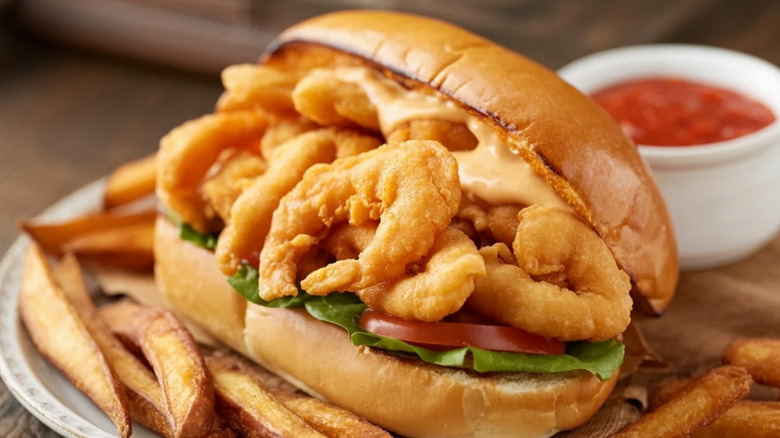
Pretty much everyone agrees that the absolute best bread for po’boys is French bread, and this bakery has been serving it up since the 1920s.
Food Republic – Restaurants, Reviews, Recipes, Cooking Tips








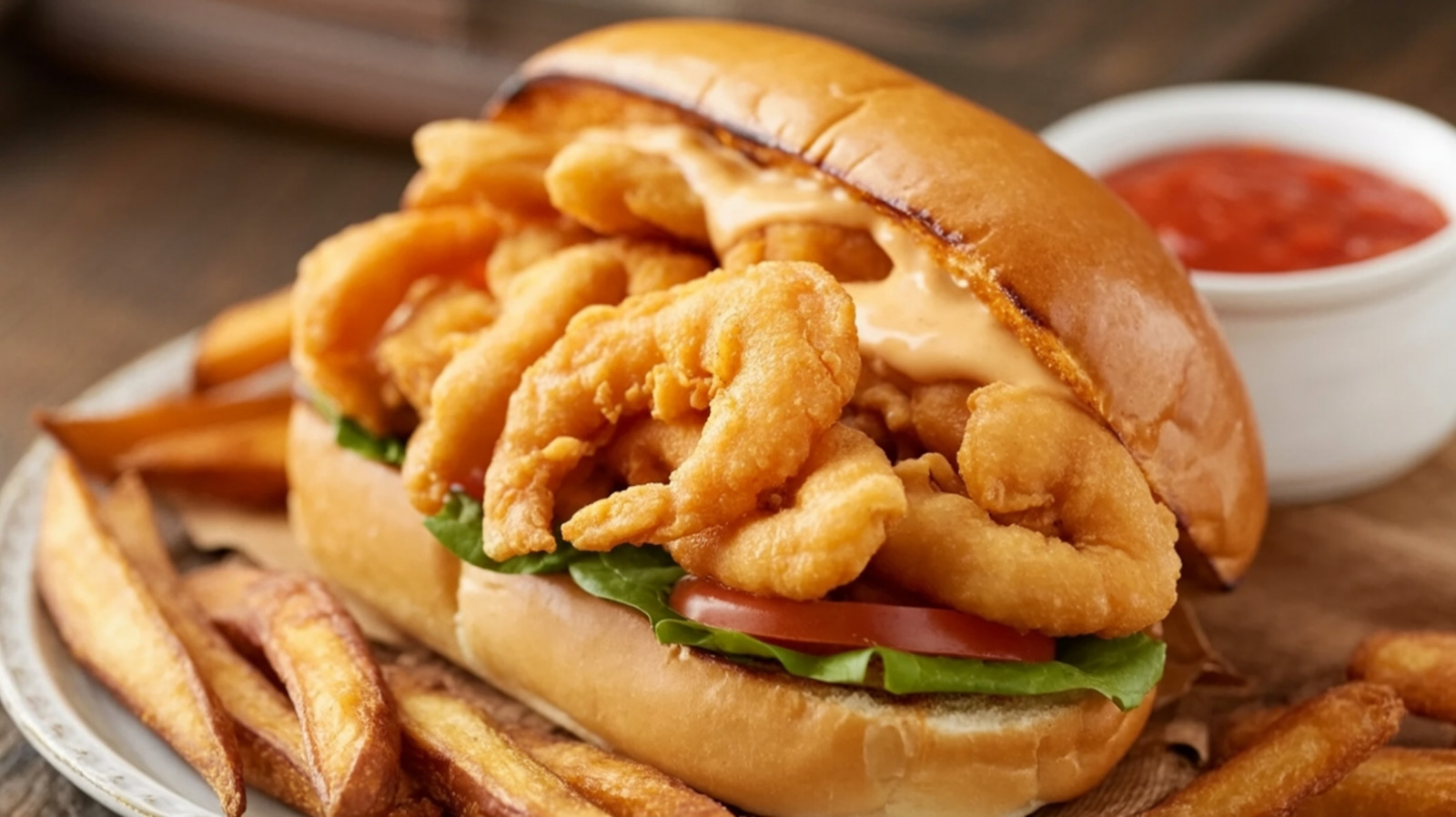
Pretty much everyone agrees that the absolute best bread for po’boys is French bread, and this bakery has been serving it up since the 1920s.
Food Republic – Restaurants, Reviews, Recipes, Cooking Tips

Lauren Alaina put out her head down and wept as she spoke about the importance of supporting mental health at the 2026 ACM Awards. Continue reading…The Boot – Country Music News, Music Videos and Songs
Lauren Alaina put out her head down and wept as she spoke about the importance of supporting mental health at the 2026 ACM Awards. Continue reading…Country Music News – Taste of Country
![<a href="https://theboot.com/ixp/204/p/cody-johnson-luke-combs-support/" target="_blank">[EXCLUSIVE] How Luke Combs Helped Launch Cody Johnson Worldwide</a>](https://townsquare.media/site/204/files/2026/05/attachment-untitled-design-2026-05-18t070545-027.jpg?format=natural)
Cody Johnson just snagged a big win at the ACM Awards, and his gratitude for Luke Combs tells a heartwarming story of friendship in the country scene. Continue reading…The Boot – Country Music News, Music Videos and Songs
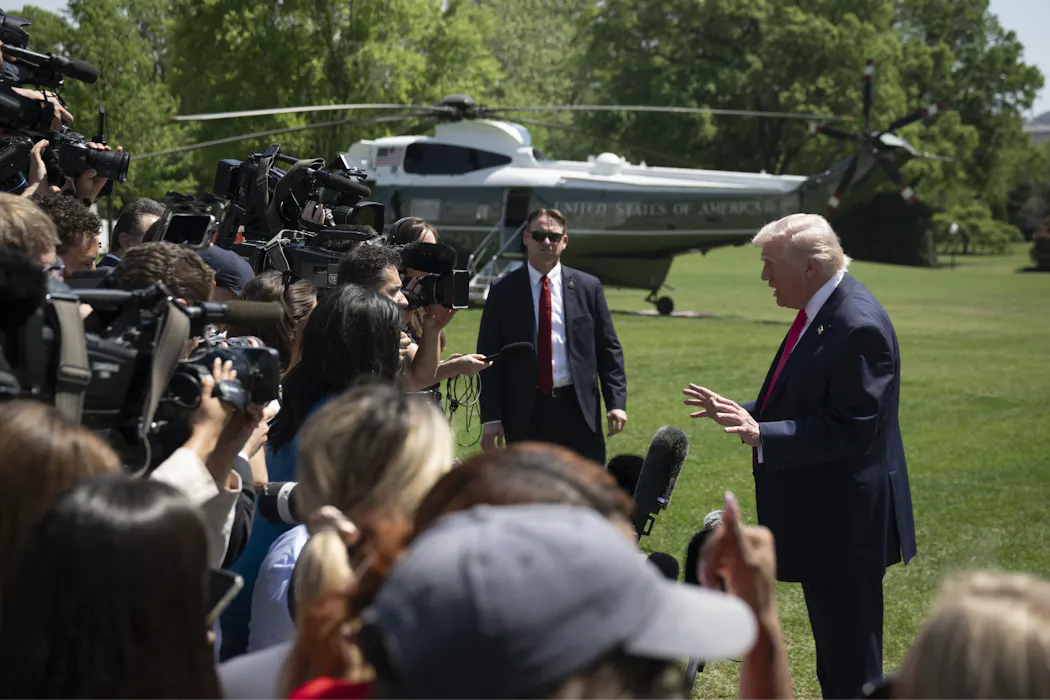
The first half of 2026 has been a chaotic time for U.S. foreign policy: new tariffs, threats to annex Greenland, the capture of Venezuelan President Nicolás Maduro and the struggle for control of the Strait of Hormuz.
As a researcher focused on the values and rhetoric of American presidents, I study how presidents and their administrations communicate to the public about foreign policy. My primary aim is to understand the values systems and policy priorities that make up a president’s public persona.
I have found the second Trump administration exceptionally difficult to track and assess. Keeping up with Truth Social posts, press conferences and off-the-cuff Oval Office remarks from the president can feel like drinking from a fire hose.
Gone for now are the days when a U.S. president stepped to the lectern and delivered a speech direct from the teleprompter or released a carefully crafted statement that was understood to be official U.S. policy.
In its place is an unpredictable barrage of communication – ranging from traditionally worded executive orders in the mold of previous administrations to an expletive-laden Truth Social post on Easter morning in the midst of Operation Epic Fury, the Pentagon name for the war in Iran.
The president’s rhetorical style, heard most recently on his mid-May trip to China, is explained by political allies as part of Trump’s strategic approach and criticized by his opponents as the dangerous musings of an unstable leader.
In either case – whether it’s Trump’s defenders or detractors – it is increasingly difficult to ascertain whether the language of the president signals actual policy positions from the White House.
If the words of the American president no longer function as reliable indicators of U.S. foreign policy, where can the public, U.S. allies and America’s adversaries look to better understand the administration’s geopolitical priorities?
One answer may be found by examining the words of key Cabinet members.
Trump’s second term has introduced a political paradox: because he is president, his words carry enormous weight. And yet, because of his hyperbolic and often erratic communication style, each statement also carries significant political uncertainty.
Will the next social media post threatening to exit NATO hint at a real policy position? Or will it simply disappear into the digital information ecosystem as another “Trump being Trump” moment?
The rhetoric of Cabinet members increasingly serves as a bridge between Trump’s erratic communication style and actual policy.
Public statements delivered in 2025 by Vice President JD Vance, Secretary of State Marco Rubio and Defense Secretary Pete Hegseth offered, I believe, critical insight into the administration’s foreign policy vision and helped lay the groundwork for major policy actions in 2026.
In February 2025, Vance stood at a lectern at the Munich Security Conference to address a gathering of prominent European political and military leaders. Many analysts expected an aggressive speech from Vance criticizing Europe’s spending on defense in the context of shared American-European security concerns, such as NATO and the war in Ukraine.
Instead, Vance argued that Europe’s political elites had failed to defend “Western” values. Speaking over audible gasps from attendees, Vance declared: “What I worry about is the threat from within, the retreat of Europe from some of its most fundamental values, values shared with the United States of America.”
Using freedom of speech as a shared value, Vance argued that many left-leaning European governments – not authoritarian-led Russia or Hungary – posed the real threat to this cornerstone of Western society.
As the first major foreign policy speech delivered abroad by the second Trump administration, Vance’s remarks signaled a major shift in America’s approach to the trans-Atlantic alliance.
The speech suggested that, in the eyes of the administration, the “values-and-interests” framework that shaped the U.S.-European relationship post-World War II had weakened. In that phrase, “values” are understood as a country’s moral and cultural preferences and its “interests” as the factors that advance its security and prosperity.
Instead, Vance argued that liberal values alone would no longer guarantee cooperation, and the administration made clear it would not avoid public fights over ideological differences with European allies.
The speech also appeared to send a clear signal to right-leaning political leaders in Europe, including then-Hungarian Prime Minister Viktor Orbán, that their brand of “Western” values had become increasingly attractive to Washington.
It is not difficult to connect Vance’s Munich speech to the administration’s subsequent embrace of right-leaning political leaders and its pullback from postwar liberal foreign policy priorities, such as a commitment to international aid.
One of the most tumultuous domestic periods of Trump 2.0 came during the DOGE process of massive budget cutting, which eliminated programs across the government.
One DOGE flash point was the fate of the U.S. Agency for International Development, or USAID, which since 1961 had been the American government’s primary organization delivering humanitarian aid globally.
On July 1, 2025, the administration officially announced that USAID would stop providing foreign assistance, which it had been doing in approximately 130 countries.
That same day, Rubio published an article on the State Department’s Substack account titled Make Foreign Aid Great Again, arguing for a new approach that prioritized “trade over aid, opportunity over dependency, and investment over assistance.”
Like Vance in Munich, Rubio adopted an overtly aggressive tone in criticizing both USAID and America’s broader humanitarian aid model. Rubio argued that the “charity-based model failed.” Rubio’s rhetoric built on and complemented themes from Vance’s speech.
First, it reinforced the administration’s broader free-ride-is-over argument that prioritized quid pro quo relationships over established liberal values-based commitments. While Vance applied this logic to European allies in the context of “Western” values and military support, Rubio applied it to humanitarian aid projects and America’s relationships across the Global South.
Second, Rubio’s remarks made clear that a quid pro quo foreign policy rooted in what he deemed to be U.S. national interests would increasingly shape State Department decision-making – regardless of the humanitarian consequences from cuts to international aid programs or multilateral institutions such as the United Nations.
In September 2025, Secretary of Defense Pete Hegseth stood in the Oval Office alongside Trump to discuss his department’s renaming to the “Department of War.” Hegseth asserted that the War Department would focus on “maximum lethality, not tepid legality; violent effect, not politically correct.”
Viewed alongside the administration’s actions in late 2025 and into 2026 – from attacks on nonmilitary vessels around Venezuela to the extraction of Maduro, to the scale of destructive force deployed against Iran – the “maximum lethality” statement may prove to be one of the most consequential rhetorical moments from a Trump Cabinet official.
As Operation Epic Fury continues, Hegseth has defiantly reaffirmed the administration’s “maximum lethality” posture. At one point he declared that “we negotiate with bombs,” and at another briefing he called for “no quarter, no mercy for our enemies” – a practice that violates international law.
These remarks and others underscore the administration’s rejection of international law and diplomacy in favor of military force as the preferred tool of American foreign policy.
In 2025, Vance, Rubio and Hegseth articulated new visions of America’s role in the world. In their own ways, they deployed rhetoric that sought to reshape U.S. foreign policy by redefining Western values, embracing quid pro quo relationships and prioritizing military force as guiding principles of the Trump administration’s agenda.
Despite the daily frenetic social posts and statements from Trump, members of his Cabinet will surely continue to project their own moral and political visions of America throughout 2026 and beyond.

Kevin Maloney is affiliated with the Carnegie Council for Ethics in International Affairs.
Politics + Society – The Conversation
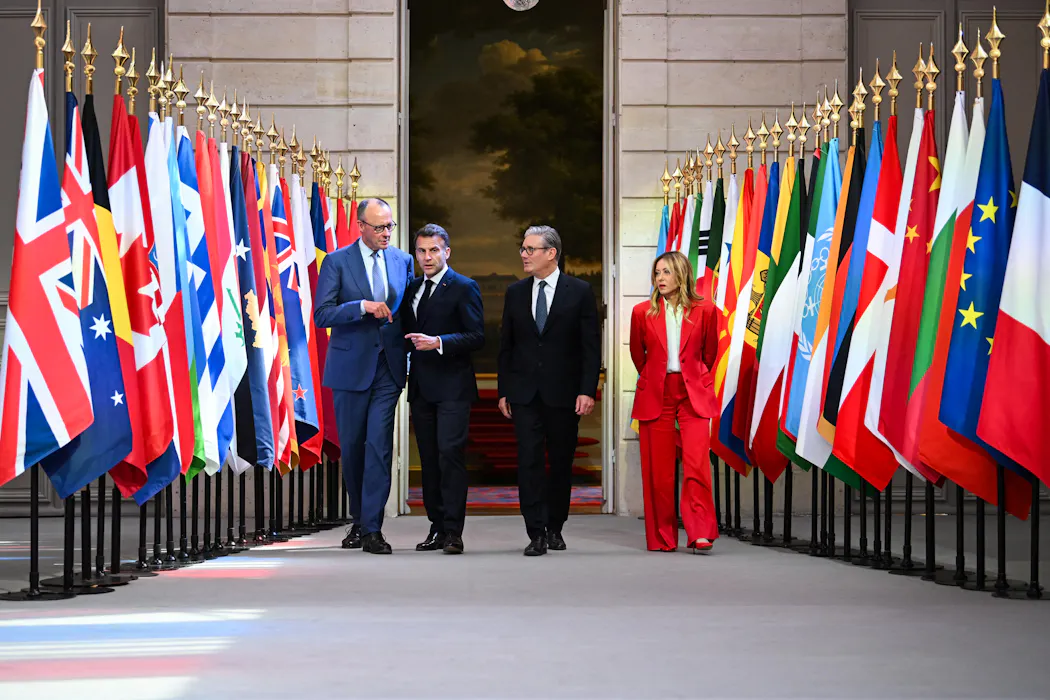
Days after U.S. and Israeli strikes on Iran began on Feb. 28, 2026, Spanish Prime Minister Pedro Sánchez denied American forces the use of the Naval Station Rota and the Morón Air Base – installations that had hosted U.S. troops for more than 70 years.
“We are a sovereign country that does not wish to take part in illegal wars,” Sánchez said. U.S. President Donald Trump responded by threatening a full trade embargo against Spain.
Weeks later, Italian Prime Minister Giorgia Meloni – Trump’s closest European ally and the only EU head of government invited to his second inauguration – broke publicly with Washington.
“When we don’t agree, we must say it,” she said. “And this time, we do not agree.” Rome then refused to let U.S. bombers refuel at a base in southern Italy.
These are not minor diplomatic frictions. As a scholar of alliance politics and nuclear security, I see something much larger than a tactical disagreement. The Iran war’s most consequential casualty may not be in Tehran. It may be American credibility as an ally, and with it, the trans-Atlantic alliance itself.
The initial U.S. and Israeli strikes on Iran were launched with virtually no advance consultation with European allies. The Trump administration treated NATO partners not as participants in strategic decision-making but as logistical infrastructure to be commandeered or punished for refusing assistance.
European governments, even those most invested with the U.S., declined to join the campaign. The Trump administration has responded with the embargo threat against Spain and the withdrawal of 5,000 U.S. troops from Germany.
“The U.S.A. will REMEMBER!!!” Trump posted on Truth Social on March 31, 2026.
The reflex in Washington has been to read this as a rerun of 2003, when France and Germany opposed the Iraq War. In January 2003, Defense Secretary Donald Rumsfeld dismissed France and Germany as “old Europe” while courting the postcommunist “new Europe,” including Poland, the Czech Republic and Hungary.
On the surface, the parallel is tempting: a unilateral American war in the Middle East, European refusal to participate, trans-Atlantic recriminations.

But the comparison conceals more than it reveals. In 2003, the United States wanted Europe in its coalition. The George W. Bush administration sought United Nations authorization, courted allies and treated European refusal as a problem to be managed.
In 2026, the Trump administration explicitly does not want European input. It views allies as freeloaders and threatens them with economic coercion. It treats their hesitation as cause for retribution rather than negotiation.
The deeper difference is structural. In 2003, the trans-Atlantic alliance still rested on shared commitments to collective defense, open trade and an international, rules-based order.
Today, the Trump administration does not share the commitments that traditionally bound the United States to its European partners, whether on NATO, the Russia-Ukraine war, or the rules governing trade and migration.
The shared values that papered over the Iraq disagreement in 2003, and that allowed President Nicolas Sarkozy to reintegrate France into NATO’s command by 2009, are no longer there to do the work of repair.
The April 2026 collapse of Viktor Orbán’s 16-year rule in Hungary left Trump without a serious political ally among major European governments.
A more illuminating precedent lies further back. In 1956, Britain and France went to war with Egypt over the Suez Canal, in coordination with Israel, deliberately concealing their plans from the Eisenhower administration. Washington responded by threatening to crash the British pound, forcing London and Paris into humiliating retreat.
The crisis is conventionally remembered as the moment Britain accepted that it was no longer an independent great power.
But its more important legacy was strategic. Suez exposed the depth of Europe’s dependence on the United States. That humiliation drove Charles de Gaulle’s pursuit of an independent French nuclear deterrent. It also accelerated European integration and planted the recognition that genuine strategic autonomy would be a generational project.
The Iran war inverts the conditions of that lesson. In 1956, Europeans learned that they could not act independently of Washington. In 2026, they are learning that they cannot rely on Washington’s consent being available, and that the U.S. will act without them, against their stated interests and at their economic expense.

The pattern is the same: Dependence on the U.S. is unsustainable, and autonomous capacity is no longer optional. What has changed is that Europe is now willing to use the financial, economic and military tools it has long possessed in ways it would not have considered before.
The EU’s €90 billion joint-debt loan to Ukraine signals an autonomous European strategic stance. So do discussions of activating the bloc’s anti-coercion trade instrument against U.S. tariffs, France’s nuclear arsenal expansion and offers to “Europeanize” deterrence.
The strategic postures were debated for decades. The Iran war is making them operational.
This is not yet European strategic independence. Europe remains militarily reliant on U.S. air defense, satellite capacity and intelligence.
The closure of the Strait of Hormuz, for example, has forced an uncomfortable energy reckoning with American liquefied natural gas, Russian pipelines, Middle Eastern hydrocarbons and Chinese-dominated renewable supply chains. None of the available paths to energy security run through trusted partners.
France and Germany still disagree on nearly every detail of how integration should proceed. But the political condition for autonomy, a shared European belief that Washington can no longer be trusted to share strategic decision-making, has crystallized in a way that no previous crisis produced.
The post-1945 trans-Atlantic bargain traded U.S. security guarantees for European deference on global strategy. Iraq 2003 strained that bargain. Trump’s first term cracked it, and the Iran war has broken it.
What replaces it will not be a renewed partnership. It will be a parallel relationship between two powers with sometimes overlapping interests and, increasingly, separate strategic horizons.
In 1956, Europe learned how dependent it was on Washington. In 2026, it is learning that dependence is no longer sustainable.
Eleni Lomtatidze, a student in the International Relations Program at the University of Pennsylvania and at SciencesPo Paris, contributed to this story.

Farah N. Jan does not work for, consult, own shares in or receive funding from any company or organization that would benefit from this article, and has disclosed no relevant affiliations beyond their academic appointment.
Politics + Society – The Conversation

Watering plants can be perilous if you have delicate herbs or veggies that get trampled by your hose. Use wine bottles to create a hose-guide for your garden.

Food Republic – Restaurants, Reviews, Recipes, Cooking Tips
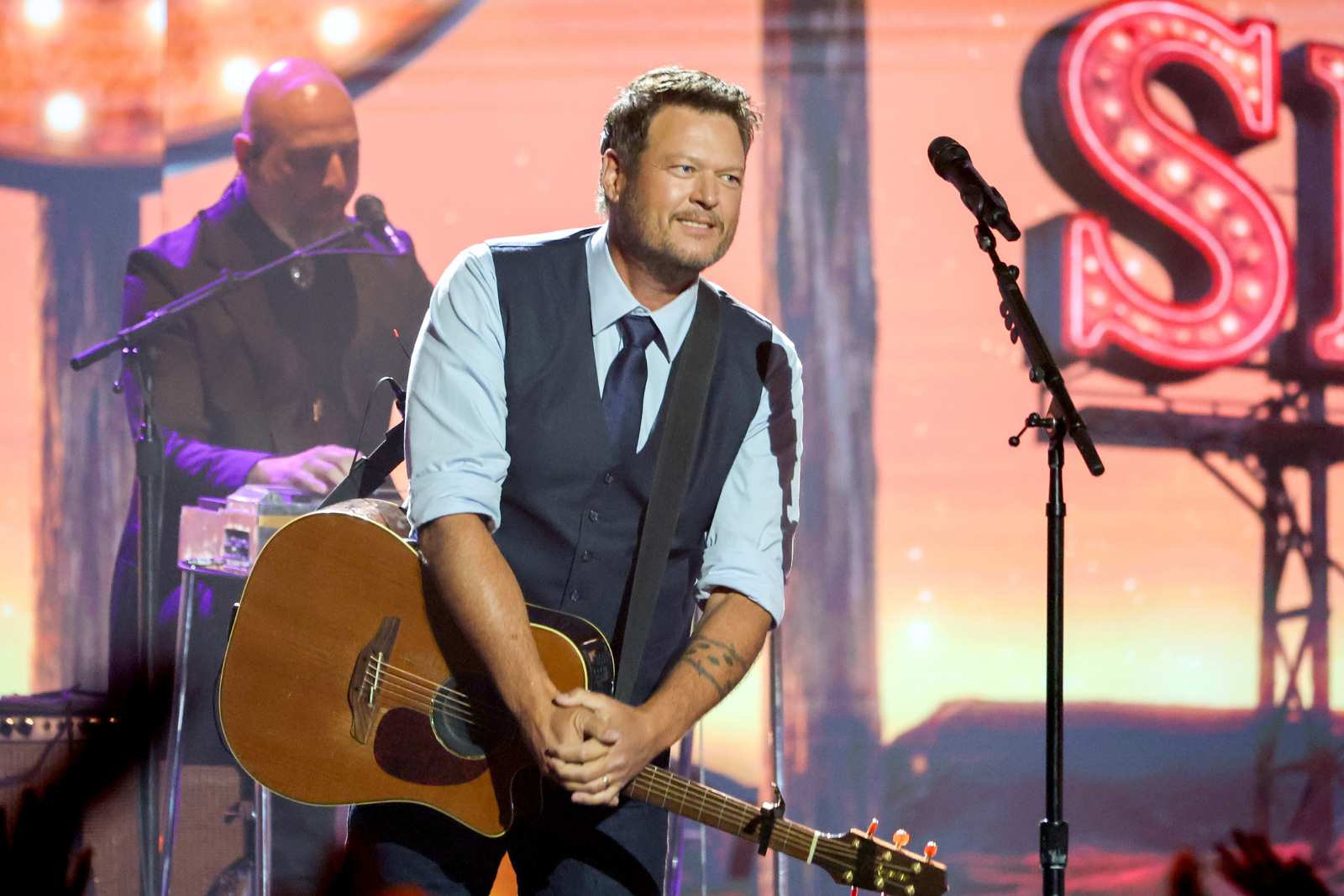
Blake Shelton closed the 2026 ACM Awards with an emotional performance of “The Gambler” honoring legendary songwriter Don Schlitz. Continue reading…The Boot – Country Music News, Music Videos and Songs
Blake Shelton closed the 2026 ACM Awards with an emotional performance of “The Gambler” honoring legendary songwriter Don Schlitz. Continue reading…Country Music News – Taste of Country
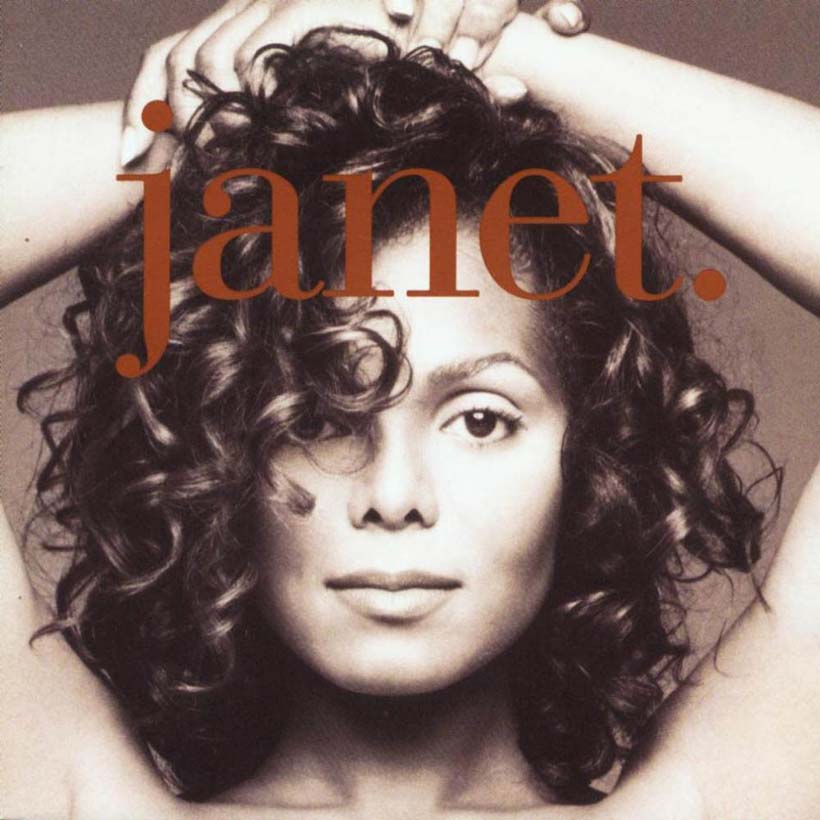
Janet Jackson was a 16-year-old ingénue when she began her solo recording career at A&M Records in 1982. Though she scored a couple of Top 10 US R&B hits (the dancefloor grooves of 1982’s “Young Love” and ’84’s “Fast Girls”), it didn’t look like she would be able to emulate the phenomenal chart triumphs of her elder brother Michael, eight years her senior, whose popularity had reached new heights after the release of his blockbusting 1982 LP, Thriller. Certainly, no one expected her next move to kick-start a run of US No.1 albums that included 1985’s Control, 1987’s Janet Jackson’s Rhythm Nation 1814, and 1993’s transatlantic chart-topper, janet.
Things changed for the 19-year-old singer when she teamed up with writing and production duo Jimmy “Jam” Harris and Terry Lewis, former members of Minneapolis funk group The Time, who had helmed big US R&B hits for The SOS Band (“Just Be Good To Me”), Force MDs (“Tender Love”), Cherrelle (“I Didn’t Mean To Turn You On”), and Alexander O’Neal (“Innocent”). Though Jam and Lewis had a proven track record of delivering hits, nothing in the music industry is guaranteed, and for Janet Jackson, who was dissatisfied with her previous records, it felt like the last chance saloon, as she told this writer in 2001: “That was a point where it was like a crossroads for me in my career. If it wasn’t going to pan out, I was going to go back to school to study business law, but I thought I would try music one more time.”
This time, though, Janet desired a fresh new approach. “I wanted to do it differently than being handed a piece of music and told, ‘Here, sing this,’ which it was in the past,” she said. “I wanted to express myself, and Jimmy and Terry allowed me to do that. Jimmy and I rode around Minneapolis and we talked about my life and what I had gone through.”
These conversations became the basis for the songs they wrote together for the aptly-titled album Control. Released in January 1986, it topped both the US pop and R&B albums charts, and yielded five American R&B No.1 singles, including “What Have You Done For Me Lately.” At that point, Janet was hotter than her brother, Michael, who had yet to release a follow-up to Thriller.

Jam and Lewis had unlocked the real Janet Jackson and helped her to realize her potential. “They allowed me to open up to them and express myself,” she said. The new music, including the astounding seven hit singles lifted from Janet Jackson’s Rhythm Nation 1814, ignited a major-label bidding war that saw Virgin Records emerge triumphant for a purported $40 million.
After a four-year gap, janet. emerged on May 18, 1993. As with her two previous albums, it was produced by the dependable Jam and Lewis. Jackson’s rationale for having them on board was simple: “They allowed me to grow, they allowed me to blossom,” she said, “and I love working with them. The relationship that we have is just great. We’re like friends and they’re like brothers to me. We’re very close and I love what we do together. There are no egos involved.” Indeed, all of the credits on janet. – both production and writing – were divided equally between the singer and her two producers.

Though a cursory glance at janet.’s tracklisting reveals a whopping 28 cuts and seemed to indicate a sprawling sonic extravaganza that took full advantage of the CD format’s 80-minute playing time, in actual fact, there were only 12 proper songs, the rest being short interludes. The music on janet. was much more eclectic than on her previous two albums, shifting from the old-school, shuffle-beat pop-soul of “Whoops Now” to the machine-tooled New Jack Swing of “You Want This.” The guitar-led “What’ll I Do” owed a stylistic debt to rock (though the song also features R&B-style horns), while the thumping dance groove of “Funky Big Band” is peppered with old-time jazz samples.
While there are nods to the past, janet. also looks to the future with a slice of electro trance-dance called “Throb,” which features erotic moans à la Donna Summer on “Love To Love You, Baby.” Hip-hop, then the dominant currency in pop, is referenced on “New Agenda,” which features a noteworthy cameo from rap Public Enemy’s head MC, Chuck D.
Though mostly dominated by energetic dance tracks, janet. does have some moments of repose, especially toward the end of the album. “Again” – a song that appeared in the movie Poetic Justice, in which Janet Jackson appeared, alongside Tupac Shakur – is a fairly conventional R&B ballad that shows the singer’s more sensitive side. “The Body That Loves You,” meanwhile, is jazzier and more sensual, while “Any Time, Any Place” is an R&B-tinged slow jam that digs deeper into an erotic groove.
Without doubt, janet.’s centerpiece was its first single, the mesmeric groove ballad “That’s The Way Love Goes,” which won a Grammy for Best R&B Song. With its subtle, jazzy inflections and infectious chorus the song spent eight weeks at the top of the American pop charts in the summer of 1993 (it reached No.2 in the UK). The song’s success helped to propel the parent album, released in June of that year, straight to the top of the US R&B and pop albums charts. The album sales were staggering and janet. spent 106 weeks on the Billboard 200, eventually being certified sextuple-platinum by the Recording Industry Association Of America.

While Control was an assertion of self-determination and … Rhythm Nation 1814 represented a critique of social inequity, Janet was a frank and liberating celebration of the singer’s sexuality. Coming from a member of the US’s first family of entertainment, the Jacksons, who had been brought up in the strict Jehovah’s Witness faith, Janet Jackson’s frank exploration of love and sex was shocking to some. But it was fairly tame compared to the singer’s next opus, 1997’s The Velvet Rope, which delved into even darker erotic themes. Even so, janet. represents an important milestone in Janet Jackson’s evolution, both as a person and a recording artist.
Listen to Janet Jackson’s janet. now.
Discover more about the world’s greatest R&B artists | uDiscover Music