Leon Panetta on Iran, Ukraine and the new global power struggle
 lead image
Politics








lead image
Politics
 Oh, snap! Jaime Pressly is on OnlyFans.
The My Name Is Earl alum launched her account May 7, joining a growing list of actresses creating content on the subscription-based platform known for…
E! Online (US) – Top Stories

 Hugh Jackman was Blake Lively’s superhero at the 2026 Met Gala.
Although Ryan Reynolds didn’t attend the New York ball with his wife of nearly 14 years, Jackman was able to fill in for his…
E! Online (US) – Top Stories

 “That’s hot” applies to more than just the weather this summer. Paris Hilton is bringing her signature style to the new “It’s Old Navy” campaign alongside her mom, Kathy Hilton, and the looks are…
E! Online (US) – Top Stories

 Candace Cameron Bure is ready for a new kind of full house.
The Fuller House alum and husband Valeri Bure’s daughter Natasha Bure is pregnant and expecting her first baby with Bradley Steven…
E! Online (US) – Top Stories

 Summer technically doesn’t start until late June, but if you ask us, the season starts as soon as the first Memorial Day sale drops. And let’s just say there is no shortage of early Memorial Day…
E! Online (US) – Top Stories

Now that the NFL Draft is behind us, the bulk of the 2026 NFL offseason is in the books — and it was really one to remember. There were 10 new head coaches hired, the most since 2022. The Arizona Cardinals decided they no longer wanted Kyler Murray, but the Minnesota Vikings deemed him good enough to sign him and allow him to compete with J.J. McCarthy for the starting quarterback job. The Las Vegas Raiders, meanwhile, will seemingly start veteran Kirk Cousins after taking Fernando Mendoza with the first overall pick in the 2026 NFL Draft. The Los Angeles Rams might have had the biggest swings this offseason. They traded for All-Pro cornerback Trent McDuffie in a deal with the Kansas City Chiefs, giving up a first-round draft pick in that deal before using another first-round pick to surprisingly take quarterback Ty Simpson. But the biggest news this offseason surrounded a blockbuster trade that didn’t happen. The Baltimore Ravens landed star edge rusher Maxx Crosby for a few days before pulling out of the deal due to his medicals. As Crosby remains with the Raiders, the Ravens opted to sign star edge rusher Trey Hendrickson instead. So, now that the dust has largely settled this offseason, let’s take a look at the five teams that have improved the most this spring as we inch closer to the start of training camp in July. Notable additions: Robert Saleh (hired as head coach), Brian Daboll (hired as offensive coordinator), wide receiver Carnell Tate (selected with fourth overall pick in 2026 NFL Draft), edge rusher Keldric Faulk (31st overall pick), wide receiver Wan’Dale Robinson (signed a four-year, $78 million contract), defensive lineman John Franklin-Myers (signed a three-year, $63 million deal) Let’s start with coaching changes. The Tennessee Titans hired a defensive-minded head coach with a strong, charismatic personality in Robert Saleh, who brought in an experienced staff led by former New York Giants head coach Brian Daboll as the team’s offensive coordinator and former Jacksonville Jaguars head coach Gus Bradley as the team’s defensive coordinator. Along with an experienced coaching staff, Saleh’s focus has been surrounding last year’s No. 1 overall draft pick Cam Ward with upgrades at receiver in first-round pick Carnell Tate and free agent signee Wan’Dale Robinson. However, the offensive line remains a question mark. The Titans took late-round flyers on two interior offensive linemen in Fernando Carmona and Pat Coogan. How Daboll changes things schematically, along with how offensive line coach Carmen Bricillo brings that group together, will go a long way to Ward’s improvement. Saleh will make the defense better, an experienced coaching staff will limit mistakes and help Tennessee double its win total from three games in 2025. Notable additions: Linebacker Sonny Styles (selected with the seventh overall pick in 2026 NFL Draft), edge rusher Odafe Oweh (signed a four-year, $100 million deal), linebacker Leo Chenal (signed a three-year, $24.75 million deal), edge rusher K’Lavon Chaisson (signed a one-year, $12 million deal), tight end Chig Okonkwo (signed a three-year, $30 million deal), running back Rachaad White (signed a one-year, $2 million deal) Head coach Dan Quinn isn’t using injuries as an excuse for last year’s disappointing 5-12 finish after reaching the NFC Championship Game two years ago. Instead, the Washington Commanders made wholesale changes on offense and defense, moving on from experienced offensive coordinator Kliff Kingsbury in favor of quarterbacks coach David Blough, who will put Jayden Daniels under center more in the upcoming season. The defensive-minded Quinn also moved on from defensive coordinator Joe Whitt Jr., replacing him with Minnesota Vikings defensive passing game coordinator Daronte Jones. Expect an emphasis on improved pass rush defensively, led by athletic first-round pick Sonny Styles. The team also made a splash in free agency, adding Odafe Oweh after he recorded 7.5 sacks in 12 games with the Los Angeles Chargers last season. And on offense, general manager Adam Peters hopes the additions of running back Rachaad White, running back Jerome Ford and wide receiver Dyami Brown in free agency will lead to more explosive plays. Peters also drafted enticing Clemson wide receiver Antonio Williams in the third round and Penn State running back Kaytron Allen in the sixth round to help achieve that goal. The Commanders should improve this upcoming season and be back in the race for the NFC East division title. Notable additions: Defensive tackle Dexter Lawrence (acquired in trade with New York Giants), edge rusher Boye Mafe (signed a three-year, $60 million deal), defensive tackle Jonathan Allen (signed a two-year, $$25 million deal), safety Bryan Cook (signed a three-year, $40.25 million deal), edge rusher Cashius Howell (selected with 41st overall pick in 2026 NFL Draft) If Joe Burrow can stay healthy, the Cincinnati Bengals have upgraded enough defensively to compete for the top spot in the AFC North. The big move was trading for dominant defensive tackle Dexter Lawrence in a deal with the New York Giants, sacrificing the 10th overall pick in the 2026 NFL Draft. But they also signed defensive tackle Jonathan Allen, edge rusher Boye Mafe and safety Bryan Cook in free agency, helping to fill the void left by edge rusher Trey Hendrickson, who signed with the Baltimore Ravens. The Bengals had one of the worst defenses in the league last season, but have an infusion of talent that includes the addition of defensive linemen Cashius Howell and Landon Robinson through the draft. The Bengals allowed 29 points per game last season. If they can drop that number to the low-20s, Cincinnati will win more games because of an explosive offense. And the Bengals still have insurance behind Burrow in an accomplished veteran quarterback in Joe Flacco. Notable additions: Running back Travis Etienne (signed a four-year, $52 million deal), wide receiver Jordyn Tyson (selected with eighth overall pick in 2026 NFL Draft), guard David Edwards (signed a four-year, $61 million deal), linebacker Kaden Elliss (signed a three-year, $33 million deal), tight end Noah Fant (signed a two-year, $8.75 million deal) The New Orleans Saints appeared to have gotten the quarterback right, with last year’s second-round pick Tyler Shough showing he can be the long-term answer with the way he played in the second half of 2025. New Orleans added an elite playmaker with receiver Jordyn Tyson in the first round. Now the Arizona State product must prove he can stay healthy, dealing with a hamstring injury this past college football season. Third-round pick Oscar Delp is an athletic mover who gives head coach Kellen Moore the ability to use more heavy formations with more tight ends. North Dakota State product Bryce Lance, the younger brother of quarterback Trey Lance, was considered by some scouts I spoke with as one of the most underrated prospects in this year’s draft, with New Orleans adding the wide receiver in the fourth round of the draft. The Saints also signed running back Travis Etienne, guard David Edwards and tight end Noah Fant in free agency. Defensively, Georgia defensive tackle Christian Miller and Ohio State safety Lorenzo Styles should help upgrade the defense. New Orleans also signed Atlanta Falcons free agent linebacker Kaden Elliss to replace departed veteran inside linebacker Demario Davis. Those moves could put the Saints in a position to compete in the winnable NFC South. Notable additions: Running back Kenneth Walker III (signed a three-year, $45 million deal), cornerback Mansoor Delane (selected with the sixth overall pick in the 2026 NFL Draft), defensive tackle Peter Woods (selected with the 29th overall pick), safety Alohi Gilman (signed a three-year, $24.75 million deal), edge rusher R Mason Thomas (selected with the 40th overall pick) With the loss of cornerback Trent McDuffie in a trade and fellow corner Jaylen Watson to the Los Angeles Rams in free agency, the Kansas City Chiefs focused on replacing those playmakers by taking four defensive players with their first four picks in the draft, including cornerbacks Mansoor Delane and Jadon Canady, defensive tackle Peter Woods and edge rusher R Mason Thomas. The Chiefs also signed veteran safety Alohi Gilman and defensive tackle Khyiris Tonga in free agency, revamping their defensive unit from front to back. Offensively, the centerpiece of this offseason was securing Super Bowl MVP Kenneth Walker III in free agency from the Seattle Seahawks. Walker’s arrival should take pressure off Patrick Mahomes to carry the offense, as he returns from season-ending ACL knee surgery. Mahomes is expected to be ready for Week 1, as general manager Brett Veach recently said his star quarterback is ahead of schedule. Add in the return of Travis Kelce, and the Chiefs should rebound from a 6-11 campaign in 2025.Latest Sports News from FOX Sports
If you need to cut down on your salt intake, you have many options. Chef José Andrés prefers this one spice over others to replace salt in your meals.
Mashed – Fast Food, Celebrity Chefs, Grocery, Reviews
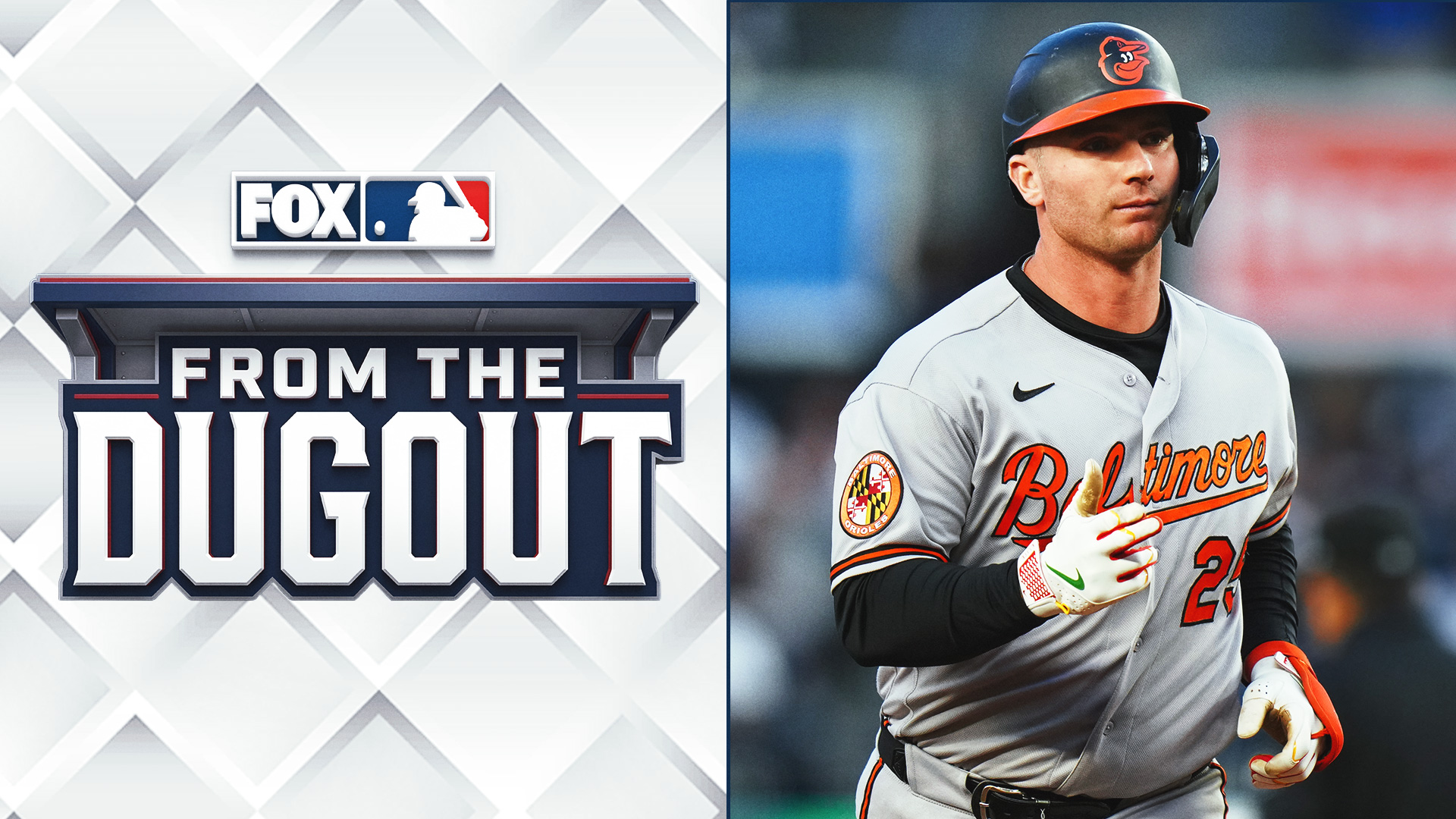
New York — Time after time, leadership gets passed down. That’s especially true for those that are sponges; not only willing to learn, but eager to lead. Pete Alonso grew up in the big leagues alongside some of the greatest players who have ever stepped on a baseball field. In 2019, even as he slugged his way to 53 home runs and won the National League Rookie of the Year award with the Mets, Alonso never presumed to know it all. He leaned on veterans to understand how to be a professional major-leaguer, and how to do things the right way. Seven years ago, he didn’t know where life would take him. Now, playing with the Orioles on a record-breaking contract, Alonso is bringing all that he’s learned to Baltimore, aiming to shape it into a championship-caliber organization. “I was really fortunate,” Alonso told me at Yankee Stadium this week. “I’ve had a lot of great teammates. Max Scherzer, [Jacob] deGrom, [Justin] Verlander. Future Hall of Famers. And for me, too, Noah [Syndergaard] was a huge influence. Robbie Cano, Todd Frazier. So those guys, they would take me out to dinner, bring me places, introduce me to things. They were like, ‘This is not only how you play, but this is how you behave.’ It was like, these are the standards of what you need to carry yourself as a professional, not just in the big leagues, but in New York. “And I feel like those professional life lessons, they kind of helped me through. It’s definitely made a big impact. They were showing me, this is what you do in the big leagues. This is how you operate. So, for me, I’m paying it forward. I was on the receiving end for a number of years, so now it’s like, it’s my turn.” Being a mentor to his Baltimore teammates has come naturally for the first baseman. It was Alonso’s idea to take the O’s to the Clemente Museum — which is dedicated to preserving the life and legacy of baseball player and humanitarian, Roberto Clemente — when they traveled to Pittsburgh to play the Pirates in the second week of the season. Over the years, Alonso has built a strong relationship with the museum’s owner, Duane Rieder, who the slugger said, “Makes some of the best wine and has incredible baseball memorabilia.” The Clemente Museum houses an urban winery in the cellar, which surprised some younger players. “It’s just really an unbelievable hangout spot,” Alonso said. “I think it’s the best one in Pittsburgh. So it’s an easy thing to do. I want to be able to do things like that because we did a lot of things that built camaraderie on some of the good teams that we had with the Mets. All good teams, they do stuff together.” The Orioles entered Thursday with a 17-20 record. Much like many contending teams around the league struggling to eclipse .500, it’s not the start Baltimore had hoped for. But Alonso is reminding his new club to stay the course. Those who are getting to know the way the “Polar Bear” works have appreciated that, even if Alonso goes 0-for-4 with four strikeouts at the plate, he’s still the same guy, keeping his head up, afterward. Orioles teammates describe Alonso as a vocal leader. He’s often the first to speak up on team bus rides. He’s tapping players on their backs after losses, saying, “We’ll get ‘em tomorrow.” He’s spending extra time in the batting cages with hitters — particularly after games, wins or losses — to help when someone isn’t having the most success at the plate, or if someone’s struggling with a certain pitch. Third baseman Coby Mayo, now in his third year in the big leagues, has struggled to hit offspeed pitches this season. He was starting to get down on himself when Alonso stepped in and offered a new approach: “How about just eliminating the pitch?” Alonso advised Mayo to stop swinging at curveballs and sliders, and then opposing pitchers might change their game plans against the 24-year-old. Mayo has since focused on working himself into better counts. He’s forcing pitchers to throw more competitive pitches in the strike zone. “Instead of worrying about not hitting this pitch well, mostly, it’s because you’re not swinging at the right ones, and you’re chasing them too much,” Mayo told me, explaining how Alonso has collaborated with him. “So, just little things that can help you see it in a different way. It’s cool that he takes the time to talk to guys about it.” Guiding younger Orioles hitters like Mayo, Jackson Holliday, Jordan Westburg, Colton Cowser and Jeremiah Jackson was one of the primary reasons owner David Rubenstein was comfortable signing Alonso to a five-year, $155 million contract in December. Alonso’s $31 million average annual value marks the largest commitment in Orioles franchise history. Baltimore’s roster carries several promising young talents, and there was a void in leadership that is now being filled in a way players hadn’t seen or experienced prior to Alonso’s addition. “We would do little things here and there, but I’d say this is the first year when I’ve felt that presence, that leadership presence,” Mayo said. “He’s been great. We haven’t had a guy come into that type of role, making the biggest contract in our history. So it’s definitely a higher level of respect for Pete.” Orioles manager Craig Albernaz considers Alonso his “thought partner.” Being new to the organization, accompanied by a new coaching staff, the first-year skipper has enjoyed bouncing ideas off the first baseman. Alonso is “echoing the right messaging, and he also wants to talk ball,” Albernaz told me. Alonso reached the postseason in 2022 and ‘24 with the Mets, so Albernaz is leaning on the slugger to help the Orioles get back on track. After back-to-back playoff appearances (2023-24), the 2025 Orioles season was a major disappointment. They finished 75-87, last place in the American League East, and were eliminated from postseason contention by mid-September. Following a poor start, manager Brandon Hyde was fired last May. The team failed to recover largely due to an absence of strong pitching and extreme underperformance from their emerging hitters. There was a missing piece in the clubhouse and, so far, Alonso has looked like the answer. After a slow start at the plate, the slugger is beginning to heat up. Alonso’s three-run blast off Marlins right-hander Eury Perez in the first inning Wednesday was the difference in Baltimore’s 7-4 win over Miami. He’s hitting .225/.331/.449 with seven home runs and a 119 OPS+ in 37 games. “Pete was brought in to be Pete Alonso,” Albernaz told me during Orioles batting practice in the Bronx this week. “And everything he brings on the field, it’s been an added bonus of him being him, and how he navigates the clubhouse. It really comes down to him being a great teammate. He really wants the best out of everyone around him. He wants to help. He’s there to help. He’s not overbearing. As I’m talking now, he’s dapping up kids and stuff. He has such a big heart. He cares so much. And he’s such a fierce competitor. He really wants to win every night. He’s about winning.” Community service is another area where Alonso has always been a leader, and he and his wife, Haley, haven’t wasted any time giving back to Baltimore. Last month, the Alonso’s donated $10,000 through the Alonso Foundation to the Baltimore Animal Rescue and Care Shelter, a local shelter not far from Camden Yards. They’ve rescued two dogs, and they love animals, so Alonso described the decision to donate as “a quick, easy thing.” And after becoming parents last September, welcoming their son, Teddy, into the world, the Alonso’s have shifted their efforts to helping families and mothers. Understanding all that it takes to raise a child, they’ve made a few donations to a local Baltimore diaper bank. “Diapers aren’t cheap,” Alonso said. “So we just wanted to kind of help out that way, too. We want to be able to do more, but we’ve just been so busy. As the season starts to kind of unfold, and we spend more time, we’ll have a better plan of how to help out more.” Paying it forward, indeed. “From The Dugout” is where we provide an insider’s view on the biggest and best storylines surrounding MLB’s top players and teams.Latest Sports News from FOX Sports

A drifted home on the outskirts of Kipnuk after Typhoon Halong flooded the Western Alaska village, underscoring the scale of erosion and storm damage facing climate-threatened communities. October 22, 2025. (Photo by Jenni Monet/Alaska Beacon)
Testifying before the Senate Committee on Indian Affairs about last fall’s deadly remnants of Typhoon Halong, Paul J. Paul, Chief of the Native Village of Kipnuk, recalled the moment his six-year-old granddaughter asked the family to sing “Silent Night” — in the dark — as early-morning floodwaters swirled violently around their home.
Lucy Martin, a tribal resilience assistant coordinator for Kwigillingok, listened as she dabbed her eyes dry. Earlier that day, she described graves and caskets unearthed by the storm rolling outside her window as her home broke free from its foundation and floated away. “It was a real-life horror movie for me,” she said.
Over two days of field hearings in Anchorage and Bethel, storm survivors from the hard-hit villages of Kipnuk and Kwigillingok offered a rare, emotional account of the fear and lingering hardships linked to the October 12 storm that killed at least one, left two others missing and displaced residents of both communities. Tribal leaders and policy officials used the hearings to urge Congress to rethink how federal agencies handle disaster recovery in rural Alaska.

Only Sen. Lisa Murkowski, R-Alaska and chair of the committee, attended the hearings on behalf of the Senate panel. Assistant Secretary for Indian Affairs Billy Kirkland also participated in the discussions alongside Sen. Dan Sullivan, R-Alaska, who joined the first day of testimony in Anchorage.
“I know that this is not easy,” Murkowski told survivors Tuesday. “We’re here to better understand the impacts of Typhoon Halong, how the federal response worked, where it fell short, and what we need to do together as we move forward.”
No one wants to move back to Kipnuk, the tribal administrator, Rayna Paul said, as she spoke of the destruction and contamination that claimed 90% of village infrastructure. “Our lands have been forever changed by these disasters,” Paul said. “We are no longer safe there.”
Kipnuk has endured three federally declared disasters in just 37 months, each more destructive than the last. Viewing Typhoon Halong as a warning of what lies ahead, both Kipnuk and Kwigillingok — with a combined population of about 1,000 people — have voted overwhelmingly to relocate to higher ground.
But Wednesday’s hearing in Bethel exposed what tribal leaders have warned about for decades: The deep flaws in the federal government’s disaster recovery system — from delayed housing aid and fragmented funding programs to the absence of any formal framework for responding to climate-threatened villages.

“The status quo is not sustainable,” Alaska Native Tribal Health Consortium President and CEO Natasha Singh said, testifying how communities are often left navigating multiple agencies with overlapping rules and unclear authority—all while simultaneously responding to disaster impacts. “For the people we serve, the existing approach is unacceptable.”
Similar concerns were raised by leaders from the Association of Village Council Presidents, the Calista Corporation, the Yukon-Kuskwokwim Health Corporation and the Denali Commission.
Assistant Secretary for Indian Affairs Billy Kirkland highlighted a recently announced $20 million emergency package from the Bureau of Indian Affairs, including $4 million for immediate fuel, water and firewood assistance in 16 Western Alaska villages and $16 million for erosion and infrastructure work in Chefornak.
But questions remained about the status of the BIA’s Tribal Climate Resilience Program, which was renamed the Branch of Tribal Community Resilience by the second Trump administration. The grant initiative represents one of the federal government’s primary funding sources for tribal climate adaptation and migration planning since its creation in 2011.
One tribal administrator taking in the talks, Noelle George from Akiachak, told the Alaska Beacon that roughly $250,000 in erosion mitigation funding awarded during the Biden administration had yet to be distributed under President Trump.
Kirkland, who was confirmed in October, did not directly address the resilience grants during the hearings despite repeated references to it by witnesses. It also remains unclear whether any new funding has been awarded to any new recipients during Trump’s second term. During his first, the administration unsuccessfully sought to eliminate the funding program altogether.
Bryan Fisher, director of Alaska’s Division of Homeland Security and Emergency Management, described Typhoon Halong as the most catastrophic disaster he has seen in 32 years, and warned that federal funding disruptions and staffing shortages have created new obstacles in the recovery process.
“FEMA is hard to work with,” Fisher said bluntly during a question-and-answer session following Wednesday’s hearing.

He added that furloughs and delays within the Department of Homeland Security slowed reimbursements and recovery planning. On April 29, FEMA implemented Immediate Needs Funding, limiting spending to only the most urgent, life-saving measures amid the partial government shutdown.
Still, FEMA said in a six month recovery update that the agency and the state had distributed more than $60 million in individual and public assistance funds tied to Typhoon Halong recovery efforts, including housing assistance, infrastructure repair and debris removal.
In a press conference afterward, Murkowski confirmed that some disaster recovery funds tied to Halong had been stalled in Washington awaiting approvals while DHS funding remained unresolved.
The strain of those delays emerged in the case of Rayna Paul, whose FEMA appeal reviewed by the Alaska Beacon showed the agency denied her request for continued housing assistance after determining her living expenses did not exceed 30% of household income. The denial suggested Paul had achieved some degree of financial and housing stability.
But that stood in stark contrast to her testimony, Tuesday, when she described displaced families in Anchorage facing looming evictions, suicides, depression, bullying in schools and deep cultural isolation far from their ancestral villages.
In that sense, Paul’s denial represented a broader concern raised throughout the hearings: that federal disaster assistance formulas often fail to reflect the realities facing Alaska Native families living on the frontlines of climate change.
As relocation plans slowly take shape, Paul urged lawmakers to support an interim village where displaced families could remain connected to their homelands, while also establishing a federal pilot relocation project for climate-threatened Alaska Native communities.

Murkowski said she is already working with other senators on legislation aimed at reforming FEMA and improving disaster response systems. She also suggested Alaska could become a national model for climate-driven community relocation.
But not without tribal consultation and autonomy. The hearings also revealed growing tensions over agencies and contractors failing to communicate directly with tribal leadership in recovery efforts in Kipnuk and Kwigillingok.
“When you hear the tribal administrator say she learned of what was happening in her community because she saw a picture posted on Facebook, that’s wrong,” Murkowski said.
Tribal self-determination ran as a central theme throughout the hearings, among storm survivors and tribal leaders from across the Yukon-Kuskokwim region. Many stated that the federal government bears a trust responsibility to help Native communities threatened by climate change — particularly in Alaska where federal Indian boarding school policies forced the settlement of tribes now concentrated in some of the state’s most flood-prone danger zones.
For Paul, however, the crisis extends beyond federal policy and agency response. He described how, in his culture, nature is personified — but now storms no longer behave in ways elders recognize.
“Nature is talking to us,” he told the panel. “Remember that nature is stronger than man.”
This post has been updated.