 Just try and keep up.
Kris Jenner once again showed momagers everywhere how to effortlessly steal the spotlight while arriving to the Met Gala 2026 on May 4 with a new take on her signature bob…
E! Online (US) – Top Stories
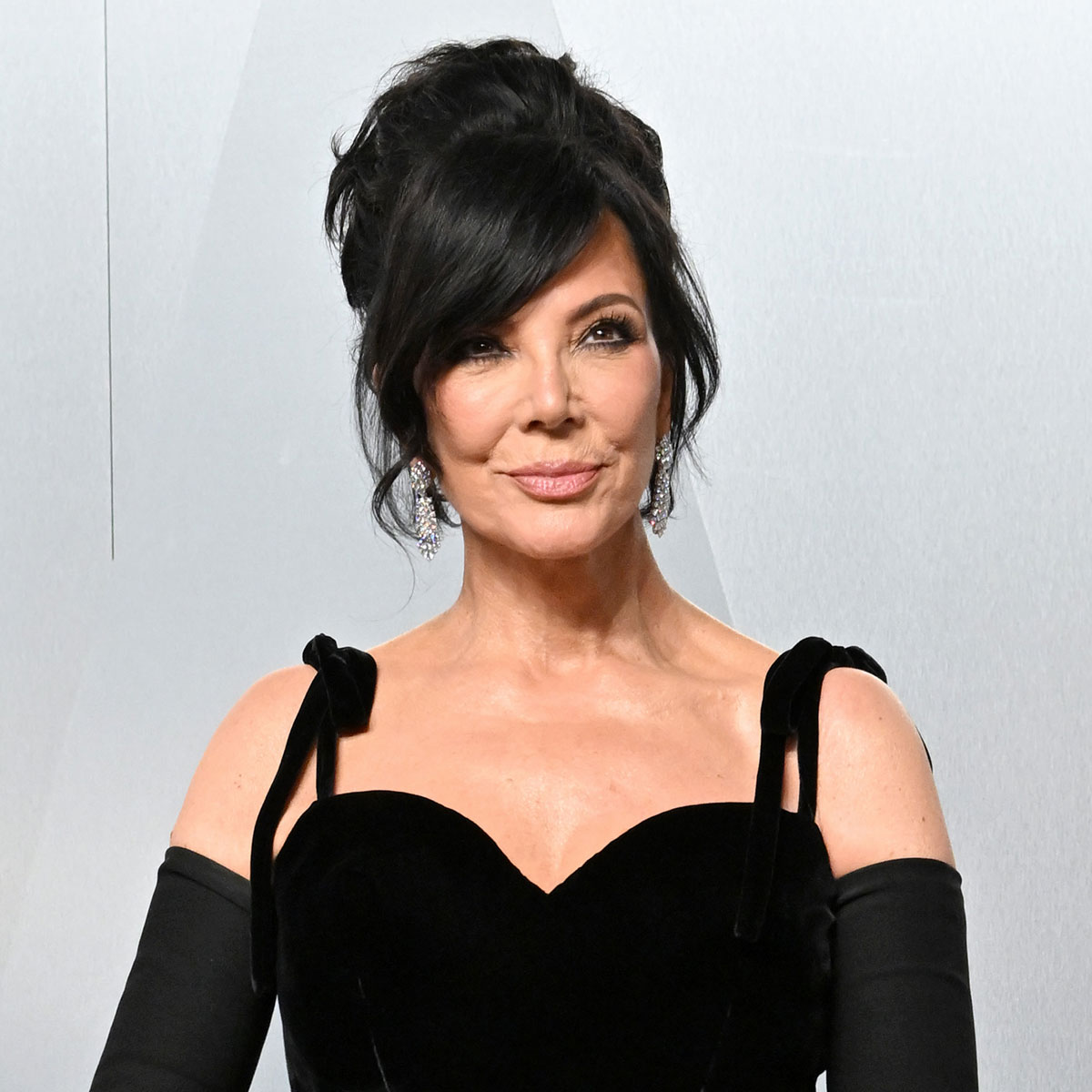








Just try and keep up.
Kris Jenner once again showed momagers everywhere how to effortlessly steal the spotlight while arriving to the Met Gala 2026 on May 4 with a new take on her signature bob…
E! Online (US) – Top Stories

 The Kardashian-Jenners are doing amazing at the Met Gala 2026, sweetie.
After all, mom Kris Jenner and her daughters Kim Kardashian, Kendall Jenner and Kylie Jenner turned heads with their…
E! Online (US) – Top Stories
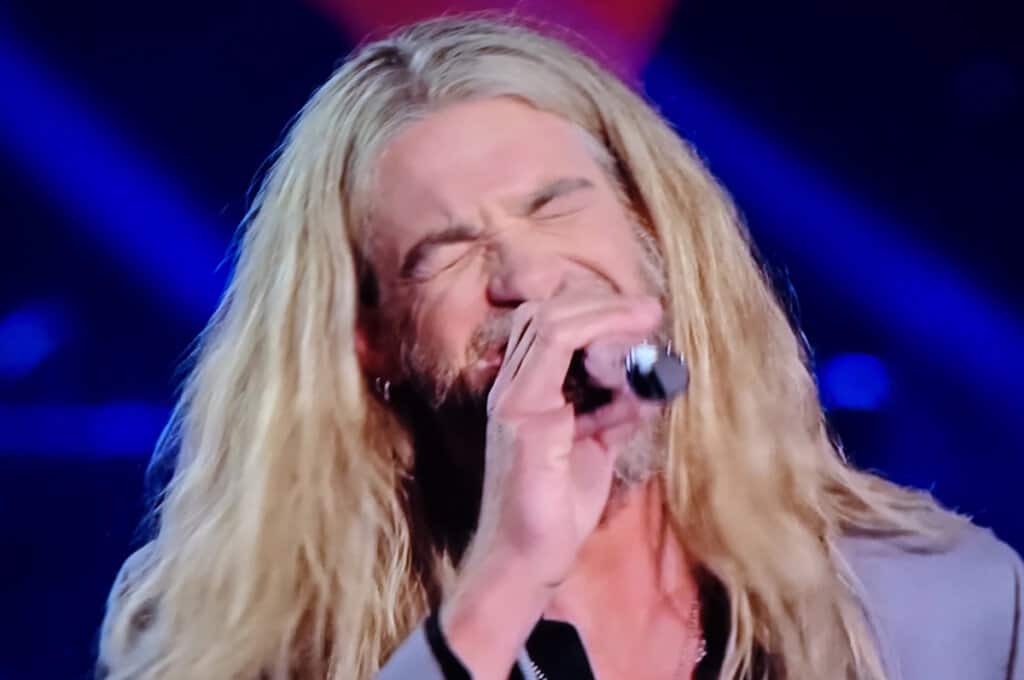
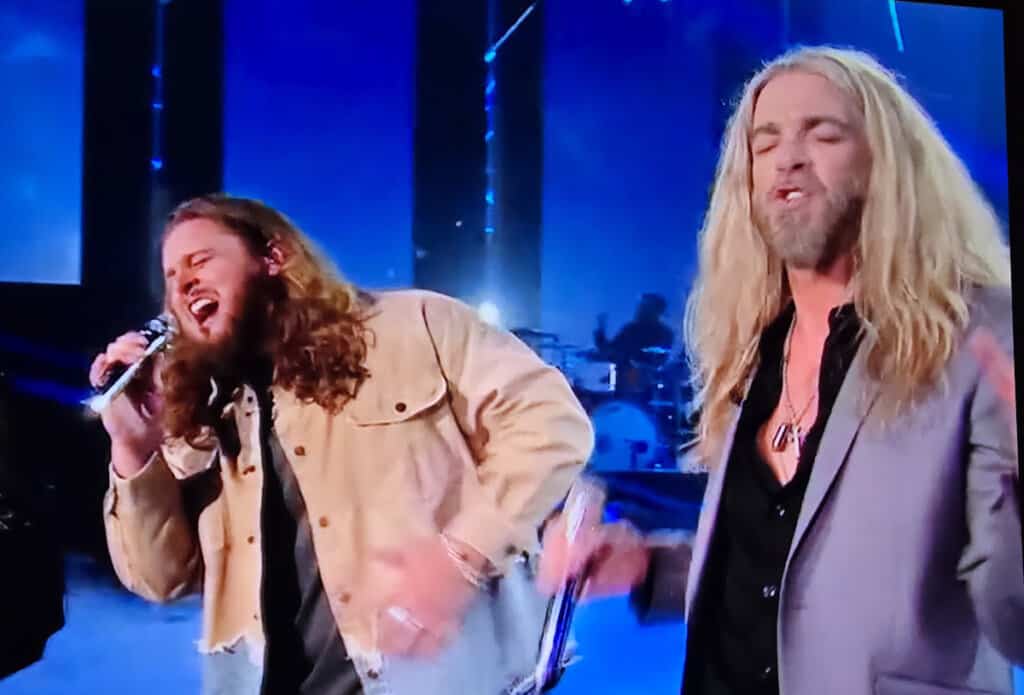
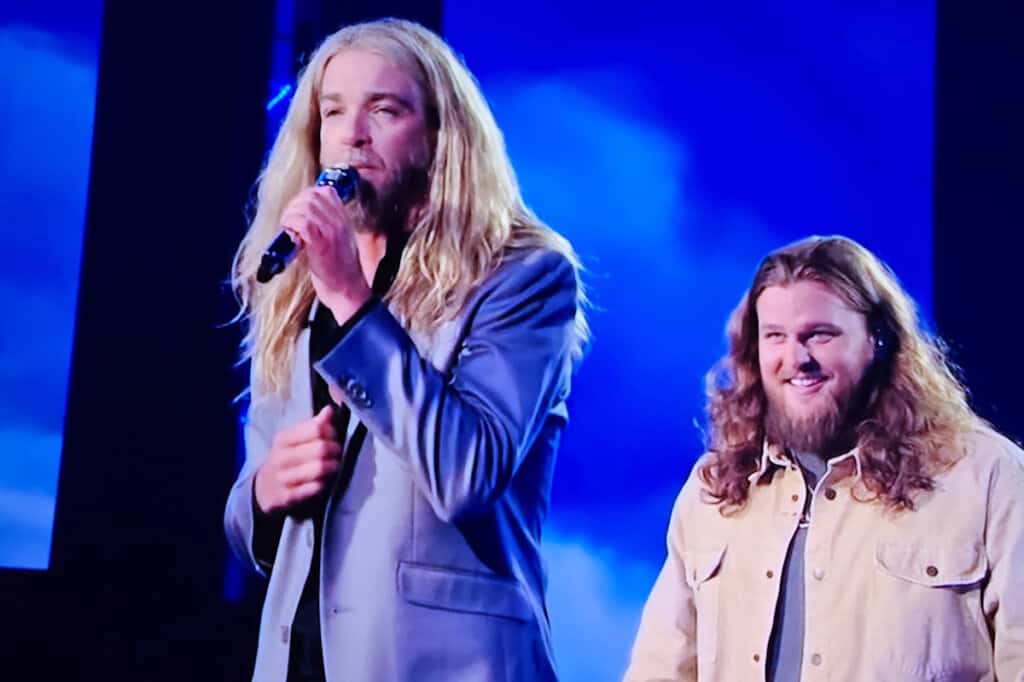
Bucky Covington returned to the American Idol stage on Monday, teaming up with finalist Chris Tungseth to perform “The Thunder Rolls,” the iconic hit made famous by Garth Brooks.
Covington was one of several members of the Idol Class of 2006 who returned for the show’s 20th reunion, alongside Kellie Pickler, Taylor Hicks, Paris Bennett, and Elliott Yamin, all of whom appeared to duet with contestants from this season’s Top 5.
Covington and Tungseth brought the dramatic storyline of “The Thunder Rolls” to life on the Idol stage, delivering a powerful performance that paid tribute to the country classic.
The moment marked a full-circle return for Covington, who originally performed the song during the American Idol semi-finals on March 1, 2006. Nearly two decades later, he revisited the track on the same stage alongside a new generation of contestants.
Now 48, Covington ultimately placed eighth during Season 5 of American Idol. Following his time on the show, he signed with Lyric Street Records and released his self-titled debut album on April 17, 2007. The project debuted at No. 1 on the Billboard Top Country Albums chart and produced charting singles including A Different World, It’s Good to Be Us, and I’ll Walk. He also earned recognition for songs like A Father’s Love (The Only Way He Knew How). Although a follow-up album was expected, the closure of Lyric Street Records ultimately ended that chapter of his recording career.
Covington also made a memorable appearance in Hannah Montana: The Movie.
According to a press release, Covington is now preparing to return to the studio to record new music this year and is also planning an acoustic tour.
Monday night’s episode also welcomed back original American Idol judges Paula Abdul and Randy Jackson, who appeared as a guest judge and guest mentor, respectively. The show also featured Dancing with the Stars pros, adding a touch of ballroom flair to the celebration, while America voted live to narrow the Top 5 down to the Top 3.
The American Idol grand finale is set for May 11, 2026, when the remaining finalists will take the stage one last time to earn America’s votes. Alicia Keys will serve as guest mentor and perform, with additional “music legends” set to be announced soon.
The post Bucky Covington Returns to ‘American Idol’ for Full-Circle ‘The Thunder Rolls’ Performance With Chris Tungseth appeared first on Country Now.
Country Now

 Why yes, Cardi B, you are the drama—at least when it comes to making jaws drop upon arrival at the Met Gala.
The “Costume Art” theme and complementary “Fashion Is Art” dress code for the May 4,…
E! Online (US) – Top Stories

When pineapple season rolls around, you’ll probably start seeing more of them in stores, but how do you pick out a good one? We asked some experts to find out.

Mashed – Fast Food, Celebrity Chefs, Grocery, Reviews

Speaker of the House Bryce Edgmon, I-Dillingham, and Senate President Gary Stevens, R-Kodiak (at rear) preside over Monday’s joint session of the Alaska Legislature on May 4, 2026. (Corinne Smith photo/Alaska Beacon)
After two southeast Alaska Republicans reversed themselves, the Alaska Legislature on Monday failed to override Gov. Mike Dunleavy’s veto of an elections bill intended to take effect this year.
Forty votes were needed to override the veto. Monday’s vote was 38-22, with Rep. Jeremy Bynum, R-Ketchikan, and Sen. Bert Stedman, R-Sitka, providing the critical votes to sustain the veto. Both previously voted to pass Senate Bill 64 and send it to the governor.
Each said after Monday’s vote that they did not believe state officials would be able to implement the bill in time for this year’s elections.
As written, SB 64 contained a swath of changes to state law that were intended to make it easier for Alaskans to vote and to improve the security of state elections.
Among the proposed modifications: Free postage for absentee ballots, a new system for absentee voters to track their ballots through the counting process, a 10-day period for absentee voters to fix problems that disqualified their ballots, updated procedures for auditing the state’s voter list to remove ineligible people, a requirement that the financial backers of ballot measures disclose their identities and a special liaison intended to fix widespread voting problems in rural Alaska.
Dunleavy vetoed the bill on Thursday. In his veto message to the Legislature, he wrote, “the Division of Elections warns such changes would be extremely difficult if not impossible, to implement securely and reliably in advance of the 2026 elections.”
Sen. Bill Wielechowski, D-Anchorage, supported the bill and the override. Speaking ahead of the vote, he said that in 2022, during a special election held after the death of Rep. Don Young, R-Alaska, the state was able to implement a ballot-tracking system within six weeks.
“I’m not prepared to tell Alaskans, ‘Sorry, it’ll have to wait another year. It’s just too hard,’” Wielechowski said.

But Bynum said afterward that he was swayed by statements from the Division of Elections, which said it was uncertain about its ability to implement the system so quickly this year.
“I can’t speak to what they may or may not have done in 2022. I can only speak to what the Division of Elections is telling me today. And what they told me is that this timeline is too aggressive for them to effectively put this in the law,” he said.
Bynum said another factor in his vote was the use of tribal IDs by voters at the polls. SB 64 would have mandated the state to accept their use as voter ID. Bynum said that until the past week, he was unaware that tribal IDs could already be used as a matter of policy.
Bynum said the vote was a difficult one for him and that if the bill had taken effect Jan. 1, he would have voted for it.
Stedman was one of the last legislators to vote, and his opposition was significantly less important because Bynum’s decision had already sustained the veto.
“I think they need more time to implement it. That was it, pretty much. I think there’s a lot of good work in this bill and a lot of positive things, but it just needs a little more time,” he said while walking away from Monday’s joint session.

In March, the House voted 23-16 on March 23 to pass the bill. Rep. Ashley Carrick, D-Fairbanks, was excused absent from that vote but later expressed her support. Two days later, the Senate voted 16-4 to approve the House’s changes and send the bill to Dunleavy.
The veto of SB 64 was Dunleavy’s 10th in the two-year 34th Alaska State Legislature. While prior governors have vetoed more bills during a single Legislature, this Legislature has passed relatively few bills, and Dunleavy has vetoed bills at a higher rate than any previous governor.
Legislators overrode two of Dunleavy’s 10 vetoes. Two others, in addition to SB 64, saw override votes fail. The remaining five were never brought up for an override vote despite opportunities to do so.
The veto means a sixth consecutive year will pass without a significant update to the state’s election system. Bipartisan bills failed in 2022, 2024 and now 2026.
This year’s bill appeared to have the most likelihood of success — it was endorsed by Reps. Sarah Vance, R-Homer, and Kevin McCabe, R-Big Lake, two of the most politically conservative members of the state House, and it had support from House and Senate progressives.
The Alaska Federation of Natives issued a statement urging legislators to support an override, as did other groups.
But many Republicans opposed the changes because they wanted a more rigorous cull of the state’s voter list and oppose easier access to absentee voting.
Ahead of the final vote, Republican writer Suzanne Downing lambasted the bill, as did other socially conservative commentators.
Vance, speaking Monday to the Legislature, said she received “threats” and “bullying” because of her support of the bill and an override.
After the vote, she said “there has been slander and an all-out assault to discredit and, frankly, lie to the people about what this bill does.”
Asked whether she was referring to Downing and her website, which has published a series of articles against the bill, she said, “Very clearly — intentionally misleading the people about what’s actually in the bill, what it does, and claiming that I’m no longer a conservative.”
One of the articles was from Rep. Rebecca Schwanke, R-Glennallen, who urged Dunleavy to veto the bill and on Monday asked legislators to sustain the governor’s decision.
Speaking on the floor, she said rural voters in her district need more than 10 days to fix problems that might have disqualified their absentee ballot.
Sen. Mike Cronk, R-Tok, represents Schwanke’s district and another Fairbanks-area House district. He was in favor of the override.
“If I lose an election because a little old lady in Arctic Village had to cure her ballot and have that one ballot cost me my election, so be it,” he said. “Aren’t we here to make sure every vote counts?”

It’s getting to be picnic weather again, but there’s something you should look out for when you pack your meal: It might be better to avoid cheese.

Food Republic – Restaurants, Reviews, Recipes, Cooking Tips

Costco has introduced all kinds of new products to its stores in 2026. It can be tough to know which ones are worth a try, so we narrowed down some favorites.

Mashed – Fast Food, Celebrity Chefs, Grocery, Reviews

A brown bear stands in water in Katmai National Park on Sept. 27, 2022. The Alaska Department of Fish and Game is poised to start a spring predator control program targeting bears west of the park, in the area used by the Mulchatna Caribou Herd. Some critics of the program say it might wind up killing Katmai bears. (Photo by T. Carmack/National Park Service)
With the Alaska Department of Fish and Game poised to start culling bears in a program to boost the population of a depleted caribou herd, critics have asked a state judge to block the program before the shooting begins.
The Alaska Wildlife Alliance is seeking an injunction to prevent the department from resuming a controversial predator control program in 40,000 square miles of state land east of the Togiak National Wildlife Refuge and west of Katmai National Park and Preserve. The territory is used by the Mulchatna Caribou Herd.
The alliance maintains that the predator control program the department seeks to pursue is no better than the program found unconstitutional last year by two state Superior Court judges, Andrew Guidi and Christina Rankin.
The Department of Fish and Game, however, argues that the constitutional violations the judges identified have been addressed and that the program is too important to Western Alaska subsistence hunters to delay. The department says it must remove bears from the area to give the Mulchatna herd a better chance to recover — and that the removal needs to happen soon, this spring, when the caribou are giving birth to calves that might be vulnerable to bear predation.
The parties were in court on Friday arguing their cases before a third Superior Court judge considering the matter, Adolf Zeman.
“The board has reinstated the exact same predator control program that was struck down by the court as unconstitutional for failure to consider bear population data,” Michelle Sinnott, the attorney representing the Alaska Wildlife Alliance, told Zeman at the hearing.
The only new information that the department has provided concerns caribou, information that is irrelevant to the question of whether bears are adequately protected, Sinnott said.
Kimberly Del Frate, the state attorney arguing on behalf of Fish and Game, told Zeman the bear-culling program, as designed by the department, will not harm the overall bear population.
“The bear removal itself is narrow and targeted,” and therefore does not threaten the sustained yield of the bear population, she said.
Further, an emphasis on Mulchatna herd health over bear numbers is justified, Del Frate argued. Past state Supreme Court rulings and state legislation shows that the concept of “sustained yield,” which is in the Alaska constitution and expresses the principle of managing natural resources for long-term health, is meant to be flexible, she said.
“It expressly allows for preferences among beneficial uses, such as a preference for prey species as a food source over other uses of predator species,” she said.
Zeman, at the conclusion of Friday’s hearing, promised a speedy decision.
“I understand that we’re time-sensitive here, so I will issue a decision here as soon as I can,” he said.
The bear-culling is planned for this month, when the caribou begin giving birth to their calves, said Patty Sullivan, a spokesperson for the Department of Fish and Game. There is not a firm start date, she said.
“Typically, we would start looking for signs of calving in the Mulchatna (area) during the first couple weeks of May. Exact timing varies from year to year depending on how and where calving is occurring. It’s fairly dynamic,” she said by email.
Critics of the program say it threatens populations of bears that use habitat in Katmai National Park and Preserve, among other sites.
The program was initially authorized by the Alaska Board of Game in 2022, and it started in 2023. From 2023 to 2025, the program killed 186 brown bears, five black bears and 20 wolves. Of that total, 11 brown bears were killed last spring, days after Rankin’s May 7, 2025, ruling that found the program legally void. The judge responded by issuing a restraining order against the department.
Both Guidi and Rankin had found that the Mulhatna predator control program, as approved by the Board of Game and carried out by the Department of Fish and Game, violated the constitution’s sustained yield provision by failing to assess population impacts on bears, as well as provisions requiring adequate public notice and participation.
The Board last July approved a revived Mulchatna predator control program; board members said it addressed issues raised by the earlier court rulings.
The Mulchatna herd population peaked at about 200,000 animals in the 1990s but is now down to about 15,000 animals, according to the Department of Fish and Game. Hunting was closed in 2021. The department’s goal is to bring the numbers up to between 30,000 and 80,000 animals, a population size that would support resumed hunting.
The department argues that predator control done to date has already helped the herd. But critics argue that the herd’s population has now stabilized and that factors other than bear predation — including habitat change, disease and past overhunting — are more likely causes of the population decline.

Eagles’ fans didn’t get to hear one of the group’s biggest hits on Saturday night. Continue reading…The Boot – Country Music News, Music Videos and Songs