Categories
Entertainment

‘Inconsolable’ Denise Richards ‘Can’t Stop Crying’ After …

Reading Time: 3 minutes

Over the weekend, actor Patrick Muldoon suddenly died.

He was only 57.

For half a decade, he and Denise Richards were a couple. They had known each other for even longer.

She is now “inconsolable.”

Denise Richards speaks to the camera.
On ‘Denise Richards & Her Wild Things,’ the titular actress speaks about the complex realities of parenting teen girls (and one young adult). (Image Credit: Bravo)

‘She can’t stop crying’

On Sunday, April 19, Muldoon passed away after a sudden heart attack.

Richards and Muldoon dated for almost five years during the late 1990s.

They had known each other since she was 19 and he was 21. The two had met in an acting class.

(And yes, both famous appeared in the classic scifi satirical masterpiece, Starship Troopers.)

Despite having dated and parted ways, they remained lifelong friends — right until his death.

An inside source tells The Daily Mail that Richards is, understandably, not taking it well.

“She’s devastated. Really, really sad,” the insider described.

“I’d even call her inconsolable,” the source then characterized.

According to the insider: “She can’t stop crying.”

Richards has had some famous, ugly breakups with exes. What makes Muldoon stand out is how different things were.

Denise Richards holds up a hand, as if to interrupt filming.
Multiple times, Denise Richards tried to interrupt RHOBH filming on Season 10 by saying “Bravo!” It did not work. (Image Credit: Bravo)

‘They were better friends than lovers’

“Patrick is the ex that she had the best relationship with,” the source reported.

According to the insider: “There was a ton of respect on both sides.”

The source continued: “It was so amicable that they were better friends than lovers and they remained in constant contact.”

The insider gushed: “She was his biggest supporter, he was hers.”

Muldoon’s own words told a similar story, just last year.

Lola Sheen addresses the camera.
On Bravo, Lola Sheen expresses how she feels like she can never win. (Image Credit: Bravo)

In October 2025 — a mere 6 months prior to his passing — Patrick Muldoon sat for an interview on Tori Spelling’s MisSPELLING podcast.

“We both don’t come from entertainment families,” he said of Richards at the time.

“And,” Muldoon continued, “our families got to know each other over the years and kind of checked in with each other on navigating the crazy stuff that we all go through.”

Muldoon also added: “I have a good relationship with both Lola and Sami.” Those are Richards’ adult daughters.

He explained: “I’ve known them since they were first born, and so I have a good relationship with both.”

Denise Richards and Sami Sheen stand in a kitchen.
In the trailer for ‘Denise Richards & Her Wild Things,’ the titular Denise Richards stands beside adult daughter Sami Sheen. (Image Credit: Bravo)

This is a normal and healthy time to grieve

Grief spans years — even lifetimes.

Sometimes, those who lose loved ones find themselves mourning longer than they knew someone — or even longer than the dearly departed person was even alive.

The first days after a loss like this, crying is a vital release valve.

Over time, the grief will express itself in different ways. Strange dreams, sudden stabs of sorrow, a quiet sadness when certain topics arise.

Our thoughts are with all of Muldoon’s loved ones as they process this shock and the ensuing sadness.

‘Inconsolable’ Denise Richards ‘Can’t Stop Crying’ After … was originally published on The Hollywood Gossip.

​The Hollywood Gossip

Categories
Food

My Go-To Late-Night Spot For Korean BBQ In Atlanta

As someone who’s patronized just about every kind of Korean barbecue restaurant in Atlanta, what sets this late-night spot apart from the rest is its variety.

​Food Republic – Restaurants, Reviews, Recipes, Cooking Tips

Categories
Politics

Dems brace for a close finish on Virginia redistricting effort

Democrats hope gerrymandering Virginia will give them the edge they need to win back the House. But Tuesday’s special election is proving more competitive than they’d like.

Tight polling and concerns over voter turnout in an atypical April election have many Democratic party strategists and officials preparing for a close finish.

“I always thought this campaign would be close [and] 24 hours out, I believe that to be the case,” Democratic strategist Jared Leopold said on Monday, before the final day of voting.

“Anytime you’re on the ‘yes’ side of a referendum, you’ve got the burden of proof,” he added. “It doesn’t matter what the referendum is, but anytime you’re arguing for ‘yes,’ the other side is going to be arguing for the status quo.”

The party anticipated its campaign to redraw the state’s congressional maps would be boosted by its massive war chest and a favorable political environment that helped elect Gov. Abigail Spanberger last November. If approved, the aggressive partisan gerrymander could deliver Democrats a 10-to-1 seat advantage in Virginia, which amounts to a net pickup of as many as four House seats.

“I think it was always going to be close,” said another Democratic strategist, granted anonymity to speak candidly. “One side is giving [President Donald Trump] power and the other side is doing a reform that a lot of them don’t really want to do. That’s your choice.”

The election will serve as a test of whether voters in the light blue state will set aside long-standing distaste for partisan gerrymandering to counter a redistricting fight set in motion by Trump last year. With primary elections already underway, this is one of Democrats’ last shots at offsetting or even overcoming the gains Republicans made in Texas and elsewhere before November.

If the ballot referendum fails, it would be an early embarrassment for Spanberger as governor and a high-profile loss for a Democratic Party that has cast Trump’s efforts in existential terms as “election rigging” that undermines American democracy.

The campaigns have drawn heavyweight national involvement from former President Barack Obama and House Minority Leader Hakeem Jeffries, among others, who have campaigned on behalf of Virginians for Fair Elections, which is leading the “yes” effort. On the Republican side, former Gov. Glenn Youngkin has been a vocal critic of the measure. And, after largely staying on the sidelines, Trump made a late push Monday night for the “no” campaign, joining Speaker Mike Johnson for a tele-rally where he sought to remind voters of the stakes.

“Tomorrow, your commonwealth has an incredible, and really, an important election in every sense of the word that will have major consequences for our entire country this November,” Trump said. “This is really a country election. The whole country is watching.”

Public polling suggests the race will hinge as much on persuading voters about the need for new maps as on mobilizing them to the polls for an out-of-cycle election.

A Washington Post-Schar School poll conducted last month shows the “yes” campaign leading by roughly five percentage points among likely voters. That same poll found Republicans are slightly more likely than Democrats to say they planned to vote in the special election or already had — 85 percent to 79 percent.

Many Democrats say they remain cautiously optimistic. There has been an uptick of early voting in recent days, particularly in counties in Northern Virginia, which tend to be blue-leaning. Overall, more than 1.3 million people cast early ballots, according to the Virginia Public Access Project, not much lower than the roughly 1.48 million who cast early ballots in 2025, when Spanberger was running.

“I don’t think there’s been an alteration to whether or not people like gerrymandering,” said John Bisognano, president of the National Democratic Redistricting Committee. “What I do think is, if this is the only way that we can keep the U.S. House of Representatives as a representative body for this nation, people are willing to do it.”

Virginia Democrats have also recently put pressure on the governor to more aggressively campaign on behalf of the “yes” effort and be more outspoken about the stakes of the special election. She was on the campaign trail over the weekend urging voters to back the measure.

“Ultimately, I do think this is more of a persuasion election than a turnout election, and so it’s a test to see if [the] ‘no’ campaign has done an effective job reaching voters,” said Noah Jennings, a Virginia-based Republican strategist unaffiliated with the “no” campaign.

Complicating Democrats’ pitch are two factors: The Virginia Supreme Court could still nullify the redistricting effort after the April election. And, in 2020, voters approved a constitutional amendment that established a bipartisan redistricting commission seeking to limit the partisan redrawing of maps.

That history has given the “no” campaign a potent line of attack.

Conservatives have painted Spanberger as a flip-flopper on redistricting and slammed her for caving to pressure from national Democrats. GOP-aligned groups have also sent out misleading mailers or run ads using past comments opposing gerrymandering to suggest that both she and Obama are “no” votes on the ballot measure.

“The Democrats have deployed over $60 million to rig Virginia’s congressional maps and yet the referendum is extremely close — as all sides acknowledge,” said Mike Young, of Virginians for Fair Maps, the group encouraging voters to vote against redistricting. “That didn’t happen by accident or dumb luck.”

Jennings said if the “no” effort wins on Tuesday, “that’s a very clear showing that there’s a line that you cannot cross.”

“Virginia does have that larger middle that does move independently, and I think those people don’t like the gamesmanship, and they don’t like it from either side,” he said.

The “yes” campaign says it’s unfazed.

“While Republicans have spent nearly $34 million flooding this race with MAGA misinformation, the YES Campaign has been doing the work — knocking over 600,000 doors, communicating directly with Virginians, organizing in every corner of the state, and driving historic early vote turnout,” said Dan Gottlieb, a spokesperson for Virginians for Fair Elections.

The outcome of Tuesday’s election could reverberate well past Virginia. After Trump pushed to redraw congressional boundaries in Texas last year, the fight escalated into a tit-for-tat battle, with each party trying to lock in an advantage ahead of November.

In California last year, voters overwhelmingly approved new congressional districts, offsetting GOP gains out of Texas. Florida could redraw its own maps as soon as next week, which could counter any Democratic gains in Virginia — should the ballot measure pass.

CLARIFICATION: The headline of this article has been updated to more accurately reflect the stakes of the Virginia special election for Democrats.​Politics

Categories
Politics

Rival PACs line up to target GOP cosponsors of immigration bill

The GOP’s escalating infighting over immigration now has a pair of PACs lining up millions of dollars on opposing sides of Republican primaries across the country.

The dueling pledges turn a congressional fight over Rep. Maria Elvira Salazar’s (R-Fla.) Dignity Act into an electoral proxy war between hardliners and moderates over how far the Republican Party should go on immigration reform. It’s putting the bill’s 20 House GOP co-sponsors in the spotlight.

The Homeland PAC, backed by immigration-restrictionist Republicans, launched last week in an effort to primary some of those co-sponsors. Meanwhile, American Business Immigration Coalition Action, a pro-immigration group, secured $1.2 million to protect them through its Building America’s Economy PAC and hopes to raise $5 million in total, according to plans first shared with POLITICO.

The Dignity Act, a bipartisan bill, has faced an onslaught of criticism from conservative MAGA influencers and allies of President Donald Trump, who view it as a nonstarter. While the bill doesn’t create pathways to citizenship, it would allow millions of unauthorized immigrants to eventually gain work permits and remain in the U.S. legally.

Republicans like battleground Reps. Gabe Evans (Colo.) and Brian Fitzpatrick (Pa.) have signed onto the bill. But critics pan it as “amnesty” and signal that the future of the Republican Party hinges on this debate.

Donald Trump is not going to be around forever,” said Ryan Girdusky, the GOP strategist behind Homeland PAC. “The goal is to focus and to put our efforts into the future, and make sure Republicans know that the demand for stronger borders and for reforms to legal immigration and illegal immigration means something. We are not going to roll over and go back to business as usual.”

The clash is playing out as the White House recalibrates its own message on immigration amid plummeting public perception. The administration has shifted away from using the phrase “mass deportations” in public messaging and says it is focusing on deporting the “worst of the worst.”

“Extreme-right internet influencers have escalated their attacks, and we want to ensure the leadership on commonsense immigration reform are protected,” said Rebbeca Shi, CEO of ABIC Action, whose PAC is seeking to defend Republican co-sponsors of the Dignity Act.

Salazar has defended her bill, saying it offers workers “dignity.” But former Trump adviser Steve Bannon called it the “screw American workers” bill. Conservative pundit Megyn Kelly said the bill “is not going to go over well with the GOP base, with the America Firsters.” And conservative members of Congress, including Sen. Mike Lee (R-Utah) and Rep. Brandon Gill (R-Texas), slammed the bill as a betrayal to Trump’s base.

Girdusky, whose Homeland PAC is dedicated to “ending the career of every Republican who supports amnesty and sells out the American people on immigration,” won’t reveal which specific lawmakers he’s targeting or how much money he plans to spend. Several of the Dignity Act’s cosponsors are retiring or represent competitive districts, but Girdusky said his group will focus on those in safe-red seats with primary challenges.

“If any of these members have a change of heart and say, ‘Wow, this is actually a terrible bill for American workers and for the border and enriches human traffickers, I’m going to drop my support of it,’ I’m not going to challenge them in a primary,” he said.

Several hardline immigration groups have jockeyed for influence with the Trump administration, hoping to convince the president to keep his promise to enact the largest deportation initiative in history. But leaning into such an approach risks turning off voters, many of whom disapprove of the president’s handling of immigration so far.

New results from The POLITICO Poll shows that Americans’ views of Trump’s deportation campaign remain broadly negative in the three months since its enforcement surge in Minneapolis. Half of Americans, including one quarter of Trump’s 2024 voters, said his deportation campaign is too aggressive.

Shi said her group will defend the Dignity Act’s cosponsors — both Republicans and Democrats — in primaries, as well as Republicans who voted to reinstate temporary protected status for Haitians last week. She believes signing off on a bipartisan immigration reform bill like the Dignity Act would be a smart political move for the White House ahead of the midterms.

“The White House is very sensitive to the polling on this, and the numbers haven’t changed since Minneapolis,” Shi said. “That’s why the next logical step to win in November is to actually have solutions.”

​Politics

Categories
Hip Hop

Nashboro Records: Highlights From The Nashville Gospel Imprint

Clara Ward

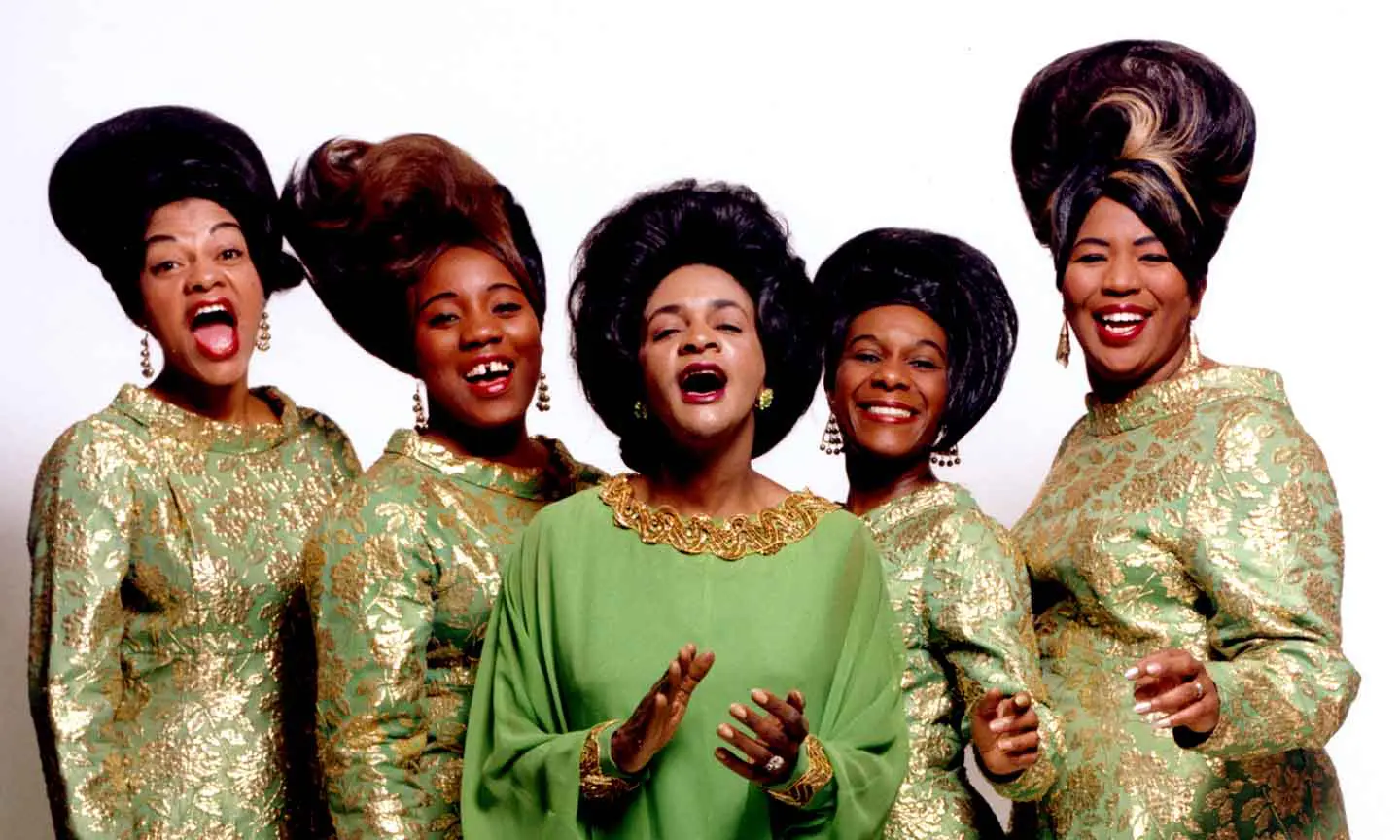
Nashville, globally recognized as Music City, is primarily hailed as the capital of country music. Its central role in the development of gospel music is a less-known fact. But when record store owner Ernie Young founded Nashboro Records in 1951, he began a label that would become one of the most prolific creators and sellers of the genre, capturing the wide range of sounds that gospel encompassed.

The enterprising Young built a studio above his record shop, and later broadcast gospel programs on multiple radio stations from the front of his record shop, which gave him the ability to both record in-house and promote the artists he was recording. He recorded well-known groups from around the country when they passed through Nashville, like the Angelic Gospel Singers, Brother Joe May, and Edna Gallmon Cooke, regional favorites like Morgan Babb’s Radio Four and the Fairfield Four, and got in on the ground floor of the careers of artists like Candi Staton, then just eleven years old singing with the Jewel Gospel Trio, and Jackie Shane, then a teenaged drummer for various Nashboro sessions. The Best of Nashboro Gospel encapsulates some of the greatest moments from this period, now recognized as “the golden era of gospel.”

Listen to the best of Nashboro Records now.

When Young sold the label to Crescent in 1967, Shannon Williams was promoted from Young’s record shop to vice president of production. Williams produced over 200 singles and albums for the label until he left the label in the early 80s, generating hits for gospel icons like Dorothy Love Coates, Alex Bradford, and Sister Lucille Pope. He also conceived the label’s subsidiary, Creed Records, which played a major part in the development of contemporary gospel, signing The New York Community Choir, Benny Cummings & the King’s Temple Choir, Milton Brunson & The Thompson Community Singers, and Harrison Johnson’s Los Angeles Community Choir, all of whom were visionaries of the burgeoning new choir sound, converging gospel with soul, funk, disco, and pop.

At a time when many labels abandoned traditional gospel, Nashboro was insistent on representing the full spectrum of the gospel sound. As Williams told Billboard, “The record sales support our idea that there’s definitely a market for this type of traditional music.” “They were it!,” the late Don Butler, co-founder of the Gospel Music Association, once explained to The Tennessean. “At one time, they had that whole area of the business sewn up.” While the label shut down in the early 80s, their catalog continues to capture new listeners. These are three projects that capture the magic of the distinctive Nashboro sound.

Clara Ward – The Very Greatest

When Clara Ward came to Nashboro in the summer of 1971, she hadn’t had a gospel hit in quite some time. Her mainstreaming of gospel by way of television appearances and nightclub performances alienated the gospel audience that catapulted her to stardom. She’d spent most of the 60s recording inspirational pop songs like The Beatles’ “Help” and “Aquarius/Let The Sunshine In” from the counterculture musical Hair, which further scandalized her more pious listeners. Shannon Williams’ production returned Ward to her gospel core.

Gospel music historian Anthony Heilbut praised Clara’s Nashboro recordings as “pure, hard gospel,” and Clara as an artist who “still has no superiors.” Balancing contemporary tunes written specifically for her by Charles May (a writer for Quincy Jones and James Cleveland) with uptempo, tambourine beaters like “When We All Get To Heaven” and “We’ll Soon Be Done with Troubles and Trials,” and the hymns she loved most like “Beams of Heaven” and “The Last Mile of the Way,” The Very Greatest showcases the talent and spirit that made Aretha Franklin her student as a youngster. “The Last Mile of the Way” earned Ward her last Grammy nomination weeks after her January 1973 death.

YouTube Video
Click to load video

John Whittaker & The Twenty-First Century Singers – Triumphant

Johnny Whittaker first came to Nashboro as part of the BC&M Choir, an interdenominational choir that he co-directed, which scored the label major hits including “I Made a Vow” (led by Regina McCrary of the McCrary Sisters) and “Live So God Can Use Me.” He stepped out and formed the Twenty-First Century Singers, initially a large ensemble that he reduced to a trio, composed of himself, Charles Miller, and Lula Jordan. Whittaker’s dazzling soprano, Miller’s Baptist growl, and Jordan’s sterling alto became synonymous with the Nashboro sound – not only because of their albums, but their contributions to the albums of other artists on the label like Isaac Douglas, Morgan Babb, and Rev. Ruben Willingham. Williams wrote of Whittaker, “I personally know of no other male sopranos in the gospel business – with the exception of Roger Roberts with the James Cleveland Singers – who would hit F’s above high C the way John Whittaker could.”

The Triumphant compilation includes the entirety of this Grammy-nominated group’s 1982 masterpiece of the same title which features Whittaker and Jordan with two new group members, Robin Johnson and Shirley Settles. Twenty-First Century Singers provide a masterclass in the wide terrain of gospel sounds that Nashboro championed. Whittaker reaches for the stars on octave-leaping hymns “The Solid Rock,” “What a Friend We Have In Jesus,” and “Blessed Assurance,” making these studio recordings feel like a live church service. “One of These Days” and “I Want To Be Ready” are unabashed gospel-disco-funk, while “I’m Gonna Love You” and “There’s a Better Day Coming” flirt with R&B almost a decade before BeBe & CeCe Winans hit #1 on the R&B charts.

YouTube Video
Click to load video

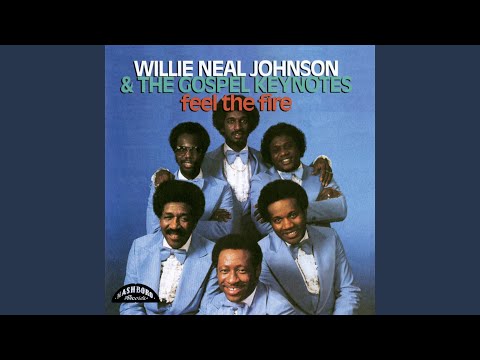
Willie Neal Johnson & The Gospel Keynotes – Feel The Fire

The Gospel Keynotes came to Nashboro in 1964 from Tyler, Texas, inspired by groups like the Swan Silvertones and the Five Blind Boys of Alabama and Mississippi. Over the course of their nearly twenty-year affiliation with Nashboro, they stretched the boundaries of what quartets could do and where they could go. Shannon Williams told gospel music historian Don Cusic, “They’ve done some of the Black college campuses and things of that nature and have been accepted very well. Even though they’re a quartet, they’re not the ordinary quartet. They’re a little more progressive, a little more contemporary.”

Feel the Fire showcases the group’s signature spontaneity in the studio and on stage with burners like “Same Old River” and “I Feel The Fire Burning,” while also going against the grain of convention by venturing into disco with their Grammy-nominated cover of McFadden and Whitehead’s “Ain’t No Stopping Us Now,” and interpreting choir hits of the time like James Cleveland’s “God Has Smiled On Me,” Walter Hawkins’ “Be Grateful,” and Harrison Johnson’s “I Decided To Make Jesus My Choice.”

YouTube Video
Click to load video

Browse our R&B / Soul / Funk collection featuring limited edition vinyl and CDs here.

​Discover more about the world’s greatest R&B artists | uDiscover Music

Categories
Alaska News

Overturning of mining ban in Minnesota has Southeast Alaska tribal leaders worried about similar actions

A U.S. Senate vote overturning a mining ban on U.S. Forest Service land near Minnesota’s Boundary Waters has local tribal leaders worrying it sets a precedent for similar actions in the Tongass National Forest.

The 50-49 vote on Thursday puts the validity of all U.S. Forest Service management plans enacted over several decades into question, according to critics. President Donald Trump is expected to sign the legislation, which had already passed the U.S. House.

House Joint Resolution 140 reverses a 20-year mining moratorium enacted in 2023 by the Biden administration for about 350 square miles of Minnesota’s Superior National Forest. The resolution applies a first-ever use of a provision known as the Congressional Review Act (CRA) — which can overturn federal agency rules and regulations on a majority vote of Congress and the president’s approval — to a management decision on Forest Service land.

Concerns about the resolution’s impact on tribal sovereignty were expressed by White Earth Nation located within Minnesota, which stated the legislation “ignores both science and treaty obligations.” Similar worries about the policy implications in Alaska — and transboundary mining issues involving Canadian and First Nations governments — were expressed during a Central Council of the Tlingit and Haida Indian Tribes of Alaska’s executive council on Friday.

“I do think this sets a precedent that is quite concerning,” said Ku.seen Jacqueline Pata, the tribe’s first vice president.

Among the concerns, said Will Micklin, the council’s fourth vice president, is “it was pushed by Sen. (Dan) Sullivan as the champion of this legislation in the Congress.” Sen. Lisa Murkowski and U.S. Rep. Nick Begich III, the other members of Alaska’s all-Republican congressional delegation, also voted for the resolution.

“It’s a test case for what could be applied in other areas, like Alaska in particular, and what this involved was the ceded lands of White Earth, so this is just the example of the extent that the Congress is now willing to withdraw protections that affect tribal interests,” Micklin said.

An 1854 land cession treaty opened an area along the shore of Lake Superior to mining while creating several reservations where tribal citizens retained exclusive land-use rights. Micklin said Tlingit and Haida’s efforts to seek environmental safeguards for waterways affected by transboundary mining activity and full scrutiny of large-scale proposed mining projects “could be fruitless if, in fact, the CRA theory of the Congress is that they can use that act to strip away environmental protections.”

Amanda Coyne, a spokesperson for Sullivan, stated in an email Friday that “it’s important to note that H.J. Res. 140 did not authorize any particular mine, and any proposed project would go through state and federal environmental permitting processes.” A Chilean mining company, Antofagasta, which has long sought the mine near the Boundary Waters Canoe Area Wilderness, still needs extensive permits to proceed with the project.

“Senator Sullivan sided with building trades, local leaders, and people who live in the area in support of Rep. Stauber’s legislation to overturn the Biden administration’s preemptive unilateral lock up of 225,504 acres in the Superior National Forest in Minnesota for any mineral production,” Coyne wrote. “Alaska is all too familiar with these kinds of sweeping, preemptive actions. The Biden Administration actions — over 70 in Alaska alone — stopped responsible resource development and negatively impacted Alaska’s economy over the objections of those who live closest to those projects.”

Concerns expressed by tribal and other officials about mining impacts and cleanup — notably of the long-abandoned Tulsequah Chief Mine where decades of efforts have lingered — also have been a focus of Sullivan’s, Coyne stated.

“He has raised this issue with successive Canadian prime ministers and continues to push British Columbia to take concrete steps to clean-up the Tulsequah Chief mine site,” she wrote. “He continues to (work) closely with tribal organizations, including Tlingit & Haida, nonprofits and the State of Alaska to pressure both the Canadian government and Canadian mining companies to clean up their toxic mess at Tulsequah Chief and prevent any new pollution.”

This story was first published by the Juneau Independent.

The post Overturning of mining ban in Minnesota has Southeast Alaska tribal leaders worried about similar actions appeared first on Chilkat Valley News.

Categories
Entertainment

Haylie Duff & Fiancé Matthew Rosenberg Break Up After Over 10 Years

Matt Rosenberg, Matthew Rosenberg, Haylie DuffHaylie Duff and Matthew Rosenberg are no longer in 7th heaven. 

Nearly 12 years after getting engaged, the Material Girls actress and the entrepreneur—who share daughters Ryan, 10, and Lulu,…
​E! Online (US) – Top Stories

Categories
Entertainment

What Is The Best-Selling Soda Brand In The US?

The brand earning the top spot is headquartered in the Southeast, and its seemingly biggest rival is actually in third place when it comes to sales.

​Mashed – Fast Food, Celebrity Chefs, Grocery, Reviews

Categories
Entertainment

Devil Wears Prada 2: Anne Hathaway Shares If Meryl Streep Went Method

Anne Hathaway, Meryl StreepMeryl Streep didn’t have to scream anyone’s name on the set of The Devil Wears Prada 2. 
In fact, as costar Anne Hathaway revealed, Meryl decided not to use method acting this time around while…
​E! Online (US) – Top Stories

Categories
Alaska News

Alaska LNG export project requires further massive public subsidy

On the Kenai Peninsula, a dormant liquefied natural gas export plant could be repurposed to receive cargoes of imported LNG under a plan being studied by Harvest, an affiliate of oil and gas company Hilcorp. The fuel would be transferred from ships to the tanks on the left, still in liquid form, before being converted back into gas and sent into a pipeline. (Courtesy Harvest)

Sponsors for the proposed 807-mile Alaska gas pipeline and liquefied natural gas processing and export facilities are seeking additional massive public subsidies to make the project viable. Even fallout from the largest “oil disruption in history” isn’t enough to overcome the need.

Although President Trump initially boasted that the Alaska LNG export project would be a signature accomplishment of his administration, the project appears vastly over budget and shrouded in secrecy. 

The project is being advanced by a partnership of the private firm Glenfarne Group, which has a 75% share, and 8 Star Alaska LLC, a private subsidiary of the state-owned Alaska Gasline Development Corporation, with a 25% share. AGDC gave 75% of 8 Star Alaska’s assets, including permits, rights of way, research and data, to Glenfarne in exchange for a commitment to pursue the project to a “final investment decision” on whether to build it. The final investment decision, due at the end of 2025, is still pending and months behind schedule.

Legislation introduced by Republican Gov. Mike Dunleavy would institute a massive tax break for the project and forgo billions in future revenues for the State of Alaska and local municipalities.

The Alaska Department of Revenue estimated Dunleavy’s proposal would equate to a roughly 90% reduction in property tax revenue, once the pipeline is at full capacity. Dan Stickel, an economist with the Department of Revenue, told the House Resources Committee on March 25 that AGDC and Glenfarne have said the project will not move forward without property tax relief. 

The often cited $44 billion cost estimate for the 807-mile pipeline from the North Slope to Cook Inlet is 10 years out-of-date. Efforts to build it have been unsuccessful for decades due to high costs and competition from sources of gas closer to tidewater. The Alaska Department of Revenue recently updated its cost estimate to $46 billion, a number still far below what observers expect the true cost to be. Project sponsors have updated cost estimates but refuse to release them. 

Recent surges in inflation mean the already expensive project is now much more costly; sales prices for the gas are also likely much higher, as high as $20 per thousand cubic feet or about ​​​double today’s import prices and even more uneconomic compared to alternatives. Despite the recent cease fire, the war in Iran is further driving up prices of everything. 

Letters of Intent from potential purchasers of Alaska LNG continue to be signed but are not binding commitments. A Letter of Intent by TotalEnergies to purchase 2 million tons per year of Alaska LNG for 20 years is subject to the final investment decision. Although Glenfarne still maintains that construction will begin this year, it doesn’t have a single binding contract with buyers. Thus, imminent construction appears unlikely except possibly as a photo op. 

Legislators are concerned, Alaskans should be too

The Alaska Senate Resources Committee recently introduced Senate Bill 275 that makes significant revisions to the statutes governing AGDC. The bill would enact a surcharge on exported LNG and put new conditions on any direct state investment in projects.

Sen. Resources Chair Cathy Giessel, the author of the bill, said in a newsletter to constituents: 

“Glenfarne was unknown until 18 months ago. They have not completed N. America projects. But they want a 92% reduction in our local property taxes. They are holding all financial information about the project confidential. This is not a good business position for our state to be in. We get to find out the cost of the gas for Alaskans after the project sets the price in secret.”

Even AK LNG proponent, Alaska House Majority Leader Chuck Kopp, R-Anchorage, who recently urged Alaskans to speak with a unified voice in support of the project, noted growing ambivalence.  “What [investors] cannot model is political incoherence. From the perspective of Washington and Wall Street, confusing or contradictory signals from Alaska’s elected leadership are more destabilizing than permitting hurdles. No financier commits billions into a jurisdiction that sounds ambivalent. No federal partner prioritizes a state that publicly undercuts itself,” Kopp wrote in a recent op-ed in the Anchorage Daily News.

More than four decades of effort to build a North Slope gas line for export have produced only failure, exorbitant costs and public subsidies of almost a billion dollars. This deal is bad for the climate and bad for Alaska. Alaska’s leaders should call it what it is, an uneconomic pipe dream, and walk away. 

SUBSCRIBE: GET THE MORNING HEADLINES DELIVERED TO YOUR INBOX