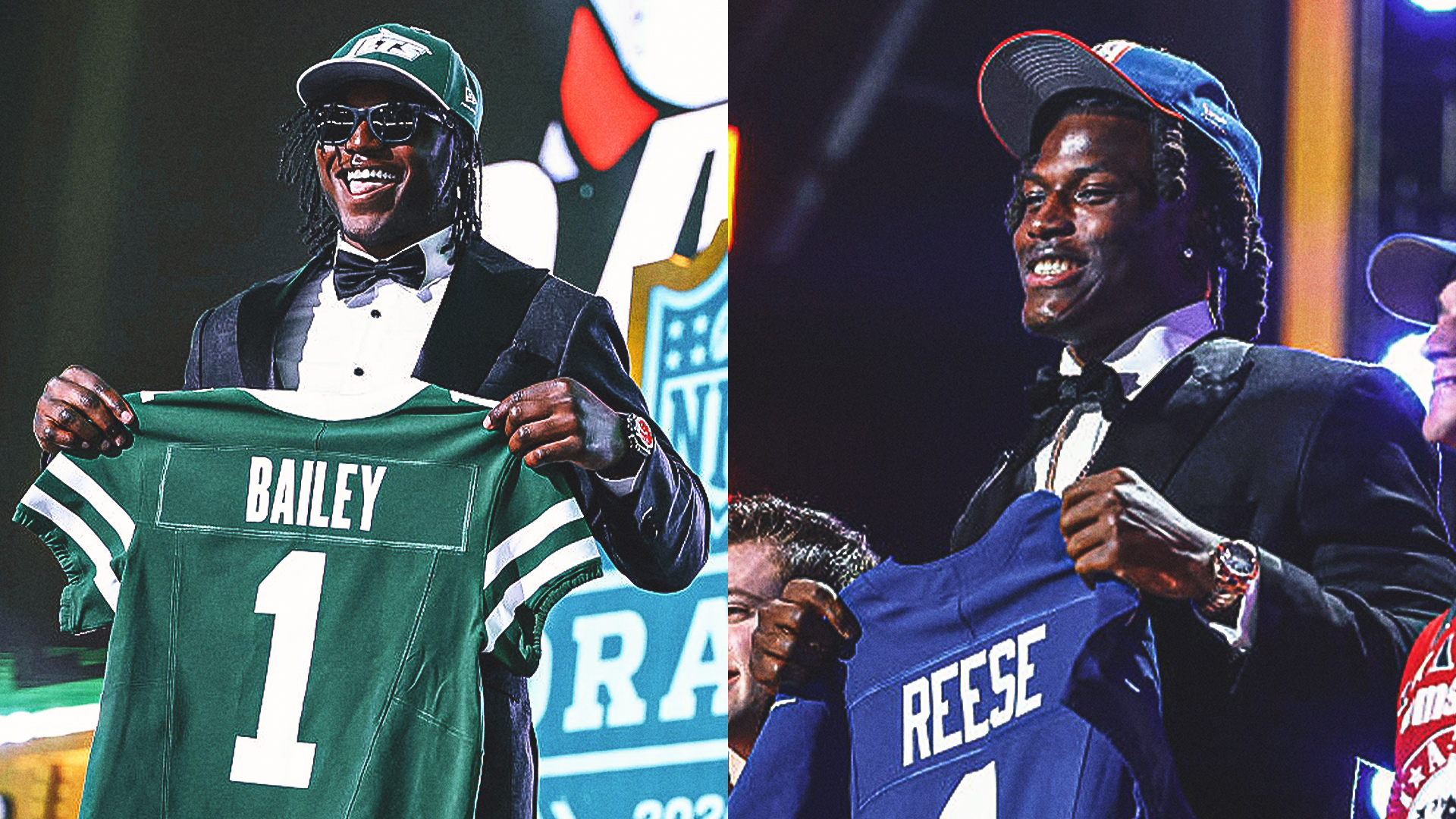
Grading a draft immediately after it concludes is akin to giving your compliments to the chef before the meal has been served. Sure, the food might sound good (or bad) based on the ingredients listed on the menu, but the true evaluation won’t come until after the product has been tested. It will take at least three years before we can truly assess how the 32 NFL teams fared over the weekend. But what is readily apparent is the different approaches that were taken, from going for the best available talent to focusing on team needs to gambling on character concerns and long-term potential. AFC East Buffalo Bills Entering the draft with no pick between Nos. 26 and 91, the Bills traded down twice, dropping out of the first round entirely and picking up extra selections to reshape the roster in new head coach Joe Brady’s vision. The Bills still added a quality edge rusher in T.J. Parker, who I thought was going to come off the board on Day 1. He is already a well-rounded and productive player and is still just scratching the surface of his potential. While Parker will understandably get most of the attention, I thought GM Brandon Beane found quality value and stylistic fits throughout the draft. Cornerback Davison Igbinosun and offensive tackle Jude Bowry were two of my favorite “second-tier” prospects at their respective positions. Wideout Skyler Bell and safeties Jalon Kigore and Zane Durant also have the athleticism that suggests they could be future NFL starters. Perhaps my favorite Day 3 pick for the Bills, however, was TCU linebacker Kaleb Elarms-Orr, a heat-seeking missile who might compete for a starting role immediately. Grade: A Miami Dolphins With an NFL-high 13 draft picks used, no team was better positioned to make a splash in the 2026 draft than the Miami Dolphins — but I’m not convinced this class will prove much better than a belly flop. Don’t get me wrong, there are some prospects added that I think are going to be quality NFL players. Specifically, I love the selections of cornerback Chris Johnson, wideout Chris Bell and linebacker Kyle Louis, and I like the additions of Jacob Rodriguez and Kevin Coleman, as well. But the Dolphins started off the class with, literally and figuratively, one of the “biggest” gambles of the draft in Alabama’s Kadyn Proctor. There are teams that could afford such a roll of the dice, but I don’t believe the Dolphins are one of them. Similarly, while I like Texas Tech wideout Caleb Douglas, I don’t see him as a future No. 1 wideout in the NFL or, frankly, appreciably better than the two pass-catchers GM Jon-Eric Sullivan nabbed later in Bell and Coleman. The Dolphins are in the midst of a complete roster rebuild, so I have no doubt that most of these players will make the team. But will Miami be one that wins more than a handful of games next year? I have my doubts. Grade: D New England Patriots Making the roster of any NFL team is difficult, and it is exponentially harder for one coming off a Super Bowl appearance. That’s why I appreciated the Patriots’ strategy of getting pro-ready contributors with two of their three top-100 selections and gambling on athletic upside in the later rounds. Interestingly enough, the pro-ready players I’m referring to, however, are second-round edge Gabe Jacas and third-round tight end Eli Raridon. First-rounder Caleb Lomu has all the traits needed to eventually be a high-end starting left tackle in the NFL, but I don’t believe that he’s currently strong enough for this role. It will be interesting to see if the Patriots do push him to start as a rookie, potentially moving last year’s top pick Will Campbell inside to guard. While I like the Patriots’ strategy — and appreciate the difficulty of finding players who can make an impact on a team this talented and deep — their class feels long on potential and short on immediate help. Grade: B New York Jets Trading back into the first round to have three cracks at the top 32, the Jets are ready to ascend. It is easy to gush about top pick David Bailey, whose burst and bend off the edge make him a strong candidate for Defensive Rookie of the Year. I don’t believe Kenyon Sadiq is going to make a splashy statistical contribution as a rookie, but I love the threat of his speed down the seam and his explosiveness as a blocker. I do love the addition of two champions from Indiana in wideout Omar Cooper Jr. and cornerback D’Angelo Ponds. Cooper might just become Geno Smith’s favorite target as a rookie and Ponds might remind head coach Aaron Glenn of himself as an undersized but playmaking corner. I also like the fourth-round gamble on quarterback Cade Klubnik, who has a chance to make a case for himself as the long-term future quarterback without the pressure to perform immediately. With three first-round picks next year, as well, the Jets are well-positioned to address the QB position again should Smith and Klubnik not help the Jets take flight in 2026. Grade: B AFC North Baltimore Ravens Following the loss of All-Pro center Tyler Linderbaum in free agency, it was critical that the Ravens reinvested in the interior, and Vega Ioane was one of the few blue-chip prospects available in this class. Eric DeCosta came back in the second round with another player in Missouri defensive end Zion Young — one of the most violent and competitive players of this class — seemingly born to play for the Ravens. I liked the mid-round gambles on big receivers Ja’Kobi Lane and Elijah Sarratt. While they play the same position and have similar size, they are quite different, with the former excelling as a vertical threat and the latter as more of a possession receiver. Both can help Lamar Jackson. I liked the similar double-dip at tight end with Matthew Hibner and Josh Cuevas on Day 3 and the addition of toolsy big back Adam Randall. My favorite late-round pick for Baltimore, however, was fifth-round cornerback Chandler Rivers, a four-year starter at Duke who plays much bigger than his size suggests (5-9, 185). With 11 draft picks, DeCosta had plenty of “shots at the basket,” and I think this class will have plenty of swishes — though I was disappointed to not see the Ravens make selecting a true center more of a priority given this year’s quality class at the position. Grade: A- Cincinnati Bengals The Bengals invested the No. 10 overall selection in one of the most powerful defensive tackles in the NFL in veteran Dexter Lawrence and complemented this by adding a pass rushing ace in Cashius Howell at No. 41 overall. The duo should help unlock the potential of previous first-round picks along Cincinnati’s defensive front. The Bengals nabbed one of the most underrated cornerbacks of this class in Washington’s long and speedy Tacario Davis at No. 72. Had he not struggled with injury in 2026, he might have been selected a round earlier. Similarly, the Bengals grabbed their future starting center in Connor Lew in the fourth round and made sure that the pivot is secure with Brian Parker II two rounds later. The double-dip at center will be panned by some but not me — protecting Joe Burrow is priority No. 1, and both players are quality prospects. Grade: B Cleveland Browns Long-suffering Browns fans, it appears that logic has finally descended upon Cleveland with the club stringing together one of their better collections of talent in my 26 years of professionally evaluating NFL drafts. The Browns needed a left tackle and got the most athletic one in Spencer Fano at No. 6 overall, followed by a pair of promising WR selections. The combination of KC Concepcion’s elusiveness and straight-line speed alongside Denzel Boston’s size and body control give Cleveland its first truly formidable receiving corps in a decade or more, perhaps providing the quarterbacks on the roster (or one coming next year) a true chance at success. Rangy free safety Emmanuel McNeil-Warren’s draft-day slide ended with a soft landing in Cleveland, where the Browns’ stellar pass rush should help him keep up his playmaking ways. The quarterback room in Cleveland is already full, but I’m as intrigued as anyone by Taylen Green’s upside and understand the roll of the dice in the sixth round. Grade: B Pittsburgh Steelers The Steelers did a remarkable job of hosting the draft this year and GM Omar Khan put together one of this year’s better classes, as well, thrilling the home crowd. I like the investment in gifted young tackle Max Iheanachor at No. 21 overall, even if it was a pivot after the Eagles swooped in to nab wideout Makai Lemon a pick earlier. If the Steelers were at all soured by losing out on Lemon, Khan turned it into lemonade a round later by nabbing Germie Bernard, a similarly versatile weapon. Pittsburgh added a special teams ace in Kaden Wetjen, one of the best guards of this class in Gennings Dunker, a cornerback with the traits worthy of developing in Daylen Everette — and perhaps most importantly, a quarterback with the size and big arm to push Aaron Rodgers — either back onto the roster or into retirement. I’m not as high on Allar as others — and that is reflected in my grade, but I love the swing for the fences at this point in the draft. Finally, I love the exclamation point at the end of the draft with the selection of Navy’s do-everything star Eli Heidenreich. Whether Allar lives up to his upside or not, this was the kind of draft Steelers fans deserved and it kicks off the Mike McCarthy era in fine form. Grade: A- AFC South Houston Texans It is funny how certain teams adopt the mentality of their head coach, and the Texans certainly are doing that with top picks Keylan Rutledge and Kayden McDonald playing with the same tenacity and physicality that helped former linebacker DeMeco Ryans star in the NFL. Both have the look of longtime franchise anchors. I’m just not so sure the Texans got optimum value with their next few picks — Michigan tight end Marlin Klein, Oklahoma guard Febechi Nwaiwu and Clemson linebacker Wade Woodaz. But I do like the versatility and instincts of USC safety Kamari Ramsey to lead off the fifth round — my favorite of Houston’s five Day 3 selections. Grade: C+ Indianapolis Colts Trading for cornerback Sauce Gardner a year ago left the Colts without a first-round pick, but GM Chris Ballard nabbed two All-SEC defenders in linebacker C.J. Allen and safety A.J. Haulcy on Day 2 that will provide plenty of big plays, as well as the alpha personalities and playing styles to build around. Not surprisingly, I’m highest on the Colts’ top two selections from Day 3 — guard Jalen Farmer and linebacker Bryce Boettcher. Farmer has the talent to be a quality NFL starter, with the physicality to excel in the Colts’ run-heavy system. Boettcher has the intensity and underrated athleticism to help the Colts’ special teams units immediately and might be hard to get out of the starting lineup if given an opportunity. Of the Colts’ later picks, I like the contrast of their edge rushers, George Gumbs Jr. — a former wide receiver — and Caden Curry, who might lack elite traits but certainly performed well in his lone starting season for the Buckeyes. Grade: B Jacksonville Jaguars Last year’s bold trade up for Travis Hunter meant that the Jaguars weren’t on the clock until No. 56 overall, and some Jacksonville fans might wish they had waited even longer after using their first pick on Texas A&M tight end Nate Boerkircher, a player who I (and many others) projected to be available well into Day 3. Unfortunately, the trend continued throughout the entire draft with the Jaguars repeatedly selecting players who ranked much lower on my board than theirs. The Jaguars made 11 selections in the 2026 draft and only three of them — Oregon offensive guard Emmanuel Pregnon, Duke defensive end Wesley Williams and Baylor wideout Josh Cameron — cracked my personal Top 150. GM James Gladstone may ultimately get the last laugh with this class but, at least at this point, his group offers more quantity than quality. Grade: D Tennessee Titans Tennessee general manager Mike Borgonzi made a titanic decision at No. 4 overall to give Cam Ward the No. 1 target needed to take his game to the next level, choosing offense over higher-rated defenders. I won’t quibble with this decision because I am a big fan of Tate’s game and love how the Titans bounced back with their next two picks to add two future front-seven standouts in Keldric Faulk and linebacker Anthony Hill Jr. — each of whom I like in Robert Saleh’s scheme. I thought Tennessee also received good value on Day 3 with underrated blockers Fernando Carmono and center Pat Coogan, as well as a proven workhorse back in Nicholas Singleton. Grade: B+ AFC West Denver Broncos The Dolphins invested their first-round pick in speedy NFL wideout Jaylen Waddle and didn’t make their first selection until pick No. 66 overall, nabbing twitchy defensive tackle Tyler Onyedim. His burst alongside one of the NFL’s best (and frankly, most underrated) rushers, Zach Allen, gives Denver an intriguing 1-2 punch when they want to switch to more of a four-man front. With six running backs already on the roster — including 2025 second-rounder R.J. Harvey, I can’t deny that I was surprised to see the Broncos select Washington’s Jonah Coleman in the third round. But given his ability and the attrition at that position, I also can’t disagree with it. Coleman might lack Harvey’s breakaway speed, but he’s otherwise a carbon copy in running style and an excellent third down back due to his elite pass protection — always important to Sean Payton. Denver’s early Day 3 selections of offensive lineman Kage Casey (who I think will ultimately be a guard) and tight end Justin Joly boost positions that needed a bit more depth. Grade: B Kansas City Chiefs Needing to replace three starters in their secondary, I loved the aggression the Chiefs showed in trading up to get the top cornerback in the draft in Mansoor Delane, who is equal parts athlete and technician, projecting as an immediate starter with high-end potential. I would have liked to see the Chiefs continue to make their secondary the top priority, but instead the club pivoted to applying pressure on opposing quarterbacks, nabbing one of the few penetrating defensive tackles of this class in Peter Woods and a quick-twitch edge rusher in R Mason Thomas, two players who fit well in Steve Spagnuolo’s scheme. Kansas City went back to cornerback with its fourth-round pick of Jadon Canady, who makes up for a lack of ideal size with great quickness and lateral agility, projecting best at nickel in the NFL. This draft was almost all about the Chiefs’ defense, but I have to mention one of my favorite prospects in this class — former Nebraska running back Emmett Johnson, whose elusiveness and soft hands will quickly make him a favorite of both Andy Reid and Patrick Mahomes and a steal in the fifth round. Grade: A Las Vegas Raiders Armed with the No. 1 overall selection and making 10 total picks, GM John Spytek was well-positioned to turn over the roster in his and head coach Klint Kubiak’s vision. But talking about it and doing it are far different things, and I love how this draft unfolded for the Raiders — starting off, of course, with Fernando Mendoza, an ideal schematic and personality match for Las Vegas. I also loved the instant chemistry that former Arizona teammates Treydan Stukes (No. 38 overall) and Dalton Johnson (No. 150) will add to the Raiders’ secondary, as well as the gamble on cornerback Jermod McCoy, whose cloudy medical grades pushed the first-round talent all the way to Day 3. Edge rusher Keyron Crawford has the twitch to serve as a wonderful complement to returning star Maxx Crosby. Similarly, Mike Washington Jr.’s long-strides and breakaway speed make him a wonderful change-of-pace option to last year’s top pick, Ashton Jeanty. I even like late-rounders Hezekiah Masses and Malik Benson, who profile as quality special teams additions, as well as playmakers on offense and defense, respectively. The Raiders desperately needed a roster rebuild and this draft class — one of my very favorites — was a wonderful start. Grade: A Los Angeles Chargers There may not be a head coach in the NFL who values the line of scrimmage more than Jim Harbaugh and this draft class just reinforces that, with the Chargers dedicating six of their eight selections to the burly brawlers up front on both sides of the ball. Size, physicality and pro-readiness are clearly traits Harbaugh and the Los Angeles scouts prioritize, with former Miami defensive lineman Akheem Mesidor personifying these attributes. His ability to rush off the edge or reduce inside should pay immediate dividends, with burly two-gapping defensive tackle Nick Barrett the total opposite, but also a clean schematic fit for the Chargers’ front. Even more importantly, the Chargers made protecting Justin Herbert a clear priority, adding some of the most physical and battle-tested blockers of this class in center Jake Slaughter, tackle Travis Burke and late-round guards Logan Taylor and Alex Harkey, the latter of which played right tackle at Oregon but projects best inside in the NFL. Fourth-round exceptions to the buffet bashers — wideout Brenen Thompson and safety Genesis Smith — are flashy athletes who should serve as fun complementary pieces. Grade: B NFC East Dallas Cowboys With two first-round picks to play with following last year’s Micah Parsons trade, it was clear the Cowboys had the potential to be active in this draft, but they were even more flexible than expected, aggressively trading up to nab star safety Caleb Downs at No. 11 and recouping picks by dropping back and still getting an explosive edge rusher in Malachi Lawrence at No. 23. Given where he was selected, I’m similarly excited about the potential of linebacker/rusher Jaishawn Barham, whose experience at both positions and undeniable athleticism makes him an exciting ball of clay for defensive coordinator Christian Parker to develop. Of Dallas’ Day 3 selections, I’m most intrigued by the versatility LT Overton provides as well as the long-term upside of tackle Drew Shelton, who needs to add strength but possesses the length and agility to ultimately be an NFL starter. The Cowboys needed to take advantage of their two first-round selections and did so. The duo will immediately upgrade what was one of the NFL’s most porous defenses of a year ago. Grade: A- New York Giants The John Harbaugh era started off in true “Big Blue” fashion with arguably the best overall prospect stolen at No. 5 overall and the best blocker a few picks later. Arvell Reese is a virtual ball of clay whose ability as a rusher and off-ball linebacker should unleash the talent of recent first-round picks Abdul Carter and Kayvon Thibodeaux, among others. And while he won’t get as much attention, I’m similarly excited about Francis Mauigoa. He starred at right tackle for Miami, but I like him as a mauling right guard for the Giants. Sixth-rounder J.C. Davis is also well-suited for this role, if needed. Cornerback Colton Hood bounced around at three different schools over his college career and that probably is what pushed him into the second round, but his tape this past season was outstanding. Wideout Malachi Fields has the size, strong hands and body control to become Jaxson Dart’s favorite downfield target, as well. And don’t sleep on BYU LB Jack Kelly, the type of blue-collar brawler Harbaugh has won with for years. Grade: B Philadelphia Eagles The popular expression “Fly Eagles Fly” took on new meaning with Philadelphia adding swift pass-catchers Makai Lemon and Eli Stowers with its first two selections. Lemon is a playmaking dynamo whose competitiveness and ability to create before and after the catch should quickly make him a favorite of Jalen Hurts and Philadelphia’s fan base. Stowers, similarly, has the explosiveness to project as a big-play threat and provides the Eagles with a young option behind Dallas Goedert. Speaking of contingency plans, I especially liked the selection of massive right tackle Markel Bell and exciting developmental quarterback Cole Payton. Don’t sleep on twitchy seventh-round edge rusher Keyshawn James-Newby, either. Reinforcing a roster as talented as the Eagles’ is difficult, and GM Howie Roseman does it creatively and effectively every year, lengthening the team’s Super Bowl window. Grade: A- Washington Commanders With only six draft picks — including just two among the first 146 picks — the Commanders had fewer opportunities than most. Any evaluation of their class should also note the second and fourth-round picks peddled earlier, however, for veteran left tackle Laremy Tunsil. Nevertheless, Washington found a future star at linebacker in Sonny Styles and one of my favorite wideouts in Antonio Williams. Styles’ sideline-to-sideline speed will be maximized in Dan Quinn’s defense, and I’m also excited to see twitchy edge rusher Joshua Joseph’s development in this system. Grade: C NFC North Chicago Bears The NFL Draft is all about value, and few teams added more of that in the first round than Chicago, stealing a future Pro Bowl-caliber safety in Dillon Thieneman at No. 25 overall. Center Logan Jones wasn’t perhaps quite as economical a selection at No. 57 overall, but I think he’ll start as a rookie with the mentality and rugged playing style to project as a long-term anchor inside. Similarly, Stanford tight end Sam Roush isn’t flashy, but I like his physicality (and underrated receiving skills) as a nice complement to last year’s star rookie Colston Loveland. Speaking of complements, don’t be surprised if speedy wideout and returner Zavion Thomas winds up producing better numbers in Ben Johnson’s wide-open attack than he did at the collegiate level. I also really like the value Chicago got on Day 3 with cornerback Malik Muhammad and linebacker Keyshawn Elliott. The former lacks ideal bulk, but he has legitimate cover talent and the latter has the physicality and closing speed to boost a Bears’ linebacker corps needing an upgrade of both. Grade: B+ Detroit Lions Detroit is a blue-collar town and the Lions have adopted that mentality under general manager Brad Holmes and head coach Dan Campbell. This class reflects those principles with reinforcement along the line of scrimmage coming in the form of ironman Blake Miller in the first round and powerful Michigan edge rusher Derrick Moore in the second. I also liked the Lions’ approach on Day 3, with inside linebacker Jimmy Rolder and mighty cornerback Keith Abney II each playing with the instincts and tenacity one normally wouldn’t expect given the former’s lack of starting experience and the latter’s size. Both, however, will prove starters sooner than later. Campbell’s fiery coaching style has made him a favorite for many NFL fans, but Holmes and his scouts also deserve a lot of credit for turning the Lions into a contender. Grade: B+ Green Bay Packers Last year’s blockbuster trade for Micah Parsons meant that the Packers had to wait until No. 52 overall for Brian Gutekunst to make his first selection, and he opted to focus almost exclusively on defense, starting with cornerback Brandon Cisse. The toolsy corner was considered a potential first-round selection, so getting him at this point in the draft was a coup. Chris McClellan lacked the flashy stats of some of this year’s other interior, but I think his size and style suggest he’ll be a longtime NFL starter, as might edge rusher Dani Dennis-Sutton. I thought Green Bay could’ve boosted its depth at offensive tackle and running back in this class, so this grade is tempered, but I liked the gamble on traits with sixth-round cornerback Domani Jackson and I think that McClellan, in particular, is going to ultimately outplay his selection as a mid-Day 3 pick. Grade: C+ Minnesota Vikings Interim general manager Rob Brezinzski and head coach Kevin O’Connell put together one of the more entertaining and intriguing draft classes in the NFL. After moving on from veterans Javon Hargrave and Jonathan Allen, the Vikings added two prospects who might prove immediate upgrades in Caleb Banks and Domonique Orange, sandwiched around a do-it-all linebacker in Jake Golday, whose size and speed could make him a star in Brian Flores’ system. Safety Jakobe Thomas gives Florida a foursome of possible rookie standouts with each offering undeniable upside. Each also, however, carries significant risk, with Banks struggling with durability, Golday and Thomas flashier than finished products, and Orange a bit of a one-trick pony as a run-specialist. Similarly, while I like OL Caleb Tiernan’s toughness and think he has the core strength to handle the anticipated move inside, it will be hard for Kyler Murray (or JJ McCarthy) to throw over the top of him, given his nearly 6-foot-8 frame. This is a class that could pay off big — or completely flop. Grade: C+ NFC South Atlanta Falcons After trading the rights to their first-round selection a year ago to nab James Pearce Jr., the Falcons had to wait until No. 48 overall to make their first choice. But they certainly made it worth it, bringing Avieon Terrell to town to play with his older brother, A.J., already a Pro Bowler for the club. The good vibes continued into the third round with Atlanta nabbing local product Zachariah Branch at No. 79 overall. The Georgia wideout will offer this offense even more burst and big-play potential. However, after the fun start, the Falcons crash-landed on Day 3, by taking fliers on twitchy (but highly inconsistent) rushers Anterio Thompson and Harold Perkins. Grade: C Carolina Panthers The unfortunate injury to Ikem Ekwonu in the playoffs this past winter made it critical that GM Dan Morgan add a talented tackle early in this draft. Monroe Freeling started only one year at Georgia and therefore comes with inherent risk, but he has the traits to project as a future frontline NFL left tackle, so this selection makes a lot of sense. I love the addition of burly defensive tackle Lee Hunter in the second round, as well as wideout Chris Brazzell II as a vertical threat in the third. My favorite of the Panthers’ Day 3 selections was Kansas State’s Sam Hecht, whose quickness, agility and clean technique could make him a future starter — perhaps as early as this year. This wasn’t a flashy draft, but I thought it was a smart one with quality players added at positions of concern. Grade: B New Orleans Saints I’m excited to see how Tyler Shough and the Saints’ offense grows in Year 2 under Kellen Moore after a draft class that gives him four new pass-catchers, starting with Jordyn Tyson at No. 8 overall. Tyson’s struggles with durability have been well documented, but he’s a proven difference-maker when healthy. The production has not been as consistent with the other pass-catchers GM Mickey Loomis drafted this year, but I love the upside offered by tight end Oscar Delp and Day 3 wideouts Bryce Lance and Barion Brown. It wouldn’t be a Loomis-led draft without reinforcements along the line of scrimmage. Christen Miller is one of my favorite prospects in this class, and I’m intrigued by the size and physicality of former Auburn guard Jeremiah Wright, as well. I also like the contrast between Combine superstar Lorenzo Styles Jr. and T.J. Hall, who might lack Styles’ straight-line speed but makes up for it with instincts. This isn’t the splashiest draft — and I think the Saints could’ve used more help on defense — but this was one of the better all-around classes this year. Grade: B Tampa Bay Buccaneers Speaking of help on defense, the Bucs added three alphas in edge rusher Rueben Bain Jr., linebacker Josiah Trotter and defensive back Keionte Scott with three of their first four picks. In between, the Bucs nabbed one of the most exciting receiver prospects of this class in Ted Hurst, who might have been a first-round prospect had he starred at Georgia rather than Georgia State in college. Hurst has a long ways to go before being considered any kind of replacement for free-agent departure Mike Evans, but like the longtime Bucs star, he offers a unique combination of size and speed. Given all the big names selected before them, fifth-rounders Demonte Capehart and Billy Schrauth will be overlooked by many, but I see both as early contributors. This is another quality class from Jason Licht and one that was needed, given all the turnover on the roster this offseason. Grade: B NFC West Arizona Cardinals General manager Monti Ossenfort has come under plenty of criticism, with each of the four players he’s selected in the first round (OT Paris Johnson, WR Marvin Harrison Jr., edge Darius Robinson and DT Walter Nolen) failing to play up to expectations, thus far. That is among the reasons why I like the willingness to take a “can’t-miss” talent like Jeremiyah Love at No. 3 overall this year, providing new head coach Mike LaFleur with a bankable star to build around. Quarterback Carson Beck is an undeniable talent whose accuracy, smarts and pro-readiness also make him an intriguing fit for LaFleur, with guard Chase Bisontis a plug-and-play upgrade at guard. Of Arizona’s Day 3 selections, I’m especially excited about small-school product Kaleb Proctor of Southeastern Louisiana, who quieted critics of his level of competition with impressive performances against LSU, as well as at the Senior Bowl and Combine. His agility and competitiveness might light a fire for a Cardinals defense that finished 30th in sacks last year. Grade: C+ Los Angeles Rams Prior to the draft, I listed the Rams as one of the cleanest fits for Alabama quarterback Ty Simpson. His pre-snap recognition and accuracy project quite well to Sean McVay’s offense, and with Matthew Stafford already in place, Simpson will have the opportunity to learn from the sideline, rather than get pushed onto the field prematurely. However, I thought the Rams had a unique opportunity to add an immediate difference-maker at No. 13 overall and further propel a possible Super Bowl run. Instead, GM Les Snead opted to plan for the future. He may prove a genius in doing so, but McVay and Rams fans might be left wondering “what if” should that not occur. Frankly, I was just as mystified by the Rams’ second selection of tight end Max Klare at No. 61 overall. I like Klare and think he, too, is a good fit in the Rams’ scheme, but L.A. has invested more at tight end recently than any other team in the league. Frankly, in terms of immediate impact, my favorite pick for the Rams was Keagan Trost, a massive right tackle who might push Warren McClendon this upcoming season. The undeniable upside that Simpson and Klare offer keeps this from being the worst grade outright, but frankly, I was hoping for more — and I think many Rams fans feel the same. Grade: D San Francisco 49ers While I didn’t always like where the 49ers made their selections, I do like the players GM John Lynch picked — and let’s face it — isn’t that the point? Plenty will quibble with the perceived value of the No. 33 overall pick and the selection of Mississippi wideout De’Zhaun Stribling, for example. But with wide receiver a glaring need for this club, the 6-foot-2, 207-pounder with elite speed (4.36), a track record of production at three different programs and a taste for run blocking certainly makes him a fit. Similarly, plenty will point out that the 49ers used a third-round pick on a running back that wasn’t even invited to the Combine, but I thought Indiana’s Kaelon Black was one of the biggest Combine snubs I’d ever seen in over a quarter-century of evaluating the draft, and I love his fit in Kyle Shanahan’s offense. I also like the pass rushing potential of speedy edge Romello Height and the slipperiness of defensive tackle Gracen Halton. Carver Willis was a tackle at Washington, but I like him better inside at guard and wouldn’t be surprised if the fourth-round pick starts as a rookie, as well. San Francisco’s draft ended in the fifth round, but I bet the time spent off the clock was dedicated on recruiting players who went undrafted, so don’t be surprised when San Francisco has a UDFA (or three) who make this club — a difficult task for a team as talented (and well-paid) as this one. Grade: B Seattle Seahawks The defending Super Bowl champion Seahawks entered the draft with an NFL-low four selections, but even after attempted trade-down opportunities evaporated while on the clock at No. 32 overall, GM John Schneider doubled his picks, ultimately adding eight players. The clear star of the class is running back Jadarian Price, an instinctive runner well-suited to the wide-zone scheme new offensive coordinator Brian Fleury will keep in Seattle. The Seahawks needed to find a back with Super Bowl MVP Kenneth Walker III now with the Chiefs, and the club filled holes at safety and cornerback with its next picks in TCU’s ball-hawking Bud Clark and the ascending and highly aggressive Julian Neal at No. 99 overall. Day 3 went from a yawner to the Seahawks’ most active day of the draft, with the club turning one pick into five, adding pro-ready guard Beau Stephens, Minnesota ironman Deven Eastern, toolsy wideout (and special teams ace) Emmanuel Henderson and two more developmental cornerbacks in Andre Fuller and Michael Dansby. This class wasn’t as flashy as the one a year ago, which helped power the Seahawks to its second championship in franchise history, but it was an impressive haul that improved one of the deepest rosters in the league — even with the club having already invested two middle-round picks at the trade deadline for Rashid Shaheed. Grade: BLatest Sports News from FOX Sports











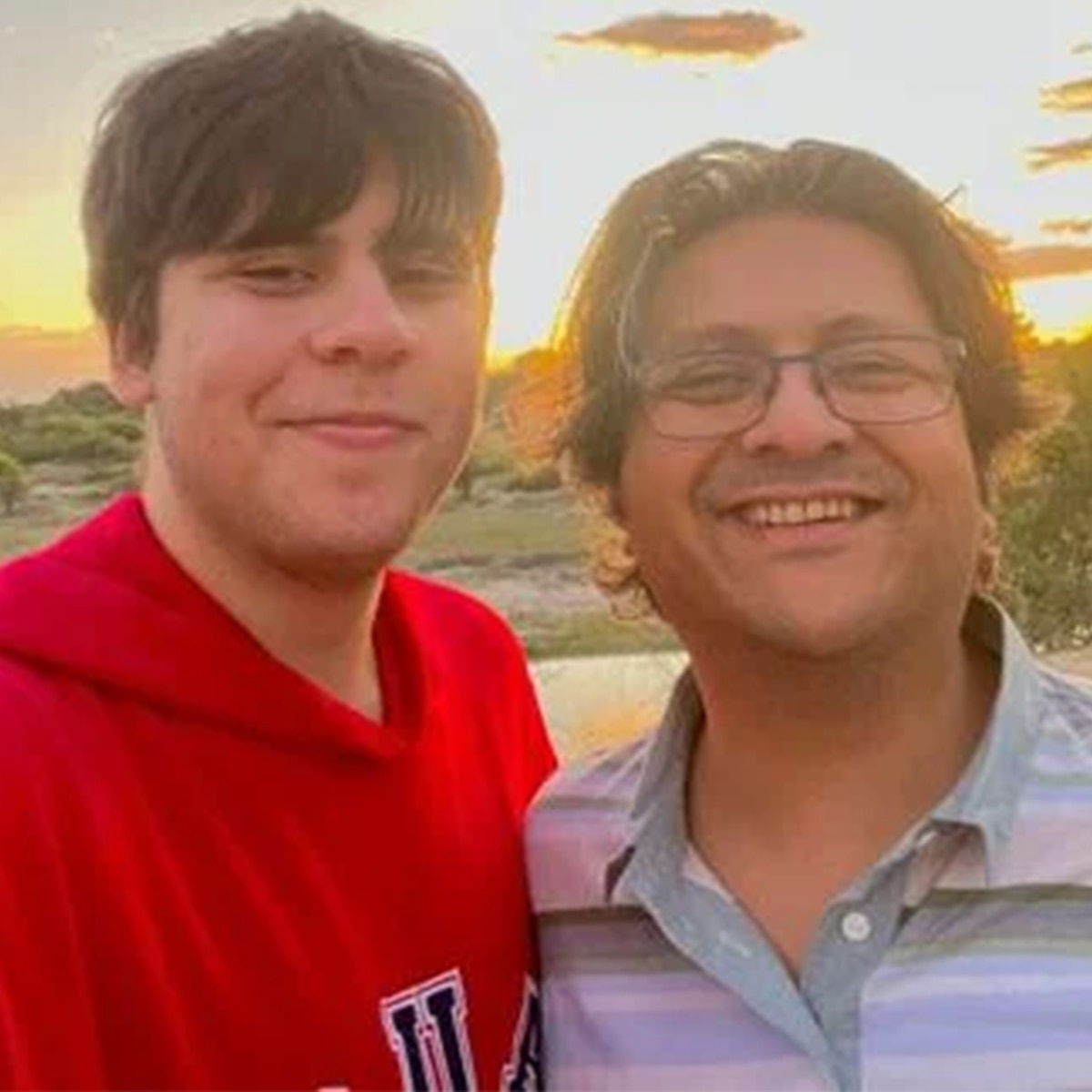
 Christine Dawood is sharing harrowing details about the aftermath of a devastating tragedy.