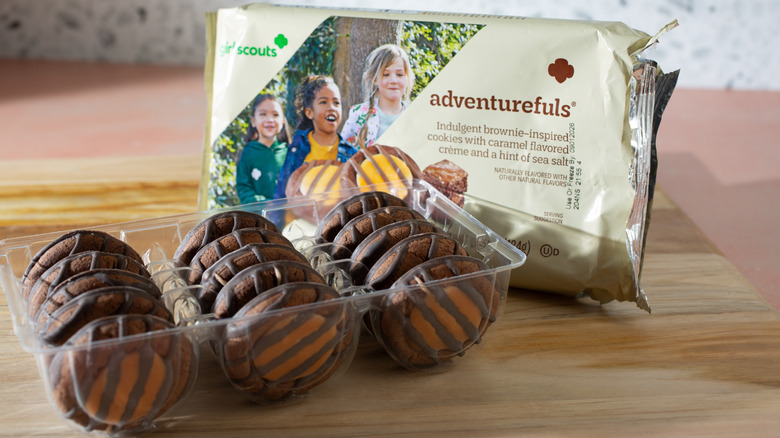
Pretty much everyone can agree that Girl Scout cookies are delicious, but more budget-minded customers means more leftover boxes. Where do these cookies go?
Mashed – Fast Food, Celebrity Chefs, Grocery, Reviews









Pretty much everyone can agree that Girl Scout cookies are delicious, but more budget-minded customers means more leftover boxes. Where do these cookies go?
Mashed – Fast Food, Celebrity Chefs, Grocery, Reviews
Republicans once saw Georgia as the crown jewel of their Senate pickup opportunities. They’re now blaming each other as the GOP primary unravels into an intraparty brawl that could cost them their chance of defeating Democratic Sen. Jon Ossoff.
The party is grappling with a crowded field, no dominant front-runner, no endorsement from President Donald Trump — and the reality that the May 19 primary will very likely extend into an expensive, bruising mid-June runoff.
Rep. Mike Collins (R-Ga.), a close Trump ally, leads in public polling, with fellow Rep. Buddy Carter (R-Ga.) and Gov. Brian Kemp-endorsed former football coach Derek Dooley battling for second. But a large share of voters remain undecided, underscoring how fluid the race is. Meanwhile, incumbent Ossoff — who faces no primary challenge of his own — is keeping his powder dry and has amassed a formidable eight-figure campaign war chest ready to deploy in the general election.
“If Ossoff could write a playbook for how he wants this primary to go, this is exactly it,” said a GOP operative, who, like others interviewed for this story, was granted anonymity to speak candidly about the race’s dynamics. They said that Georgia is like a “red-headed stepchild” not getting any attention from Washington.
Republicans point to several unforced errors that got the party to this point. Some say their current challenges were set in motion last year, when they failed to convince the state’s popular outgoing GOP governor, Kemp, to run for Ossoff’s seat. Others point to a lackluster effort by the National Republican Senatorial Committee to recruit a stronger crop of candidates or unify the field. Many also fault Trump and Kemp, who have had a sometimes-testy relationship, for failing to agree on a candidate they both could support to avoid a costly primary.
“It’s not ideal that it looks like it’s going to runoff,” said Cole Muzio, president of the conservative Frontline Policy Council. “There was so much talk about Kemp and Trump getting together and finding a nominee together, landing the plane on one person. I’m not going to try to sort out what happened with that, but a unity nominee would have been ideal.”
The early finger-pointing that has emerged in conversations with a dozen GOP strategists and officials in Georgia reflects their deep frustration with the state of their primary — and their chances of holding onto the Senate majority. The party is fending off competitive Democratic candidates in several red states as voters sour on Trump’s agenda, making flipping Georgia even more of a priority.
“It’s a mess that could have been much less messy if they had figured this out six months ago,” said a second Georgia-based Republican strategist unaffiliated with any campaign. “Everybody’s resigned to this going to May and then a June runoff and then pick up the pieces after that.”
Early general election polling shows Ossoff leading all three potential GOP candidates in a head-to-head matchup. After five years in the Senate, he has built a formidable political operation, churned out razor-thin statewide wins and amassed a sizable fundraising cushion.
“Jon Ossoff has $24 million. Jon Ossoff is on TV all of the time, carefully articulating his positions, grilling Tulsi Gabbard — really being methodical,” said Ryan Mahoney, a GOP strategist unaffiliated in the race. “He has tons of resources — great name ID, a lot of exposure — while the Republicans are fighting against each other, trying to see who can break out and ultimately be the nominee.”
“He’s just in a great position,” Mahoney noted.
Still, several Republicans say they’re confident about their prospects in a state that Trump won in 2024, and they expect money and outside support to dramatically ramp up once their nominee is decided.
“Republicans created this problem. We created this problem and it’s not any one person,” the second GOP strategist said. “I still think a Republican can win, I just think we’re making it way harder.”
With around 40 percent of likely GOP primary voters still undecided, according to recent public polling, the Senate candidates have been jockeying for Trump’s blessing — an endorsement that could be pivotal in deciding the future of the race.
All three candidates have engaged with the White House directly. In an interview with conservative host Clay Travis’ Outkick podcast, Dooley said he met with Trump in the Oval Office last year and had a “very engaging conversation.” Carter, for his part, told POLITICO in a brief interview that his campaign continues “to talk to the administration” about the race. Collins and the president have also met and discussed the race, according to a person familiar with the conversation. In February, Collins appeared onstage with the president during an event in Rome, Georgia, focused on Trump’s economic agenda.
Collins’ campaign recently released a lengthy memo outlining his argument for why the field should coalesce him around the primary. “[Democrats] are watching Republicans turn what should be the best pickup opportunity of the midterms into a needless intraparty squabble that wastes time and resources,” the memo reads. “Instead of spending the majority of 2026 focused on defeating Jon Ossoff, Republicans are on track to not be unified until late June, after a runoff, leaving the Republican nominee only four months to raise money and campaign across the largest state east of the Mississippi to unseat the Democrat.”
Most outside groups have been waiting to line up behind a clear front-runner, though Club for Growth PAC, a major conservative super PAC, has already endorsed Collins’ campaign — an unusual step for a group that usually acts in lockstep with the White House’s political strategy.
The White House did not respond to a request for comment regarding Trump’s thinking about the primary or his conversations with the three candidates.
Then there’s the Kemp factor.
After the governor declined to run, Republicans feared the primary could become a proxy war between himand Trump, who’ve previously clashed over Trump’s insistence that the 2020 election in Georgia was fraudulent. That hasn’t quite played out, with the president staying out of the race so far. But Kemp’s decision to back Dooley, the former football coach, means it’s unlikely they’ll find common ground.
Dooley has no prior experience in politics. State voting records show the former coach did not vote in presidential elections in 2016 and 2020 — attack fodder for his opponents as they seek Trump’s endorsement. (He did vote for Trump in 2024.)
“It’s no secret that the profile of a candidate that President Trump would prefer is much different than the profile of a candidate that Governor Kemp would prefer,” said a third local GOP strategist, who is unaffiliated in the race. “The nexus between those two just made it very hard, if not impossible, to come out with a consensus candidate.”
Garrison Douglas, a spokesperson for Kemp, doubled down on the governor’s support for Dooley in a statement and said he isn’t “wasting time worrying about the complaints of anonymous consultants.” Dooley spokesperson Connor Whitney said he’s confident Georgia voters will “choose the only political outsider in this race — not another stale D.C. politician.”
Carter spokesperson Chris Crawford rejected the criticism of running a messy primary, saying that “only in Washington do consultants think voters choosing their nominee is a problem.”
Collins, in a statement, expressed confidence in his ability to win the primary, and added that his campaign “would welcome any help to ensure we could wrap this up in May and get on to the main event.”
With Georgia in a holding pattern, some local Republicans worry that Washington’s attention is drifting toward Michigan, where former GOP Rep. Mike Rogers has unified the party — and the president — around him in the state’s key battleground Senate race as a trio of Democrats battle it out in their own messy primary.
“There’s offense and defense. I think on offense, [Georgia] is still a top race. I think the only difference is that Michigan is a clear field. Rogers is ready to roll. He’s raising money. Dems have a mess on their side over there,” said one national Republican familiar with the party’s midterm strategy, who was granted anonymity to discuss behind-the-scenes planning.
Still, the person said they believe Georgia remains competitive, particularly if Republicans unify.
In a statement, Nick Puglia, a spokesperson for the NRSC, said Ossoff “is the most vulnerable incumbent on the map” and Georgia “has been and remains a top state for Republicans to expand President Trump’s Senate Majority.”
But Republicans in the Peach State are skeptical.
“I sense from some Republicans a feeling that maybe Michigan is a better opportunity, and of course, one of the reasons … for that is, ‘well, the field’s been cleared,’” said a fourth GOP strategist in Georgia.
“It feels like D.C. is shifting to Michigan because of a problem that they could solve today,” said the second Georgia-based GOP strategist.
Politics
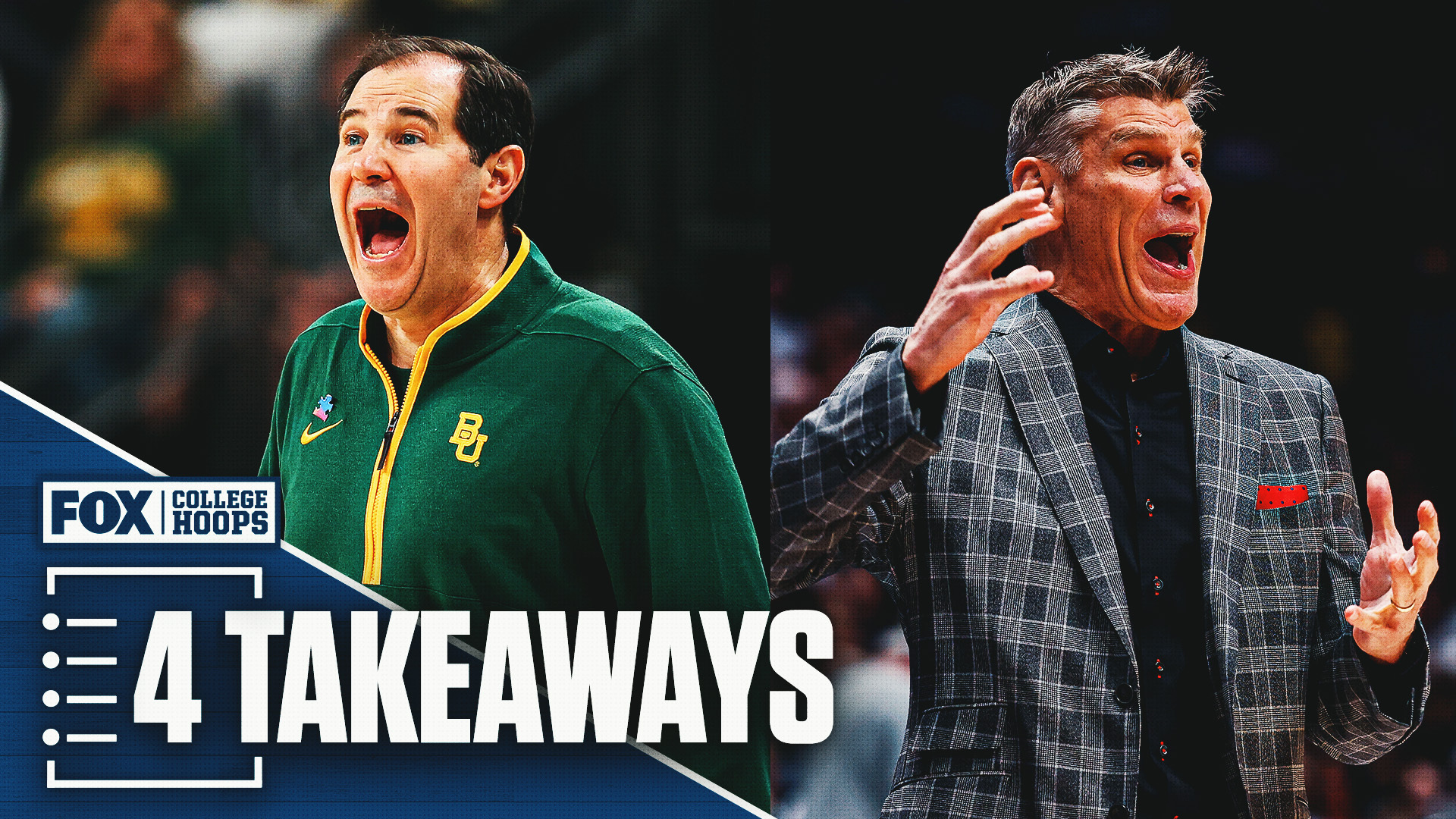
MGM GRAND GARDEN ARENA (LAS VEGAS) — As the national anthem reached its conclusion on Wednesday evening, moments before Oklahoma and Colorado tipped off to begin the second annual College Basketball Crown, a call-and-response chant of “Boomer! …. Sooner!” rang out across the building for all to hear. Scores of fans proudly sporting crimson and cream dominated the crowd as this year’s tournament began, eager to support head coach Porter Moser and a squad that arrived in Sin City having won eight of its last 11 games. On the strength of that run, along with strong roster retention ahead of the transfer portal opening next week, Oklahoma entered as the overwhelming favorite to win the event — though the Sooners didn’t play that way for most of the evening. A double-clutch 3-pointer from redshirt freshman forward Kuol Atak (16 points) leveled the score with 9:12 remaining, eliciting an eruption from the Oklahoma faithful. Another 3-pointer from senior guard Nijel Pack (20 points) on the following possession finally nudged the Sooners in front. Slowly but surely, the most accomplished team in the field awoke in time to survive, 90-86, in overtime. Oklahoma will now face Baylor in the semifinals on Saturday. Here are my takeaways from Day 1 of the College Basketball Crown. 1. Oklahoma defense clamps down when it matters When Oklahoma head coach Porter Moser was running rampant at Loyola Chicago, guiding the Ramblers to the Final Four in 2018 and the Sweet 16 in 2021, his program was revered for its miserly defense. Two of Moser’s last four teams before taking over the Sooners finished among the top 17 nationally in adjusted defensive efficiency, according to KenPom, including a second-place finish in his final year. The leap in competition from the Missouri Valley Conference to the Big 12 — and now the SEC — has been accompanied by a slight regression in Moser’s defensive potency. His first three teams at Oklahoma all ranked among the top 48 nationally, but last year’s group sunk to 60th and this year’s squad entered Wednesday night having plummeted to 108th overall. It looked that way when the Sooners allowed Colorado to shoot nearly 54% from the field in the opening half. But with the second half came a renewed focus and intensity on the defensive end, one that challenged the Buffaloes on seemingly every shot and conceded almost nothing around the rim. Moser’s group, which trailed by as many as 10, clawed back by limiting Colorado to just 24% shooting after the break, including a dreary 2-for-10 from beyond the arc. Twice, the Sooners forced strings of at least seven consecutive missed shots. “The last 10 games, we’ve really relied on each other playing more protect-the-paint defense,” Moser said during the postgame news conference in response to my question about the second-half improvement. “I thought we really protected the paint. They put so much pressure on you because they go downhill very hard, and then they can draw fouls. They got us in the bonus fast. For us to play that physical, still, through that foul [trouble], I thought was a credit to those guys playing together defensively.” [COLLEGE BASKETBALL: Expert Predictions and Analysis for Crown] 2. Colorado battles attrition with early transfer departures Even though the transfer portal doesn’t officially open until April 7, one day after the national championship game in Indianapolis, the Buffaloes were dealt a trio of early blows from players announcing their intention to leave. That saddled head coach Tad Boyle and his staff with the challenge of reshuffling rotations and playing time ahead of the College Basketball Crown. The Buffaloes arrived in Las Vegas without the services of leading scorer Isaiah Johnson (16.9 points per game), third-leading scorer Sebastian Rancik (12.3 points per game) and fourth-leading scorer Bangot Dak (11.5 points per game). All three players made their transfer decisions public within a four-day span the week before this event began. “We’ve had a few weeks now to prepare for this,” Boyle told me after the game. “We started, obviously, when we found out that those three guys weren’t playing. I knew it would give guys opportunities that hadn’t maybe been in the rotation up to this point.” Without most of its top-end firepower, Colorado leaned heavily on guard Barrington Hargress (14.2 points per game), the only other double-figure scorer still on the roster. Hargress scored a team-high 31 points on Wednesday against the Sooners, including 13 in the first half on an array of impressive shots: a transition 3-pointer from the top of the key, a difficult baseline turnaround and a crossover-turned stepback on the left wing. But after a sizzling first half that saw the Buffaloes shoot 53.6% from the floor, both Hargress and his teammates cooled significantly after the break. Colorado went more than five minutes without a field goal from the 17:47 mark to the 12:19 mark of the second half, during which time their slim advantage dwindled and, ultimately, disappeared for good. Boyle’s team bowed out after missing 24 of their final 30 field goal attempts. 3. Flashes from Baylor stars underscore looming draft decisions When the Big 12 released its preseason basketball poll in mid-October, the Bears were picked seventh in the 16-team league. There were reasons to be optimistic about what Baylor could do during the 2025-26 campaign after head coach Scott Drew signed a recruiting class that finished 25th nationally and added seven players via the transfer portal, two of whom were ranked among the top 40 by 247Sports. But five months later, when the regular season mercifully ended, the Bears had sunk to 14th in the conference standings with just six Big 12 wins. It was a shocking outcome for a team that includes multiple future pros in guards Cameron Carr (19.2 points per game) and Tounde Yessoufou (17.8 points per game). Both project as late first-round picks in the 2026 NBA Draft. Their presence at the College Basketball Crown made Baylor one of the more intriguing teams in Las Vegas, where NBA personnel got an extra chance to watch them before draft decisions are eventually made. What those evaluators saw against Minnesota on Wednesday night were two players whose physical and athletic profiles remain wildly enticing, even if consistency eludes them at times. Carr, who scored 15 points and grabbed nine rebounds, soared for an alley-oop dunk in which his 7-foot-1 wingspan seemed to scrape the ceiling and exhibited dynamic body control for two acrobatic layups. Yessoufou, who scored 19 points and snagged seven rebounds, flashed versatility by operating out of the high post against the Gophers’ zone and showed his open-floor ability with back-to-back buckets on fast breaks early in the second half. “As a coach, you want to start the season together and you want to finish the season together,” Baylor head coach Scott Drew told me after the game. “I think it just speaks to their character, wanting to play for Baylor, wanting to have a chance to win a championship. That speaks volumes to them. I know everybody is entitled to their own decisions and every situation is different, but I know we’re excited that they’re playing.” 4. Obi Agbim breaks out of shooting slump for the Bears There’s no question that Baylor guard Obi Agbim, a transfer from Wyoming, is a 3-point specialist. Last season, 80 of his 184 made field goals originated beyond the arc during his lone campaign with the Cowboys. And this year, his first with the Bears, he splashed 72 of his 112 field goals from 3-point range entering the College Basketball Crown. However, Agbim arrived in Las Vegas on a cold streak from downtown: He’d only made six of his last 27 attempts (22.2%) across Baylor’s last four games, two of which were losses. That changed immediately in the Bears’ opening-round blowout of Minnesota on Wednesday night when Agbim exploded for 17 points, his highest point total since scoring 19 against Colorado on Feb. 4. Agbim buried five of eight shots from beyond the arc to tie his season high for most 3s in a single game. He made more perimeter jumpers by himself than Minnesota did as a team. “Just slowing down a little bit,” Agbim told me after the game when asked what contributed to his strong shooting performance. “Playing with a pace that I’ve always played with. In the games before this, I was kind of rushing my shot a little bit. So just slowing down, taking my time when I shoot the ball. I feel like that affected my jumper really well today.” 4½. What’s next? Here are a few storylines to watch as we move toward Thursday’s action: Stanford vs. West Virginia — Had Stanford not lost to Pittsburgh in its opening game at the ACC Tournament, the Cardinal might have been in position to reach the Big Dance given their uptick over the final month. Led by head coach Kyle Smith, the Cardinal won six of their last eight regular season games, including four in a row to end the year. The Mountaineers, meanwhile, finished 18-14 overall and 9-9 in the Big 12 under new head coach Ross Hodge, who previously guided North Texas to consecutive NIT appearances the last two seasons. Rutgers vs. Creighton — This week marks the end of an era for Creighton head coach Greg McDermott, who is retiring after 16 seasons with the program. He guided the Bluejays to incredible heights during that span with 365 victories and 10 NCAA Tournament appearances, headlined by three trips to the Sweet 16. Now, McDermott will face a Rutgers team that bounced back from a lengthy losing streak in the middle of the season to win five of its previous nine games before traveling to Las Vegas.Latest Sports News from FOX Sports

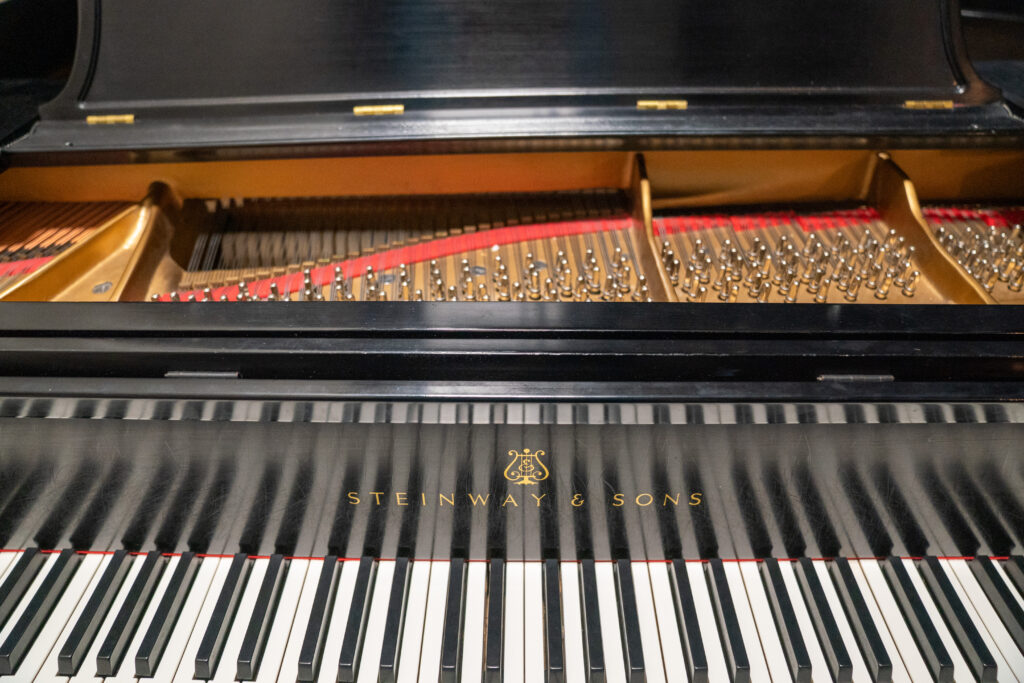
The Steinway Model B piano has resided in the Chilkat Center for 33 years and will soon be the center of an entire concert, “A Night on the Steinway.”
Michael Marks, a board member of the Foundation for the Chilkat Center for the Arts, first had the idea for a concert when he noticed community members’ desire to play it while it was out on stage.
Concert pianist Jean-Paul Billaud donated the instrument to the Chilkat Center in 1993.

According to a Steinway piano index, the piano in the Chilkat Center was manufactured in 1975. Former piano teacher Nancy Nash knew Billaud when he worked for the University of Alaska Southeast. After performing in the Chilkat Center, Billaud donated his piano to the community.
“It’s definitely not common for a town our size to have both that hall, which does have wonderful acoustics, and then an instrument like that,” Nash said.
“It would be hard to get even if you were planning to make the acoustics perfect,” said Lorrie Dudzik, a board member on the Foundation for the Chilkat Center for the Arts. She and Nash said that Billaud admired the acoustics in the center.
The 1880s old grand piano was put into a box after the Steinway arrived. It remained mostly unused in the back of the Chilkat Center until Marks found it a few months ago. Upon recovering this piano, Marks had the idea to have a dueling piano performance during the “Night on the Steinway” concert.
Marks showed the old grand piano to French pianist Baptiste Bailly, who came to Haines to perform with his band in mid-March.
“He (Bailly) sat down and played it for a while and had a big smile on his face and said something in French,” Marks said.
The goal for the concert, Dudzik said, is to “bring the local people who’ve always wanted to perform on that piano and give them an opportunity to do that.”
According to Marks, a piano tuner hasn’t been in town since before Covid. The Foundation for the Chilkat Center is looking for a piano tuner before the concert in May.
Nancy Nash last played the Steinway during the “Holly Jolly Follies” concert in the Center last December.
“We’re very, very fortunate to have that (piano),” Nash said.
Currently, five performers are signed up for the May 10 concert. Interested pianists can call Lorrie Dudzik at 766-2071. Musical selections are due by April 16.
The post Fifty-one-year-old piano to be center of May concert appeared first on Chilkat Valley News.
It has been 15 years since Haines had a reported case of a highly contagious skin infection in local mountain goats.
But state wildlife officials are raising the alarm in neighboring Juneau, which has seen three dead mountain goats and at least five reports of animals showing the disease since the beginning of winter.
Alaska Department of Fish and Game area management biologist Carl Koch said that while contagious ecthyma is “not as much an issue in Haines,” it is something to keep an eye on while out hunting.

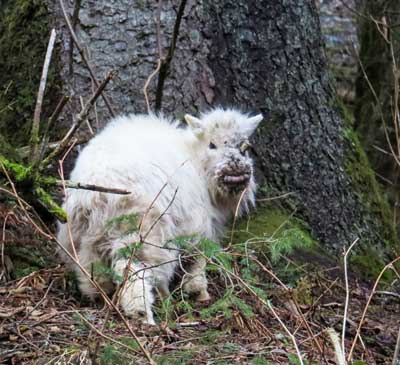
The viral disease contagious ecthyma is sometimes called CE, sore mouth, or as local hunters referred to it “orf.” It can affect other species besides mountain goats, like dall and bighorn sheep and muskox. It can also infect domestic sheep and goats and is spread through contact with other infected animals.
Koch said that goats can be carrying the disease without showing “observable outward signs.” The symptoms are not always severe and can sometimes be just a small sore.
“I’ve seen some with just like red rings around their eyes, and then others were like, you’re surprised to think and eat and breathe properly because the face is so infected,” Koch said.
Koch said he thinks reports of contagious ecthyma in the region date back to the 1970s or 80s.
Local hunter Kevin Shove remembers shooting a goat prior to 2011 that “looked like it had scars on its face” when he went up to dress it. He said that the scarring looked similar to the images he had seen of contagious ecthyma.
In severe cases, the disease can cause lesions around goats’ orifices like their mouth, nose, ears and hooves. For goats with weaker immune systems, the lesions can get infected and swollen to the point where it impacts the animal’s ability to feed, see and hear.
Kevin White, a goat researcher at the University of Alaska Southeast, said generally “its immune system can respond to it and then the symptoms will pass.” Adult animals tend to survive; it is generally the youngest and oldest animals who are most vulnerable, White said.
While working as a wildlife research biologist with the Alaska Department of Fish and Game, he took the blood samples of over 500 mountain goats in four different areas of Southeast. He was screening for many diseases, one of them being contagious ecthyma. He found that around 5% of the population had an immunity to contagious ecthyma.
“It was interesting that it was widespread” and was found in almost all of the different populations and subpopulations that White tested. “It means that it was occurring in all these areas at some point.”
But even with that wide spread of animals with the disease, in all of his time gathering samples, White said he never saw any instances of animals with outward signs of it.
And local guides, like Larry Benda, who owns Alaska Fair Chase Guiding, said in his 30 years of hunting and guiding, he has never seen a mountain goat with it. Third generation hunter Donald Hotch also said he’s never seen it or heard about the disease.
White recently conducted an aerial survey to estimate the mountain goat population that covered Davidson Glacier, up through the Chilkat Valley, over towards Skagway until Creek Pass. White estimated a total of about 1,400 mountain goats over the more than 1,158-square-mile area.
And, while the disease hasn’t been seen much by local hunters, Koch warned that carnivores can get it and spread it to other carnivores.
“If a goat’s dead and it’s infected and an eagle, scavenging on it, and it was to fly away, it’s probably low likelihood but if it’s carrying the dead cells, it could transfer them somewhere else,” Koch said.
According to Koch, severe winters drain the goat’s immune system. This in combination with the disease took a toll on the goats who ended up dying. The goats who died, he said, “didn’t look that bad months ago.”
Humans can get contagious ecthyma but according to Koch, it does not get worse than a blister in the human cases he has seen.
“I wouldn’t rub my face if I touched a goat, but we don’t get those horrific-looking things that sometimes the goats get.”
Koch suggests that “anybody cleaning any game animal – because this isn’t the only disease out there – should be wearing gloves and cleaning up and then cooking the meat” to 160 degrees Fahrenheit. Koch said that cold does not kill this virus but heat does. It is still safe to eat the meat of an infected animal; one just has to cook the meat to the proper temperature.
The post Goat disease resurfaces in Juneau, officials urge caution appeared first on Chilkat Valley News.

Ten months after the state raided a Chilkat Valley wildlife facility, and owner Steve Kroschel left for Russia, the fate of some 20 animals left behind by state troopers and wildlife regulators has still not been resolved.
The animals are part of a long-running dispute between the state and Kroschel over how he managed the dozens of animals that used to live at the Kroschel Films Wildlife Center.
Retired wildlife trooper Patrick McMullen has been caring for the animals in the absence of Kroschel and the state. Previously McMullen cared almost exclusively for the facility’s three wolves.

Now, he’s responsible for all of the animals left behind. It’s difficult to verify the exact number of animals that were in the facility from any one source, but Kroschel and state staff now agree there are about 20 animals left behind. Fish and Game previously reported ermine, arctic fox, martens, minks, and a snowy owl are still at the facility.
McMullen did not return a phone call seeking more information and texted that he didn’t have any interest in talking. But he followed by saying he feeds and waters the remaining animals every day.
“[Fish and Game] has been totally fine. And supportive,” he wrote. “Obviously it’s a difficult situation. There is a lot of snow at the park. It will be resolved soon.”
Kroschel, who said he is currently living somewhere near Yekaterinburg, Russia, said he texts McMullen from time to time to “see how he is doing.” “[He] does not tell me much.”
Kroschel’s son, who did not respond to a phone call seeking more information, is also on the property but Steve Kroschel said he is often not there.
“I am worried about vandalism, among other things,” he said.

Fish and Game wildlife division director Ryan Scott, said he was not able to share a lot of detailed information due to the pending court case against Kroschel, but that Fish and Game staff had been in contact with McMullen.
“We’ve had conversations about food, water, and electricity, things like that,” he said. “We’re keeping tabs on what’s going on via phone call and email. [McMullen] has been responsive.”
He said the state intends to go back in and capture some remaining animals and place them in other facilities.
His office asked for his help retrieving the animals from the property on Oct. 7.
“It just hasn’t worked out,” Scott said. “And then winter showed up in a big way. There’s some concerns. We want to do it right and we want to do it safely for the animals.”
Scott said he assumed Kroschel was paying for supplies for the remaining animals. He said Fish and Game has offered to assist with food and supplies but has not started doing that.
“I think it’s important that people know, we didn’t just walk away. We’re still here. We’ve been keeping tabs,” he said.
Kroschel said McMullen has been scraping up enough money to feed and care for the animals on his own.
“I ask him and he somehow finds a way,” Kroschel said.
Kroschel is facing three felony and two misdemeanor cruelty to animal charges.
During his last hearing in the case on Jan. 22, Kroschel’s counsel withdrew and he is now representing himself. But there was some disagreement over how he’d be communicating with state prosecutors about the case given that there is an active warrant out for his arrest.
Kroschel said he is applying for asylum in Russia, though he said his understanding is that his passport will be taken away for about a year if it gets granted. Then, he’ll be free to return to the U.S.
The post Nearly a year after the raid, 20 animals remain at Kroschel’s wildlife facility appeared first on Chilkat Valley News.

 Eugene Mirman is recovering from a near-death experience.
The Bob’s Burgers star, who’s voiced Eugene Belcher in over 300 episodes of the beloved animated series, was hospitalized after being…
E! Online (US) – Top Stories
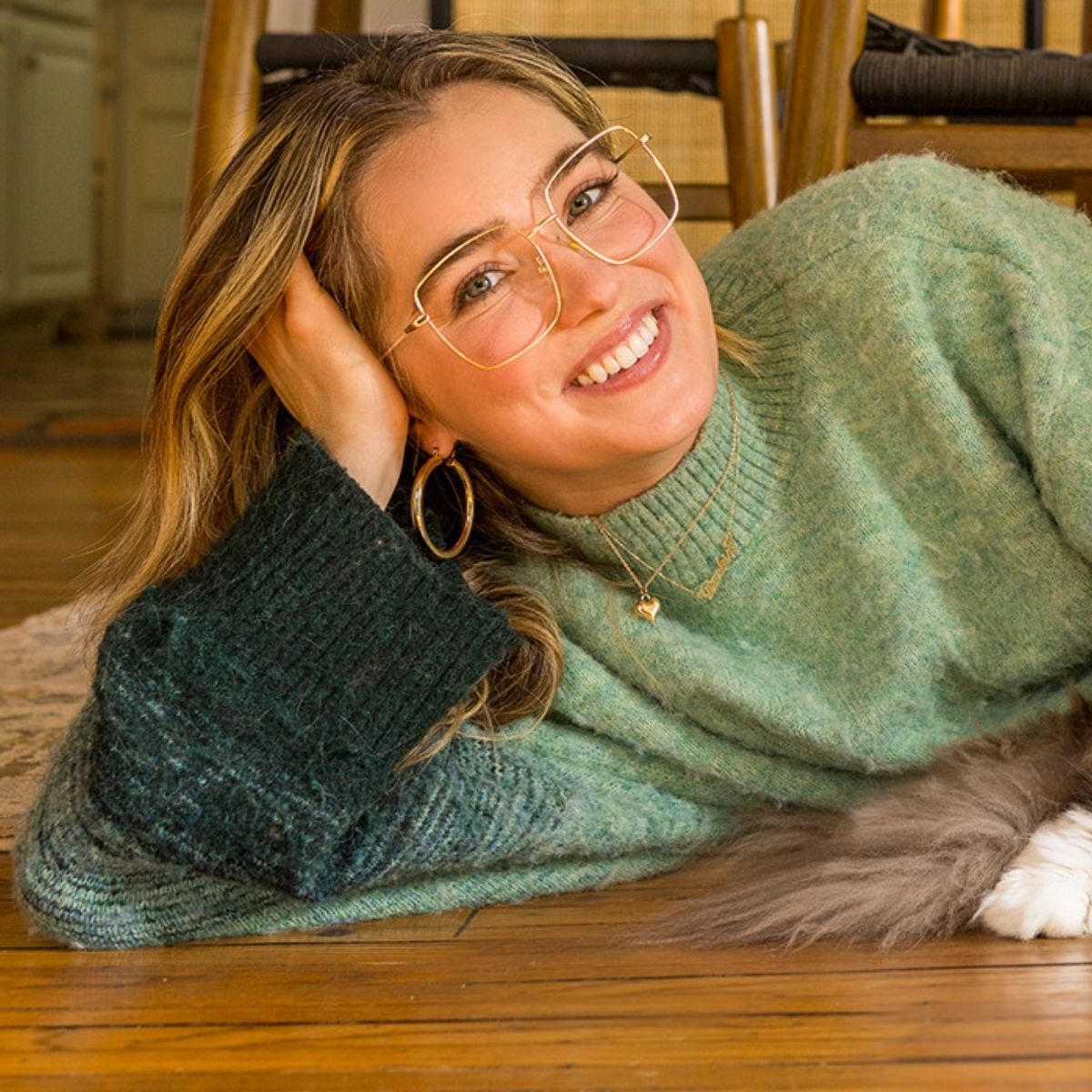
 Haley Lu Richardson is more than just an award-winning actress—she’s also a cat mom.
“Darbin is really more like my child to me than my cat,” The White Lotus star told E!. “He brings me the most…
E! Online (US) – Top Stories
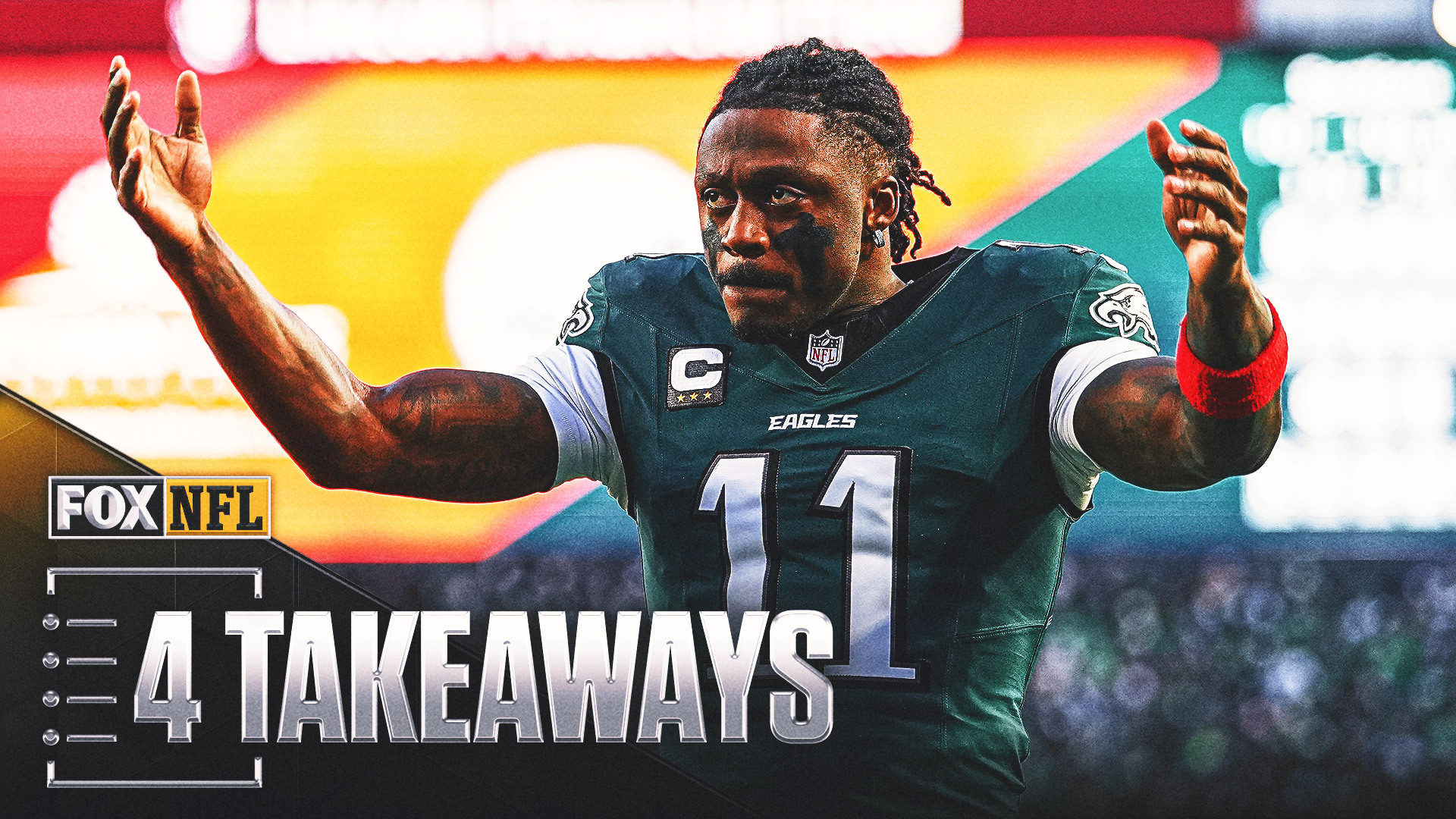
PHOENIX — Rule changes were at the forefront of the NFL owners meeting this week, with the most notable approved proposal being a one-year rule that allows officials “to correct clear and obvious mistakes” as the league’s referees face a potential lockout. It’s clear the NFL anticipates having to use replacement referees — and because it was a largely damaging decision last time, with the replacement refs struggling enormously in 2012 (see: the Fail Mary), the league is doing what it can to help preserve the product in the event of a work stoppage. But there were other newsworthy items that came from coaches, execs and owners about their respective teams during the week. What potential moves might come next in the NFL this offseason? Who should we keep an eye on as we’re five months away from the start of the regular season? Let’s dive into those items as we share our four takeaways from our time in Arizona. 1. Teams only created more burning questions around some of the league’s top wide receivers Henry McKenna: At any given time of year, the quarterbacks are typically the most polarizing players, a lightning rod for discussion. But it was the receivers who — for better and for worse — generated the most buzz at the NFL owners meeting. Puka Nacua: If you look at the NFL’s receiving yards leaders, you’ll see Nacua up there at No. 2 behind Seattle Seahawks star Jaxon Smith-Njigba, who received an extension for four years worth $168.6 million. Nacua is eligible for a new contract, and could demand as much as Smith-Njigba. But that ignores the ways their careers have diverged off the field, with Smith-Njigba acting as a leader in the locker room and a no-nonsense professional. Nacua, meanwhile, has struggled to conduct himself with the same professionalism. This offseason, after several incidents, the Rams receiver has checked himself into rehab, his attorney confirmed. Prior to the news that Nacua was in rehab, Rams general manager Les Snead was asked how Nacua’s off-field issues could impact a future contract. “The impact is continuing to evolve,” Snead said at the owners meeting. “Not only as a person but as a football player. And you need to be on your P’s and Q’s in both categories to earn that type of contract. Right now we’re focused on the human being, and then we’ll get to that stuff.” George Pickens: Pickens proved he is capable of being a WR1 in the times when CeeDee Lamb was hurt — and so that probably makes Pickens the best WR2 in the NFL. That should increase the Dallas Cowboys’ urgency to get a deal done, rather than force him to play on the franchise tag. And yet Cowboys owner Jerry Jones said on Tuesday that he has not been in touch recently with Pickens’ agent, who — by the way — has a history of encouraging his franchise-tagged players to hold out. “The franchise tag is an integral part of all teams and certainly an integral part of our strategy over the next two or three years as we look at how to keep the best players,” Jones said. To Jones’ credit, the Cowboys are getting Pickens on a discount on the tag (one-year, $28 million). So you can see why he’d like to have the wide receiver play on those terms. It’s just unrealistic to expect that to go smoothly — and without Pickens putting up a fight. Given the way everything fell apart with Micah Parsons and Jones last offseason, you’d think the Cowboys wouldn’t want to make the same mistake twice — overcomplicating their relationship with one of their best players. But maybe that contract dispute won’t inform this one. A.J. Brown: The Philadelphia Eagles appeared to spend the meetings working to create leverage in the trade, which now seems extremely likely. Both general manager Howie Roseman and coach Nick Sirianni told reporters that “A.J. is an Eagle.” And while that’s factually accurate, it still left us without an answer about whether he’ll be an Eagle in September for Week 1. But if you listen to what New England Patriots coach Mike Vrabel had to say about Brown, you’ll hear a coach who is deeply interested in taking on Brown, for all his pros (outstanding play) and cons (outspokenly critical, at times). Do I think Brown will be a Patriot? Yes. But we likely won’t know for sure until after June 1, when the receiver’s contract becomes easier to trade from a salary cap standpoint. 2. Rams’ GM Les Snead offers remedy to avoid another Maxx Crosby trade debacle Eric D. Williams: Las Vegas Raiders edge rusher Maxx Crosby’s rescinded trade by the Baltimore Ravens due to a failed physical over his surgically repaired left knee serves as a cautionary tale for the rest of the league. The Ravens traded two first-round picks for Crosby, including the 14th overall selection in the upcoming draft. It marked the first time Baltimore relinquished a first-round pick for a player via trade in franchise history, so the Ravens were certainly excited to acquire Crosby. However, less than 24 hours before the trade could become official at the start of the new league year, the Ravens informed the Raiders they were backing out after Crosby failed his physical in Baltimore. A long-time NFL medical staff member familiar with the process of team physicals told me the issue could have been avoided had the two sides agreed to have Crosby evaluated by a Ravens team doctor before the announcement of the trade. Count Rams general manager Les Snead as someone who believes a more uniform, collaborative process needs to be installed by the NFL. “There’s a conundrum there, where a lot of times these things get announced, or maybe even reported before the league year,” Snead told reporters at the NFL annual meeting this week. “And then people can go and do physicals. But here’s what I would say: I think we as clubs need to be more proactive. “We can wait on the governing body, per se. But I think you should get into really sharing the information before you bring someone in, if you can, or you’re going to have that issue. The trade gets announced or reported. A week later, he shows up for a physical [and he fails]. … You should be able to put your medical people on with their medical people and make that a sensible thing.” While Crosby says he’s staying with the Raiders for this season, that doesn’t mean other teams are not interested. Dallas was one of the teams interested in Crosby before the trade, and Cowboys owner Jerry Jones indicated he hasn’t shut the door on the possibility of seeking the talented pass rusher’s services. “I don’t anticipate — standing here right now — revisiting that situation,” Jones told reporters at the NFL owners meeting. “I don’t anticipate it. Is it possible? Yes.” 3. Cowboys HC Brian Schottenheimer has a plan to upgrade Dallas’ miserable defense Williams: With Dak Prescott leading the offense, the Cowboys averaged 28 points a game, good for seventh in the NFL this past season. However, the defense let the Cowboys down all season, giving up a league-high 30 points per game. Specifically, Dallas struggled in the back end defensively, allowing a league-high 252 passing yards per contest, the second-most passing touchdowns in the league (35) and totaling just six interceptions on the year. But Schottenheimer believes he’s created an opportunity to improve the defense by moving on from Matt Eberflus and replacing him with former Philadelphia Eagles defensive passing game coordinator Christian Parker as his new defensive coordinator. Schottenheimer said he would like to see more pre-snap disguise and multiplicity from his defense, like Parker’s protégé Vic Fangio. That could also mean the Cowboys using more defensive groupings with six defensive backs. The Cowboys signed former Arizona Cardinals safety Jalen Thompson, former Denver Broncos safety P.J. Locke and ex-Los Angeles Rams cornerback Cobie Durant in free agency, adding versatility and playmaking ability to the secondary. The Rams used six defensive backs on a league-high 347 defensive plays last season, while the Cardinals used six defensive backs in 176 defensive plays. The Super Bowl champion Seattle Seahawks used six defensive backs on 167 defensive snaps in 2025. The Cowboys? They used six defensive backs on just four plays last year. “The disguise element to me is exciting,” Schottenheimer said when I asked for a couple of characteristics he wants to see from his defense. “It’s one of the things I fell in love with – maybe not fell in love with because it sucks going against Vic Fangio’s style of schemes – but just the confusion that they give you at the start of the snap, because they’re all sitting back there at the quarter shell. “When I listen to these guys talk, because it’s still a little bit of a foreign language when I listen to Christian Parker, [passing game coordinator] Derrick Ansley and [inside linebackers coach] Scott Symons talk about some of the coverage variations we can get to, what I love about it is the ability to take away the side of the field, a player and different ways to take away the leverage of a slot receiver. Christian is a great coach at every level, but I think he’s a Superstar when it comes to the secondary.” 4. There is no more compelling experiment than Kyler Murray and Kevin O’Connell McKenna: Every offseason, there’s a rearranging of personnel — a change of scenery — that has the potential to be special. Or to fail fabulously. The Vikings’ signing of Murray might be the transaction with the greatest boom-bust potential. Murray has enjoyed legitimately elite quarterback play, but he has never sustained it. And O’Connell has a track record of doing just that, with Kirk Cousins and Sam Darnold putting together seasons that completely rearranged what we thought we knew about them. In this sense, Murray should be the next guy in line. It would be oversimplistic to call Murray a reclamation project. But it’s fair to say he has yet to realize his full potential. The problem with this narrative is that O’Connell hit his first snag in QB development with J.J. McCarthy, a former first-round pick who was probably the league’s worst starter in 2025. Even after two seasons in the NFL, we have no idea what McCarthy can offer. O’Connell’s reputation is on the line with Murray. Murray’s career is on the line with O’Connell. And to make it even more compelling, Murray’s outstanding mobility makes him unlike the pocket passers who have preceded him in O’Connell’s system. “I don’t think he’s gotten enough credit for, you know, playing in-rhythm,” O’Connell told reporters at the owners meeting in Phoenix. “We all recognize some of the highlight reel ability that he has, and Kyler Murray has always had that level of talent. But I think sometimes what we don’t recognize is … him play with really, really good technique and fundamentals either in the dropback game.” Let’s see it.Latest Sports News from FOX Sports

 Machine Gun Kelly is rocking out for his daughter’s first birthday.
The “Cliché” singer, who shares Saga Blade with ex-girlfriend Megan Fox, celebrated the special milestone with a look back at…
E! Online (US) – Top Stories


