Ella peeled back a few more layers of her upcoming project. Continue reading…Country Music News – Taste of Country










Ella peeled back a few more layers of her upcoming project. Continue reading…Country Music News – Taste of Country

Reading Time: 3 minutes
When Joseph Duggar was in Arkansas jail, he spent 23 hours a day in solitary confinement.
His similarly disgraced brother, Josh, has spent time in solitary for various reasons — including after being caught with contraband.
Why did that happen with Joseph?
The newly disgraced Duggar is now roaming free on bond. It’s pretty reasonable for people to want answers.
On March 28, authorities arrested Joseph.
He faces charges in Florida — where he has since curiously pleaded not guilty — over allegedly molesting a 9-year-old girl during a 2020 family vacation.
But, prior to his extradition to the Sunshine State, Joseph was in solitary.
Years ago, Josh Duggar had a contraband phone behind bars. Its discovery led to his solitary confinement.
A new report explains why Joseph was in near total isolation ahead of his extradition.

The Washington County Sheriff’s Office confirmed to E! News that Joseph was housed separately “for his own safety” before they shipped him off to Florida.
It sounds like this isn’t standard operating procedure — and has a lot to do with his (relative) fame.
“Due to Duggar’s social status and the media presence that is surrounding his case,” an officer logged on March 19.
The log continued: “I am placing Duggar on Administrative segregation in HC-4 for 7 days for his own safety.”
Joseph’s solitary confinement lasted for over a week, ending only on his Friday, March 27 extradition to Florida.

While in solitary confinement, we know that Joseph read his faith’s holy book, the bible.
He also seemed to decline an offer for alternative reading material during one of his awkward phone calls with his wife, Kendra.
At the time, he appeared to be remorseful for his alleged crimes, having reportedly confessed twice prior to his arrest.
It is unclear if that has changed, or if his not guilty plea is a legal strategy to coax some sort of deal out of prosecutors.
He is currently out on $600,000 bond, barred from contacting any minors without supervision, and has even reunited with Kendra, who remains in hiding.
Both Joseph and Kendra are also facing charges in Arkansas.
They each face four counts of child endangerment and four counts of false imprisonment, both in the second degree.
Neither is permitted to contact their four children at this time.
Joseph and Kendra are both due in court on April 29.
Presumably, they will enter their pleas at this time.

Meanwhile, Joseph is due in court back in Florida sooner than that, on April 20. That will be his first arraignment.
If Joseph returns to custody on a long-term basis, he will likely need additional protective measures — including solitary confinement — for his own safety.
Sometimes, even violent criminals draw the line somewhere. One of those lines is at grown men who prey upon small children. Even the accusation that someone is a predator can lead to violence or death behind bars.
Our prison system should not be this way, and not only because we know that innocent people will end up behind bars.
But … none of that really has much to do with Joseph, does it? Or with Josh. Or with whoever is the next member of the family to be exposed as a monster.
Joseph Duggar Was Held in Solitary Confinement: Why? was originally published on The Hollywood Gossip.
The Hollywood Gossip

A decade of work on a hybrid electric boat propulsion project culminated Thursday as U.S. Senator Lisa Murkowski shattered a bottle of champagne on the bow of the F/V Mirage, and saw it move under electric power along the dock at Sitka’s Gary Paxton Industrial Park.
Tradesmen worked at the industrial park over the past year to install the hybrid propulsion system on the Mirage, completing the first phase of a federally-funded Alaska Longline Fishermen’s Association initiative to fit three boats with battery-electric motors.
F/V Mirage skipper Jeff Turner returned Wednesday night from the offshore black cod fishing grounds in order for Murkowski to tour the vessel during her brief visit to Sitka.
Turner is using his troll and longline fishery operations to break in his vessel’s new battery-electric motors.
“It runs nice and quiet the way it’s supposed to, and it’s powerful enough to haul black cod pots from 300 fathoms — 40-pot strings, over and over and over and over,” Turner told the Sentinel.
With the hybrid system, Turner can run to and from the fishing grounds using the boat’s diesel engine, and then switch to electric mode for trolling or longlining, or to cruise at slower speeds.
As Turner is learning the new technology and adjusting it to his vessel, he’s leaning on the technical expertise of energy scientist Chandler Kemp and electrician Ben Matthys, who spent years bringing the project to life.
“They’re my pacifiers,” Turner said. “When things go wrong, I text them pictures of what everything is doing. If I see an error message, I send it to them and they tell me ‘try this.’”
As Murkowski arrived at the industrial park Thursday, 28 people — tradesmen, three Mirage crewmen, ALFA staff and partners — gathered in a circle on the dock.
ALFA executive director Linda Behnken introduced Turner, Kemp, Matthys, marine electrician Dan Cooper and marine fabricator Jeremy Serka as members of the team that made the project a reality.
Serka, of Sitka Custom Marine, provided the shop space, materials and equipment needed for the project.
He helped rebuild Turner’s propulsion system and redesign the Mirage engine room, as well as the cabin, to make way for the battery-electric equipment.
“Everything got moved except for the generator and the freezer system,” Serka told the Sentinel. “It was a lot to do in a short amount of time.”
Serka said that the most exciting challenge came early this year, just before the team was scheduled to commission the vessel.
“We realized the engine showed up with the wrong flywheel — from the factory, they put in the wrong flywheel, so there was no starter we could get to actually engage that flywheel,” Serka said. “So we had to figure that out, and then pull apart the engine, get a new flywheel, replace it, you know, overnight, essentially, to make this work, and that was a big challenge.”
ALFA board member Terry Perensovich chimed in: “That’s the thing about cutting edge, all those problems get discovered so the next guy that does this will know what to anticipate.
“Henry Ford didn’t start with an assembly plant, right?” Perensovich said. “He was in the barn figuring out how to build a car.”
After meeting the team members, Murkowski asked Turner why he decided to make his boat available for hybrid-electric conversion.
Turner said he was initially drawn to the project to “be greener, maybe save money.”
Now that he’s fishing with the hybrid vessel, the absence of noise “is something I really notice,” Turner said. “A quiet boat is fatigue-free. You can talk in a normal voice, you don’t have to yell across the deck.”
Murkowski said that with the way fuel prices are going, Turner should feel good about pioneering the hybrid technology.
“Everyone’s going to be looking at you with ‘electric envy,’” she said.
Behnken noted that the team is preparing to install an all-electric inboard power system on the F/V Energizer, a Juneau gillnet boat that’s now in Serka’s shop.
Before christening the F/V Mirage by breaking a bottle of champagne, Matthys led Murkowski on an inspection tour of the hybrid vessel.
“I felt like a fish out of water,” Matthys said of his time in the engine room with the senator. “It was cool to discuss the challenges of fitting things in boats, and looking at opportunities to do this for the fleet. … We need U.S. manufacturing to have capacity to make these goodies, batteries, all of that.”
Kemp, an assistant professor of sustainable energy at the University of Alaska Fairbanks Bristol Bay campus, traveled to Sitka for the christening Thursday.
He joined the ALFA project team in 2016, beginning by researching energy efficiency on boats. Ten years later, Kemp said it’s surprising to be showing a U.S. Senator a completed, hybrid-electric fishing vessel.
The success is due largely to fishermen who were invested in the project, and the professionals in Sitka who supported installation of the hybrid-electric system, Kemp said.
“I think the work that we’re doing now really lays the groundwork for if, in the future, folks did want to have an operation that was fully powered by renewable energy,” Kemp said. “So it’s really exciting to get to this point, and it’s interesting to think about what comes next.”
This story was originally published by the Daily Sitka Sentinel.
The post Hybrid electric fishing boat gets traditional send-off appeared first on Chilkat Valley News.
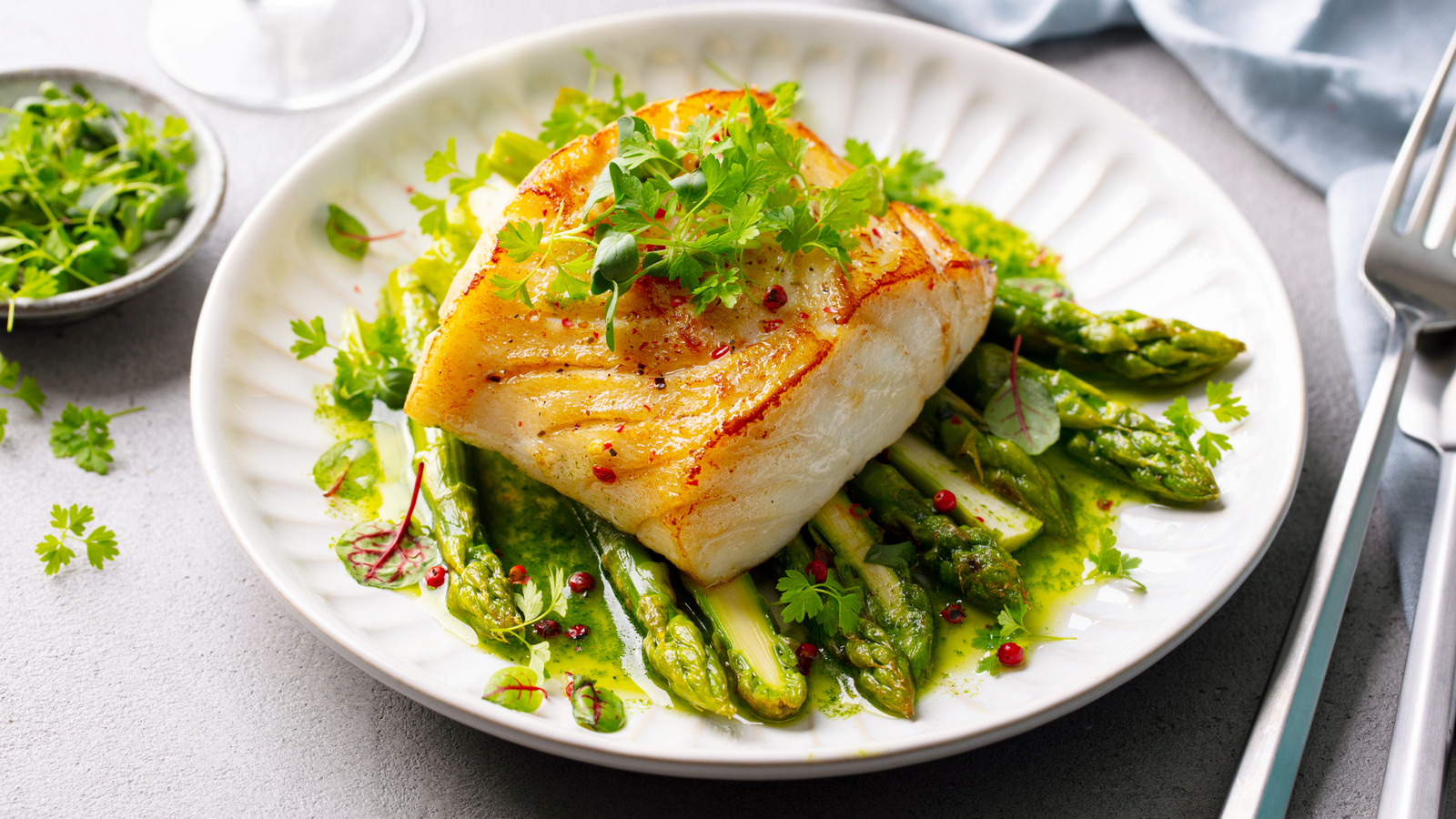
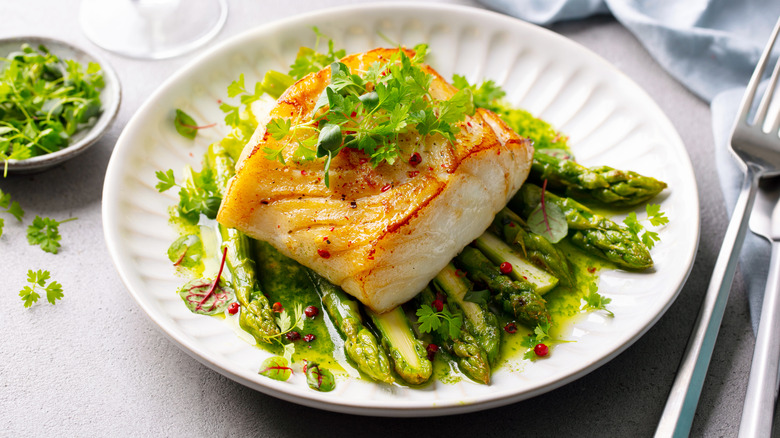
Cheap fish may be good for your grocery budget, but it can come back to bite you in other ways. Think twice before buying and cooking these common swimmers.
Food Republic – Restaurants, Reviews, Recipes, Cooking Tips

The 2026 Southeast harvest limit for king salmon is more than 50% higher than the limit for 2025. This year, Southeast Alaska fishermen can catch a total 205,300 treaty king salmon — fish that didn’t come from Alaska hatcheries — according to a March 31 announcement by the Alaska Department of Fish and Game.
State fishery managers use the harvest target for treaty kings to set catch limits for each gear type in sport and commercial fisheries.
This year’s harvest target for Southeast was calculated in accordance with the U.S.-Canada Pacific Salmon Treaty, which regulates fishing for migratory king (chinook) populations along the West Coast of both countries.
In 2025, due to poor forecasts for the migratory stocks that drive Southeast fisheries, the treaty limit hit a record low of 133,500. That represented a 40% cut from the 2024 Southeast limit of 211,400.
In recent years, the Southeast limit has ranged between a high of 355,600 kings in 2016 down to roughly 130,000 in both 2018 and 2025, Fish and Game records show.
Announcing the 2026 Southeast limit, Fish and Game reported that “several stocks have shown signs of improvement in 2024 and 2025.”
From this year’s harvest limit, commercial troll fishermen can take up to 146,000 kings, up substantially from the record-low 92,730 in 2025.
Trollers get to fish “50,000 more chinook than last year, with last year being the lowest allocation in history, so it’s better than terrible for the trollers this year,” said Patrick Baum, an Alaska Trollers Association board member.
Some trollers depend on the high-value kings for about 40% to 50% of their annual income, while facing ever-increasing prices for fuel, groceries and maintenance required to operate their vessels.
In early 2025, the Alaska Board of Fisheries changed the way the state divides the allocation between troll and sport by shifting 3% of the troll allocation to the sport sector each year, which added to trollers’ frustration about the low harvest limit last year.
For 2026, resident and nonresident sport anglers in Southeast can harvest 43,600 kings, the department announced.
That sport harvest limit is up from the record-low 27,700 allowed last year.
This year residents can harvest two kings, 28 inches or greater in length, each day, with no annual limit. The record-low treaty allocation in 2025 triggered a one-fish daily limit for residents, with no annual cap.
Nonresidents in 2026 can catch one king salmon, 28 inches or greater in length, each day. From Jan. 1 through June 30, nonresidents have an annual limit of three; from July 1 through Dec. 31, the nonresident annual limit is one.
Nonresidents in 2025 were bound to an unusually tight, year-round annual limit of one fish.
On March 31, the department also announced its annual closure of waters around Petersburg and Wrangell, particularly in front of the Stikine River, to protect weak king salmon runs.
“The retention of king salmon is prohibited; any king salmon caught must be released immediately,” in District 8 in front of the Stikine and a portion of the Back Channel, from April 1 through July 14.
The same restriction applies April 1 through June 14 in the waters around Wrangell, Kupreanof, Etolin, Zarembo and Mitkof islands, which encompass District 6, District 10 and portions of District 5, District 7 and District 9.
The closure from April 1 through June 14 also applies to waters near Juneau, Haines and Skagway.
Troy Tydingco, state sport fishery manager based in Sitka, said the one-fish limit for nonresidents in 2025 is having a lingering impact his year on the Southeast sportfishing industry that serves primarily nonresident clients.
He said nonresidents may have been deterred from booking charter fishing trips after seeing the one-king nonresident annual limit for all of 2025 and following emergency closures to king salmon retention in recent years.
The harvest by nonresidents has comprised about 75% of Southeast sport harvest in recent years.
For other gear types, the state set the 2026 harvest for Southeast commercial seiners at 8,800 kings; for drift gillnetters, 5,900; and 1,000 for set gillnetters.
This story was originally published by the Daily Sitka Sentinel.
The post Southeast king salmon harvest limit set 50% higher than last year appeared first on Chilkat Valley News.
Alaska’s senior U.S. senator, Lisa Murkowski, knows from experience how difficult it is for the state to adopt a long-term fiscal plan, rather than simply hoping for federal dollars and high oil prices to pay the bills.
“Alaska will need a legitimate fiscal plan as the federal budget inevitably tightens,” she told state House and Senate members gathered in a joint session to hear her annual address on March 31.
Congressional Republican-led federal budget cuts are shifting more costs to the states, including Alaska, for food assistance benefits known as SNAP, disaster response and prevention and other services.
Higher oil prices, caused by the war on Iran and Iran’s attacks on Middle East oil and gas facilities, have provided the state with additional revenues this year, but those revenues will fade away when oil returns to lower prices.
“The (oil-price) windfall will only go so far and last so long,” Murkowski told legislators. “We can’t count on anyone or anything to bail us out of our fiscal woes. Only a long-term plan will truly end the cycle of a boom and bust.”
In a later interview with reporters, Murkowski recalled her four years in the Alaska Legislature, before becoming a U.S. senator in December 2002. She was part of the bipartisan Fiscal Policy Caucus, which she joined as a freshman in 1999.
The state had been drawing as much as $1 billion a year out of reserves to balance the budget as low oil prices cut deeply into state revenue. The House-led group of Democrats and Republicans was determined to put together a fiscal plan to help pay for public services for years into the future.
Though the group debated multiple revenue bills and pieces of a fiscal plan 1999 through 2002, and succeeded in winning House approval in 2002 of a state income tax and higher taxes on alcohol, the Senate adopted only the alcohol tax increase.
Higher oil prices and more spending from reserves over the years have covered the budget, but the reserves have declined and oil prices are never guaranteed.
Murkowski acknowledged to reporters in an interview session after her address to the Legislature that she was unable to solve the state’s long-term fiscal problem when she was a member of the House.
“We know what the contours of a fiscal plan need to be,” she said. “But political will to make it happen — still waiting 20 years later.”
Legislators and governors have continued talking for the past 20 years about the need for a fiscal plan to provide stable revenues and managed spending but have not been able to assemble the political will or the votes to pass legislation.
The senator told lawmakers she didn’t want to be “lecture-y,” but followed with advice anyway.
“And one of those areas — I’m just going to offer it up here — is matching funds,” she said. Many federal programs, particularly money for highway improvements, require a state match.
This summer’s road construction work in Alaska could be at risk if the Legislature and governor cannot settle their differences over how to pay the state match on federal highway dollars in time for contractors to mobilize for the short construction season.
“When the delegation secures a federal allocation, we really need you to come through with your share in a timely manner,” she said. “We need you to meet the match.”
She also called out the governor for his decision to use federal aid to replace state dollars in the Alaska Marine Highway System operating budget.
The senator succeeded in getting nearly $1 billion in the bipartisan infrastructure law during President Joe Biden’s term that could come to Alaska for new ferries and other one-time spending to pay for improvements.
However, much of that federal aid went to cover the ferry system’s annual operating expenses.
That federal funding is a “lifeline, it’s not an entitlement,” Murkowski said.
“It’s not a good strategy to rely on a temporary, competitive federal grant program to cover 45% of our state’s operating costs, all of which used to be paid for by the state,” she said. “That’s the case that we’re facing right now.”
It’s not all the state’s problem, the senator, now in her 25th year in Congress, acknowledged. “The federal government is often beset by chaos these days.”
“We’re looking at the situation with the Department of Homeland Security being shut down now for 46 days,” she said. “We have seen workers —whether they be TSA, FEMA, some in our Coast Guard — working without paychecks. … But the problem that we’re dealing with here is shutdowns are becoming far too routine and too many policymakers are just becoming numb to their impacts.”
The post Murkowski reminds legislators: State needs a real fiscal plan appeared first on Chilkat Valley News.
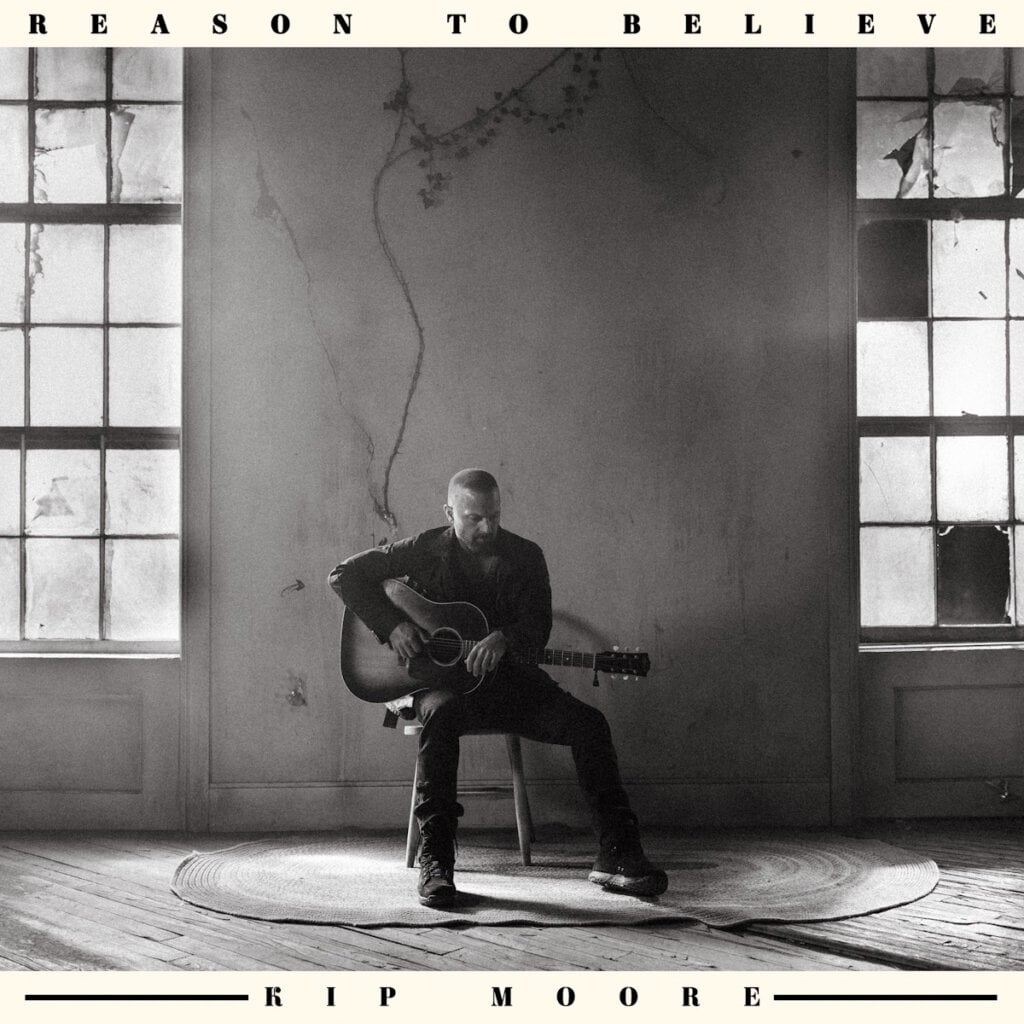
Kip Moore is gearing up to release Reason To Believe, his second full-length album in two years, arriving May 29.
Staying true to his promise to fans to deliver more new music than ever before, the upcoming 13-track project features songs co-written by the Georgia native himself.
As anticipation builds ahead of the release, here’s everything we know about Reason To Believe.
James, a highly respected songwriter, tragically passed away in a plane crash last year. His loss hit Kip Moore deeply, as James was not only a longtime collaborator but also a mentor and key supporter throughout his career.
On the record, Moore leans into themes of grief, faith, and the weight of time, capturing the perspective of a man who’s slowed down long enough to truly reflect and take everything in. He even named the project after a song James had always loved, which Moore originally wrote years ago with longtime collaborators Dan Couch and Scott Stepakoff.
“I felt like I was describing more of who I am as a human. This album is my daily thoughts. In here,” he said, while tapping his chest. “It’s an ‘in here’ kind of thing.
Moore co-produced the entire album with Andrew DeRoberts, marking the first time he’s worked with the acclaimed producer. DeRoberts introduced a different sonic approach than Moore had leaned into before, favoring “space over volume,” which opened up a new creative direction for the project.
“Levee” serves as the lead single and delivers a punch with its guitar-heavy production while showcasing Moore’s signature gritty vocals. The track also features guest vocals from Hillary Lindsey, who additionally co-wrote another song on the upcoming LP.
Moore is set to take Reason To Believe on the road this year with his upcoming Reason To Believe World Tour, headlining stadiums and arenas across Australia, New Zealand, Europe, the U.S., and the U.K. He’ll also return to South Africa, where he’s helped open the door for country music in the region, performing for crowds of more than 40,000 fans.
Before launching the full tour, Moore will also hit the road for a run of shows with Cody Johnson over the next couple of months, followed by another co-headlining tour with Billy Currington.
1. Levee (Kip Moore, Luke Preston, Hank Born)
2. Get What Ya Give (Kip Moore, Luke Preston)
3. The Darkness (Kip Moore, Andrew DeRoberts, Luke Preston)
4. Heartbreaker (Kip Moore, Jaren Johnston, Casey Beathard)
5. Headlights (Kip Moore, Andrew DeRoberts)
6. You & Me (Kip Moore, Andrew DeRoberts, Hillary Lindsey)
7. Faith In The Wind (Kip Moore, Andrew DeRoberts, Luke Preston)
8. Reason To Believe (Kip Moore, Dan Couch, Scott Stepakoff)
9. Lonely Tonight (Kip Moore, Casey Beathard)
10. Long Time Coming (Kip Moore, Andrew DeRoberts, Luke Preston)
11. Wild Things Like You (Kip Moore, Dan Couch)
12. Sober (Kip Moore, Manny Medina, Dave Nassie, Erich Wigdahl, Hank Born, Will Lynde)
13. Josephine (Kip Moore, Manny Medina, Dave Nassie, Erich Wigdahl, Hank Born, Will Lynde)
The post Everything We Know About Kip Moore’s New Album ‘Reason To Believe’ appeared first on Country Now.
Country Now

Diana’s former royal chef dished on her go-to meal so you can try your hand at making it. We’ll leave it up to you if you want the 99%-fat-free version, though.

Mashed – Fast Food, Celebrity Chefs, Grocery, Reviews
![<a href="https://theboot.com/ixp/204/p/reba-mcentire-mom-jacqueline-reba-guest-appearance-watch/" target="_blank">Reba McEntire’s Mom Once Appeared on ‘Reba’ [Watch]</a>](https://townsquare.media/site/204/files/2024/08/attachment-reba-mcentire-mom.jpg?format=natural)
It was a small role, but memorable. Continue reading…The Boot – Country Music News, Music Videos and Songs
It was a small role, but memorable. Continue reading…Country Music News – Taste of Country