You may think most grocery store hot dog buns are all the same. According to reviews, though, both the flavor, texture and design set these ones apart.

Food Republic – Restaurants, Reviews, Recipes, Cooking Tips










You may think most grocery store hot dog buns are all the same. According to reviews, though, both the flavor, texture and design set these ones apart.
Food Republic – Restaurants, Reviews, Recipes, Cooking Tips

Store-bought steak seasoning can provide the burst of flavor your meat needs to be great. However, the wrong ingredient could ruin your cooking session.

Mashed – Fast Food, Celebrity Chefs, Grocery, Reviews

HOMER, Georgia — The last few players of the day were finishing their rounds at the Chimney Oaks Golf Club when a steady wind picked up by the practice putting green. Pin flags bent to a near snap. A sleek helicopter slowly descended onto the manicured lawn.
Rick Jackson had arrived.
The billionaire health care executive turned GOP gubernatorial candidate was making his grand entrance as a headliner for a recent event hosted by the Banks County Republican Party. In many ways, it mimicked the same disruptive force with which he entered the race two months earlier: loud, ostentatious and out of nowhere.
He rose from being a virtually unknown contender to a frontrunner in the polls by spending $50 million of his own money to flood the airwaves, social media and mailboxes with ads — nearly double the amount of all the candidates in both primaries for governor combined, according to an AdImpact analysis. He’s cutting into Trump-backed Lt. Gov. Burt Jones’ margins with ultra-conservative voters and he’s complicating Secretary of State Brad Raffensberger’s path to making the June run-off.

An already crowded race has become all about Jackson.
“Anytime you’ve got somebody spending $100 million on TV and mailers and everything else, obviously you’re forced to talk about him,” Jones said in an interview with POLITICO.
As Jackson has upended the governor’s race, he’s also taking up so much of voters’ attention that Georgia Republicans in other races are worried about their own chances of breaking through.
Voters and strategists alike say they just can’t avoid Jackson’s presence anywhere, not even at home. His media blitz is alarming fellow Republicans, half a dozen of whom told POLITICO that Jackson is endangering Republicans in down ballot races — and a critical Senate contest — that will likely be decided by razor-thin margins.
“Down the ballot, it’s going to be extremely difficult for candidates for the other constitutional offices to get any kind of media attention, which creates a scenario where many of these races are essentially crapshoots,” said Spiro Amburn, a longtime Georgia Republican strategist and statehouse official who is neutral in the race.

A Georgia-based Republican operative involved with the governor’s race suggested that Jackson is partly the reason for the GOP’s messy Senate primary because the candidates are struggling to “get traction” and make headway with paid media. Another GOP strategist said Jackson’s spending, particularly in a primary, has far surpassed any precedent: “I watched 30 minutes of TV the other day and had six Rick Jackson ads. It’s just on a different level.”
“He’s sucked up so much oxygen that it’s really hard for any other Republican to operate right now,” said a third GOP strategist involved in races up and down the ballot in the state.
Jackson, in an interview, said he had not considered how his spending might be affecting other races and said he’d ultimately help them across the finish line when he’s the GOP nominee.
“Anytime you have a lot of money on TV, it’s going to raise the bar for everybody. Unfortunately, it’s just a necessity,” he said unapologetically. Speaking with POLITICO after the Banks County event last week, Jackson shrugged off any concerns about his money and said he will do “whatever it takes” to win.
“When I win, that’s when I’m done,” he added.
Perhaps the biggest target in the face of Jackson’s onslaught is Jones, who used to lead the governor’s race by most standards. He now finds himself neck and neck with the billionaire in recent polling, as Jackson sells himself as another Trump-aligned candidate — even though he and the president don’t have much of a close, personal relationship.
“He’s not portraying himself as what he really is,” Jones told POLITICO. “He’s not this hard-nosed conservative guy. He is somebody who’s dependent on state and federal contracts to make his living, and he’s trying to make himself out to be some outsider and doesn’t know how the political process works.”
Other Jones allies have been leaning hard into attacking Jackson as a big-spending outsider. At a fish fry last week in rural Atkinson County, state Rep. James Burchette encouraged voters to question why a candidate would spend so much money to “take control of the state of Georgia.” Sen. Russ Goodman warned that “all this stuff that you see in the mailbox — it’s nothing but a bunch of lies.”
But even with Jackson’s big-spending approach, Trump’s stamp of approval still holds immeasurable power with the MAGA base.
The president has reaffirmed his support for Jones: “All these guys are coming in now loaded up with some money. Who the hell knows how much money he’s got? But Burt Jones has been here and been with you and been with me right from the beginning,” the president said at an event in Rome, Georgia in February.
Parked outside the fish fry, Jones’ campaign bus was emblazoned with that reminder: “Trump Endorsed.”

Jackson is betting on voters like Bruce Brooker, a 72-year-old farmer from Atkinson County: intrigued by Jackson, but ultimately sticking with the lieutenant governor out of loyalty to the president.
“I would probably vote for [Jackson] if Trump had not endorsed Burt,” he said. “I like the fact that he started with nothing and crawled and climbed through like any. He knows what hard work is. I’m not being critical of him. I admire him.”
Jackson, meanwhile, is trying to prove his MAGA credentials to Georgia Republicans to siphon off enough of Jones’ voters to win. Over in Homer, where Jackson was addressing a crowd of about 200 voters at the country club, attendees peppered him with questions about his relationship with Trump.


One man in the crowd asked Jackson to explain why he had donated to former Rep. Liz Cheney (R-Wyo.) — a longtime Trump critic who voted to impeach the president during his first term. Another questioned why he had only donated to the president after the 2024 election.
“Just like JD Vance and Marco Rubio, I will admit I was late to the Trump Train. There’s no question about it,” Jackson responded. “But I gave a million dollars to him. That’s not an insignificant concept of supporting somebody.”
Others in the governor’s race who are less interested in wooing the MAGA masses — including Raffensperger, who has rebuked efforts to overturn the 2020 election, and Attorney General Chris Carr — are not as concerned about Jackson undercutting their campaigns.
Carr campaign spokesperson Julia Mazzone said in a statement that Jackson’s entry into the race “devastates Burt Jones’ campaign, but it does not change the fundamentals for us.” The attorney general has a long-shot chance of advancing out of the primary, however, as polls show him in a single-digit fourth place.
A March 30 memo penned by Raffensberger’s campaign manager and obtained by POLITICO claimed that the Jackson-Jones cagefight has created an opening for other candidates to lead on policy substance. The secretary has avoided injecting himself into the MAGA mêlée, instead keeping his profile comparatively low as he travels the state to speak with voters.

“I have my own lane, and I feel good where we are,” Raffensberger said in an interview. “We travel all over the state, reaching voters, talking to people, making sure that people understand my message is about making sure we keep Georgia affordable and safe, and I’m best positioned to do that at the end of the day.”
After all, Raffensperger has a history of overcoming Trump-backed challengers and cruising to a general election victory.
“I’m going to be in the runoff,” he added, deflecting any and all concerns with finality.
Politics

In the annual public meeting with SEARHC officials on April 6, Sitka residents listed what they see as systemic issues with the Native-owned health care nonprofit that provides medical and hospital services for all of Sitka and serves 25 other Southeast communities.
Sitkans expressed concerns and ideas on how the Southeast Alaska Regional Health Consortium could improve its communications, care coordination, elder care, telehealth, medical recordkeeping, billing, patient portal functionality and patient follow-up, among other topics.
SEARHC leaders and Sitka Community Health Council members collected notes on sheets of butcher paper while listening to feedback from about 40 participants, including many longtime SEARHC patients and medical professionals.
The two-hour meeting at Centennial Hall was held in accordance with the 2019 sale agreement wherein the city sold Sitka Community Hospital, its assets and business to SEARHC.
Staff from Spruce Root, a Native-owned business development organization, helped facilitate the meeting and is to create a report on public input to be sent on to SEARHC leaders.
Meeting participant Susan Litman said after the two-hour session that she hopes the meeting’s facilitated format, which was new this year, will bring about solutions addressing the issues raised by members of the public.
“I’m hopeful, because nothing happened after the last one,” Litman said.
At last year’s public meeting, residents brought up challenges with SEARHC medical care in a two-hour “listening session.”
JJ Carlson, a Health Council member, said “there’s frustration from community members that there wasn’t any action from the feedback people shared last year.”
After last year’s meeting, the board of directors received a copy of the meeting minutes summarizing the dozens of personal stories. Carlson said that format didn’t give the board clear recommendations for action.
“SEARHC has that board as its governing body, and they don’t quite do the listening to the same degree that (the Health Council does),” Carlson said.
Carlson said that hiring facilitators and focusing on systemic issues in this year’s public meeting represents a “move towards having more robust documentation that could be absorbed better by the SEARHC board of directors.”
At the April 6 meeting SEARHC Chief Medical Officer Dr. Cate Buley, chair of the Health Council, said the goal of the new format “is to translate concerns into recommendations and priorities.”
Buley said she and Chief Operating Officer Martin Benning will deliver reports from the public meeting to the SEARHC directors.
“We will bring that forward, and those recommendations are going to help guide our further discussions and our review with the Health Council,” Buley said.
After Buley’s opening remarks, participants gathered in three breakout groups: one focused on community needs, another emphasized the quality of patients’ experience at SEARHC, and the third looked at the systems-level approach to clinical practices, policy and strategy.
Participants spent about 40 minutes discussing concerns in one topic area, before moving stations to consider challenges and propose solutions in a second topic area.
In a group discussing community needs, Sitkans said they need better access to primary care providers; that SEARHC could improve services by building partnerships with other local organizations; and that expanded services are needed in patient advocacy, elder care, home health care, long-term care and end-of-life care.
In discussions on patient access and experience, Sitkans stressed the need for centralized communication between SEARHC, out-of-network specialists and patients; clear processes for care coordination between case managers, specialists and primary care providers; an improved online patient portal; and better communication in general.
“Telephone, email, the whole system is broken,” Health Council member Dr. David Lam said in regard to SEARHC communications.
While discussing systems, policies and strategy, Sitkans said they’d like transparency from SEARHC as to its strategic plan.
Nicole Miller, who worked at SEARHC for four years, and recently moved on to lead the Brave Heart Volunteers nonprofit, said “morale is very low” among SEARHC hospital staff.
“I feel like SEARHC has opportunities to fix it, and I just wish they would,” Miller said.
Meeting participants questioned why many SEARHC administrators like Dr. Buley live in Juneau, rather than Sitka, and why CEO Charles Clement lives primarily in Utah.
Miller acknowledged these concerns and said she believes Clement did a great service for Sitka by securing the federal funding required for SEARHC to construct the new Mt. Edgecumbe Medical Center facility.
“Now I just hope SEARHC uses it to its fullest potential and staffs it appropriately,” Miller said.
Participants also discussed how Clement is being paid more than $2.6 million a year, according to recent 2024 tax filings.
Commenting on the new hospital facility, Health Council member Lam said he’s “not sure why we’re spending $300 million to have the same number of hospital rooms that we have now.” He expects SEARHC will eventually tear down the old hospital, which SEARHC took over from the U.S. Indian Health Service in 1986.
A ceremonial opening of the new hospital and medical office building is set for April 23, and patients will be welcomed starting this summer, officials said.
At the close of the two-hour meeting, note-takers for each of the breakout groups shared summaries of what they heard during discussions.
After the meeting Sitka resident Connie Kreiss told the Sentinel that she believes the new facilitated format “dilutes the process” of gathering public feedback.
The Health Council and SEARHC are responsible “to hear the concerns and figure out solutions,” Kreiss said. “It’s not our job to prioritize the concerns and come up with solutions. … They’re supposed to listen.”
SEARHC pediatrician Dr. David Vastola told the Sentinel the new format could make room for more people to share their ideas.
“It takes a certain kind of person to get up in front of a big group of people and speak, whereas somebody who’s maybe not so assertive will sit here and talk to you and share their good ideas,” Vastola said.
Four-year Health Council member Susan Padilla told the Sentinel she was “skeptical” the format was going to work at the beginning, but felt the conversation was good.
“We got a lot of good feedback,” Padilla said. “People were focused on the questions that they were asking, so I felt that that was good. … I’m not sure what direction or what path or how this will turn out, but this was another attempt to gain community communication for their health needs here in town.”
Alana Peterson, a Health Council member and executive director of Spruce Root, told the Sentinel today that the third-party meeting facilitators “are working on a report right now.”
Peterson said Health Council members have already received notes from the April 6 meeting and now “Spruce Root is preparing a report and then some recommendations for next steps for SEARHC based on what we heard, and based on how we understand and consider the best ways for organizations to be working in communities.”
The Sitka Community Health Council was established in 2019 as part of the city’s agreement selling Sitka Community Hospital to SEARHC. No other Southeast Alaska community has a Health Council, or a mechanism by which to hold an annual meeting with SEARHC leaders.
The Sitka Council meets quarterly, and each year opens a portion of its spring meeting to the public, according to the group’s charter. It sends all of its meeting minutes to the SEARHC board.
Current members of the Council are SEARHC officials Buley, Benning and hospital administrator William Spivey, PT; Sitka city administrator John Leach; Sitka Tribe of Alaska Tribal Council members Peterson and Woody Widmark; and at-large members Carlson, Lam, Amy Ainslie, Sally Tonkin and Susan Padilla.
The post Sitkans seeking results from SEARHC session appeared first on Chilkat Valley News.
Representatives from Moffatt & Nichol, the borough’s advisors on the Lutak Dock rebuild, presented elected officials last week with three potential dock design concepts.
The concepts represent a mostly new starting point after the borough cut ties with former dock contractor Turnagain Marine. The borough assembly is scheduled to make its top pick of the three Moffatt & Nichol options later this month.
One of the options is essentially a more limited version of the design by Turnagain, Moffatt & Nichol project lead Paul Wallis said last month.
Like the Turnagain design, the concept would build a new dock face in front of the existing dock, also known as encapsulation. Unlike the Turnagain design, it proposes a structure far smaller than the existing dock, with the rest of the old section demolished and replaced with rock pile, also known as rip-rap.
The other two concepts would demolish the existing dock and replace it with a new type of structure. One would rebuild a new flat dock face, also known as a bulkhead, for barges to tie up to. The other would trade a flat dock face for a loading ramp on a float, allowing barges to unload over rip-rap.
Each concept appears to have pros and cons. According to Moffatt & Nichol engineers, the encapsulation concept — the one most similar to Turnagain’s — might have advantages in permitting speed and level of functionality, both during construction and once it’s built. It might also be the least cost-effective, Wallis said.
At the moment, none of the concepts include cost estimates.
The borough and Moffatt & Nichol representatives have stressed that the contractor’s role is to draw up a broad plan outlining shape and functionality, but will stop short of a detailed, ready-to-build design.
That work will be left for a new contractor, expected to be selected from a bidding process at the end of July to finish and build the design.
Despite the lack of specificity, Wallis assured officials last week that all the concepts are viable.
That includes the ability to complete federal design-specific permitting before a key deadline: the source of much of the dock funding, the Federal Maritime Administration, has said permitting must be complete by Sept. 2027, or the funding could be taken away.
Wallis said the subcontractor slated to handle the permitting process has said permitting for all three concepts would be able to meet that deadline.
It also includes the ability to construct the concept within the borough’s total unspent dock funds — roughly $22 million, according to a March 24 memo from borough manager Alekka Fullerton.
Some officials shared concern for unforeseen cost increases given cost overruns with the previous Turnagain design.
Wallis seemed to draw a line between his firm’s process and Turnagain’s.
“The previous constructor promised to encapsulate the whole dock for the money you had available, but eventually it came to light that was not economically feasible,” Wallis said. “At that time (Moffatt & Nichol) had been asked to provide a third-party review of what was purported to be (Turnagain’s) 95% design. Guys, you don’t get to a 95% design and then find out you can’t afford it.”
Wallis followed by saying he couldn’t speak to exactly what went wrong with Turnagain’s process, but said he believed his firm could “rightsize any of these options for your scope, schedule and budget.”
One thing that is certain is all three designs will result in downsizing of the existing dock face. Wallis said at the meeting that the existing sections of the dock not covered by the new footprint would have to be demolished.
“We can’t leave the cells there,” Wallis told officials. “If we leave the cells there, they’ll eventually collapse and the contents will spill out and that’s an uncontrolled failure.”
The post Contractor presents Lutak Dock concepts appeared first on Chilkat Valley News.

With hits like “We Belong Together” and “Shake It Off,” The Emancipation of Mimi, released in 2005, marked Mariah Carey’s return to her chart-topping highs of the 90s. The 2008 follow-up, E=MC2, is – for the most part – the party she threw to celebrate the win.
E=MC2 is a largely uptempo album loaded with beats that are ready-made for head-nodding, finger-snapping, and two-steppin’ on the dancefloor. Even some of the ballads – such as hood fairytale “Love Story” – have a deep bass thump. Mariah accomplished this sound by re-teaming with longtime collaborator Jermaine Dupri, who oversaw Emancipation’s biggest cuts, as well as working with other producers known for innovative R&B.

Danja, a Timbaland protégé, helms the opening cut “Migrate,” featuring autotune virtuoso T-Pain. The tune comes off as if Mariah, singing in her whistle tones, is hopping from club to club, following the lead of a beatboxing robot pied piper.
Atlanta’s DJ Toomp, known for his work with rapper T.I., contributes the airy “I’ll Be Loving U Long Time.” The track is built around a snatch of El DeBarge’s “Stay With Me,” which was also used on The Notorious B.I.G.’s 1995 smash “One More Chance (Remix).” (Mariah has used familiar hip-hop samples throughout her career. The 1993 smash “Dreamlover” borrows the same loop from The Emotions’ “Blind Alley” that’s used by old-school rapper Big Daddy Kane on his 1988 hit “Ain’t No Half-Steppin’.”)
Lyrically, Mariah is more conversational and playful than ever before, shouting out B.I.G. and 2Pac on the house-y “I’m That Chick,” complaining about a dude who “brings the drama [with] six baby-mamas” on the reggae-tinged “Cruise Control,” and referencing YouTube – then just three years old – and talk show host Wendy Williams on the springy, come-on “Touch My Body.” (The song, which was E=MC2’s first single, became Mariah’s 18th No.1 on Billboard’s Hot 100.)

But E=MC2 isn’t all fun times. It also deals with Mariah’s lingering family issues. On the rhythmic elegy “Bye Bye,” the biracial crooner reconciles with her Black father after years of estrangement (“I’m glad we talked through all them grown-folk things [that] separation brings”). But sadly, they reconnect only shortly before his death from cancer in 2002. She regrets that he wasn’t able to witness how she rebounded from the commercial disappointment of her Glitter film and soundtrack: “You never got to see me back at number one.”
The closing song, “I Wish You Well,” which surges with gospel fervor, addresses the more complicated relationship that Mariah has with her brother and sister, both of whom have sold stories about her to the tabloids. She makes peace with the fact that she’ll likely never be able to trust them enough to have them in her life. “I weep for what I dreamed we all could be,” she sings with longing.
These last two cuts make E=MC2 both a celebration of the joys of success and a testament to the wounds it can never heal. For Mariah, Emancipation was not an endpoint, but the beginning of an emotional open road.
Shop Mariah Carey’s E=MC2 here.
Discover more about the world’s greatest R&B artists | uDiscover Music

Nineteenth-century cowboys couldn’t just stop at a gas station convenience store for food. However, they could make this simple bread while on the trail.

Mashed – Fast Food, Celebrity Chefs, Grocery, Reviews
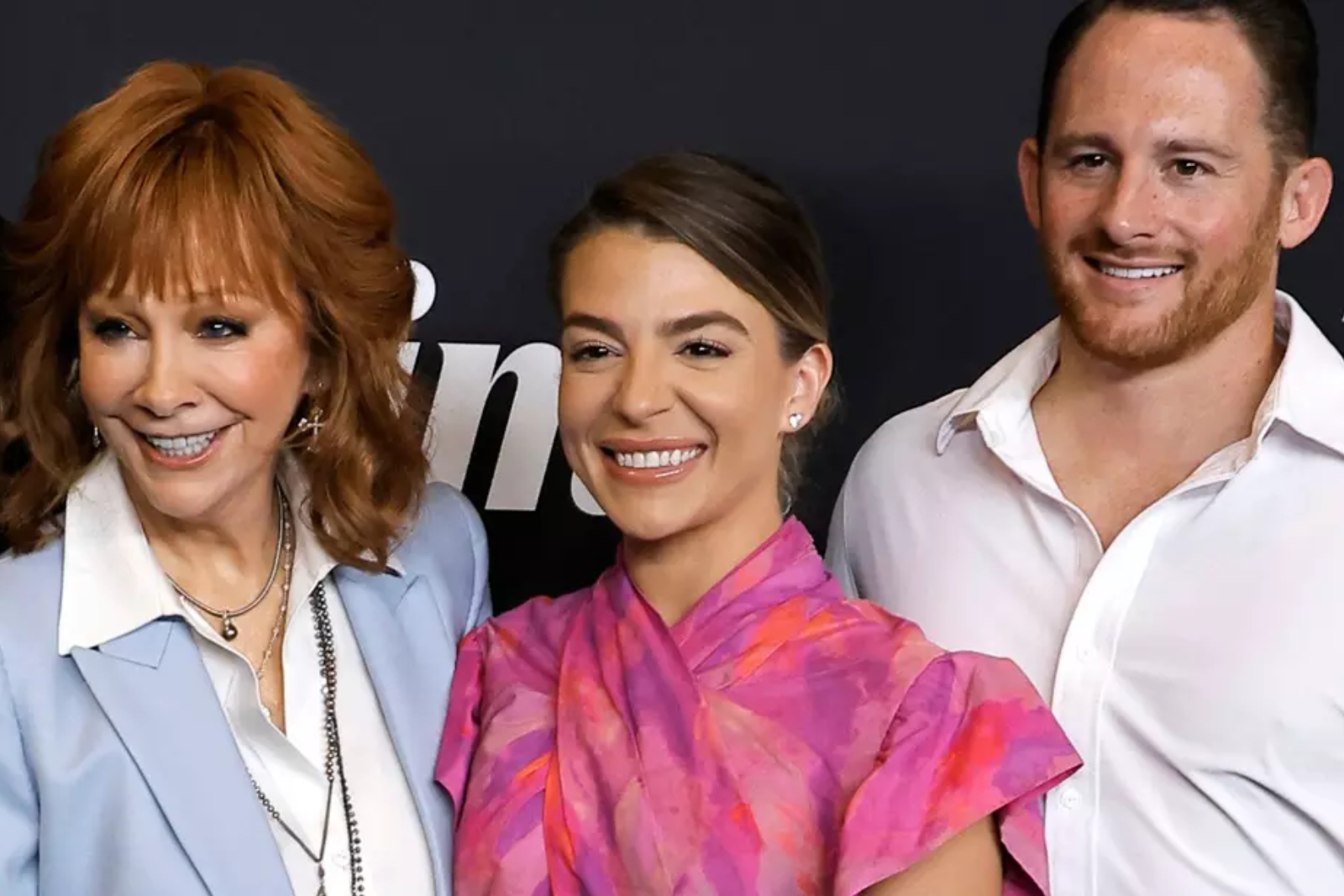
Shelby and Marissa Blackstock are expecting their first child, sharing the news after previously opening up about their struggles to start a family. Continue reading…The Boot – Country Music News, Music Videos and Songs
 The verdict is in: Anthony Norman didn’t know he was being pranked.
The subject of Jury Duty’s second season Company Retreat shut down online speculation that he discovered the faux documentary…
E! Online (US) – Top Stories

 Hailey Bieber wants another baby, baby, baby, oh.
However, the Rhode Skin founder—who is already mom to 19-month-old son Jack Blues Bieber with husband Justin Bieber—is still unsure exactly how…
E! Online (US) – Top Stories
