Another April, another Kourtney Kardashian birthday!
Her husband, Travis Barker, put out a birthday tribute to his beautiful wife.
There’s a lot to celebrate. She’s botox-free. She’s a few years sober.
And Kourt’s toes are also in Travis’ mouth. Should we be seeing this?
Kourtney Kardashian and Travis Barker sit at a table during an episode of The Kardashians that aired in June of 2023. (Image Credit: Hulu)
Happy birthday, Kourt!
Saturday, April 18, was Kourtney’s birthday.
The Poosh founder and mother of four is now 47 years old.
On Sunday, April 19, Travis took to his Instagram page to share a series of photos to celebrate his wife.
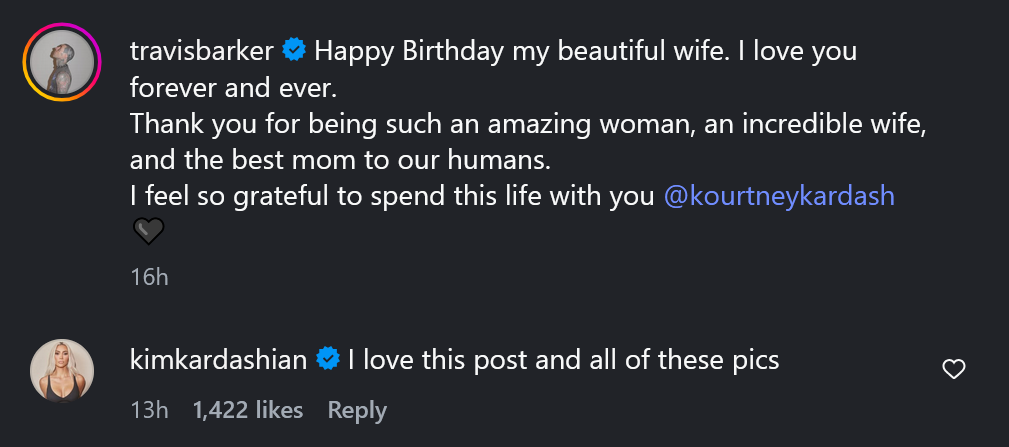
“Happy Birthday my beautiful wife,” he began his tribute. “I love you forever and ever.”
Travis gushed: “Thank you for being such an amazing woman, an incredible wife, and the best mom to our humans. I feel so grateful to spend this life with you @kourtneykardash.”
Most of the photos are exactly what you’d expect from a birthday tribute to a world-famous MILF.
We see the couple cuddling. There are also multiple photos of their child, whose name is Rocky Thirteen.
Travis opted to post a couple of certified thirst traps of his wife. That’s allowed.
The final photo of the set, however, shows him giving his wife a kiss. But not on her mouth.
It is with a heavy heart that I show Travis Barker sucking the toes of Kourtney Kardashian. This was the last photo in his birthday tribute post to her.
Naturally, the photo of Travis sucking on Kourt’s toes broke containment pretty darn quickly.
It’s across multiple social media platforms.
To some, of course, this is an erotic photo, perhaps the subject of an envious fixation.
Others, however, are reeling from the unexpected look at an intimate moment between these two.
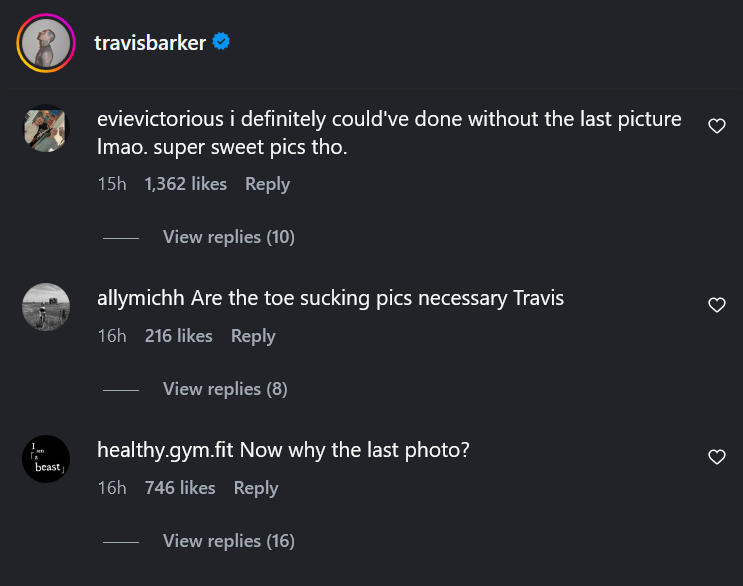
As you can see, even just this small sampling of commenters — including real fans — questioned whether Travis needed to include the toe-sucking pic.
Not every fan of the couple was a fan of a somewhat intimate photo that Travis Barker shared. (Image Credit: Instagram)
We’ll admit that we, too, could have done without seeing Travis kissing Kourt’s toes.
Now, this doesn’t fully look like foot-worship like foot fetish content might include. At most, this would be a prelude to it.
But it is still a very intimate moment that most (but not all) of the couple’s fans didn’t feel a need to see.
That said, there’s definitely some laughter at the expense of foot-fetishists. Even though this photo is really just a husband kissing the nearest part of his wife.
Foot fetishists are often the butt of jokes when they’d rather be the foot of jokes, in part because their kink is non-controversial and more easily publicly discussed despite being relatively uncommon. Sometimes, it’s harmless! But the jokes can sometimes be mean.
Clearly, Kim Kardashian is in her brother-in-law’s corner. Toes and all. (Image Credit: Instagram)
Well, they have one person’s support
In response to Travis’ post, Kim Kardashian shared her take.
“I love this post,” she wrote to her brother-in-law, “and all of these pics.”
That’s pretty specific language.
Maybe she’s trolling “the haters,” but Kim seems to be making it clear that there isn’t one single photo that doesn’t meet with her approval.
At the end of the day, the only person who needs to approve of Travis’ toe-sucking is Kourtney. His followers can always just unfollow, if they like.
Sandy Snodgrass gives a presentation on her advocacy work and raising awareness of the dangers of fentanyl at the Alaska State Capitol on Apr. 15, 2025. (Photo by Corinne Smith/Alaska Beacon)
An Anchorage mother whose son died from a fentanyl overdose is continuing to champion national and statewide action to raise awareness around the dangers of the synthetic opioid and prevent future deaths.
On Wednesday, Sandy Snodgrass was recognized with a legislative citation of honor at the Alaska State Capitol by Anchorage Democratic Senator Bill Wielechowski for her advocacy work.
In December, Snodgrass attended the signing of a package of legislation, including Bruce’s Law, which directs federal funds toward youth education and community-based treatment and recovery programs. It’s named after her son who died in 2021 and was sponsored by Alaska’s U.S. senators and signed by President Donald Trump.
Sandy Snodgrass is honored with a legislative citation by Sen. Bill Wielechowski for her advocacy work to raise awareness around the dangers of fentanyl on Apr. 15, 2026. (Photo by Corinne Smith/Alaska Beacon)
“This is a different world we live in with fentanyl now,” Snodgrass said in a lunchtime presentation after receiving the award. “We live in a world where one pill, one half pill can kill you. And it’s not a tolerance, you know, it’s one time and you can die.”
Trained as a clinical psychologist, Snodgrass founded the Alaska Fentanyl Response Project aimed at raising awareness about overdose deaths, particularly among young people, sharing stories of those who have died and advocating for legislation and resources for prevention and addiction treatment.
“I talk about it as a three legged stool,” she said. She described demand reduction, law enforcement and treatment as the three legs of the stool. “And if we don’t do all three, the stool will fall over,” she said.
She said her focus is demand reduction. “So I am not law enforcement,” she added. “I don’t have a treatment center. But I did have a child that died from fentanyl poisoning, and so I can tell my story to anybody, anywhere, anytime.”
“You can never die from an illicit drug if you never try an illicit drug,” she said.
Snodgrass’ son, Robert Bruce Snodgrass, died at the age of 22 in 2021, during a wave when Alaska saw the highest increase in opioid deaths nationwide, a 75% increase from 2020 to 2021, according to the U.S. Centers for Disease Control and Prevention.
Fentanyl is a synthetic opioid, clinically prescribed for pain, and is more potent than other opioids like morphine or heroin. As little as two milligrams — an amount the size of a few grains of salt — can be fatal.
The Alaska wave of fentanyl deaths peaked in 2023, according to state data, with 357 reported deaths. Last year, there were 245 deaths reported from 2024 to 2025, according to the most recently available data, with the majority in Anchorage.
Sandy Snodgrass holds a photo of her son Bryce, who died from a fentanyl overdose in 2021. President Donald Trump signed the photo when he signed a package of legislation, including Bruce’s Law, to direct funding to prevention education and treatment and recovery programs in Dec. 2025. Snodgrass is seen at the Capitol on Apr. 15, 2026. (Photo by Corinne Smith/Alaska Beacon)
Thousands more non-fatal overdoses were reported each month, with many surviving thanks to the use of emergency naloxone, known as Narcan, a life-saving drug that can quickly reverse an opioid overdose.
She said it’s a difficult message to convey the risks to young people, like her son.
“Bruce was an Alaskan boy, through and through — all the Alaskan things. He was a free solo mountain climber. He was a certified mountain guide. He was an extreme sport, high adrenaline young man, just like so many of our Alaskan boys and girls, he lived on the edge and loved it,” she said.
She said she thought she’d get a call about him being injured in some kind of rock climbing accident. “That’s not the call I got. He was safe out there. He was not safe less than a mile away from our home in Anchorage,” she said.
Snodgrass said she’s glad to see law enforcement investigating more fentanyl overdose deaths as drug induced homicides, and recent legislative action to increase criminal penalties to second degree murder. But she said she recognizes it can be accidental.
“That guy, whoever gave my son the drugs, is almost as much a victim as my son is. He likely didn’t know there was fentanyl. He likely didn’t want to kill my son. He did not do it intentionally. But that’s what happened. So I don’t call it ‘accidental overdose,’ I call it poisoning,” she said.
She said she mentioned the idea of fentanyl as a “chemical weapon” and a “weapon of mass destruction” to President Trump when they met in the Oval Office in December — weeks later he issued an executive order designating fentanyl as a weapon of mass destruction.
It directs attorneys general to pursue prosecutions of fentanyl sales, including manufacturing, distribution and illicit sale of precursor chemicals, and directs the military and Department of Homeland Security to consider fentanyl in its response to chemical incidents and to conduct counter-fentanyl operations.
Snodgrass cited estimates of hundreds of people dying across the U.S. every day from overdoses. An August 2025 estimate by the CDC showed 77,648 drug overdose deaths occurred in the 12 months ending in March 2025. Fentanyl remains the leading cause of overdose deaths.
“We’ve got to change that,” she said. “It’s as if a jet airliner, a jumbo jet airliner, was crashing in this country every single day, day after day after day.”
Sandy Snodgrass gives a presentation on her advocacy work and raising awareness of the dangers of fentanyl at the Alaska State Capitol on Apr. 15, 2025. (Photo by Corinne Smith/Alaska Beacon)
Snodgrass said she’s especially focused on doing more school presentations and raising awareness in rural Alaska, which she said drug dealers target for the high retail prices for fentanyl.
“When this reached my son in Anchorage, I was shocked, and the fact that it’s now reaching our rural communities to the extent that it is, is shocking,” she said, citing recent deaths in Nome, Dillingham and Togiak.
“I could not get over the statistics in Togiak of the number of seizures that the DEA was making, 3,000 pills at a time in a backpack on a plane to Togiak. Togiak has 800 people in it. It just was terrifying to me,” she said.
“It devastates the community to lose even one person. And so the numbers coming out of those rural communities are terrifying. They’re horrible, and it just keeps happening,” she said.
Snodgrass said she’s supportive of Senate Bill 288, sponsored by Sen. George Raucher, R-Sutton, that would require opioid abuse and prevention curriculum for students in grades 6 through 12, during an annual drug awareness week known as Red Ribbon Week. It’s currently being considered by the Senate Education Committee.
“They’re innocuous little pills, unless someone tells you that pill is going to kill you, or could potentially kill you,” Snodgrass said. “It’s a little blue pill, and it looks harmless, and you may take it to change the way you feel. That’s all they’re doing. And so the only thing I can do as one person is keep telling that story over and over and over again, and so that’s what I’m here to do.”
Since her rise to stardom during her “Gilmore Girls” days, Melissa McCarthy has been on a health journey that her fans (and Hollywood!) have witnessed.
Health Digest – Health News, Wellness, Expert Insights
We have tragic news to report from the world of television.
Patrick Muldoon — the beloved star who was best known for his work on Days of Our Lives — has passed away.
News of his death comes courtesy of a statement from his sister, Shana Muldoon-Zappa.
Patrick Muldoon attends the premiere of “Riff Raff” during the 2024 Toronto International Film Festival at Princess of Wales Theatre on September 09, 2024 in Toronto, Ontario. (Photo by Monica Schipper/Getty Images)
According to Shana, Muldoon took a shower after drinking coffee with his girlfriend at their Beverly Hills home on Sunday morning.
After noticing that he’d been in longer than usual, the girlfriend went to check on Patrick and found him unconscious on the floor.
She called 911, but paramedics announced Muldoon dead at the scene.
Friends described Muldoon as “endlessly generous — with his poetry, his humor, and his unmistakable presence,” according to Page Six.
Though he racked up dozens of credits over the course of his career, Muldoon is likely best known for his work as Austin Reed on “Days of Our Lives” from 1992 to 1995, and then again from 2011 to 2012.
Muldoon also had recurring roles on the iconic 1990s sitcoms Who’s the Boss? and Saved By the Bell, where he played Jeff, the Max manager who briefly came between Zack Morris and Kelly Kapowski.
On the bid screen, Mudoon had roles in films like Deadlock (2021), Vanquish (2021), Dakota (2022), Marlowe (2022), and Murder At Hollow Creek (2023).
He also appeared in the movie Dirty Hands, which will be released later this year.
Muldoon was also an executive producer on a movie that’s currently in production, Kockroach, which will star Chris Hemsworth, Taron Egerton, and Zazie Beetz.
The film is set for release in 2027.
Our thoughts are with Patrick Muldoon’s loved ones during this incredibly difficult time.
The arrest of Joseph Duggar almost feels inevitable, given the family’s history and the cult’s extreme beliefs.
We do not know the identity of the 9-year-old victim whom he allegedly molested in 2020. But she was likely a family friend, if not closer.
Cousin Amy Duggar is speaking up about the steps that she’s taking to keep her own young child safe.
And she doesn’t have to name-drop either of her disgraced cousins to bring them to mind.
In 2017, Amy Duggar appeared on Marriage Boot Camp alongside her husband. (Image Credit: WEtv)
‘We will protect your world fiercely’
On Sunday, April 19, Amy took to her Instagram page to share a message about the safety of her 6-year-old son, Daxton.
“We can’t shield you from the whole world,” she began, “but we will protect your world fiercely.”
Amy continued: “Your safety, your steadiness, and the life we’re building around you.”
Referring to her husband, Dillon King, she wrote: “Dad and I will never be passive about who we allow near you.”
In the post’s conclusion, Amy acknowledged: “Not everyone deserves a place in your story.”
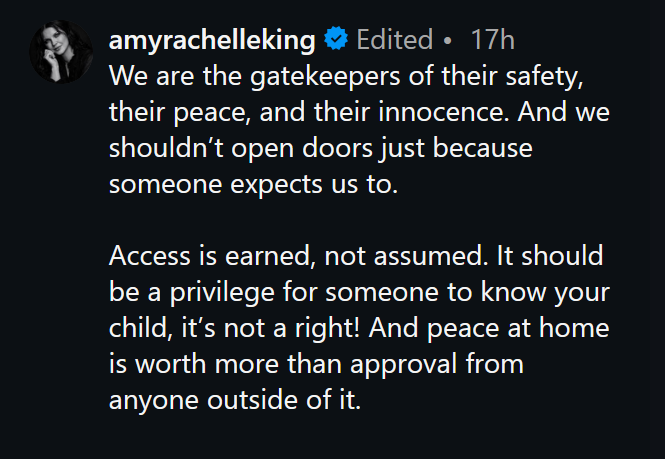
On Instagram, Amy Duggar shared this text post about shielding her child from bad adults who don’t “deserve a place” in her son’s story. (Image Credit: Instagram)
“We are the gatekeepers of their safety, their peace, and their innocence,” Amy wrote in the Instagram post’s caption.
“And we shouldn’t open doors just because someone expects us to,” she acknowledged.
“Access is earned,” Amy affirmed, “not assumed.”
She advised: “It should be a privilege for someone to know your child, it’s not a right!”
Amy concluded: “And peace at home is worth more than approval from anyone outside of it.”
We all know that, for decades, a public campaign to warn children about predators arguably backfired.
“Stranger danger” can be real. But children are much more likely to run afoul of physical abuse, sexual abuse, or both at the hands of family — especially close family — and other “trusted adult” caretakers.
That said, we think that Amy knows this. Perhaps even better than most.
In her Instagram caption, Amy Duggar King elaborated upon her desire to keep her son safe. (Image Credit: Instagram)
Amy appears to simply be saying that no one is entitled to spend one-on-one time with her son.
(It’s true that the accused Duggar men all allegedly pursued little girls, which is the most common form of predation. But some predators target boys or are simply indiscriminate, seeking a victim above all else.)
That doesn’t just mean that she’s careful about babysitters.
Clearly, Amy and her husband are also making it clear that they’re not just going to drop off the kids with the main Duggar clan and head off for a weekend getaway.
(Truth be told, dropping off your child with members of an abusive cult would be ill-advised, even if there were zero sexual predators in the mix. CSA is not the only harm that can befall a child.)
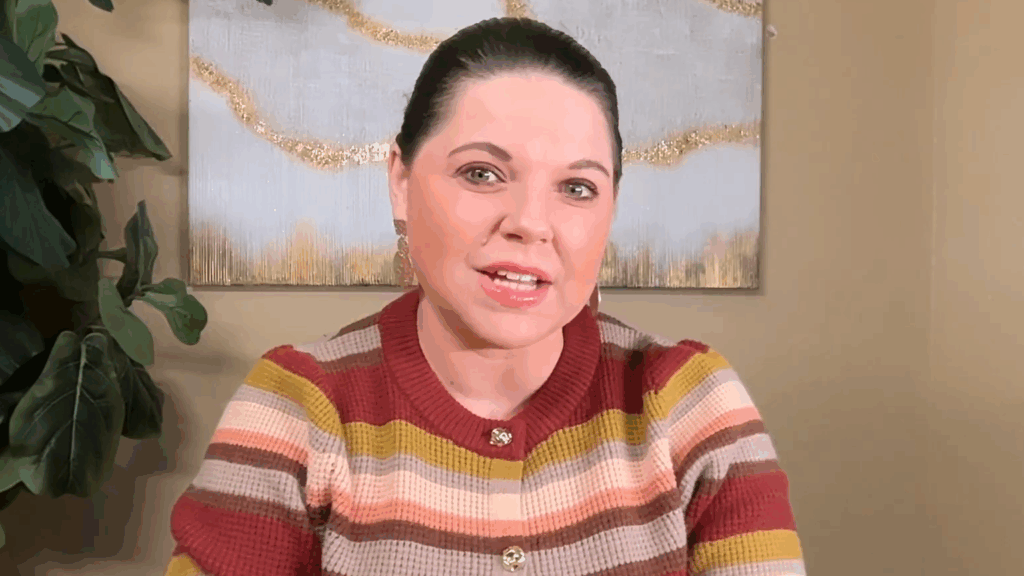
On the ‘Group Text’ YouTube show, Amy Duggar King speaks about the policing of words, attitudes, and thoughts in her cousins’ household. (Image Credit: YouTube)
Could someone ever be TOO over-protective?
Obviously, it is common sense to go to great lengths to protect one’s child, especially from opportunists and abusers.
But there are ways in which “protecting” a child can also cause home. Hopefully, Amy understands this.
Not allowing a child to meet any other adults (instead of introducing them to adults but ensuring that they remain safe) is poor socialization. Even worse is keeping a child isolated from meeting random, age-appropriate peers.
In fact, we see this in the Duggar cult. Much of the family subjects their children to homeschooling. Even if they were qualified teachers teaching a real curriculum (which is not what’s happening), their kids are missing out on meeting other children and experiencing the real world.
The most important step in safeguarding a child against predators is making sure that they have the language to explain what happens to them, and the context that a predator is doing wrong.
The miners waged a pitched battle with the National Guard for 10 days before President Woodrow Wilson ordered federal soldiers to intervene. An estimated 69 to 199 people were killed. It was the end of one of the most bitter and violent miner strikes in U.S. labor history, which had begun in September 1913. The strike and massacre prompted Congress to take a hard look at labor reform. But significant changes in labor relations and unionization didn’t come until the mid-1930s.
Some state labor laws were on the books, but in 1914 the U.S. House Committee on Mines and Mining reported: “Colorado has good mining laws and such that ought to afford protection to the miners as to safety in the mine if they were enforced, yet in this State the percentage of fatalities is larger than any other, showing there is undoubtedly something wrong in reference to the management of its coal mines.”
Once the initial shock of the violence wore off, the Ludlow strike received little public attention outside of the immediate families affected and some Colorado residents until late in the 20th century. In “Where Are the Workers,” Mary Anne Trasciatti, a professor at Hofstra University, and I edited a collection of essays written by labor historians and archivists that explore nationwide efforts to bring the history of labor and working people into mainstream narratives of U.S. history.
In September 1913, roughly 10,000 mostly immigrant miners who worked for the Colorado Fuel & Iron Co. went on strike. The miners were represented by the United Mine Workers of America, which submitted a list of demands when the strike began, including implementing the eight-hour workday, being compensated for the time miners spent in the shafts, and the right to select their own housing and doctors.
A song by Woody Guthrie about the Ludlow strike and massacre recorded in the 1940s.
Coal mining in the early 1900s was labor intensive and dangerous. Death rates were high. Workers had no say in how the mines operated. From 1884 to 1912, more than 1,708 men died in the state’s coal mines, a rate twice the national average. In 1910, explosions at two Colorado Fuel & Iron mines killed 131 people. In 1912, 125 workers lost their lives in mine accidents across Colorado. That year, the annual death rate in Colorado’s mines was 7.06 per 1,000 employees, compared to a national rate of 3.15. Every trip down a shaft was fraught, with workers paid only for the weight of the coal they mined, not for their travel time.
John D. Rockefeller, the nation’s wealthiest man at the time of the strike, was the main owner of the fuel and iron company. With about 10,000 workers and nearly 70,000 acres of land under control, Colorado Fuel and Iron was one of the most powerful mining companies of that era.
Coal companies often owned entire towns, including miners’ homes, which was the case in Ludlow. Worker protests often led to widespread evictions. As a result of the Ludlow strike, 1,200 coal miners and their families were evicted and took refuge in tent colonies around the mines during the winter of 1913-14.
Colorado Fuel & Iron hired and armed 300 members of a private security agency known as Baldwin-Felts when the strike began. The agency was founded in the early 1890s by William Gibbony Baldwin and employed by mining companies in West Virginia and Colorado to repress strikes. Their job was to keep order and – if possible – break the walkout and reopen the mines.
Members of the United Mine Workers of America armed themselves as conflicts with the mining company’s private security force intensified.
Eventually, the Colorado governor, Elias M. Ammons, ordered the Colorado National Guard to join the fray on the corporation’s side, with the Rockefellers paying their wages. The Guard arrested hundreds of strikers.
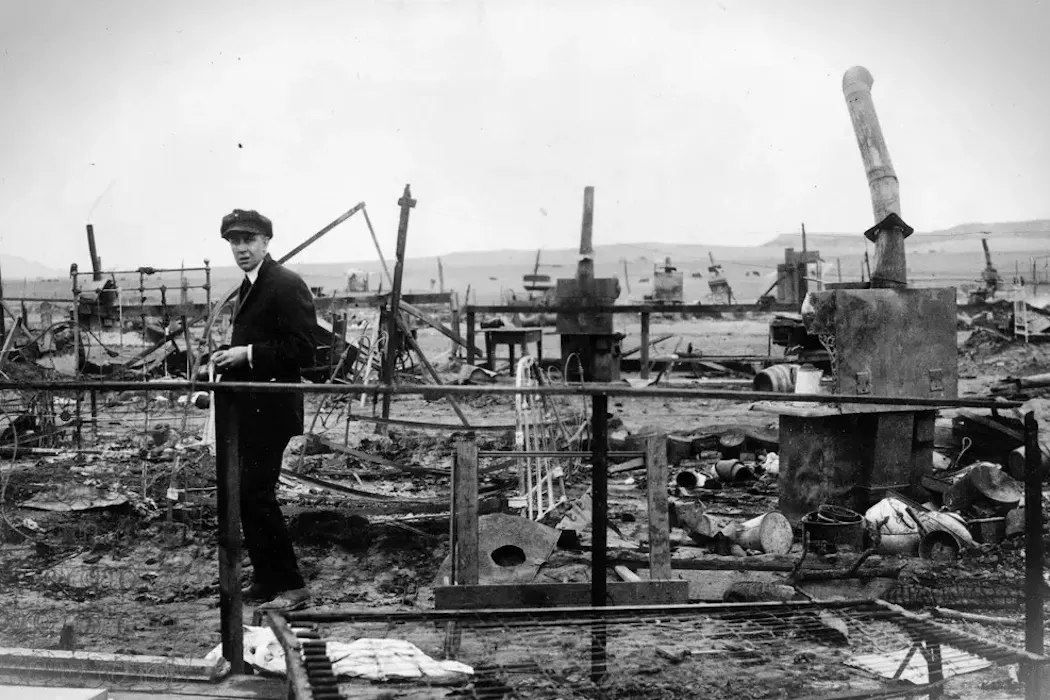
Then, on April 20, 1914, the National Guard and the private company opened fire on the tent colonies where the miners lived. After several hours of gunfire, with miners defending their camp, 25 people were dead, including two women and eleven children trapped when the camp was intentionally set ablaze.
Months earlier, miners had dug foxholes under tents so women and children could avoid bullets randomly fired through the camps. When the armored vehicle opened fire, everyone in the camps ducked into the holes. Later, women and children were found by miners huddled together at the bottoms of their burned-out tents.
Many miners’ family members were saved when the engineer on a passing train witnessed what was happening and stopped on the track to shield them from the gunfire.
This violence led to 10 more days of conflict before President Wilson finally ordered federal troops to disarm both sides.
Changes to labor law
In Congress, the House Committee on Mines and Mining conducted an investigation into the events and released a report in 1915. John D. Rockefeller Jr. was summoned before the committee, where he was questioned for several hours on May 20, 1914. There, he admitted that he had not visited the site since the incidents that led to the deaths of workers and their families.
According to a New York Times report, when asked whether he knew that thousands of his employees had been evicted from their homes and were living in tent colonies, and that the striking workers and their families were suffering without work or food, Rockefeller replied that he could not say, but that company officials could provide the facts. None were forthcoming.
A federal Commission on Industrial Relations also held hearings, determined to quell the upsurge in early 20th-century labor violence.
The commission determined that the strike raised a fundamental question about whether workers had a right to a voice at work. This question would animate labor struggles into the 1930s.
In 1935, Congress passed and President Franklin Roosevelt signed into law the National Labor Relations Act, which provided federal guidelines for labor union formation and stated that workers had a federal right to bargain over wages, hours and conditions of employment, the very things Colorado coal miners sought when they went on strike in 1913.
Commemorating the Ludlow strike and massacre
In 1915, officers of the United Mine Workers of America purchased 40 acres of land north of the Ludlow, Colorado, train depot, on the site where the tent colony had sheltered coal miners and their families during the 1913-14 strike.
Three years later, United Mine Workers officials dedicated a granite monument at the site where the women and children were killed. Labor historian James Green noted that of all the violence against workers at the time, none shocked the nation or troubled its collective conscience more than the Ludlow massacre because of the deaths of children. However, even incidents like the Ludlow Massacre did not become a significant part of the public discourse. This has changed some in the recent past.
The labor movement in the United States remains a bulwark of democracy, and workers have often been a driving force for social and economic equality in their communities. Yet its stories are not widely known, even one so dramatic as this battle in the Colorado coalfields.
The recognition of the Ludlow site as a National Historic Landmark and the recent release of a Library of Congress research guide propel the history of labor and working people into the mainstream. Such place-based labor history promotes our understanding of how and why things we sometimes take for granted – such as the eight-hour workday, paid holidays or workplace safety laws – came about only because people were willing to risk their lives fighting for these rights.
Robert Forrant does not work for, consult, own shares in or receive funding from any company or organization that would benefit from this article, and has disclosed no relevant affiliations beyond their academic appointment.
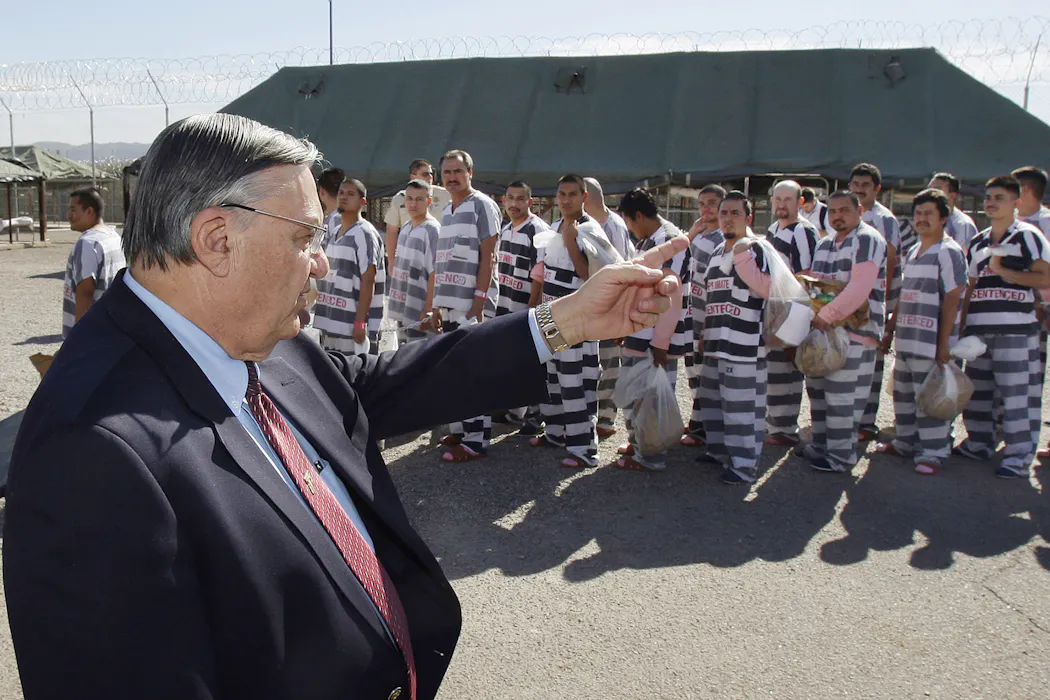
Maricopa County Sheriff Joe Arpaio orders undocumented immigrants handcuffed together and moved into a separate area of Tent City in Phoenix on Feb. 4, 2009.AP Photo/Ross D. Franklin, File
As a historian of U.S. immigration, I believe Arpaio’s immigration detention methods are clearly echoed in the hardline immigration policies devised by presidential aide Stephen Miller. That’s evident in actions by immigration agents with Immigration and Customs Enforcement and Customs and Border Protection that have been described as inhumane by some lawmakers and civil rights groups.
Using surplus army tents from the Korean War to house up to 1,700 inmates, Arpaio built Tent City in August 1993 to address overcrowding in Phoenix jails. By the time the jail closed in 2017, Sheriff Paul Penzone estimated that running Tent City cost taxpayers US$8.5 million annually.
Tent City was initially used for detaining criminals, but after 2009, Arpaio used the facility for housing detained immigrants.
Immigrant inmates line up at the Maricopa County Tent City jail in Phoenix on March 11, 2013. John Moore/Getty Images
Starting in 2006, Arpaio and Maricopa County sheriffs engaged in a pattern of “unlawful discriminatory police conduct directed at Hispanic persons,” according to Deputy Assistant Attorney General Mark Kappelhoff. During these operations, he directed deputies to detain people suspected as being undocumented immigrants without legal immigration authorization.
Phoenix News-Times journalist Stephen Lemons in January 2009 noted that, during operations, some Maricopa County sheriff’s deputies wore ski masks and carried assault rifles while conducting immigration sweeps.
Camp East Montana is the most recent of these new facilities. Opened in August 2025, the 60-acre detention center has become one of the largest ICE facilities in the U.S., holding 5,000 detainees.
Hardened tents are seen at the Camp East Montana immigrant detention center near El Paso, Texas, on Feb. 13, 2026. AP Photo/Morgan Lee
Like Tent City, Camp East Montana was constructed using tents that do little to shield inmates from the elements. The Washington Post reported in September that the facility’s poor food, shoddy living quarters and exposure to the desert sun violated 60 federal regulations.
Those included a $9 million payout to the parents of Charles Agster III, after a federal jury found Arpaio and jailhouse nurses negligent in his death. And they included a $2 million payout to the parents of Brian Crenshaw after the disabled man died following an altercation with a sheriff’s detention officer.
The most costly, though, was the 2013 ruling in Melendres v. Arpaio. U.S. District Judge Murray Snow found Arpaio guilty of racial profiling. The ruling placed Arpaio’s office under federal monitoring with orders to overhaul the department. As a result, Maricopa County residents have paid $323 million to reform the department.
In July 2017, a federal court found Arpaio guilty of criminal contempt for violating a 2011 federal order to stop detaining people solely on suspicion of illegal immigration status.
A month later, before Arpaio’s sentencing, Trump pardoned Arpaio. He described the sheriff as a “great American patriot” who had “done a lot in the fight against illegal immigration.”
Jonathan van Harmelen does not work for, consult, own shares in or receive funding from any company or organization that would benefit from this article, and has disclosed no relevant affiliations beyond their academic appointment.