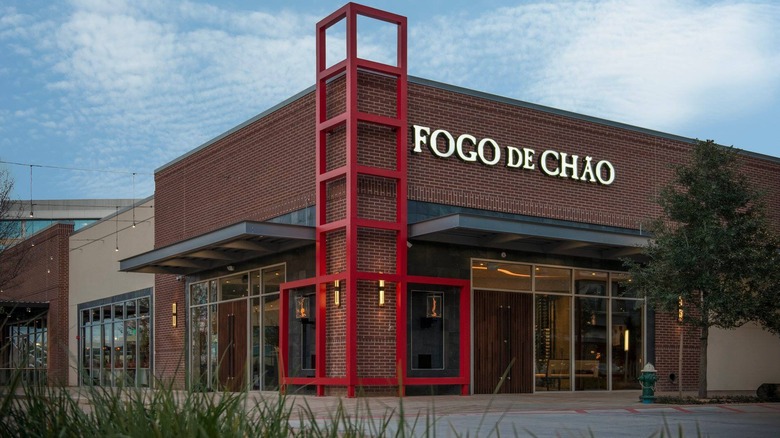
Fogo de Chão offers a unique dining concept with plenty of meats endlessly carved tableside. For the best experience, you need to follow some rules.
Mashed – Fast Food, Celebrity Chefs, Grocery, Reviews









Fogo de Chão offers a unique dining concept with plenty of meats endlessly carved tableside. For the best experience, you need to follow some rules.
Mashed – Fast Food, Celebrity Chefs, Grocery, Reviews

Reading Time: 3 minutes
When Savannah Guthrie returned to the Today show earlier this month, fans were quick to celebrate.
The comeback was bittersweet, of course, as Savannah’s mother, Nancy Guthrie, remains missing, nearly 11 weeks after she first disappeared from her home in Tucson, Arizona.
Now, two unexpected developments have put Nancy’s alleged abduction right back into the headlines.
First, Nancy abruptly left the studio midway through Wednesday’s show.
There are many reasons why she may have needed to excuse herself, but naturally, viewers were quick to jump to the conclusion that there had been some update regarding the investigation into her mother’s disappearance.
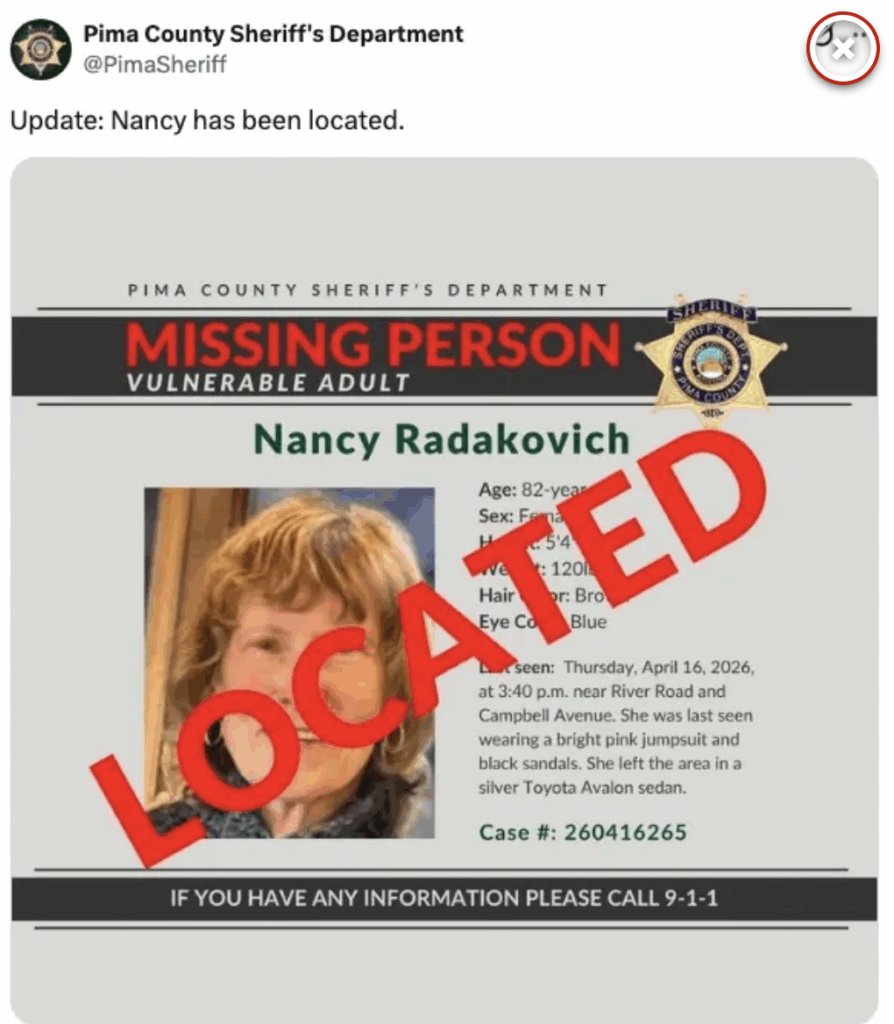
Those suspicions were bolstered on Thursday by a post on X (formerly Twitter) from the Pima County Sheriff’s Department.
“Update: Nancy has been located,” the post read.

Pima is the county where Nancy Guthrie disappeared, and its sheriff, Chris Nanos, has been the face of the investigation for several months now.
So naturally, thousands jumped to the conclusion that Savannah’s 84-year-old mother had finally been located.
However, the post was referring to a woman named Nancy Radakovich, who also went missing in Pima County.
For obvious reasons, some users got the wrong idea, and quite a few were quick to
“Are you kidding? So unprofessional! You couldn’t list the last name?” one person wrote.
“Omg whyyyyyy would you word it like that smh,” another added.
“Ok now you’re all just being a–holes on purpose. Thank god she was found but COME ON. Can you be anymore tone deaf???” a third chimed in.
“Cleary you deliberately didn’t use the last name. Why would you do that? Really makes you look like a piece of s–t,” a fourth noted.

Some even went so far as to accuse the sheridd’s department of being deliberately misleading:
“I am glad this lady is found don’t get me wrong but these scum bags know what they did with this post,” one such conspiracy theorist wrote.
That might be a bit of a far-fetched theory, as it’s hard to imagine what the sheriff’s department would stand to gain by intentionally misleading the public.
Whatever the case, there have been no new updates from the Guthrie family or the police, and thus, there’s no reason to believe that there have been any breaks in Nancy’s case.
We will have further updates on this developing story as new information becomes available.
Where Is Savannah Guthrie? Host Steps Away From ‘Today’ Mid-Show as Sheriff … was originally published on The Hollywood Gossip.
The Hollywood Gossip

Meet Dylan Conrique: a 21-year-old singer-songwriter whose journey has taken her from the pop world of Los Angeles to Nashville, where she has found a home in the heart of Music City. With each step of her path, Conrique has brought her knack for songwriting to life and her latest release, “A Little Like You”, is a perfect example of that.
While growing up in Northern California, artists like Rascal Flatts and George Strait became the soundtrack of her upbringing. By third grade, she leaned into that passion for music and began taking vocal lessons and performing around the area with a small group of other aspiring performers. On top of her passion for music, she also discovered a love for acting, inspired by Disney Channel stars at the time like Zendaya and Selena Gomez.
Her parents supported this new dream and moved her and her brother out to L.A. when she was just 12 years old and went on to earn screen credits including a recurring role on ABC’s The Rookie.
“The acting took over. When I came to L.A., I had 23 followers. My account was private. I did this YouTube series, it blew up. I made my account public, changed my username to my name, and the rest is history. And that’s kind of… Honestly, I would say the fans and everything, I wouldn’t be here without them because it’s given me so many opportunities to pursue music,” Conrique shared with Country Now.
But that music bug still stuck around through it all. She finally made her music debut at age 15 in the pop scene. During this time, she signed to her first label and began writing songs for the first time in her life. While she was finally finding her footing in the industry, there was still something missing that Conrique was looking for to make her feel more fulfilled in her artistry.
“I loved being in the studio and being a part of it. And then as time went on, I started to get a little more…it’s like a muscle. It’s like you’re working a muscle in your mind when it comes to writing. And so I was doing that a lot and I wanted to go to Nashville because I just heard it was the place to be for country music and I grew up listening to country music all the time,” she explained. “So I did a trip and I was supposed to only write pop music and I came out with country music.”
The California native naturally fell right back into her roots during her visit to Music City, giving her the confidence to officially move to the Volunteer State and embark on the next chapter of her career.
“From then on I was like, ‘This is my place. This is where I want to be.’ And yeah, I just fully did the move. Most of my family moved out of California, long drive to Tennessee and now I’m fully here,” she revealed.
During one of those eye-opening writing trips to Tennessee a couple years ago, she penned her latest release, “A Little Like You” with co-writers Sam Ellis and Lydia Sutherland. The mid-tempo song taps into a personal experience in Conrique’s dating history with a guy who everyone in her life had fallen in love with. Being a daddy’s girl herself, the songstress found that the thing she admired most about this man was that he reminded her of her own father’s kindness, humor and hard work ethic. Her father was the one to set the standard for the kind of love she deserves, and because of that, she finds herself hoping that the two men in her life can accept each other
“I was telling them about this guy that I met and we had already been like eight or nine months into this. And I was kind of just talking about how my parents love him. He’s great. Everyone gets along. And there’s like similar things that he does that my dad does, but maybe different career wise. And I just really look up to my dad and love my dad so much. And yeah, I’m just also like a daddy’s girl. So that’s why I also wrote that song about him as well,” she shared.

With her gentle vocals, soft instrumentation, and strong storytelling, Conrique fits right into country music. She has particularly found that writing songs from her personal experiences that offer vulnerable lyrics and unfiltered emotions is what has helped her build an impressive community of fans in such a short amount of time.
“I feel like when I write music from the heart, it’s something that I’ll love for the rest of my life. It’s a song that I’ll love and I’ll want to perform for the rest of my life. And then I also noticed a pattern of when I did speak my truth, there were other people who also felt the same way, it’s helped people,” she admitted. “And so that’s kind of been my biggest thing is like, I want to write from the heart, and I want to write from personal experiences because other people are also going through or have gone through the same thing. So in a sense, it’s like I’m kind of like a therapy session.”
She truly began speaking her truth in 2022’s “Birthday Cake” followed by “Polaroid,” which stemmed from a particularly hard period that left her in tears. Walking into the writing session that day, she chose to address the sadness on her face instead of burying it and the result was an incredibly striking track that captures that feeling of watching everyone around you figure life out when you’re still finding your own path.
That idea was compared to the process of a polaroid. When you look at the picture after it’s first taken, it’s impossible to see it clearly until it’s fully developed. Conrique’s co-writer Nicole Beaubien pitched this idea saying, “’It’s kind of like your life. You’re on your own path. Your picture is going to become clear at some point, just maybe not right now.’”

Once the story came to life, Conrique gained a whole new perspective and finally stopped putting so much pressure on herself to be someone that she wasn’t ready to be yet.
“I’ve learned to just be patient in the music industry and just people will find me at some point. So yeah, that song overall was just a good song for me to write for myself and I felt like I had the need to put it out as well,” she added.
That idea has carried over into the making of her next collection of songs, which is slowly coming to life through her latest string of releases, including “Written In Stone,” “Polaroid,” “A Little Like You,” and more.
“I’ve been writing and not having too much pressure on myself to, I guess, put an album or an EP out, but that would be a dream of mine. So that is a thought in my head right now, for sure.”
Fans can keep up with Dylan Conrique on Instagram.
The post Dylan Conrique Talks Her Shift From Pop to Country Music and Finding Her Voice in Nashville appeared first on Country Now.
Country Now

This Midwest chain prides itself on serving you fish that’s fried right when you order it. See where it sources the fish from and how the frying process works.

Mashed – Fast Food, Celebrity Chefs, Grocery, Reviews

Belles is reimagining one of country music’s most beloved songs, Dolly Parton‘s “Jolene,” putting her own modern twist on the well-known story with “Son of Jolene.” And to make it even more full circle, she has tapped the country music icon to be part of it.
The rising country star has always had a love and admiration for Dolly Parton’s masterful storytelling, especially on a song as timeless as “Jolene.” Last year while on her headlining tour, she had her first run-in with a woman named Jolene, who also happened to be the mother of her opening act on the road. This instantly sparked Belles’ idea to revisit the classic narrative and write what she imagines the next chapter would look like.
“Obviously ‘Jolene’ is one of the most iconic country songs of all time and one of my favorite country songs ever, and just songs in general. But I grew up loving that song and loving Dolly and her music so much,” Belles told Country Now.
She continued, “I don’t know what came over me, but I just turned to him and I was like, ‘You should write a song about being the son of Jolene.’ And maybe you could spin it where you have a messed up love life because your mom’s name is Jolene and just explore that…he was kind of like, ‘Oh, I mean, it’s a good idea, but I don’t really know if it feels like me or my artistry.’ And I was like, ‘That’s totally fair, but do you mind if I maybe try to write that song?’ And he was like, ‘Sure.’”
The next week, Belles was in the writing room with Dan Harrison and Tyler Bank and together they cranked out “Son of Jolene” in no time.
“It kind of just came out of the sky. I remember as soon as we finished writing it that day, I texted Dan and Tyler and I was like, ‘I feel like we wrote something really special today.’”

The new song serves as a continuation of the classic story. Belles tells it in a way that honors its legacy while introducing a fresh, modern perspective. She draws from the original character Jolene to depict how her mischief and cheating tendencies might have been passed down to her son later in life.
The track unfolds from the perspective of a woman who’s doomed for heartbreak after falling for the son of the same Jolene who once sent Dolly Parton into a frenzy as she begged the woman with “beauty beyond compare” not to take her man. When she hears his mother’s name and notices his auburn hair and emerald green eyes, a lightbulb goes off. The narrator realizes too late that history is bound to repeat itself and accepts defeat: “I was headed for heartbreak.”
Belles’ raw Nebraska twang shines on this mid-tempo track that includes every element of a traditional country song, from twanging guitars to steady rhythms and of course, heartfelt storytelling. She joins forces with Dolly Parton’s signature vocals, creating a moment of pure girl power, as the singers reflect on the people who have wreaked havoc on their lives.
She sings, “I’m just another fool who fell for him/ And the vision of what could’ve been/ But what was I expecting him to be/ The son of Jolene.”
At the end of the tune, Belles tips her hat to the original, repeating the scorned name “Jolene” while Parton’s voice harmonizes alongside hers, serving as a generational passing of the torch that bridges classic and modern country.
When “Son of Jolene” was first written, Belles wanted to make sure she got Dolly Parton’s blessing before sharing it with the world. The country music icon did more than just give her stamp of approval, she also decided to help bring the story to life.
“Immediately after we wrote it, before really doing anything with it, I just wanted to make sure that she was okay with this song and this idea and hopefully get her stamp on it. And so it was actually my publisher, Stephanie Green, who got the song to Dolly’s producer and he was kind of like, ‘I really like this song and I think I’m going to play it for Dolly because I think she would love it. And that was just so crazy to me that Dolly Parton was going to hear a song that I wrote and sang on,” Belles gushed.
“A week later, I got on that Zoom call that I recorded for TikTok and Instagram, and they told me that she wants to sing on it with me. And I was shocked, honestly. It was probably one of the best moments in my life,” Belles confessed.

The “Crazy As Me” singer was lucky enough to meet Parton in person when they came together to record the stunning harmonies for the track last November. She admits there was a fear of getting emotional in the moment, but she held it together until Parton was no longer in her presence and then let the tears of joy flow.
“It was amazing. It was so much fun. And there’s going to be so many clips and content that I’m about to roll out about meeting her. And yeah, it was such a special day. And she was everything that you would imagine her to be and more. It was really awesome.”
“Son of Jolene” follows the release of her self-titled EP and the viral success of her breakout single “Crazy As Me.” Belles finds herself in the midst of a major milestone moment as she gears up to send her newest single to country radio May 11 and looks forward to dropping her debut full-length album later this year.
“It’s been such a highlight of my life. And because I’ve been here in Nashville for seven years and I’ve gotten to do so many cool things. And I got to open for Miranda Lambert, who is another hero of mine and so many awesome things. But Dolly has always been my number one favorite country artist of all time. And I never in a million years thought that I would ever get to meet her, much less have a song with her. I mean, it is truly the greatest honor. And yeah, and I’ve just been working really hard on this album, just trying to make Dolly proud and keep putting out songs that she likes.”
Beginning May 1, Belles will also launch her Songs & Stories Tour with stops in cities across the U.S., including New York City, Atlanta, Austin, Chicago, Seattle, and Portland. This trek offers a stripped-back listening experience, putting Belles’ storytelling front and center as she shares personal moments and real-life inspirations behind each song in her live performances.
The majority of the tour dates will feature Johnny Gates as the opening act, with Averie Bielski joining the Atlanta performance. Belles will also serve as support for country legend Gene Watson for two shows in Tennessee and Alabama this year.
Reflecting on the upcoming set of shows, Belles shared, “I love to tour so much. I love to play live, and I love to just get up there and just talk about how I wrote the songs from my real life perspective and maybe some stuff that you wouldn’t hear just on social media and kind of give a behind the scenes look on how these songs made it out into the world…I want to leave every show feeling like I know these people and they know me better as an artist and a person. I’m really excited to get back out there. I think it’s going to be a really fun summer.”
A full list of Belles’ tour dates can be found on her official website.
The post Belles Opens Up About Reimagining ‘Jolene’ and Working With Dolly Parton on ‘Son of Jolene’ appeared first on Country Now.
Country Now
He wasn’t the first country star to record the song … and he nearly passed on it himself. Continue reading…Country Music News – Taste of Country

Reading Time: 3 minutes
Just a few weeks ago, Bravo’s most controversial couple revealed themselves.
Amanda Batula and West Wilson are an item.
The Summer House couple caused a huge stir for a number of reasons.
But Wilson is the ex of Ciara Miller, Batula’s friend. Better make that ex-friend.
As we reported, Batula and Wilson put out a joint statement on their respective Instagram Stories on March 31.
“We’ve seen the growing online speculation, so while this is still very new, we wanted to provide some clarity,” they began.
“It was never our intention to purposely hide anything,” the couple claimed.
“Given the complicated relationship dynamics involved and the scrutiny that comes with being on a reality show,” they explained, “we needed a little space to process things privately before speaking on it.”
Speculation had run rampant for weeks before their confession. Batula had split from her estranged husband, Kyle Cooke, back in January.

Miller was in an on-and-off romance with Wilson going back to 2023.
Season 10 of Summer House is currently airing on Bravo.
As we can see for ourselves, the two were happily flirting during these episodes.
Miller and Batula aren’t just co-stars on the reality series. They have been close friends for a long time.
Dating your friend’s ex is usually shady (outside of very specific subcultures), even without the messy context. As it is, Batula’s reeling.

Now, Miller is opening up to Glamour about what a “mindf–k” this hurtful revelation has been.
“It’s one thing to experience hurt behind closed doors,” she expressed.
Miller continued: “To experience it so publicly is like another layer.”
She pointed out: “And then to have to see what you thought was your life still play out in season 10.”
Miller then characterized: “It’s a major mindf–k.” We can only imagine!

Additionally, Miller revealed that she only received 24 hours’ notice before Batula and Wilson released their Instagram Story statement.
“I read it with the rest of the world,” she shared.
Miller picked up on something that a number of Bravo fans had also pointed out.
“There’s something about the lack of being able to say each other’s names in the statement that I found very telling,” she remarked.
Miller added: “But I don’t know.”

Viewers can see Miller and Batula continuing to support each other during the ups and downs of their lives.
Batula confided to Miller on camera that she might end her marriage to Cooke. Which, of course, she did.
(Note: when someone says that on a reality series, it means that they’re either really going to do it or are otherwise prepared for their spouse to see the confession. It’s like setting a breakup timer.)
“Just know when something’s weird in your gut, there’s a reason,” Miller advised while speaking to Glamour.
“What’s done in the dark always comes to light,” she continued. “And sometimes you really don’t even have to do anything except sit back and let the universe handle it all.”
Ciara Miller Calls Amanda Batula & West Wilson Scandal a ‘Major … was originally published on The Hollywood Gossip.
The Hollywood Gossip

The war in Iran is risking what could be a catastrophic spike in the price of fuel in the rural villages and hub communities across Alaska’s coast — and distributors are also warning of possible supply shortages.
Even before the war, fuel prices in the state’s off-road system communities were eye-wateringly high: Unleaded gas was $6.72 a gallon this winter in the Western Alaska hub town of Bethel, while in the Northwest Alaska village of Ambler, the price of gas and heating fuel has been $17.50 a gallon for the past year, according to local officials.
Vendors that sell bulk fuel to those regions are now warning that prices could rise 50% due to the war-driven supply crunch, according to Ingemar Mathiasson, energy manager for the Northwest Arctic Borough, which held a meeting attended by fuel company representatives last week in the regional hub town of Kotzebue.
Rural communities can receive as little as a single bulk fuel delivery during a shipping season that runs only through the summer — meaning that rates can be locked in at that price for the whole next year, even if global commodity prices fall. Government and Native corporation subsidies can help offset costs, but prices are still high and about to get higher.
“We’re looking at, maybe, a survival scenario for rural Alaska,” Mathiasson said in a phone interview Monday. “At those prices, I would imagine that people are going to try to move into Anchorage. I don’t know if you can heat your house at over $20 a gallon.”
Policymakers say they’re tracking the problem but haven’t announced concrete steps to protect consumers.
“This is one of the things that is top of my list right now, this week, here in Washington — to raise this within the administration to try to get in front of it,” said U.S. Sen. Lisa Murkowski. “It has to be a full-on effort to make sure that these communities are not left high and dry.”
The energy shock from the Iran war is landing worldwide, as Iran’s effective shutdown of the Strait of Hormuz keeps some 20% of global oil production out of the markets.
The effects have landed particularly hard in Asia, the destination of 80% of the oil that typically transits the Strait. And Asian refineries produce much of the supply for the more than 160 Western Alaska communities that receive maritime fuel deliveries during the May through October season, according to the Alaska Chadux̂ Network, a tanker and fuel distribution industry trade group.
Buying fuel from other sources “may be possible,” but likely at “significantly elevated prices,” the network’s chief executive, Buddy Custard, wrote in a recent letter received by Alaska policymakers.
“Despite best efforts, a supply gap remains a credible risk,” Custard wrote in his letter, dated March 31. “An undefined portion of the estimated 140 million gallons of fuel may be at risk of non-delivery, affecting dozens of communities, regional hubs, and critical infrastructure that serve as lifelines for surrounding villages.”
Custard said he was unavailable for an interview, but he shared additional correspondence with a state House member’s office from last week in which he said it’s difficult to “confirm specific outcomes or timelines” given the “highly dynamic and unpredictable” situation in the Middle East.
“It is not that alternative sources are entirely unavailable, but rather that they are constrained by a combination of limited refining capacity for the required fuel types, existing contractual commitments, and significantly higher costs,” Custard wrote. “In short, limited supply may be available, but not necessarily in the volumes, timeframe, or at the price points required to support Western Alaska communities.”
The uncertain outlook poses a dilemma for leaders at rural institutions that purchase fuel, including village governments and utilities, who are questioning whether to commit to fuel purchases now, later, in full, or in multiple orders to spread out the cost.
“I don’t know what to tell members who say, ‘Should I wait?’ I don’t know what to tell members who say, ‘I can do this much now, this much later,’” said Nils Andreassen, executive director of the nonprofit Alaska Municipal League, which supports local governments. “I don’t know how to keep ahead of it. And the current global uncertainty is not giving me a lot of confidence.”
Fuel vendors — which for Western Alaska include Vitus, Crowley and Delta Western — are urging customers to not delay placing their orders in hopes that prices will improve, according to a written summary of their comments from last week’s meeting in Kotzebue.
“We’re really getting squeezed on all this,” Tom Atkinson, the general manager of Kotzebue’s electric utility, said in a phone interview. “Nobody wants to lock in at this high price.”
Atkinson said that his utility’s diesel fuel supply for the past year cost $3.10 a gallon. This year’s delivery of a million gallons, he said, could come in at more than $6 a gallon.
In prior years, fuel companies have sometimes loaded their tankers with more supply than communities have ordered, expecting to sell the excess once the cargo arrives in Alaska. But this year, vendors say the price is too high for them to buy and transport fuel that risks going unsold.
A cold winter has also produced more sea ice than usual, which could shorten the delivery season. If communities miss the tanker delivery window, those that end up with shortages may have to turn to deliveries by plane, at even higher prices.
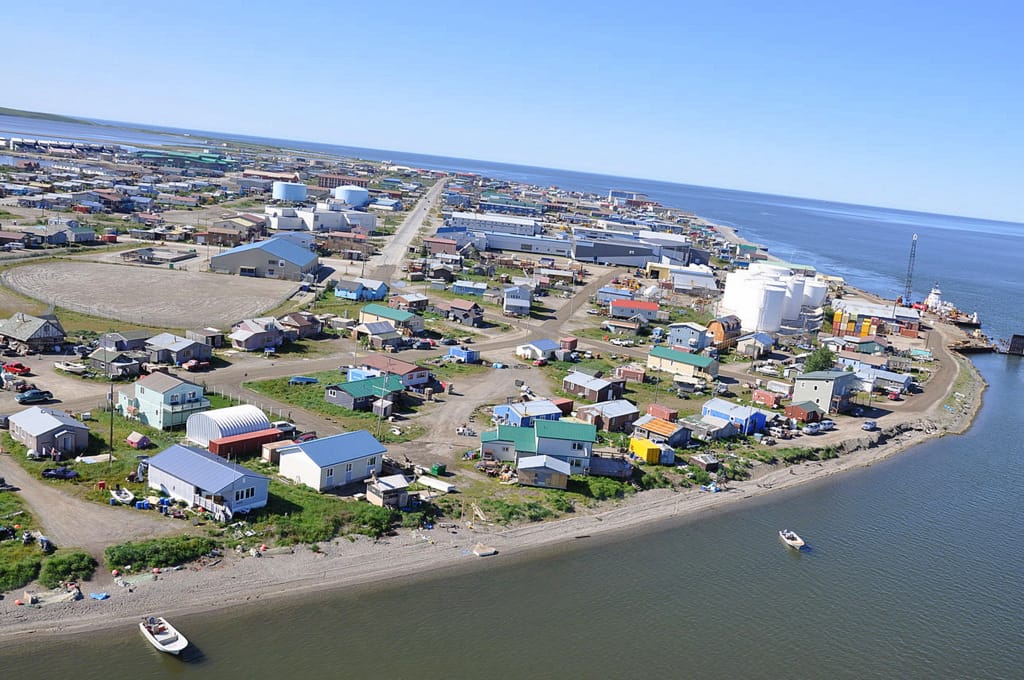
“We end up with situations where if the communities don’t fill their tanks, we don’t have enough airplanes in Alaska to help,” said Mathiasson, the Northwest Arctic Borough energy manager. “You just can’t wait until the last minute.”
Energy shocks have hit Alaska before, notably in a major price spike in 2008. That year, lawmakers used a huge windfall in taxes paid by Alaska’s oil-producing companies to help fund a “resource rebate” added to the annual checks written by state government to residents. The total paid to each recipient that year was $3,269, double the amount of the previous year.
This year, given the state’s tighter budget, advocates are pushing for measures that more narrowly target the communities in need. One concept supported by the municipal league is boosting the $750,000 cap on a state program that offers loans to local governments and utilities when they make their bulk fuel purchases.
“I’m not done turning over every stone and seeing what we can do,” House Speaker Bryce Edgmon, who represents a rural legislative district centered in the Bristol Bay region, said in a phone interview from Juneau. “If this war continues, there’s no question it’s going to be catastrophic.”
Edgmon noted that rural Alaska communities already were seeing higher costs for groceries and goods delivered through a federal program called bypass mail, which had a 9% rate increase last year.
A spokesperson for Gov. Mike Dunleavy declined to comment on the outlook for rural Alaska fuel prices and policies under consideration to address them.
In a worst-case scenario of a $5-a-gallon increase, the overall hit to rural Alaska from the war-driven fuel price spike could reach hundreds of millions of dollars, according to one economist’s estimate.
Each rural Alaskan, on average, requires some 1,200 gallons of fuel a year to meet their demand for heat, transportation and electricity, according to economist Steve Colt, who works with the Alaska Center for Energy and Power. By Colt’s calculation, the added expense could reach $6,000 per person and $450 million across the state’s rural communities.
Even before the spike, electricity and heating fuel can cost households in one region of Western Alaska, the Kusilvak Census Area, some 45% of their income, according to data collected by the energy center’s founding director, Gwen Holdmann. That area already faces a poverty rate of more than 30%, triple the statewide level.
“It’s definitely a serious issue that we’re raising up to the highest level,” Mathiasson said.
Nathaniel Herz welcomes tips at natherz@gmail.com or (907) 793-0312. This article was originally published in Northern Journal, a newsletter from Herz. Subscribe at this link.
The post A war-driven spike in fuel prices could produce a ‘survival scenario’ in Alaska villages appeared first on Chilkat Valley News.
Alaska Gov. Mike Dunleavy has been appointed to the U.S. Arctic Research Commission at a time when the federal agency is pivoting from its longtime focus on environmental science to more emphasis on military defense and economic development.
Dunleavy is an ally of President Donald Trump. Dunleavy’s presidential appointment, announced by the commission this week, comes five months after Liz Qaulluq Cravalho’s position on the commission was terminated. Cravalho is vice president of lands at NANA Regional Corporation, the Alaska Native corporation for the state’s northwest region. She was initially appointed by then-President Joe Biden in 2021 and reappointed in 2024.
The commission, created in 1984, advises the president and Congress on research policy. Its seven commissioners are appointed by the president.
Dunleavy is the first sitting governor to be appointed to the commission, which advises the president and Congress on Arctic research. Past Alaska lieutenant governors have served on the commission, but not during their time in state office. Mead Treadwell chaired the commission prior to being elected in 2010 as lieutenant governor in the Parnell administration, and Fran Ulmer chaired it after serving as lieutenant governor in the Knowles administration and after serving as chancellor of the University of Alaska Anchorage.
In 2019, his first year in office, Dunleavy used his veto powers to cut state funding of the University of Alaska system by 41%, an action that at the time was characterized as devastating to the university’s Arctic research, among other activities. Much of the funding was later restored through a compromise Dunleavy made with the university.
In a statement released by the commission, Dunleavy praised the role of Arctic research, saying it helps Alaskans.
“Alaska sits at the forefront of the Arctic, and our communities, resources, and strategic position make us essential to advancing responsible research, economic development, and national security in the region,” he said in a statement released by the commission. “I look forward to working with fellow commissioners to ensure that Arctic research reflects the needs of Alaskans while strengthening America’s leadership in the Arctic.”
The Trump-appointed chair of the commission, speaking Wednesday at the Arctic Encounter Summit in Anchorage, said the organization is “tremendously thrilled” to have Dunleavy as a member.

“We’re super excited about that,” said Thomas Emanuel Dans, appointed in December. “We’ve got the very experienced hand and voice at our commission, and we’re looking to do big things here.”
Dans, who also served on the commission during the first Trump administration, expressed an expansive view of the Arctic that he likened to that of 19th century explorers.
“We want to create the conditions that really unleash human flourishing. We want more. We want human life. We want people to have big dreams,” he said.
Rather than focusing on pure science, the commission is focused on security, as Dans described it.
“Security is probably the overriding, overarching theme of things,” he said.
But security has several facets, he said. It includes military security, international security, energy security and community security, “which can be interpreted broadly in terms of health and well-being” for Arctic residents and others in the nation and the world, he said.
Dans, who lives in Texas and spent most of his career in finance, served on the U.S. Arctic Research Commission during the first Trump administration. But his comments on Wednesday indicated some gaps in his Arctic and Alaska knowledge.
He mentioned Russia’s Wrangel Island, off the northern coast of Siberia, as a security threat. Wrangel island “is close to Alaska here,” he said in his speech. “And for a long time it was incorporated as part of the United States. Today we face missiles pointing at us from Wrangel Island.”

Wrangel Island was never part of the United States. There is a place with a similar name – Wrangell Island – that is located in Southeast Alaska. Since 2004, Russia’s Wrangel Island, located 300 miles from the nearest point in Alaska, has been designated as a UNESCO World Heritage Site. It is famous for its Arctic biodiversity, including the world’s largest concentration of Pacific walruses.
A decade ago, Russia built a military base on the island with a focus on radar systems to monitor airspace. The military use of the island is part of Russia’s military buildup in the Arctic, which has worried U.S. officials, and it is also considered to pose a potential threat to the natural resources there.
In his Arctic Encounter Summit comments, Dans hailed the planned expansion of the U.S. Coast Guard’s icebreaker fleet, saying the fleet has “gone from zero to maybe 14.” However, the Coast Guard for decades has operated two polar-class icebreakers: the Healy, which performs annual missions in Alaska and the wider Arctic, and the Polar Star, which usually sails in the Antarctic. The Coast Guard recently acquired another icebreaker for Arctic operations. Originally an oil industrial vessel called the Aiviq, the ship was renamed Storis and commissioned in a Juneau ceremony in August. The fleet is poised to expand: there was funding for more than a dozen new icebreakers in the Trump administration spending bill known as the One Big Beautiful Bill Act.
Concerning Russia, which holds more Arctic coastline and land than any other nation, Dans urged more cooperation and communication. “I’d love to have the younger generation in Alaska learn Russian,” he said.
Within a few miles from the Dena’ina Civic and Convention Center, where Dans spoke at the Arctic Encounter Summit, classes were being conducted in Russian language at elementary, middle and high schools through the Anchorage School District’s Russian immersion program. It was launched as a full-time program in 2024, according to the school district.
The post Alaska Gov. Dunleavy joins Arctic research commission as focus turns to security appeared first on Chilkat Valley News.
On March 31, President Trump issued a new executive order on citizenship records and mail‑in ballots entitled “Ensuring Citizenship Verification and Integrity in Federal Elections.” The order has nothing to do with election integrity — the name is like “Newspeak,” Orwell’s fictional language for a totalitarian state. It is an unlawful attempt to seize control of how Alaskans vote and to make an error‑ridden federal database the gatekeeper of our ballots.
Ever since statehood Alaska has built an election system that reflects our geography and our values. By‑mail and absentee voting are not mere conveniences here; they are how thousands of our neighbors who live in remote areas accessible only by air or sea participate in democracy at all. Yet the president now proposes to tell Alaska when and to whom we may send ballots by mail, based not on Alaska law, but on whether a voter’s name appears on a new federal “citizenship list.”
The order directs the Department of Homeland Security to compile state‑by‑state rosters of presumed U.S. citizens eligible to vote in federal elections and then directs the Postal Service to withhold mail ballots from anyone not on those lists. In one stroke, the president purports to rewrite who may receive a ballot by mail, how ballots travel through the postal system and which government gets the last word on whether an Alaskan can vote. That authority does not belong to him.
The U.S. Constitution is explicit in this matter. It reads in pertinent part: “The Times, Places and Manner of holding Elections . . .shall be prescribed in each State by the Legislature thereof; but the Congress may at any time by Law make or alter such Regulations . . .” Alaska’s Legislature has determined who may vote absentee, how those ballots are requested and mailed, and how they are counted. An executive order that conditions ballot delivery on a federally controlled citizenship list displaces those laws with presidential preference. That is not faithful execution of the law; it is legislation by directive. And it is patently unconstitutional.
The order also collides with bedrock principles of federalism. The federal government may not simply commandeer state election officials or local postmasters to administer a new federal scheme that overrides state choices about mail voting. By insisting that Alaska adapt its procedures to match a federal citizenship database that we did not design, do not control and cannot effectively challenge, the administration seeks to turn state election workers into unwilling agents of a national policy they never adopted.
Even if the president had such power—which he does not—the policy itself is dangerously unsound. The citizenship records he proposes to rely on are notoriously unreliable. Federal and state databases routinely misclassify naturalized citizens as non‑citizens, lag months or years behind status changes, and contain basic errors in names, dates of birth and addresses. Tying ballot delivery to a single “State Citizenship List” assembled from these imperfect sources is a recipe for widespread disenfranchisement.
Those errors will not fall evenly. Naturalized citizens, Alaska Natives whose names and records do not conform to federal bureaucratic expectations and rural voters with inconsistent or non‑standard addresses are all especially vulnerable to being left off or misflagged in a national database. If the Postal Service is instructed not to send a ballot unless it can confirm a match on that list, many eligible Alaskans will simply never receive a ballot at all.
In urban areas, some voters might fall back on in‑person early voting or Election Day polling places. In much of Alaska, that is unrealistic. An elder in a village accessible only by plane or boat, a deployed service member relying on an overseas ballot or a college student temporarily out of state cannot easily “work around” a missing ballot. For them, the executive order does not mean extra paperwork. It means no vote.
The order also offers no meaningful, timely remedy for those wrongly excluded. By the time a voter discovers that no ballot has arrived and tries to untangle why their name is missing from a federal citizenship list, the election may be over. We will never know how many voices were silenced by database error rather than voter choice.
Alaska has used absentee and by‑mail voting for years without any evidence of widespread non‑citizen voting or ballot fraud. Our challenges are logistical, not criminal: weather, distance and infrastructure, not hordes of ineligible voters swamping the polls. Imposing a rigid, centralized federal screen on top of that system does nothing to address real problems, and threatens to create a new one that is far worse: a loss of confidence that ballots will arrive at all.
Let’s not attempt to dress this order up as a mere “data‑sharing” exercise rather than the federal takeover it truly is.
The post Trump’s latest elections order is an unlawful assault on Alaska’s elections appeared first on Chilkat Valley News.