Categories
Uncategorized

Trump sidelined Congress’ authority over war on Iran – and lawmakers allowed it, extending a 75-year trend

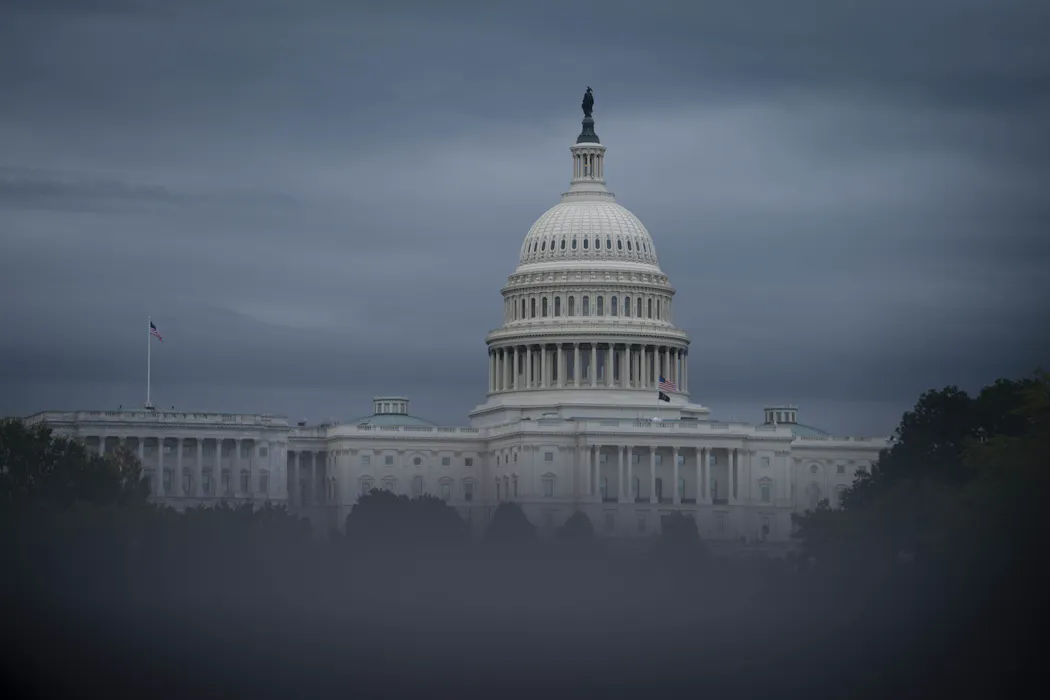
Congress has not used its constitutionally granted power to influence the war in Iran. Bloomberg Creative via Getty Images

Lawmakers in the U.S. House of Representatives set April 21, 2026, as the date to hear from and question top Pentagon officials Adm. Brad Cooper, the head of U.S. Central Command, and Gen. Dagvin R.M. Anderson, head of U.S. Africa Command, about the war in Iran. But Republican legislators put off the hearing for a month, giving up – for now – the opportunity to exercise oversight of the war.

Adam Smith, the top Democratic member of the House Armed Services Committee, told The New York Times, “We are six weeks into this conflict. And we still haven’t gotten a public briefing from anyone in the administration about the war.”

President Donald Trump’s military campaign against the Iranian regime is currently in a ceasefire. Despite the low approval rating of the war, the president has not drawn the conflict to a close, and the result of the operation is so far unclear.

The postponed hearing was only one example of how Congress has been noticeably meek about the war, with most Republicans killing the many Democratic efforts to exercise constitutionally granted power over engaging in such military conflicts. For the fourth time, the Senate on April 16, 2026, rejected a war powers resolution.

As scholars who research war powers and have a book coming out about President Barack Obama’s decision-making about the Afghan war, we know that the reluctance of Congress to assert its power is, in fact, history repeating itself, as is the president’s unilateral action.

A man standing at a lectern flanked by flags, pointing into the audience of raised hands.
President Donald Trump and Defense Secretary Pete Hegseth conduct a news conference in the White House briefing room about the war in Iran on April 6, 2026.
Tom Williams/CQ-Roll Call, Inc via Getty Images

Historically meek Congress

Article 1 of the U.S. Constitution gives Congress the power to declare war, not the president. But most modern presidents and their legal counsel have asserted that Article 2 of the Constitution allows the president to use the military in certain situations without prior congressional approval – and have acted on that, sending troops into conflicts from Panama to Libya with no regard for Congress’ will.

Based on the 1973 War Powers Resolution – passed over President Richard Nixon’s veto – the president has an obligation to inform Congress about his actions within 48 hours of initiating military action and requires him to seek legislative authorization if the military operation will last over 60 days.

Since its passage, presidents have dutifully informed Congress within the 48-hour window when they unilaterally initiate military operations. Typically, they use the following language: “Pursuant to” their power as commander in chief and chief executive, they are initiating an operation.

Yet presidents since Nixon have never formally acknowledged the constitutionality of the War Powers Resolution. They have, however, mentioned it in their letters to Congress about their actions, and for the most part they have abided by its restrictions. So language is crucial and presidents tend to use the phrase “consistent with” the War Powers Resolution when they inform Congress about military operations.

The second Trump administration has broken with that standard. In Trump’s message to Congress about the Iran war, sent on March 2 2026, he did not acknowledge the War Powers Resolution or the Constitution, let alone pay lip service to either.

Instead, Trump has sidestepped the traditional use of the War Powers Resolution – and avoided the congressional oversight that comes with it – by relying on executive orders to convey his intent to use military power against the Iranian regime. That move, whether legal or not, has provided the president with a great deal of freedom to decide what the military can do, what tools they can use to do it and how long they can do it. His decision to send another carrier group and the addition of thousands of U.S. troops to the region is just the latest example.

Congress has proved incapable or unwilling to check this presidential unilateralism. Shortly after the start of the military campaign against Iran, Democratic Sen. Chris Murphy introduced war powers legislation to constrain Trump that failed to pass the Senate. In the House on March 5, members narrowly rejected a resolution to impede a broader or longer operation.

To a meaningful extent, we are watching history repeat itself: Over the past seven decades during times of war, members of Congress have not wanted to act, and presidents have not wanted to ask permission.

From alacrity to deference

Presidents Woodrow Wilson and Franklin D. Roosevelt made their case for war and obtained a formal declaration from Congress within three days in 1917 and within the same afternoon in 1941, respectively.

Since the start of the Korean War, however, members of Congress have demonstrated more deference and less assertiveness.

In Korea, President Truman did not get congressional authorization for the war.

Following North Korea’s invasion of the South in June 1950, Truman bypassed Congress, making his case for war to the United Nations Security Council. In July 1950, United Nations Security Council Resolution 84 “authorized the United States to establish and lead a unified command comprised of all military forces from UN member states, and authorized that command to operate under the UN flag.”

A soldier with a gun ordering soldiers on the ground to do something.
U.S. soldiers in 1951 order Chinese prisoners to the ground outside Seoul, South Korea, before U.S. and U.N. troops took the city.
AFP via Getty Images

Truman’s rhetoric about American combat operations on the Korean peninsula being part of a U.N. “police action” became increasingly tenuous, but he managed to avoid seeking congressional permission. In doing so, Truman created a precedent in which a congressional declaration of war was no longer necessary for the American military to carry out combat operations. Sen. Robert Taft, a Republican, opposed this lack of congressional deliberation, declaring that Truman’s actions represented a “usurpation” of the war powers authority.“ But Congress did nothing to stop the war as the tactical and strategic picture in Korea stalemated.

In Vietnam, in the aftermath of the 1964 Gulf of Tonkin incident – a purported attack by the North Vietnamese on American naval vessels that did not, in fact, occur – President Lyndon Johnson used the alleged crisis to push for congressional authorization for the escalation of force in Southeast Asia.

Johnson presented the Gulf of Tonkin Resolution to Congress, which quickly passed it. The resolution allowed Johnson to freely escalate American military involvement in Southeast Asia with a vague authorization to engage militarily as he saw fit, in contrast to the very clear declarations of war that came before it for previous wars.

Col. Harry G. Summers, who wrote an influential strategic analysis of the Vietnam War, points to the Gulf of Tonkin Resolution as evidence that the relevant actors – the executive, Congress and the military – failed to foresee the scale of the course of action they were embarking on.

The resolution significantly increased the president’s freedom of action – and freedom from oversight – and marked a major step toward the Americanization and escalation of the war in July 1965. Despite the deeply troubled engagement in South Vietnam and the passage of the War Powers Resolution, we still see presidents acting alone, without consulting members of Congress, let alone getting authorization.

Refusing responsibility

In Summers’ Vietnam postmortem, he relates a telling anecdote of a professor at West Point. The professor, an Army officer, remarked, “When people ask me why I went to Vietnam I say, ‘I thought you knew. You sent me,’” a comment indicative of “the civilian sector’s growing refusal to take responsibility for the kind of army it needs.”

In the case of Trump’s decision-making concerning hostilities with Iran, Americans will one day need answers to the questions: Why did the United States engage in this war with unclear political objectives? And why did Congress allow it to continue?

This story contains material from an article published on March 6, 2026.

The Conversation

The authors do not work for, consult, own shares in or receive funding from any company or organization that would benefit from this article, and have disclosed no relevant affiliations beyond their academic appointment.

​Politics + Society – The Conversation
Categories
Uncategorized

Trump’s coercive tactics in Latin America evoke era of gunboat diplomacy – and the rise of anti-imperialism it helped spur

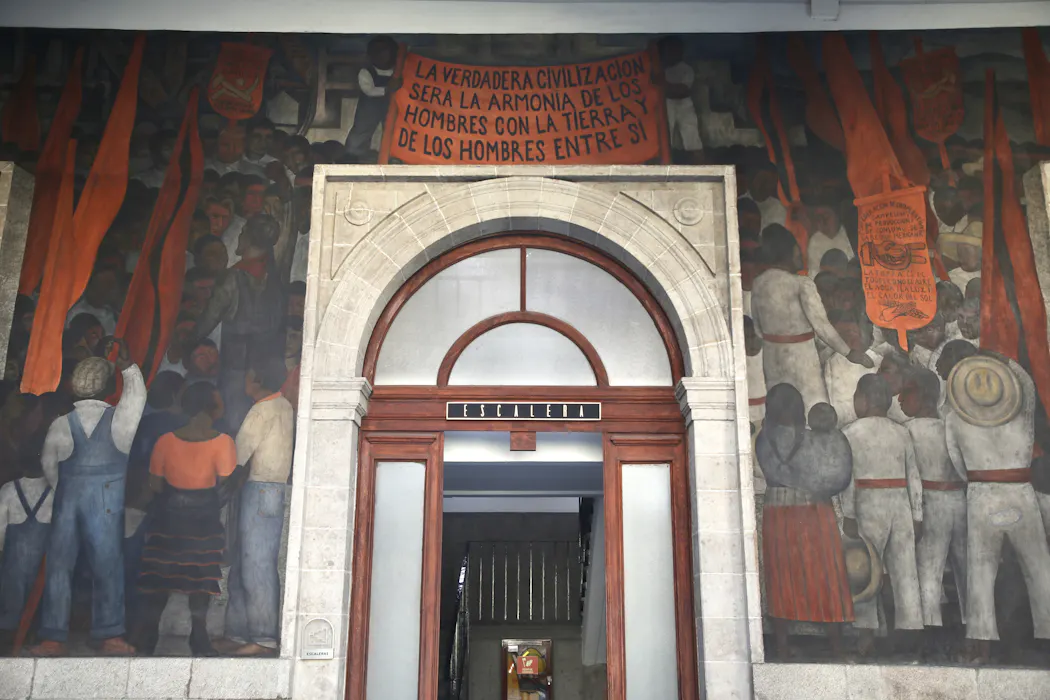
One of scores of murals Diego Rivera painted in the interwar period that sits above the Secretariat of Public Education in Mexico City, Mexico. Apolline Guillerot-Malick/SOPA Images/LightRocket via Getty Images

In Latin America, as in other parts of the world, the second Trump administration has adopted an increasingly aggressive policy.

From drone strikes on purported drug traffickers to increased tariffs on imports, and from the blockade on fuel shipments and threats of invasion in Cuba to the Jan. 3 military incursion into Venezuela, the U.S.’s more coercive approach to its hemispheric neighbors evokes an earlier period of U.S. foreign policy.

Many commentators have found echoes of the 1989 capture of Panamanian leader Manuel Noriega in the kidnapping of Venezuelan president Nicolás Maduro. Others highlighted the longer history of U.S. interventions in Latin America stretching back through the Cold War. That includes the Nixon administration’s support for the 1973 coup against Salvador Allende in Chile or the CIA-sponsored removal of Guatemala’s elected president, Jacobo Arbenz, in 1954.

Yet as a historian of early 20th-century Latin America, I believe the Trump administration’s approach to Latin America more closely resembles an older pattern of U.S. policy. Between 1900 and the mid-1930s, U.S. forces intervened in one Latin American country after another. This practice was often justified by the Roosevelt Corollary, President Theodore Roosevelt’s addition to the Monroe Doctrine. In cases of “chronic wrongdoing,” Roosevelt said in 1904, the U.S would find itself compelled to exercise an “international police power” in defense of U.S. interests.

But crucially, how Latin Americans responded to the U.S. exerting its dominance in the early 20th century may hold some lessons for the present day. One of the major side effects of the U.S.’s so-called gunboat diplomacy was an upsurge of resistance and anti-imperialist thinking in the region’s political life.

The roots of anti-imperialism

In the 30 years after Roosevelt asserted the U.S.’s right to intervene across the hemisphere, U.S. forces occupied Cuba three times – in 1906-09, 1912 and 1917-21. They also occupied Haiti from 1915 to 1934 and the Dominican Republic from 1916 to 1924. In Nicaragua, the U.S. deployed the Marines from 1912 to 1925 and then again from 1926 to 1933, waging a counterinsurgency in which it used aerial bombardment for the first time.

Across much of the region, then, this was a time when the U.S. was quick to resort to force, unburdened by any concerns for Latin American countries’ sovereignty.

Yet this era of external intervention also coincided with a period of remarkable political ferment, which I describe in my recently published book, “Radical Sovereignty.”

In one place after another, from Buenos Aires to Mexico City and from Havana to Lima, movements sprang up that put forward sharp critiques of U.S power. Many of them grew out of student organizations in the late 1910s, while others drew on the rising strength of labor unions and newly formed leftist political parties.

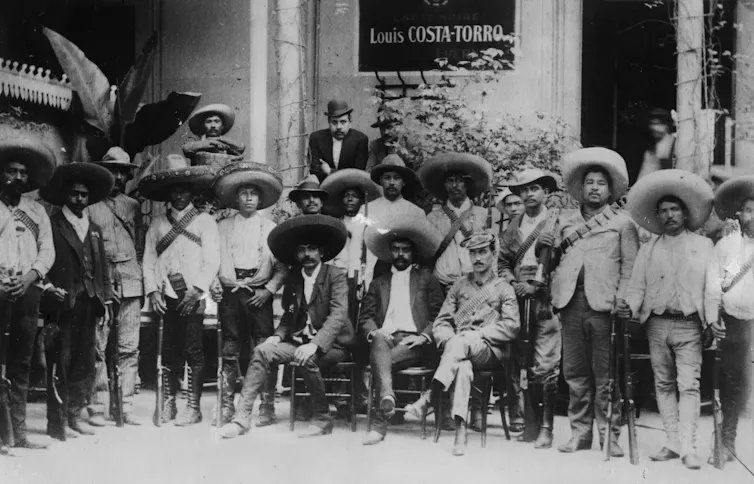
Emiliano Zapata, a primary leader of the Mexican Revolution, is shown with his fellow soldiers in an undated photo.
HUM Images/Universal Images Group via Getty Images

In 1923, rural workers in the Mexican state of Veracruz formed a Peasant League. From the outset, they saw local issues as closely interwoven with international ones, and they argued that there was a compelling reason for this. As the league put it, “Our internationalism is not the child of a crazed enthusiasm for empty phrases … but of the need to take preventive measures, to bolster ourselves against the enemy,” which they identified as “the imperialism of North America.”

Many of Latin America’s radical movements at this time were inspired by the recent example of the Mexican Revolution. The new Mexican Constitution of 1917 had nationalized the country’s land and natural resources, putting it on a collision course with U.S. companies and landowners.

Others still were energized by the global repercussions of the Russian Revolution. This, of course, included several brand-new communist parties across the region. But at the time, many others in Latin America saw the Bolsheviks as part of a global anti-colonial wave.

Mexico City as activist hub

My book explores the key role Mexico City played as a gathering point for these different political tendencies.

They included groups ranging from Mexican peasant leagues to the American Popular Revolutionary Alliance, an anti-imperialist movement formed by Peruvian exiles. Many of these organizations converged under the umbrella of the Anti-Imperialist League of the Americas. Founded in Mexico City in 1925, it soon had chapters in a dozen more countries across the region.

Between them, these movements brought into focus the novel features of U.S. power. As the Cuban student leader and communist Julio Antonio Mella saw it in 1925 – at a time when his native country was highly dependent on the U.S. but formally sovereign – the U.S. was distinct. Unlike European empires, it largely refrained from direct control of territories, though it had pressed the Cubans to include in their 1901 constitution a provision allowing it to intervene in the island at will.

In Mella’s view, the U.S. was clearly an empire, one that mainly exercised its dominance through commercial or financial pressures. For him, the dollar and Wall Street were as central to U.S. power as the halls of government in Washington, D.C.

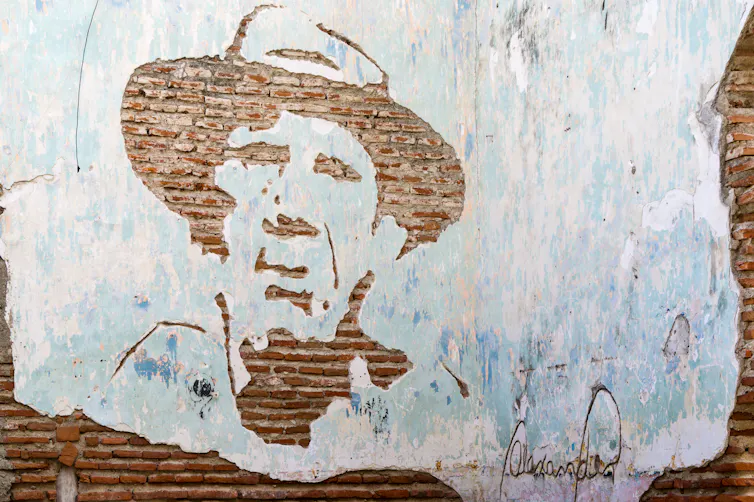
A portrait of a man chiseled from a brick wall.
A portrait of Julio Antonio Mella is seen chiseled from a brick wall in Camaguey, Cuba.
Roberto Machado Noa/LightRocket via Getty Images

For Ricardo Paredes, an Ecuadorean doctor who founded the country’s Socialist Party in 1926, a new term was required to capture Latin American countries’ contradictory position. Formally sovereign, they were not colonies as such. Yet they were economically and politically subordinated to Washington and Wall Street – “dependent countries,” as he phrased it in 1928.

For the Peruvian poet Magda Portal, a leading member of the anti-imperialist American Popular Revolutionary Alliance, U.S. dominance played out differently in different parts of Latin America.

In a series of lectures she gave in Puerto Rico and the Dominican Republic in 1929, Portal divided the region into zones. While countries such as Argentina or Brazil were mainly sites for U.S. investment, Mexico and the Caribbean were regularly subjected to U.S. military force. Or, as Portal put it, “Here imperialism wears no disguise.”

Portal concluded her lectures with a phrase that combined her analysis of U.S. dominance with a resonant appeal for unity: “We have a single and great enemy; let us form a single and great union.”

United states of resistance?

Yet while there was much Latin American anti-imperialist thinkers could agree on, there were also profound divergences between them. This included questions of strategy as well as issues of principle. What role should different classes play in their movement? How radical a transformation of society were they pushing for? And what kind of state should emerge from it?

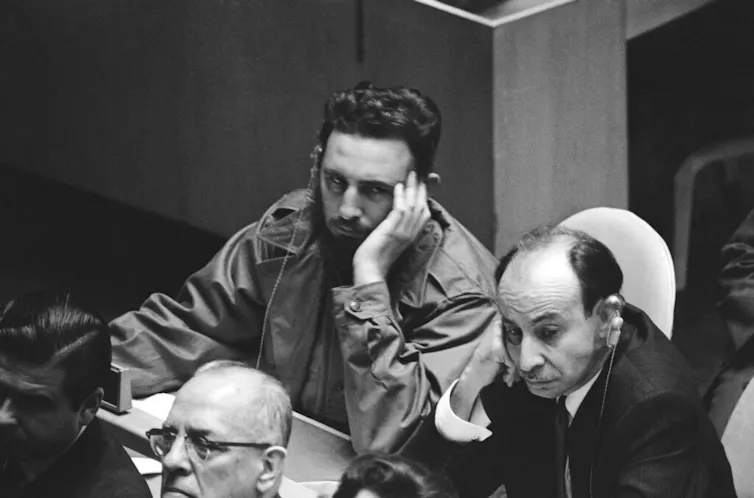
Two men listen to a speech in an old photograph.
Cuban Premier Fidel Castro and his foreign minister Raul Roa listen to U.S. President Dwight Eisenhower speak to the United Nations General Assembly on Sept. 22, 1960.
AP Photo

Over time, these differences turned into deep rifts that pitted revolutionaries against democratic reformists, internationalists against nationalists, and pro-Soviets against anti-communists. These disagreements played an important role in Latin American politics over the rest of the century.

While many of these rifts became especially prominent during the Cold War, they developed out of earlier divisions over how best to counter U.S. dominance.

The anti-imperialist upsurge of the 1920s and ’30s was formative for a generation of Latin American radicals. Several of those who entered political life during these years went on to play key roles in major events of the 20th century. Raúl Roa, for example, who served as foreign secretary for Cuba’s revolutionary government from 1959 to 1976, was first politicized in the island’s anti-imperialist movement of the 1920s.

The men and women whose political visions were formed in the interwar period carried those ideals forward into the Cold War era. In important ways, the 1920s and 1930s laid vital groundwork for later and better-known radical movements.

Past is, of course, not always prologue. It is impossible to predict what the long-term consequences of current U.S. policy in Latin America will be, especially given the rightward tilt that is currently unfolding across the region.

But looking at the region’s anti-imperialist traditions does point to one possible outcome: The U.S.’s newly aggressive stance will, sooner rather than later, fuel a resurgence of anti-imperialist sentiment as the organizing principle for a new generation of activists.

The Conversation

Tony Wood does not work for, consult, own shares in or receive funding from any company or organization that would benefit from this article, and has disclosed no relevant affiliations beyond their academic appointment.

​Politics + Society – The Conversation
Categories
Sports Fox

Villanova, Notre Dame Hoops Off to Rome for ‘Eternal City Tip-Off’ Season Opener

The Villanova and Notre Dame men’s and women’s basketball teams are officially set for a one-of-a-kind season opener on an international stage. Pope included. The Fighting Irish’s and Wildcats’ teams will play in the “Eternal City Tip-Off” in Rome on Nov. 1 to start the 2026-27 season. The doubleheader will make history in a couple of categories: the first men’s international season opener and the first Division I basketball game played in Italy. While next season officially begins on Nov. 2, the NCAA approved this special men’s and women’s event starting in Rome a day early. So why, specifically, are these two Catholic universities playing halfway across the world? Simply, Pope Leo XIV (whose real name is Robert Francis Provost). And, he plans to have an audience with the teams during their trip. The Pope — an American-born sports fan who resides in Vatican City in the heart of Rome — is an alumnus of Villanova in the class of 1977. What’s more, his roots are in Chicago, which is relatively close to Notre Dame’s campus in South Bend, Indiana. His recent election inspired the Eternal City Tip-Off. [MEN’S NCAA BASKETBALL: Illinois, Duke Highlight Way-Too-Early Top 25] The Villanova men’s program has seven Final Four appearances and three national titles, with its most recent in 2018. Led by coach Niele Ivey, the Notre Dame women also have three national titles. The Fighting Irish clinched an Elite Eight appearance this season but ultimately fell to No. 1 seed UConn. The Eternal City Tip-Off will be the second time in four seasons the Notre Dame women’s team has competed abroad. In 2023, The Fighting Irish played South Carolina in Paris. The men’s teams will meet for the first time since 2016, and their game will air on FOX and lead into the network’s NFL coverage. The women’s team will play for the first time since 2018 with that matchup being broadcast on FS1.​Latest Sports News from FOX Sports

Categories
Entertainment

D4vd Arrested In Connection With Death of 14-Year-Old Celeste Rivas

Reading Time: 2 minutes

Back in September of 2025, the body of a 14-year-old girl named Celeste Rivas was found in the trunk of an impounded car belonging to R&B singer D4vd.

On Thursday, after months of investigation, D4vd was arrested in connection with Rivas’ death.

The arrest came in dramatic fashion, with officers from the LAPD descending on D4vd’s Hollywood Hills home with guns drawn.

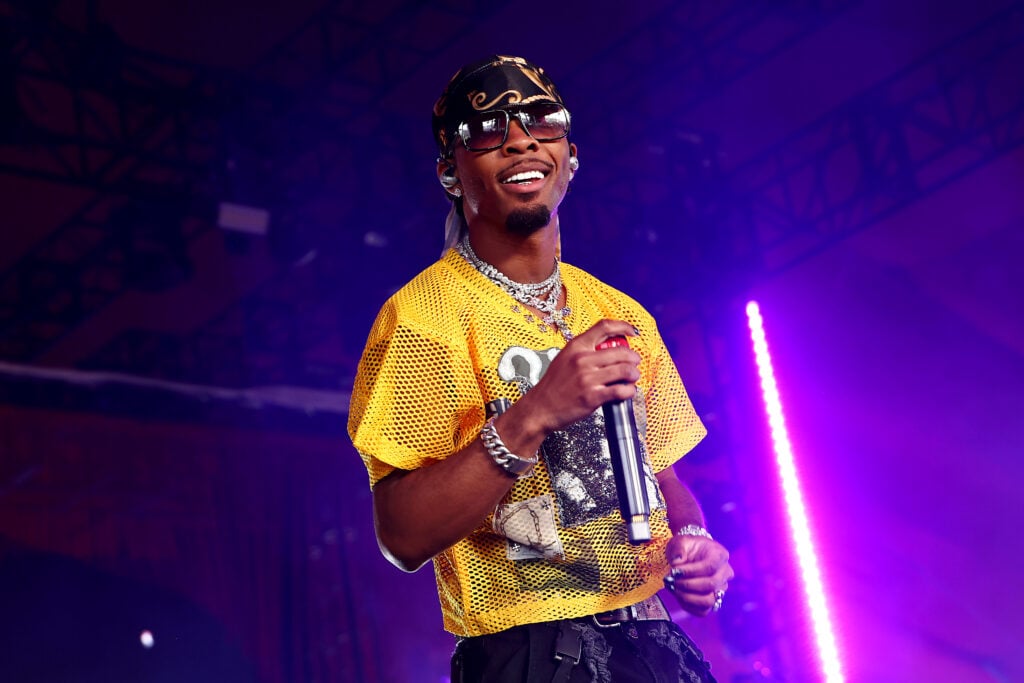
d4vd performs at Gobi Tent during the 2025 Coachella Valley Music and Arts Festival  on April 20, 2025 in Indio, California.
d4vd performs at Gobi Tent during the 2025 Coachella Valley Music and Arts Festival on April 20, 2025 in Indio, California. (Photo by Arturo Holmes/Getty Images for Coachella)

“We came to the home with a probable cause arrest warrant for him,” said LAPD Robbery-Homicide Division Commanding Officer Captain Scot M. Williams (per The New York Post).

“We did the best we can to keep tabs on him, but once we developed probable cause to arrest him for murder, then we were on him pretty diligently,” Captain Williams continued.

“Detectives from Los Angeles Police Department, Robbery-Homicide Division have arrested David Burke, a 21-year-old resident of Los Angeles, for the murder of Celeste Rivas. Burke is being held without bail. The case will be presented to the District Attorney’s office on Monday for filing consideration,” an LAPD release confirmed.

D4vd’s attorneys Blair Berk, Marilyn Bednarski and Regina Peter allege that the singer was arrested unlawfully, without a grand jury indictment.

“Let us be clear – the actual evidence in this case will show that David Burke did not murder Celeste Rivas Hernandez and he was not the cause of her death,” the legal team told TMZ, adding:

“There has been no indictment returned by any grand jury in this case and no criminal complaint filed.”

The lawyers added, “David has only been detained under suspicion. We will vigorously defend David’s innocence.”

In a statement, the Los Angeles DA Office said “prosecutors will review the facts and evidence to determine whether there is sufficient evidence to file charges.”

After Rivas’ dismembered body was discovered last year and identified by a tattoo, D4vd — whose real name is David Anthony Burke — quickly became the focus of the investigation.

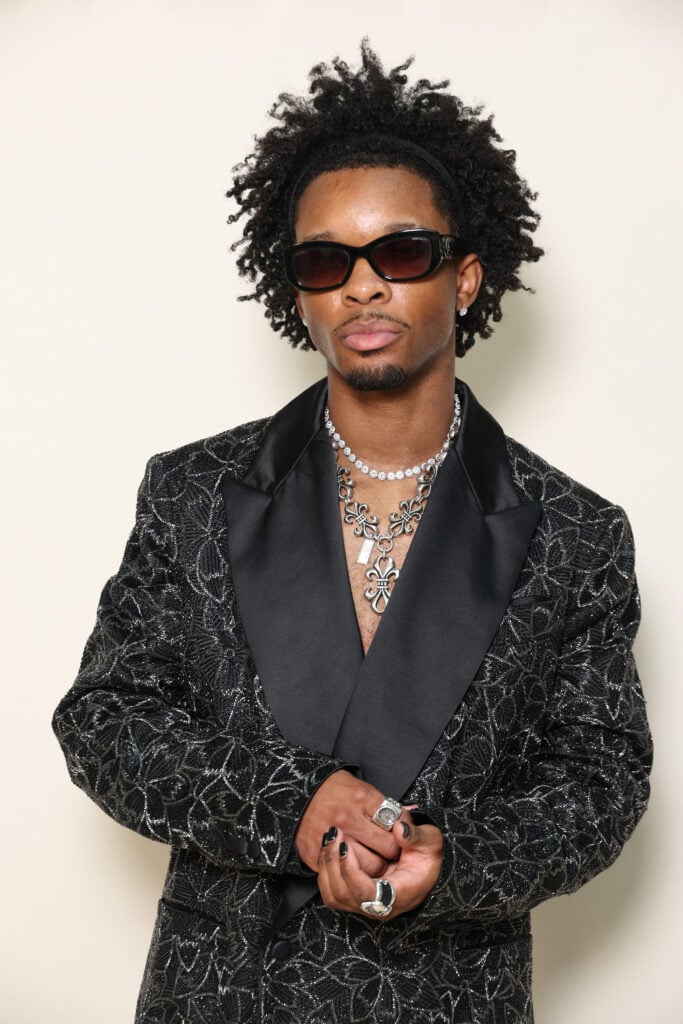
d4vd attends the Amiri Menswear Spring/Summer 2026 show as part of Paris Fashion Week on June 26, 2025 in Paris, France.
d4vd attends the Amiri Menswear Spring/Summer 2026 show as part of Paris Fashion Week on June 26, 2025 in Paris, France. (Photo by Pascal Le Segretain/Getty Images)

The abandoned Tesla in which Rivas was found was registered to D4vd, but it was unclear if he had ever driven the car.

According to a Los Angeles ABC affiliate, the body had been wrapped in plastic.

The car was reportedly towed to the lot after being reported abandoned in the Hollywood Hills.

D4vd was on tour and preparing for a show in Minneapolis on the day that the body was discovered. He has yet to speak publicly on the matter.

TMZ reports that D4vd was booked into the Los Angeles County Jail this morning as he awaits arraignment.

We will have further updates on this developing story as new information becomes available.

D4vd Arrested In Connection With Death of 14-Year-Old Celeste Rivas was originally published on The Hollywood Gossip.

​The Hollywood Gossip

Categories
Entertainment

Christina Applegate Hospitalized After Months of Worsening Health

Reading Time: 3 minutes

Beloved actress Christina Applegate has been sick for a long time.

She first revealed her diagnosis years ago.

Since then, she has warned, her condition has been getting worse.

Now, Applegate has reportedly been hospitalized under a veil of secrecy.

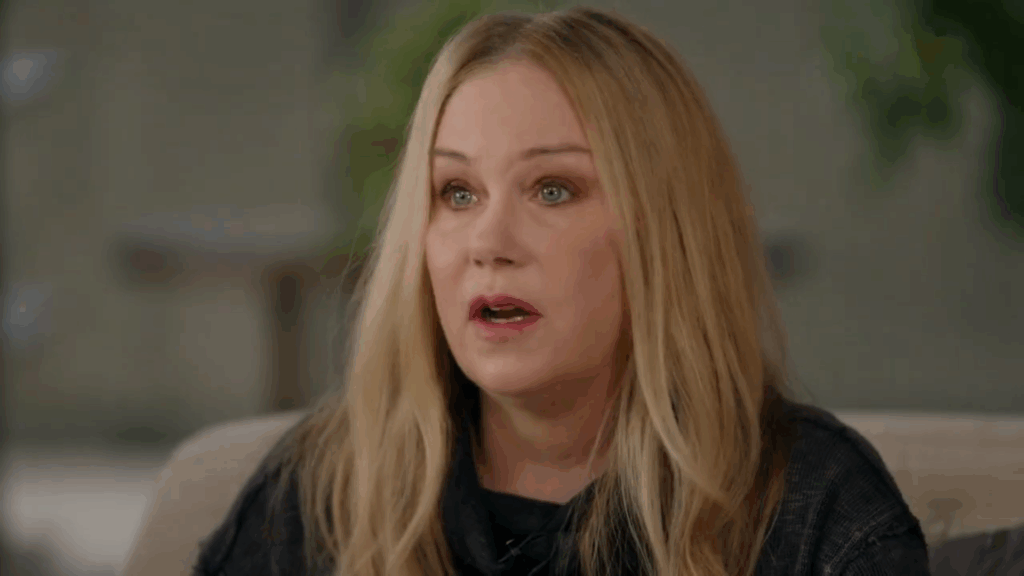
Christina Applegate on Good Morning America.
Christina Applegate discusses the ravages of her battle with MS. (Image Credit: ABC)

She was hospitalized just a couple of weeks ago

TMZ reports that Applegate has been hospitalized in Los Angeles.

Specifically, the tabloid details, she was admitted in late March. If anyone knows the exact date, they aren’t sharing.

Prior to this report, the biggest hint that something was awry came on March 31.

Applegate and Jamie-Lynn Sigler are co-hosts on the MeSsy podcast. At the end of last month, Sigler announced that the show would be on hiatus — briefly — while both women are on book tours.

Under the circumstances, it sounds like the truth may have been a little more serious than that.

A representative for Applegate declined to confirm the hospitalization when speaking to Page Six, and kept things deeply vague.

“I have no comment on whether she is in the hospital or what her medical treatments are,” the rep began.

“She’s had a long history of complicated medical conditions,” the rep acknowledged, “that she has been refreshingly open about.”

Applegate’s rep then added: “as evidenced in her memoir and on her podcast.”

Her recent memoir, You With the Sad Eyes, documented both her time in the entertainment industry and her struggle with MS.

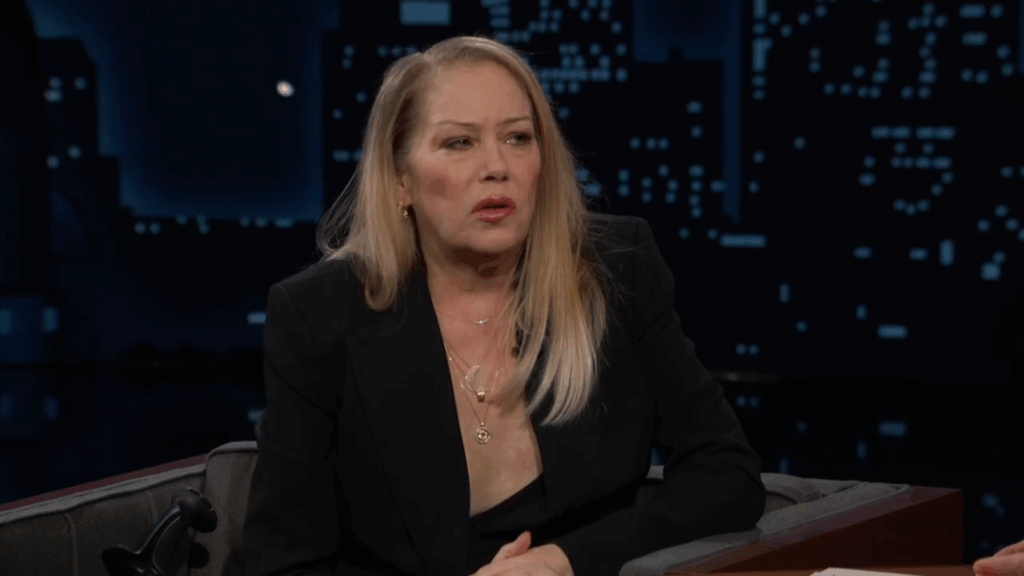
Christina Applegate on Kimmel.
Speaking on a talk show, Christina Applegate promotes her new memoir. (Image Credit: ABC)

It has been 5 years since she was diagnosed

Back in August of 2021, Applegate first revealed her diagnosis of Multiple Sclerosis (MS).

“Hi friends. A few months ago I was diagnosed with MS. It’s been a strange journey,” she tweeted at the time.

“But I have been so supported by people that I know who also have this condition,” she added.

“It’s been a tough road,” Applegate’s 2021 tweet acknowledged. “But as we all know, the road keeps going. Unless some a–hole blocks it.”

Her tweet concluded: “As one of my friends that has MS said, ‘We wake up and take the indicated action.’ And that’s what I do. So now I ask for privacy. As I go through this thing. Thank you xo.”

Applegate has been extremely candid about her worsening condition as her MS battle continues.

She has opened up about wearing diapers, about being mostly confined to bed, and more.

Sigler, her podcast co-host, has been living with relapsing MS for over two decades.

However, we have to emphasize that we do not actually know if Applegate’s hospitalization was related to her MS.

It is natural to assume that a secret hospitalization might stem from her worsening health battle. But we do not actually know.

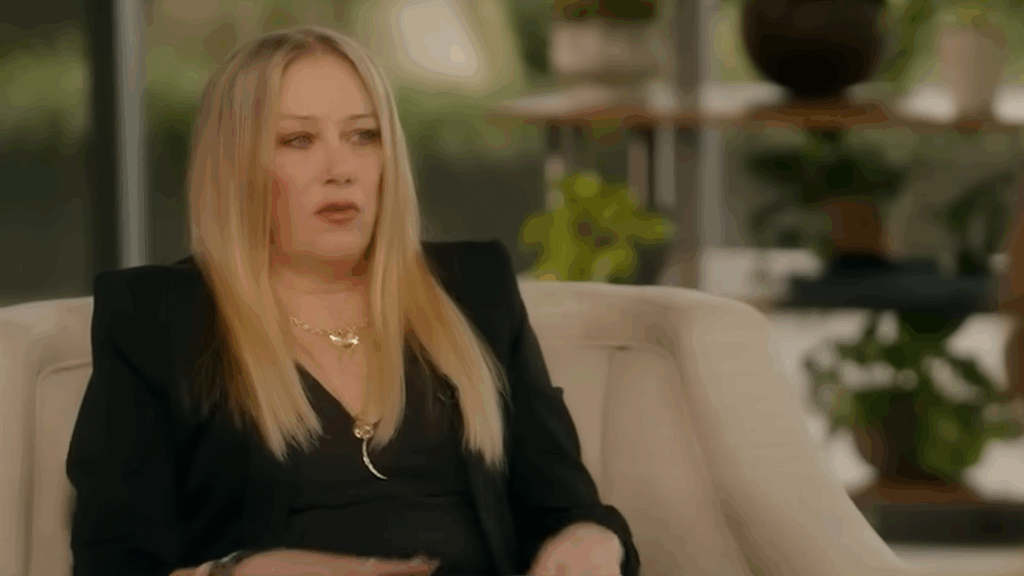
Christina Applegate on GMA in early 2026.
An emotional Christina Applegate tells ‘Good Morning America’ just how bad things have become. (Image Credit: ABC)

Her current status is unknown

For a full decade, Applegate starred on Married … with Children, a tongue-in-cheek sitcom known for breaking a lot of “family sitcom” conventions.

That was her breakout role.

Many would argue that it was her role in Anchorman that cemented her legacy as a

Since then, she has starred in many projects, including on Netflix, introducing herself to new audiences.

We hope that all is well, and will keep Applegate in our thoughts.

Christina Applegate Hospitalized After Months of Worsening Health was originally published on The Hollywood Gossip.

​The Hollywood Gossip

Categories
Health

Side-By-Side Pics Of The First Celebrities Who Admitted To Ozempic And GLP-1 Use

The topic of Ozempic and GLP-1 use for weight management tends to be a sensitive one for celebrities, but some stars have been upfront about it from the start.

​Health Digest – Health News, Wellness, Expert Insights

Categories
Entertainment

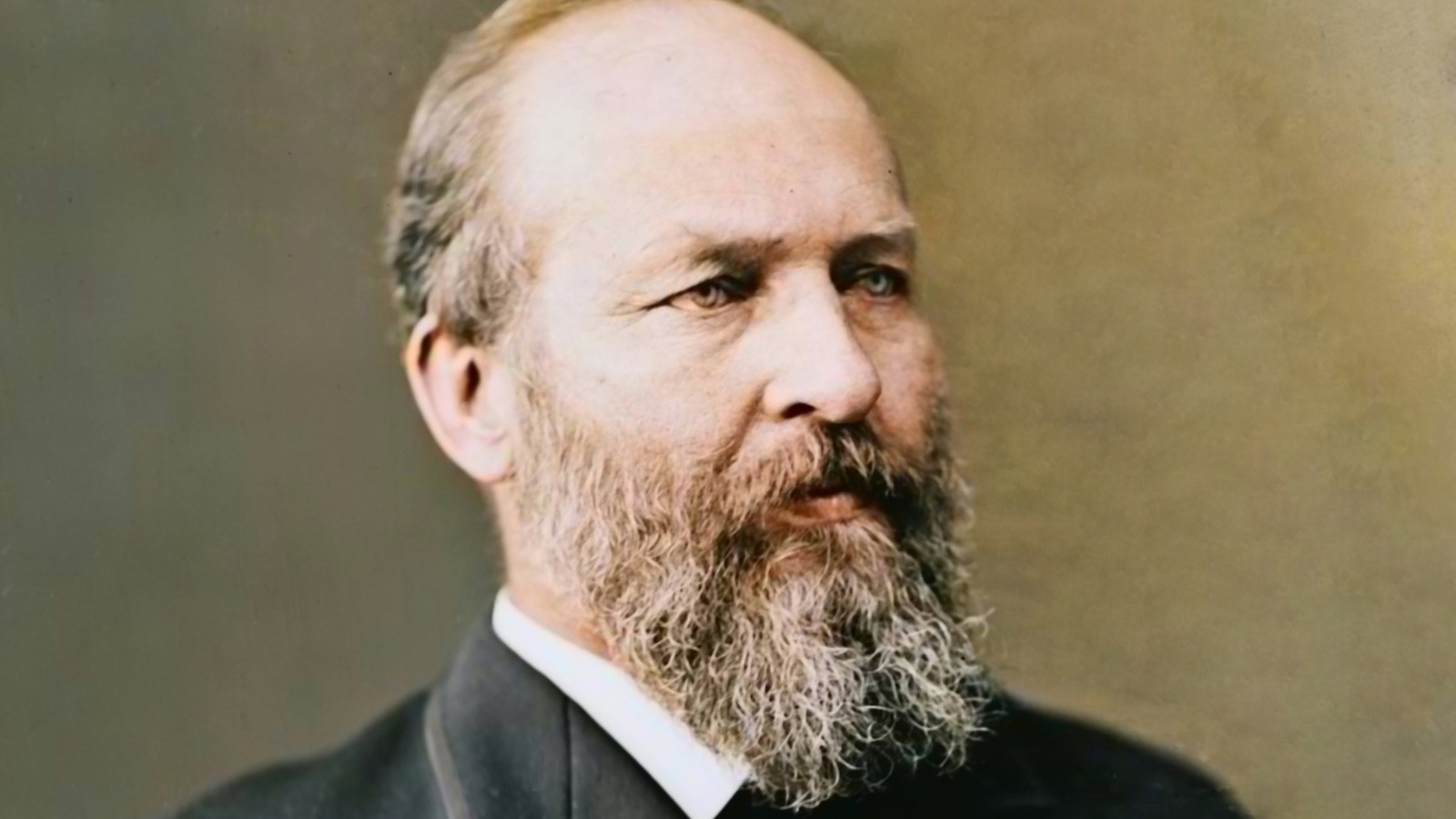
The Unusual Soup James Garfield Loved That’s Rarely Eaten Today

James Garfield’s presidency was tragically cut short by an assassin. Before his passing, doctors wanted to lift his spirits with a soup he ate in his youth.

​Mashed – Fast Food, Celebrity Chefs, Grocery, Reviews

Categories
Food

What Makes This Destination North Carolina Grocery Store So Unique

North Carolina is known for many foods, some of which can be found at this charming family-owned grocery store. People drive hours to visit, here’s why.

​Food Republic – Restaurants, Reviews, Recipes, Cooking Tips

Categories
Entertainment

Costco Lets You Use Outside Shopping Bags — With One Important Condition

If you’re an experienced Costco shopper, you know the store doesn’t offer single-use shopping bags. You can bring in reusable totes, but there’s a catch.

​Mashed – Fast Food, Celebrity Chefs, Grocery, Reviews

Categories
Politics

The nation’s cartoonists on the week in politics

Every week political cartoonists throughout the country and across the political spectrum apply their ink-stained skills to capture the foibles, memes, hypocrisies and other head-slapping events in the world of politics. The fruits of these labors are hundreds of cartoons that entertain and enrage readers of all political stripes. Here’s an offering of the best of this week’s crop, picked fresh off the Toonosphere. Edited by Matt Wuerker.​Politics