Kirk Cousins has followed the same playbook all three times he’s been a free agent. However, before he signed with the Las Vegas Raiders, the veteran quarterback’s free-agency game plan called for something different: a FaceTime call with Tom Brady. A few days after Cousins officially signed with Las Vegas, he shared that he spoke with Brady, a minority owner of the Raiders, in an unusual setting before making his free-agent decision. “You know me, I’m going to do my homework before I sign somewhere. So, I had a lot of conversations with people here and there with the Raiders’ organization,” Cousins told NFL Network’s “Good Morning Football.” “One of those conversations was with Tom. I texted him and asked him to call me when he could. He actually FaceTimed me. I was at youth baseball practice. So, I stepped away and just FaceTimed with Tom for a little bit, just to get on the same page and the vision for the organization and kind of what he saw ahead and if I would be a good fit for it or not.” That call gave Cousins the clarification he needed on whether to sign with the Raiders. “I got off the call, and I called my wife and I said, ‘That was a really life-giving call with Tom,'” Cousins said. “He gets it. He’s been where I’ve been, and then some. I think he understands what it needs to look like and what it will look like. I really felt a shot in the arm after talking with him and I felt that was a big nudge for me to come to Vegas. Cousins signed relatively late in the free agency process, picking Las Vegas as his new home nearly a month after he was released by the Atlanta Falcons. He reportedly agreed to a five-year deal worth up to $172 million in total money. However, only $20 million of the contract is guaranteed, giving the Raiders a potential out after the 2026 season. Putting the money aside, Cousins will likely serve as a mentor to quarterback Fernando Mendoza, who the Raiders are highly expected to take with the No. 1 overall pick in the 2026 NFL Draft. In fact, Cousins seemed to spoil the Raiders’ draft plans in the interview with “Good Morning Football,” saying “Fernando is going to be a great addition to our team.” Some also presumed that the 37-year-old Cousins might have received a guarantee to be the Raiders’ Week 1 starter when he signed with Las Vegas. But he told “Good Morning Football” that “I honestly don’t want to start unless I’m the best option,” adding that he’s relayed that message to first-year Raiders head coach Klint Kubiak. While Cousins will be relied on to help mentor and develop Mendoza, he shared that he’s looking forward to the opportunity to learn from Brady, who Cousins said was at the Raiders’ facility for the first day of organized team activities. “Didn’t expect that, but he stopped by the quarterback room and I was able to catch up with him in the cafeteria,” Cousins said. “He just wants to be a resource. I don’t know if he’s going to be around all the time, but he’s always a phone call or text away, and I think to have a guy who has won seven Super Bowls a phone call or text away that’s embedded into your organization, that’s gotta be a positive.”Latest Sports News from FOX Sports
For most Americans, chicken sandwiches are pretty standard fare. This was also true a century ago, but we now consider this 20th-century sandwich unusual.
Mashed – Fast Food, Celebrity Chefs, Grocery, Reviews
Sofia Mattsson is always game for a new adventure.
Close to two weeks after announcing that she would be joining the cast of Days of Our Lives, the actress detailed what it’s been like stepping… E! Online (US) – Top Stories
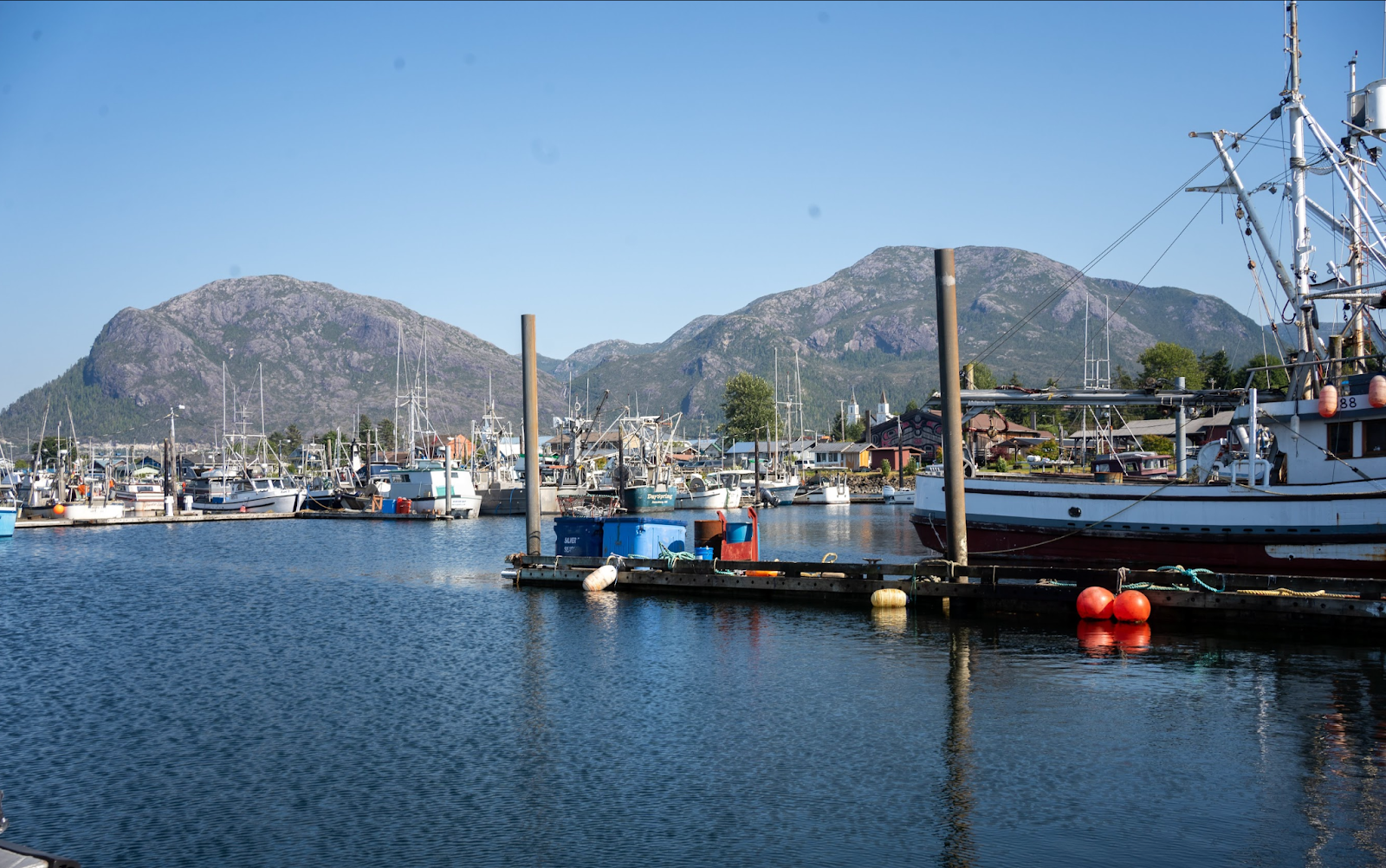
Fishing boats line the harbor in Metlakatla, a Tsimshian village south of Ketchikan in Southeast Alaska. (Jack Darrell/KRBD)
This story was produced as part of the Pulitzer Center’s StoryReach U.S. Fellowship. It’s the third in a series about access to commercial fisheries in rural Alaska; read Part Oneand Part Two.
METLAKATLA, ALASKA — Across Alaska’s coastline, from the Indigenous communities of Bristol Bay to the Tlingit and Haida villages of the panhandle, rural harbors that once bustled with commercial fishing boats now sit unused and empty.
Abandoned boats covered with mold and algae line the shores of one Southeast town; others have seen their fleets sold off and relocated.
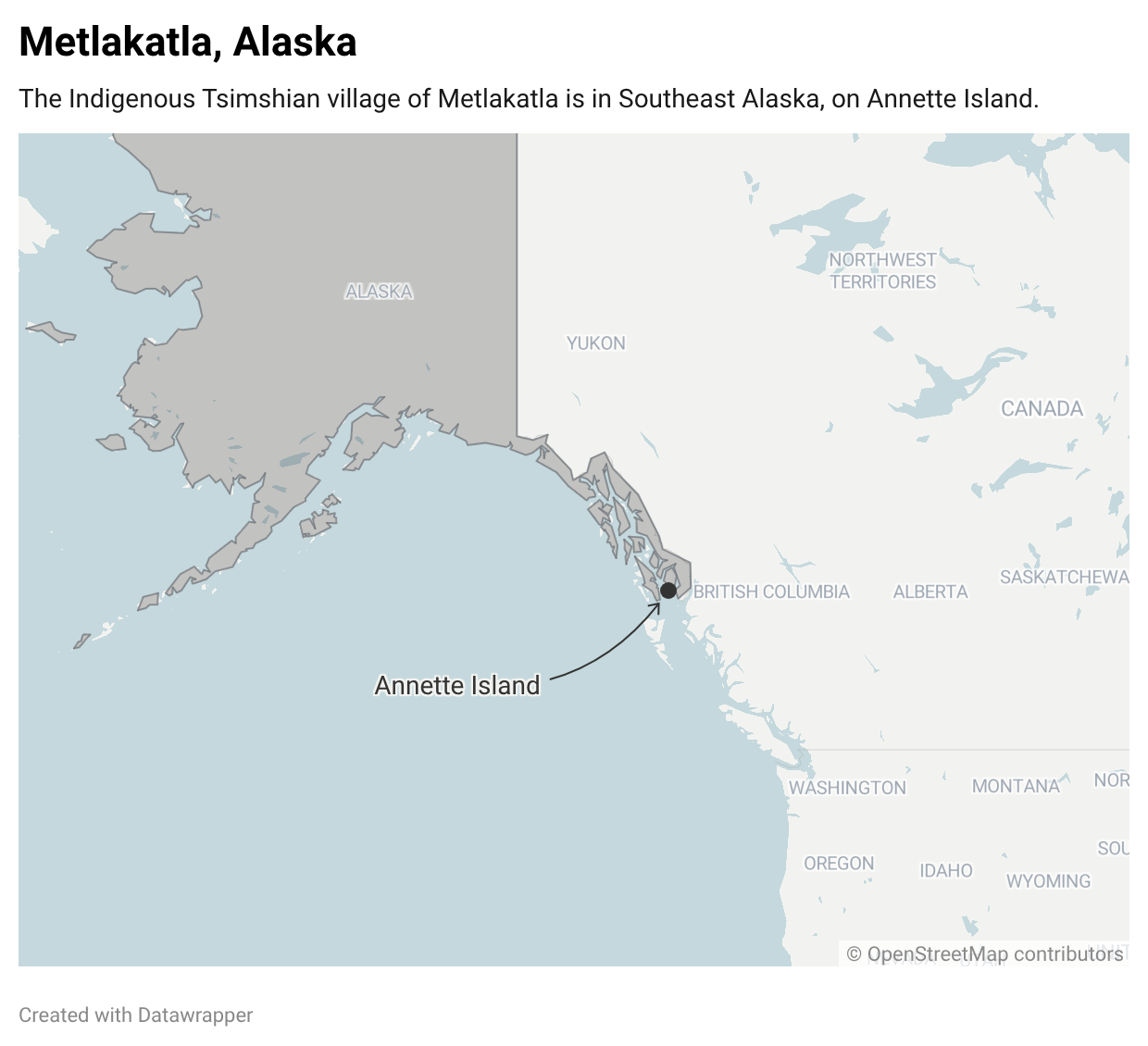
In the Indigenous village of Metlakatla, though, it’s a different story.
Fishing vessels pack the downtown harbor on Annette Island, which sits just off the coast at Alaska’s southernmost tip. Huge seiners, with onboard cranes to reel in fish-laden nets, loom over the docks, with many more slips filled in by smaller gillnetters. Fathers and grandfathers still fish with sons and grandsons.
Experts and industry players disagree about the exact reasons for the decline of commercial fishing in the rest of rural, coastal Alaska — with some blaming state policies and others pointing to global market trends.
In Metlakatla, local leaders say their success in sustaining their fishing culture stems from the community’s unusual history.
In the 1970s, the village stayed out of a land claims settlement between Alaska Natives and the federal government — a deal that could have brought cash in exchange for ceding Metlakatla’s reservation and residents’ collective right to pull fish from the waters off their shores. All the other Native reservations in the state were terminated.
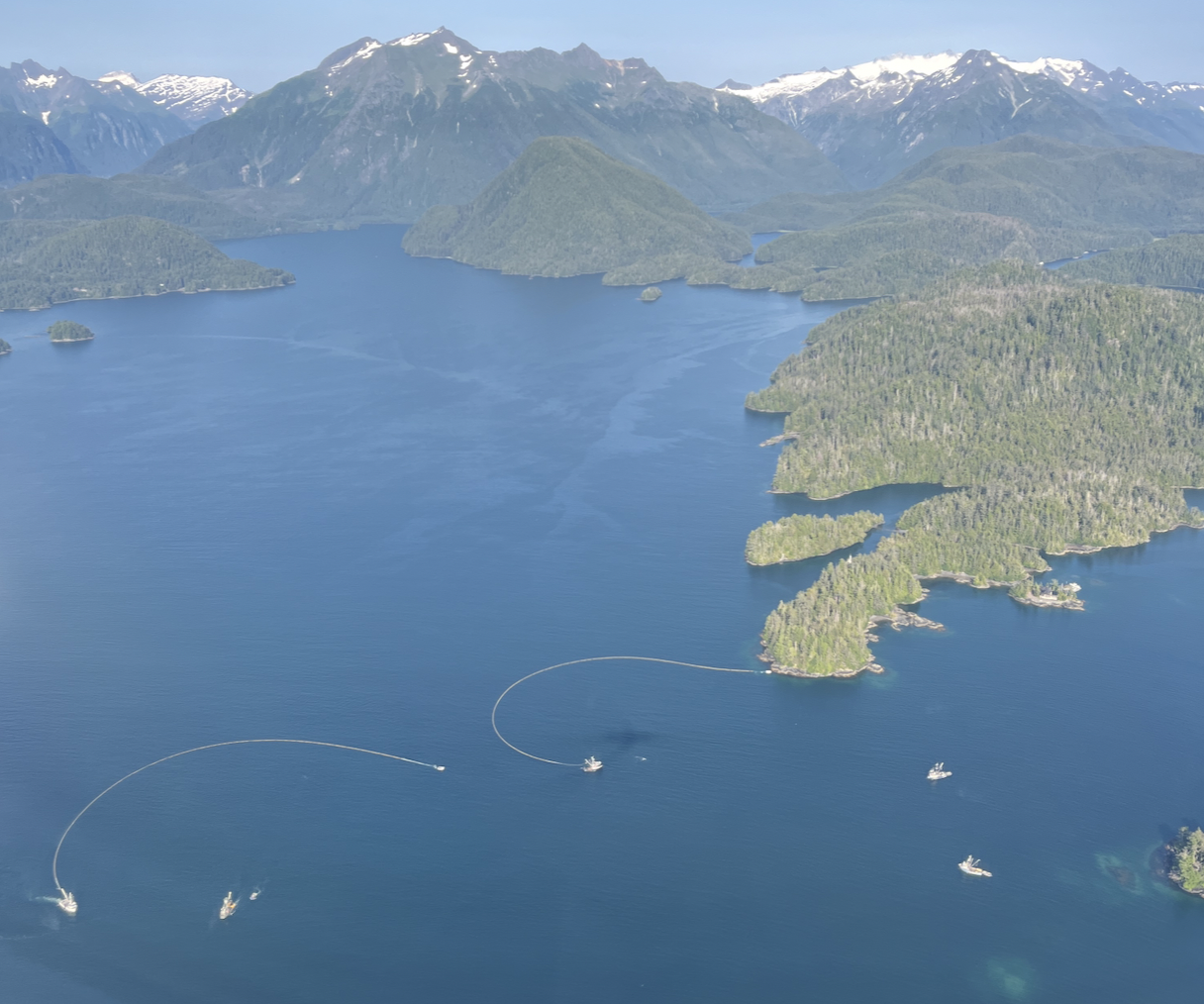
Seine boats such as these in Metlakatla’s harbor use an onboard crane to help pull fish-laden nets on board. (Nathaniel Herz/Northern Journal)
As a result, Metlakatla is the only Native community in Alaska that manages its own commercial fishing harvest. The right to earn a living from the ocean waters surrounding the island is tied to tribal membership and can’t be sold off to outsiders — as happened in other rural and Native communities across the state.
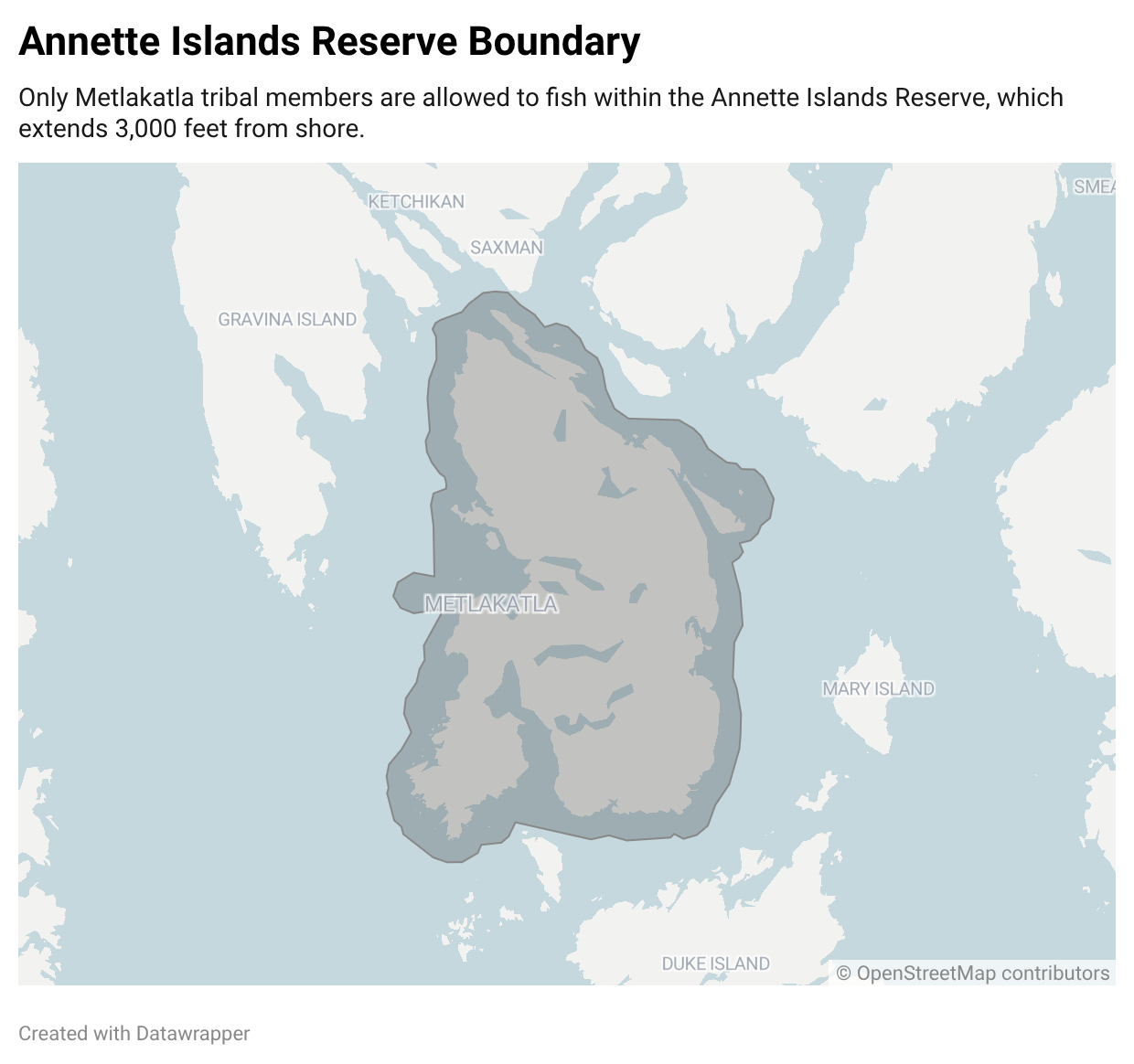
Elsewhere, Native residents of coastal villages and cities might have to pony up $100,000 or more for a permit to access state-managed commercial fisheries just offshore. Meanwhile, any Metlakatla tribal member with a boat and $25 can buy a permit and cast their net in the Indigenous-managed fishery that extends 3,000 feet around Annette Island.
“It’s 100% of the reason why we’re not down to one boat,” said Albert Smith, Metlakatla’s mayor.
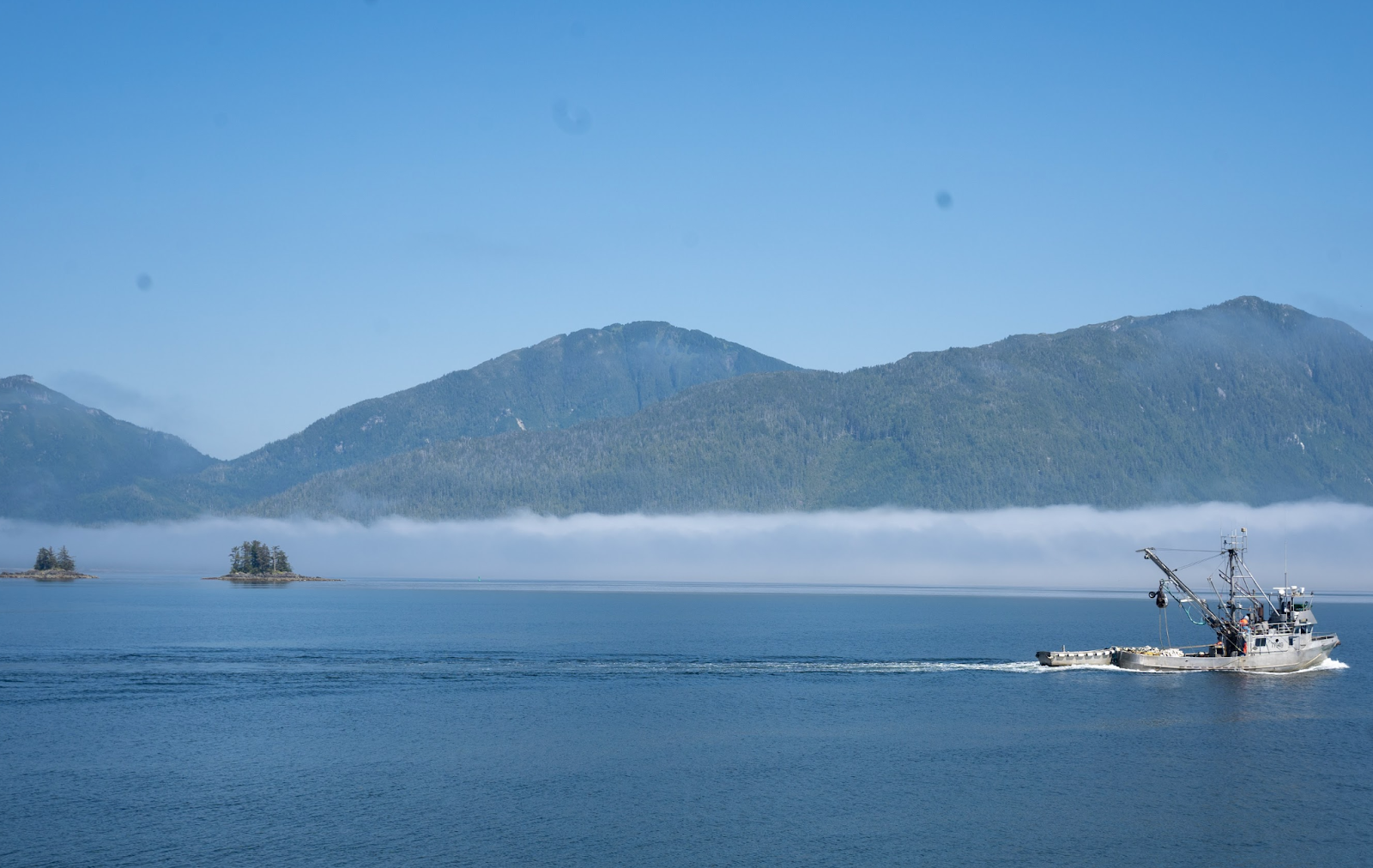
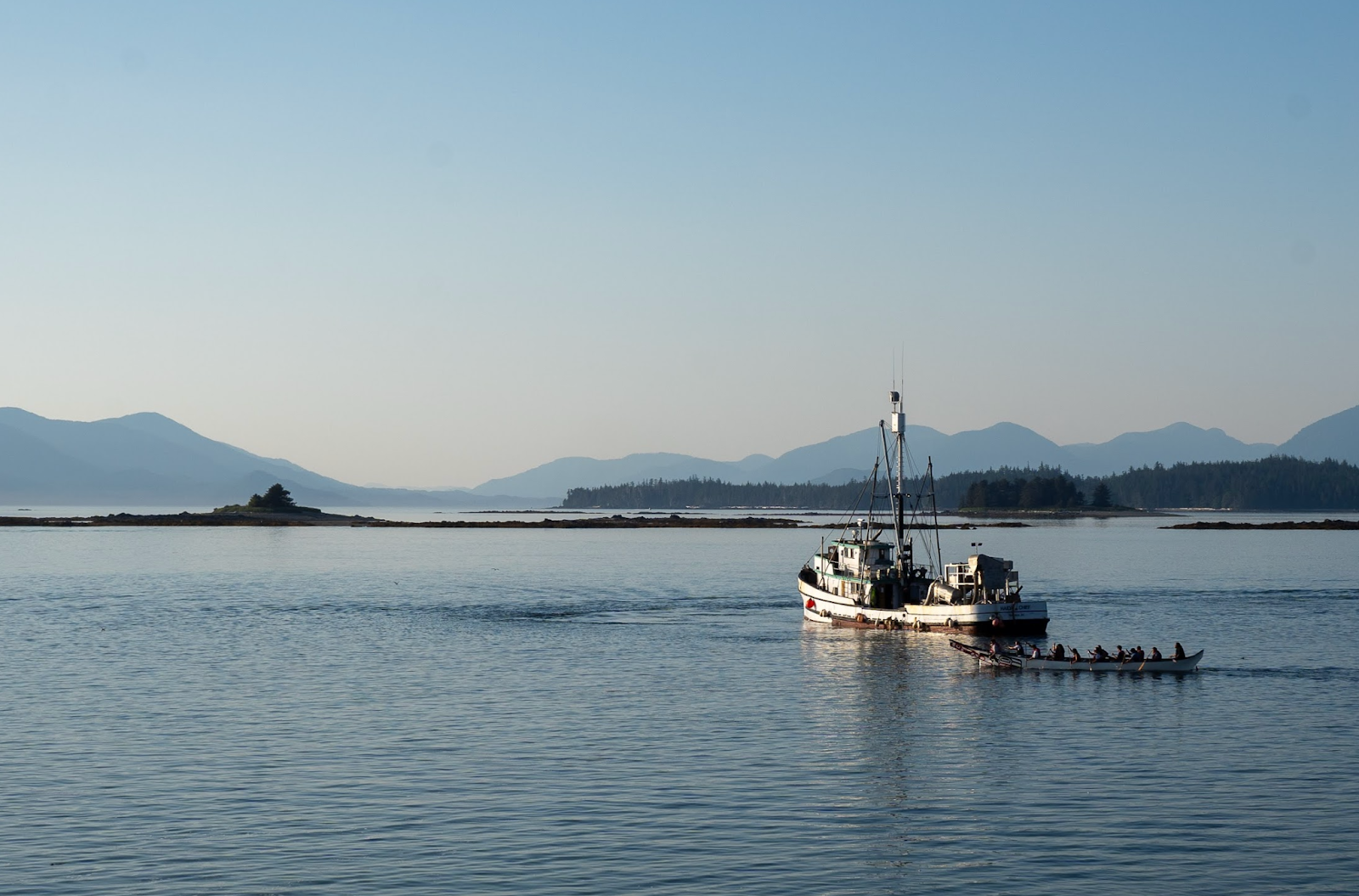
A seiner tows a small skiff along the ocean just outside Metlakatla in 2024. (Jack Darrell/KRBD)
The island fishery sustains the largest tribally managed salmon harvest in the United States. The 1,600-person community has dozens of active commercial fishing vessels, which harvested more than 1.3 million salmon in 2024, according to the most recent tribal data available.
The community stands today as a kind of experiment. Its fishery represents an alternate reality that could have unfolded in rural Alaska if more communities had the same opportunities to access nearby waters — or had state policymakers not chosen to privatize commercial harvest rights in the rest of Alaska’s big salmon fisheries, as they did in the 1970s.
Metlakatla’s narrative is a “direct refutation” of the argument that coastal Alaska Native villages are to blame for the loss of their fishing industries, said Jonathan Kreiss-Tomkins, who once represented Metlakatla in the state House and several years ago pushed an unsuccessful bill to boost access to rural commercial fishing careers.
In Metlakatla, “every slip in the harbor is full — high schoolers are deckhanding for their uncle, their dad, their best friend’s dad,” Kreiss-Tomkins said. “I think it’s a fascinating case study.”
Local leaders say they’ve still had to fight to sustain Metlakatla’s fleet and its tribal fishery.
The community is now in the midst of a six-year legal effort to expand the waters available to tribal members, which leaders say could help solidify the future of Metlakatla’s fishing industry. But its federal lawsuit faces opposition from Alaska Gov. Mike Dunleavy’s administration, competing fishermen and even neighboring Indigenous people.
Metlakatla’s main harbor is near the center of the village, next to a small casino and an artist workshop. (Jack Darrell/KRBD)
‘We’re the salmon people’
The Metlakatlans left northern British Columbia in the late-19th century amid conflicts over land ownership.
Residents secured an invitation to America from President Grover Cleveland and members of Congress at the behest of William Duncan, a charismatic Anglican minister. Duncan had worked with the region’s Indigenous Tsimshian people to establish the original Metlakatla in British Columbia, which he envisioned as a model Christian community.
After a mass migration in canoes and other vessels, the new Metlakatla was built 70 miles away on Annette Island, just across the international border in Alaska, where residents eventually built an enormous church.
A canoe passes by a fishing industry vessel just offshore of Metlakatla in 2024. (Jack Darrell/KRBD)
A cannery served as a market for residents’ ancestral fishing tradition, which the tribe has described as a “bedrock of the Coast Tsimshian culture and way of life.” A presidential proclamation from Woodrow Wilson in 1916 subsequently set aside the 3,000-foot strip around the island exclusively for use by the village’s fishermen.
For decades afterward, Metlakatla’s commercial fleet harvested both inside and outside the exclusive zone.
Skippers of today, who are mostly men, learned to fish from their fathers, who learned from their fathers and grandfathers before them.
Fishing is “one of the few things that remain unbroken from our forever history,” said David R. Boxley, a Metlakatla artist who served on the village’s tribal council until recently.
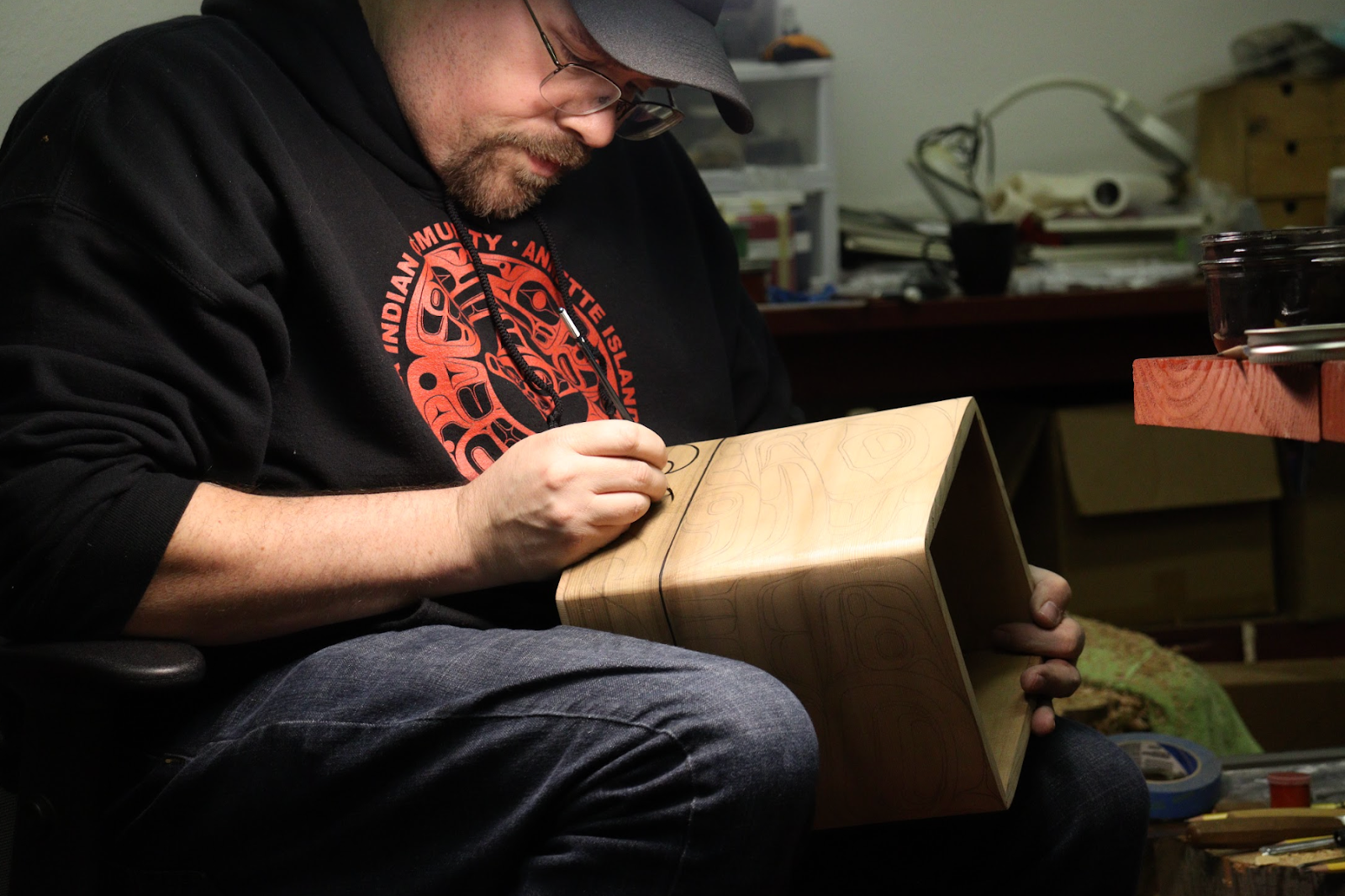
Artist and former tribal council member David R. Boxley details a traditional bentwood box in his workshop in Metlakatla. (Nathaniel Herz/Northern Journal)
“That’s our culture, even though it’s changed in how we do it,” he said. “It’s as old as our people. We’re the salmon people.”
Tribal fishery ‘saved our butts’
In 1971, Congress passed the Alaska Native Claims Settlement Act, which came with a painful tradeoff.
Newly formed, Indigenous-owned corporations would receive a total of $1 billion and some 45 million acres — roughly 10% of the state. In exchange for that money and property, Alaska’s Indigenous people would give up claims to larger swaths of traditional lands, and those that had reservations would surrender them.
Metlakatla had one of only 23 reservations in Alaska and exclusive fishing rights to boot, so it had more to lose. It may have also had less to gain, because the community’s emigration from Canada made its Alaska land claims less certain.
Some in Metlakatla wanted to pursue the payout anyway, according to Boxley.
But elders whose parents and grandparents had been through the exodus from the original village site in British Columbia saw their sovereignty as priceless, he explained.
“We’d already lost a Metlakatla,” Boxley said. “We had to build two communities — one was basically taken from us. Why would we do that again?”
The other 22 reservations in Alaska were dissolved as a result of the settlement. Today, only Metlakatla’s remains.
A few years after the other tribes settled, in an effort to prevent overfishing and make the industry more profitable, the state of Alaska established its “limited entry” program. The system capped the number of skippers in each commercial fishery and transformed fishing from a public right to a private privilege, one available only to those who could afford or inherit a permit. And since the supply of permits was limited, they became valuable commodities.
Commercial fishing permits can now be bought and sold on the open market, in some cases fetching six-figure prices. And over the years, residents of many rural and Indigenous communities have sold their permits to people from Alaska’s larger cities and towns, and from other states.
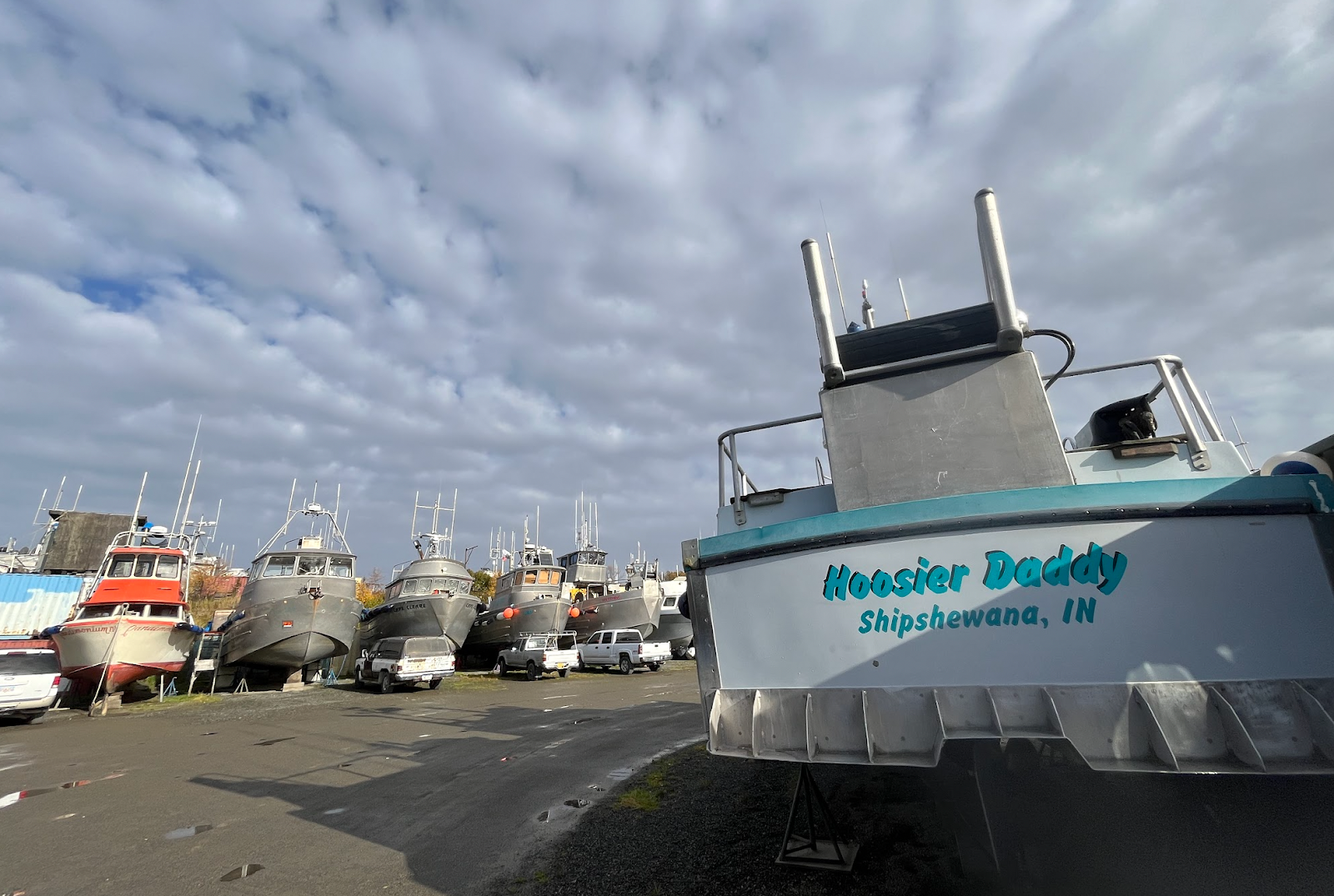
Fishing boats sit in winter storage in the Bristol Bay region, Alaska’s salmon fishing capital, where many skippers are out-of-state residents. (Nathaniel Herz/Northern Journal)
Rural fishermen also moved out of villages and took their permits with them. And those forces conspired to hollow out rural, coastal communities economically — even as Alaska lawmakers have done little to stem the tide.
In Metlakatla, though, tribal members don’t need those expensive permits to pursue a commercial fishing career. While many fishermen in the village have purchased them anyway — allowing harvests both inside and outside the 3,000-foot zone — other Metlakatlans fish only inside that exclusive strip.
Even top fishermen who roam well beyond Annette Island say that the tribal fishery has helped sustain them in lean years — particularly by providing lucrative catches of sea cucumbers and clams, which are harvested in underwater diving gear and fetch high prices in Asia.
“We’ve had terrible seasons seining,” said longtime Metlakatla fisherman Daniel Marsden, 48, referring to the technique of catching salmon with a huge, circular net. “And we go diving, and that saved our butts.”
A lawsuit to expand fishing rights
While commercial fishing remains vibrant in Metlakatla, the community’s fish processing plant is another story.
The business was long an economic mainstay for the village, providing local jobs and revenue for the tribal government.
But beginning in the 1990s, falling seafood prices challenged its profitability, and since 2018, it’s processed only small amounts of fish.
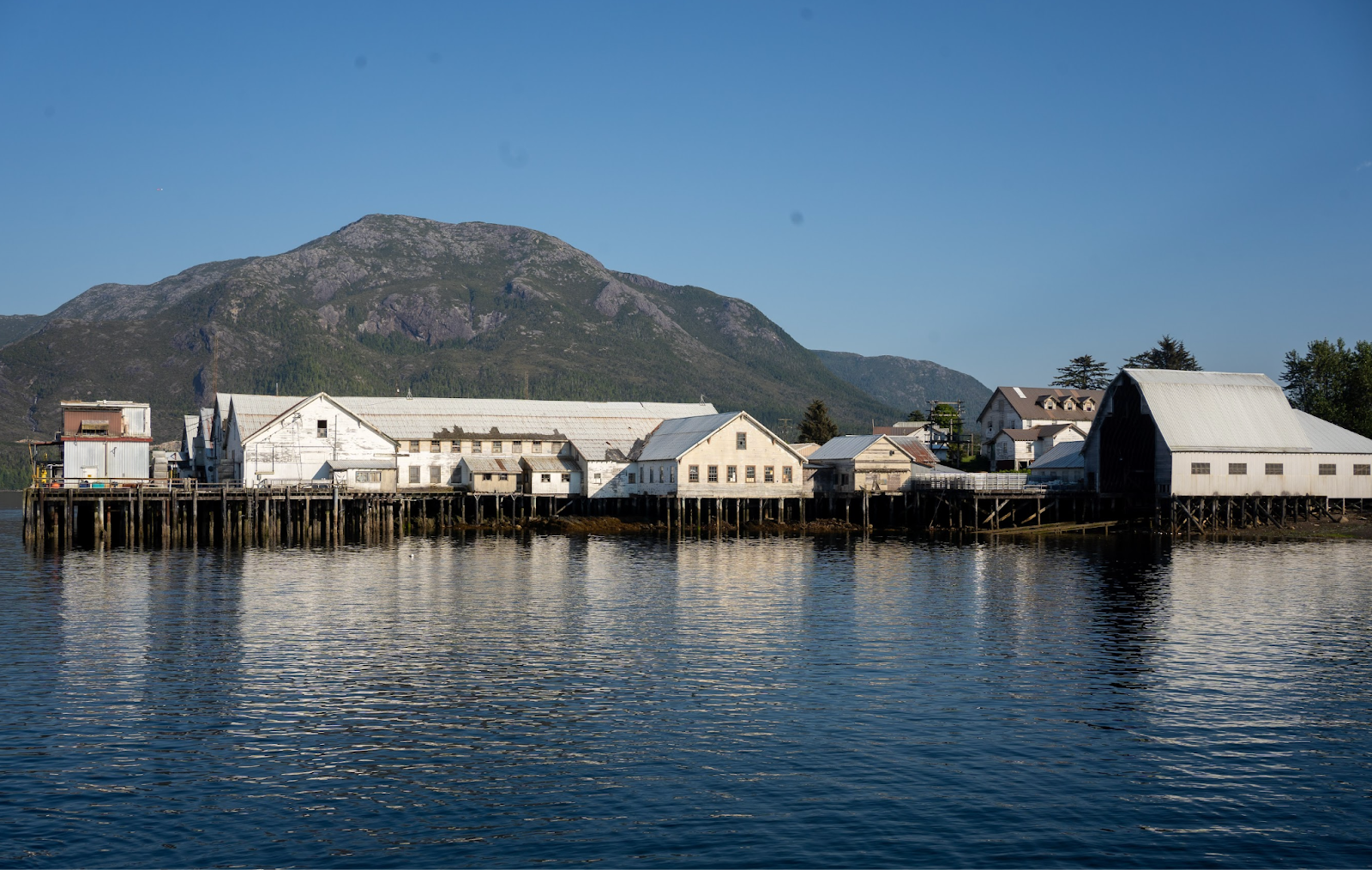
Metlakatla’s fish processing plant sits on the water near the village’s downtown. (Jack Darrell/KRBD)
Today, the cavernous waterfront processing buildings, with peeling white paint, operate at a fraction of their capacity.
Most fishermen who live in Metlakatla and dock their boats in the village harbor sell the salmon they harvest not to the tribally owned plant, but to processing businesses in Ketchikan, 15 miles north. The tribal plant currently lacks the equipment it needs to handle the large volumes of salmon netted by Metlakatla’s fleet, Smith explained.
If more of Metlakatla’s up-and-coming fishermen could harvest farther from the island without having to buy expensive state permits, he added, their catch could be large enough to justify reinvesting in the tribally owned plant.
The 3,000-foot strip around Annette Island, local leaders argue, is no longer the community’s breadbasket. It’s become a “cage” holding back the village’s fleet, according to one longtime fisherman, Edward Gunyah.
To break out of that cage, Metlakatla filed a lawsuit.
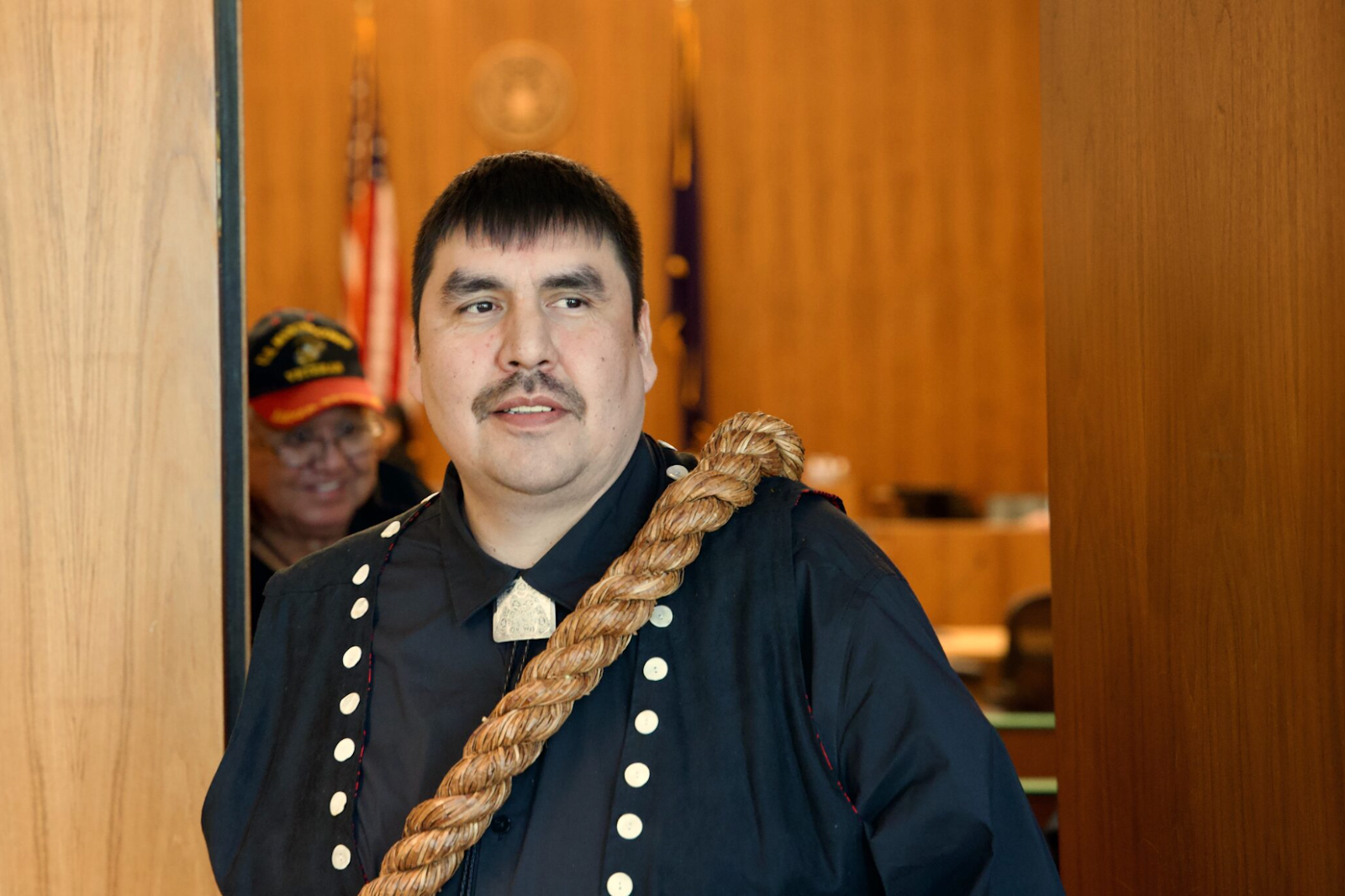
Albert Smith, Metlakatla’s mayor, leaves a courtroom in Juneau. (Eric Stone/Alaska Public Media)
Nearly six years ago, the tribe entered a complaint in federal court, asserting that the state of Alaska’s limited entry permit program was illegally barring Metlakatlans from harvesting in areas they were entitled to fish.
The tribe argues that an 1891 federal law granted it the right to enough fish to make the village self-sustaining — which should allow members to harvest anywhere within roughly a day’s travel from the reservation. The suit doesn’t seek to expel other skippers from the disputed waters, only to allow Metlakatla residents to fish there without buying pricey state permits.
“Congress intended to give the community an opportunity to prosper by accessing the fisheries in the waters surrounding the Annette Islands,” the tribe said in its amended complaint.
State and tribal opposition
Metlakatla’s attorneys filed the 2020 lawsuit in federal court on Aug. 7 — a yearly community holiday commemorating the 1887 arrival of the village’s advance party at Annette Island.
Since then, Metlakatla has won preliminary victories as the case has wound through rounds of lower court decisions and appeals.
But it has also faced strong opposition — from the state government, the fishing industry and other tribes.
“We’re going to see this through to the end,” Doug Vincent-Lang, Alaska’s fish and game commissioner, told a group of Ketchikan fishermen in 2024, according to a recording obtained by Northern Journal and APM Reports.
A win by Metlakatla, he said, would invite efforts from other tribes “that don’t have a treaty, or want to expand what they consider their rights to fish outside the state regulatory environment.”
Doug Vincent-Lang is Alaska’s fish and game commissioner. (Alaska Department of Fish and Game)
“We’re not against Metlakatla,” Vincent-Lang said in an interview. “We support their right to fish in their tribal waters. It’s just when you start fishing outside of those waters, there’s treaty implications and everything else that comes into play. How do you account for that? It’s just all kinds of questions that come up.”
Some of the group’s members are concerned about the potential for the lawsuit to expand Metlakatlans’ fishing rights in a way that increases competition, said Tom Meiners, who leads the group’s board.
“We don’t see the need for the island fishery to be expanded,” Meiners said, noting how numerous Metlakatla fishermen already have state permits and wouldn’t directly benefit if the tribe wins.
Salmon seiners operate outside the Southeast Alaska town of Sitka. (Nathaniel Herz/Northern Journal)
Meanwhile, nearly five years into the litigation, a group of other Southeast Alaska tribal governments, the Central Council of the Tlingit and Haida, filed their own motion to dismiss Metlakatla’s case.
The request, ultimately rejected by the judge, said Metlakatla’s Tsimshian residents were descended from Canadians and were infringing on traditional Tlingit and Haida harvest rights and tribal property.
The fight against the lawsuit, particularly by the state and the other tribes, has deeply frustrated Metlakatla’s leaders and allies, who say the village has long contended with hostility to its unique fishing rights. They also say that both written and oral tradition reflect the longtime presence of Tsimshian people on both sides of the U.S.-Canadian border before it was established, with traditional names for Southeast Alaska sites derived from Tsimshian names.
“We should be working together” against factory fishing boats that accidentally harvest salmon, and against out-of-state commercial permit holders, said Boxley, the former Metlakatla tribal council member. He added: “That’s who’s devastating the fishery. Not us.”
‘Control our own future’
After five years of the lawsuit ping-ponging between lower and appeals courts, a decision on the expansion of Metlakatla’s tribal fishing rights could come as soon as this year.
Smith, the mayor, said a victory could help rev the village’s processing plant back to life.
“The vision is to see it going full-fledged again,” he said.
While awaiting a decision, the tribe leased a corner of the plant to a start-up, Circle Seafoods, that is testing a new concept for fish processing. Rather than trying to fillet and pack the whole summer salmon harvest in a single frenetic push of a few weeks, Circle freezes fish whole, then thaws and cuts them in batches throughout the rest of the year.
Metlakatla’s plant currently processes only small quantities of fish. (Jack Darrell/KRBD)
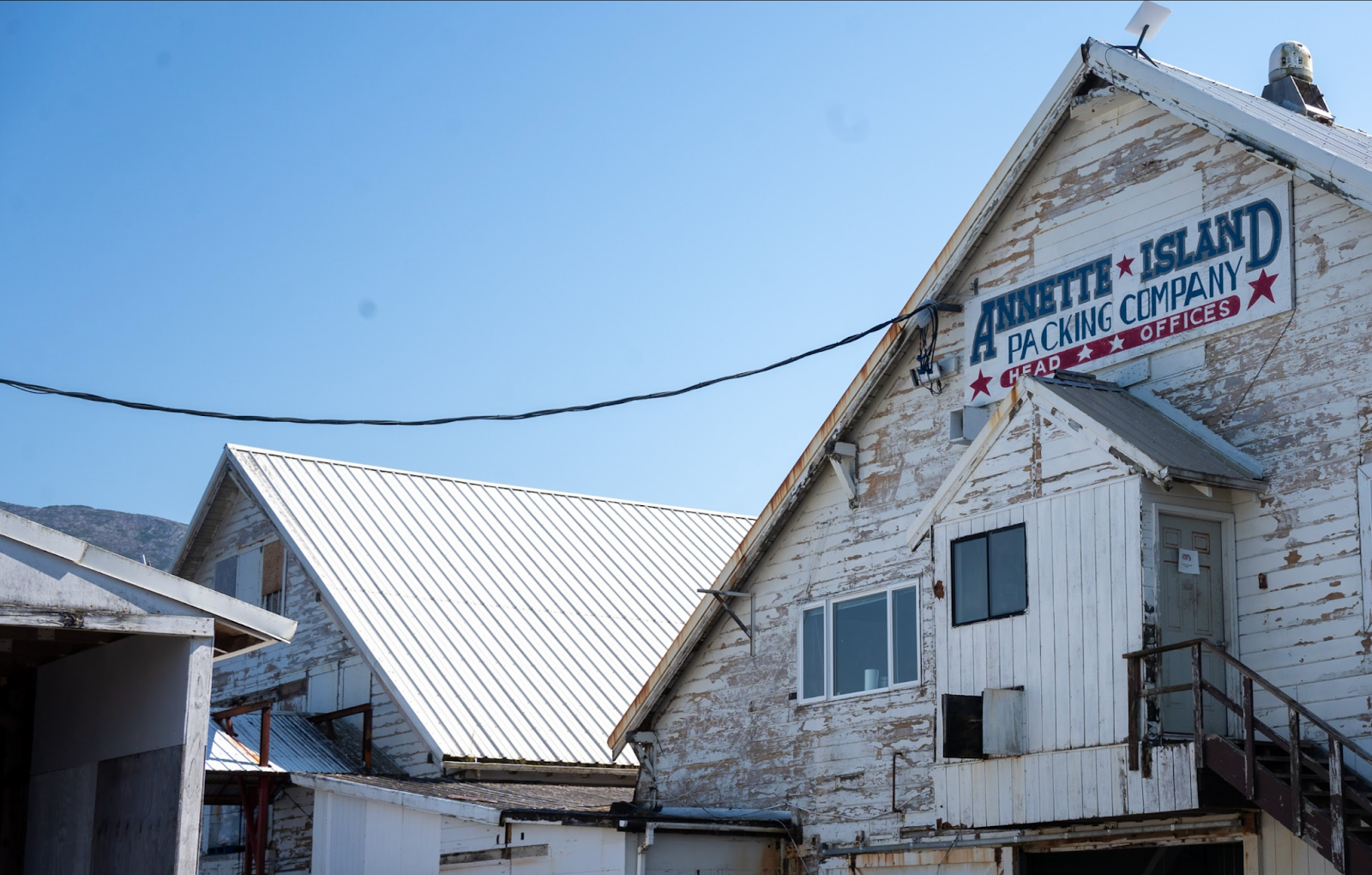
The tribe is interested in replicating the idea because it could sustain a year-round workforce in the village, Smith said. Meanwhile, Annette Island Packing Co., which is owned by the tribe, recently launched a line of freeze-dried salmon pet treats. They’re branded as Ksa Hoon — “just fish” in Sm’algyax, the Tsimshian language.
Operating at full capacity, the plant could churn out profits that the tribe could use to diversify — investing and expanding into other businesses such as ecotourism, Boxley said. He described the lawsuit as aligning with Metlakatlans’ decision a century ago to move from Canada to Alaska, where tribal members would have more autonomy.
“We did all this to be in control of our own future,” Boxley said. “That’s why we came here.”
This story was produced as part of the Pulitzer Center’s StoryReach U.S. Fellowship. It was reported and edited by Northern Journal and APM Reports.
Nathaniel Herz welcomes tips at natherz@gmail.com or (907) 793-0312. This article was originally published in Northern Journal, a newsletter from Herz. Subscribe at this link.
With Euphoria’s season three premiere airing this weekend, we have the cast’s beauty secrets on our minds. Ever wondered how these stars get their clear, glowy, and hydrated skin? For Sydney… E! Online (US) – Top Stories
Now, the photo on the right purports to show Taylor and Stefon hanging out in Provo, Utah.
And it looks pretty authentic! But of course, it’s not.
Gone are the days when AI photos were loaded with telltale signs like hands with a dozen fingers.
These days, we need to look for more subtle cues — like the fact that the post is from Hater Report and not Bleacher Report (as one might think from a quick glance at the logo).
But that didn’t stop the good folks on X (formerly Twitter) from taking this post seriously and offering up their hottest takes.
Stefon Diggs attends the 2025 CFDA Awards at The American Museum of Natural History on November 03, 2025 in New York City. (Photo by Jamie McCarthy/WireImage)
“She beats children. He beats women. Match made in heaven,” wrote one user.
“Two abusers dating each other,” another added.
“I don’t have any idea who the heck he is but he’s wearing some weird crap on his feet,” wrote a third user (who was so close to figuring this out!)
Obviously, many commenters referenced Paul’s assault on Dakota Mortensen, and for good reason.
Taylor Frankie Pail and Dakota Mortensen on ‘Secret Lives of Mormon Wives’ reunion episode. (Hulu/YouTube)
After all, that was the scandal that led ABC to take the unprecedented move of canceling Taylor’s season of The Bachelorette.
But while we’re certainly not defending Taylor’s actions, it’s worth noting that the situation might be more complicated than it appears.
There’s something about Cameron Diaz and Benji Madden.
The Charlie’s Angels alum and the Good Charlotte rocker stepped out for a rare public date, enjoying a low-key shopping trip while out and… E! Online (US) – Top Stories
Barber Motorsports Park is a punishing track for any driver. It’s physical, daunting and full of surprises, and Scott McLaughlin got a recent painful reminder of that. The Team Penske driver made headlines for a less-than-ideal reason after he spun and slid backward through the catchfence at Barber course in Alabama. McLaughlin was thankfully OK, and the crash looked worse than it was, he said afterward. But the challenges of recovering from that wreck, switching to a backup car and still trying to compete in the fastest racing series in the world are gigantic. And they were highlighted in the third episode of “All In,” a real-time docuseries from FOX Sports, INDYCAR and Shadow Lion. “As soon as I got out of the car, my first thought was my daughter and my wife,” McLaughlin said in the latest “All In” episode titled, “Every Second Counts.” “Thank god I was OK. As much as that was theatrical — and going through a fence, it was pretty legit — but it wasn’t the hardest hit I’ve had.” The crash was during practice, just hours before qualifying, meaning not only was the car wrecked but also that McLaughlin and his Team Penske crew had to rush to get the backup car ready to qualify well and salvage the weekend. That takes more effort and people than you might expect, especially in a short time frame. INDYCAR racing is a team sport, like all motorsports, and no one is like the Team Penske organization with historically dominant INDYCAR and NASCAR teams. The latest “All In” episode also revisits the 2025 INDYCAR season, which was filled with drama around the team, from McLaughlin’s heartbreaking crash during the warm-up laps for the 2025 Indianapolis 500 to Team Penske receiving notable penalties for illegal car modifications. The latter led to multiple executive firings, including Tim Cindric, previously the team president. “I was really sad for him, sad for me because I knew I probably wouldn’t get the opportunity to work with him again,” McLaughlin says in “All In.” “It was controversy, it’s quite distracting, but I think it lit a fire under everyone’s belly to keep going.” Then the unexpected happened when Cindric returned to Team Penske this season, now as a race strategist for McLaughlin and his No. 3 Chevrolet team. “Scott’s done a very good job of positioning himself to try to be the benefactor in all this,” INDYCAR on FOX broadcaster James Hinchcliffe says in the latest episode. “But Tim Cindric returning is something that I don’t think a lot of people saw coming.” As McLaughlin explains, some people might laugh or smirk, but the driver from New Zealand doesn’t care because he believes Cindric is the best at what he does. “If I had to choose one word to describe last season, it’s just a bad dream,” Cindric says in “All In.” McLaughlin said he’s thankful to have a second chance to work with Cindric, as they push to rebound this season but specifically contend for the 2026 Indy 500 crown on May 24 on FOX. Featuring INDYCAR drivers and insiders — along with INDYCAR on FOX’s Hinchcliffe, Townsend Bell and Will Buxton — “All In” examines the biggest challenges, the pressure points and the high-speed competition of racing in the series. Each episode features its own focus on a driver, team or series storyline. And the latest one dives deep into McLaughlin and Team Penske’s challenging past year, as they now eye 2026 victories. Watch “All In” on the INDYCAR On FOX YouTube page, FOXSports.com and the FOX Sports App, FOX One, as well as INDYCAR and INDYCAR on FOX social channels.Latest Sports News from FOX Sports











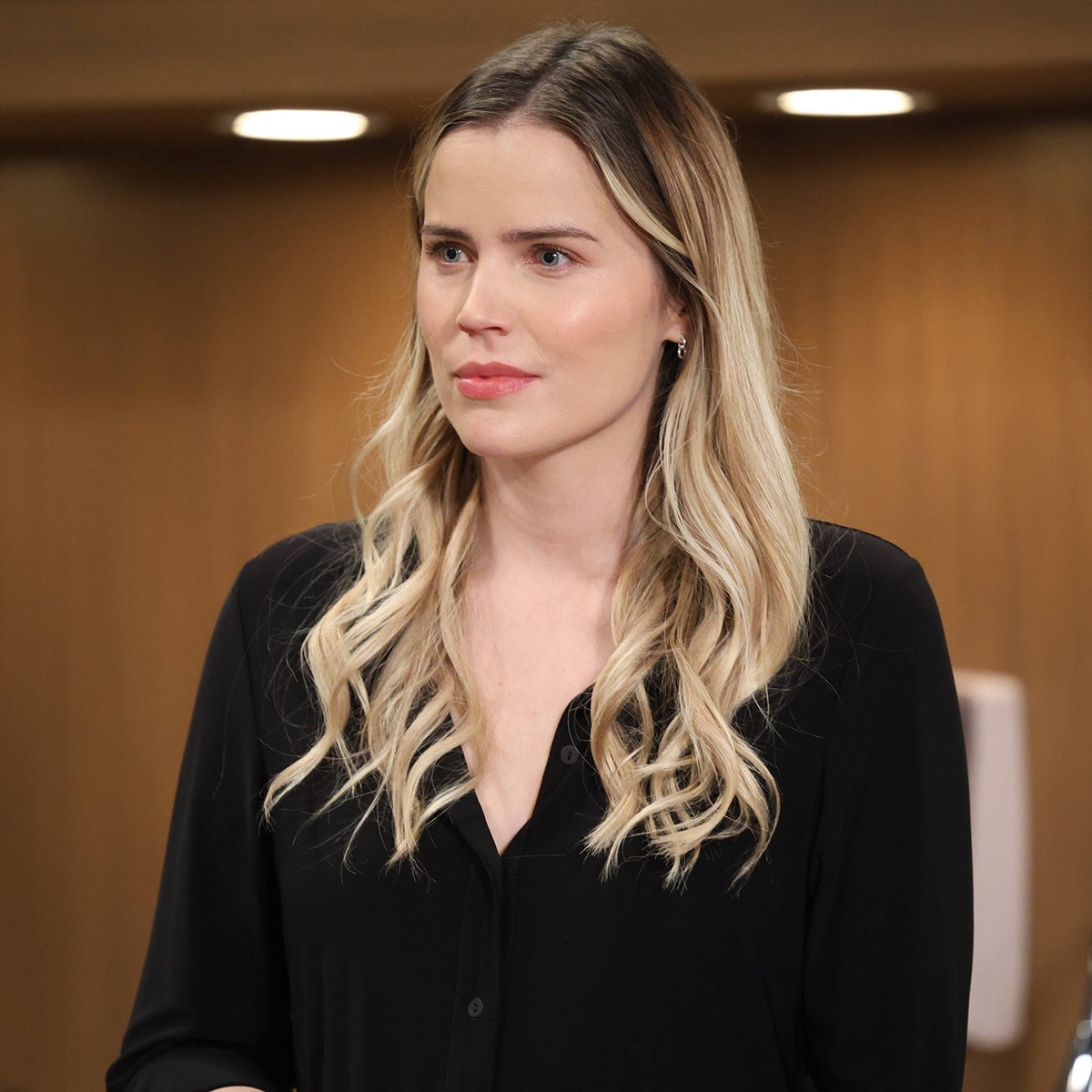
 Sofia Mattsson is always game for a new adventure.



 With Euphoria’s season three premiere airing this weekend, we have the cast’s beauty secrets on our minds. Ever wondered how these stars get their clear, glowy, and hydrated skin? For Sydney…




 There’s something about Cameron Diaz and Benji Madden.