Categories
Alaska News

Trawl allies fire back as Alaska candidates’ anti-industry rhetoric heats up

Trawl-caught pollock harvested during an Alaska research survey. (Photo by David Csepp/National Marine Fisheries Service)

Trawl-caught pollock harvested during an Alaska research survey. (Photo by David Csepp/National Marine Fisheries Service)

As Alaska’s race for governor heats up, Democrats and Republicans have increasingly targeted the state’s big trawl fisheries with criticism — and are swearing off campaign money from owners of the factory vessels that unintentionally harvest salmon as “bycatch.”

Now, the industry’s allies are pushing back.

A mysterious, pro-industry group recently launched a new five-figure radio advertising campaign on urban Alaska airwaves — targeting what it describes as “bycatch BS” and politicians telling “trawl tales.”

The group, Alaskans Deserve Better, has not publicly indicated who’s behind the radio blitz.

But legally required disclosures filed with the Federal Communications Commission show that the funders apparently have substantial cash at their disposal, with more than $10,000 in ad time reserved over the first two weeks of the campaign. A veteran Anchorage Republican political consultant, Art Hackney, is working with them, according to the disclosures.

The new radio campaign underscores how the fight over trawling has become one of the central issues animating Alaska politics in recent years.

Trawlers drag open-mouthed nets through the water to harvest whitefish like pollock for both U.S. and foreign consumers. Some of the vessels have onboard factories, which process fish that ultimately is used in fish sticks, fried fillet sandwiches and surimi, the protein paste in imitation crab, among other products.

Many of the largest trawlers are homeported in Seattle, but the industry operates in both the Bering Sea and the Gulf of Alaska. Smaller vessels without onboard factories deliver their catch to processing plants on the Alaska coast, where the industry says it sustains thousands of jobs and pays tens of millions of dollars annually in taxes.

A large pollock trawler sits at the dock in Seattle in 2024. (Nathaniel Herz/Northern Journal)

The trawlers, in past years, have unintentionally harvested as many as hundreds of thousands of chum salmon and tens of thousands of king salmon from the Bering Sea.

In 2022, underdog Democrat Mary Peltola won a seat in the U.S. House campaigning, in part, on an anti-bycatch platform.

This year, though, it’s not just Democrats weighing in — especially in this year’s gubernatorial election, in which more than 15 candidates are vying to succeed term-limited GOP Gov. Mike Dunleavy.

Republicans appear to have sensed their own political opening, and are levying unusually strident criticism against one of the natural resource industries that are, typically, closely aligned with the party’s agenda.

Multiple leading GOP candidates — including former state Sen. Shelley Hughes, former attorney general Treg Taylor, former Anchorage mayor Dave Bronson and conservative activist Bernadette Wilson — have pledged not to accept campaign contributions from trawl officials. Many also say they will nominate like-minded representatives to the federal council that manages the Bering Sea trawl fleet.

“I do know there is a leftist element to this,” said Bronson, a conservative Republican who’s been an outspoken trawl critic on the gubernatorial campaign trail. But even leftists, he acknowledged, “might be right once in a while.”

“If we treated our forests the way we treat the bottom of our oceans, everyone would have shut this down decades ago,” he said.
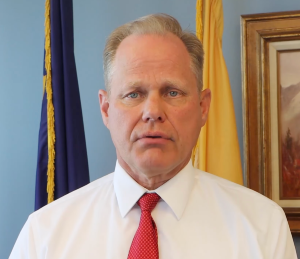
Former Anchorage mayor Dave Bronson (Screengrab/Municipality of Anchorage)

Politicians, conservation groups and tribal leaders have been protesting bycatch in recent years amid sharp declines in the number of salmon returning to spawn in Western Alaska rivers — a crash that, in turn, has devastated the subsistence traditions, culture and economy of many of the region’s Indigenous villages.

In response to the advocacy, federal managers recently passed new limits on chum salmon bycatch in the Bering Sea that trawlers say could cut into their profits.

Industry boosters point to genetic sampling showing that only a fraction of the salmon caught by trawlers as bycatch would otherwise end up spawning in Alaska rivers like the Yukon and Kuskokwim; many enter the ocean from Asian and Canadian river systems. Federal research also indicates that recent chum salmon declines, in particular, appear to be driven by global warming.

Bycatch critics, meanwhile, say it’s unfair for trawlers to take even a small number of Alaska-bound salmon when subsistence harvesters, like those on the Yukon River, are barred from harvesting a single king to feed their families. They also say that the dragging of trawl nets along the ocean floor damages habitat.

Hackney, the political consultant who reserved the pro-trawl advertising time for Alaskans Deserve Better, did not respond to requests for comment.

Andrea Keikkala, head of a trawler trade group called United Catcher Boats, said she did not know who commissioned the advertising campaign. But her group nonetheless posted audio from the ads on social media, saying they address misconceptions amid a “growing push to simplify a complex issue.”

Keikkala pointed to how Taylor, the former attorney general, was attacked on social media after a photo of him talking to a seafood industry executive was posted in an anti-trawl Facebook group.

“It’s highly politicized when a candidate can’t even talk to someone without having their picture taken and being demonized for a conversation,” Keikkala said in a phone interview. “We should not set policy on Facebook. For some of the candidates, it seems like 100% of their knowledge of trawl is coming from there.”

A trawl vessel sits docked on Kodiak Island in 2024. (Nathaniel Herz/Northern Journal)

A spokesperson for Taylor said the candidate was unavailable for an interview but pointed to a section of Taylor’s website that includes a pledge not to accept trawl money and a call to “end practices that destroy our ocean seabeds.”

On Facebook, meanwhile, a group called STOP Alaska Trawler Bycatch, is highlighting candidates’ positions for its 55,000 members.

The group’s moderator, David Bayes, said he thinks the new radio ads are a direct result of candidates turning down their money. If industry representatives can’t give money directly to campaigns, Bayes added, they “have to spend it somewhere.”

“Now that that door is closed, we’re going to see radio ads and Facebook ads,” he said.

Bayes said he’s catalogued nine gubernatorial candidates — Democrats, Republicans and independents — who’d expressed at least “something” anti-trawl in writing.

Those include Wilson, the conservative activist, who says she won’t nominaterepresentatives to the federal fishery management council if they have conflicts of interest. Adam Crum, a Republican and a former state revenue commissioner, says policymakers should have a “swift and firm” response when bycatch “threatens the health of our fisheries.”

Democratic former state Rep. Jonathan Kreiss-Tomkins has pledged to “rein in bottom trawl bycatch,” while Democratic former state Sen. Tom Begich has criticized“unsustainable practices” by “Seattle-based corporate fisheries.”

Amid these increasing calls for tighter regulation, the trawl industry has been gearing up not just its advertising but its hiring.

Coastal Villages Region Fund, a nonprofit group that uses its trawl investments to run social welfare programs in Western Alaska, recently brought on two former aides from Alaska’s congressional delegation.

One of them, Rick Whitbeck, is a veteran Republican political operative. Before working as state director for GOP U.S. Rep. Nick Begich, he operated Alaska’s chapter of Power the Future, an advocacy group that pushed oil and mining development — where he labeled critics as “eco-radicals.”

Whitbeck and Adam Trombley, formerly GOP U.S. Sen. Dan Sullivan’s state director, “bring strong statewide relationships and experience in public engagement, and will help ensure that more Alaskans hear directly from the communities and people who depend on these fisheries,” Eric Deakin, the coastal group’s chief executive, said in an emailed statement.

“There’s a lot of information — and, unfortunately, misinformation — circulating about our fisheries,” Deakin said. “Our focus is making sure facts, data, and community voices are part of that conversation.”

While Deakin’s group and other trawl organizations contend with increasing attacks from Republican gubernatorial candidates, the industry does have at least one ally in the field.

Matt Heilala, a podiatrist running for governor as a Republican, recently traveled to the fishing port of Dutch Harbor in the Aleutian Islands to “defend the trawl industry,” according to a story from the local public media station, KUCB.

Heilala, a former commercial salmon fisherman, said he’d dug into the criticism and concluded that anti-trawl sentiment amounts to “social contagion.”

“I don’t think the answer is to scapegoat something,” he said in an interview. “There’s a dire consequence to doing something too radical.”

Nonetheless, Heilala, who with his wife has donated more than $1 million to his own campaign, said he still won’t be accepting contributions from industry representatives.

“I’d be happy if they support me — like, vote for me,” he said. “They’re happy I’m speaking up on behalf of the communities. But they know darn well I’m not taking one dime.”


Nathaniel Herz welcomes tips at natherz@gmail.com or (907) 793-0312. This article was originally published in Northern Journal, a newsletter from Herz. Subscribe at this link.

SUBSCRIBE: GET THE MORNING HEADLINES DELIVERED TO YOUR INBOX

Categories
Entertainment

Beef Tallow Vs Lard: The Differences In Nutrition You Need To Know

Beef tallow has surged in popularity, but what about lard? We take a look at the nutrition info of both animal proteins to see how they differ from one another.

​Mashed – Fast Food, Celebrity Chefs, Grocery, Reviews

Categories
Uncategorized

Presidential words can turn the unthinkable into the thinkable − for better or for worse

President Donald Trump’s rhetoric has grown increasingly violent. wildpixel/iStock via Getty Images Plus

Among the most disorienting things about President Donald Trump’s public language is how easily it can feel numbing and shocking in the same moment. He says something outrageous, the country recoils, and then the recoil itself begins to feel familiar.

As a scholar who studies presidential rhetoric, I know that over time that rhythm does its own kind of damage. It teaches the public to absorb the breach. What once might have sounded like a genuine political emergency or a violation of constitutional decorum begins to register as just another day in American political life.

But the past few days merit notice. The president’s demagoguery has taken a darker turn.

Trump’s rhetoric about Iran has become more than inflammatory. Beginning with posts to Truth Social in early April, he has used profanity-laden language – “Open the Fuckin’ Strait, you crazy bastards, or you’ll be living in Hell” – to threaten attacks on the country’s infrastructure. He urged Iranians to rise up against their government. He warned that “a whole civilization will die tonight” if Iran does not comply with U.S. demands.

The Associated Press treated those remarks as a significant escalation in the context of a live conflict, not merely as familiar Trumpian excess: “As the conflict has entered its second month, Trump has escalated his warnings to bomb Iran’s infrastructure.”

The International Committee of the Red Cross also issued the unusual reminder that the rules of war must be respected “in words and action,” suggesting that the rhetoric itself had become part of the danger.

But were Trump’s recent remarks really different from his many earlier outbursts?

I think they were. For years, Trump’s rhetoric has relied on insult, ridicule, threat and contempt. He has degraded opponents and helped coarsen the terms of public life.

What seems different about his words during the first week of April 2026 is the scale of violence his language primed people to imagine. His remarks about Iran moved beyond personal attacks or chest-thumping nationalism to take on a tone of collective punishment and civilizational destruction. The style was familiar. The horizon of harm was not.

A social media post from President Donald Trump threatening destruction of Iran's civilization.
President Donald Trump’s social media post of April 7, 2026, threatening the destruction of ‘a whole civilization,’ meaning Iran.
Truth Social

Politics of fear

Presidential rhetoric is more about permission than persuasion. Presidents do not only argue. They signal.

Through those signals, they tell the public what kind of situation this is, what kind of danger is at hand, and what kinds of response are reasonable. In that sense, the president can function like a human starting gun. His words cue journalists, legislators, party allies and ordinary supporters about how to classify events before anyone has fully processed them.

Political theorist Corey Robin’s work on the politics of fear is a useful lens for understanding what is happening with Trump’s violent rhetoric.

Fear, in Robin’s view, is not simply a feeling that arises naturally in response to danger. It is politically manufactured. Power teaches people what to fear, how to name danger, and where to direct their apprehension. Presidential rhetoric is an essential tool for performing that work.

Thus, a president does not only describe a threat. He also gives it shape and scale. He tells the public how large it is, how close it is, and what kinds of response should feel reasonable in its presence.

A good example of a president doing this happened after the Sept. 11, 2001, terrorist attacks when, while visiting ground zero in New York City, George W. Bush said, “I can hear you. The rest of the world hears you. And the people who knocked these buildings down will hear all of us soon.” With that sentence, Bush acknowledged the gravity of what had happened, but also promised to fight back and bring justice to the terrorists.

When it comes to statements like those Trump has recently made about Iran, the worry is not that the president has said something extreme. Instead, the larger concern lies in what repeatedly using extreme language does to the atmosphere in which judgment takes place.

Political hyperbole lowers the threshold of what the public can imagine as legitimate, as allowable. When presidents make threats like the ones Trump issued, mass suffering becomes more imaginable. The president’s words and social media posts test whether the public will continue to hear such language as over the line, or whether it will be absorbed as one more hard-edged negotiating tactic.

At ground zero after the 9/11 attacks, President George W. Bush acknowledged the gravity of what had happened, but he also promised to fight back.

Shaping reality

Presidential rhetoric matters for reasons that go beyond persuasion or style.

It helps arrange reality. It tells the public what is serious, who is dangerous, whose suffering counts, and what forms of violence can be described as necessary. President Barack Obama did this in 2012, when he was speaking at a vigil to honor the shooting victims at Sandy Hook Elementary School.

“We bear a responsibility for every child because we’re counting on everybody else to help look after ours,” he said. “That we’re all parents; that they’re all our children.” With these words, Obama called everyone to feel, up close, the horrific loss of 20 children shot dead, and to work for a solution to gun violence.

Trump has benefited from a public worn down by repetition. Every new breach arrives trailing the memory of earlier ones.

People begin to doubt their own reactions. Surely this is appalling, they may think, but also, somehow, this is what he always does. That dual feeling is part of the harm. A damaged baseline makes serious escalation harder to recognize and judge.

The disorientation and disgust that so many people experienced in response to Trump’s thundering, violent proclamations is important. Even after years of erosion of what was deemed normal, some lines remain visible.

Paying attention now is not about pretending Trump has suddenly become someone new. It is about recognizing more clearly what his presidency has been teaching the public to hear as thinkable. The most serious harm may lie not only in what follows such rhetoric, but in the world it helps prepare people to accept.

The Conversation

Stephanie A. (Sam) Martin does not work for, consult, own shares in or receive funding from any company or organization that would benefit from this article, and has disclosed no relevant affiliations beyond their academic appointment.

​Politics + Society – The Conversation

Categories
Sports Fox

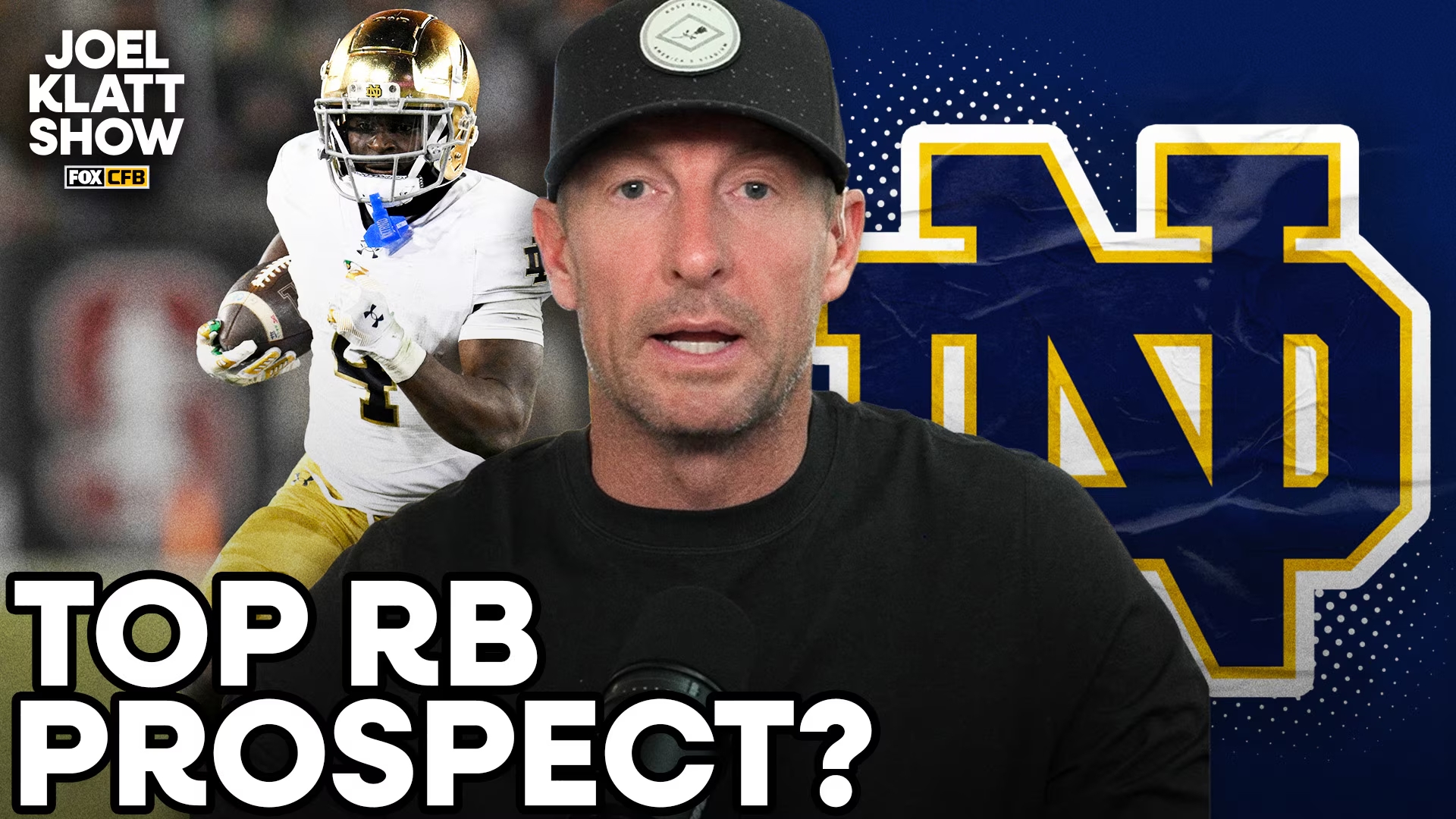
Why Jeremiyah Love’s Talent Transcends Value of RB Position: ‘Find Me the Flaws’

The running back position has become less and less valued in the NFL Draft in recent years. However, FOX Sports lead college football analyst Joel Klatt and NFL Draft analyst Todd McShay don’t want the value of the running back position to skew how good Notre Dame’s Jeremiyah Love is. In the most recent episode of “The Joel Klatt Show,” McShay shared that Love is the first running back he’s ever had ranked No. 1 in his big board in his 26 years covering the draft. On top of that, teams in the NFL also have Love ranked as high or nearly as high on their draft big boards, according to McShay. “I’ve never had a running back No. 1 overall, and this year, it’s going to be the exception,” McShay said. “We’ve seen Saquon Barkley, Leonard Fournette and Christian McCaffrey that one year. We’ve had Ashton Jeanty. Forget my rankings, talking to NFL teams, the lowest I’ve heard they have him is three on their board. So, he’s one of the best three, if not the best player in this draft.” Klatt also has Love ranked pretty high on his big board, placing him as the second-best player in the 2026 NFL Draft in his recently revealed top 50 draft prospects ranking. Klatt previously said that he holds Love in high regard due to the number of things he does at an elite level, such as his ability to hit a home run when he runs between the tackles and on the outside. But even in a draft class that’s perceived to be weaker than other ones in recent memory, there’s still some debate over whether Love should be one of the first few players drafted. Klatt, though, thinks that Love’s all-around talent should make him a top-five selection. “When you’ve got a guy that is not just a running back, and to me, he reminds me of or could potentially become McCaffrey —  maybe not McCaffrey, he’s probably like a top-six wide receiver in the league — but certainly a guy who can be a threat out of the backfield, like Jahmyr Gibbs and so on,” Klatt said. “Those are the guys where you think, OK, I’m not just paying him to be a running back. He’s really contributing. I think he could catch 40 passes in a season, and would be just fine. Then, maybe the economics [of drafting a running back with a top-five pick] work out in a particular way up at the top.” Love showcased high-end ability as both a runner and a receiver at Notre Dame this past season. He rushed for 1,372 yards on 6.9 yards per carry and 18 touchdowns in 12 games, ranking in the top 10 in the nation in all of those stats. He also had 27 receptions for 280 yards and three touchdowns. That would’ve put Love on pace for roughly 38 receptions, 400 receiving yards and four receiving touchdowns over the course of a 17-game season. Klatt had Love going to the Tennessee Titans with the No. 4 overall pick in his most recent mock draft, believing he’ll be a strong fit with second-year quarterback Cam Ward. McShay also thinks Love would be a strong choice for Tennessee, saying, “Wouldn’t you love to see that?” But he also wonders if he still might fall come the day of the draft. “What do you want from a running back in order to value him there? Obviously, the running skills, but it’s the instincts, the ability to stop and start, the contact balance, having a sense of the cutback lanes and almost like a sixth sense with the vision,” McShay said. “But I think it’s why we’re all looking and saying maybe he falls to seven and Washington because he is a running back and the economics of it.” Still, McShay is a strong believer that Love should be one of the first few players taken in the 2026 draft. “Find me the flaws,” McShay said. “You always worry about running backs and the durability, kind of managing that load, and that will be for the NFL team that drafts him to kind of figure out what’s best for him. But I just think he is everything that you look for.”​Latest Sports News from FOX Sports

Categories
Entertainment

Mike Vrabel: Married New England Patriots Coach Spotted Holding Hands With NFL Reporter …

Reading Time: 3 minutes

It’s been a tough 2026 for Mike Vrabel.

First, the New England Patriots head coach lost the Super Bowl to the Seattle Seahawks

And now, he’s at the center of a messy scandal involving the New York Times‘ NFL reporter Dianna Russini.

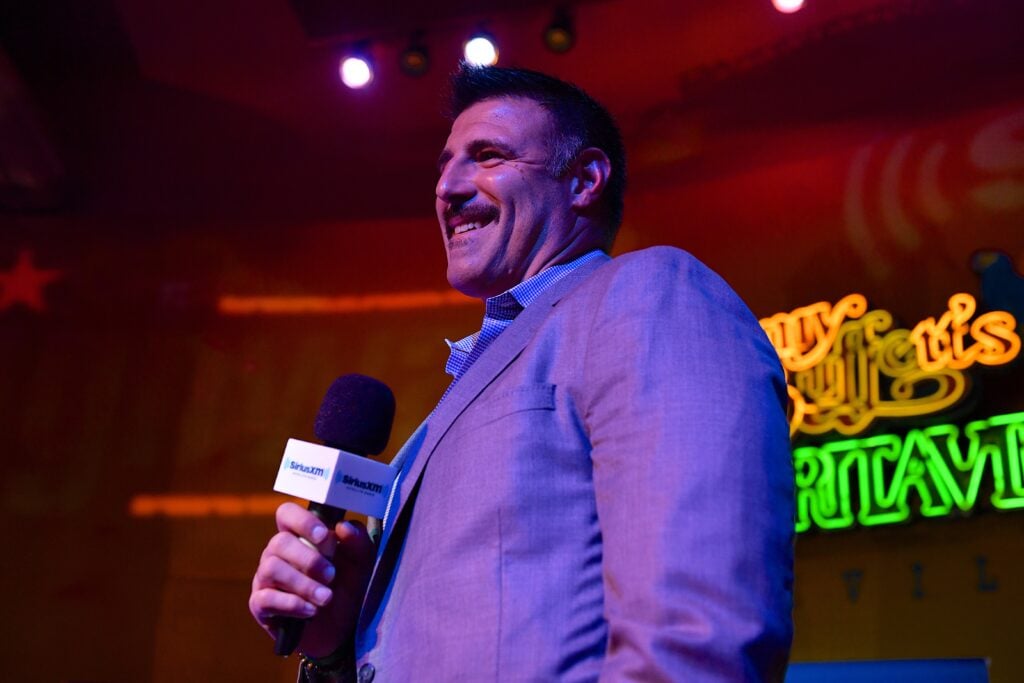
Tennessee Titan's Head Coach Mile Vrabel speaks on stage to the crowd during SiriusXM Hosts Draft Week Party At Margaritaville Featuring The Highway's "Music Row Happy Hour" And SiriusXM NFL Radio's "Movin' The Chains" on April 24, 2019 in Nashville, Tennessee.
Tennessee Titan’s Head Coach Mile Vrabel speaks on stage to the crowd during SiriusXM Hosts Draft Week Party At Margaritaville Featuring The Highway’s “Music Row Happy Hour” And SiriusXM NFL Radio’s “Movin’ The Chains” on April 24, 2019 in Nashville, Tennessee. (Photo by Jason Davis/Getty Images for SiriusXM)

In photos obtained by Page Six, Vrabel and Russini can be seen looking mighty friendly with one another at a resort in Arizona.

They were both in town for league meetings that took place at the end of March.

The only problem is that both parties are married to other people.

According to Page Six, Mike and Dianna had brunch together at their resort, before “spending a leisurely hour or so together at the pool and lounging side-by-side in a hot tub.”

The outlet further alleges that Mike and Dianna were spotted “holding hands and hugging” during their day together.

Dianna has been married to Shake Shack exec Kevin Goldschmidt in 2020, while Mike tied the knot with wife Jennifer Vrabel, the mother of his two children, in 1999.

ESPN commentator Dianna Russini at BODY at ESPYS at Avalon on July 11, 2017 in Hollywood, California.
ESPN commentator Dianna Russini at BODY at ESPYS at Avalon on July 11, 2017 in Hollywood, California. (Photo by John Sciulli/Getty Images for ESPN)

In statements to the New York Post, both Vrabel and Russini denied any wrongdoing.

“The photos don’t represent the group of six people who were hanging out during the day. Like most journalists in the NFL, reporters interact with sources away from stadiums and other venues,” Russini told the outlet.

“These photos show a completely innocent interaction and any suggestion otherwise is laughable,” Vrabel told the New York Post on Tuesday, April 7. “This doesn’t deserve any further response.”

Russini’s employer, The Athletic, also sounded off on the matter.

“These photos are misleading and lack essential context,” said executive editor Steven Ginsberg. “These were public interactions in front of many people. Dianna is a premier journalist covering the NFL and we’re proud to have her at The Athletic.”

Russini’s name is familiar to NFL fans due to her many years in the

She joined SportsCenter in 2015 and has appeared on ESPN’s popular NFL Countdown and NFL Live shows.

In more recent years, Russini switched over to print coverage in podcasts.

In 2023, she joined The Athletic, which was later acquired by the Times and she hosts the outlet’s “Scoop City: Inside the NFL” podcast.

Vrabel, of course, is a former linebacker who now serves as head coach for the New England Patriots.

He led the team to an AFC Championship in his first year on the job. But this situation could spell trouble for his career.

As many on social media have pointed out, another iconic Boston sports franchise, the NBA’s Celtics, fired coach Ime Udoka for an inappropriate relationship with a female staff member.

Even if the affair speculation turns out to be accurate — and again, both parties say it’s not — Vrabel might be spared by the fact that Russini is not an employee of the Celtics.

We will have further updates on this developing story as new information becomes available.

Mike Vrabel: Married New England Patriots Coach Spotted Holding Hands With NFL Reporter … was originally published on The Hollywood Gossip.

​The Hollywood Gossip

Categories
Music

Ella Langley Reveals Gnarly Details of Childhood Surgeries

Ella Langley required several corrective surgeries as a kid but until now she’s not talked about it. Continue reading…​The Boot – Country Music News, Music Videos and Songs

Categories
Music

Ella Langley Reveals Gnarly Details of Childhood Surgeries

Ella Langley required several corrective surgeries as a kid but until now she’s not talked about it. Continue reading…​Country Music News – Taste of Country

Categories
Alaska News

Roe seized from factory trawler accused of fishing violations in Alaska’s Bering Sea

Boxes of allegedly unreported pollock roe harvested by the catcher-processor vessel Northern Edge are stacked together. The crew of the U.S. Coast Guard Cutter Waesche seized approximately 5.4 metric tons of allegedly unreported pollock roe from the catcher-processor vessel. The Coast Guard crew boarded the Northern Eagle on March 26, 2026, about 17 miles north of Dutch Harbor and stayed with vessel as it sailed to that Aleutian Island port. In all, 11,524 boxes of pollock roe were offloaded, which was 241 boxes more than what had been declared in the vessel's production report, according to the Coast Guard. (Photo provided by the U.S. Coast Guard)

Boxes of allegedly unreported pollock roe harvested by the catcher-processor vessel Northern Edge are stacked together. The crew of the U.S. Coast Guard Cutter Waesche seized approximately 5.4 metric tons of allegedly unreported pollock roe from the catcher-processor vessel. The Coast Guard crew boarded the Northern Eagle on March 26, 2026, about 17 miles north of Dutch Harbor and stayed with vessel as it sailed to that Aleutian Island port. In all, 11,524 boxes of pollock roe were offloaded, which was 241 boxes more than what had been declared in the vessel’s production report, according to the Coast Guard. (Photo provided by the U.S. Coast Guard)

The U.S. Coast Guard said it has seized 5.4 metric tons of allegedly unreported pollock roe and discovered several significant fishing violations aboard one of the biggest factory trawlers operating in the Bering Sea off Alaska.

The enforcement action, announced by the Coast Guard on Monday, is against the Northern Eagle, a catcher-processor owned and operated by Seattle-based American Seafoods. The company disputes the allegation.

A team from the cutter Waesche boarded the Northern Eagle on March 26 when the trawler was about 15 nautical miles north of Dutch Harbor, the Coast Guard said in a statement. The action followed an alert from the National Oceanic and Atmospheric Administration Fisheries Office of Law Enforcement about discrepancies between the vessel’s production reports and electronic logbook. 

“The integrity of fisheries data is paramount for the sustainability of our nation’s living marine resources,” Captain Tyson Scofield, commanding officer of the Waesche, said in the Coast Guard statement. “This seizure highlights the Coast Guard’s commitment to enforcing federal law with our partner agencies to ensure a level playing field for all fishermen who follow the rules.”

Pollock roe is considered a delicacy in some Asian nations; Japan and Korea are the main markets for it.

The unreported roe aboard the Northern Eagle was worth $65,000, the Coast Guard said. 

The Coast Guard team remained with the Northern Eagle as it sailed to Dutch Harbor, and the team observed and documented the crew offloading 11,524 boxes of pollock roe, the statement said. That was 241 more boxes than what had been declared in the Northern Eagle’s log.

The catcher-processor vessel Northern Eagle, owned by Seattle-based American Seafoods, is seen by the Coast Guard approximately 17 miles north of Dutch Harbor. The Coast Guard said a crew from the cutter Waesche boarded the ship on March 26, 2026, and seized approximately 5.4 metric tons of allegedly unreported pollock roe. (Photo provided by the U.S. Coast Guard)

The investigation also uncovered evidence indicating that the Northern Eagle crew, in a previous voyage, had underreported about 12.4 metric tons of pollock roe worth an estimated $150,000, the Coast Guard said.

American Seafoods on Tuesday disputed the Coast Guard’s characterization of events and issued a statement “to correct the public record, address inaccurate narratives, and clarify the nature of this regulatory inquiry.”

The company said the issue is a simple paperwork discrepancy arising from different methodologies rather than deliberate misreporting. The discrepancy was the result of minor and routine differences between estimated daily numbers and final reconciled numbers, the company said in the statement.

“We strongly reject any narrative that portrays a discrepancy in daily estimated production as an intentional breach of conservation measures that protect our fishery,” Inge Andreassen, American Seafoods’ president, said in the statement. “There is no economic motive to report anything other than exactly what we produce.” 

American Seafoods is one of the major harvesters of Bering Sea pollock. The company has a fleet of seven vessels, five of which are engaged in the pollock fishery. The Northern Eagle, at 341 feet and with space for 143 crew members, is American Seafoods’ longest vessel, according to the company’s website.

Roe is collected from Bering Sea pollock in the early part of the year. The annual Bering Sea pollock harvest is divided into two parts. A winter-spring “A Season” is conducted in the first half the year, usually from January to April, and targets fish when they are spawning and the females are carrying eggs. A subsequent “B Season” starts in June and runs through the fall, usually resulting in a total harvest of higher quantity but focused more on fish fillets and products that are made from them.

SUBSCRIBE: GET THE MORNING HEADLINES DELIVERED TO YOUR INBOX

Categories
Music

Ella Langley Shared Three New Songs From Her ‘Dandelion’ Album

Ella peeled back a few more layers of her upcoming project. Continue reading…​The Boot – Country Music News, Music Videos and Songs

Categories
Music

Ella Langley Shared Three New Songs From Her ‘Dandelion’ Album

Ella peeled back a few more layers of her upcoming project. Continue reading…​Country Music News – Taste of Country