They have a history of confrontation over money. Continue reading…The Boot – Country Music News, Music Videos and Songs








They have a history of confrontation over money. Continue reading…The Boot – Country Music News, Music Videos and Songs
They have a history of confrontation over money. Continue reading…Country Music News – Taste of Country
Reading Time: 3 minutes
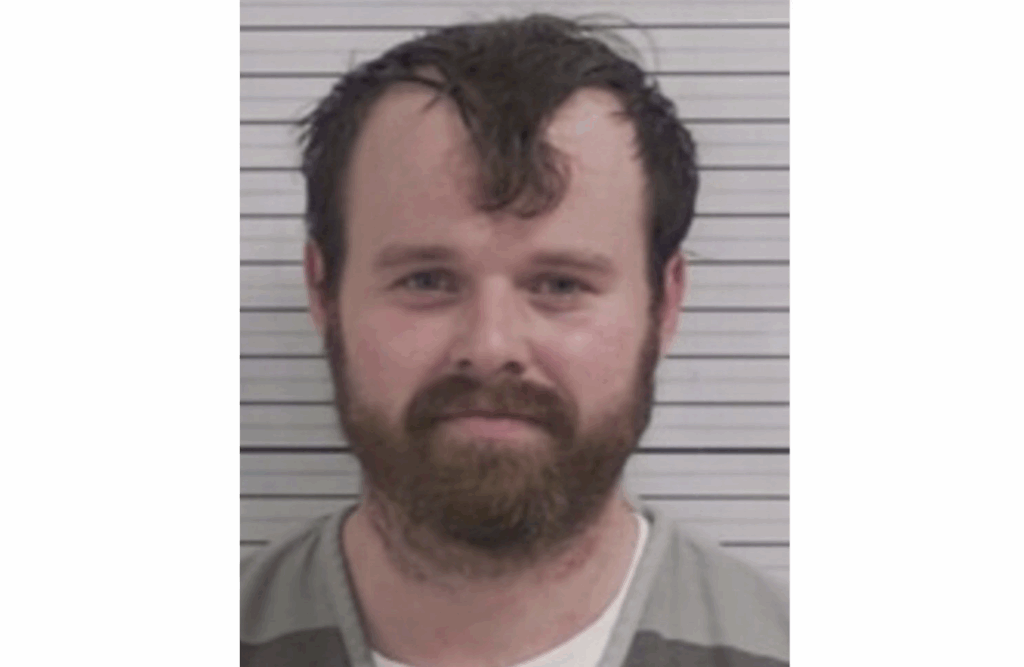
After spending more than a week behind bars in his native Arkansas, Joseph Duggar was extradited to Florida on Tuesday.
At his arraignment that same day, Joseph pleaded not guilty to child molestation charges.
In a move that shocked many observers, he was then permitted to post bond and exit police custody.
Joseph appeared in court wearing a striped prison uniform.
He was represented by Albert Sauline III, a criminal defense attorney out of Panama City Beach, Florida (via The Ashley’s Reality Roundup).
Sauline asked the judge for “the most reasonable bond” for Joseph, noting that the former reality star has “no prior criminal history, whatsoever, not even a speeding ticket.”
He also shared a message from Joseph, telling the court that the father of four requests to be “treated as anyone else would, regardless of his status in the television industry.”

The prosecution acknowledged Joe’s lack of a criminal history but noted that no ties to the community,” it would be easy for him to “leave quickly
Eventually, the state prosecutor agreed to let Joseph post a “substantial monetary bond.”
The judge set bond at $600,000: $100,000 for the Lewd and Lascivious Conduct charge and $500,000 for the Lewd and Lascivious Molestation charge.
Joe was also barred from having any contact with the alleged victim, directly, through any third parties, or through social media.
He is also not permitted to have unsupervised contact with any minors under the age of 18.
While that provision makes perfect sense, it’s somewhat surprising in that Joseph is a father of four young children.
According to The Ashley, he and Jim Bob were spotted at the Panama City airport just a few hours after his arraignment.
It seems he was permitted to return to Arkansas, provided he’s back in Florida for his next court appearance on April 20.

We would assume that Joseph would be living with his parents, but his youngest sister, Josie Duggar, is only 16, so that’s not an option.
Of course, the Duggars are massively wealthy, so in addition to posting Joseph’s “substantial” bail, Jim Bob is probably hooking him up with the keys to one of the family’s many properties.
Joseph stands accused of molesting a 9-year-old girl during a vacation to Florida in 2020.
He and wife Kendra Duggar are also facing child endangerment charges after a police search of their home revealed that their kids’ bedroom doors had locks on the outside, suggesting they were in the habit of locking their children in.
Kendra was allowed to make bail after just a few hours in police custody. She’s facing nine years in prison, while Joseph could be sentenced to as many as 34 years behind bars.
We will have further updates on this developing story as new information becomes available.
Joseph Duggar Released From Jail After Pleading Not Guilty on Molestation Charges was originally published on The Hollywood Gossip.
The Hollywood Gossip
In May 2025, the U.S. Department of Justice began sending letters to state governments demanding copies of statewide voter registration lists. The request was unprecedented: It demanded not only publicly available voter data, such as names and addresses, but also sensitive information, including driver’s license and Social Security numbers.
That data is considered highly sensitive because it can be used to commit identity theft, access financial or government records, and facilitate targeted harassment or intimidation, particularly if the data were mishandled or leaked.
Underlying these requests is the Trump administration’s stated goal of rooting out fraudulent and illegal voting. With voter data in its hands, the DOJ seeks to identify ineligible voters and mandate state election officials to remove those voters from the rolls.
States have responded in a variety of ways. Some have fully complied with the requests, some partially complied, and many outright refused to provide any voter information. For the latter states, the Trump administration has taken the fight to court and sued to get the information, claiming that federal law requires the states to hand it over.
The majority of cases are still going through the courts.
I’m an election law scholar who focuses on election administration. This battle over voter data has raised numerous questions about the Trump administration’s motives, the legality of its actions and, more generally, the role of the federal government in election administration.
The DOJ has a tough road ahead in convincing election officials and judges across the country that all of its demands in these cases are constitutionally legitimate.
States have exclusive authority to govern and administer state and local elections. The federal government, on the other hand, historically has played a much more limited role in election regulation and administration. By constitutional design, Congress may regulate only the “time, place, and manner” of federal elections – in other words, the procedural elements of elections for federal offices.
And even then, states hold concurrent authority to regulate federal elections.
Nevertheless, in his second administration President Donald Trump has sought to expand the federal government’s control over elections. In February 2026 he called on Congress to “nationalize” elections. He has also made an administration priority the passage of the SAVE America Act, a bill that would mandate states to turn away any voter without documentary proof of U.S. citizenship.
Trump’s initiatives apparently stem from conspiratorial allegations that the 2020 presidential election was rigged against him, resulting in fraudulent and illegal voting that gave Joe Biden the presidency. And they are ultimately what animates the DOJ’s crusade for voter information from the states, with Attorney General Pam Bondi having recently stated that “accurate, well-maintained voter rolls are a requisite for the election integrity that the American people deserve.”
So far, the DOJ has sent requests to at least 48 states and the District of Columbia demanding their complete voter registration lists – information on every individual registered to vote in the given state.
In doing so, the DOJ has asked the states to sign onto an agreement under which they agree to remove within 45 days any voters that the DOJ flags as ineligible. But by signing this agreement, a state is effectively handing over the administration of its voter rolls to the federal government.
Only 12 states – Alaska, Arkansas, Indiana, Louisiana, Mississippi, Nebraska, Ohio, Oklahoma, South Dakota, Tennessee, Texas and Wyoming – have fully complied with the requests, handing over to the DOJ private information such as the driver’s license and Social Security numbers of their registered voters.
Five states, meanwhile, have provided publicly available voter information – name, address and party affiliation – to the DOJ while withholding more sensitive information. The remaining 31 states of the 48 to receive requests, along with the District of Columbia, have refused to give any voter list to the federal agency.
The DOJ has sued 29 states for refusing to hand over voter lists and has also sued the District of Columbia, sparing only Iowa, Alabama and South Carolina. Only one sued state – Oklahoma – has thus far capitulated to the DOJ.
In these lawsuits, the DOJ cites three legal sources that supposedly give the agency the right to request voter information from state officials.
First, the DOJ points to a provision of the National Voter Registration Act of 1993 that requires states to “make available for public inspection” all records necessary to ensure the accuracy of their voter registration lists. As critics note, though, this provision does not require states to reveal sensitive voter information. All 50 states are, in fact, currently in compliance with the act’s mandate.
Second, the DOJ invokes the Help America Vote Act of 2002 and its requirement that all states must maintain a computerized, statewide voter registration list. Nevertheless, no provision in that law provides explicit authority to the federal government to request these registration lists from state officials.
Finally, the DOJ has argued that the states have an obligation under the Civil Rights Act of 1960 to comply with the agency’s demands. Specifically, Title III of the act permits the U.S. attorney general to request for inspection “all records and papers” kept by state election officials relating to “any application, registration, payment of poll tax, or other act requisite to voting.”
While perhaps the strongest of the three arguments, that title of the Civil Rights Act goes on to require the attorney general to offer a “statement of the basis and the purpose” of their request.
In the DOJ’s requests to states, Bondi has apparently provided zero justification as to why the states must hand over sensitive voter information to the DOJ. Indeed, any stated purposes appear unrelated to the Civil Rights Act’s aims of combating racial discrimination.

There are further legal questions regarding whether the states could even comply with the DOJ’s proposed 45-day deadline for removing declared ineligible voters.
For example, the National Voter Registration Act forbids states from removing people from the voter rolls in certain instances without first providing notice and waiting two federal election cycles – a timeline well beyond 45 days.
In the 29 targeted states, federal courts have thus far dismissed four lawsuits in California, Georgia, Michigan and Oregon. Oklahoma, as noted above, has settled its case with the DOJ. While the remaining lawsuits have yet to fully play out, the DOJ likely faces less-than-sympathetic judges in these cases.
Even if the DOJ loses in court, though, the federal government may continue attempting to receive states’ voter information through other means.
The SAVE America Act, for instance, currently under consideration in the U.S. Senate, contains a provision that incentivizes states to submit their voter registration lists to the U.S. Department of Homeland Security on a quarterly basis or otherwise subject their residents to stringent voter ID laws. Should Congress pass the act, the executive branch would have much clearer federal authority to force voter data from state election officials.

John J. Martin does not work for, consult, own shares in or receive funding from any company or organization that would benefit from this article, and has disclosed no relevant affiliations beyond their academic appointment.
Politics + Society – The Conversation
President Donald Trump appeared on former Deputy FBI Director Dan Bongino’s podcast in February 2026, where he stated: “The Republicans should say, ‘We want to take over, we should take over the voting.’ The Republicans ought to nationalize the voting.”
Trump’s call to nationalize elections, to transfer the constitutionally mandated control of elections from local to federal authorities, drew bipartisan opposition and added to Democratic fears that the president may attempt to interfere with upcoming midterm elections.
Despite Trump’s call to “nationalize the voting,” the U.S. Constitution clearly notes that states run elections – not the federal government.
The federal government, however, has a role to play in national elections – as an observer. Federal observation ensures that Americans cast their votes on election day without reprisal.
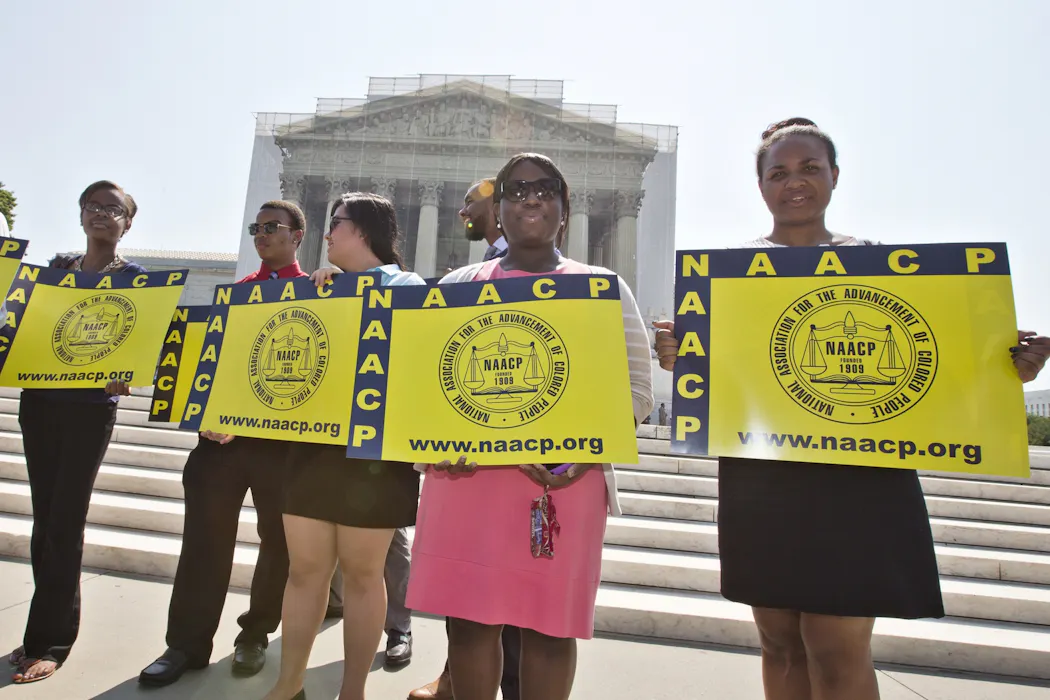
Initially dispatched to deter voter discrimination against Black Americans after passage of the Voting Rights Act of 1965, election observers ensured that those qualified to vote could do so without trouble.
But with its 2013 ruling in the Shelby County v. Holder case, the U.S. Supreme Court changed the federal government’s relationship to the election process. The ruling significantly weakened the federal govenment’s ability to send federal observers to the polls.
As a scholar of civil rights and voting rights, I know that federal oversight during elections has always been a valued part of the electoral process, even when subject to criticism.
Yet, this current moment, with the Trump administration’s efforts to cast doubt on the legitimacy of the 2026 midterms, feels different. What I have noticed recently is how the public’s thinking has shifted about the federal oversight of elections. Where once it was largely welcomed as an ensurer of fairness and proper procedures, now it is seen as a misuse of authority.
The key contribution of the Voting Rights Act that Americans are typically taught about in school is its abolition of racial discrimination in voting. The measure put a stop to poll taxes and literacy tests, which had disproportionately reduced Black voter registration.
But the act also created the type of federal observation of elections that is most familiar to Americans today.
The measure allows the Department of Justice to deploy federal observers to polling stations. That deployment can happen through a court order or by requirement to places with documented histories of voter suppression. The latter was determined by a section of the Voting Rights Act that also details the guidelines for which places merit that designation.

Federal observers take notes, often beside poll monitors, and document potential unlawful practices by poll workers.
Unlike monitors, federal observers are stationed inside polling stations. They keep notes on the tallying of votes and verify those thrown out. And where the Justice Department requires the permission from respective districts to send monitors, federal observers are sent by the U.S. attorney general and do not require the same permission.
Historically, observers were also charged with registering voters at polling stations and local registrars’ offices with the specific goal of assisting disenfranchised minorities.
Determined to maintain Jim Crow laws that enforced racial segregation, several Southern Democrats opposed the Voting Rights Act.
Some Americans also criticized the act as government overreach. And they castigated the U.S. attorney general in 1965 when he dispatched federal registrars to the South following the passing of the measure, and when he sent federal observers to the South for the 1966 congressional elections.
Despite this opposition to federal observers, and just months after the Voting Rights Act’s passage, the U.S. Commission on Civil Rights wrote that federal observers received “praise from registration workers and the (voter registration) applicants.”
Within a few years of the act, roughly 1 million Black Southerners had registered to vote. Over time, federal election observers began to focus less on registering voters, practically phasing out this practice by the 1980s, and serving only as observers.
Over the decades, conservative politicians, as they gained more seats in Congress and state legislatures, developed new strategies – they filed lawsuits, rearranged voting districts – to circumvent what they argued was federal overreach in the election process. These changes helped them gain political influence and promoted their philosophy of states’ rights. They were successful.
The increase in conservative political influence gave way to an increasingly conservative Supreme Court. This was reflected in the U.S. Supreme Court’s 5-4 ruling in Shelby County v. Holder.
In that ruling, the court struck down the section in the Voting Rights Act outlining the guidelines for deciding whether a county or state needed federal oversight. With no guidelines to follow, the federal government removed most of its oversight.
After the court’s ruling, several states – Texas, Alabama and Mississippi, for example – made rapid changes to the voting process. Those included new voter ID laws, the purging of voter registration rolls and gerrymandering. These changes have resulted in further voter disenfranchisement, disproportionately effecting Black and Hispanic voters.
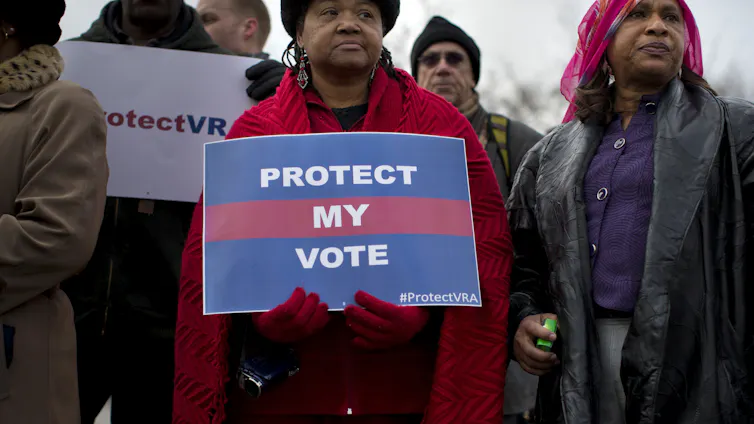
The Voting Rights Act guidelines had also helped determine where to send federal observers. With this section revoked, the federal government’s ability to send federal observers, in the way it had done for roughly 50 years, also disappeared.
The Justice Department sent federal observers to five states during the 2016 presidential election, compared to 23 states during the 2012 presidential election.
Since Shelby, disagreements over federal oversight persist and the role of federal observers has changed.
In 2024, the Justice Department announced it planned to send out 86 monitors on Election Day, the most federal monitors in two decades, due to concerns of possible partisan interference in elections. Some Republican-led states threatened to ban them from the polls.
To send out federal observers, the Justice Department needs a court order. But during the 2024 elections, courts determined that only four states needed federal observer oversight.
During the Civil Rights Movement, federal election observers were the strongest line of defense to ensure fair voting.
Recently, however, the federal government’s election focus – such as attempting to require voters to provide documentary proof of U.S. citizenship when registering to vote – has shifted to what it says is voter fraud and accusations of cheating.
Still, one thing has remained certain. Federal observers are important. Their history, even now as they are less prevalent, can inform how we discuss the federal government’s role in elections.

Allison Mashell Mitchell does not work for, consult, own shares in or receive funding from any company or organization that would benefit from this article, and has disclosed no relevant affiliations beyond their academic appointment.
Politics + Society – The Conversation
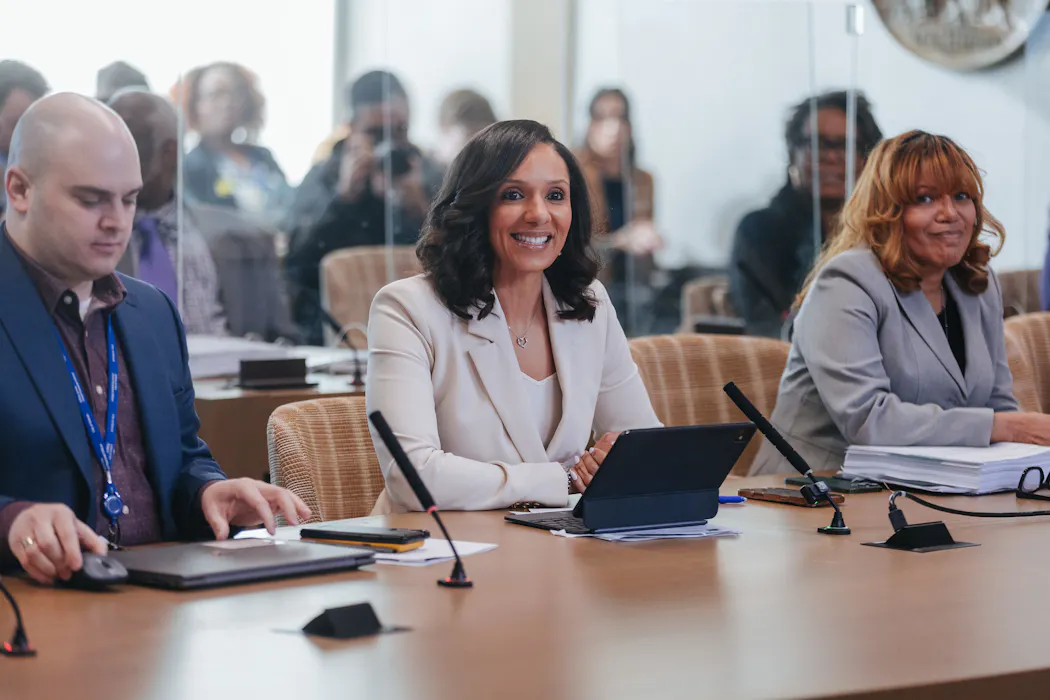
Detroit Mayor Mary Sheffield delivered her first State of the City address on March 31, 2026, at Mumford High School on the city’s northwest side.
In the speech, Sheffield touted the accomplishments of her administration’s first 90 days, which included bringing the cash assistance program RxKids to Detroit. Sheffield also announced a new initiative called Ride to Rise, which offers free bus service to the city’s K-12 students year-round.
Sheffield stressed mandates to tackle poverty, support youth development and seniors, build more single-family homes, increase homeownership and make the city a welcoming place for small businesses to grow and thrive.
That commitment to improving the lives of Detroiters, according to Sheffield, is reflected in the $US3 billion budget she introduced on March 9, 2026.
“This budget is a statement of our priorities and our values,” Sheffield said during the address.
One thing that’s missing from her budget proposal is any mention of participatory budgeting – something that Sheffield often championed during her 12 years serving on the City Council.
On the campaign trail, Sheffied said that participatory budgeting allows “residents to feel empowered and have a direct say in how their tax dollars are spent.”
I’m a professor of political science and author of a recent book called “Budget Justice” about grassroots politics. I think Sheffield had it right on the campaign trail – communities around the country want to democratize the budget process so that local governments better address their needs and increase transparency and accountability.
I gained this perspective by serving on New York City Mayor Zohran Mamdani’s transition team on community organizing, mass governance and participatory budgeting.
Participatory budgeting is a democratic experiment that gives constituents, rather than elected officials, power to decide how to allocate a portion of public funds. Although Detroit often holds community engagement forums and open calls for grant funding, participatory budgeting differs because it puts the power of the purse into the people’s hands.
I first encountered participatory budgeting in 2011. Leaders from the grassroots organization Community Voices Heard and others helped to bring it to New York City during the Occupy Wall Street protests. Protesters who were part of that movement questioned why banks received governmental bailouts while households struggling with predatory student debt did not. I joined the rulemaking steering committee for New York’s new participatory budgeting process and stayed involved for the next decade.
New York’s process consists of four stages each year. In the fall, residents learn about the process through public service announcements, local media, door-knocking outreach or word of mouth. They then attend neighborhood assemblies where they pitch thousands of proposals for community projects. Frequently, a simple question gets them started: “How would you spend $1 million of the city’s budget?”
Meeting face to face matters. I’ve observed dozens of these assemblies, and people are much less likely to troll others in person than they are online, when they are anonymous and fueled by keyboard courage.
Over each winter, some residents volunteer to research and curate the proposals that will end up on the ballot. They also work with city agencies to develop ideas into full-fledged proposals. In New York, these projects have ranged from curb extensions at intersections identified as dangerous by local residents to summer arts camps and conflict resolution training programs.
Each spring, residents vote for the proposals that they want implemented.
Each summer, winning projects get funded.
In New York City, voting week for 2026 participatory budgeting proposals is April 11-19.
In the fiscal year 2026 budget cycle, New Yorkers allocated $30 million in public funds as part of the city’s $116 billion budget.
The nonprofit Community Development Project reported that 68% of the 17,000 people who voted on participatory budget proposals at the time of the survey had never worked together on a community issue before. Roughly 1 in 4 stated that they were not eligible to vote in regular elections, primarily because of being under age 18 or holding an undocumented immigration status.
For many, participatory budgeting helped them to understand their communities in new ways. As one participant put it, “I was able to see the needs (of) the community in a way I’ve never seen before. … I didn’t know how bad of an asthma cluster there was in public housing. I don’t have kids, so I don’t know about needs at school. I don’t have any relatives who live in senior housing, so I didn’t know about the issues they faced.”
Participatory budgeting also produced ripple effects. Participants were 8.4% more likely to vote than those who had not participated in the process. The effects are even greater for those who have lower probabilities of voting, such as low-income and Black voters.
In Detroit, only 22% of voters took part in the most recent municipal election. Participatory budgeting could be a tool for increasing turnout.

In my experience, participants need to feel they are doing meaningful work.
Research shows that participatory budgeting works best when communities allocate significant pots of money through the process, when residents are trained and encouraged to stay engaged beyond the process, and when combined with efforts to change practices in other parts of government, too.
In Boston, the Better Budget Alliance works to make sure projects that didn’t get funded through the city’s participatory budgeting process still get included in community demands for the larger city operating budget, and vice versa.
In New York, the Mamdani administration has just announced a new Office of Mass Engagement that aims to deepen the levels of transparency, listening and follow-through in the city.
In other words, experiments such as participatory budgeting can serve as an entry point to transformational change.
That change may look like the ambitious and growing national people’s budgets movement, which brings together local residents and community groups to protest budget cuts on essential services, articulate budget priorities and democratize the budget process. Unlike participatory budgeting, the movement’s campaigns often ask questions regarding divestments – for example, from jail expansions – as well as investments. It also concerns itself with taxes and the revenue side of the budget, and how budgetary powers should be shared by the mayor, city council, agencies and residents.
In Brazil, where participatory budgeting first began, the process was seen as an investment in working-class residents. Brazilian cities that implemented the process collected 16% more in taxes than cities that did not implement the process. Cities with participatory budgeting were seen as more legitimate, making their residents more willing to support additional taxes. These cities also boasted of higher tax collection and compliance rates.
Participatory budgeting also helped residents to harness the popular pressure and political will to reject development projects – such as luxury hotels – that they felt reflected business interests more than public needs. Because citizens expressed interest in providing funds for prenatal health, prominent political scientists even credit participatory budgeting with lowering infant mortality.
In American cities such as New York and Detroit, participatory budgeting processes could in time take on more challenging issues, such as universal day care or social housing.
Opaque budgets and an austerity mindset lead to distrust in government, perpetuating anti-tax sentiments.
This undermines the capacity of government to get things done. Robust participatory budgeting can help residents press for what they value most and serve as a tool to help cities such as Detroit thrive.

Celina Su served on New York Mayor Zohran Mamdani’s transition team subcommittee on community organizing. She also served on the New York city-wide steering committee for participatory budgeting and advised the process for its first decade, from 2011 to 2021.
Politics + Society – The Conversation
Reading Time: 4 minutes
She didn’t have sex until she was in her 30s … after she was a household name.
From time to time, Lizzo has confessed things that fans simply didn’t want to know.
This admission, however, might help people overcome shame.
Lizzo explains that there were multiple factors behind her “late bloomer” status — including a promise that she made, early in her career.
On the Tuesday, March 31 episode of the Friends Keep Secrets podcast, Lizzo had a confession to make.
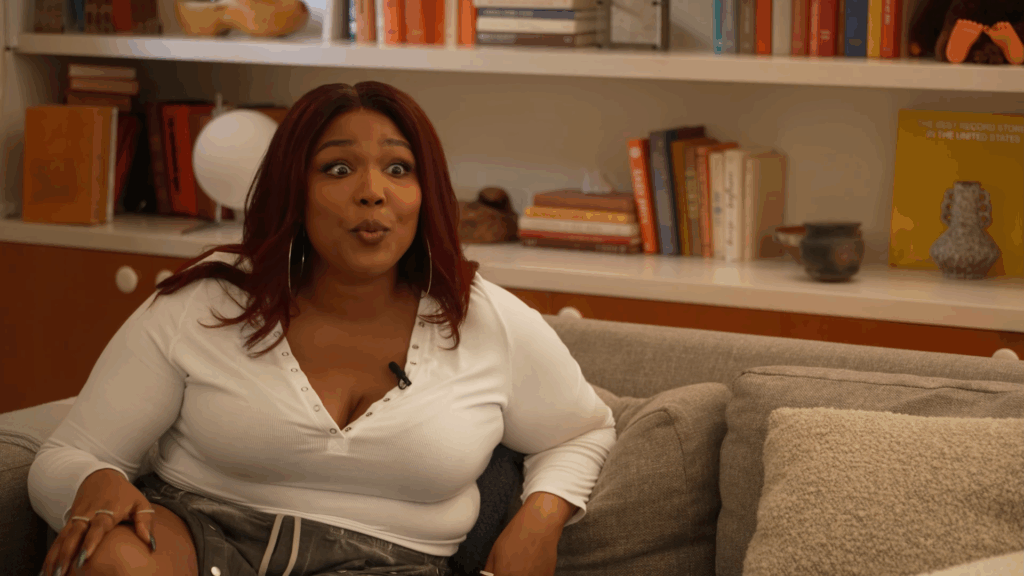
Speaking to hosts Benny Blanco, Lil Dicky, and Kristin Batalucco, the 37-year-old singer admitted that she first had sex in her 30s — waiting until after she won her first Grammy Award.
“I was a late bloomer,” Lizzo admitted. “I lied about it for a long time.”
The hosts tried to guess when the music superstar first swiped her V-card.
Lizzo ended the speculation, sharing that it happened in 2020 — by which point she was already immensely famous.
“Isn’t that crazy?” Lizzo remarked in reference to herself.
“I wasn’t even thinking about it,” she then admitted.
Lizzo revealed: “I promised myself when I was younger that I wouldn’t have sex until I won a Grammy.”
The room erupted in laughter, Lil Dicky asked if Lizzo would have caved if she’d never won the prestigious award.
Lizzo clarified that she didn’t have someone waiting in the wings in case she won that night, clarifying: “It was not the night of the Grammys.” But it was soon after.
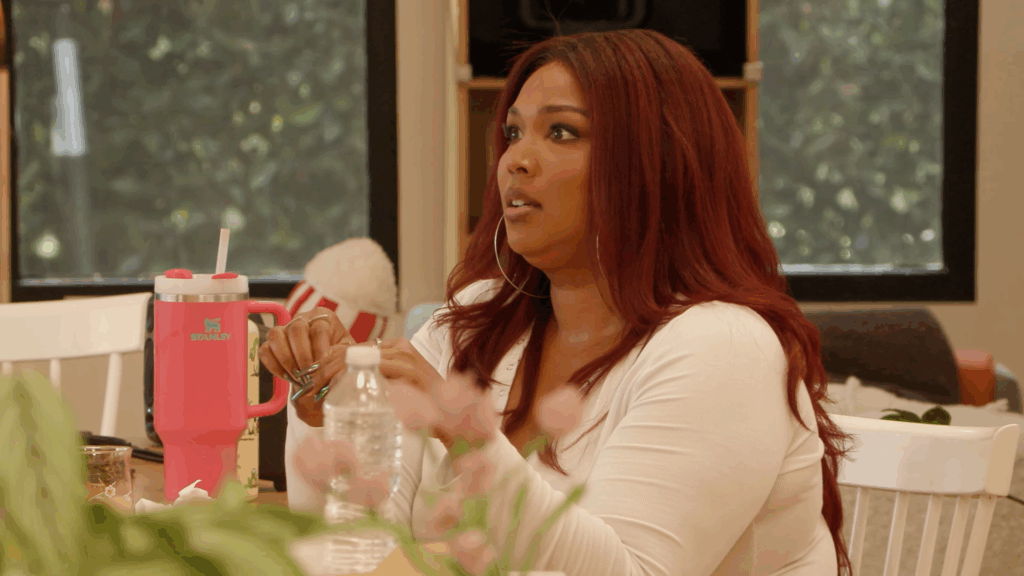
Lizzo admitted to having cringe memories of being evasive and outright lying in college, when she attended the University of Houston.
“I feel a weight off of my chest right now,” she expressed. “It was so embarrassing.”
Lizzo recalled: “I was in a friend group of girls. We were all girling one night and it was like, ‘Wait, Lizzo are you a virgin?’”
Naturally, she did the only reasonable thing that she could have done under the circumstances: she lied.
“And I remember being like, ‘No!’” she shared. “I was remember it was so embarrassing. I said, ‘I love the D’ … And it held me over for a little while.”

As Lizzo continued to explain, it became clear that there were elements of religious indoctrination — and perhaps trauma — behind her “late bloomer” status.
“Ya’ll have no idea. It was religious for me, too,” she admitted. “Like, when we were teenagers at my church, we all made a pact that we wouldn’t do anything before marriage.”
Lizzo added: “And then, I was just so scared. Like, nobody wanted to kiss me.”
At 21, she got her first kiss, but it was awful — and happened against her will.
“I was actually very upset about it,” Lizzo shared. “It was a New Year’s Eve thing and he forced it on me. I was really mad and I was like, ‘My first kiss is ruined.’ I was so mad.”
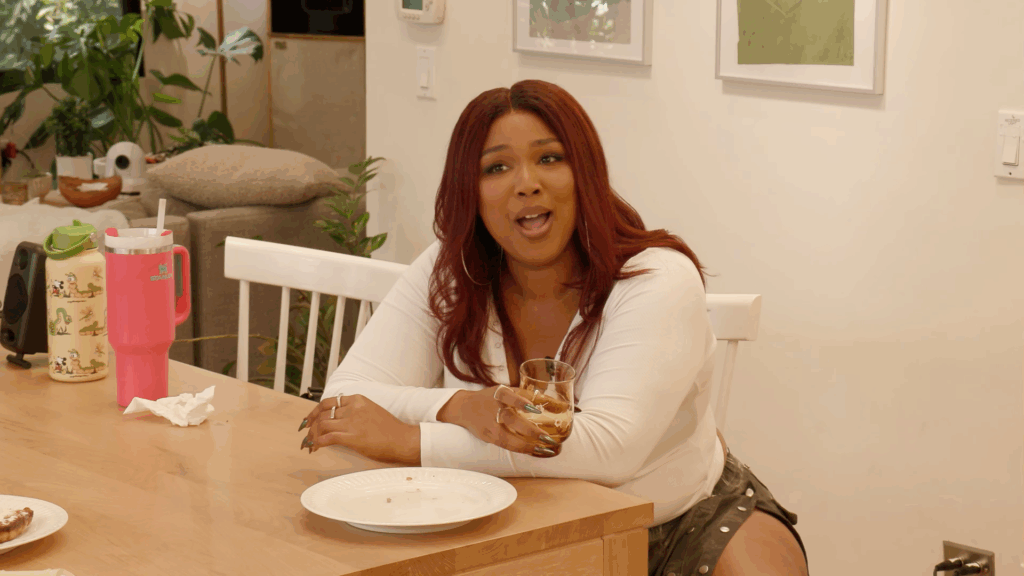
The 62nd Annual Grammy Awards ceremony took place on January 26, 2020.
As people may recall, Lizzo didn’t win just one Grammy. She won three.
For “Truth Hurts,” she won Best Pop Solo Performance. For the deluxe version of “Cuz I Love You,” she won Best Urban Contemporary Album. And for “Jerome,” she won Best Traditional R&B Performance.
Virginity is a social construct, one with varying definitions. There is no moral value to having more or less sex — only to living in an authentic way that makes you happy.
It is tragic that we live in a society where people like Lizzo felt as adolescents that their healthy desires were shameful, and that she also feared that she was undesirable. But perhaps her story can help others feel less ashamed.
Lizzo Confesses: I Was a Virgin Until I Won a Grammy! was originally published on The Hollywood Gossip.
The Hollywood Gossip
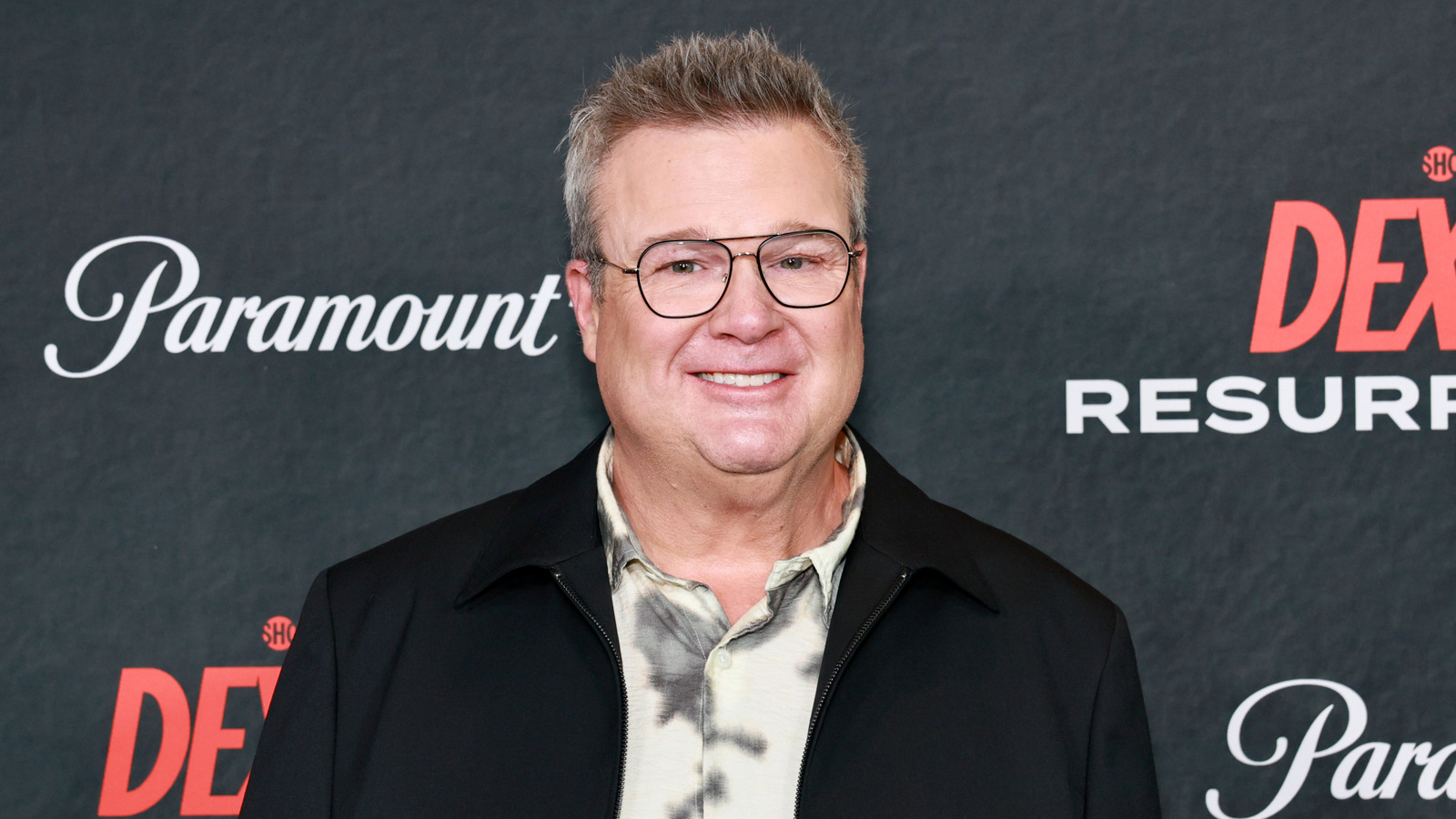
We don’t typically hear male celebrities talking about using GLP-1 medications for weight loss. But over the years, a handful have admitted that they do.
Health Digest – Health News, Wellness, Expert Insights

Imagine recording a hit song in a hotel room—Breland did just that, and the story behind it is as fun as it sounds. Continue reading…The Boot – Country Music News, Music Videos and Songs
Imagine recording a hit song in a hotel room—Breland did just that, and the story behind it is as fun as it sounds. Continue reading…Country Music News – Taste of Country