Even if you account for the shocking amount of inflation we’ve undergone, the original price of a Whopper from Burger King was incredibly low.

Food Republic – Restaurants, Reviews, Recipes, Cooking Tips









Even if you account for the shocking amount of inflation we’ve undergone, the original price of a Whopper from Burger King was incredibly low.
Food Republic – Restaurants, Reviews, Recipes, Cooking Tips

Starbucks proclaims itself as a “third place environment” where customers can relax with a beverage, but when patrons pop off, the cafe can get hostile.

Mashed – Fast Food, Celebrity Chefs, Grocery, Reviews
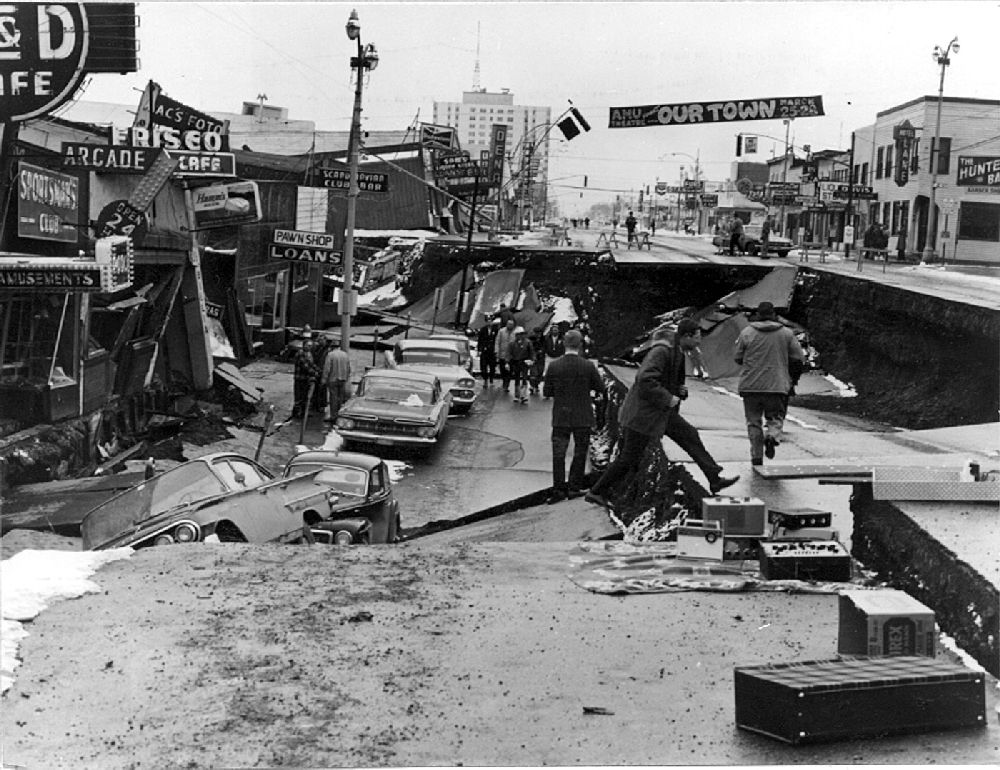
AP-Electric clocks on walls in Anchorage shut down at 5:36 p.m. on March 27, 1964. Time stopped at the start of the ’64 Great Alaska Earthquake, the second largest ever recorded at magnitude 9.2.
The ground shook for four to five minutes, roughly twice through “I Want to Hold Your Hand,” the Beatles No. 1 song that year. With the U.S. and the USSR facing off in the Cold War, some thought the Russians had attacked. The quake produced a tsunami that wreaked havoc along the West Coast. Overall damage was estimated at $2.3 billion in 2014 dollars. The quake and tsunamis killed 131 people.
Though now a distant memory, it helped make experts better prepared for future quakes. It played a role in the formation of the West Coast and Alaska Tsunami Warning Center and taught the U.S. Geological Survey what evidence to look for of previous great quakes, such as events in the Cascadia Subduction Zone off Oregon and Washington.
Geologists have a name for such strong earthquakes — megathrusts.
Plate tectonic theory says the Earth’s crust is made up of about a dozen major plates that rest on hot mantle. The thin, dense, Pacific Plate at Alaska’s southern edge moves at a shallow angle beneath the North American Plate at average rate of 2.3 inches (5.8 centimeters) per year and eventually is reabsorbed by mantle. Strain builds up until there’s a slip.
The Moment Magnitude scale rates quakes by the energy they release by calculating the area of fault rupture, the average amount of slip, and the force required to overcome the friction sticking the rocks together, according to the USGS. Every whole number higher on the scale represents 30 times the energy of the previous number.
More energy was released in the 1964 magnitude 9.2 quake than all other recorded Alaska quakes combined, said USGS research geologist Peter Haeussler. And drilling showed evidence of nine such megathrusts in south-central Alaska in 5,500 years. The average time span between them: 600 years.
The temblor caused two kinds of waves: local and trans-ocean tsunamis.
Eighty-five of the 106 Alaska tsunami deaths were caused by waves generated by underwater landslides. Rivers flowing into Alaska fjords build up huge deltas of unstable sediment on deep, underwater slopes, said USGS research geologist Rob Witter. Slides generate waves like a rock dropped in a pond.
During local tsunamis, water can at first retreat from shore in response to the underwater slide, then rush back. That’s what happened at Port Valdez. When the water swept back in, it smashed a freighter into the city dock. Longshoremen and children who had assembled to catch oranges or candy tossed down from the crew were killed. Thirty-two people died.
The great quake also rumpled the ocean floor like a rug, creating a trans-ocean tsunami. The deadly waves traveled down the West Coast. Four campers on a beach died at Newport, Ore. A dozen died in the northern California community of Crescent City.

Rayna Paul, environmental manager for the Native Village of Kipnuk, speaks on March 24, 2026, at the Alaska Tribal Conference on Environmental Management, while Amy Hendricks, Lucy Martin, Dustin Evon and Francis Sipary listen. Hendricks is with Association of Village Council Presidents’ climate adaptation and emergency management program manager; Martin and Evon work for the tribal government in Kwingillingok; and Sipary is from Toksook Bay. The five spoke at the event about ex-Typhoon Halong and how the storm affected their communities. (Photo by Yereth Rosen/Alaska Beacon)
Residents of the two Western Alaska communities hardest hit by the remnants of Typhoon Halong have reached a consensus about their futures: they want to move their villages entirely.
In the Yup’ik village of Kipnuk, where almost all of the approximately 700 residents were airlifted after storm waters swallowed their community last October, tribal members have voted overwhelmingly to relocate.
An outreach campaign that contacted nearly all adult tribal members, now dispersed into temporary living quarters in Anchorage, Bethel or elsewhere, resulted in a 92% vote in favor of moving.
“We got a really big number,” said Rayna Paul, environmental manager for the Native Village of Kipnuk, the tribal government.
Paul summarized the results at a panel discussion Tuesday at the annual Alaska Tribal Conference on Environmental Management.
Most of those voting also showed preference for a relocation site near a higher-elevation place farther inland. The preferred site was used by the ancestors of Kipnuk residents until about a century ago, when the federal government chose the current village site for its ship access.
Deciding on relocation creates “another burden,” especially since the federal and state governments have a contrary message, Paul said. “They are saying ‘No, you have to rebuild in place,’” she said.
For Kwigillingok, a Yup’ik village of about 400 residents, a consensus was reached in February in favor of moving, said Dustin Evon, tribal resilience coordinator, and Lucy Martin, the tribal government’s resilience assistant.
More details about the plans should be released in April or May, Evon said.

“We’re looking at two sites right now,” he said. “We’re in the process of making maps.”
Several remote communities, far from road networks or other infrastructure, were slammed by ex-Typhoon Halong. More than 1,600 residents were evacuated from the remote region of the Yukon-Kuskowim Delta. Impacts were most severe in Kipnuk and Kwigillingok, both of which are low-lying communities located on the Bering Sea coast.
In Kipnuk, 90% of homes were destroyed, while in Kwigillingok, about a third of the houses were knocked off their foundations and set afloat, said James Benzschawel, an Alaska Native Tribal Health Consortium emergency preparedness manager who gave a presentation at the conference.
Representatives of those two communities described harrowing experiences and storm damage conditions that appear to make the sites uninhabitable, at least for now.
In Kipnuk, Paul said, one man jumped from his floating and rocking house and tried to swim to safety, Paul said. He managed to climb aboard a piece of floating boardwalk, struggled for hours and watched dislodged coffins flow by on the river before he was rescued. About 100 of those gravesite contents have since been recovered, but “some are still unaccounted for,” she said.
Similar scenes played out in Kwigillingok, Martin said.
“When I looked out the window right before the power went out, it was like a real-life horror movie. You could see graves rolling. You could see buildings floating away, boardwalks floating before it hit our house,” she said.
Her own house was set adrift sometime after 2 a.m., shortly after the same thing happened to her parents’ house, she said. Houses sent afloat sometimes hit each other; that happened a few times to her house before it finally came to rest upstream several hours later, she said.
Now, at the insistence of her parents, who wanted to be as close as possible to their traditional fishing and hunting areas, the family is living in Bethel, Martin said. Though the hub community of roughly 6,500 people is much bigger than Kwigillingok, it has a housing shortage that affected evacuated families like hers.
Paul is now living in Anchorage, along with hundreds of other displaced Kipnuk residents. She said one challenge is addressing stress and mental health problems, exacerbated by easier access to alcohol and drugs. She suggested that some kind of central gathering place be set up to help evacuees strengthen their sense of community and culture.
In a keynote address at the conference, the state’s top emergency manager called ex-Typhoon Halong the worst event he has experienced in the 32 years he has been responding to disasters in the state.

“This is the most severe disaster that I’ve responded to in my entire career,” Bryan Fisher, director of the Alaska Division of Homeland Security and Emergency Management, told the conference audience on Tuesday.
Damages were worse than those inflicted in 2022 by another ex-typhoon, Merbok, which reached a wider region, he said. The Halong response required “the largest domestic evacuation of Alaskans in state history, even more, we believe, than evacuations that were accomplished during World War II.”
Fisher acknowledged that the residents’ ongoing displacement puts them in a degree of limbo and adds several daily challenges. And he acknowledged that the general U.S. disaster-assistance system, designed for the nation as a whole, is not always suited to rural Alaska needs.
That is particularly the case for traditional subsistence needs, he said. The Federal Emergency Management Agency can provide money to replace gear lost from subsistence camps, “but they can’t provide funding to rebuild the cabin,” he said.
But there is some good news out of Washington, D.C., about disaster response and prevention efforts.
FEMA has now reinstated the Building Resilient Infrastructure and Communities program, known as BRIC, which dispersed grants for projects aimed at preparing for and mitigating disaster impacts. That reinstatement was in compliance with a March 6 order issued by a federal court in Massachusetts.
That is a big victory for Alaska, Fisher said, even though Alaska was not among the 22 states that sued over cancellation of the BRIC program and the grants made by it. The lawsuit, filed last year, was led by officials in the state of Washington.
“Without that funding, my agency was really at a loss,” Fisher said. “We really relied on that funding. So it’s great news that that has been turned back on.”
With Kristi Noem as secretary of the U.S. Department of Homeland Security, FEMA canceled the entire BRIC program, including already awarded grants to states and tribal governments. Noem was particularly critical of grants aimed at providing resilience to climate change effects.
“Under Secretary Noem, DHS is eliminating waste, fraud and abuse. The BRIC program was yet another example of a wasteful and ineffective FEMA program. It was more concerned with political agendas than helping Americans affected by natural disasters,” said a statement issued by FEMA on April 4, 2025.
Now, under new department leadership and at the court’s direction, FEMA has committed to paying grants. On Wednesday, FEMA announced the availability of $1 billion in funding for resilience projects.
Fisher said Alaska will benefit from another change: the appointment of Markwayne Mullin to replace controversy-plagued Kristi Noem as secretary of the U.S. Department of Homeland Security.
Mullin, who served for three years as a U.S. senator representing Oklahoma, is an enrolled citizen of the Cherokee Nation.
“I think it’s an incredible win for the state of Alaska, that we have somebody with a Native background that’s going to be the Secretary of Homeland Security,” Fisher told the conference audience. “He understands the reality of doing business as sovereign tribal governments with the federal government, and I think he’s going to be a great advocate for all of you, for all of us, moving forward.”

Reading Time: 4 minutes
Last year, Ray J leveled wild and defamatory claims at a couple of the Kardashians.
Kris Jenner and Kim Kardashian sued, and the rapper countersued.
He says that the two of them have been badmouthing him for years over the release of Kim’s sex tape. And he has also accused them of perjury related to the tape’s release.
It turns out that this was a settled matter — because all of the parties involved signed a $6 million settlement in 2023.
Back in April of 2023, Kim and Ray J worked out and signed a secret settlement.
Kris Jenner was involved. And so, too, was Sonja Norwood — Ray J’s mom.
TMZ obtained a copy of “Confidential Settlement Agreement and Mutual General Release.”
“The parties have agreed to enter this agreement addressing all past, current, or future claims, disputes, causes of action, defenses, and alleged losses,” the agreement reads.
The agreement continues: “Including without limitation, all claims and defenses arising out of or concerning the subject matter of the sex tape.”

Within the document, Ray J agrees to not hold Hulu or Disney responsible for anything that comes up on The Kardashians.
Interestingly, another provision says that neither side shall “disparage or impugn the character, reputation, integrity, honesty, business, or business practices” of the other.
That’s odd, since just under two and a half years after this, Ray J made wild and unsubstantiated “RICO” allegations against Kim and Kris.
Announcing to the world that people are under federal investigation or are otherwise master criminals is grounds for a defamation suit under many circumstances.
But this document suggests that Ray J had already agreed in writing to not disparage Kim … only to do just that with a defamatory claim.

Ray J has mentioned this agreement. He brought it up in his countersuit to their defamation lawsuit.
He said that he received $6 million as part of the deal.
There would, he said, be financial penalties if he broke the agreement — but also if Kim or Kris did.
Here is where the legal question comes into play: he says that he didn’t break it, but that they did.
Ray J says that The Kardashians included discussion of the sex tape only one month after the deal was finalized.

We hate to just shrug and say that this matter is up to the lawyers and the courts. It’s always more fun to be able to predict the outcome of a legal battle.
But, in this case, there are a lot of details and matters of law in play.
For example, is Ray J saying that the Hulu series aired an episode on the topic of the sex tape just a month after signing the agreement?
Because hopefully most people know that reality TV films months before it airs. The Kardashians has a faster turnaround than most, but not by much. Many shows film 8 months to a year in advance.
If he’s saying that they filmed an episode right after, he might have a much more solid argument.

It’s often difficult to gauge where public sympathies lie.
Often, people make light of Kim’s suffering, even when very bad things — like the Paris robbery or Kanye West’s Hitler fanfest era — are happening to her.
(She is not overall a very sympathetic person, whether she’s saying cruel things or parroting harmful misinformation or promoting slop tech.)
But there are situations where many people feel sorry for her. This — the sex tape and how this one story won’t go away — seems to be one of them.
It is possible that this court case could shift opinions on Kim. But we kind of doubt it.
Kim Kardashian & Ray J Signed $6 Million Sex Tape Settlement in 2023, Years Before … was originally published on The Hollywood Gossip.
The Hollywood Gossip

Country music is getting a powerful makeover, thanks to a wave of incredible female artists. Their stories are resonating with fans and families alike. Continue reading…The Boot – Country Music News, Music Videos and Songs
Country music is getting a powerful makeover, thanks to a wave of incredible female artists. Their stories are resonating with fans and families alike. Continue reading…Country Music News – Taste of Country
Reading Time: 2 minutes
As you’ve likely heard by now, Taylor Frankie Paul’s season of The Bachelorette was canceled after video emerged of her assaulting then-boyfriend Dakota Mortensen.
One detail that stunned many viewers was the fact that one of the chairs Taylor threw struck her 5-year-old daughter, Indy, who was seated nearby.
Now, we have new information about the incident, the aftermath, and the reports that Indy suffered an injury.
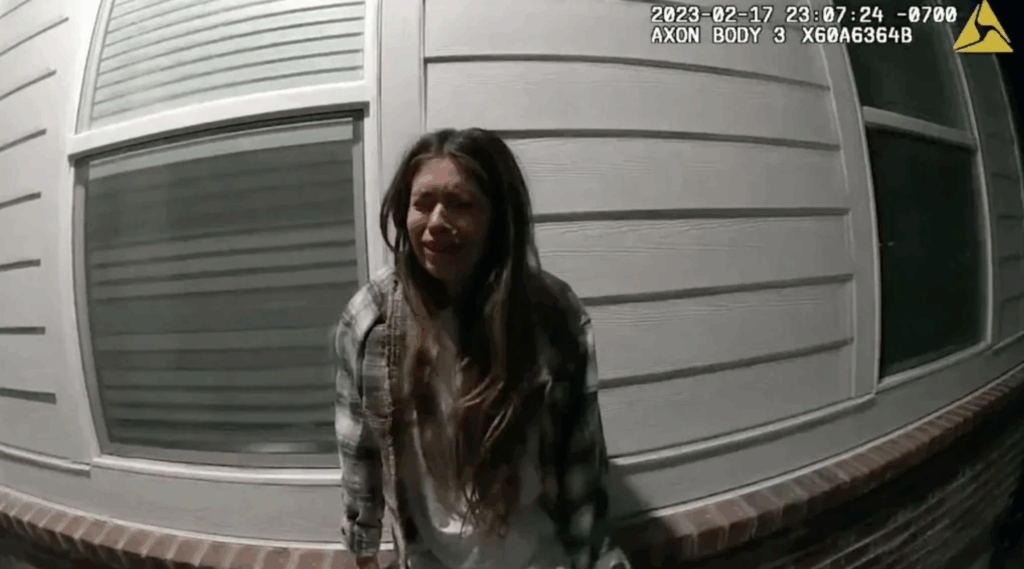
In bodycam footage obtained by TMZ, an officer with the Herriman City Police Department calls Taylor’s mom, Liann, to check on Indy.
It seems that the officer had just reviewed cell phone footage shot by Dakota and realized that Indy might have sustained an injury.
One police report described the 5-year-old as having a “goose egg on her head.”
TMZ reports that police fears of a possible head injury or concussion that may not have been immediately obvious.

But Taylor’s mother insisted that the child was fine and was peacefully sleeping in her bed.
From there, TMZ reports, “the officer stressed that injuries in kids don’t always show up right away.”
Liann seemed unconcerned, but as many social media users have pointed out, people with possible concussions should not be allowed to sleep.
Thankfully, this all went down in 2023, and Indy did not suffer any lasting injuries.
Her mother, on the other hand, is still experiencing the consequences of that fateful night.

In addition to being canceled by ABC, Taylor might soon face criminal charges as a result of multiple allegations from Dakota.
In statements on the subject, Taylor has insisted that the video did not tell the whole story, and she was a victim of Mortensen’s abuse.
“Taylor is very grateful for ABC’s support as she prioritizes her family’s safety and security,” Paul said through a spokesperson, adding (via People):
“After years of silently suffering extensive mental and physical abuse as well as threats of retaliation, Taylor is finally gaining the strength to face her accuser and taking steps to ensure that she and her children are protected from any further harm.”
Taylor has yet to respond to allegations that she was unconcerned about her daughter’s injury.
We will have further updates on this developing story as new information becomes available.
Taylor Frankie Paul: Did She Ignore Daughter’s Injuries After Chair-Throwing … was originally published on The Hollywood Gossip.
The Hollywood Gossip

A billion streams is no small feat, and Dasha’s got plans for that Spotify plaque that might surprise you. Continue reading…The Boot – Country Music News, Music Videos and Songs
A billion streams is no small feat, and Dasha’s got plans for that Spotify plaque that might surprise you. Continue reading…Country Music News – Taste of Country