If that bunch of bananas sitting on your countertop is slow to shed its green hue, all you have to do to ripen the fruits quickly yet naturally is move them.

Mashed – Fast Food, Celebrity Chefs, Grocery, Reviews









If that bunch of bananas sitting on your countertop is slow to shed its green hue, all you have to do to ripen the fruits quickly yet naturally is move them.
Mashed – Fast Food, Celebrity Chefs, Grocery, Reviews

Green admits he was nervous to take on his first acting gig. Fortunately he had some help. Continue reading…The Boot – Country Music News, Music Videos and Songs
Green admits he was nervous to take on his first acting gig. Fortunately he had some help. Continue reading…Country Music News – Taste of Country
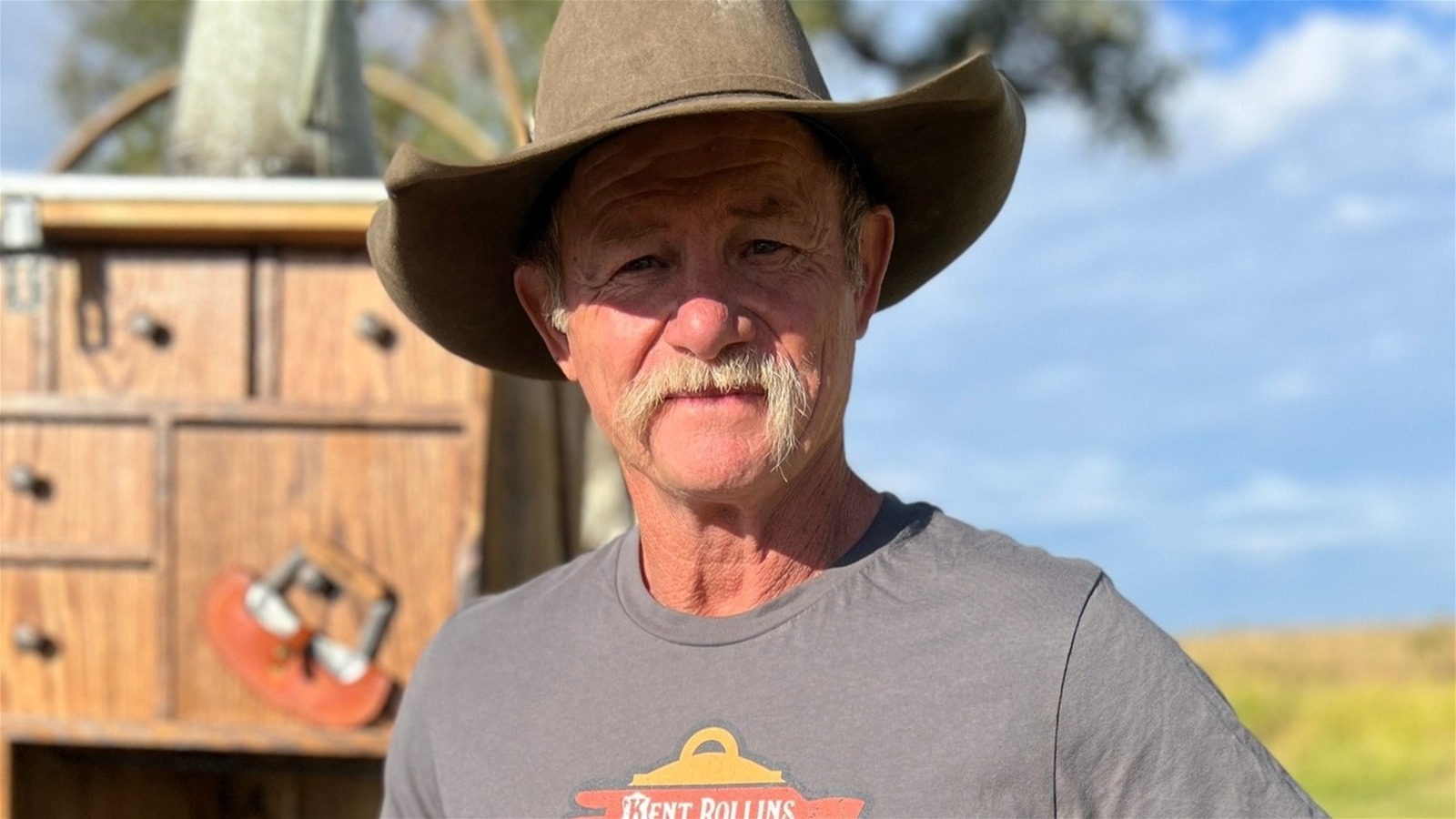
Cowboy Kent Rollins is a busy man. When he’s not rustling up his signature rustic grub, he enjoys this convenient and much-loved item from Costco’s food court.
Mashed – Fast Food, Celebrity Chefs, Grocery, Reviews

The United States’ attack on Iran is stirring up an already-roiling Democratic debate over Israel, just as primary season kicks off.
The joint U.S.-Israel military operation has put the countries’ relationship squarely at the center of the national political debate — and the role of its big-spending allies like the American Israel Public Affairs Committee, which praised President Donald Trump’s strikes, front-and-center in the Democratic primaries where the group is spending.
A heated House race in North Carolina whose election is Tuesday, several contests in Illinois two weeks later and an already stormy Michigan Senate primary have been impacted by tensions over Israel’s war in Gaza and fury over heavy spending by pro-Israel organizations.
“Palestine has become a litmus test in the party,” said Matt Duss, a former foreign policy adviser to Sen. Bernie Sanders (I-Vt.) and executive vice president at the progressive think tank Center for International Policy. “You see this in both the Michigan and Illinois primaries, where candidates are being pushed to acknowledge that Gaza is a genocide and to pledge not to take AIPAC donations. That was definitely going to continue as we move toward the 2028 presidential primary. This war [in Iran] will amplify it even more.”
AIPAC’s involvement has already upended multiple elections in Illinois, where groups aligned with the lobbying group have spent close to $14 million on four House races ahead of the state’s mid-March primary. In Tuesday’s North Carolina primaries, Israel has been a hot topic in Democratic Rep. Valerie Foushee’s reelection bid. And Middle Eastern politics loom large in Michigan’s blockbuster three-way Democratic Senate race, where there have already been sharp divisions between the candidates over Israel. Elected officials and operatives there have been fretting for months about how AIPAC could turn the race on its head and pave a way for a Republican victory for the first time since 1994.
“The war [in Iran] accentuates the risk that AIPAC’s intervention will result in electing the most anti-war, anti-Israel progressive of the available candidates in some of these districts — just as it did in mine,” said former Rep. Tom Malinowski (D-N.J.), who recently lost a hotly contested House primary to now-Rep. Analilia Mejia, a much sharper critic of Israel, after AIPAC spent more than $2 million against him in a failed bid to elevate a more unabashedly pro-Israel candidate.
AIPAC isn’t backing down. In a statement Saturday, the group hailed the U.S.-Israel-led strikes as “decisive action against the terror-supporting regime in Iran.” Its super PAC, United Democracy Project, had nearly $100 million in the bank at the end of January and plans to be active in dozens of races this year, including both Democratic and Republican primaries.
“Anti-Israel candidates should be on notice that we are looking closely at their races,” United Democracy Project spokesperson Patrick Dorton said in an interview. “Our goal is to elect the biggest possible bipartisan pro Israel majority in Congress, no matter which party is in control, and we are singularly focused in this election year on electing a pro-Israel majority in Congress.”
Maurice Mitchell, national director of the Working Families Party, said that Democrats are “gonna have to answer for” AIPAC support in primaries. “Any of those Democrats that take AIPAC money, they’re going to have a reckoning,” he said. “How can they stand for peace and the billionaire backers that are supporting them are advocating for this war?”
The Iran strikes did not initially split Democrats as deeply as Israel’s war in Gaza has over the past few years, with most in the party accusing Trump of embroiling the Middle East in conflict, even as disagreements emerged on what comes next.
“I don’t think anyone wants to be seen on the side of Iran, and I think Democrats are generally united on the idea that the president needs to explain to the American people, what the strategy is, what the endgame is,” said Brian Romick, president of Democratic Majority for Israel, a group that supports pro-Israel Democrats.
Several Democratic strategists said it’s too early to predict how much Iran will be on voters’ minds over the next few months, let alone for the next presidential election.
“We know Trump ran against wars just such as these, and the close collaboration with Israel on it may play into ongoing debates in the primary,” David Axelrod, a longtime Democratic strategist, wrote in a text. “But the unknown is the length and level of loss this will entail. The longer, the more costly, the deeper the debate will be.
Perhaps nowhere on the map does Iran loom larger than in Illinois, whose March 17 primary is just weeks away.
Democratic strategists in the state expect the attacks on Iran to call attention to the role of Congress and the broader implications of partnering with Israel.
“Now this isn’t just about Israel and Gaza,” said an Illinois political consultant granted anonymity because they’re working on multiple local campaigns. “This is about standing with Israel to wage a broad war in the Middle East that has a lot more ramifications.”
An AIPAC-aligned super PAC has already spent more than $1 million supporting state Sen. Laura Fine and attacking one of her top primary opponents, Evanston Mayor Daniel Biss, in the race to replace retiring Rep. Jan Schakowsky.
Biss and Fine’s other opponents have criticized AIPAC involvement in the race. He issued a lengthy statement Saturday slamming Trump and Netanyahu for “pushing America into another reckless and illegal regime change war.”
A separate AIPAC-linked group is set to target progressive activist and digital strategist Kat Abughazaleh, who is Palestinian American.
In an interview, Abughazaleh said Iran will be a crucial focus in her race’s closing weeks.
“We will be talking about it very vocally and often because this is very much a topic on people’s minds,” she said. “People care about this for a lot of reasons, whether it’s our tax dollars, whether it’s because you have family in Iran, whether you’re just horrified by the humanitarian implications of these strikes, or because you’re very afraid of a forever war that you may be moved into against your will.”
War in Iran isn’t the same issue as Israel’s war in Gaza, and in the first hours after Trump launched the operation, Democrats were much more unified in their opposition — including Democrats who have AIPAC’s support.
After the attack, Fine posted on X calling for Trump’s impeachment, warning that he “is leading us into another military conflict to distract from his own failures that puts American lives at risk and threatens to send the Middle East into further chaos.”
Congressional candidates Donna Miller in the 2nd District and Melissa Conyears-Ervin in the 7th, who are supported by AIPAC-aligned committees, respectively called the attacks “reckless” and “immoral” in separate statements. And Melissa Bean, who has support from an AIPAC-aligned group in the 8th District, said “Congress has the sole power to authorize acts of war.”
Tuesday’s primaries in North Carolina will give an early indication of how Democratic primary voters may be considering Israel.
Rep. Valerie Foushee (D-N.C.) was first elected to the seat in 2022 with AIPAC help — its super PAC spent more than $2.1 million to boost her to victory. But in 2025, Fousheesaid she would no longer accept the pro-Israel group’s money.
“Check my voting record to see how I have voted and what I have voted for as it relates to the people of Gaza,” she said at a town hall in August.
Dorton, the spokesperson for the AIPAC-aligned super PAC, said Foushee “rejected AIPAC support and we are not involved in or participating in any way in this race.”
But Foushee’s primary opponent, Durham County Commissioner Nida Allam, has attacked Foushee for being insufficiently tough on Israel. A new super PAC created to push back against AIPAC from the left has spent heavily in support of Allam.
Trump’s “illegal and reckless war” in Iran “will inevitably be on voters’ minds as they head to the ballot box on Tuesday,” Allam, North Carolina’s first Muslim woman elected official, said in a statement.
Foushee was also quick to condemn Trump’s “illegal war with Iran.” In a statement, she said her “record and support for legislation to stop arms sales to Israel speaks for itself.”
“It is clear to me and my constituents that the Netanyahu government’s indiscriminate killing of Palestinians cannot continue,” she continued.
The Gaza conflict has already been a major issue in the three-way Democratic battle to succeed retiring Sen. Gary Peters in battleground Michigan, a state with the highest percent of Arab-American residents in the country. More than 100,000 people voted “uncommitted” instead of backing then-President Joe Biden in the 2024 primary over his administration’s support of Israel.
Layla Elabed, one of the founders of the Uncommitted movement who now leads the progressive Arab Americans for Progress, said Democrats “do not want to see their dollars continuing to fund Israel’s genocide and now a war on Iran, especially without congressional approval.”
She said Trump’s Iran attack underscores that Democrats need candidates who “stand up to pro-war lobbies like AIPAC, who have poured money from right-wing MAGA donors into our Democratic primaries here in Michigan.”
Rep. Haley Stevens, who has been supported by AIPAC in the past, said in a statement that Trump “has once again put Americans in harm’s way without consulting Congress,” but warned that a nuclear Iran “would bring even more violence and chaos to the Middle East and the entire world.”
Her foes in the August primary took a different approach. State Sen. Mallory McMorrow said the president “has chosen a war overseas at the expense of everyone back home;” physician Abdul El-Sayed, the most progressive candidate in the field, declared “this war must end” and Trump “must be held accountable.”
Brakkton Booker contributed to this article.
Politics
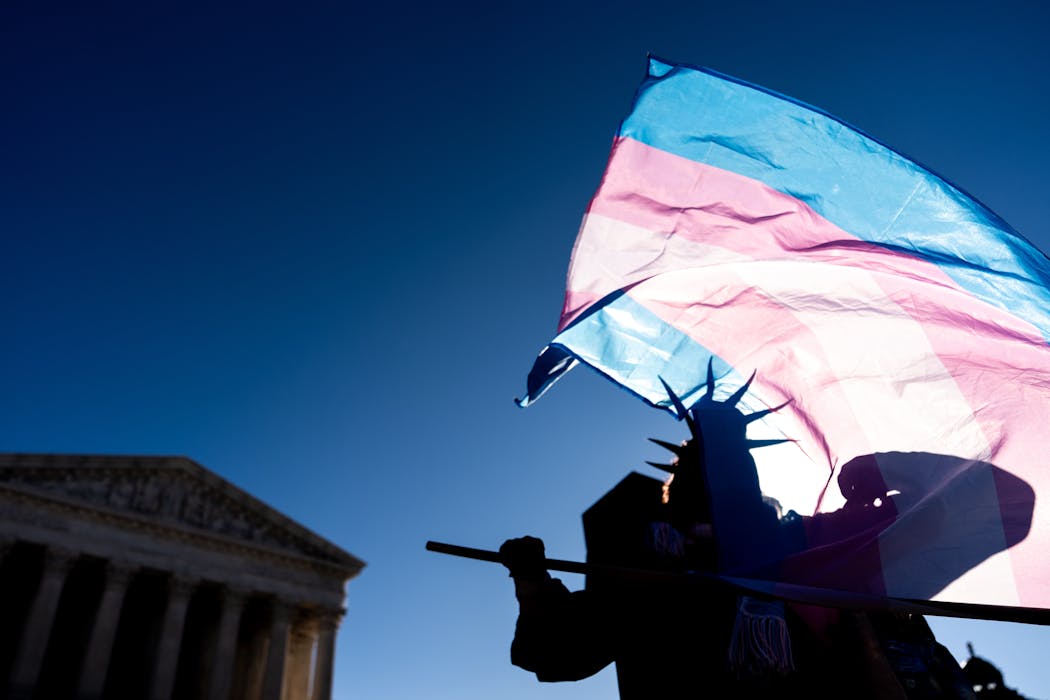
The number of bills directly targeting and undermining the existing legal rights of transgender and nonbinary people in the U.S. has been escalating, with sharp increases since 2021 and with each consecutive year. Kansas dealt the most radical blow yet on Feb. 26, 2026, as a law that immediately invalidates state-issued driver’s licenses, identification cards and birth certificates for holders whose gender marker does not match their sex assigned at birth took effect overnight.
This new law, called the House Substitute for Senate Bill 244, passed after legislators overrode the governor’s veto to rush it through legislation.
There is no grace period for this law, meaning trans and nonbinary people will have immediately invalid documents putting them at risk of a US$1,000 fine and up to six months in jail for driving with an invalid license. The law also restricts bathroom use to assigned sex at birth, and it allows citizens to sue transgender people for up to $1,000 for not complying.
While 21 states have passed similar bathroom restrictions, Kansas is the first to invalidate state-issued identification documents that were legally obtained.
We are researchers who study how marginalization and resilience affect the lives of trans and nonbinary people. Our work has documented how lack of access to accurate and affirming identification documents affects the health and well-being of this community.
By mandating the use of birth-assigned sex on identity documents, Kansas denies transgender people legal recognition and curtails their freedom of movement. These laws open the door to an even wider range of discriminatory policies.

Invalidating someone’s identification documents has immediate and powerful consequences that cascade into all aspects of their life.
For example, without a valid driver’s license, many trans and nonbinary people will be unable to get to work, attend classes, pick up their children, visit the doctor, see friends or go to the grocery store. Trans and nonbinary people who need to drive with an invalid license risk fines and jail time, where they would be housed according to their sex assigned at birth.
Taking a train or bus is not a solution that would work for many people. Almost half of the U.S. population does not have access to public transportation, and for those who do, it is often poorly maintained, sparse or unreliable. The two transgender men who sued the state of Kansas to block the law noted how loss of their ability to drive makes them unable to work.
The effects of invalidating someone’s legal documents goes far beyond just transportation. Legal IDs are required to access health care, obtain housing, have a job, vote, attend college, access financial assistance or even purchase cold medicine at a pharmacy.
Not having identification documents with the correct gender marker also poses a safety and health risk.
Trans and nonbinary people who have not updated their identification documents are more likely to experience psychological distress and suicidality, in part due to increased day-to-day stress. For trans and nonbinary people whose physical appearance no longer aligns with their ID, not having updated documents puts them at increased risk for harassment and violence.
Roughly a quarter of trans and nonbinary people who have not updated their identification documents experience subsequent mistreatment when showing their IDs, including verbal harassment, assault and denial of services or access to settings. In our research, we similarly found that not having one’s gender legally affirmed is associated with greater discrimination and social rejection – one pathway to negative effects on mental and physical health.
To comply with the current law sets up an impossible situation for many trans and nonbinary people who have been using the restroom aligning with their gender identity and presentation for years. These individuals are set up to face violence, legal action or criminal penalties even when they are complying with the law, as using the restroom aligned with their sex assigned at birth will appear to others as contradicting their gender presentation.
Researchers and public health officials consider accurate and affirming identification documents an essential determinant of health. The World Health Organization, United Nations and the World Professional Association for Transgender Health have called for trans and nonbinary people to have the right to legal recognition of their gender.

The Kansas law is a flash point in the ongoing battle across the country for legal recognition of trans and nonbinary people’s existence.
The process for gender marker changes varies widely across states. Some require documentation of medical procedures to affirm one’s gender, while some do not allow gender marker changes at all. Some allow for gender-neutral gender markers, like the letter X.
According to the 2022 U.S. Trans Survey, which had over 92,000 participants, 59% of trans and nonbinary people have not updated their gender on any of their documents, and 23% have some of their documents updated but not others. This law and others like it will disadvantage even more trans and nonbinary people.
To us, this is about more than access to driving a car – it is a direct attack on the ability of trans and nonbinary people to live and survive. As of February 2026, 711 bills are under consideration across 41 states, with 110 at the national level. The restrictions these bills propose are far-reaching – prohibiting access to gender-affirming medical care, prohibiting students from using their chosen names and pronouns, banning trans and nonbinary youth from participating in sports, restricting access to bathroom facilities and censoring public education on issues related to gender.
In the face of these legislative efforts to control and erase trans and nonbinary people from public life, trans and nonbinary people, along with their allies, continue to stand up for each other and fight for their rights.

Jae A. Puckett co-leads the Gender Affirmation Project.
Noelle Martin is affiliated with the Gender Affirmation Project.
L. Zachary DuBois does not work for, consult, own shares in or receive funding from any company or organization that would benefit from this article, and has disclosed no relevant affiliations beyond their academic appointment.
Politics + Society – The Conversation

Once reserved for the ornate charm of French-farmhouse and traditional kitchens, this sculpted countertop edge is migrating into modern spaces in 2026.

Food Republic – Restaurants, Reviews, Recipes, Cooking Tips

Surprise! Emmy Russell, an ‘American Idol’ alum and the granddaughter of Loretta Lynn, is pregnant with her second child. Continue reading…The Boot – Country Music News, Music Videos and Songs
Surprise! Emmy Russell, an ‘American Idol’ alum and the granddaughter of Loretta Lynn, is pregnant with her second child. Continue reading…Country Music News – Taste of Country

Having a few gray hairs in your 30s and 40s is normal, but what if you go gray in your 20s? It’s not as strange as it sounds; it happened to these celebrities.

Health Digest – Health News, Wellness, Expert Insights