 Taryn Manning is sharing her side of the story.
The Orange Is the New Black alum spoke out after a video of what appeared to be herself in a physical altercation with another woman was published…
E! Online (US) – Top Stories









Taryn Manning is sharing her side of the story.
The Orange Is the New Black alum spoke out after a video of what appeared to be herself in a physical altercation with another woman was published…
E! Online (US) – Top Stories

Five Alaska mayors voiced concerns about how a proposed tax break for the Alaska LNG gas line project would impact their communities.
Republican Alaska Gov. Mike Dunleavy has proposed eliminating property taxes and other local taxes for the $46 billion megaproject. Instead, his bill would impose a volume-based tax when substantial quantities of gas are delivered from the North Slope.
The Alaska Department of Revenue estimated Dunleavy’s bill would equate to a roughly 90% reduction in property tax revenue, once the pipeline is at full capacity. The state agency has said the pipeline will not move forward without cutting property taxes for Glenfarne, the New York-based developer of the proposed pipeline and export facilities.
Five Alaska mayors on Friday testified to the Senate Resources Committee in support of the 800-mile pipeline, which is set to run from the North Slope to Cook Inlet. But the municipal leaders also expressed concerns about the potential loss of revenue from the governor’s tax break and the impacts on municipal services.
Peter Micciche is mayor of the Kenai Peninsula Borough, one of Alaska’s largest with roughly 62,000 residents. He said a liquefaction facility, equating to 43.5% of the total project, is set to be located in the coastal region.
Micciche said the project would have tens of millions of dollars of impact annually for the Kenai Peninsula, with costs set to be borne by local communities under Dunleavy’s bill. He said the proposed elimination of all local taxes for Alaska LNG is “cutting deep into the fabric of how our communities work. And that worries me.”
He cited concerns about Dunleavy’s proposed tax rate rising by 1% annually. He said the borough’s budget increases on average by 2.5% each year, meaning that would leave the Kenai Peninsula “underwater.”
“Costs have shifted from the state to the municipalities. But we simply cannot afford additional costs,” he said to lawmakers Friday.
Micciche, a former long-time oil and gas executive, emphasized that he is excited by the project, but he considers the governor’s tax break to be “a bottom offer.”
Adam Prestidge, president of Glenfarne Alaska LNG, on Monday told the Senate Resources Committee that the company recognizes there will be impacts to municipalities from the project. He said discussions are ongoing with municipal leaders about how the company will cover some costs to ensure communities feel comfortable they “will be taken care of.”

Micciche, a former Republican Alaska Senate president, framed the scale of the challenge of negotiating acceptable legislation for communities and Glenfarne with less than half of the legislative session left until adjournment. “This bill needs a lot of work,” he said.
“We’re ready to sit down and pen a deal that works for everyone — the developers, our community, Alaskans — and I hope to God that comes along with affordable gas,” Micciche said.
Supporters remain bullish on the gas line’s potential to be an economic boon for Alaska. Former Democratic U.S. Sen. Mark Begich has been hired by the Dunleavy administration to boost the pipeline. He told the Senate Resource Committee on Monday that it was “a once-in-a-lifetime project.”
Glenfarne owns 75% of the project while the Alaska Gasline Development Corp., a state agency, owns the remaining 25%.
Begich and Prestidge declined to answer some questions in detail about the proposed tax break and whether it was at an appropriate rate, citing the need for confidentiality in commercial agreements. Begich implored lawmakers to hold a session behind closed doors to discuss revenue questions with Glenfarne.
Under Dunleavy’s bill, the long-sought gas pipeline is expected to raise over $22.5 billion in new revenue for the state of Alaska. But over the next 36 years, it would also cost roughly $13 billion for local communities compared to current law, according to state projections.
Instead of property taxes, the governor’s bill would impose a volume-based tax of 6 cents on every thousand cubic feet of gas, which would increase by 1% annually. The tax would only be imposed once the pipeline delivers an average of 1 billion cubic feet of gas per day or 10 years after gas starts being produced.
Edna DeVries is mayor of the Matanuska-Susitna Borough, home to around 117,000 people. She said the Mat-Su Assembly believes those thresholds are “far too high” and that they should be lowered so the borough could collect revenue sooner.
DeVries cited a concern common to all five mayors along the proposed corridor for Alaska LNG: the impacts of constructing the pipeline on municipal budgets.
Mayor Chris Noel of Denali Borough, home to 1,600 residents, said that construction would see added costs for waste management, fire and rescue and housing, which would likely be borne by the local community. Denali Borough does not currently collect property tax. But it would get “limited benefits” from the pipeline with no local offtake planned for the borough, Noel said.
“The bottom-line is we cannot subsidize increased costs. We need certainty via an impact payment program during construction that actual costs will be covered by the project,” he said.
Another potential concern: education funding. Alaska’s complicated education funding formula means that as a local community’s total assessed property tax value increases, state contribution for schools is reduced.
Mayor Josiah Patkotak of the North Slope Borough said he was concerned at the “precedent” set by eliminating property taxes for oil and gas projects before a final investment decision is reached. Patkotak, also a former member of the Alaska House of Representatives, cited a recent record North Slope lease sale and said oil developers could seek similar tax relief.

The North Slope Borough, based out of Utqiaġvik with 10,500 residents, has a long history of fiercely defending its authority to levy property taxes on oil and gas companies, he added.
Patkotak estimated Dunleavy’s proposed tax break means the borough would collect $12 billion less in revenue compared to current law. He said property tax revenue has been critical for the borough, which funds schools, fire and rescue services, airports and waste management.
Prestidge declined to tell the Senate Resources Committee whether the proposed tax break would be make-or-break for the project. But he said if the bill failed to pass, “It makes it more difficult because it makes the gas more expensive.”
“It creates an incredible amount of uncertainty around the project,” he added.
Patkotak noted that the North Slope would not get any of the gas delivered through the pipeline with no offtake planned for the remote region.
That has long been a concern for Fairbanks, which has a population of 97,000 people. The borough has advocated for a $180 million spur to deliver gas to the Interior city.
“We need to make sure we’re getting Alaskans’ gas to Alaskans,” said Mayor Grier Hopkins of the Fairbanks North Star Borough.
Hopkins said there are currently “no concrete” plans to build a gas offtake for Fairbanks, but discussions are ongoing with Glenfarne.

The post Alaska mayors say governor’s proposed tax break for $46B gas line ‘needs a lot of work’ appeared first on Chilkat Valley News.

President Donald Trump signed a sweeping executive order on Tuesday that attempts to restrict mail-in voting, a White House priority certain to face significant legal challenges.
The order directs the U.S. Department of Homeland Security along with the Social Security Administration to compile a list of voting-age American citizens in each state and share it with state election officials. The order also requires the U.S. Postal Service to only send and receive ballots that include tracking barcodes.
Trump’s order represents a major escalation in his effort to assert presidential control over elections, which under the U.S. Constitution are administered by the states. Trump last year attempted to unilaterally impose a proof of citizenship requirement to vote in federal elections in an executive order that was blocked in federal court.
The move also reflects a long-held focus by Trump and his allies on noncitizen voters. Studies have shown noncitizen voting is extremely rare.
“I think this will help a lot with elections,” Trump said.
Homeland Security operates the SAVE system, a powerful computer program that can verify citizenship.
DHS has previously invited states to run their voter rolls through SAVE, which flags voters as potential noncitizens. Some election officials criticize the system, saying it wrongly identifies U.S. citizens as possibly ineligible.
The U.S. Department of Justice as recently as last week denied any efforts to create a national voter registration list. While the executive order does not explicitly mandate the creation of a voter list, it essentially marks an effort by the White House to create a national database of adult U.S. citizens.
The order requires Homeland Security to enable states to routinely supplement or suggest changes to each state’s citizenship list. Federal officials would also be required to allow individuals to access their own records and update or correct them ahead of elections.
Under the executive order, the postmaster general must propose rules to require all outbound ballot mail to be sent in an envelope that includes a barcode for tracking. The order also requires that states must inform the U.S. Postal Service at least 90 days before federal elections whether they intend to allow ballots to be sent through the mail.
“Instead of focusing on lowering the cost of energy, groceries, and health care, Donald Trump is desperately attempting to take over and rig our elections and avoid accountability in November,” U.S. Sen. Alex Padilla, a California Democrat, said in a statement shortly after Trump announced the order. “This executive order is a blatant, unconstitutional abuse of power.”
Trump has pushed Congress to pass the SAVE America Act, which would require individuals to produce documents, such as a passport or birth certificate, proving their citizenship in order to register to vote. The U.S. Senate is debating the bill, but it appears unlikely to have enough support to overcome a filibuster.
Trump has repeatedly asked Republicans to add three provisions to the bill, including restrictions on mail-in voting, with exceptions for members of the military, people who are ill and those on vacation.
The president has also previously promised to advance voting restrictions, with or without Congress. Earlier this month, Trump voted by mail in Florida.
The executive order directs the Justice Department and other federal agencies to withhold federal funds from non-compliant states and localities “where such withholding is authorized by law.”
Tuesday’s order is certain to face legal challenges. The Constitution gives Congress — not the president by executive order — the power to override state election regulations.
Marc Elias, a prominent voting rights litigator, promised to fight the executive order.
“If Trump signs an unconstitutional Executive Order to take over voting, we will sue,” Elias wrote on social media. “I don’t bluff and I usually win.”
Republican National Committee Chairman Joe Grunters praised the order, saying Trump was restoring voter confidence. “Protecting America’s ballot box isn’t optional – it’s the foundation of our republic,” Grunters said.
The Justice Department has sued 29 states and the District of Columbia for copies of their voter rolls that contain sensitive personal information on voters, such as driver’s licenses and partial Social Security numbers. About a dozen states have voluntarily provided the data, but most are fighting the demands in court.
Three federal judges have so far ruled against the Justice Department. The administration is appealing and in court documents has argued that swift court decisions are necessary to ensure the security and fairness of the midterms.
The Trump administration has said the data is necessary to verify only citizens are registered to vote. Last week, a Justice Department lawyer confirmed in court that voter data would be shared with Homeland Security.
“Some may freak out about this, but honestly, this is hilarious,” David Becker, executive director of the nonpartisan Center for Election Innovation & Research and a former U.S. Department of Justice Voting Section attorney, wrote on social media about the Trump order.
“It’s clearly unconstitutional, will be blocked immediately, and the only thing it will accomplish is to make liberal lawyers wealthier. He might as well sign an EO banning gravity.”
Jennifer Shutt contributed to this report.
The post Trump signs order seeking to curb vote-by-mail in bid to control state election laws appeared first on Chilkat Valley News.

 Shapewear is one of those things that isn’t always easy to shop for, especially compared to whatever is going on top (hello, fabulous wedding guest dress), but can really change the game in terms…
E! Online (US) – Top Stories
WASHINGTON — The U.S. Supreme Court will hear oral arguments Wednesday in a case that could reshape the understanding of who is American by birth.
The case, Trump v. Barbara, challenges President Donald Trump’s executive order that redefines citizenship to exclude children born to parents who either do not have legal status, or hold temporary legal visas.
It has the potential to upend the guarantee of birthright citizenship in effect since a Supreme Court decision in 1898 that extended citizenship to virtually anyone born in the United States. There is a small carveout for children born to foreign diplomats.
The Trump administration petitioned the high court in December after multiple lower courts struck down the executive order, finding it violated the Constitution.
Birthright citizenship has been a longstanding core principle in the United States, where nearly any child — regardless of their parents’ immigration status — born on U.S. soil is automatically granted citizenship. Experts have warned that if birthright citizenship were struck down, it would effectively create a class of millions of stateless people.
But what was once a fringe legal theory has been pushed into the mainstream by the president and his far-right allies, who have sought to redefine who is American.
They argue the citizenship clause of the Constitution’s 14th Amendment, which is the basis for birthright citizenship, was meant to apply to newly freed African American slaves after the Civil War, not to children of immigrants. Most legal scholars and historians disagree with that interpretation.
The text of the clause is: “All persons born or naturalized in the United States, and subject to the jurisdiction thereof, are citizens of the United States and of the State wherein they reside.”
After oral arguments are heard on Wednesday, a decision from the Supreme Court is expected before the court’s summer recess begins at the end of the term in late June or early July.
This is not the first time the Trump administration has brought a birthright citizenship case before the Supreme Court.
Last year, after federal judges in Maryland, Massachusetts, New Hampshire and Washington state struck down the president’s executive order, the Trump administration appealed to the Supreme Court, but asked the justices to consider the lower courts’ use of universal injunctions, rather than the merits of birthright citizenship.
The justices took up the case, and in a 6-3 vote divided along ideological lines, the use of universal injunctions was curtailed by the conservative wing of the high court.
After the ruling, immigration advocates and the American Civil Liberties Union filed class action suits, which were successful in blocking the birthright citizenship executive order. The suits argued that future children born in the United States without gaining citizenship constituted a nationwide class.
Cody Wofsy, of the ACLU, is a co-lead attorney in the case and told reporters last week that the Supreme Court already decided the issue of birthright citizenship in 1898.
“The constitutional text is clear, the precedent is clear and the history is clear,” Wofsy said.
The 1898 case, United States vs. Wong Kim Ark, settled the idea that automatic citizenship was granted to children born on U.S. soil, Wofsy said.
Ark, born in San Francisco, was denied entry back into the country after visiting China. Officials at the time argued that because his parents were Chinese citizens in the United States on temporary visas at the time of his birth, and therefore were not “subject to the jurisdiction” of the U.S., he was not a citizen. He took the issue to the high court and in 1898 the Supreme Court affirmed that children born in the United States were guaranteed citizenship.
Arguing on behalf of the Trump administration, Solicitor General D. John Sauer has said that the 1898 case is being misinterpreted, and that it meant to only include children born to parents who were granted authorization to be in the U.S.
“Illegal aliens are not ‘permitted by the United States to reside here,’ and thus their children are excluded from citizenship,” Sauer argued in briefs.
However, Trump’s executive order would also deny citizenship to children born to parents on temporary visas, such as for work or school.
Sauer also relies on an 1884 Supreme Court decision that denied citizenship to John Elk, a Native American man born in Nebraska, who was no longer a member of his tribe and tried to become a naturalized U.S. citizen in order to vote.
Elk was denied citizenship, because he was not “subject to the jurisdiction of” the U.S. because of his “political allegiance” to his tribe, even though he had renounced his tribal citizenship. Congress extended citizenship to all Native Americans in 1924.
Sauer cites the Elk case in his argument that the citizenship clause does not apply to children born to immigrants on temporary visas or undocumented people and “only to those born of parents with primary allegiance to the United States.” The administration is not arguing that Indigenous people should be denied birthright citizenship.
Torey Dolan, an assistant professor at the University of Wisconsin Law School, said Sauer’s argument wrongly conflates Indigenous people with migrants, despite a long U.S. legal tradition of treating them distinctly.
“American law has always found a way to distinguish Indigenous people from non-Indigenous people in a way that has never been applied to immigrants,” Dolan, an enrolled citizen of the Choctaw Nation of Oklahoma, said.
She noted that in the Declaration of Independence, which includes the grievances of the colonists, one complaint was how British King George III refused to allow for migration into the colonies in order to occupy land stolen from Indigenous tribes.
“This conflation of immigrants and Indigenous people, for the sake of this argument, I think, is pretty egregious, and I think it really obfuscates American history and its colonial history in particular,” she said.
Legal advocates challenging the executive order are confident they will win at the Supreme Court.
“President Trump’s executive order is plainly unconstitutional and unlawful, and we’re confident that the Supreme Court will reaffirm existing legal precedent and strike down this executive order once and for all,” Hannah Steinberg, a staff attorney for the ACLU’s Immigrants’ Rights Project, told reporters.
In briefs, the ACLU has also argued that if Trump’s executive order were to go into effect, it would create a stateless class of people. The Migration Policy Institute, a think tank that studies migration, found that the end of birthright citizenship would increase the unauthorized population by an additional 2.7 million by 2045.
Trump’s push to end birthright citizenship is part of the administration’s broader goal to curtail migration to the U.S., arguing that birthright citizenship is an incentive for unauthorized immigration.
But the idea that people migrate to the U.S. so their children can be born as citizens is not supported by research, Julia Gelatt, the associate director of the U.S. Immigration Policy Program at the Migration Policy Institute, said.
“People move mainly for opportunity for themselves and their children and also for safety,” she said. “There are many unauthorized immigrants who have come to the United States with their own children, who were born in another country, who won’t be U.S. citizens, and they still come.”
“I don’t think there’s any evidence that birthright citizenship specifically is an independent pull factor. It’s more the safety, the rule of law and the earnings potential that people see in the United States, and the opportunity to reunite with other families is another major factor,” she continued.
Ama S. Frimpong, the legal director for the immigrant rights group We Are CASA, told reporters that there are practical questions to how Trump’s executive order would even work.
“What happens in a household in which there are older children who are born here and now, suddenly they have a new baby who’s born tomorrow, and that baby is not going to have the same rights that their siblings have?” she asked. “Is a baby going to be subject to detention and deportation by their very own government that is meant to protect them because they were born here?”
That reality of birthright citizenship being stripped, Frimpong said, would be “just pure chaos.”
The post Supreme Court to decide if Trump can end birthright citizenship appeared first on Chilkat Valley News.

A Ketchikan-based U.S. Coast Guard fast response cutter has a temporary commanding officer after an “investigation leading to a loss of confidence” prompted the Coast Guard to “temporarily” relieve the cutter’s regular commanding officer.
The Coast Guard announced on Monday that Rear Adm. Bob Little, commander of the Coast Guard Arctic District that includes Ketchikan, “temporarily relieved Lt. Edwin Kuster following an investigation leading to a loss of confidence. This temporary relief is not due to misconduct.
“Lt. Bryce Matakas has temporarily assumed the position of commanding officer of Coast Guard Cutter Douglas Denman,” the announcement continued.
The Douglas Denman is one of three Sentinel-class fast response cutters currently based in Ketchikan, which is also home to the buoytender Anthony Petit.
The Douglas Denman is continuing in service, according to Lt. Pam Manns, a public affairs officer with the Coast Guard Arctic District.
“This cutter remains fully operational, and there will be no degradation in our mission success or capabilities,” Mann wrote in an email reply to a Ketchikan Daily News inquiry. “We have full confidence in the crew of the Douglas Denman to continue to execute the mission safely and effectively.
“Until the new commanding officer permanently assumes command, we have assigned a temporary commanding officer who is experienced and ready to lead the cutter through the upcoming operational schedule,” wrote Mann.
Mann wrote that the commander of the Coast Guard Personnel Service Center has the final decision authority for a “permanent relief for cause.”
The circumstance of a temporary relief of command is “initiated by the operational commander with information and circumstances that raise concerns about a service member’s ability to effectively serve in their current position,” write Mann. “Commanding officers are expected to demonstrate the highest levels of leadership, judgment, professionalism, proficiency, and dedication to the Coast Guard’s core values.”
This story was originally published by the Ketchikan Daily News.
The post Coast Guard ‘temporarily’ relieves commander of Ketchikan-based cutter appeared first on Chilkat Valley News.

Klukwan Chilkats take master’s bracket
At some point in his life, some time before tip-off Saturday, Andrew Friske forgot how to miss a shot. For four quarters in the Gold Medal masters’ bracket championship, the memory never came back.
It was shooting, shooting, and more shooting from Klukwan’s lineup of Gold Medal hall-of-famers, who didn’t see a close game all tournament. Friske, a Haines High alum, spent the game hardly touching the rim with his shots. Alongside him, 2026 Hall of Fame inductee Dave Buss shot well, as did Stuart DeWitt and Jason Shull.

The game started with Klukwan’s Jordan Baumgartner winning the tip-off — a somewhat rare occurrence for a team’s point guard to be taking a job usually reserved for the tallest player. It was a sign of things to come, with Klukwan’s perimeter players playing at a different speed than their Sitka counterparts.
In the first quarter, Sitka was hardly able to get a foothold on the Klukwan side of the floor. Michael Ganey in particular swiped a series of steals, as did Baumgartner and Friske.
That trio was everywhere, crashing the boards from the perimeter and even taking matchups down low. Sitka made an effort to work the ball inside to their big men, but the Klukwan perimeter players, giving up plenty of size, swatted a number of low-post attempts.
Outside those three, Klukwan sent in wave after wave of crafty players, who had all played together before on Gold Medal teams. Hall of Famers Shull and Jesse McGraw checked into the game and helped dictate the flow of the offense. McGraw in particular gave Klukwan an inside presence who was comfortable stepping outside to distribute the ball and shoot. McGraw’s passing was a boon for Haines’ athletic perimeter scorers.
After all, the Friske backdoor cut is something McGraw said he’s been looking for since they were in high school.
“Stuart and Andrew were juniors when I was a senior in high school,” McGraw said after the game. “That’s when I started playing with them and it’s still the same. They do the same moves on the court, I know where to find them. Stuart’s the spot-up shooter, Andrew is the back-cutter.”

By the end of the third quarter, Klukwan had all but wrapped up the game with a 62-37 lead.
Klukwan closed out their scoring with a Jeffrey Klanott three, winning 74-52.
Coach Dan Hotch said the team’s run through the tournament came from their shooting, but also the shared experience. “This is the love of the game,” Hotch said. “I coached 22 years of high school basketball in Oregon, but it all started right here.”
Friske led the scoring with 25 points, Ganey contributed 12, Baumgartner 8, Shull 8, Buss, 8, DeWitt 7, McGraw 3, and Klanott 3.
For Sitka, Derek James scored 14 points, Jimmie Jensen 10, Jeremy Plank 10, Efren Arce 5, Cliff Ritcher 4, Thomas Anderson 4, Steve Edenshaw 3, Justin Bagley 2.
Ganey and DeWitt were named to the master’s bracket All-Tournament Team alongside Friske, the master’s bracket most valuable player.

Deishu Merchants take B bracket
“Bigger, better, more athletic,” was how Haines Merchants coach Steve Fossman described the Angoon team across from him Saturday night in Juneau.
To that point, no one had been able to make anything stick on the Merchants, Haines’ B Bracket team. But being undefeated was a challenge unto itself, said Gold Medal hall of famer and master’s bracket MVP Andrew Friske. By Friske’s estimation, in the tournament’s history the one-loss team in the championship game had beaten the undefeated team roughly 70% of the time.

From the tip, Friske’s warning looked prophetic. For the first time all tournament, Haines struggled with ball pressure and couldn’t free-up its playmakers.
The packed, mostly pro-Angoon gym didn’t give Haines’ slow start much grace, and neither did Angoon’s Clayton Edwin. Edwin kicked off scoring with a clean three-pointer, and then a four-point play the next trip down the court after being fouled. A third Edwin three, this time tossed up as he was falling over, had the crowd in rapture with hardly five minutes gone. That gave Angoon an 18-7 lead.
When Edwin finally spent a possession not making a three, Angoon’s Kendrick Payton was the first player at the tournament to make Haines’ Tyler Swinton look small, scoring an early bucket easily on the block.
Amid the Angoon run, Haines matched Angoon’s physicality and avoided turning the ball over. That left Haines in a position to make a run of their own when Angoon’s hot shooting cooled. In the closing minutes of the quarter, a flurry of three-pointers from veterans Swinton and Kyle Fossman brought Haines back to just a one-point deficit.
From there on out, it was three quarters of both teams trading blows and the lead.

The second quarter featured more impressive shotmaking from Edwin. Even so, it was Angoon’s star point guard Aquino Brinson who remained the tempo-setter of the offense. Brinson was cool under on-ball pressure from Haines’ backcourt that had been effective all tournament. Brinson was frequently able to probe in, get a bigger defender switched on to him, pull the ball back out, and then make a play.
Brinson and Edwin’s combined efforts, plus inside scoring from Tajuan Jamestown, gave Angoon a five-point lead at the end of the half.
In the second half, Haines got the same reliable minutes from top contributors it had all tournament. Angoon split defensive duties on Swinton between the bigger Payton and the far smaller Jonathan Jack-Nixon. Swinton handled the diverse looks well, able to alternate scoring inside and outside depending on the matchup.
Fossman continued his steady outside shooting and playmaker role, finding the ball anytime the offense was unsettled. Often, he would bide his time down low, letting the younger guards handle the ball, before popping out and spraying the ball to an open shooter.
Helping keep the Merchants in the game were big moments from smaller-minutes players, like James Hart who hit a corner three to end a brief Haines scoring drought, and Chevy Fowler who stood in for a charge on Brinson.

Steve Fossman specifically cited the contributions of Ryan Olsen who in particular contributed tough rebounding. “Always in the right place,” Fossman said Olsen.
As is Gold Medal custom, it was largely laissez-faire refereeing. Generally, if you were going up at the rim you could expect to go down, hard. At one point, tensions sparked with Jack-Nixon getting tangled up with Combs, Haines’ smallest player, and then Fossman getting nose to nose with Jack-Nixon to defend his younger teammate. A tough bucket from Fossman resulted in a steady stream of jawing back down the court.
It was a credit to both teams that even with jawing and a raucous crowd, offense remained clean and organized. It was fitting that the third quarter ended tied, 43-43.

For the fourth, it was in the sure hands of Brinson that Angoon placed most of its trust. His secure ballhandling and cool demeanor was a match for the moment, and he was able to draw fouls and score at the line.
The score remained knotted, with multiple ties and lead changes — neither team able to separate.
For nearly the whole quarter, Haines ran a lineup that included its youngest players, high-school senior Colton Combs and recent Mt. Edgecumbe grad Jake Friske. Both continued to seek out the ball, taking risks while avoiding turnovers.

Friske had debuted on the team last year, but played a smaller role off-ball. Then he broke his foot mid-tournament.
This year, he was tasked with more primary ballhandling duties. Earlier in the tournament, with the ball in his hands, his instincts from playing college intramural ball kicked in, he said. That had earned him an earful in the huddle from the older guys.
“I started kind of doing whatever, and when we got into the huddle they were yelling at me, telling me to slow it down,” Friske said.
“Kyle (Fossman) pulled me aside at the end of the game and told me he’d start trusting me more. And I understood my role on this team was to take care of the ball and play good defense.”
Both he and Combs did just that, seemingly constantly on the floor diving for loose balls.
Friske had another role to play as the game wound down. After a clutch bucket from Tompkins, Angoon had the ball down two with 25 seconds left. For seemingly the first time, Brinson made an error: Haines’ perimeter pressure prevented him from getting into the paint, and then he turned the ball over.
After losing possession, Angoon was left in a position of having to foul to stop the clock.
That sent Friske to the line, two different times, to ice the game.
When asked after about the pressure of the moment, Friske said he’d seen it before. “I was actually fine there,” he said afterward. “It wasn’t that loud, honestly. We won in overtime in Barrow my senior year and it was way louder there.”

Friske sank four straight free-throws to give Haines their winning margin of victory, 57-51.
It’s Haines’ fourth Gold Medal B Bracket title. Between young blood like Friske and Combs, former big-name Southeast high-school stars Fossman and Tompkins, old Haines High contributors like Kyle Rush, Hart, Olsen, and Fowler.
“I knew all these guys were good because I’ve played against all of them,” said Tompkins, the newcomer. “It’s nice to play with them. We’ll be back next year.”
For Haines, scoring leaders were Swinton with 23, Fossman 13, Friske 9, Tompkins 7, Hart 3, and Combs 2.
For Angoon, Edwin led with 24, Brinson 12, Tajuan Jamestown 9, and Payton 6.
Swinton and Tompkins made the all-tournament team alongside tournament MVP Kyle Fossman.

The post Chilkat Valley Sweep: Haines and Klukwan take home Gold Medal titles appeared first on Chilkat Valley News.

Whether you make your oatmeal on the stovetop, in the microwave, or let it sit for overnight oats, this one ingredient will make it taste delightfully tropical.

Food Republic – Restaurants, Reviews, Recipes, Cooking Tips
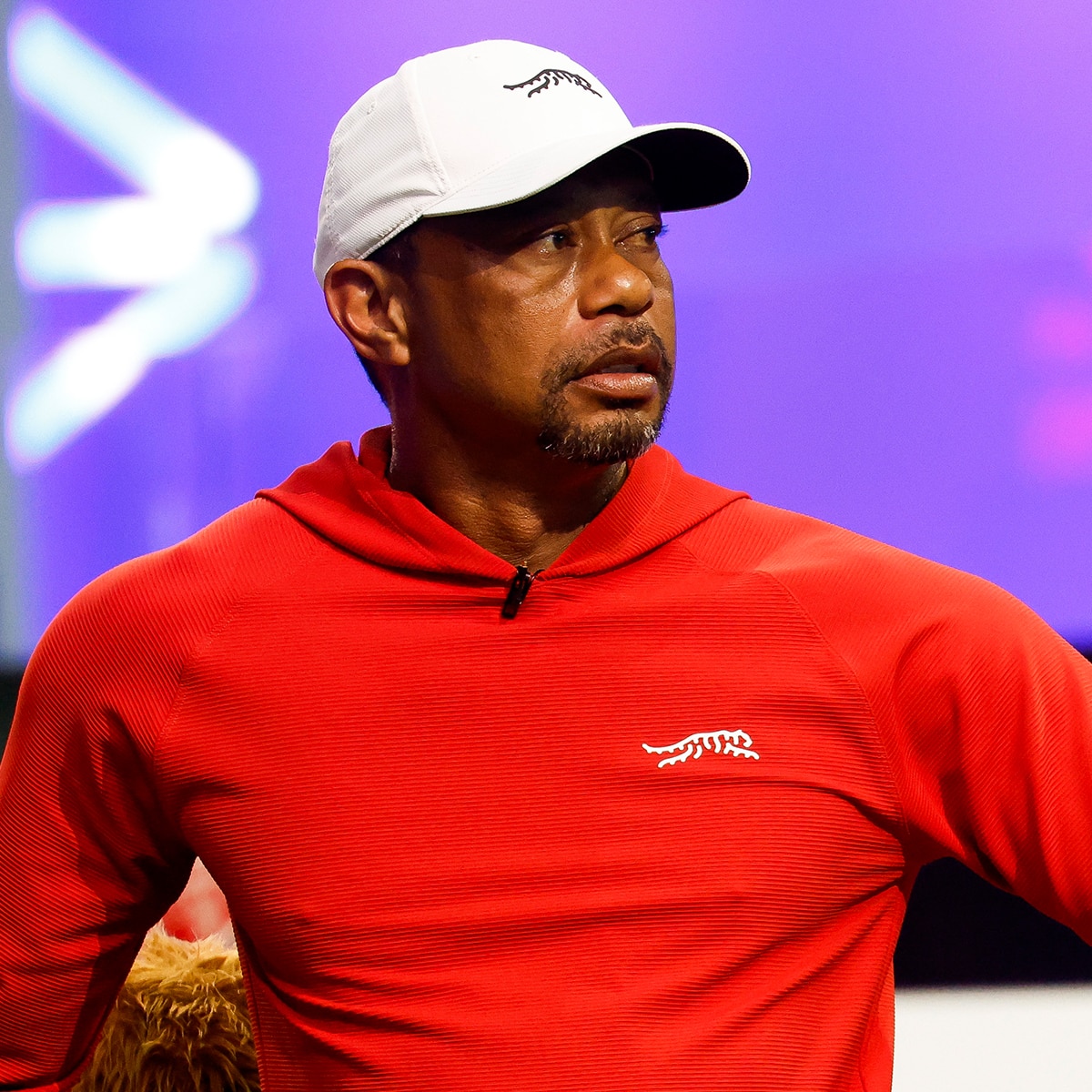
 Tiger Woods is weighing in on his recent arrest.
Following his March 27 car crash, after which he was arrested and charged with driving under the influence and refusing to take a drug test, the…
E! Online (US) – Top Stories

Sometimes Gordon Ramsay might seem more like a fire-breathing dragon than a judge on “MasterChef.” Here’s how some contestants ignite his ire.

Mashed – Fast Food, Celebrity Chefs, Grocery, Reviews