‘American Idol’ took an unexpected turn during its live show, leaving contestants and viewers waiting — and wondering what just happened. Continue reading…The Boot – Country Music News, Music Videos and Songs









‘American Idol’ took an unexpected turn during its live show, leaving contestants and viewers waiting — and wondering what just happened. Continue reading…The Boot – Country Music News, Music Videos and Songs

MARIETTA, Ga. — As he settled into his podium seat for Monday’s packed pre-match press conference inside the sprawling and pristine training facility of MLS side Atlanta United, U.S. men’s national team coach Mauricio Pochettino cut a businesslike figure. The Argentine answered the first dozen or so questions matter-of-factly, displaying little sign of the charm that endeared him to fans of clubs across Europe — including the all-world squads like Chelsea and Paris Saint-Germain — during the 15 years he spent managing on the continent. – Will Defender Chris Richards Play vs. Portugal?- World Cup Schedule, Matches Exactly 24 minutes into the back-and-forth with reporters, Pochettino’s demeanor changed. Asked how the American squad can keep its intensity high for all 90 minutes, something it failed to do in Saturday’s 5-2 capitulation against Belgium, in Tuesday’s World Cup preparation match versus No. 6-ranked Portugal, the 54-year-old instantly became animated. He gesticulated as he spoke. That trademark charisma was suddenly on full display. “If you watched the game [between] France and Colombia, that is intensity,” said Pochettino, referring to Sunday’s exhibition between the 2018 World Cup champions (and 2022 runners-up) and Los Cafeteros in Landover, Maryland. Les Bleus won 3-1, yet the victory was anything but comfortable. “You can win, or you can lose,” Pochettino said. “But do you think the coach of Colombia, [despite] losing the game, is going to complain about [the effort of] some players? They played like this was the final of the World Cup. And France, when they saw the intensity and the aggression of Colombia, said, ‘If we aren’t as intense, they’ll kill us.’ That is intensity.” In stark contrast, the U.S. all but folded up shop when a Belgian penalty put the home side down two goals on Saturday with more than 30 minutes of the contest still left to play. The response, goalkeeper Matt Turner and others said afterward, should’ve been the opposite. As the saying goes: If you can’t beat them, beat them up. Pochettino didn’t go that far, of course. And although English is his third language after his native Spanish and the French he learned playing as a central defender for Ligue 1 sides PSG and Bordeaux in the early 2000s, he couldn’t have expressed himself more clearly. This isn’t the first time intensity has been a problem for the Americans since Pochettino arrived on these shores 18 months ago. Exactly this time last year, a flat and toothless USA dropped home games to regional foes Panama and Canada in the Concacaf Nations League finals. Pochettino was so upset that he and his staff “destroy[ed] what we needed to destroy” and began to rebuild the team in his own image by bringing in a gaggle of newcomers who have since become mainstays. By the end of last year, the lack of fight was no longer an issue: The U.S. literally brawled toward the end of a November win over Paraguay before beating the brakes off two-time World Cup champ Uruguay — arguably the hardest team, pound for pound, on planet fútbol. It’s something Poch’s lot must rediscover between this month’s two games. “It’s a conscious decision. It’s just an overall effort,” captain Tim Ream said when asked why the U.S. faded so badly against Belgium at Mercedes-Benz Stadium. “It’s not that guys don’t want to do it. I think sometimes it’s like ’I’ve just made an effort,’ and now it’s about making the second, the third, the fourth. And sometimes, that doesn’t happen. “That’s something that’s non-negotiable, really,” Ream continued. “It’s something that we were doing really well in the fall last year. And it’s something we have to get back to.” Pochettino noted on Monday that unlike last autumn, his players have been inundated with pre-World Cup media responsibilities this week. That wasn’t the case in November or in the two international windows that preceded it. Yet he also pointed out that it’s not a switch that can simply be turned on when the World Cup kicks off in June. That’s the big lesson from Saturday. It’s the mandate for Tuesday. The 2026 World Cup co-hosts still might not win the match. Portugal has a legitimate chance of hoisting the most coveted trophy in sports next July 19. Even at home, the U.S. would require a miracle even to reach the final four. Failure to rediscover their pugilistic spirit could end in catastrophe. As Pochettino asked rhetorically of whoever his team comes up against next summer: “Do you think that they are not going to fight?” “There’s still time to realize that we need to compete,” he reiterated on Monday. “The players need to believe in that.” We’ll find out on Tuesday how much. 2026 FIFA World Cup: How To Watch The World Cup will run from June 11–July 19, 2026. Spread across three countries, the tournament will culminate with the final on July 19 at New York New Jersey Stadium in East Rutherford, New Jersey. All 104 tournament matches will air live across FOX (70) and FS1 (34) with every match streaming live and on-demand within both the FOX One and the FOX Sports apps.Latest Sports News from FOX Sports

A snow-covered statue of William Henry Seward stands in front of the Alaska State Capitol on Wednesday, March 4, 2026. (James Brooks photo/Alaska Beacon)
Alaska has a loophole big enough to bury a body in.
Right now, if someone in Alaska witnesses a murder or another violent crime against an adult and does not report it, the law treats that failure as a violation. Not a misdemeanor. Not a felony. A violation with a $500 fine.
That should alarm people. The fine is less than the penalty for littering.
Alaska has seen this pattern before. Lawmakers moved to close the “Schneider loophole” in 2019, and this year another bill was introduced to tighten a gap in the state’s sexual-assault law involving health care workers.
Kathleen’s Law was introduced last year, and one of those public safety loopholes that was aimed at fixing part of that problem. It would have raised the penalty for failure to report a violent crime against an adult from a violation to a criminal misdemeanor. It was not an extreme proposal. It was an attempt to say that when someone witnesses murder, kidnapping, or sexual assault, and says nothing, that silence should carry more weight than a ticket-level, $500 offense.
But the bill died.
Not because the law is good enough. It died because groups that work with victims raised concerns about the wording and potential unintended consequences, and the work needed to fix it was met with apathy.
Alaska law still fails to clearly distinguish between failure to report a violent crime and intentional concealment of a murder. Those are not the same thing, and pretending they are has consequences.
There is a world of difference between a person who fails to report a violent crime and a person who knows, or reasonably should know, that someone died by murder, has a safe chance to report it, and instead stays silent to keep that death from being discovered or investigated.
I have shared a draft bill with several legislators addressing concealment of murder. It creates a new criminal offense for someone who knowingly fails to report a death under circumstances showing an intent to prevent discovery or investigation.
That is not mere silence. That is concealment.
And it should be treated more seriously than Alaska law treats it now.
Under the current failure-to-report law, murder is lumped in with other violent crimes, even though the harm caused by intentionally keeping a homicide hidden is different in kind. A murder investigation can be delayed for months or years. Families can be left in the dark. Evidence can be lost.
Concealment of murder would remove murder from the existing framework of failure to report a violent crime and create a separate offense for concealment of murder, making it a class C felony. This creates a middle category that Alaska law does not currently have.
Right now, Alaska law can punish someone for actively helping an offender, hiding evidence, or tampering with a scene. But if someone intentionally keeps knowledge of a murder to themselves and does not cross one of those narrow lines, the law may have very little to say.
This gap is not theoretical. This loophole has had real consequences in Alaska. We have seen cases where silence delayed the truth and deepened harm. We have seen how slow disclosure shapes investigations and leaves victims’ families carrying the cost.
Recognizing that concealment of murder deserves its own category is a chance to modernize Alaska law.
Silence after a killing is not neutral, not when it protects the truth from coming out and not when it makes justice harder to reach. Alaska’s current law leaves room for people to sit on information after a homicide and face little or no meaningful consequences.
And currently, that is a policy choice.

By early 2007, the excitement coming from the UK about Amy Winehouse was too overwhelming for the US record industry to ignore any more.
The British vocal sensation had failed to make the American charts with her debut album Frank, which made its UK debut in 2003, rising to an initial peak of No.13. But even in her home country, that first record was more of a critical favorite than a commercial success until Winehouse released the follow-up, Back To Black, on October 27, 2006.
Both albums would spend literally years on the British charts. In the week of the 15th anniversary of its release, in 2021, Back To Black was spending its 127th week in the UK Top 40, and 444th in the Top 100.
Listen to the best of Amy Winehouse on Apple Music and Spotify.
Produced by Mark Ronson and universally hailed in Britain as a modern-day masterpiece of contemporary soul music, the record entered the domestic bestsellers at No.3 in November 2006. Perhaps surprisingly in retrospect, it spent only four initial weeks in the Top 40, but then the effect of its first hit “Rehab” and the new year single “You Know I’m No Good” began to kick in.
In the second half of January 2007, Back To Black topped the UK chart for the first time, and would go on to spend all but two of the next 48 weeks in the Top 10. America couldn’t overlook Amy any longer, and the album entered the Billboard 200 on the March 31 chart.
Just in advance of the set’s US release on Universal Republic, Kim Garner, the label’s senior VP of marketing & artist development, told Billboard: “The feedback across the board here has been nothing short of amazing. Amy had two incredibly successful shows here in New York that generated a slew of excellent reviews.” Those mid-January gigs, at Joe’s Pub in mid-January, were her first-ever US shows.
The album “made people rethink music,” Ronson told Billboard, “because it was so simple in its approach: the sound of five or six really good instrumentalists with an amazing singer.” Blender, greeting the record’s US appearance, said it “sounds fantastic – partly because the production nails sample-ready 60s soul right down to the drum sound and partly because Winehouse is one hell of an impressive singer.” The New York Times purred: “A 23-year-old English songwriter, Ms. Winehouse is decades too young for 60s nostalgia, but she has come up with a wonderfully time-twisted batch of songs.”

Back To Black went on to reach No.2 in the US, turning gold in May 2007, platinum in July and double platinum the following March. From it, that “Rehab” signature became a major pop item, hitting No.9 on the Hot 100, and by the end of the year Winehouse had six Grammy nominations, of which she would win five, missing out only in the Album of the Year department. But back at the time of the American release of Back To Black, Winehouse was typically and delightfully dismissive about the business aspects of the record.
“I love doing music and playing gigs,” she told this writer in that Billboard story, “and I’m really grateful for the opportunity to do so. But to be honest I’m not the kind of person that will think about the demographic. I’m just the ‘turn.’”
Recently named one of Apple Music’s Best 100 Albums of All-Time, listen to Back To Black now.
Discover more about the world’s greatest R&B artists | uDiscover Music
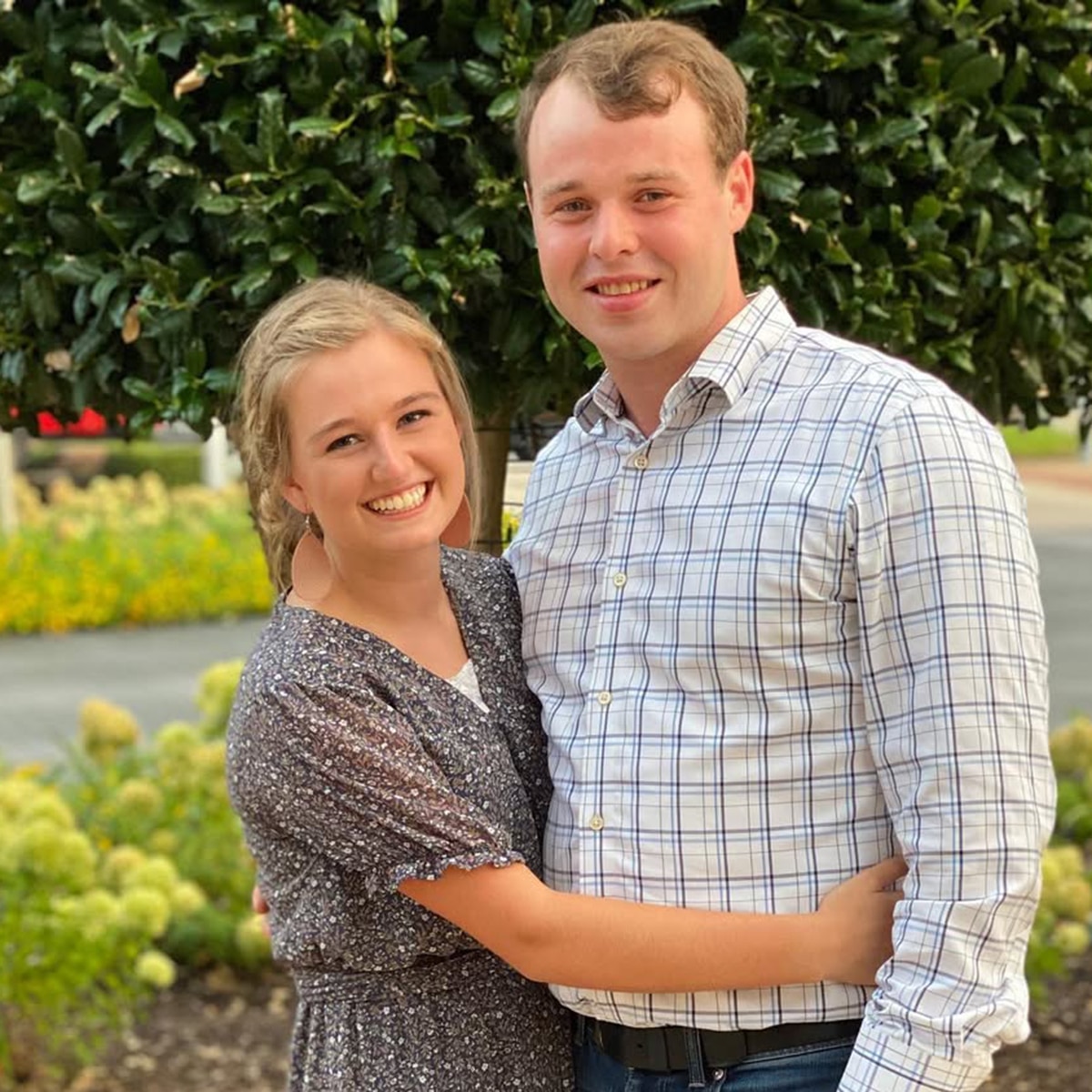
 Kendra Duggar is preparing to head to court.
Hours after she was released from an Arkansas prison March 20 on charges of endangering the welfare of a minor and false imprisonment, the 27-year-old…
E! Online (US) – Top Stories

 Megan Fox might be done being Machine Gun Kelly’s emo girl.
Especially since there’s online speculation that the Jennifer’s Body star blocked the “Bloody Valentine” singer on Instagram over two…
E! Online (US) – Top Stories

There are many protocols to remember when it comes to takeout, but servers find it especially grating when customers do this after ordering their food to go.

Mashed – Fast Food, Celebrity Chefs, Grocery, Reviews

Forrest Wolfe is seen in an undated campaign photo for his run for the Alaska House of Representatives for District 21, in East Anchorage, in 2022. (Campaign photo provided by Wolfe)
A legislative aide to Alaska Gov. Mike Dunleavy, and a former candidate for the Alaska House of Representatives, was arrested and charged with driving under the influence of alcohol on Thursday in Juneau.
Forrest Wolfe, 40, was pulled over by Juneau Police at about 10:30 p.m. on Mar. 26, according to court documents, after driving erratically through a busy area of downtown Juneau. Wolfe was the sole occupant of the vehicle, a red Chevrolet Tahoe, when he was pulled over on Franklin Street.
Wolfe exhibited a strong odor of alcohol and gave conflicting stories of his previous activities, then stopped answering questions, according to the police report. Wolfe failed a field sobriety test and then later a chemical test for alcohol, showing his breath alcohol level at 0.10, which is above the legal limit of 0.08. He was arrested and charged with a criminal misdemeanor.
Wolfe serves as deputy legislative director for Dunleavy, a role he began in January, according to his public LinkedIn profile.
A spokesperson for Dunleavy’s office declined to comment on the arrest or any penalties by his employer on Monday, citing privacy as a personnel matter.
Wolfe ran for the Alaska House in 2022 as a Republican representing District 21 in East Anchorage, and narrowly lost to Rep. Donna Mears, D-Anchorage, by just 150 votes.
Prior to serving in the governor’s office, Wolfe served as a legislative liaison for the Alaska Department of Administration for about a year, in 2025. He worked as legislative staff for more than a decade, since 2012, for various Republican representatives.
Wolfe posted a $500 bail and was released from Lemon Creek Correctional Center on Friday morning, according to Alaska Public Media.
Wolfe has had previous run-ins with Juneau Police for minor infractions, and was arrested and convicted for drunk driving in 2011.

 The royal family’s Easter celebrations will look a little different this year.
While many members of the family will be gathering together for the upcoming holiday, E! News has learned that…
E! Online (US) – Top Stories
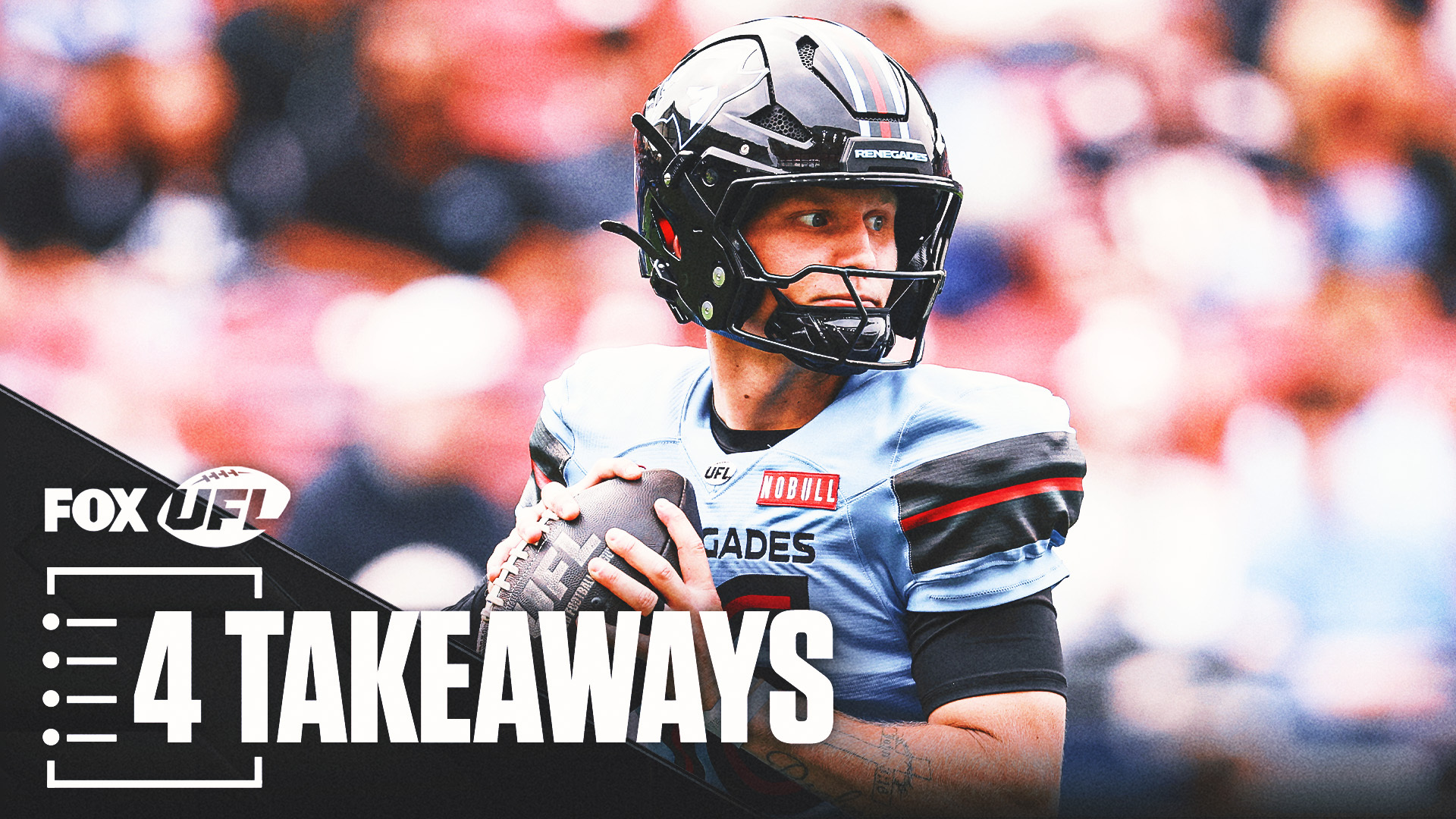
Austin Reed’s first start at quarterback in the UFL was one to remember. The Western Kentucky product engineered a scintillating debut for the Dallas Renegades, completing 26 of 40 passes for 376 yards — the most in league history in a regular-season game — three touchdowns and no interceptions in his team’s 36-17 win over the Houston Gamblers in the season opener for both teams. Veteran UFL receiver Tyler Vaughns led Dallas (1-0) with seven receptions for 144 yards and a score, while fellow receiver Greg Ward added three catches for 93 yards and a touchdown in a runaway victory over Houston (0-1). “It was really a team effort more than anything,” Reed said. “[The] guys were playing well, and we had a really good game plan. We felt good about what we had going into this game, and what we were going to do. It just came down to whether we were going to execute or not.” Reed said despite how well the offense moved the ball, the Renegades can play even bigger, which makes for an interesting matchup next week against one of the best defenses in the league in the St. Louis Battlehawks (1-0). “I feel like we could have played even better, and that’s a great thing to see when your Week 1 output looks like this,” Reed added. “There’s so much more we can improve.” [UFL 2026: Everything To Know About the Upcoming Season] Speaking of St. Louis, former legendary NFL receiver Ricky Proehl earned his first victory as a head coach, leading his hometown Battlehawks to a 16-10 victory over the defending UFL champion DC Defenders (0-1) in front a league-high crowd of 31,191 at The Dome at America’s Center. The Louisville Kings (0-1) couldn’t hold onto the lead late, falling to the Birmingham Stallions (1-0) by two, 15-13, in AJ McCarron’s first victory as head coach. The Kings played in front of 14,034 at Lynn Family Stadium in Kentucky. Leading the Orlando Storm (1-0) for the first time, head coach Anthony Becht helped to engineer a 23-16 victory over the visiting Columbus Aviators (0-1). Here are my takeaways from Week 1 of the UFL: 1. Opportunistic defense leads Stallions to road win over Kings Birmingham forced 13 takeaways last season, and it continued its ball-hawking ways to start the 2026 season. The Stallions thwarted an early promising drive for Louisville when Kings tight end Zach Davidson failed to corral a pass from his quarterback, Jason Bean, with Birmingham linebacker Dyontae Johnson winding up with the loose ball. The Stallions turned that into a 5-yard touchdown, courtesy of Snoop Conner, for an early lead. Later in the game, Birmingham safety Hudson Clark intercepted a Bean pass in the fourth quarter to help salt away a two-point victory — McCarron’s first as a head coach, as he replaced three-time spring football champion coach Skip Holtz this year. Birmingham finished with three takeaways overall, the most for a defense in Week 1. 2. Matt McCrane drills first 60-yard, 4-point field goal It didn’t take long for a kicker to take advantage of one of the UFL’s newest rules implemented to generate more points. Defenders kicker McCrane booted a 60-yard field goal on his team’s opening drive on the road against St. Louis on Saturday, marking the first 4-point field goal in UFL history. However, McCrane did miss from 55 yards later. Elsewhere, Battlehawks kicker Tucker McCann made a 58-yarder in the opening quarter but missed from 45 yards. “Matt was hitting the ball well on field goals and things like that,” Defenders head coach Shannon Harris said. “He had the long miss, but he’ll make that 10 out of 10 times. So, we’re going to always continue to put him in those situations because of the faith we have in him.” In Week 1, kickers went 15-for-20 on field goals, including four from beyond 50 yards, and 8-for-10 on extra points. 3. Battlehawks’ defense looks legit after seven-sack performance Led by 2025 UFL Defensive Player of the Year Pita Taumoepenu, the Battlehawks sacked the Defenders seven times on their way to a tough win. Taumoepenu finished with 2.5 of those sacks, along with a combined six tackles in the win. St. Louis lost to DC at home in the playoffs last season, so the win was a little measure of revenge for St. Louis. “When one guy gets to the ball carrier, I want 11 guys getting to the football,” Proehl said. “They bought in, and they’ve done it in practice every day for the last two weeks. They showed up today. They wore them down. We were in better shape, in my opinion. We were in great shape, and we finished.” 4. Jordan Ta’amu and DC’s offense show early struggles Led by 2025 UFL Championship Game MVP Ta’amu, the Defenders struggled to move the ball on the road against the Battlehawks. One of the top offenses in 2025, DC mustered just 153 total yards offensively against St. Louis’ stingy defense. The Defenders averaged 22.4 points per game last season but were held to a league-low 10 points this week. Considered one of the most dynamic quarterbacks returning in the UFL this season, Ta’amu was sacked seven times and held to 123 passing yards. He also threw two interceptions. The only way is up for DC’s offense in Week 2. “We’ve got to clean things up,” Harris said. “We’ve got to understand that every game thus far is going to be everyone’s Super Bowl. We’ve got to understand that magnitude of it.” 4 ½: What’s Next The Kings and the Battlehawks are on the road next week after hosting in Week 1, while the Renegades and the Storm have their second consecutive home matchup of the season. One game will be played on Friday (Defenders at Aviators), one on Saturday (Kings at Storm), one on Sunday (Stallions at Gamblers) and the final game on Tuesday (Battlehawks at Renegades).Latest Sports News from FOX Sports