Photo Courtesy of UAS, from their Alaska Native Arts, Language and Studies program.
NOTN- The Central Council of the Tlingit & Haida Indian Tribes of Alaska and the University of Alaska Southeast are launching a collaborative effort to develop a School of Indigenous Studies in Southeast Alaska.
Leaders from both organizations signed a memorandum of understanding at the Andrew Hope Building in downtown Juneau this morning, marking what officials describe as an initial step toward building a new academic program grounded in Indigenous knowledge.
This is only the biggening of the collaboration.
The agreement signed, outlines a shared vision between Tlingit and Haida and UAS, of an education model that reflects Indigenous languages, traditions and values, that supports workforce development, research and economic opportunities.
“We are really excited to have a formal relationship with the tribe to create a school of Indigenous Studies at UAS.” Said UAS Chancellor Aparna Palmer, “This is one of the few times where a university has worked with a tribe to co-create a vision for this school, and the school is so important and transformative and amazing because it will honor the values of the tribe, while at the same time giving us a chance to bring together all of the disciplines that we already offer.”
As part of the effort, a working group, with representatives from both Tlingit & Haida and the university will be formed to develop a roadmap for the School of Indigenous Studies.
“We already offer classes on the language and the culture and the history of the indigenous peoples of Southeast Alaska, and now they will be housed at a school that is specific and integrated within UAS.”
While the Duggars have mostly kept quiet about Kendra’s child endangerment charges, they’ve been much more outspoken about Joseph’s situation.
The latest to speak out is Joseph’s sister Joy-Anna Duggar.
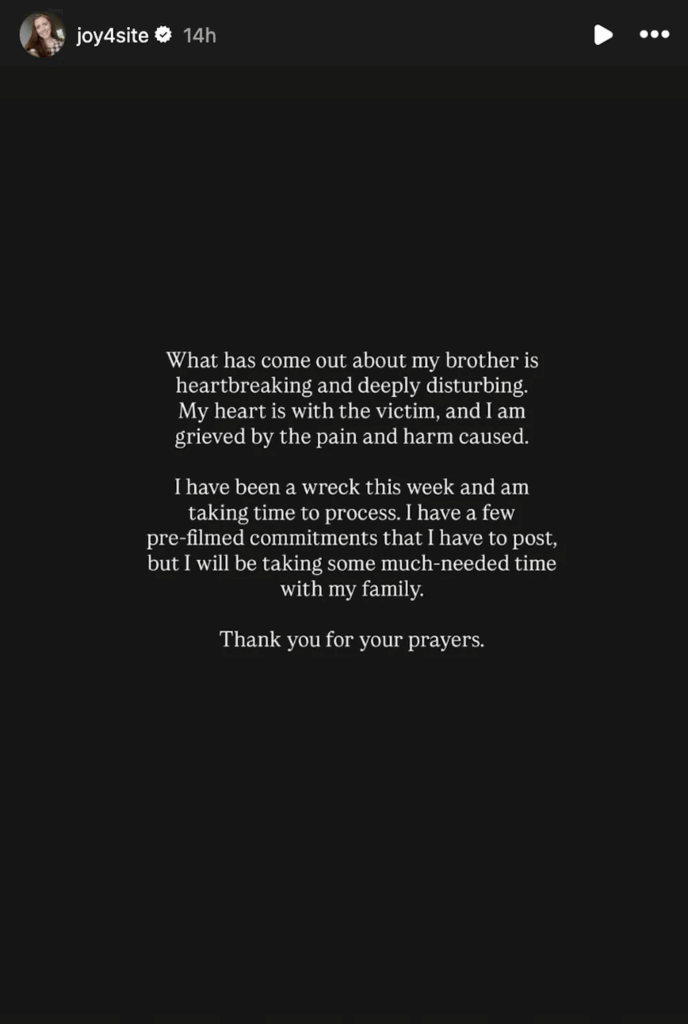
“What has come out about my brother is heartbreaking and deeply disturbing,” she wrote in her Instagram Stories.
(Instagram)
“My heart is with the victim, and I am grieved by the pain and harm caused. I have been a wreck this week and am taking time to process,” she said.
“I have a few pre-filmed commitments that I have to post, but I will be taking some much-needed time with my family. Thank you for your prayers.”
Joy-Anna is just the latest of several Duggars to speak publicly on the Joseph situation in the wake of his arrest.
“I did not think my heart could break like it has this week,” Jinger Duggar said on the latest episode of her podcast.
“The pain and heartbreak that we’ve had over this and just thinking of how it’s affected so many — yeah, it’s just unthinkable. It’s so hard and painful on many levels.”
Jinger and Joy’s cousin Amy Duggar also spoke out about Joseph, stating that the well-being of the victim is her first concern.
Joy-Anna Duggar shares a story here on YouTube. (Image Credit: YouTube)
“My first thoughts are with the victim, a child who deserved to be safe, protected and surrounded by people she could trust,” she said, adding:
“The courage it took for her to come forward, especially after years of carrying something so heavy, cannot be overstated. That bravery deserves to be honored above all else.”
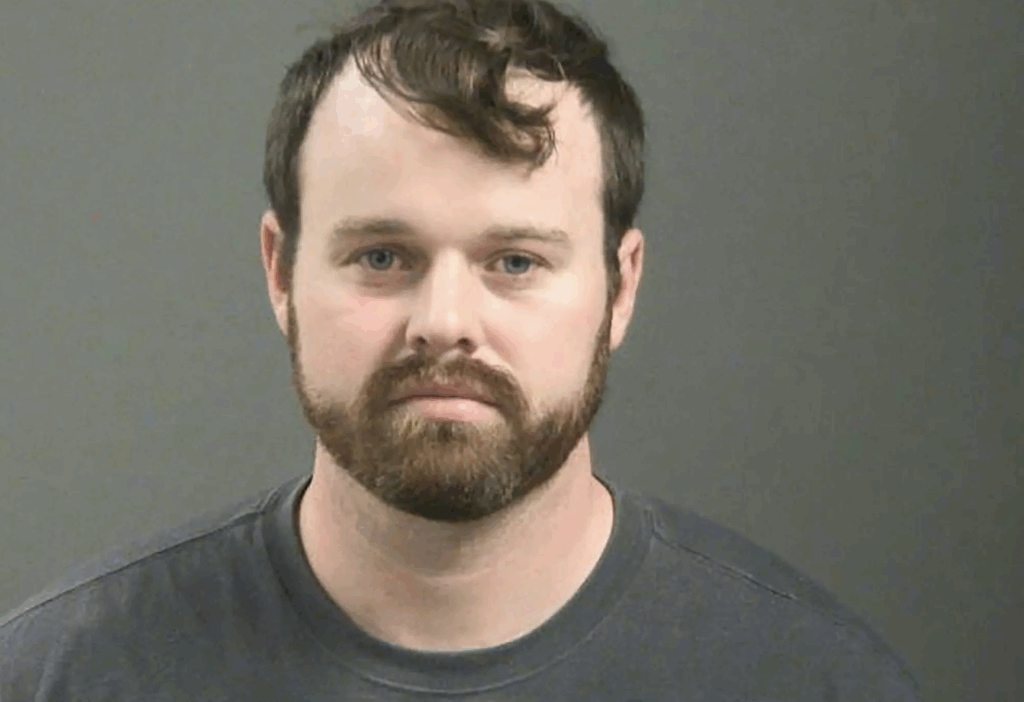
Joseph was arrested after police conducted a “forensic interview” with a 14-year-old girl who alleges that Joseph molested her during a Florida vacation in 2019.
As for Kendra, she was arrested when police searched the house and found that the doors to her children’s bedrooms had locks on the outside, indicating that she and Joseph were in the habit of locking their kids inside.
“She’s not suspected or accused of participating in his alleged crime,” a source close to the situation tells People.
We will have further updates on this developing story as new information becomes available.
Celebration comes in many forms, and for Dasha, it’s a trip to Louis Vuitton and a new Bronco with quilted seats. What a ride! Continue reading…The Boot – Country Music News, Music Videos and Songs
Celebration comes in many forms, and for Dasha, it’s a trip to Louis Vuitton and a new Bronco with quilted seats. What a ride! Continue reading…Country Music News – Taste of Country
If you want to make the quickest but gosh darn tastiest lemon frosting imaginable, you only need three simple ingredients (and you probably have them).
The United States, alongside other countries, has a growing pro-democracy and nonviolent civil movement.Oliver Helbig/Getty Images
On Feb. 24, The Conversation hosted a webinar titled, “What Americans can learn from other nonviolent civil activism movements.”
Executive editor and general manager Beth Daley interviewed John Shattuck, professor of practice at The Fletcher School of Law and Diplomacy at Tufts University, and Oliver Kaplan, associate professor at Josef Korbel School of Global and Public Affairs at the University of Denver and a visiting scholar at Stanford University.
Shattuck is the former president of Central European University in Hungary, where he defended academic freedom against a rising authoritarian government. Kaplan is the author of “Resisting War: How Communities Protect Themselves.” This interview has been condensed and edited for print.
Beth Daley: What is an authoritarian regime, and what are their characteristics?
John Shattuck: The authoritarian, often referred to as a “king,” is the ideal role from the point of view of the king, but certainly not from the point of view of the people. Authoritarian characteristics include centralized unlimited power, the opposite of democracy; no accountability and no rule of law; no independent courts; no checks and balances on how the king operates; rule by fear and coercion, and when necessary, in order to carry out the king’s orders, rule by by force. There are no individual rights or civil liberties except those the king decides to allow those who are loyal to him to have, at least until he decides to take them away.
John Shattuck defines authoritarian regimes in a sound bite from The Conversation’s webinar on nonviolent civil movements.
That’s a nutshell informal description of an authoritarian regime. A special threat today is that an authoritarian can emerge from a democratic election, and, indeed, a democratic election can be used to turn a weak democracy into an authoritarian regime. But when this happens, it opens the door to challenge the authoritarian in a subsequent election if civic activism can defend the electoral process by which the authoritarian was elected.
BD: What are we seeing and not seeing in the U.S. that other countries have gone through in terms of authoritarian government?
Oliver Kaplan: I think we are heading toward an autocracy, if not there already. In their 2026 report, the Varieties of Democracy Project writes that the U.S. is no longer a liberal democracy and is moving into “competitive authoritarianism,” marked by executive overreach and erosion of judicial and legislative checks. The report notes that U.S. democracy is being dismantled at a speed that is “unprecedented in modern history.”
One of the things we’re not seeing at full force yet is a complete shutdown of civic space. We’re able to hold this kind of conversation, and people are still able to dialogue and go out on the street. There are some efforts at curtailing free speech, and I think there’s some self-censorship possibly happening. But there’s still this open space and a powerful mass movement growing in this country.
BD: John, you were on the front lines, particularly in Hungary as the head of Central European University. What did you see there that has parallels today to the U.S.?
JS: There’s certainly a parallel between Hungary and the U.S., even though the countries are very different in size, history and background. What I saw in Hungary when I became president of Central European University in 2009 was a weak, new democracy that was only established in 1990 after 70 years of fascism and communism.
I was in Hungary from 2009 to 2016 and, despite the differences, I could begin to see some parallels. Many people had grievances in Hungary about how their economy was operating, particularly after the global financial crisis that affected Hungary more than any other Eastern European country. Then there was an urban-rural divide, the urban elite versus the rural majority in the country.
Along came a cynical populist-nationalist politician, Viktor Orbán. Orban started manipulating these grievances, and did so to significantly divide Hungarian society. He attacked many of the institutions of democracy, which were increasingly unpopular because of people’s grievances. He went after elites, and foreigners, and migrants, and the media. And he blamed all of them for the country’s problems. He then was able to ride these grievances into office.
Once in office, Orban amended the constitution and laws relating to the parliament. He undermined the independence of the media and the judiciary so as to centralize power. All of this happened while I was running an international university in Budapest, which remained independent because it received no funding from the Hungarian government. We were able to resist the increasingly authoritarian regime over issues of academic freedom. The government tried to shut down our programs of migration studies and gender studies, and tried to censor aspects of our history department.
BD: How do communities respond in different ways to authoritarian regimes?
OK: Pro-democracy movements and protection types of movements at the local level often co-occur. For example, in Colombia there have been various leftist movements and political parties that have pushed for greater democratic opening while communities mobilize to keep people safe and help them cope with repressive conditions. In places like Chile, El Salvador and Guatemala, communities built trust and support networks to provide aid, such as for people who needed food assistance. This provides space to independently operate and preserve the community.
Fact-finding and countering stigma are important, and in the U.S. we’re seeing that in the form of the video recording and publicizing of harmful actions. This has played out similarly in Syria with fact-finding to protect nongovernment organizations.
There’s also accompaniment where outside actors come in to provide support to communities. Around the world, church organizations play important accompaniment roles. We’re seeing clergy in the U.S. step up and visit places that are at risk.
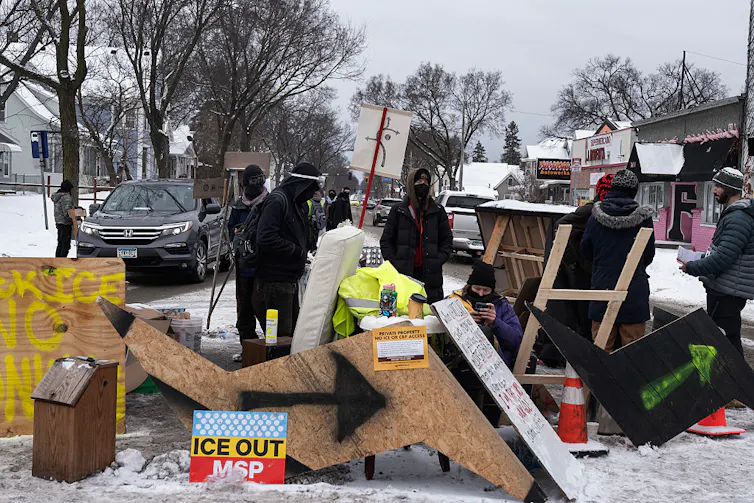
Anti-ICE protestors in Minneapolis built a barricade to monitor federal law enforcement vehicles traveling through the neighborhood. Star Tribune via Getty Images
And then, there are protests, the most visible kind of action. In Minnesota, we’ve seen communities actually setting up community barricades, which has also happened in Mexico, Colombia and Northern Ireland. Communicating the nonviolent nature of these movements is important to avoid any pretext for additional crackdowns.
I think Americans have been taking similar actions to places around the world in part because there are some similar background conditions: repression and strong social capital networks. Those two things come together to produce these strategies.
BD: Could you speak more about the need to build a clear narrative and a positive one?
JS: There are two basic rules for how to resist authoritarianism that I’ve learned from experience: Build a diverse coalition and develop a unifying theme. You need a diverse coalition in order to appeal to a broad range of the public, and in order to do that, you need agreement on the goal and values of what you’re trying to accomplish. You need a clear and unifying narrative. The narrative often involves economic issues and issues of corruption, since there’s often a great deal of corruption in authoritarian regimes.
Hungary will have its next parliamentary election in April in which Orban will seek his fifth term as prime minister. The opposition has developed a broad coalition and a unifying theme, while Orban is using the centralized instruments of government and media that he controls to try to manipulate public opinion. The opposition coalition is headed by Peter Magyar, who was once a major supporter of Orban’s government. Magyar’s name can be magical in Hungary – sort of like a “Joe America” in the U.S.
With Magyar as its head, the opposition is aiming to peel off supporters of the regime. It’s campaigning on economic grounds, with a positive message and on moderate terms. And most importantly, it includes parties from the left, right and center.
Feb. 26, 2026, webinar led by The Conversation U.S. executive editor Beth Daley, examining what we can learn from other nonviolent civil resistance movements.
Poland has succeeded in doing what the Hungarian opposition is attempting. It managed to vote out an authoritarian government by putting together a broad coalition to defend the independence of the Polish judiciary. That became a coalition to elect parliamentarians in 2023, and that succeeded in changing the government.
BD: How important is the preexisting social fabric of a community to the success of a protest movement?
JS: It’s important, but complicated. Hungary had a very weak civil society after 70 years of totalitarian fascism and communism. When I was there, the very word to “volunteer,” which we think of as the essence of community action and service, was seen to be a bad word in Hungarian because it was closely associated with collaborating with the regime.
In the U.S., we’re the opposite in a sense, although the U.S. is now slipping on this. We have a long history of volunteerism, we have all these civil society organizations, we have a tradition of barn raising, people getting together with their neighbors and doing things in their communities. This is very much a part of the American spirit and a core value.
But today, I would say a combination of consumerism and economic individualism coming out of decades of economic deregulation has caused our civil society to fray. But the authoritarian challenge that we face now, and the way in which we are beginning to respond to it, is in fact bringing communities back together again. I think what happened in Minneapolis is an example of that. And this may reflect a growing capacity to resist an authoritarian regime.
Former President, Central European University (2009-2016)
Oliver Kaplan does not work for, consult, own shares in or receive funding from any company or organization that would benefit from this article, and has disclosed no relevant affiliations beyond their academic appointment.
Barber Motorsports Park (Leeds, Ala.) — They say a picture is worth a thousand words. At Barber Motorsports Park, a picture is worth a thousand double-takes. From a big spider statue in one turn to a huge figurine of a lady’s head in a lake to a mannequin hanging from one of the bridges, this 2.3-mile, 17-turn road course is picturesque and eclectic like no other. Drivers will try not to pay attention to the artwork around the track. Well, that’s unless the mannequin Georgina falls and gets clipped by one of the cars like it did two years ago. They will likely pay most attention to Alex Palou, who led 81 of the 90 laps last year. The Children’s of Alabama Indy Grand Prix is part of a FOX-FS1 doubleheader of racing with coverage of Barber beginning at 1 p.m. ET on FOX and then the NASCAR race at Martinsville set for 3:30 p.m. ET on FS1. Here’s what to know about this race weekend at Barber: Is Alex Palou the points leader? No. No he is not for the second race in a row. Kyle Kirkwood, for the first time in his five seasons in the series, leads the standings. Yes, it is only after three races of an 18-race schedule, but he is the leader. “Hopefully it’s not just for one weekend,” Kirkwood told me and other reporters Friday morning. “It’s a good feeling to be the points leader for the first time ever in an INDYCAR championship. I haven’t led a points championship since Indy Lights in 2021 so it’s a pretty big deal. “It’s a fun time to be alive in INDYCAR racing. Given that, we’re three races in. It’s not really a big focus right now, but it is a nice feather in my cap to say I had led an INDYCAR championship. And hopefully that trend does continue.” Prior to coming over to the media, Palou talked to Kirkwood. He said they weren’t talking about points. They were talking about the IMSA race at Sebring last weekend. “It’s rough,” the three-time defending series champion Palou sarcastically told me and other reporters Friday morning about not being the points leader. “It’s tough.” [INDYCAR INSIGHTS: Rotating Points Leaders Means More INDYCAR Parity] Can Palou lead 81 laps again? He can. But much like the way he views his overall dominance from last year, he views a repeat performance as tough. “Last year was great for the 10 car [of me],” Palou said. “Who knows [if it will be the same]. We will try. I think it changes every year. Two years ago, we’re not like that. Then last year we were. So hopefully [we are]. “It’s a place I love. I’m excited to be back on a road course. Finally, first one of 2026.” Can Andretti Have Clean Pit Stops? Andretti Global teams had a rough day on pit road at Arlington. The organization did not make changes for Barber. “Pit stops are not my job, so I just drive the car, hit the marks, and that’s it,” Kirkwood said. “On our car, we were having an issue with the right rear, and we know exactly what was happening. “We’ve been really good at pit stops at the beginning of the year. Across the board, we’re all faster than we have been. But we just need the consistency now and to tie it all together.” Kirkwood doesn’t get into suggesting what they can do better. He just tries to keep his crew motivated. “When I saw our rear right guy, Adam [Martin] after the race, I just was like: Listen, dude, you’ve been great all season, yes, there’s a couple of hiccups this weekend, but we know how good you are. Don’t be too hard on yourself. We know we’re going to rebound here at Barber, and everything’s going to be fine,” Kirkwood said. Who Might Surprise Fans? Nolan Siegel started sixth and finished ninth at Barber last year. The Arrow McLaren driver could really use that type of day as he has had finishes of 20th, 20th and 24th this year. “It’s interesting and almost more frustrating in a way because I actually feel like this year has felt much better than the majority of the races last year,” Siegel told me and other reporters Friday morning. “I feel like the team has worked well together. I feel like the execution has actually been quite good, and the results have been just really poor. We have not matched kind of the way that I felt. It’s exciting to come here where we know we’ll be strong and just try to kind of get the results going and get some momentum building.” [INSIDE THE GARAGE: How Bad do Drivers Want to Beat Former Teammates?] How Is Mick Schumacher Doing? Former F1 driver Mick Schumacher sits last in the standings but he’s optimistic. He never got a chance to race at St. Pete after getting taken out on a first-lap crash. Phoenix was his first oval. And then he had a drive-through penalty for avoidable contact at Arlington. “Overall, I think that the results don’t really speak for the performance that we’ve shown,” Schumacher told me and other reporters Friday morning. Was There A Penalty From Arlington? Yes, INDYCAR explained on Wednesday afternoon that Kyffin Simpson would be penalized to the tail end of the lead lap for unavoidable contact on the restart before the one-lap dash to the finish March 15 at Arlington. Simpson finished 19th, as he was able to continue after the wreck, finishing ahead of Felix Rosenqvist. They ended up switching positions with Rosenqvist 19th and Simpson 20th. “I get it,” Simpson told me and other reporters on Friday morning. “The incident was my fault. I take responsibility for it, so I understand the penalty.” Will The Same Format As Arlington Be Used For Qualifying? No. The final round of the six fastest drivers will be a group session. INDYCAR experimented at Arlington by sending them out one at a time for one lap. The sanctioning body is still evaluating whether to use that format again. The issue at Arlington was because they went from slowest to fastest in the final round. The sixth-fastest driver from the previous round got to go out first and had more heat in his tires. Do they give an extra set of tires for use in the final round if they go single-car? Is it that big a benefit? The biggest benefit is that those drivers and teams get the attention for a couple of minutes with no other cars on the track. “[Those cars] should get exposure for that. … People talking about them, it creates this excitement, Team Penske driver Scott McLaughlin told me and other reporters Friday morning. Are The Tire Rules The Same As Arlington? No. There are different tire-use rules on permanent road courses than on street courses. The rule for street courses is that teams must use at least two sets of soft tires (used or new) and at least one set of primary tires (used or new) during the race. The rule for road courses is that teams must use at least one set of new soft tires and at least one set of primary tires (used or new) during the race. What Else Should Fans Watch For? There will be tributes throughout the weekend to track founder George Barber, who died in February. He was 85. His passionate advocacy for INDYCAR and motorsports is seen throughout the course, which in some ways is one big tribute to him and his vision.Latest Sports News from FOX Sports
Sylvia Chou quit her job at the National Cancer Institute in January, after working for the agency for more than 15 years. She says the Trump administration took a “sledgehammer” to the agency. (Eric Harkleroad/KFF Health News)
Marc Ernstoff, a physician who has pioneered immunotherapy research and treatments for cancer patients, said his work as a federal scientist proved untenable under the Trump administration.
Philip Stewart, a Rocky Mountain Laboratories researcher focused on tick-borne diseases, said he retired two years earlier than planned because of hurdles that made it too challenging to do his job well.
Alexa Romberg, an addiction prevention scientist focused on tobacco, said she “lost a great deal” of the research she oversaw when federal grants vanished.
“If one is thinking about the ‘Make America Healthy Again’ agenda and the prevention of chronic disease,” Romberg said, “tobacco use is the No. 1 contributor to early morbidity and mortality that we can prevent.”
The National Institutes of Health is the largest public funder of biomedical research in the world, with a mission statement to “enhance health, lengthen life, and reduce illness.”
Over decades, the value of the NIH may be the one thing everyone in Washington has agreed on. Lawmakers have routinely boosted its funding.
“I’m so pleased to be associated with NIH,” former Sen. Roy Blunt, a Missouri Republican and one of the NIH’s biggest champions in Congress, said in 2022 shortly before he retired.
But in President Donald Trump’s second term, the NIH has seen an exodus of scientists like Ernstoff, Stewart, and Romberg. Federal data shows the NIH lost about 4,400 people — more than 20% of its workforce. Scientists say the departures harm the U.S.’ ability to respond to disease outbreaks, develop treatments for chronic illnesses, and confront the nation’s most pressing public health problems.
“People are going to get hurt,” said Sylvia Chou, a scientist who worked at the National Cancer Institute in Rockville, Maryland, for over 15 years before she left in January. “There’s going to be a lot more health challenges and even deaths, because we need science in order to help people get healthy.”
Why They’re Leaving
KFF Health News interviewed a half dozen scientists who said they quit their jobs years before they’d planned to because of the tumult of 2025.
Only a few years ago, the NIH workforce was steadily growing, from roughly 17,700 employees in fiscal year 2019 to around 21,100 in fiscal 2024, federal data shows. Under Trump, those gains have been slashed.
The Trump administration enacted a campaign to purge government workers perceived as disloyal to the president. People were fired or encouraged to leave. Officials instituted a months-long freeze on hiring.
The NIH workforce has plummeted to about 17,100 people — its lowest level in at least two decades. Most who left weren’t fired. Roughly 4 in 5 either retired, quit, had appointments that expired, or transferred to a different job, according to federal data.
Physician Marc Ernstoff joined the National Cancer Institute in 2020 to shepherd research on how the immune system responds to cancer, to advance the development of drugs that help patients live longer. Ernstoff said he left his job in October because, under President Donald Trump, the National Institutes of Health had turned into a “hostile work environment” and he was denied permission to work remotely. “I was not ready at all to retire,” Ernstoff says. (Rob Strong for KFF Health News)
Scientists watched with dread as their colleagues were forced to terminate research funds for topics the Trump administration deemed off-limits. Across NIH labs, routine work stalled. They said they faced major delays in accessing equipment and supplies. Travel authorizations were slowed or denied.
Agency staff were instructed not to communicate with anyone outside the agency. When they could talk again, they were subject to greater constraints on what they could present to the public.
And under the administration’s agenda to eliminate “diversity, equity, and inclusion,” references to minorities or health equity were purged from NIH-funded research. Initiatives to protect Americans’ health were gutted. Among them: support for early-career scientists, ways to prevent harm from HIV or substance use, and efforts to study how different populations’ immune systems respond to disease.
In a January op-ed, Chou and Romberg were among a group of NIH scientists who said they resigned in protest of an administration “that treats science not as a process for building knowledge, but as a means to advance its political agenda.”
Alexa Romberg says she thought she would spend the rest of her career at the NIH before the Trump administration made it untenable. “It took a long time to really decide to give up on that, and that that wouldn’t be the future for me,” she says.(Eric Harkleroad/KFF Health News)
A ‘Fundamental Destruction’
Health and Human Services spokesperson Emily Hilliard said in a statement that the agency had shifted to focus on evidence-based research over “ideological agendas.” She said the NIH is still recruiting “the best and brightest” and advancing high-quality science to “deliver breakthroughs for the American people.” The federal health department oversees NIH.
“A major reset was overdue. HHS has taken action to streamline operations, reduce redundancies, and return to pre-pandemic employment levels,” Hilliard said.
Many scientists, however, question whether the NIH can still fulfill its public mission.
“There’s been a fundamental destruction,” said Daniel Dulebohn, a researcher who spent nearly two decades at Rocky Mountain Laboratories in Hamilton, Montana. It’s going to “take a very, very long time to rebuild.”
Dulebohn left the NIH’s infectious disease and allergy institute in September.
He analyzed how molecules and proteins interact in diseases, such as Lyme disease, HIV, and Alzheimer’s — information that’s key for new treatments. Dulebohn was a resource for scientists when they hit walls trying to understand, for example, if molecules could prevent infection or react to a treatment.
Now he and his wife are living off savings in Mexico with their three young kids. Dulebohn’s thinking about what’s next. One option: real estate.
The expert in biochemical analysis operated equipment few others know how to use. His exit further depletes resources in the specialty.
“It’s clear when someone comes out with a drug and now you’ve just cured a disease. But you never know which ones could have been cured,” Dulebohn said. “We don’t know what we’ve lost.”
Laura Stark, a Vanderbilt University associate professor who specializes in the history of medicine and science, said wiping out NIH staff will propel a shift toward private-industry research, with its profit motives, “as opposed to actually helping American health.”
“We just don’t have people who are now able to pursue research for the public good,” Stark said.
From Support to Scrutiny
Stark said the seeds of the present-day NIH were planted during World War II when the U.S. government spearheaded an effort to mass-produce the antibiotic penicillin to save soldiers from infections.
The agency has played a central role in lifesaving discoveries and treatments — including for heart disease, cancer, diabetes, and genetic diseases such as cystic fibrosis.
With bipartisan backing from Congress, the NIH budget has grown significantly over time, sitting at $48.7 billion for fiscal 2026. The NIH allocates roughly 11% of its budget for agency scientists. About 80% is awarded to universities and other institutions.
The money may be there, but the people who get it out the door are not, scientists said.
Jennifer Troyer left the National Human Genome Research Institute in Bethesda, Maryland, on Dec. 31, after working in various positions at the NIH for about 25 years. The division she led reviews research and oversees grants to organizations studying the human genome — or a person’s complete set of genes — and how it can be used to benefit health.
Last year, she said, her division lost about two-thirds of its staff. “There really are not enough people there right now to actually get the work done,” Troyer said. “It’s extreme harm.”
She decided to quit the day Trump issued an executive order in August that prohibited the use of grants to “fund, promote, encourage, subsidize, or facilitate” what it described as “anti-American values.” It also allowed political appointees to review all funding decisions.
“I wasn’t going to operate a division under those orders,” Troyer said. She hasn’t figured out her next career steps.
Jennifer Troyer left her job at the National Human Genome Research Institute in December, after working at the NIH as a contractor or civil servant for more than two decades.(Eric Harkleford/KFF Health News)
‘Enough Is Enough’
Research aligned with the administration’s stated priorities has suffered.
HHS Secretary Robert F. Kennedy Jr. has called the diagnosis and treatment of Lyme disease — a tick-borne infection that can cause debilitating lifelong symptoms — a priority. In December, Kennedy said the government had long dismissed patients burdened with a disease that nearly 500,000 people in the U.S. are diagnosed with annually.
Philip Stewart says the Trump administration had created too many hurdles over the past year for him to do his job well.(Katheryn Houghton/KFF Health News)
That same month, Stewart, who had dedicated his career to ticks and Lyme disease as a federal scientist, retired early. He’d worked for the government for 27 years. Stewart said workforce cuts and travel delays stalled his efforts to confirm how far Lyme-carrying ticks had spread — information that could help doctors recognize symptoms sooner.
Stewart was a lead scientist on research published last year identifying a black-legged tick, or deer tick, in Montana. It was the first time the tick best known for transmitting Lyme disease had been confirmed in the state. He wanted to determine if the discovery was a fluke or an indicator that the species was gaining ground.
“The advice we’ve been getting is, ‘Put your head down below the trench line. Don’t look. Don’t peek over and risk getting shot,’” Stewart said. “At what point do you finally say, ‘Enough is enough’ and ‘We’re not being effective anymore’?”
Scientists said those early in their careers are looking abroad for jobs and training. People who want to stay in the U.S. are running into problems getting hired because of cuts to research grants and uncertainty about funding.
Collectively, people studying diseases warn the U.S. could lose its long-held position as the global leader in biomedical research, with devastating impact.
Stanley Perlman, a University of Iowa virologist who studies pediatric infectious diseases, said that title earned the nation more than prestige; it drew top scientists from the world over to the U.S. to study diseases that particularly affect people here.
There’s no guarantee halted research will be picked up elsewhere, whether by private industry or other countries. If others are doing that work, Americans could face delays in seeing benefits, he said.
“If you don’t have access to how the work was done,” Perlman said, “it’s harder to reproduce and adapt it for your country.”
KFF Health News data editor Holly K. Hacker contributed to this report.
KFF Health News is a national newsroom that produces in-depth journalism about health issues and is one of the core operating programs at KFF—an independent source of health policy research, polling, and journalism. Learn more about KFF.
Subscribe to KFF Health News’ free Morning Briefing.
In the months since Charlie’s death, Erika has been on a nonstop media tour, hosting rallies, granting interviews, even being invited to the White House.
Some have accused her of exploiting her husband’s death or seeming inappropriately gleeful during her period of grief.
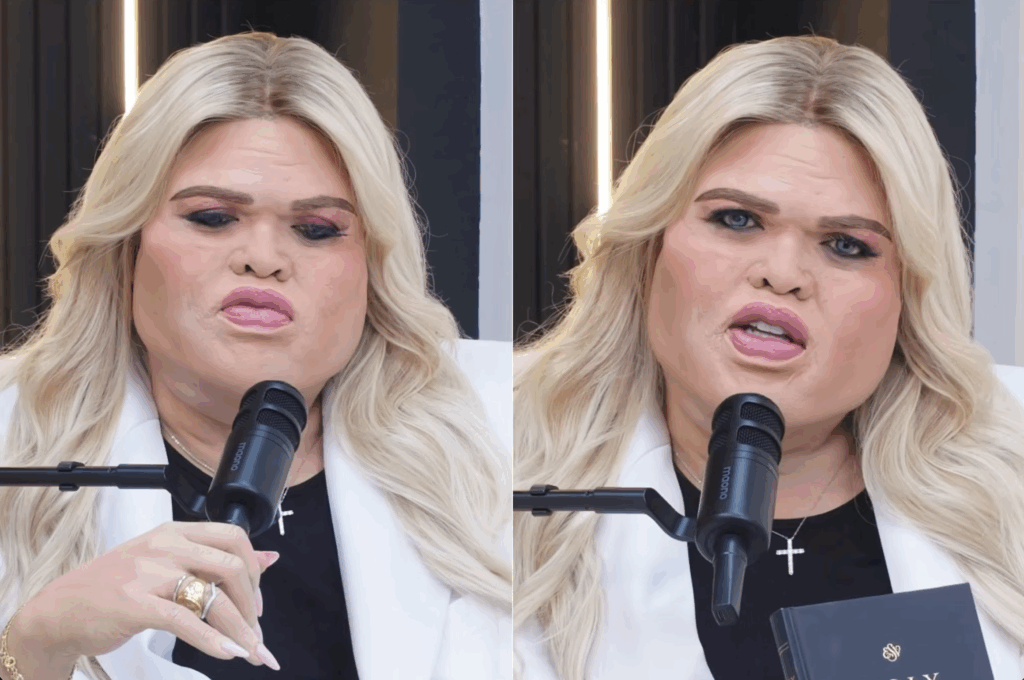
Druski’s sketch doesn’t call out Erika by name — but there’s no mistaking the fact that she’s being roasted.
“How Conservative Women in America act,” he captioned the video above.
The two-minute sketch skewers Erika’s rallies, as well as comments she’s made during some of her viral interviews.
“I serve a righteous God, and that is why we say our prayers. We are all his children, and when I say children, I mean the holy blessed Trinity, which is why I hold the Bible,” Druski (as Erika) says in the video.
“We have to protect all men in America, especially the white men in America. Those are the ones we care about. Yes, because they are the ones who matter most.”
We don’t need to tell you that these are very divisive times in America.
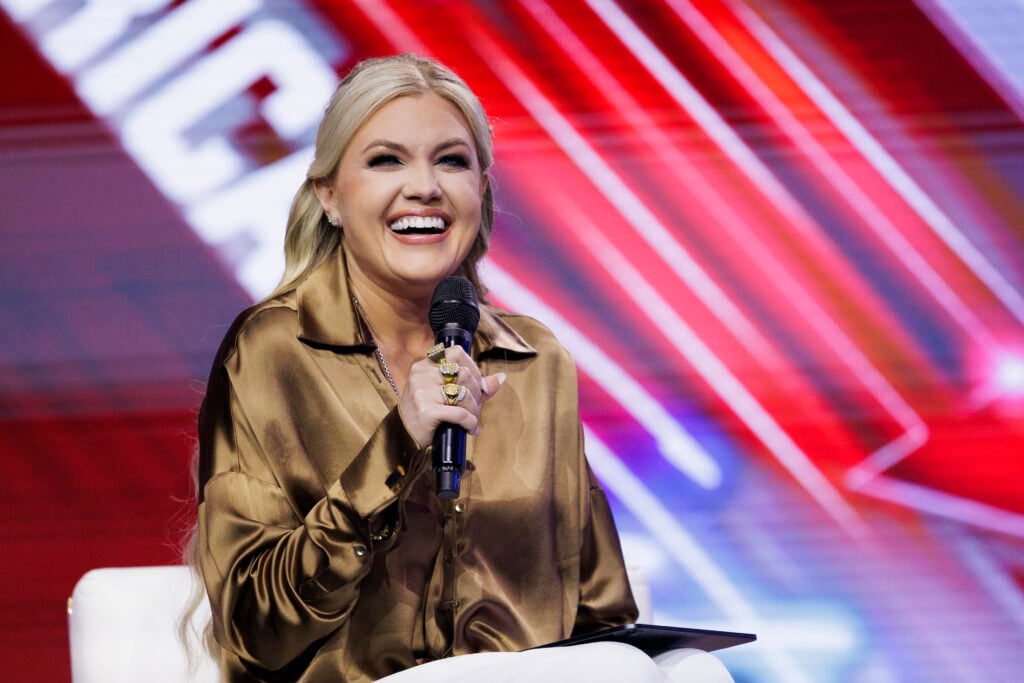
Erika Kirk interviews surprise guest Nicki Minaj on the final day of Turning Point USA’s annual AmericaFest conference at the Phoenix Convention Center on December 21, 2025 in Phoenix, Arizona. (Photo by Caylo Seals/Getty Images)
So it’s not surprising that many on the Right have taken issue with
“Of all conservative women in America why her? This woman is [still] grieving,” one X user wrote.
“Is this a joke? You think this is funny? Making fun of Erika Kirk? You’re a disgusting piece of you know what,” another added.
“This is too far man… You were completely disrespectful during NFL Honors & now you’re making fun of Erika Kirk, whose husband was brutally assassinated. This ain’t it,” conservative commentator Jon Root wrote on X.
Root is referring to an incident at the 2026 NFL Honors Awards, where Druski mispronounced the name of Seattle Seahawks wide receiver Jaxon Smith-Njigba’s name while presenting him with the Offensive Player of the Year Award.
Neither Erika nor Druski has commented on the controversy publicly. But something tells us Erika is probably less than thrilled with Druski’s portrayal.










![<a href="https://theboot.com/ixp/204/p/dasha-splurge-purchases-bronco-designer-bags/" target="_blank">[EXCLUSIVE] We Want to Take a Ride in Dasha’s Splurge Purchase</a>](https://townsquare.media/site/204/files/2026/03/hqdefault1.jpg?format=natural)