Categories
Alaska News

As waters around Alaska warm, algal toxins are turning up in new places in the food web

Two dead northern fur seals are seen on the beach on St. George Island in August 2025. Both tested positive for saxitoxin, the algal toxin that causes paralytic shellfish poisoning. (Photo provided under Permit #23283 by the National Oceanic and Atmospheric Administration's Fisheries Service)

Two dead northern fur seals are seen on the beach on St. George Island in August 2025. Both tested positive for saxitoxin, the algal toxin that causes paralytic shellfish poisoning. (Photo provided under Permit #23283 by the National Oceanic and Atmospheric Administration’s Fisheries Service)

Over the past two summers, a pair of remote and treeless volcanic islands in the eastern Bering Sea broadcast signals of climate change danger in the marine ecosystem that feeds Alaska residents and supports much of the state’s economy.

The Pribilof Islands, a four-island archipelago in the eastern Bering Sea, are seen on a map of Alaska. In inset shows a close-up of St. Paul Island and St. George Island. (Map provided by the National Oceanic and Atmospheric Administration Fisheries Service)

Tribal employees monitoring St. Paul Island’s beaches came across 10 dead but seemingly well-fed northern fur seals in August of 2024, their bodies lying amid piles of dead fish and birds.

Testing revealed that the seals had been killed by an algal toxin that causes paralytic shellfish poisoning. It was the first ever conclusive case of marine mammals killed by saxitoxin, the algal toxin that causes paralytic shellfish poisoning.

The people living on St. Paul, numbering about 400, most of them Unangax, are highly dependent on the marine environment for their food. They are aware of the algal toxins that pose risks of paralytic shellfish poisoning in faraway Southeast Alaska. But seal deaths from algal toxin poisoning on their own island came as a big surprise to local people, said Aaron Lestenkof, who is part of the tribe’s Indigenous Sentinels Network.

“It never occurred to us that it may happen to our marine mammals here,” Lestenkof said. “I guess it was just a matter of time.”

St. Paul Island is seen on Nov. 6, 2010. About 400 people live on the islandm, which is about 750 miles west of Anchorage in the Bering Sea. (Photo by Jim Greenhill/Alaska National Guard)
St. Paul Island is seen on Nov. 6, 2010. About 400 people live on the island, which is about 750 miles west of Anchorage in the Bering Sea. (Photo by Jim Greenhill/Alaska National Guard)

The St. Paul die-off was not a one-time incident. In August of 2025, tribal residents found 21 dead fur seals on a beach at St. George Island, a sister island of St. Paul. Along with the seals were two dead fin whales, a dead sea lion and several dead seabirds.

The events show that deadly levels of algal toxins, once believed to be confined to the warmest waters in the warmest months in southernmost Alaska, are spreading north and into regions and parts of the food web that previously caused no worry for local people.

“This is the scary, ‘I-don’t-know’ moment of this event now happening in consecutive years,” said Mike Williams, one of the National Oceanic and Atmospheric Administration biologists who happened to be on scene at St. George to gather samples and document the event.

St. Paul and St. George, which has about 70 residents, are the only inhabited islands in the four-island Pribilof archipelago. Located about 750 miles west of Anchorage and 300 miles from the mainland, the islands are far from Alaska’s population centers. But the Pribilofs are at the center of a Bering Sea ecosystem so rich with marine life that they are sometimes called the “Galapagos of the North.”

The waters around the islands support some of the nation’s biggest seafood harvests, with vessels catching pollock, cod, halibut, crab and other fish. Millions of migratory seabirds of a dozen species flock each year to nest in the Pribilofs. The Pribilofs are the breeding grounds for two-thirds of the world’s approximately 1 million northern fur seals. Each summer, they gather on the islands’ rocky beaches in noisy congregations to give birth to and nurture their young, molt their fur and rest.

Parakeet auklets perch on a rocky ledge in Alaska Pribilof Islands in 2010. (Photo by Allen Shimada/National Oceanic and Atmospheric Administration)

The algal discoveries on the St. Paul and St. George beaches point to a bigger phenomenon in the ecosystem, but how much bigger is yet to be determined.

“The problem is they die at sea. They’re being poisoned at sea, and they can’t even make it back to land, right?” Williams said.  “We don’t know how this may have population consequences because we don’t really have a true estimate of the number of animals that are dying.”

Paralytic shellfish poisoning: a history

Paralytic shellfish poisoning is a long-known hazard in the southern coastal areas of Alaska and other warmer parts of the world. Alaskans still know a spot in Southeast Alaska as Poison Cove, named for the approximately 100 people who died in 1799 after eating tainted mussels. The victims were Native hunters, either Unangan or Alutiiq, who had been brought to the site by Russian colonizers.

Saxitoxin is colorless and odorless. It cannot be cooked out or frozen out of food. Once ingested, there is no antidote. The poison acts within minutes, interfering with signals from the nervous system that enable vital bodily functions. In mild cases, many of which may go unreported, patients feel some numbness and possibly nausea and other symptoms before recovering. In fatal cases, saxitoxin blocks the nervous system’s functions, causing paralysis that suffocates victims.

From 1992 to 2021, 132 people in Alaska were reported sickened with paralytic shellfish poisoning, according to state epidemiologists. Between 1994 and 2020, five people died after eating saxitoxin-tainted food.

A chain of Alexandrium catenella cells is seen under a microscipe. (Photo by Brian Bill/National Oceanic and Atmospheric Administration)
A chain of Alexandrium catenella cells is seen under a microscope. (Photo by Brian Bill/National Oceanic and Atmospheric Administration)

Understanding the exact chemical process that leads to paralytic shellfish poisoning took decades of scientific research. Saxitoxin was first identified in 1937 in an Alaska butter clam by a team led by Hermann Sommer at the University of California, San Francisco. They named the toxin for the species of the clam in which it was found: Saxidomus gigantea.

In later decades, researchers purified saxitoxin extracted from host clams and mussels. That led to a covert military operation. During the 1950s, the Central Intelligence Agency made mass purchases of tainted Alaska clams and developed saxitoxin into an alternative to the cyanide capsules that spies would use to kill themselves as a last resort if caught. Francis Gary Powers, the spy plane pilot who was shot down over the Soviet Union in 1960, was carrying a lethal dose of saxitoxin hidden in a modified silver dollar. He did not use it; he was freed in a spy trade in 1962.

The days of saxitoxin as a military tool are over. Now the ominous factor is climate change.

Saxitoxin is produced by a particular algae species, Alexandrium catenella, that blooms in warm conditions. The association of warmth and algal toxin risks was well-known; an old rule of thumb for harvesters was to gather clams only in months with the letter R in their names. An even older guideline was to use the end of herring spawning — an event usually in late spring — as the signal to pause harvests of clams for the season.

There are inescapable facts about the proliferation of Alexandrium and other harmful algae in Alaska: Ocean waters are getting warmer, and staying warmer longer, meaning there are more blooms producing more toxins and creating more exposure risks for marine life and for the people who depend on food from the sea.

Kathi Lefebvre, a NOAA Fisheries research biologist who specializes in algal toxins, ran through the trends during a presentation at January’s Alaska Marine Science Symposium in Anchorage. She showed charts and graphs of reduced sea ice, warming temperatures and Alexandrium blooms even in Arctic waters north of the Bering Strait.

One of two dead fin whales found on beach at St. George in August 2025 is show splayed on beach. At the same site, 21 dead northern fur seals were found, along with some dead birds and a dead sea lion. Logistics precluded testing of the dead whales, but the fur seals were found to have been killed by saxitoxin, the algal toxin that causes paralytic shellfish poisoning. (Photo provided by Lydia Kleine/National Oceanic and Atmospheric Administration)
One of two dead fin whales found on beach at St. George in August 2025 is shown splayed on beach. At the same site, 21 dead northern fur seals were found, along with some dead birds and a dead sea lion. Logistics precluded testing of the dead whales, but the fur seals were found to have been killed by saxitoxin, the algal toxin that causes paralytic shellfish poisoning. (Photo provided by Lydia Kleine/National Oceanic and Atmospheric Administration)

“Do we predict that these blooms will continue to increase and toxins will be increasing in Arctic food webs? Yes, they will,” Lefebvre said in her presentation.

Risks increasing in the Bering Sea and farther north

Eight years before the St. Paul die-off, Lefebvre and her colleagues published a landmark study that documented at least trace amounts of algal toxins in each of the 13 marine mammal species tested, as far north as the Beaufort Sea in the Arctic. Toxins detected included a domoic acid, produced by an algae called Pseudo-nitzschia and the cause of mass die-offs of sea lions, seals and other marine mammals in California. Domoic acid has not yet proved to be a problem in Alaska, but scientists are watching for trends.

A more recent study led by Lefebvre found saxitoxin in feces of bowhead whales swimming in the Arctic.

In 2019, an especially warm year, scientists retrieved clams from the Bering Strait and Chukchi Sea that had levels of saxitoxin well above the threshold for safe consumption by people. That coincided with a large Alexandrium bloom in the region. Three years later, in another warm year, the Northern Bering Sea had one of the largest and densest Alexandrium blooms ever recorded in the nation, indicating more risks for poison-laden clams.

In July of 2024 and July of 2025, a month before each of the Pribilof seal die-offs, large blooms developed around those islands.

Don Anderson, an expert on harmful algal blooms who runs a lab at the Woods Hole Oceanographic Institution in Massachusetts, said there are now two major sources of far-north blooms.

Alexandrium catenella cyst distribution as mapped in surface sediments during 2018 and 2019 research cruises. (Map provided by Don Anderson/Woods Hole Oceanographic Insitution)

Alexandrium catenella cyst densities in the shallow sedimentr, as indicated by sampling during a 2024 research cruise. (Map from Lefebvre et al., "Saxitoxin Linked to Deaths of Northern Fur Seals in the Southeast Bering Sea," Marine May 26, 2025)
Alexandrium catenella cyst densities in the shallow sedimentr, as indicated by sampling during a 2024 research cruise. (Map from Lefebvre et al., “Saxitoxin Linked to Deaths of Northern Fur Seals in the Southeast Bering Sea,” Marine May 26, 2025)

An Alexandrium bloom near the Pribilofs, as tracked from Aug. 2 to Aug. 4, 2025 by scientist aboard the research vessel Sikuliaq, is shown on a map. The bloom was detected just before fur seals and other marine mammals, along with some birds, were found dead on St. George Island, (Map provided by Evie Fachon/Anderson Lab, Woods Hole Oceanographic Institution)
An Alexandrium bloom near the Pribilofs, as tracked from Aug. 2 to Aug. 4, 2025 by scientists aboard the research vessel Sikuliaq, is shown on a map. The bloom was detected just before fur seals and other marine mammals, along with some birds, were found dead on St. George Island. (Map provided by Evie Fachon/Anderson Lab, Woods Hole Oceanographic Institution)

Most of that algae is believed to have been carried north by ocean currents. But climate change has created a possible bigger local source of blooms, he said: germination from massive seed beds that are, by far, the largest and most concentrated ever documented in the world.

The Bering, Chukchi and Beaufort seas used to be dead ends for Alexandrium cysts, the equivalent of seeds. They settled in the sediment after decades and centuries of being washed north, remaining dormant in the cold temperatures.

“We kept having repeated inputs of transported blooms from the south, and that gave us these enormous cyst concentrations that we haven’t seen anywhere else in the world, something we’ve called the sleeping giant,’” Anderson said in a presentation at the marine science symposium in Anchorage.

The warm conditions that enable them to germinate have arrived, albeit sporadically. If temperatures at the seafloor reach a little over 8 degrees Celsius, the cysts can germinate within about 10 days and proliferate during the long daylight hours of Alaska summers, he said.

The new findings have created unease for some Western Alaska residents.

Valerie Tony of Alakanuk, a Yup’ik village near the mouth of the Yukon River, is one of them. At a February workshop on algal toxins held in Anchorage, she asked about the abundant freshwater clams that her people harvest from tundra ponds.

“Does that mean our clams are no good now?” Tony asked. “Any kinds of toxins, we’ve never had to deal with these before.”

The bivalves enjoyed in Alakanuk and other Yukon-Kuskokwim Delta villages are actually mussels colloquially known as Yukon floaters. They should be safe for now, said Thomas Farrugia, coordinator of the Alaska Harmful Algal Bloom Network, a multiagency program.

For St. Paul and St. George residents, food questions are a bit different.

The traditional subsistence diet in the Pribilofs relies little on clams or mussels, wild foods that are the usual sources of the toxins that give people paralytic shellfish poisoning. But residents of St. Paul and St. George rely heavily on the sea for food. That includes fish, like halibut, cod and crab, but also fur seals that are legally hunted in traditional Indigenous harvests.

It is unclear how the fur seals are getting exposed to saxitoxins. Unlike marine mammals considered to be at risk for algal toxins like clam-gobbling walruses and sea otters,  fur seals do not eat bivalves. They do eat squid and schooling fish, including a tiny, slender, silvery fish called sand lance, which is known to absorb large concentrations of saxitoxin.

Lydia Kleine and Mike Williams, National Oceanic and Atmsopheric Administration scientists who were on scene at St. George Island in August 2025, stand on Jan. 27, 2026, by a poster describing the die-off of fur seals there. Kleine and Williams presented information at the Alaska Marine Science Symposium in Anchorage about the dead fur seals, whales and other animals they found on the island. (Photo by Yereth Rosen/Alaska Beacon)
Lydia Kleine and Mike Williams, National Oceanic and Atmsopheric Administration scientists who were on scene at St. George Island in August 2025, stand by a poster describing the die-off of fur seals there on Jan. 27, 2026. Kleine and Williams presented information at the Alaska Marine Science Symposium in Anchorage about the dead fur seals, whales and other animals they found on the island. (Photo by Yereth Rosen/Alaska Beacon)

Luckily for seal hunters, Lestenkof said, the new pattern of Alexandrium blooms seems to be timed to late summer, in between early summer and autumn hunts. But whatever fish the dead seals were eating could be food that the people eat as well.

Sitka a model of testing

About 1,300 miles east of St. Paul, in the rainforest-surrounded coastal town of Sitka, a tribally-operated lab was established in 2016 to help keep locally harvested food safe.

The Sitka Tribe of Alaska Environmental Research Lab is the state’s main algal toxin testing facility for personal harvests. The other main lab in the state, located in Anchorage and operated by the Alaska Department of Environmental Conservation, focuses on commercial harvests.

The Sitka lab accepts any samples brought or sent to it. Mostly, those have been from harvests from Southeast Alaska, though it has tested samples from as far away as Nome.

The lab uses a method called Receptor Binding Assay, a widely used scientific method that measures how well certain chemicals bind to selected materials.

As Environmental Lab Manager Matteo Masotti describes it, the process used in Sitka is intended to parallel what would happen if people ate the tested clams, mussels and other items.

Nicole Filipek, environmental lab analyst at the Southeast Alaska Tribal Ocean Resarch laboratory operated by the Sitka Tribe of Alaska, holds a horse clam sent for algal toxin sampling, Dec. 15, 2025. (Photo by Yereth Rosen/Alaska Beacon)

The testing starts with a slurry created once shellfish are delivered. “We blend them up into what we call a shellfish smoothie,” Masotti said. Effective testing generally requires six individuals or 100 grams of tissue, he said.

From there, acid is extracted, “basically simulating the pH of the stomach as if someone was digesting.” Then samples are tested for how well they bind to a swine tissue, a stand-in for a human stomach membrane. Once samples bind, another material is added that converts their chemical radiation into flashes. Those flashes reveal saxitoxin quantities.

It is only one method of testing shellfish. Other labs, such as the state’s Anchorage lab, use different methods, each of which have advantages and disadvantages.

The goal in Sitka is to get results to people within a couple of days, which is not always easy.

“The people out there have to harvest the shellfish, they have to get it to the airport, send it to us – assuming it doesn’t get delayed at the airport and assuming we pick it up immediately, which we try to be really good about,” he said. “We get them, we have to blend them up, we have to extract them, we have to then run them on the test, and then we have to analyze the test. And so we try to give people results in one to two business days after submission. Not always possible, but we do our best.”

There is even a slogan for the process of waiting for test results: “Harvest and Hold.”

In a lot of ways, the Sitka operation is a big success story.

Amos Philemonoff a fraditional foods assistant for the Sitka Tribe of Alaska, stands outside the resource protection building on Dec. 15, 2025. He is from St. Paul but has been living in Sitka and is a graduate of Mount Edgecumb High School. (Photo by Yereth Rosen/Alaska Beacon)
Amos Philemonoff, a traditional foods assistant for the Sitka Tribe of Alaska, stands outside the resource protection building on Dec. 15, 2025. He is from St. Paul but has been living in Sitka and is a graduate of Mount Edgecumbe High School. (Photo by Yereth Rosen/Alaska Beacon)

Sienna Reid, a young tribal employee who grew up in Sitka, said the lab’s operations are giving people confidence that their traditional harvests are safe.

She said she has seen no decline in clamming, despite what is now an abundance of information about algal toxins’ presence in the environment. That was not the case in the past, she said. “I remember clam digging growing up. I don’t remember even thinking about algal toxins,” she said.

But for Amos Philemonoff, another young tribal employee who happens to be from St. Paul, information about algal toxins is still off-putting.

When he learned from a St. Paul friend about the 2024 seal paralytic shellfish poisoning deaths, he was taken aback. “I thought that was so weird. I’ve never heard of that before,” he said.

Though he enjoys plenty of wild food, Philemonoff stays away from clams, even though they are widely enjoyed in his adopted home of Sitka. That is specifically because of algal toxins, which he learned about when he was attending Sitka’s Mount Edgecume High School, a boarding school. “It’s kind of scary now, after learning about it in marine biology,” he said. “I kind of stepped away from eating shellfish.”

Nicole Filipek, Environmental Lab Analyst, and Matteo Masotti, environmental lab manager, stand on Dec. 15, 2025, behind equipment used at the Southeast Alaka Tribal Ocean Research lab to analyze shellfish samples for levels of saxitoxin, the algal toxin that causes paralytic shellfish poisoning. (Photo by Yereth Rosen/Alaska Beacon)

New challenges in old places

While paralytic shellfish poisoning is a long-recognized hazard in Southeast and Southcentral Alaska, climate change has exacerbated the threat in those regions.

The old guidelines about months with the letter R or timing of herring spawning no longer hold because algal toxins are present beyond the summer.

A significant bloom of Alexandrium was detected last September in Southcentral Alaska’s Kachemak Bay. It was the highest abundance measured since 2016. Blue mussels and butter clams found that month had saxitoxin levels about the safety threshold. The bloom followed a spate of bird and marine mammal die-offs earlier in the summer in the bay, and it did not dissipate until early October.

There are algal toxin  hotspots even in winter. In the far Southeast community of Hydaburg, for example, information from the shellfish data system includes a butter clam found on Dec. 5 with saxitoxin levels more than four times the safety threshold for human consumption. It turns out that some bivalve species, like butter clams, can retain algal toxins in their tissues for several months, and sometimes for more than a year.

Matteo Masottienvironmental Lab manager for the Sitka Tribe of Alaska, holds a net on Dec. 15, 2025, used to collect algae for water testing. The net is used to collect algae in the water; once the types of algae are identified, lab workers can get indications of risks at tested sites. The tribe operates the Southeast Alaska Tribal Ocean Research laboratory, which tests harvested shellfish for algal toxins, among other research tasks. (Photo by Yereth Rosen/Alaska Beacon)
Matteo Masotti, environmental Lab manager for the Sitka Tribe of Alaska, holds a net on Dec. 15, 2025, used to collect algae for water testing. The net is used to collect algae in the water; once the types of algae are identified, lab workers can get indications of risks at tested sites. The tribe operates the Southeast Alaska Tribal Ocean Research laboratory, which tests harvested shellfish for algal toxins, among other research tasks. (Photo by Yereth Rosen/Alaska Beacon)

Another challenge facing the Sitka lab, also related to warming conditions, is the proliferation of invasive European green crabs in the most southern parts of Southeast Alaska.

The invasive species, known for mowing down eelbeds and devouring native fish, was not seen in Alaska waters until 2022. Last year, the tribal government in Metlakatka, in the far southeast corner of the state, trapped more than 40,000 of them.

To avoid spreading the invasion further, the Sitka lab requires that samples sent from the most southeastern part of the state be frozen for at least 24 hours to kill any green crab larvae that might be attached.

Replicating Sitka success

Compared to other states, Alaska has little safety testing for personal harvest of shellfish. Tribal and science organizations are trying to change that.

The Sitka lab’s services are available free of charge to all personal-use harvesters in the state, but deliveries from remote areas outside of the Southeast Alaska region are logistically difficult.

A beachcomber walks at the end of Homer Spit on Oct. 22, 2025. The spit extends out into Kachemak Bay. (Photo by Yereth Rosen/Alaska Beacon)

Locally focused shellfish-screening labs have also been set up on the Kenai Peninsula south of Anchorage: in Seward, at the Native-owned Alutiiq Pride shellfish hatchery, and last summer in Homer at the Kachemak Bay Research Reserve.

An innovative research program led by the Knik Tribe, based in the Matansuka-Susitna Borough near Anchorage, has been tracking the movement of toxins through the food chain. It has gathered samples from various parts of the state, including some from as far away as the Bering Strait. Tests are conducted at the state Department of Environmental Conservation lab.

The Paralytic Shellfish Poisoning Risk Management Project is examining not just clams and mussels but also crabs and finfish, and the program has discovered high levels of saxitoxin in some unexpected places.

Livers and digestive tracts of salmon from the Yukon River and Cook Inlet turned out to have saxitoxin levels above the safety threshold. Hermit crabs from the Kodiak Archipelago and the Alaska Peninsula were found to have saxitoxin levels 15 to 17 times the safety threshold. And a stickleback from Wasilla north of Anchorage was found with a level more than 50 times the safety limit. Sticklebacks are small spiny fish found in different varieties and widely abundant in Alaska in both freshwater and saltwater systems; they are not generally eaten by people, but they are important prey for birds and larger fish.

Funding for the four-year research program, provided by the federal government, ends this year. The Knik Tribe and the Alaska Federation of Natives have urged the state to take up responsibility for funding the program into the future.

A Nov. 6, 2010, street scene in the village on St. Paul Island show the Russian Orthodox church and a tour bus used to shuttle visitors. (Photo by Jim Greenhill/Alaska National Guard)
A Nov. 6, 2010, street scene in the village on St. Paul Island shows the Russian Orthodox church and a tour bus used to shuttle visitors. (Photo by Jim Greenhill/Alaska National Guard)

No lab in the state tests marine mammals for saxitoxin. Tests of the dead Pribilof northern fur seals were conducted at a lab in Seattle that is part of a West Coast program monitoring toxins in marine mammals.

For residents of St. Paul and St. George — both remote and often fog-bound islands dependent on air service that is spotty, inconsistent and expensive — relying on distant labs for toxin testing has been burdensome.

“I mean, there’s just a million billion things that sometimes are against us to get this information back to the community in a timely manner,” said Chelsea Campbell, marine mammal programs manager for the Aleut Community of St. Paul Island. It can take weeks to get results back to the island, she said.

That is why the tribal government is planning to add algal toxin testing to its on-island science program, Campbell said. The tribe already operates a facility, the Bering Sea Research Center, that tracks things like mercury and microplastics in the ecosystem. It is taking the necessary steps to add algal-toxin testing as early as this summer, as long as equipment arrives and workers are available and trained, she said.

A subadult fur seal is hauled out on St. Paul Island in 2007. About two-thirds of the world's northern fur seal population uses the Pribilofs for breeding. (Photo by Carla Stanley/U.S. Fish and Wildlife Service)
A subadult fur seal is hauled out on St. Paul Island in 2007. About two-thirds of the world’s northern fur seal population uses the Pribilofs for breeding. (Photo by Carla Stanley/U.S. Fish and Wildlife Service)

The hope is that in time, the St. Paul lab will serve other remote communities in Western Alaska, from the Aleutians to the Bering Strait. “It’s going to be much easier for Saint George to send us samples than it is to send samples to Seattle, right?” she said.

Such a lab would be a big improvement over status quo in Western Alaska, which is to either take risks or use an old-fashioned screening process that Alex Zaochney, a researcher and tribal council member with the Native Village of Atka, described at the Anchorage workshop on harmful algal blooms.

“I wouldn’t recommend it,” Zaochney said. “Traditionally, we would touch the tip of your tongues on it and wait 20 minutes. If you start to get a tingle, that is not good.”

This article was produced as a project for USC Annenberg’s Center for Health Journalism and Center for Climate Journalism and Communication 2025 Health and Climate Change Reporting Fellowship.

SUPPORT: YOU MAKE OUR WORK POSSIBLE

 

Categories
Entertainment

Bhad Bhabie & Sophie Rain Stock Up on Baby Oil, Condoms Ahead of OnlyFans Collab

Reading Time: 3 minutes

It’s true that baby oil has had a run of bad luck in the PR department recently.

Maybe that’s about to change.

OnlyFans stars Bhad Bhabie and Sophie Rain are gearing up for a collab on the adult media platform.

It also looks like they’re stocking up, and baby oil isn’t the only item at checkout.

Bhad Bhabie in August 2022.
Bhad Bhabie attends TBT Magazine Social Media Edition Powered By Berman Law at Sway Nightclub on August 26, 2022. (Photo Credit: Jason Koerner/Getty Images for TBT Magazine Powered By Berman Law Group)

That’s a short and sweet shopping list

TMZ has obtained and published video of rapper and OnlyFans star Bhad Bhabie, real name Danielle Bregoli, and fellow OnlyFans star Sophie Rain, whose real name is allegedly Izabella Blair.

The two are on a small and simple shopping trip to a CVS in Tarzana (in Los Angeles).

In the video, we see them purchasing two bottles of Johnson’s baby oil and a single box of Trojan Magnum condoms.

Bhabie is sporting her latest hair, which is long, straight, and rose gold.

Both young women are wearing booty shorts and neither looks particularly anonymous.

TMZ shared video of Bhad Bhabie and Sophie Rain stocking up.

[image or embed]

— fanana hammock (@fananahammock.bsky.social) March 26, 2026 at 8:01 AM

These two young women did not film this themselves — at least, not physically.

By all accounts, it looks like a fellow customer or perhaps a store employee recognized them, filmed them, and sold the video to TMZ.

(That doesn’t mean that this is how it happened; we’ll delve into that in a moment.)

Bhabie and Rain have an upcoming OnlyFans collab.

While we don’t know if the condoms and baby oil are for that project, that certainly seems to be the implication.

Wait, who are the condoms for?

Fans on social media have been quick to point out that the condoms seem odd.

Not simply because many OnlyFans performers avoid using condoms when they can help it.

(Condoms are life-saving in many ways! For professional sex workers who can both get tested regularly, some feel that it hurts their bottom line because it ruins much of the fantasy.)

Rather, because isn’t Sophie Rain’s whole brand that she’s allegedly never had sex before?

The concept of “virginity” is a social construct with conflicting meanings. But it’s been pretty important to her (admittedly repulsive) “clean girl” brand.

It is our understanding that Bhabie and Rain will be filming their OnlyFans collab on Friday, March 27.

If so, the timing of this little excursion to CVS makes sense.

In theory, they could also have been grabbing these items for just one of them, or for a friend, or whatever.

However, the video and their teens-who-changed-into-a-different-outfit-at-the-mall-in-2002 outfits and the simplicity of their shopping list has led some to another conclusion.

Was this whole thing just a publicity stunt?

Bhad Bhabie in August 2022.
Danielle Bregoli, known professionally as Bhad Bhabie, performs onstage during TBT Magazine Social Media Edition Powered By Berman Law at Sway Nightclub on August 26, 2022. (Photo Credit: Jason Koerner/Getty Images for TBT Magazine Powered By Berman Law Group)

Is this guerilla marketing?

To be clear, nobody’s saying that Bhabie and Rain called up TMZ to be like “hey, promote us!

Instead, it seems more likely that someone on the team of one of them or other other could have “leaked” the video — since it seems designed to catch eyes, in more ways than one.

That would be smart, since a leaked video is going to reach a wider audience than their regular subscribers.

As for the condoms … they could be for all sorts of things. Certain sex toys, for example, are often best used with a condom.

But also … Rain lied about her age. Some fans, very understandably, wonder if the “virginity” gimmick that she has going is another marketing deception.

By the way, Danielle Bregoli was born on March 26, 2003. Happy birthday, Bhad Bhabie!

Bhad Bhabie & Sophie Rain Stock Up on Baby Oil, Condoms Ahead of OnlyFans Collab was originally published on The Hollywood Gossip.

​The Hollywood Gossip

Categories
Entertainment

Sydney Sweeney Reveals Her Brother Has Been Deployed, Expresses Gratitude to US Troops

Reading Time: 3 minutes

Folks, we regret to inform you that we might be in for another round of discourse about Sydney Sweeney’s politics.

Amid news that the Pentagon had deployed the 82nd Airborne and roughly 5,000 Marines to Iran, Sydney revealed this week that her younger brother has been deployed.

Trent, 25, is a member of the US Air Force.

Sydney Sweeney attends "The Housemaid" New York screening at 787 Seventh Ave on December 02, 2025 in New York City.
Sydney Sweeney attends “The Housemaid” New York screening at 787 Seventh Ave on December 02, 2025 in New York City. (Photo by Dia Dipasupil/Getty Images)

Sydney posted a screenshot from their latest video call, along with the following caption:

“Receiving calls from my bro always make me happy when he’s deployed,” she wrote, adding:

“Thinking of all our boys and girls overseas and sending my love! Thank you for your service :).”

Sydney did not reveal if her brother had been sent to Iran to assist with ongoing military operations there.

It’s possible that he was sent elsewhere.

Sydney Sweeney shared an image from a Facetime call with her brother.
Sydney Sweeney shared an image from a Facetime call with her brother. (YouTube)

But given that the largest troop deployment by far is to the Middle East, it’s not surprising that fans have concluded that that’s where Travis was sent.

Bombing a foreign country without provocation or Congressional approval was always gonna be a controversial move, and even Trump supporters have taken issue with the decision.

So it stands to reason that Sydney’s post was sparked a political debate.

But it’s important to bear in mind that Trent and his fellow airmen do not have any say in where they’re sent, and Sydney is right to be proud of her brother’s service.

As you may recall, Sydney’s political views became a subject of intense debate over the summer of 2025.

Sydney Sweeney arrives at the Los Angeles special screening of "Americana" at Desert 5 Spot on August 03, 2025 in Los Angeles, California.
Sydney Sweeney arrives at the Los Angeles special screening of “Americana” at Desert 5 Spot on August 03, 2025 in Los Angeles, California. (Photo by Emma McIntyre/Getty Images)

The debate began with her American Eagle ad campaign (which punned on her having “good jeans/genes”) and continued with the revelation that Sydney is a registered Republican.

The actress has done her best to sidestep the controversy, preferring instead to keep the focus on her work.

“I’ve never been here to talk about politics. I’ve always been here to make art, so this is just not a conversation I want to be at the forefront of,” she told Cosmopolitan in January.

“I just have to continue being who I am, because I know who I am. I can’t make everyone love me. I know what I stand for,” she continued, adding:

“I’m in the arts. I’m not here to speak on politics. That’s not an area I’ve ever even imagined getting into. It’s not why I became who I am.”

These days, Sydney is a lingerie mogul as well as an A-list actress, and she’s not about to jeopardize everything she’s worked for by entering the culture wars fray.

But that won’t stop folks from both ends of the political spectrum from speculating on her beliefs!

Sydney Sweeney Reveals Her Brother Has Been Deployed, Expresses Gratitude to US Troops was originally published on The Hollywood Gossip.

​The Hollywood Gossip

Categories
Uncategorized

The long shadow of Paul Ehrlich’s ‘Population Bomb’ is evident in anti-immigration efforts today

The idea of overpopulation has been used to argue against immigration. Pandagolik/iStock/Getty Images Plus

Paul Ehrlich opened his 1968 book “The Population Bomb” with a scene recounting returning to his hotel through a crowded Delhi neighborhood on a stifling night in the mid-1960s. He described the physical sensation of overpopulation: people eating, washing, arguing, begging – “people, people, people, people.”

From that visceral opening, he declared that famine, conflict and nuclear war would sweep the globe in the 1970s because of overpopulation. Hundreds of millions of people would starve to death regardless of any crash programs launched to prevent it. Ehrlich argued for population control, chillingly describing population growth as a “cancer” that needed to be cut out.

Ehrlich’s predictions were conspicuously wrong – and experts said so at the time. But his logic resonated through the 1970s and ’80s across the political spectrum. Its shadow is evident in today’s anti-immigration campaigns and White House arguments for mass deportation.

We have followed its long afterlife, as a computational social scientist studying contemporary extremism and as a historian whose book “Building the Population Bomb” analyzed Ehrlich’s impact.

Getting it wrong

Demographers and economists in the decades after World War II rejected the idea that Ehrlich was promoting to millions of readers: that population growth is the primary cause of environmental degradation. Instead, the expert consensus showed how pollution and resource depletion are driven far more by extraction and overconsumption than by head count.

Princeton demographer Ansley Coale told the Population Association of America in 1968, the year “The Population Bomb” was published, that attributing national failures to population growth had become fashionable despite most of the country’s problems having little to do with it.

His colleague and former Population Association of America president Frank Notestein demonstrated at the association’s 1970 meeting that increases in pollution had far outpaced increases in population. Notestein called population control in “developed regions” a distraction from the more immediate need to regulate industry.

People listen at an exhibit displaying a population of just over 4 billion.
Visitors to Chicago’s Museum of Science and Industry listen to a taped explanation of the world population clock in 1976. The world population reached 8 billion in 2022.
Bettmann/Contributor via Getty Images

Ecologist Barry Commoner’s 1971 empirical study confirmed that postwar environmental damage had stemmed almost entirely from new production methods and rising per capita consumption, not from the growing number of people. When the economist Julian Simon challenged Ehrlich in 1980 to a wager on changes in commodity prices over the next decade, Ehrlich accepted – and lost.

In a 2009 retrospective, Ehrlich acknowledged some of “The Population Bomb’s” flaws but did not revisit its central claim. The mass famines he predicted had not materialized in the 1970s because he had not anticipated the Green Revolution, a dramatic expansion of agriculture output. He said the book’s catastrophic scenarios were illustrative exercises, not inevitable forecasts. He dismissed his critics as shills for polluters. Ehrlich’s retrospective concluded, “It was thus a successful tract, and we’re proud of it.”

Origins of the ‘population bomb’ analogy

Ehrlich’s arguments resonated with the popular anxieties of the late 1960s. By tying population growth to the environment, the threat of nuclear war and the sexual revolution, Ehrlich generated left-wing support for population control, which had previously been primarily a concern of the political right.

With the publication of “The Population Bomb,” Ehrlich became a celebrity almost overnight. Though his claims about the consequences of population growth were consistently wrong, Ehrlich had an enormous public impact. A butterfly biologist, he was suddenly booking appearances on Johnny Carson’s “Tonight Show.” He influenced dystopian Hollywood productions, such as “ZPG” (1972), “Soylent Green” (1973) and “Logan’s Run” (1976).

Paul Ehrlich on “The Tonight Show Starring Johnny Carson” in 1980.

The intellectual genealogy behind “The Population Bomb” ran deeper than Ehrlich’s own career. The “bomb” analogy was borrowed from a 1954 pamphlet by Hugh Moore, a businessman whose population anxieties descended from Guy Irving Burch, the anti-immigrant eugenicist who founded the Population Reference Bureau in 1929.

Burch, worried about “alien or negro stock” replacing Europeans, introduced the phrase “population explosion” to American public discourse in the 1930s as part of a campaign for immigration restriction. Moore updated Burch’s framework for the Cold War, warning that population growth in Africa, Asia and Latin America would produce communist expansion and nuclear war.

Ehrlich’s use of ecological carrying capacity – the idea that any environment has a finite number of resources to support a population before collapsing – justified coercive population control initiatives as foreign and domestic environmental policies in the minds of many Americans.

India’s “Emergency” period from 1975-77 subjected an estimated 8 million people to sterilization under conditions ranging from financial inducement to outright coercion. China’s one-child policy was enforced through fines, forced sterilizations and compelled abortions for nearly three decades. Population control programs in some developing countries imposed contraception and sterilization on women without their consent.

California performed sterilizations on some inmates until the 2010s. Hysterectomies on detainees continued in at least one U.S. Immigration and Customs Enforcement detention center until 2019.

Ehrlich tied environment to immigration

Within the United States, Ehrlich co-founded the organization Zero Population Growth, which quickly outlasted its original premise. By 1972, the total fertility rate in the United States was already below the replacement level, and ZPG pivoted to immigration restriction as its primary policy target.

David Brower, the first director of the Sierra Club, authored the famous line “the battle to feed all of humanity is over” in the foreword to “The Population Bomb.” He appointed John Tanton, Ehrlich’s ZPG co-founder, to chair the Sierra Club’s national population committee.

Tanton would go on to build a network of groups that would implement the logic Ehrlich had popularized. This logic linked Ehrlich’s ecological carrying capacity, lifeboat ethics – the idea that wealthy nations risked being swamped by immigration – and reactionary anxieties about demographic change.

Tanton’s anti-immigration network became one of the most influential organizations in late-20th-century American politics. In addition to ZPG, Tanton founded the Federation for American Immigration Reform (FAIR) in 1979, the Center for Immigration Studies in 1985, The Social Contract Press in 1990 and NumbersUSA in 1996.

This network produced policy research and lobbied for drastic reductions in both legal and illegal immigration. It was also instrumental in repackaging nativism into genteel policy briefs for the 1994 Republican revolution, securing the bipartisan passage of the Illegal Immigration Reform and Immigrant Responsibility Act of 1996, and backing anti-immigration efforts that passed in California and Arizona. Ehrlich served on FAIR’s board of advisers until 2002. He died on March 13, 2026.

Ehrlich, Tanton and Brower, as part of Californians for Population Stabilization, tried to push the Sierra Club to adopt immigration restrictions as an official position, but members of the influential environmentalist group resisted. Ballot measures and board elections for the Sierra Club from the late 1990s into the early 2000s exposed the deep ties to anti-immigration activists – and defeated them.

Overpopulation in politics today

Ehrlich’s population anxieties continue to have a long afterlife as political figures build on the idea that immigration constitutes a form of “replacement” of existing populations. Once-fringe grievances suggesting white people were being replaced by people of color have become part of President Donald Trump’s MAGA allies’ “mass deportation now” agenda.

Fifty years separate India’s sterilization camps from today’s ICE detention warehouses, but we believe the logic connecting them is direct: a population defined as excessive, a government apparatus authorized to reduce it, and a scientific vocabulary used by some of the president’s closest allies to justify the means as an ecological necessity. Ehrlich’s contributions to that vocabulary proved far more durable than his predictions.

The Conversation

The authors do not work for, consult, own shares in or receive funding from any company or organization that would benefit from this article, and have disclosed no relevant affiliations beyond their academic appointment.

​Politics + Society – The Conversation

Categories
Health

Photos Of Oprah Winfrey’s Weight Loss Transformation Prove Wellness Is Not Always A Straight Line

What has Oprah Winfrey’s path to wellness looked like? Let’s take her life by decades and work through her weight loss ups and downs in photos.

​Health Digest – Health News, Wellness, Expert Insights

Categories
Uncategorized

Supreme Court’s tariff decision still leaves a ‘mess’ for companies trying to grab refunds

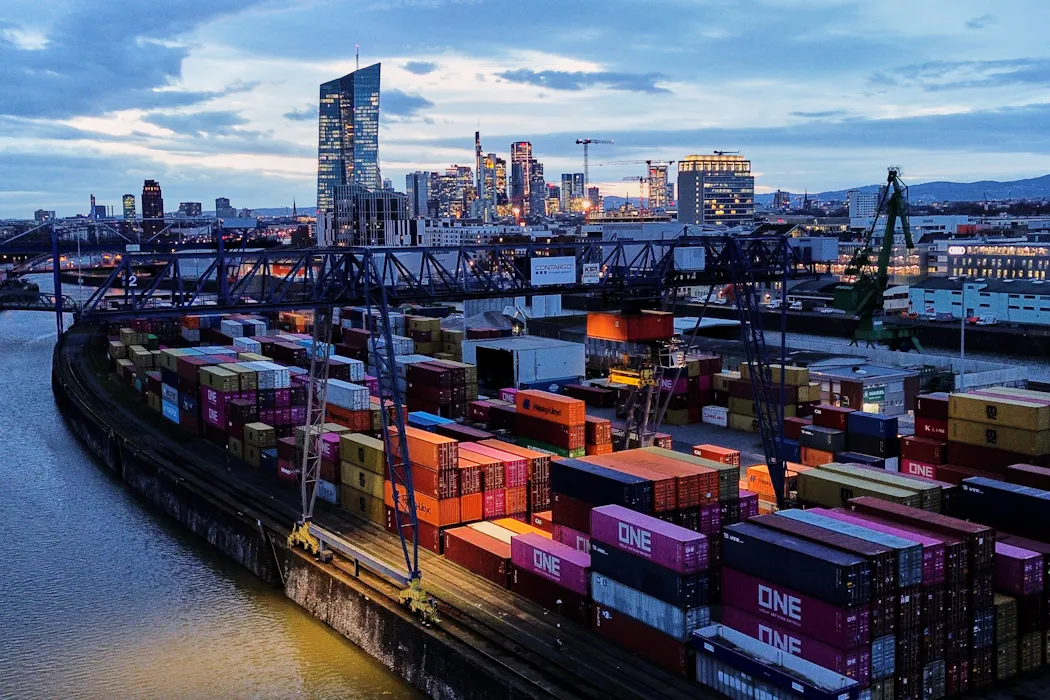
Containers are stacked up in a cargo terminal in Frankfurt, Germany. AP Photo/Michael Probst

U.S. companies stung by President Donald Trump’s emergency tariffs had hoped for relief when the U.S. Supreme Court ruled in February 2026 in their favor. But settling on a remedy – namely, rebate checks from the government – may be an even bigger headache.

Fresh wrinkles are prompting businesses to take different routes as they try to recoup money, with many opting to sue to improve their odds. These lawsuits are also underscoring the complex ways that tariffs worked their way through corporate accounting. In some cases, their cost was a clear line item; in others, the impact was muddier – say, through changed supply lines or selective increases in retail pricing. And some have backed off from a legal fight altogether and sold their refund rights to investment firms, often at a deep discount, figuring that getting something is better than risk getting nothing.

These technicalities didn’t seem to concern most members of the high court. In fact, only one Justice, Brett Kavanaugh, raised the question of the decision’s practical complications in his dissent. But his warning of “substantial” repercussions now looks more prescient by the day.

“The United States may be required to refund billions of dollars to importers who have paid the … tariffs, even though some importers may have already passed down costs to consumers or others,” he wrote. “As was acknowledged at oral argument, the refund process is likely to be a ‘mess.’”

We are professors of finance and law who have been following these cases closely. To begin untangling the “mess” this ruling created, it’s helpful to focus on the different ways companies processed these tariffs – and why this means that a quick and clean remedy is unlikely.

To refund or not to refund

In its 6-3 decision, the high court concluded that a broad category of Trump’s tariffs imposed under the International Emergency Economic Powers Act exceeded the president’s legal authority. Many companies that had sued for relief in the form of rebate checks cheered the ruling.

Judge Richard Eaton at the Court of International Trade, tasked with overseeing the refund distribution, then ordered the Trump administration to immediately start the process by asking Customs and Border Protection to recalculate its revenues without the tariffs to determine the rebate total – a tally that the agency estimates at about US$166 billion. But no one is sure how long it will take or whether it will work. And that uncertainty is sparking a fresh round of litigation.

Consider the different approaches taken by two businesses that paid the tariffs: logistics giant FedEx and the retail chain Costco. Costco filed suit against the Trump administration before the Supreme Court decision, while FedEx was among the many businesses that sued after the ruling.

Fedex, which saw some of its cross-border business plummet by 25% to 35%, collected tariffs from both U.S. companies importing goods and from U.S. customers ordering from abroad. In this function as broker, it was able to separate out the tariffs as a line item. That means it can more easily calculate what it would pay back to its customers. If Fedex gets the rebates, it has said it will refund all clients who bore the cost.

The accounting for Costco, by contrast, is less straightforward. It paid the duties but reallocated much of the cost internally. For some goods, it shuffled its extensive global supply chains to mitigate the tariffs’ bite or covered the cost by selectively hiking prices on items where demand would be less affected. It has not made as explicit a commitment of repaying its customers, although it has said it will try to honor it.

In both cases, executive pledges of refunds weren’t enough to prevent class action lawsuits by skeptical consumers since the Supreme Court’s decision, arguing they needed a more ironclad guarantee.

Several women shoppers and a child in a shopping card are looking at outdoor cooking equipment on display in a Costco warehouse.
Shoppers walk by an outdoor cooking display in a Costco warehouse on March 12, 2026, in east Denver.
AP Photo/David Zalubowski

Avoiding the fight

Other companies, meanwhile, are waiving a legal fight altogether and selling their refund rights to investment firms, often at only a fraction of what they had paid in levies, in the expectation that full repayment is unlikely.

These companies typically are too small to finance a legal battle but big enough to have sufficient money at stake for Wall Street to take interest. For example, Atlanta-based Kids2, which sources almost all of its toy and infant products in China, sold its rights before the high court’s ruling for about a quarter of what it paid out in the emergency tariffs.

Legal complications aside, logistical snags are also emerging. In response to Eaton’s order, Customs and Border Protection chief Brandon Lord stated in a filing on March 6, 2026, that the government was “not able to comply” due to the “unprecedented volume of refunds” overwhelming the agency’s technology. It’s working on an online system to “streamline and consolidate refunds and interest payments,” to be operational in 45 days of that filing, he wrote.

In response, Eaton paused his order requiring immediate refunds, but he has demanded regular updates on CBP’s progress. On March 19, Lord reported
that the four components of the new online system were between 45% and 80% functional.

New tariffs may loom

While some companies may get relief for levies they already paid, there’s the risk Trump could still make good on his threat to use other federal statutes to impose tariffs. Those laws aren’t an easy workaround for the administration, but they still provide some options for Trump to apply tariffs on imports, including those that had been affected under the emergency levies.

Further uncertainty, in short, is likely.

As the stock market volatility in 2025 after Trump’s “Liberation Day” announcement showed, this uncertainty can be costly. And the Supreme Court’s decision hasn’t allayed those fears. Companies have delayed investment, stockpiled inventory and diverted resources into compliance and legal review since the tariff wars kicked off.

Such actions can tie up capital that could otherwise fund new employment, higher wages or product innovation. Trump’s trade policy is, in fact, underscoring the basic economic lesson that tariffs don’t eliminate trade but simply make it more expensive, research shows.

Businesses have to decide to either pass these import taxes along to consumers via higher prices or absorb higher input costs themselves. Trump’s experiment is no different. According to fresh research from the New York Federal Reserve, as the average tariff rate jumped from 2.6% to 13% from January through November 2025, almost 90% of the burden hit consumers and businesses.

That’s why tariffs are a rare point of consensus among economists: They harm economic growth and are more costly today than ever before, given how interconnected global supply chains have become. And as the aftermath of the Supreme Court’s ruling shows, undoing their effect is a lot messier than tariff boosters would admit.

The Conversation

The authors do not work for, consult, own shares in or receive funding from any company or organization that would benefit from this article, and have disclosed no relevant affiliations beyond their academic appointment.

​Politics + Society – The Conversation

Categories
Entertainment

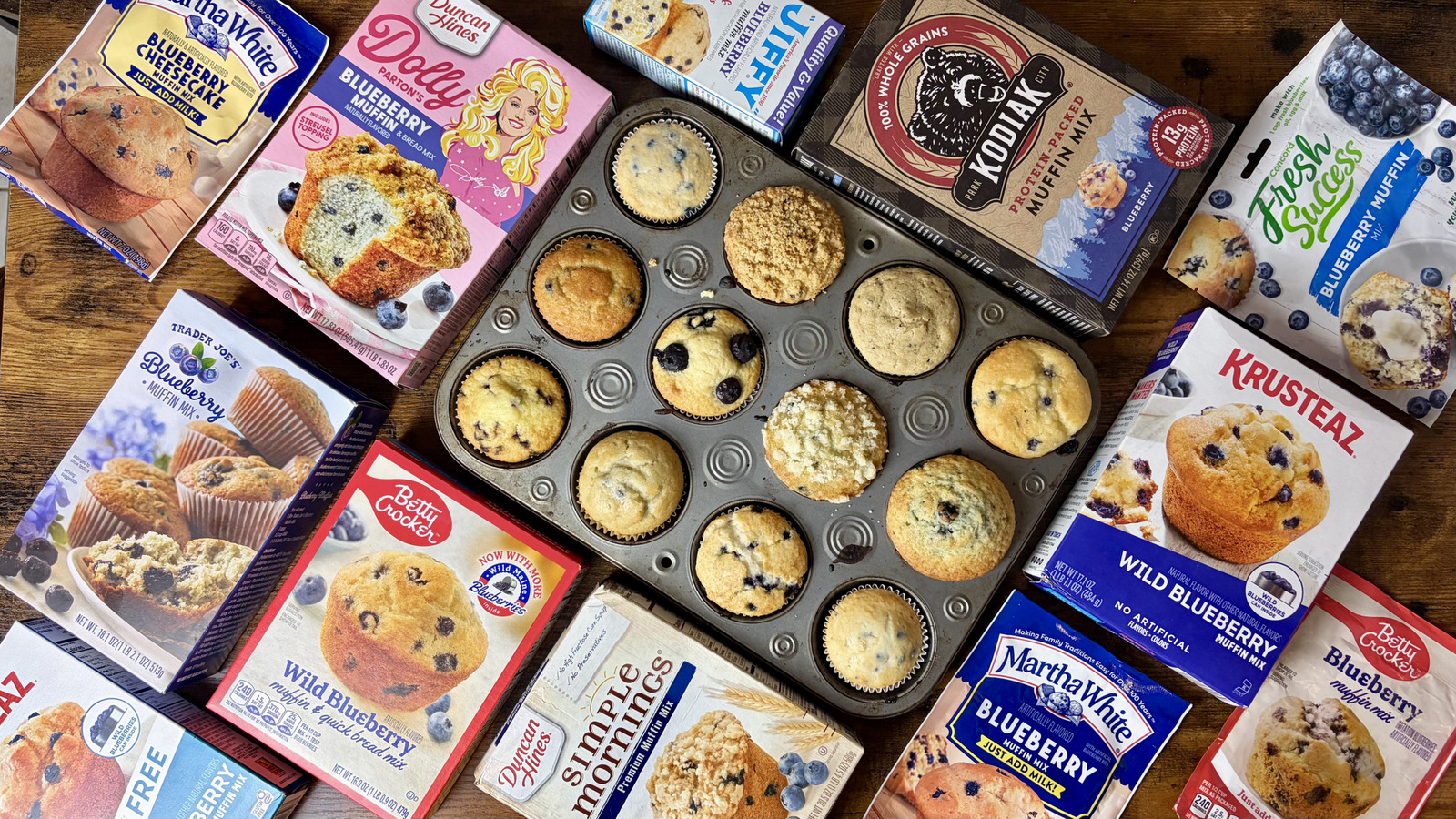
Why This Protein-Packed Blueberry Muffin Mix Is The Worst

Protein is a vital nutrient that people these days can’t seem to get enough of, but there’s a brand of blueberry muffin mix with protein that you should avoid.

​Mashed – Fast Food, Celebrity Chefs, Grocery, Reviews

Categories
Music

Woman Accused of Fraud Thought She Worked for Country Stars

Florida woman accused of fraud believed she was working on behalf of Florida Georgia Line and Chase Rice, according to investigators. Continue reading…​The Boot – Country Music News, Music Videos and Songs

Categories
Entertainment

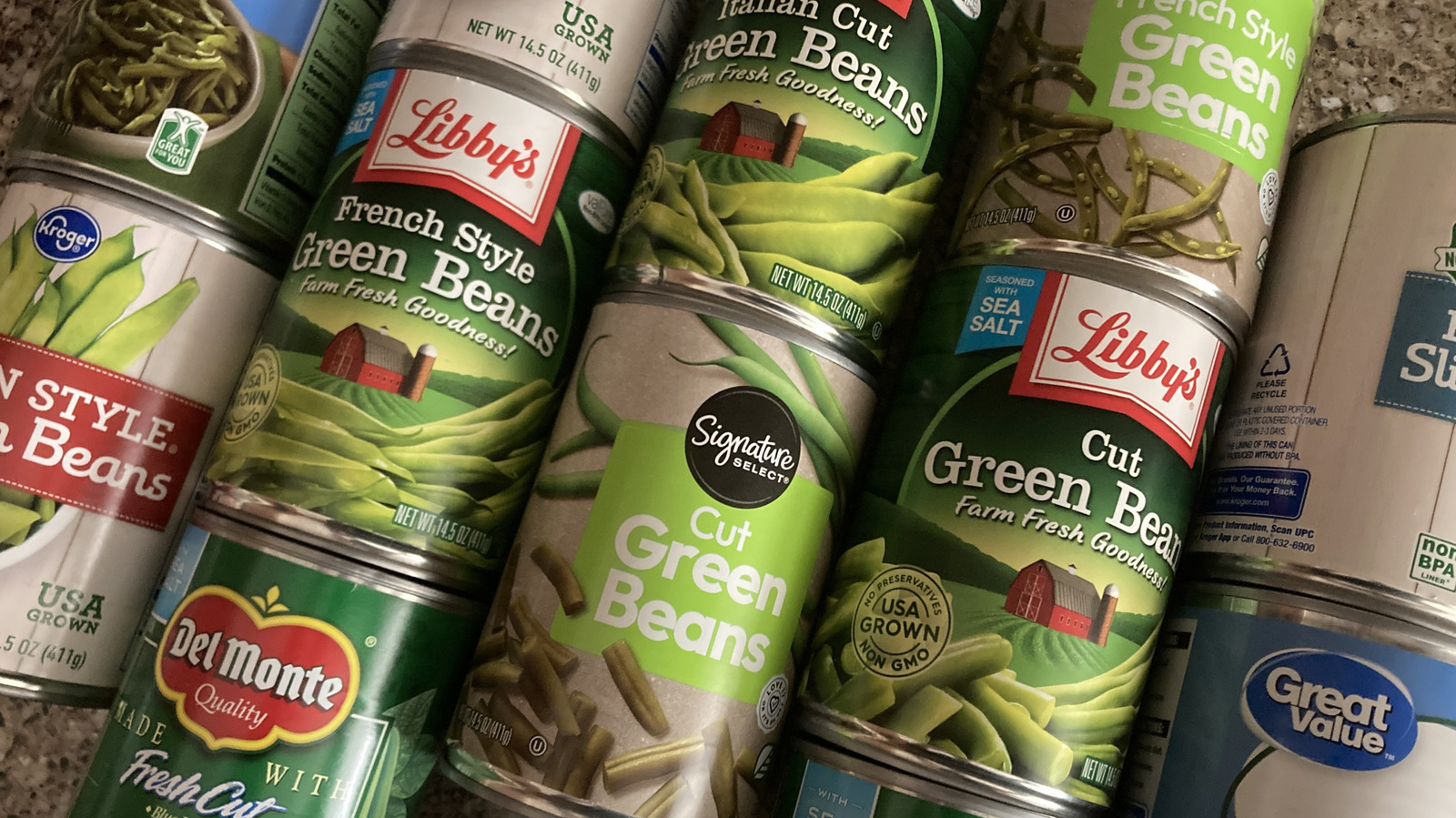
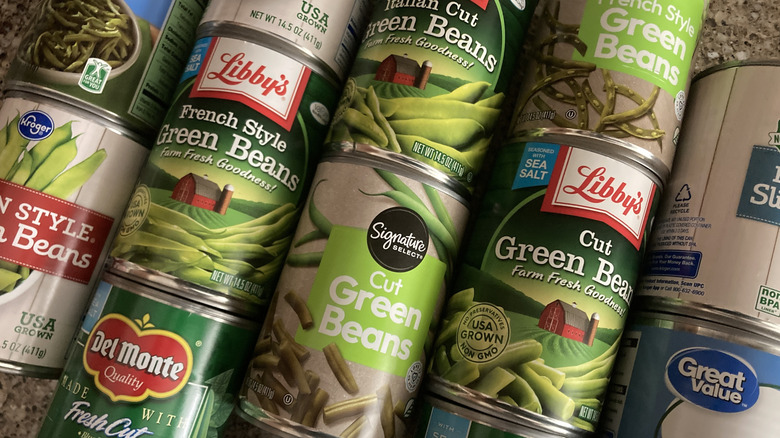
7 Canned Green Beans You Should Buy & 6 You Shouldn’t

Canned green beans provide a great shortcut in the kitchen, but not all products are made equal. Find out which cans are worth buying and which to skip.

​Mashed – Fast Food, Celebrity Chefs, Grocery, Reviews

Categories
Food

How To Transform Bologna Into A Mouthwatering Burger

If you want to have a burger but feel like eating something just a tiny bit different, turn to bologna instead. Get it thick cut, and you can make a burger.

​Food Republic – Restaurants, Reviews, Recipes, Cooking Tips