Categories
Entertainment

Colter Wall Says He’s ‘Not Doing Well,’ Stuns Fans By Canceling Tour

Reading Time: 3 minutes

Colter Wall abruptly canceled the remainder of his tour this week, telling fans he’s “not doing well mentally” and needs time to focus on his health.

The popular country star shared the news in a short — and somewhat vague — social statement.

Wall said he will be stepping back from performing “for the time being” and apologized to ticket holders and crew, adding that he hopes to return when he’s stable again.

Colter Wall performs onstage during 2018 Stagecoach California's Country Music Festival at the Empire Polo Field on April 29, 2018 in Indio, California.
Colter Wall performs onstage during 2018 Stagecoach California’s Country Music Festival at the Empire Polo Field on April 29, 2018 in Indio, California. (Photo by Matt Cowan/Getty Images for Stagecoach)

Colter Wall abruptly cancels several shows

“Myself and the band and the crew are very grateful for the privilege to play music together for you. We thank you for it,” Wall wrote.

“The truth is that I am mentally unwell. Despite this, I have pushed myself to continue with touring. As a result my mental health has only further declined,” he continued, adding:

“After discussions with my team we have decided to cancel the remaining shows

“Thank you for your understanding and support, Tickets will be refunded automatically from original point of purchase.”

Colter Wall performs onstage for Country's Roaring '70s: Outlaws and Armadillos exhibition opening concert at Country Music Hall of Fame and Museum on May 25, 2018 in Nashville, Tennessee.
Colter Wall performs onstage for Country’s Roaring ’70s: Outlaws and Armadillos exhibition opening concert at Country Music Hall of Fame and Museum on May 25, 2018 in Nashville, Tennessee. (Photo by Jason Kempin/Getty Images)

Vague announcement sparks concern among fans

Promoters confirmed multiple upcoming dates have been scrapped, and refunds are being issued for affected shows. Several venues and ticketing sites have updated their listings to reflect the cancellations.

Fans reacted with an outpouring of support online, with many urging Wall to take the time he needs and thanking him for his honesty.

Others expressed disappointment over lost shows.

But thankfully, the predominant tone across threads and fan pages was one of concern and sympathy.

Colter Wall performs onstage during 2018 Stagecoach California's Country Music Festival at the Empire Polo Field on April 29, 2018 in Indio, California.
Colter Wall performs onstage during 2018 Stagecoach California’s Country Music Festival at the Empire Polo Field on April 29, 2018 in Indio, California. (Photo by Matt Cowan/Getty Images for Stagecoach)

Mental health has become a more visible topic throughout the celebrity world in recent years, with artists increasingly open about needing to step back for wellbeing. Wall’s message echoed that trend — brief, candid and focused on recovery rather than speculation.

Management has not provided additional details about the singer’s condition or a timetable for resuming performances. No replacement dates have been announced.

Wall rose to prominence with a rugged, traditionalist country-folk sound that quickly earned him a fiercely loyal audience.

His abrupt hiatus leaves fans hoping for a speedy, private recovery and a return to the stage when he’s ready.

Some fans have expressed concern, but many more have offered words of compassion and support.

We’ll have further updates on this developing story as new information becomes available.

Colter Wall Says He’s ‘Not Doing Well,’ Stuns Fans By Canceling Tour was originally published on The Hollywood Gossip.

​The Hollywood Gossip

Categories
Sports Fox

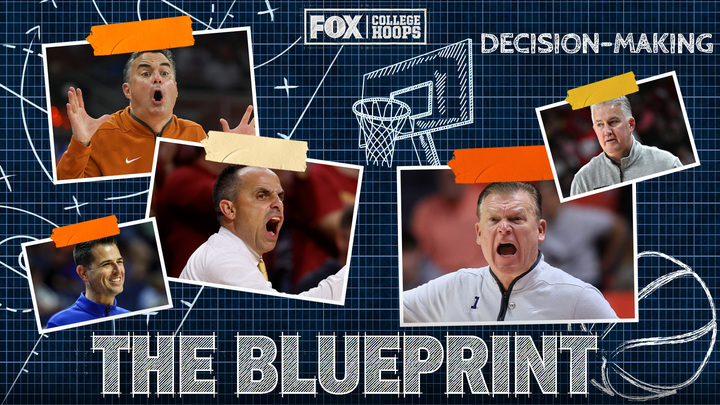
The Blueprint: Why Decision-Making Has Become College Basketball’s Ultimate Skill

Now more than ever, an integral part of the recruiting process for college coaches involves piecing together the puzzle of an athlete’s inner circle. It still entails forging relationships with a player’s family and high school coach, but now there are typically a few more tentacles surrounding each potential future star: an agent, a marketing manager, a financial advisor, a strength coach. At times, the entourages seem endless. For Purdue head coach Matt Painter, the figures he’s far more curious about now than at any point during his highly successful career are the private instructors, sometimes known as the “workout guys.” These are the individuals responsible for sharpening a player’s skills beyond the confines of traditional practices or games. In an era when players are asked to think about the game at higher levels — processing more options in real time than ever before — Painter needs to know how that aspect of a recruit’s development is handled. “If they have somebody that is a valuable asset that’s really helping them become a better player,” Painter told me last month, “decision-making should be a part of the workout. Decision-making is so important. If your decision-making only grows during the winter, then you’re probably not going to be a very good decision maker. You’re not going to get to the level that you should get to because it should be a 12-month deal in terms of getting better at reading situations, reading defenses, knowing what’s going on.” An absorption of offensive concepts and schematic ideas from professional leagues across the world has rewritten the traditional responsibilities associated with each position. Primary ball handlers now come in all shapes and sizes. Power forwards and centers are spending more time on the perimeter. Playmaking skills are now expected from at least four, if not all five, players in a given lineup. Glaring statistical changes reflect that. So far this season, there are 44 players listed at 6-foot-5 or taller averaging at least 3.5 assists per game, up from 24 such players 10 years ago. In terms of perimeter shooting, there are currently 30 players listed at 6-foot-7 or taller averaging at least 2.1 made 3-pointers per game, up from 19 such players 10 years ago and only four such players 20 years ago. “One part of the game that I really enjoy as a fan is watching the Euro League,” Texas head coach Sean Miller told me. “I think that might actually translate to college a little bit more [than the NBA]. Their ball movement, their cutting, their concepts — so much of how they play the game today is a lot of what you see in college basketball.” Part 4 of our series analyzes the heightened importance of individual decision-making in college basketball, where on-court processing power is now worth its weight in gold. What used to be a game dominated by heady point guards and back-to-the-basket big men is now an exercise in team-wide basketball IQ. One of the reasons why there are 50 teams averaging at least 120 points per 100 possessions this season — the highest mark in at least 30 years — is because players are getting smarter with the ball in their hands. [Player Acquisition | Shot Selection | Offensive Rebounding] *** *** *** Todd Golden, Florida: That was not something teams really focused on 20 years ago when I was in college. Teams had a traditional point guard, you maybe had another guy out there that could be a secondary ball handler and decision maker, but everybody else kind of had specific roles. Your wings were trying to attack the rim or defend with size, and your frontcourt players were paint players and playing inside the 3-point line. Now, I think the best teams — regardless of whether you’re a team that shoots a lot of 3s or a team that really hunts to play out of the paint — if you can play with multiple decision-makers on the floor, you’re going to be a lot better. Miller: I think there always has to at least be four players on the court who can pass, dribble, shoot, decision-make. The best teams in college basketball certainly have that. And then when you can add that fifth player, even if he does it in a different way, it goes to [the idea] where you try to build your roster with players who can think about the game, who can have a fundamental skill level, but really understand how basketball works. The screen and rolls, the spacing, the importance of cutting, why you make one decision versus the other. T.J. Otzelberger, Iowa State: A lot of bigs now tend to step out more on the perimeter. There’s certainly the extreme example like [Nikola] Jokic in the NBA. Everyone kind of wants that. I just think you’re watching guys’ decision-making in real time, assist-to-turnover numbers. Certainly, the better you shoot the ball as a frontcourt player, the more it opens up playmaking space for you to do things. Ben McCollum, Iowa: Having good passing bigs is more important than having good shooting bigs. Obviously, you’d like to have both, but if you can have a good passing big, a high processor who works pretty fast through some of those things, that’s more difficult to defend than somebody who can just stretch the floor. And so you’re trying to find those processors. Painter: We get it a lot with our big guys, because if you’re not good enough to [draw] a double team and you can’t get position deep, then why should you have ever been a good passer? Zach Edey wasn’t a guy who ever got double-teamed … so we had to get to work on [his passing] right away. Are they covering down ball side? Are they coming big to big [from the] opposite [side]? Are they coming baseline-side on a double? Are they coming when you bounce it? Is there any difference when you’re above the block to whether you’re up the lane or outside a little bit? Now we’ve got to put drill work into effect on those five things and we’ve got to mix it up and not tell him when it’s coming. And then he’s got to make those reads. That’s what we did every day for 10 to 12 minutes. All of a sudden, he went from somebody that was not able to make those plays and passes to someone who was probably the best in the country at it. Golden: That’s an area that we’ve been fortunate over these last three years to have frontcourt players that really understand how to play basketball. They all haven’t necessarily been able to shoot the 3, but they know how to dribble, they know how to pass, they know how to make decisions and that opens up a lot for the rest of your team. McCollum: It’s not the great passes that make the difference. It’s how quickly does the ball come out. You always hear the Spurs talk about half-second decisions. A lot of that is the ball comes out of their hands quicker. … The timing and the rhythm and the flow increases field goal percentages [and] keeps the defense behind quite a bit more. Then you increase your 2-point field goal percentage and your 3-point field goal percentage because of how quickly each individual gets off the ball. I don’t think we ever get the perfect guys to do that, but those are some things that we try to identify. It’s not an objective measure, it’s just like, ‘That guy has a good feel. I don’t know why. He just makes sense to me.’ That’s probably more what we look for. Grant McCasland, Texas Tech: There’s so many variables in this that you obviously start with the basics, which is always assist-to-turnover [ratio]. Then you take into account usage and historical reference on what a coach’s tolerance level is for turnovers. Some coaches don’t necessarily demand [perfection] and some prefer more free-flowing [offense] and have more turnovers. … Usually the guys that have a better feel shoot a higher percentage because they don’t take as difficult of a shot. I think an ultimate separator, too, is how many of those guys have won. That’s an underrated part of all this, when you look at it, is just win percentage. That shows that a guy knows how to do all three: take care of the basketball, what do they shoot, and then have they won doing it. I know that’s probably a simplistic approach, but that says a lot about someone’s understanding of the game. Golden: I think it’s the hardest part with evaluating, whether it’s high school guys or even portal players, to understand how they see the game and how they make decisions. You’ve really gotta watch them. We analyze a lot of data in determining which guys we’re going to target, but an area that we’ve continued to spend more time on over the last two years is really trying to drill down in the film. After we might be intrigued by a guy from their analytical profile, we end up watching more film to make sure that profile is telling us the whole story. Jon Scheyer, Duke: When you’re watching a guy, watching the shots he shoots, how he plays, does he pass to his teammates, the way he processes the game, there’s an eye test component to that. But I think the most enjoyable part for me is that I ask a lot of questions with our recruits. When we show film to them, we also talk about the areas that they have to do better. I love seeing how they respond to that. I love seeing if they embrace that. And I love just asking them questions about the game. If you can find yourself just talking to them, the longer I’ve done this, the more I like to ask questions and get inside their mind of how they process and what they think. Brad Underwood, Illinois: Problem-solving is the game of basketball. We do a lot of disadvantage basketball or advantage basketball. We play 5-on-4, 4-on-3, we play 5-on-4½ from a disadvantage so guys have to learn to process and make decisions in all scenarios. I think it’s helped us and it helps guys improve. Golden: A lot of people spend time in the spring and summer working on individual player development, and we do our fair share of that. But at the same time, we expect our guys to play a lot of pickup — whether it’s 3-on-3, 5-on-5 — to put themselves in those situations outside of the season, to make sure they’re sharpening those parts of their game. From a coaching and player development standpoint, we grade every 5-on-5 possession that we play in practice. We film everything and we grade it. We give our guys feedback based on how they do in what we call our hustle stats. It’s a way to give tangible feedback along with film, where not only can you show them the numbers, but you can also have film to back up whether they’re doing things well or not well. Over the course of time, when you’re using playing time as the carrot being dangled, guys are going to work to do what you want them to do when you can show it to them in a few different ways. Miller: What I have found, the way the game is played today, is when a player doesn’t have that [heightened] understanding, it’s really hard for him. The game is harder for that type of player than it used to be. Painter: That’s a real important piece of somebody’s growth as a basketball player. In The Blueprint, our in-depth, long-form series takes you inside some of the most amazing stories in sports.​Latest Sports News from FOX Sports

Categories
Alaska News

Glacier Bears win regional title

Haines sophomore Isaac Jones (1), Petersburg senior Noah Pawuk (12) Haines senior Colton Combs (3) and Petersburg senior Brayden Tucker (0) go for a ball during the Glacier Bears 42-40 Region V Championship game win over the Vikings at the Alaska Airlines Region V 2A/3A/4A Basketball, Cheer, Dance, and Pep Band Tournament on Friday, March 6, 2026, in the Juneau-Douglas High School: Yadaa.at Kalé George Houston Gymnasium. (Klas Stolpe / Juneau Independent)

With physical defense and just enough timely shotmaking, the Haines Glacier Bears survived at the buzzer to win a Southeast region title. 

The Glacier Bears came into the game underdogs against Petersburg, a team with whom they split the season series. Given two close prior matchups, it made sense that a third meeting between the teams would once again come down to the wire. But you wouldn’t have guessed it — nor would you have guessed Haines’ underdog status — through the first half Friday night. 

After a slow start, Haines was the first team to start finding easy buckets, fueled by swarming team defense. Quick to send help on Petersburg’s forays into the paint, Haines forced a series of turnovers. Between the turnovers and rebounding by senior big man James Stickler, the Glacier Bears had plenty of opportunities to run, and run they did. 

In the open floor, the game plan seemed to be to find senior point guard Colton Combs. Combs at full speed was the best offensive weapon in the game, including multiple finishes through two Petersburg defenders in the first half.

Combs’ hot start continued even in the halfcourt, where he carried the offense for long stretches. With a minute to go in the first quarter, Combs drained a three off the dribble, and then seconds later jumped in for a steal and quick layup, forcing a Petersburg timeout. 

The momentum stayed with the Glacier Bears through the second quarter. As Haines continued to help aggressively and leave shooters open, Petersburg was unable to capitalize, missing a string of open three-point attempts. 

Haines Defensive standouts included junior Brody Ferrin, who also chipped in much-needed secondary scoring, and senior JC Davis.

The Glacier Bears also got strong minutes off the bench from juniors Kyren Sweet and Wade Lloyd, with Lloyd cashing a timely three, a big block, and slowing down Petersburg senior point guard Noah Pawuk on defense. 

As the half ticked on, the same gifts kept on giving. Near the half time buzzer, Combs, seemingly feeling his oats, walked into and drained a deep three well behind the line, giving Haines the 31-12 lead that they would take into the locker room. 

But the Petersburg that returned for the second half looked like a different team. 

On the offensive end, the Vikings were far more effective clearing space for their perimeter players. Pawuk, showing off his quickness, blew by Haines defenders multiple times. The cleaner offense by Petersburg paid huge dividends going the other way as well. With fewer turnovers and long rebounds to run off of, Haines began to get stuck in the muck. The first half remedy of Combs’ shotmaking dried up, thanks in large part to Petersburg senior Brayden Tucker. 

Tucker’s smothering defense on the Haines guard, plus perimeter doubles from his teammates, held the Haines sparkplug scoreless for much of the half.

Haines junior Kyran Sweet (32) shoots from the arc over Petersburg senior Logan Tow (13) during the Glacier Bears 42-40 Region V Championship game win over the Vikings at the 2026 Alaska Airlines Region V 2A/3A/4A Basketball, Cheer, Dance, and Pep Band Tournament on Friday, March 6, at the Juneau-Douglas High School: Yadaa.at Kalé George Houston Gymnasium. (Klas Stolpe / Juneau Independent)

By the end of the third quarter, Petersburg clawed back to a 36-24 deficit. 

It was more of the same into the fourth as the Glacier Bears saw their once massive lead evaporate. Petersburg’s Camden Johnson banked-in a three to cut the deficit to six with just under seven minutes to go — the first signs of Petersburg life from beyond the arc. 

With Combs — who played all game, full speed on both ends — shut down, other Glacier Bears pitched in offense to keep the team afloat. A Kyren Sweet steal and score and a Stickler layup were some of the few Haines baskets, but Johnson and Pawuk continued to chip away at the Haines lead. Two high-pressure free throws from Petersburg senior Logan Tow made it 41-38 with a minute and a half to go. 

In the end, the game was decided by a long final minute with a movie-script number of dramatic turns. 

Inside the final minute, Ferrin made one of two free throws to push the Haines lead to four. Petersburg then attacked quickly to cut into the two-score deficit, missing but rebounding an initial three-point attempt. That led to a corner-three in which the Petersburg shooter was fouled by Combs. 

Two made free throws left Haines with a two-point lead and the ball, 6.3 seconds between them and a title. Needing something improbable to stay alive, Petersburg answered the call, denying the Haines inbound pass to earn a five-second violation and the ball. 

After inbounding the ball from the baseline, Petersburg had a layup to tie the game. But the attempt was denied under the rim by what looked to be a game-winning steal from Haines sophomore guard Isaac Jones. 

In the ensuing rush for the loose ball, however, which Jones and his backcourt-partner Combs looked like they secured, Haines was called for a travel.

That gave Petersburg one last chance at a game-winner. A clean inbounds play left Pawuk, until then their most effective weapon, with an open, straight-away three, for the game. Pawuk’s shot was one of the most accurate Petersburg long-range attempts of the day, but it wasn’t accurate enough. As the buzzer sounded, the ball clanked off the front rim, giving Haines the win. 

With one title in hand, the Glacier Bears are now in Anchorage as the third seed in the state 2A tournament. The Glacier Bears will play a first round game against #6 Tikigaq March 12. 

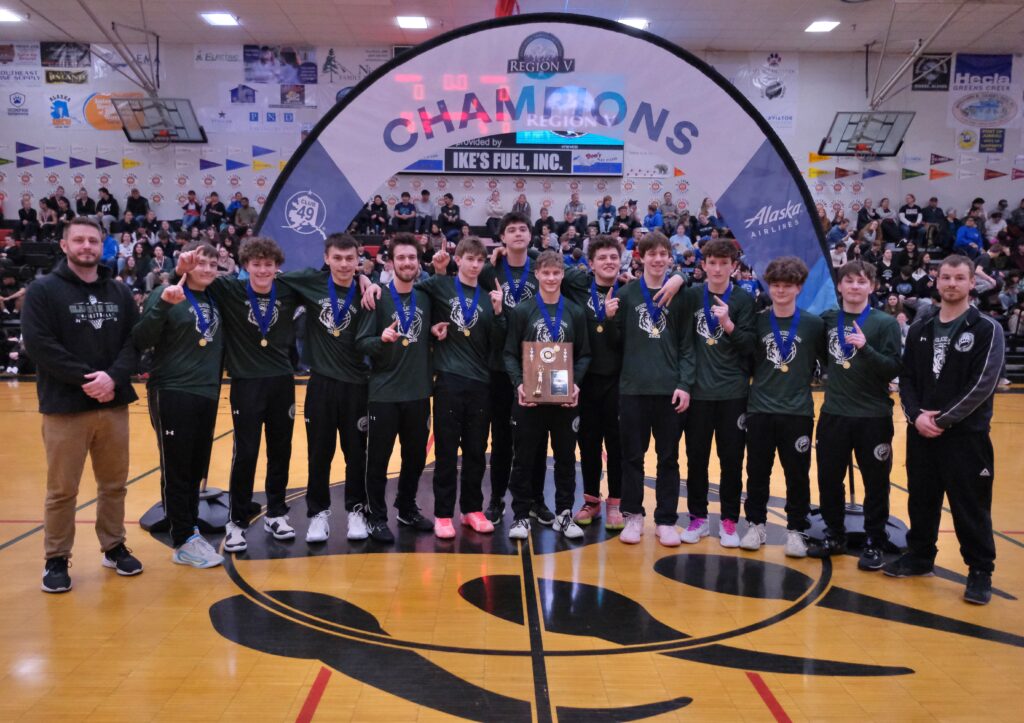
The Haines Glacier Bears basketball team pose with their 2A championship trophy at the Alaska Airlines Region V 2A/3A/4A Basketball, Cheer, Dance, and Pep Band Tournament on Saturday, March 7, 2026, in the Juneau-Douglas High School: Yadaa.at Kalé George Houston Gymnasium. (Klas Stolpe / Juneau Independent)

The post Glacier Bears win regional title appeared first on Chilkat Valley News.

Categories
Alaska News

Chief returns from academy, department adds new officers

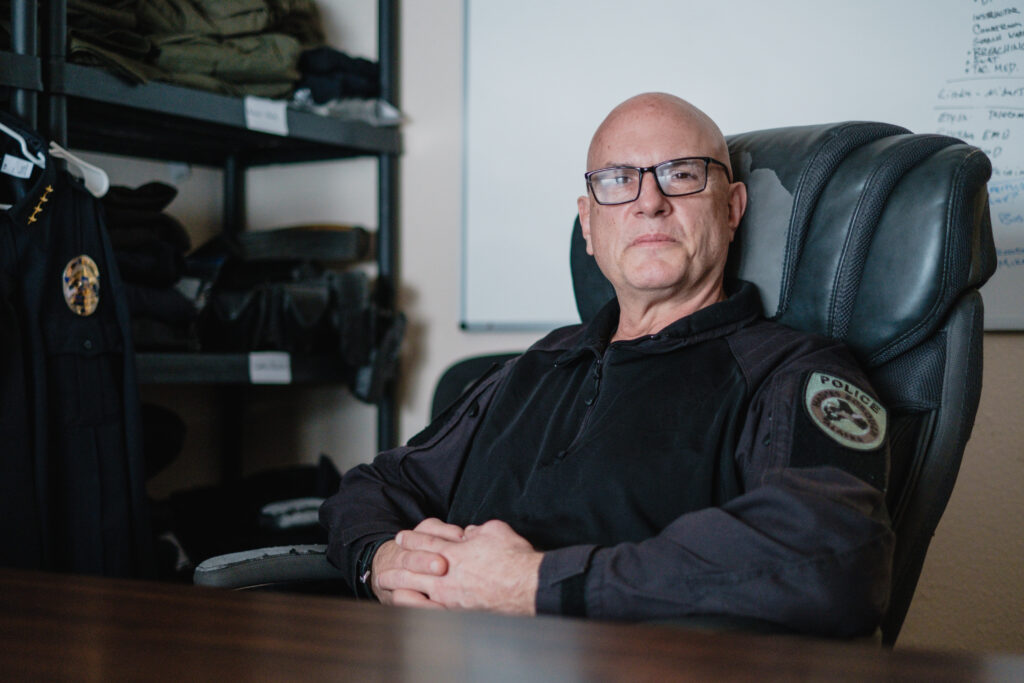
Haines police chief Jimmy Yoakum, Thursday, March 5, 2026. (Will Steinfeld/Chilkat Valley News)

Police chief Jimmy Yoakum and new hire Max Marty have returned from a state police academy, adding personnel to a department that has been mired in understaffing and turnover.

For much of the past year, officers Max Jusi and Travis Russell have split round-the-clock policing duties after a third officer, interim-chief Michael Fullerton, resigned last April.

The department struggled to find a long-term occupant for its top job after seven-year chief Heath Scott resigned in 2023. 

The assembly hired Yoakum last summer, but just before the hire was finalized, the assembly learned the Alaska Police Standards Council would not accept a transfer of Yoakum’s Tennessee police credentials. That required the borough send Yoakum to a 17-week state police academy in Fairbanks, while also continuing to pay his $125,000 salary. 

Yoakum successfully completed the academy Feb. 1 and is back in Haines. 

Yoakum said the experience was a useful update on both Alaska code and new policing techniques. 

Yoakum first received his police training at a Tennessee academy in 1995. Similar to his Tennessee training, much of the Alaska State Police Academy training focused on firearms and combat skills, Yoakum said in an interview last week. 

Yoakum, however, said he observed a sea change in both training methods and policing philosophy — an improvement, he said, over his experience 30 years prior. 

Rather than simply spending time at a shooting range, Yoakum said, the Alaska police training focused on working through policing scenarios, including decision-making on when to fire or physically engage a suspect, and when to disengage. 

“Just about every single drill we did up there that I can remember, we were engaged in a survival situation, in a gunfight, and at some point you had to come off of it,” Yoakum said. 

The training, Yoakum said, also included ways to avoid confrontations in the first place. 

“In 1995, you didn’t have people carrying around guns and weapons and knives and things like that,” Yoakum said. “It was mainly just a wrestling match. But now, there’s a lot of people out there that are trained in combatives, and so if I can maintain that distance and talk with you, 85% of the time we’re going to come to a good resolution.”

Not all of Yoakum’s academy experience was focused on combat. Yoakum talked extensively about officer mental health while interviewing for the chief position, and he said mental health first aid training and officer mental health discussions at the academy were a welcome change from his first academy go-round. 

Yoakum also now has a heavily annotated textbook on his desk in the borough police department from academy courses on Alaska code and constitutional law. Yoakum said the training had a specific focus on the Fourth Amendment, which bars illegal search and seizure. 

While Yoakum and Marty were at the academy, the Haines department saw at least two high-profile policing situations, including one drug arrest and a shooting at Picture Point in November. Yoakum said he was briefed on both situations by department sergeant Max Jusi. 

“(Jusi) has a wealth of knowledge,” Yoakum said. “He’s got experience. He makes great decisions. He’s got good judgment. The information I got, there was no reason for me to second-guess him, and he continued to handle it just like he has been for the past year.”

Yoakum completed the academy alongside new department hire Max Marty. Marty, however, won’t be able to serve on his own as an officer until he completes a mandatory field-training course. For the two-and-a-half- to three-month course he’ll serve alongside Travis Russell, his field training officer. 

While he completed the police academy training, Yoakum will also have to wait until after a probationary period ends on July 22 to apply for his official Alaska Police Standards Council certification. Alaska Department of Law spokesperson Austin McDaniel said the probationary period is standard for all academy graduates, and under state law the probationary status will not change the duties Yoakum can perform. 

On top of Yoakum and Marty’s return, the borough has also begun advertising a fifth officer position. 

The post Chief returns from academy, department adds new officers appeared first on Chilkat Valley News.

Categories
Alaska News

Assembly takes of suite of industry regulation, drafted with help of ‘AI analytical tools’

Assembly member Kevin Forster at the Oct. 14, 2025 assembly meeting. (Will Steinfeld/Chilkat Valley News)

Resource extraction vs. conservation: It’s a familiar fault line in the borough. But some say it shouldn’t be, at least not in such stark terms.

Those who advocate for some sort of middle ground now officially include assembly members Kevin Forster and Gabe Thomas, who introduced this week their “safety belt” proposal — a 38-page package of potential legislation that would provide “guardrails” if heavy industry were to begin operating in the borough.

At Tuesday’s assembly meeting, Forster pitched the proposal as an “à la carte menu” of regulations already in use around the state that could be considered for use in the borough.

Forster said in comments after the meeting that he and Thomas had received support in drafting the package from his wife Jess Kayser Forster and from “AI analytical tools.” He placed particular emphasis on the “draft” aspect.

“I want to be very clear, the document we’re discussing tonight is by no means a finished product, and is by no means a take-it-or-leave-it ordinance,” Forster said. “I’m not even saying I support every element of this packet. But I do believe the public deserves to see the full scope of what is possible across this state, so we can decide what’s appropriate for this community.”

The proposal will now enter into a 30-day public comment period, after which the assembly will presumably begin to edit down the proposal, though the process has not been completely explained yet. Included in the package are a host of what could be ordinances or ballot measures changing borough charter.

It’s somewhat unusual for assembly legislation, which generally arrives at the body ready for two public hearings and a final vote. More complicated proposals are often discussed and refined in committee meetings before being brought to the assembly.

Sargent was the lone vote against introducing the package, and he raised some of those process discrepancies in explaining his vote after the meeting.

Sargent raised concerns of staff and resident capacity while the Lutak Dock rebuild is ongoing. He also specifically referred to the fact that the legislation was changed and resubmitted by its sponsors after the assembly packet was released on Thursday.

“It’s happened twice in a row where Gabe and Kevin have done these privately, and then we get big changes right before the meeting,” Sargent said, referring also to an ore- containerization proposal at the last assembly meeting. “We’re basically voting on things we haven’t seen.”

Sargent said that while he supported the overall goal of the proposal, he had issues with some of the content.

“It was presented as a survey of things being done elsewhere in the state. That’s not really what it is. There are a number of things that haven’t been done elsewhere.”

Forster emphasized after the meeting that the rough-draft nature of the document was meant to provide a starting point, but still leave an opening for the public to speak. With the motion to introduce the package, the assembly also directed the package be reviewed by the borough attorney.

It remains to be seen whether the public will get behind the package, but it had preliminary support from officials at the meeting — including some like Morphet and Stickler — who have often been on opposite sides for other issues.

Forster himself recently signed a letter from Chilkat Forever advocating against any large-scale mining in the Chilkat Valley. But personal views aside, he argues the assembly has neither the authority, nor a clear mandate from voters, to block heavy industry.

Said Forster after the meeting: “The question that I think would get, like, 95% buy-in, would be, if you found out there was some kind of large-scale development, whether you wanted it or not, how would we see the most benefit and least harm. That’s the question.”

The post Assembly takes of suite of industry regulation, drafted with help of ‘AI analytical tools’ appeared first on Chilkat Valley News.

Categories
Sports Fox

What’s Behind Italy’s WBC Success? Inside Vinnie Pasquantino’s Recruiting Push

DAIKIN PARK (Houston) – Months before he was distributing espresso shots and cheek-kisses to home-run hitters in the dugout and handing out bottles of wine to the players on the best team in Italy’s baseball history, Vinnie Pasquantino was bored on Thanksgiving. So, the country’s best baseball recruiter used the holiday to reach out to prospective players, as he had done for much of the year after committing to the team for the World Baseball Classic in early 2025. “It was kind of messed up thinking about it, but… I didn’t have a whole lot going on, and I was like, ‘Oh, this would be a good day to hit everybody’s Instagram DMs,’” Pasquantino told me ahead of Wednesday’s game against Mexico.  “So, there was a lot of DM’ing that day. That’s when the WhatsApp was created for the group. It’s been a lot of fun trying to help create this team.” The seeds were being planted for what would become the WBC’s improbable juggernaut, a group consisting primarily of prospects and novice MLB players who quickly blossomed into the tournament’s success story by stunning much more experienced and decorated rosters along the way with their own distinctive panache. The Italians left the best U.S. roster ever assembled dumbfounded in an upset victory on Tuesday. One night later, they bulldozed a Mexico squad that nearly made it to the WBC finals three years ago. That capped the Azzurri’s perfect 4-0 start to the competition to win Pool B and advance to the quarterfinals. “I’m, like, weirdly emotional tonight, to the point I’m thinking about crying,” Pasquantino said in his postgame press conference after his three-homer performance over Mexico helped send Italy through to the next round, “which is funny for a tournament in March.” Really, though, this represented so much more than normal March baseball for the team’s captain, who was so moved by his experience playing for Italy in 2023 — and his trip to the country before that WBC — that he spent the better part of the last year doing whatever he could to help the Italian Baseball Federation field the best roster imaginable for this tournament. The near-catharsis was the culmination of all the effort that led into Wednesday night. “I committed in what would have been spring of last year, right at the beginning of spring training, letting them know that I was in,” Pasquantino told me before the Mexico game. “From there, it was, ‘All right, who do we need to go get? Send me phone numbers. I’ll make cold calls, whatever I need to do.” After receiving a target list of players to call from Italy’s coaches and staff, the Royals’ gregarious first baseman hit the recruiting trail. “I think they know I have a bigger personality, so it was more from their end, ‘If we really need a guy, will you call him?'” Pasquantino said during our chat before Mexico’s game. “And I think from my end, it was like, ‘Why don’t I just call everybody?’” “I think he reached out to everyone,” Italy infielder Andrew Fischer confirmed. “He took this team by the reins, brought us together.” “You’ve got to find out who’s eligible and things like that,” Pasquantino added, “but once we were able to find out different things about guys, that’s when the phone calls really started.” Some pitches, like the one to Pasquantino’s Royals teammate Jac Caglianone, were easy. Some fell short, like the one to Red Sox standout Roman Anthony. Pasquantino had a conversation with the 21-year-old talent, but it never got far. Anthony told me he had no plans to participate for any team in the World Baseball Classic, and was set on staying in Boston’s camp, until USA manager Mark DeRosa called. His Red Sox manager, Alex Cora, thought that was an opportunity he wouldn’t want to miss. In other cases, Pasquantino’s perseverance paid off. He pestered veteran pitcher Michael Lorenzen about joining the squad for years. “When Vinnie asked me if I wanted to play, I did tell him I would only do it if I was a two-way player,” Lorenzen said. That hasn’t happened, at least yet. For now, Italy is just happy to see Lorenzen thriving on the mound, where the veteran MLB pitcher blanked USA’s star-studded lineup for 4.2 scoreless innings in the upset victory that Italy manager Francisco Cervelli described as one of the best days of his life. “Everybody in Italy should see this,” Cervelli said after the win over the USA. “We’re doing it for them, for the kids. It can happen. It’s possible.” Anthony was in the losing dugout of that Italy win, one that threatened to end USA’s run before it could ever really get going. Maybe that defeat wakes up Team USA, which is still fully capable of avenging its 2023 finals defeat and going all the way, thanks to Italy’s win against Mexico on Wednesday. To this point, though, it’s been Italy having most of the fun. “It’s unbelievable how close this group has gotten in such a quick timeframe,” said MLB veteran Jon Berti, who played for the Cubs last season. “Vinnie gets a huge credit for that. He set the tone early for us. He’s an awesome leader, very fun to be around and kind of drew everybody in and together.” Pasquantino was also responsible for the professional manner in which Italy handled the biggest baseball win in its country’s history. In the aftermath of avenging a 2023 loss to Mexico, Team USA stayed back hours after the win sharing stories and sipping drinks together in the clubhouse. “There’s some guys dragging today,” DeRosa said to reporters the following day, hours before suffering one of the most surprising defeats in WBC history against an unafraid, unyielding, undefeated Italy squad. Pasquantino knew that a 3-0 start wouldn’t mean much if Italy turned around and had a similar letdown the next day against Mexico. So after the win against Team USA, he told his group that once midnight hit, it was time to turn the page. “We had a good time in there,” Pasquantino told me, “but nobody’s dragging over here today.” The results of a 9-1 win against Mexico backed that up. ‘This Team Might Be Different’ Three years ago, Pasquantino was part of an Italy roster that advanced out of WBC pool play without hitting a single home run. This time — an example of the strides the country has taken since then — it has already launched 12. Italy’s offense ranks second in the tournament in both home runs and OPS, despite lacking the established MLB talent that other rosters possess. It does, however, have the best arms it has ever taken to the tournament in Lorenzen and Aaron Nola, a plethora of intriguing young MLB talents in Pasquantino, Caglianone, White Sox catcher Kyle Teel, Marlins outfielder Jakob Marsee and Mariners outfielder Dominic Canzone and promising prospects in Fischer, Aldegheri, Dante Nori and Sam Antonacci. Pasquantino knew for Italy to succeed, he had to foster the right environment for the youthful group to feel comfortable. Quickly, he noticed the unusual confidence the team’s recent draft picks already possessed. “The first day we had a workout, Andrew Fischer talked a bunch of crap about the music I was playing,” Pasquantino told me, “and I was like, ‘All right, you take it.’ I was just playing simple EDM music. But that’s when I kind of knew, all right, this team might be kind of different. “These guys just aren’t scared, and that’s the coolest part, and that’s where I feel like it’s my job to let them know, like, yeah you shouldn’t be scared, this is what you should be doing, having a good time, having a blast, playing with your chest out.” Their fearlessness has been evident throughout the tournament. Aldeghiri, a 24-year-old Angels prospect, threw 4.2 scoreless innings in his lone start. Nori, a 2024 first-round pick of the Phillies, is 6-for-12 with two homers. Antonacci, one of the top position player prospects for the White Sox, has two extra-base hits. And Fischer, a first-round pick of the Brewers last year and the Energizer bunny personified, is 3-for-8 with a home run. “My personality, sometimes, is not really easy to work with,” Fischer told me. “I’m an extrovert. I’m from Jersey. I don’t really care a lot of the time what some guys think of me…but I just come in with a very loud personality, and fortunately enough, they took me in with open arms. “Vinnie’s done a great job kind of taming me back but also letting me be myself,” Fischer continued. “There’s been times I wasn’t sure how he’d react, and I see he has my back, and I feel very good about it, and other times that I’m not sure how he would react and he puts me in my place, and I respect him because he’s been in the game a long time. So, he’s a great leader, great captain.” ‘I Wish My Grandfather Was Still Around’ Even when Pasquantino started the tournament 0-for-12, Antonacci described the captain as the team MVP because of the way he made his teammates feel so comfortable. The slow start offensively did bother Pasquantino, who told Cervelli he would understand if he got dropped from the clean-up spot in the order, but he also knew the value he was providing outside the batter’s box. “I’ve been dog s— at the plate,” he said Wednesday afternoon, before his breakout performance. “I’m not hiding from that. It doesn’t feel the best right now. But… what I see the captaincy being, it’s not about performance in my opinion, it’s about what you can bring to the team. I know these guys are looking to me for mostly offense, which I haven’t been able to provide, but showing them, like, ‘Look, guys, it’s not going well for me right now, that doesn’t mean it can’t go well for the team. That’s what this game’s all about. “I’m not going to have it every night, and I haven’t had it the first three games. It doesn’t mean I won’t have it tonight.” On Wednesday against Mexico, he found it. In his first at-bat, he snapped his skid with a solo homer to start the scoring. Then came another in the sixth, and another in the eighth, all pulled out to right field at Daikin Park. Three homers meant three espresso shots awaiting in the dugout. Finally, he was downing the coffee and not just handing it out. It was the first time at any level of baseball that Pasquantino could remember homering three times in a game. “The Hall of Fame reached out,” Pasquantino said. “It’s the first time they’ve ever reached out for something of mine. … They liked the bat. I said, ‘I need the bat for a few more days.’” One day, Pasquantino’s goal is for Italy’s roster to be composed of actual Italy natives. There are only three on the roster in pitchers Aldegheri, Gabriele Quattrini and Claudio Scotti. For now, though, the focus is on growing the game in the country and showing kids in Italy what is possible. And the best way to do that is by winning games with this group of primarily Italian-Americans. It seems to be working. “Someone sent me a clip. [Italy’s] prime minister gave us a little bit of a shout-out this morning,” said Berti, an eight-year MLB veteran who grew up in Michigan. “I wish my grandfather was still around. He would be loving this.”​Latest Sports News from FOX Sports

Categories
Sports Fox

Big Picture: Maxx Crosby Staying With Raiders Might Be Best After Failed Trade

It’s the same as it ever was for Maxx Crosby. After experiencing the embarrassment of the Baltimore Ravens rescinding their trade offer due to a failed physical by team doctors, the star edge rusher was back on the grind again just hours later. On Wednesday morning, Crosby was working out for the only team he’s known in his seven-year career: the Las Vegas Raiders. That same morning, Crosby took to social media to celebrate the sixth anniversary of his sobriety. “God Doesn’t Make Mistakes,” Crosby wrote in a post on X. Those words could also refer to Cosby returning to the familiar surroundings in Las Vegas and the fact that he might remain there long-term. Crosby playing for the Raiders in 2026 is a real possibility, believing it’s best for all parties involved, according to sources familiar with the thinking of the team. Crosby’s second post on X on Wednesday certainly gave that scenario credence. “Everything Happens For A Reason. Believe Nothing You Hear & Half Of What You See. Im A Raider. I’m Back. Run That Sh*t,” Crosby wrote. It’s a sharp turn from where Crosby was less than one week ago. The Ravens agreed to trade for Crosby’s services in a deal with the Raiders last Friday, giving up two first-round selections for the 28-year-old pass rusher. Crosby even said his goodbyes to Raider Nation in an emotional,13-minute video posted on social media. However, after Baltimore team doctors evaluated Crosby’s balky left knee two months out from a repaired torn meniscus, the Ravens had serious doubts about the long-term health of their new prospect and eventually backed out of the deal, according to the Raiders. [NFL Confidential: League Execs Not Happy with Ravens After Nixing Maxx Crosby Trade] But as Crosby seems to be embracing the Silver and Black again, it doesn’t seem like it’s a certainty that the five-time Pro Bowler is back with the Raiders in 2026. “For now, yes. But maybe this summer he gets moved,” a longtime NFL executive told me when asked if he envisions Crosby staying in Las Vegas. While the possibility of Crosby getting traded remains on the table, the Ravens pivoted to signing Cincinnati Bengals edge rusher Trey Hendrickson on Wednesday. They gave the four-time Pro Bowler a four-year, $112 million deal. But the previous Crosby trade didn’t preclude the Ravens from pursuing Hendrickson, if general manager Eric DeCosta is to be believed. DeCosta told reporters on Wednesday that the team explored ways to sign both Crosby and Hendrickson, but ultimately decided to move on from Crosby. “I’ve got a responsibility to the Ravens, to this community, to our fans and to [Ravens owner] Steve Bisciotti to do what we think is best for the club,” DeCosta said, when asked if the Ravens got cold feet. “And that’s what we always try to do. Every decision we make is based on this side of, ‘Is this what is best for the Ravens?’ “And that’s very, very challenging. I understand how people from afar would feel that way, but nobody’s more upset about this than me. Gutted by it, actually. A big regret for me. But we will move on as a football team.” DeCosta’s somber nature jives with an NFL source telling me that the Ravens desperately wanted Crosby and hated having to back out of the deal. Still, it’s a messy situation for Crosby and the Raiders. The elite pass rusher thought he was moving on from the constant losing with the Raiders to a team in the Ravens that’s regularly in the Super Bowl conversation. The Raiders thought they were getting significant draft compensation to help with the team’s rebuilding effort with new head coach Klint Kubiak and presumptive No. 1 overall pick Fernando Mendoza. Instead, the Raiders and Crosby are stuck with each other. And they must make the most of it. Because the Raiders had the most salary cap space available of any team in the league at the start of free agency, the Raiders have enough cap space to keep Crosby around, even after coming to an agreement with eight outside free agents. And Crosby returns to a team that’s more equipped to compete in the AFC West, including the addition of the top center on the market in former Baltimore offensive lineman Tyler Linderbaum, a fellow edge rusher Kwity Paye, receiver Jalen Nailor and linebackers Quay Walker and Nakobe Dean. Crosby could have impacted his trade value by showing toughness and playing through the painful knee injury at the end of the year. Raiders general manager John Spytek shutting Crosby down created a rift between the team and Crosby that ultimately led to him asking for a trade because of the appearance of Las Vegas tanking. But had Spytek shut Crosby down sooner, maybe his knee would have been at a better place to pass a physical? For now, Crosby is in the building at the Raiders’ facility working on his rehab and moving forward with the team. He is excited about the opportunity to continue playing for Rob Leonard, his former defensive line coach who was promoted to defensive coordinator for the Raiders by Kubiak. The Raiders should use this opportunity to mend fences with the team’s most dynamic and well-known player — the face of the franchise for the rest of the league. Crosby said he’s a Raider for life, and a misstep by the Ravens created a second chance to make that reality.​Latest Sports News from FOX Sports

Categories
Food

The Sandwich Chain That’s Way Overpriced Now, According To Customers

The era of cheap convenience is over for one major sandwich chain, disappointing fans who once prized its affordable prices and reliable rewards.

​Food Republic – Restaurants, Reviews, Recipes, Cooking Tips

Categories
Entertainment

Jill Duggar Explains Why a Funeral Helped Her Mourn After Stillbirth

Reading Time: 3 minutes

This is such a heavy subject.

In early 2024, Jill Duggar and Derick Dillard announced the stillbirth of their “beautiful baby girl.”

She and her siblings have discussed the trauma of pregnancy loss before.

Now, she’s explaining why holding a funeral for their would-be daughter was so important.

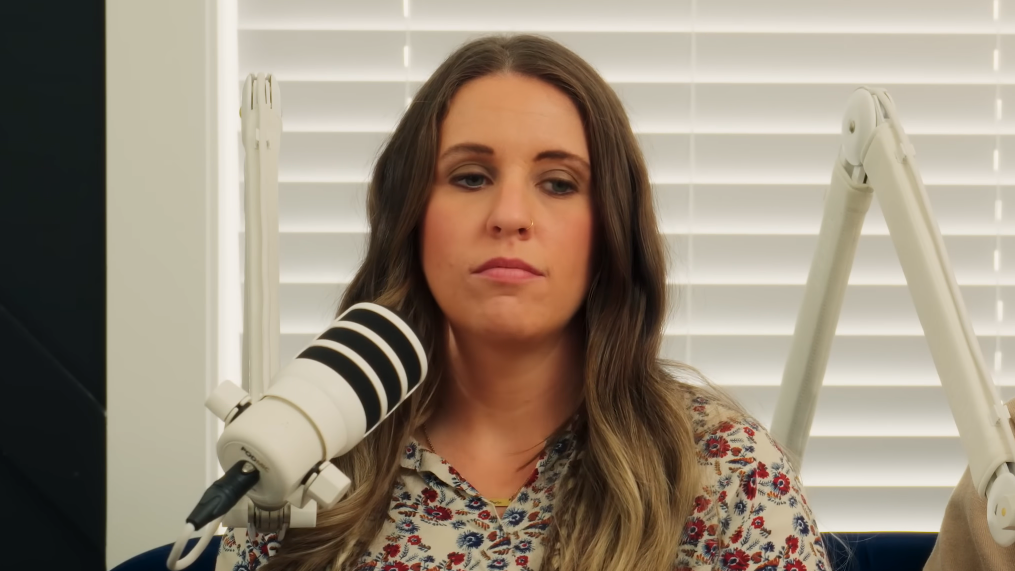
Jill Duggar in tears.
On her sister’s podcast, Jill Duggar tearfully shared the unexpected pains that followed her stillbirth. (Image Credit: YouTube)

They had hoped to meet Isla Marie

On the Wednesday, March 11 episode of her sister’s Jinger & Jeremy podcast, Jill and her husband, Derick, appeared as guests.

They were there to discuss a heavy topic: Jill’s 2024 stillbirth and their grief surrounding it.

Though their would-be daughter died before her March 19 birth, they named her Isla Marie.

Some Duggar watchers did not truly understand why Jill and Derick opted to hold a funeral for a child they never met.

But Jill was very direct in offering her explanation.

“We planned a funeral because that was something that we really wanted,” Jill affirmed.

“I think anybody at any stage of pregnancy,” she suggested, “you can minimize it [and] you can say, ‘Oh, you’re only this many weeks [or] that many weeks.’”

Jill announced: “It doesn’t matter.”

She explained: “Like, whatever you feel is going to remember your baby and remember their life in a significant way.”

Obviously, Jill is speaking personally — and also referring to miscarriages that people know about. A significant minority of miscarriages happen without the individual’s notice.

Jill Duggar and Derick Dillard in March 2026.
Together, Jill Duggar and husband Derick Dillard appeared on her sister’s podcast in March 2026. (Image Credit: YouTube)

She is not the only one in her family to have this experience

“It was really helpful for us … that we do as much of the grieving in a tangible way as possible,” Jill praised of the funeral.

“And, I had seen my mom grieve,” she shared. “I had seen my sisters grieve losses.”

Notably, Jill and her sisters have gotten together to discuss miscarriage grief.

“I had seen other people,” Jill continued.

“So, I was able to incorporate some of those experiences,” she shared, “and thankfully have more knowledge and more resources at my fingertips because of that.”

Jill also delved into the painful logistics of grappling with a miscarriage.

This included the process of procuring a stillbirth certificate from the hospital.

Tearing up, Jill spoke about the experience of calling funeral homes to see if they could accommodate her.

(If you have ever had to make extremely practical phone calls amidst bereavement, like canceling an appointment for a dead family member, you can imagine what this process was like for her.)

“No one ever prepares you” for how this works or how this feels, Jill lamented.

Jill Duggar on her sister's podcast in January 2026.
On a January 2026 episode of her sister’s podcast, Jill Duggar touched upon some very serious topics. (Image Credit: YouTube)

This grief is not something that Jill can set aside, no matter how others feel

For some who suffer miscarriages, they are attempting to become parents. The setback is traumatic and catastrophic.

Others may find that they would have added another child to an existing family. Feelings on this can run the full spectrum.

Notably, not even Jill seems to be telling others how to feel. She’s expressing her own heartache and loss.

Knowing the Duggar cult and their extreme beliefs, some on social media may feel tempted to get drawn into a personhood debate. That is pointless — and not even relevant.

This is about Jill’s sense of loss more than anything else. Our hearts go out to her as she continues to mourn.

Jill Duggar Explains Why a Funeral Helped Her Mourn After Stillbirth was originally published on The Hollywood Gossip.

​The Hollywood Gossip

Categories
Music

Marshals Confirmed for Season 2 After Impressive Premiere Ratings

The news is good for fans of ‘Marshals’! Continue reading…​The Boot – Country Music News, Music Videos and Songs