Rock legend Billy Idol is the subject of a new documentary, and during his current press tour, he’s made some shocking revelations about his personal life.
Sure, we all knew Billy was a partier.
But until this week, we didn’t know that he kicked his heroin addiction by substituting it with a good old-fashioned crack habit.
Billy Idol attends An Evening With Billy Idol & Steve Stevens at GRAMMY Museum L.A. Live on October 09, 2025 in Los Angeles, California. (Photo by Rebecca Sapp/Getty Images for The Recording Academy)
Idol made that revelation during a recent appearance on Bill Maher’s “Club Random” podcast.
“Once you’re trying to get off heroin, what do you go to? You go to something else. I started smoking crack to get off heroin,” Idol remarked.
“Did you really?” Maher asked, prompting Billy to reply, “It worked. It worked.”
This, of course, is not the first time that Idol has admitted to major substance abuse issues.
But it’s the first time that he spoke about basically using crack as a DIY Ozempic in order to curb his other bad habits.
Billy Idol performs at An Evening With Billy Idol & Steve Stevens at GRAMMY Museum L.A. Live on October 09, 2025 in Los Angeles, California. (Photo by Rebecca Sapp/Getty Images for The Recording Academy)
It’s not a strategy that we would recommend to anyone at home — but we’re glad it worked for Billy!
According to early reviews the doc — aptly titled Billy Idol Should Be Dead — contains many such revelations.
“I had it all, and I lit it with butane,” the rock legend remarked in a recent interview with the New York Times.
“There’s a point in my life where I was very drug addicted,” he added, before acknowledging that he’s lucky to be alive.
“I’m lucky that I’ve kept the brain I’ve got, because some people went brain-dead, and some people ended up in jail forever. Or dead,” he told the outlet.
Billy Idol attends the “Billy Idol Should Be Dead” Premiere during the 2025 Tribeca Festival at BMCC Theater on June 10, 2025 in New York City. (Photo by Theo Wargo/Getty Images for Tribeca Festival)
“Imagine if it was today. If I was doing what I was back then today, I would be dead because I would have run into fentanyl.”
In the interview with Maher, Idol revealed that on at least one occasion, he nearly died from snorting heroin:
“I kind of, eventually we did pass out and then when people, other people in the room came too, I was going blue,” Idol said.
Maher was puzzled by the fact that Idol turned blue, prompting the singer to provide a grimly hilarious explantion:
“If you’re dying, you’re gonna start turning blue,” he said.
Obviously, Billy made some bad decisions over the years — but at least he still has his sense of humor (and a lot of good stories).
The man said he was a location scout for a movie, but his story didn’t entirely add up. Continue reading…The Boot – Country Music News, Music Videos and Songs
It was at the tail end of the Vietnam War, when Congress passed the War Powers Resolution of 1973, asserting that it was legislators – not the president – who had the power to declare war.
Once it passed both houses, President Richard Nixon vetoed it, claiming it was unconstitutional.
In response, the legislative branch overturned the veto with the two-thirds majority vote needed to prevail.
The ‘purpose and policy’ section of the 1973 War Powers Resolution passed by Congress. National Archives
Congress asserts itself
When they debated the War Powers Resolution, members of Congress were seeing the erosion of their control over the decision to engage in military operations large and small. With a strong bipartisan consensus, they determined they had to collectively use their powers, including the power of the purse, to thwart executive overreach.
Congress’ actions came in response to the growing protests against the Vietnam War in general and Nixon’s decision to expand the war by sending U.S. troops to invade the neutral country of Cambodia to disrupt the supply lines of the Viet Cong, the communist guerrilla force that accounted for a large number of the 58,000 Americans killed in the war.
Congress – and the country– reacted extremely negatively. Members of Congress collaborated across party lines to draft legislation in an attempt to assert their power. It was a slow process, however, involving long periods of deliberation.
The sun sets behind a plume of smoke rising after a U.S.-Israeli military strike in Tehran, Iran, on March 3, 2026. AP Photo/Vahid Salemi
With these moves, lawmakers placed immense pressure on the president. This eventually led to the drafting and eventual signing of the peace agreement ending the Vietnam war in 1973.
This was not enough for Congress, however.
Rules – and flexibility
Congress wanted to create a document ensuring presidents could not unilaterally make war. They wanted legislative consultation.
They intended the War Powers Resolution to act as a permanent constraint. So, in the resolution they spelled out the specific actions in which presidents can start a conflict:
• First, if there is an invasion of the United States, the president can respond. In this instance, the president can act prior to congressional authorization.
• Finally, if Congress declares war, the president can act.
Lawmakers did, however, provide some flexibility. In the War Powers Resolution, they said a president can initiate and carry out hostilities for 60 days and has a further 30 days to draw down the troops. Once the executive has initiated hostilities, Congress must receive information about that action within 48 hours.
This opens the door for presidents to engage in smaller-scale or short operations without stepping outside the lines set in the law.
Presidents from both parties have availed themselves of this flexibility. As far back as 1975, when President Gerald Ford rescued the SS Mayaguez, the merchant ship captured by Cambodia’s Khmer Rouge, presidents have acknowledged the law and dutifully reported their military actions to Congress.
President Donald Trump after landing aboard Air Force One on March 1, 2026, at Joint Base Andrews, Maryland. Roberto Schmidt/Getty Images
Presidents since the passage of the War Powers Resolution have not, however, acknowledged that they have to get congressional approval of their actions, with few exceptions. Predominantly, without congressional approval, they limit their actions to the 60-to-90-day window.
President Barack Obama, however, attempted to circumvent the window when his bombing campaign in Libya in 2011 dragged on, as well as when he bombed the Islamic State group in 2014. In the first instance, he claimed the War Powers Resolution did not apply. In the second, he claimed each bombing campaign was discrete, rather than part of a larger campaign.
Because Congress did not put sunset dates into these authorizations, subsequent presidents Obama, Trump and Joe Biden used those same authorizations for a host of later military actions in the Middle East and elsewhere.
And legislators are deeply divided in the current discussions about demanding the cessation of hostilities against Iran.
Republican House Speaker Mike Johnson says that limiting the president at this time is “dangerous.” Former congresswoman Marjorie Taylor Greene – who has fallen out of favor with Trump’s MAGA base and the president himself – took the opposing view, posted on social media, “Now, America is going to be force fed and gas lighted all the ‘noble’ reasons the American ‘Peace’ President and Pro-Peace administration had to go to war once again this year, after being in power for only a year.”
Has the U.S. entered a moment when members of Congress reassert themselves the way they did at the tail end of the Vietnam war?
It is possible that they will follow James Madison’s advice about the power relationship between Congress and the president. Writing in the Federalist Papers, Madison said that “ambition” has “to counter ambition.” He continued, “The interest of the man must be connected with the constitutional rights of the place. It may be a reflection on human nature, that such devices should be necessary to control the abuses of government.”
As I explain in my book about congressional war powers, the constitutional system creates an invitation to struggle. Now, as the U.S. wages war on Iran, Congress must decide whether it wants to struggle, as it did during the Vietnam War, or remain compliant and in the president’s shadow.
Sarah Burns has received funding from the Institute for Humane Studies.
Detroit area homelessness providers worry the federal funding shift could affect thousands of individuals and families across the region. Charles Ommanney/Getty ImagesJoshua Lott/Getty Images
A bureaucratic shift in Washington is threatening to undo years of progress in Detroit’s fight against homelessness, potentially forcing thousands of the city’s most fragile residents back onto the streets.
In November 2025, the U.S. Department of Housing and Urban Development revised how it would allocate funding through its flagship homelessness program, the Continuum of Care.
HUD officials described the shift as a move away from a “housing first” model toward a “treatment first” approach that emphasizes participation in services, such as drug addiction disorder treatment, before or alongside housing placement.
The administration has argued that this promotes self-sufficiency. Critics contend that stable housing is the foundation that makes treatment and recovery possible.
The policy revision has been challenged in court by 20 states, including Michigan, as well as city and county governments and advocacy organizations. They argue it could destabilize individuals and families across the country, state and here in Detroit.
In December 2025, I joined 77 other homelessness researchers who sent a letter to Congress analyzing the likely impacts of HUD’s revised funding approach. That analysis draws on decades of peer-reviewed research evaluating which housing interventions reduce homelessness and which do not.
That same month, a federal judge issued a preliminary injunction that temporarily pauses HUD’s efforts to shift funding away from permanent supportive housing.
HUD officials stated that the agency intends to apply the changes in future funding rounds, once the order is no longer in effect.
Homelessness in Detroit
Detroit’s homelessness crisis is both long-standing and worsening.
The number of people who experience homelessness in Detroit, Hamtramck and Highland Park increased by about 16% from 2023 to 2024, with roughly 1,725 people experiencing homelessness on a single January night, including hundreds of families. Children in particular have been hit hard by this crisis. One data snapshot shows 2,579 children reported being doubled up, staying in a shelter, staying in a hotel or motel or being unsheltered. This was a record number for the Detroit Public Schools Community District.
While permanent supportive housing has strong outcomes for those who receive it, overall homelessness has continued to increase due to rising rents, economic instability and the limited housing supply, which has historically outpaced the number of available supportive units.
Detroit’s homelessness response system is coordinated through the federally funded local Continuum of Care led by the Homeless Action Network of Detroit.
Those funds pay for emergency shelters, transitional housing and rapid rehousing programs – which provide temporary rental assistance and the assistance of a social worker, without preconditions – and permanent supportive housing.
Like other cities nationwide, Detroit has built its homelessness response system around HUD’s funding priorities.
The revised funding priorities announced in late 2025 would substantially reduce that share and redirect funding toward transitional housing and short-term interventions.
According to the Homeless Action Network of Detroit, this means that Detroit area providers could go from about $34 million per year allocated for permanent supportive housing under the current allocation to no more than about $11 million under the new priorities.
Local advocates warn that capping permanent housing at roughly 30% of Continuum of Care dollars would drastically reduce the number of supportive units available and place hundreds of households at risk of returning to homelessness.
Why permanent supportive housing matters
Permanent supportive housing is one of the most rigorously studied homelessness interventions in the United States.
It is an evidence-based intervention that provides long-term rental assistance paired with voluntary supportive services for people who have experienced chronic, or repeated, homelessness, particularly those with disabilities or chronic health conditions.
Under the current Continuum of Care framework, households typically pay no more than 30% of their income toward rent, with the subsidy covering the remainder. Assistance can continue as long as eligibility criteria are met.
Programs also offer staff to help with coordination of health care and behavioral health services and assistance identifying and applying for relevant benefits to promote long-term housing stability. Tenants hold standard leases and have the same legal protections as other renters.
Research shows that permanent supportive housing using a housing-first approach consistently reduces homelessness and improves health outcomes for people with disabilities.
Greater investment in permanent supportive housing is also linked to reductions in chronic homelessness, meaning individuals or families who have been homeless for long periods or repeatedly over time.
A long-term study published in Social Service Review in 2014 found that communities that increased permanent supportive housing capacity experienced measurable declines in chronic homelessness over time.
Local data from the Detroit Continuum of Care indicate that at least 160 new permanent supportive housing units have been made available in the past year, and another 235 units are projected for 2026. These units help people exit homelessness and maintain stable homes amid rising rents and affordability challenges.
How transitional housing compares
Transitional housing typically requires residents to participate in supportive services or programming as a condition of stay. This can include regular meetings with a social worker, employment readiness classes, substance use treatment or financial literacy workshops, for example.
The model is often used for survivors of domestic violence or young adults aging out of foster care. While transitional housing can provide short-term stability and support during these transitions, it differs from permanent supportive housing in that it is time-limited and may require program compliance as a condition of continued residency. Transitional housing placements typically last from about six months up to two years.
However, research consistently finds that transitional housing is less likely than permanent housing to produce long-term housing stability. This is particularly the case for families and people with disabilities.
HUD’s Family Options Study in 2016 found that families offered permanent housing experienced significantly better long-term housing stability than those offered transitional housing, despite transitional housing costing more per household.
Follow-up research conducted by the Urban Institute, a nonprofit organization that studies economic policy, similarly found that many families who leave transitional housing once their time limit expires struggle to maintain stable housing. These findings are especially relevant for individuals with disabilities, chronic illnesses or mental health conditions, all groups that are typically prioritized for permanent supportive housing.
Why Detroit is especially vulnerable
Research shows that housing instability increases reliance on emergency services such as shelters, hospitals and public safety systems. This drives up taxpayer costs and additionally strains already overextended local services.
Detroit area homelessness service providers are pushing back against the potential federal changes, which they identify as “radical.”
In response, many organizations are turning to state and philanthropic partners for support while continuing to develop housing locally to help offset possible reductions in federal funding.
Deyanira Nevárez Martínez has received funding from the State of Michigan, the Latino Policy and Politics Institue at UCLA, the Institute for Research on Poverty at the University of Wisconsin-Madison, and the Freedom Together Foundation (formerly the JPB Foundation). She is an Assistant Professor of Urban and Regional Planning at Michigan State University and is an elected member of the Lansing City Council representing ward 2.
Most opening tour acts don’t purchase end-of-tour gifts for their headliners, but Ella Langley isn’t most openers. Continue reading…The Boot – Country Music News, Music Videos and Songs
Most opening tour acts don’t purchase end-of-tour gifts for their headliners, but Ella Langley isn’t most openers. Continue reading…Country Music News – Taste of Country
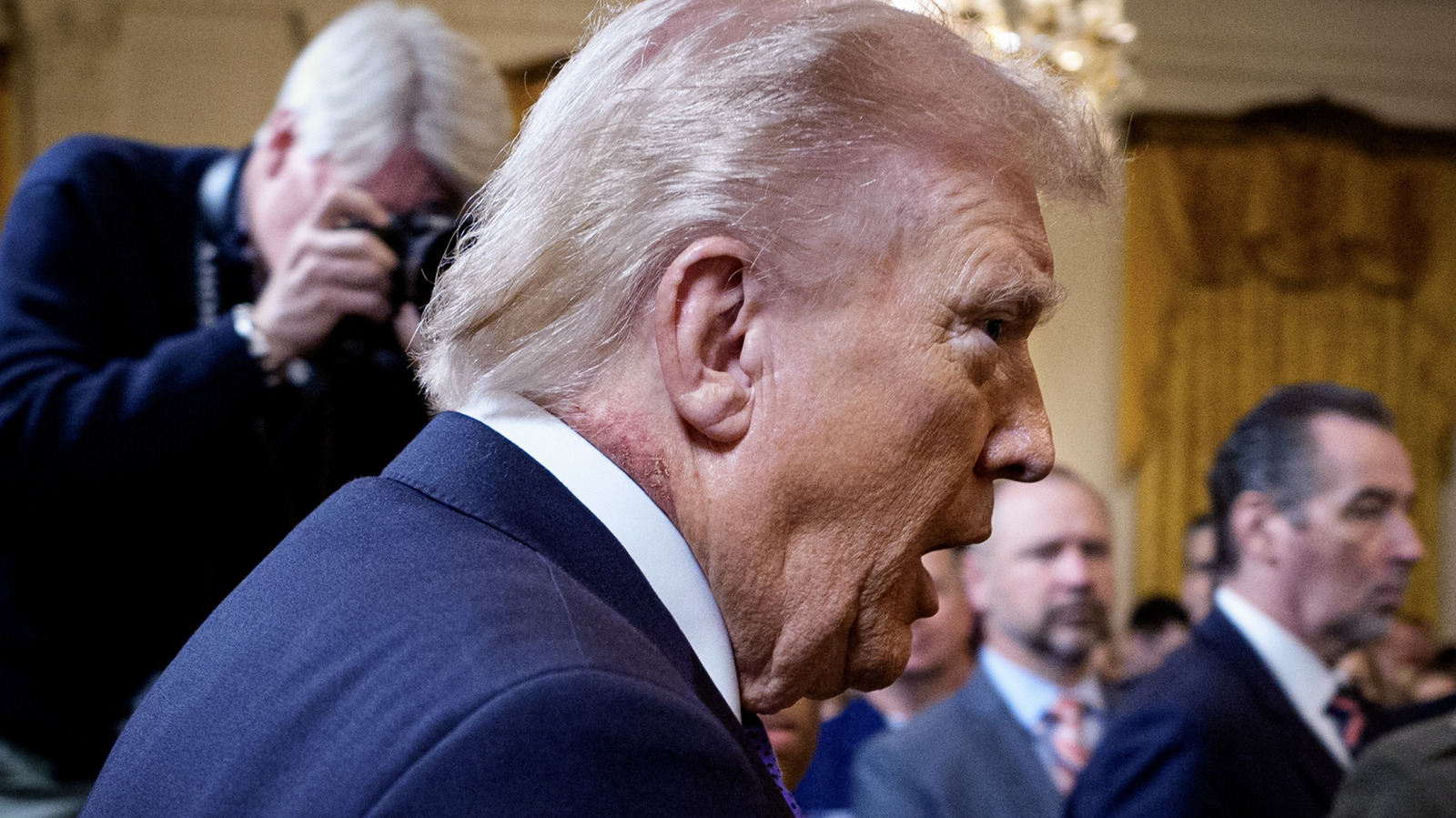
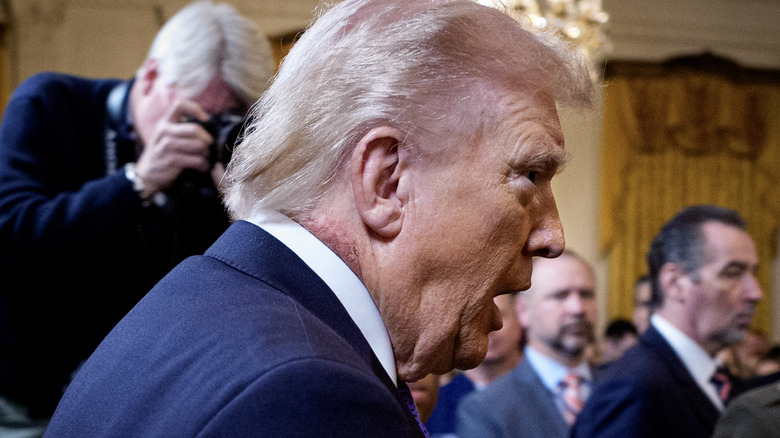
When Donald Trump’s physician released a statement about a rash on the U.S. president’s neck, the explanation only fueled further speculation about its cause.
Health Digest – Health News, Wellness, Expert Insights