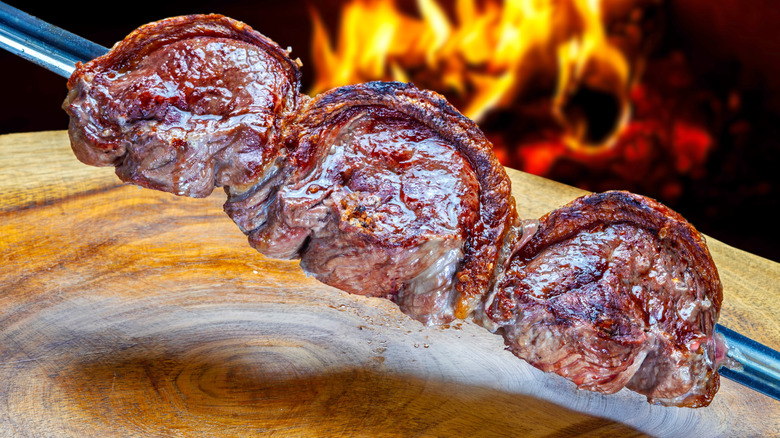
Steakhouses are great places for a tasty meal. The Brazilian variant differs in a few ways from an American place, including how a chef seasons the meat.
Mashed – Fast Food, Celebrity Chefs, Grocery, Reviews








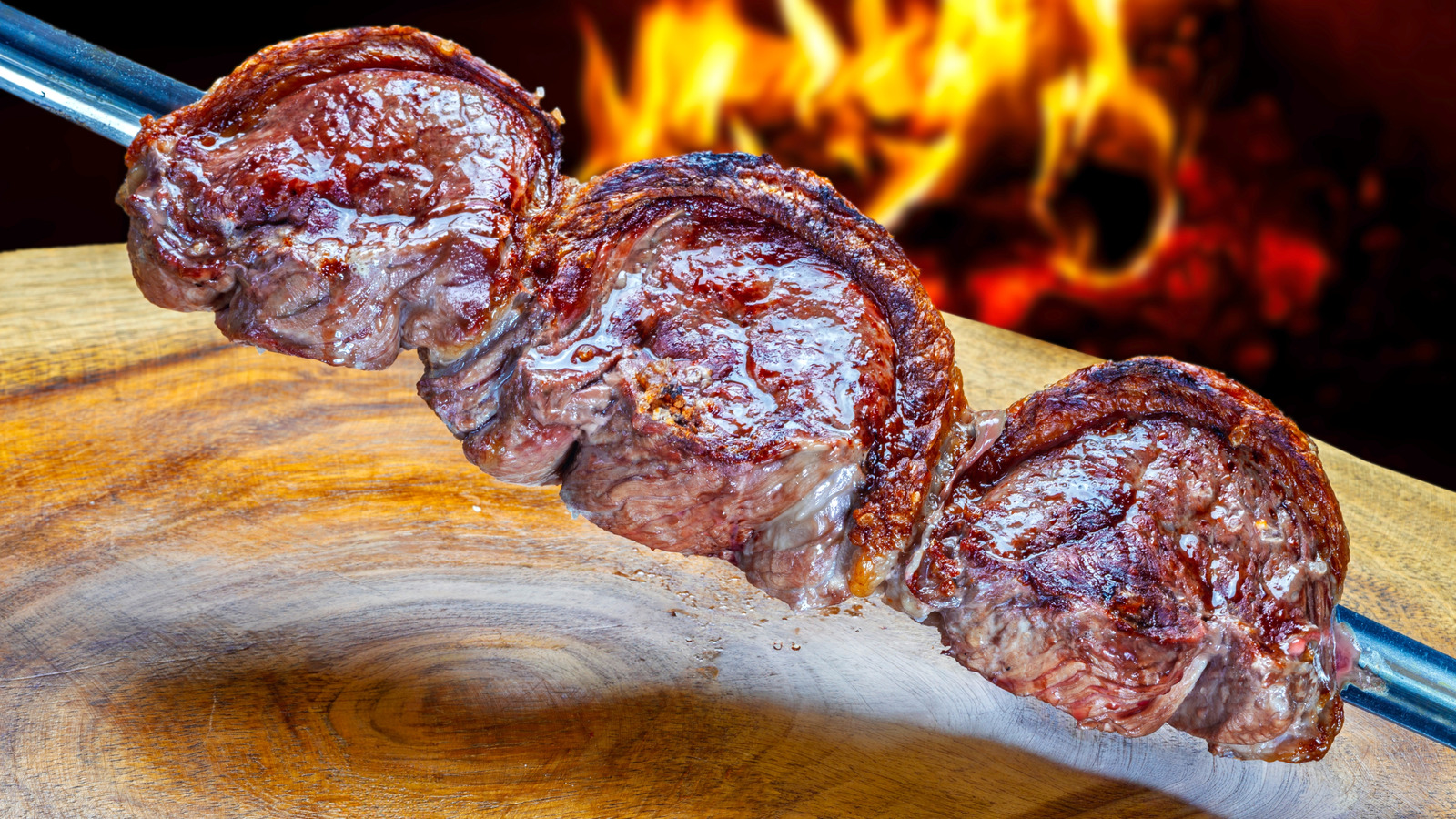
Steakhouses are great places for a tasty meal. The Brazilian variant differs in a few ways from an American place, including how a chef seasons the meat.
Mashed – Fast Food, Celebrity Chefs, Grocery, Reviews
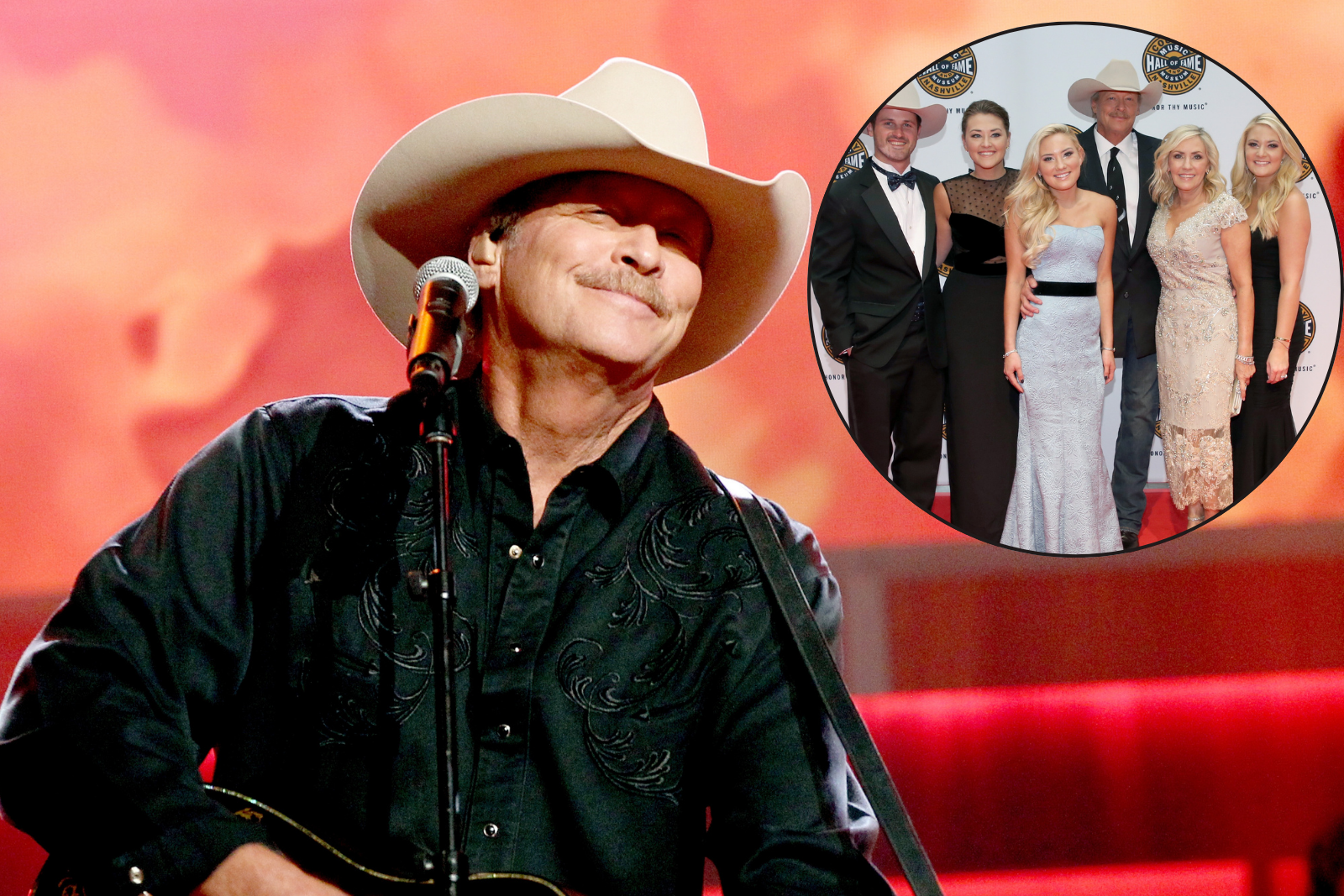
Alan Jackson’s family just got a little bigger. Daughter Mattie welcomed baby Charlie Ann Smith, marking another joyful chapter for the country legend. Continue reading…The Boot – Country Music News, Music Videos and Songs
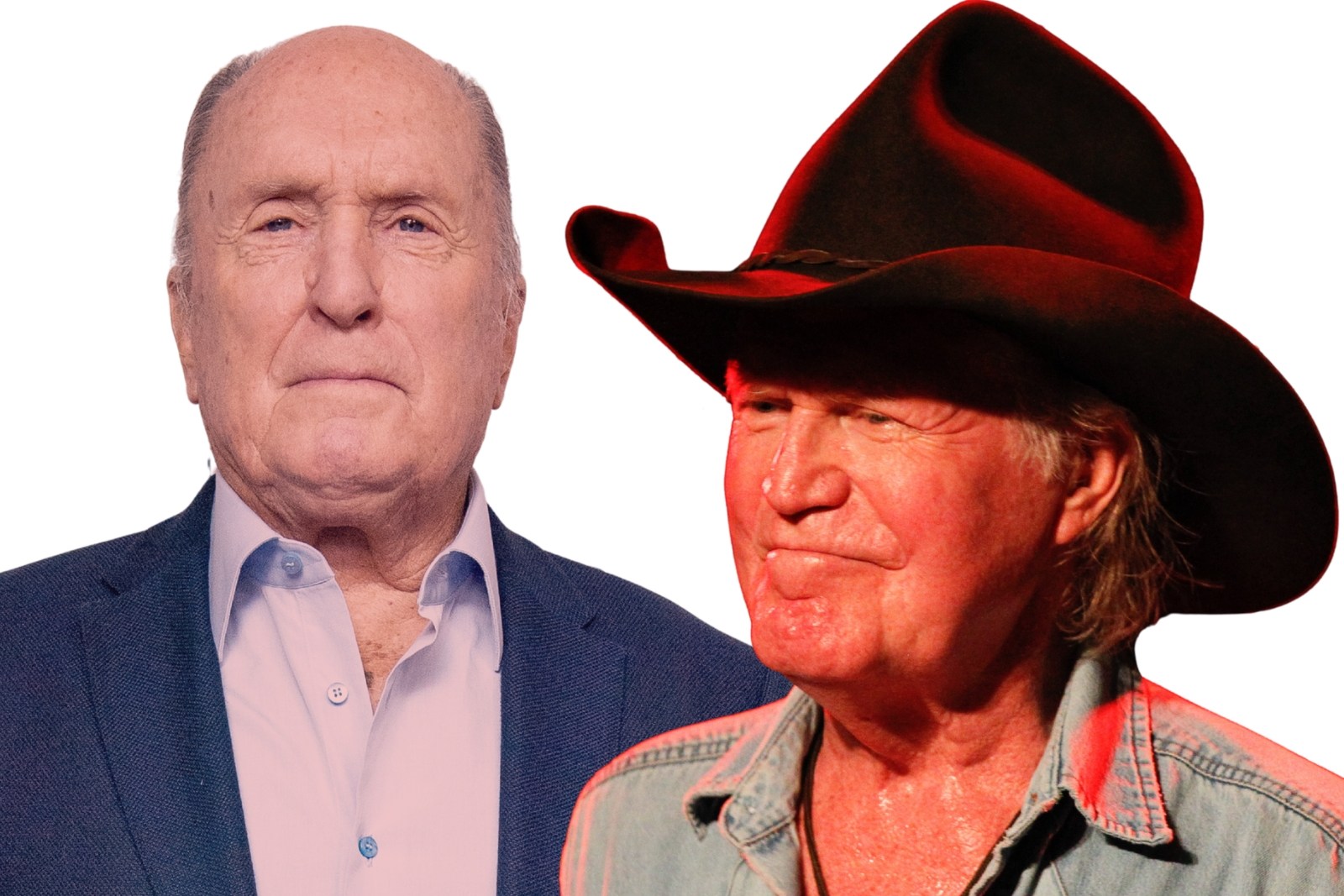
Legendary late actor Robert Duvall once testified in court for country legend Billy Joe Shaver — and maybe even changed the outcome of Shaver’s trial. Continue reading…The Boot – Country Music News, Music Videos and Songs
Legendary late actor Robert Duvall once testified in court for country legend Billy Joe Shaver — and maybe even changed the outcome of Shaver’s trial. Continue reading…Country Music News – Taste of Country
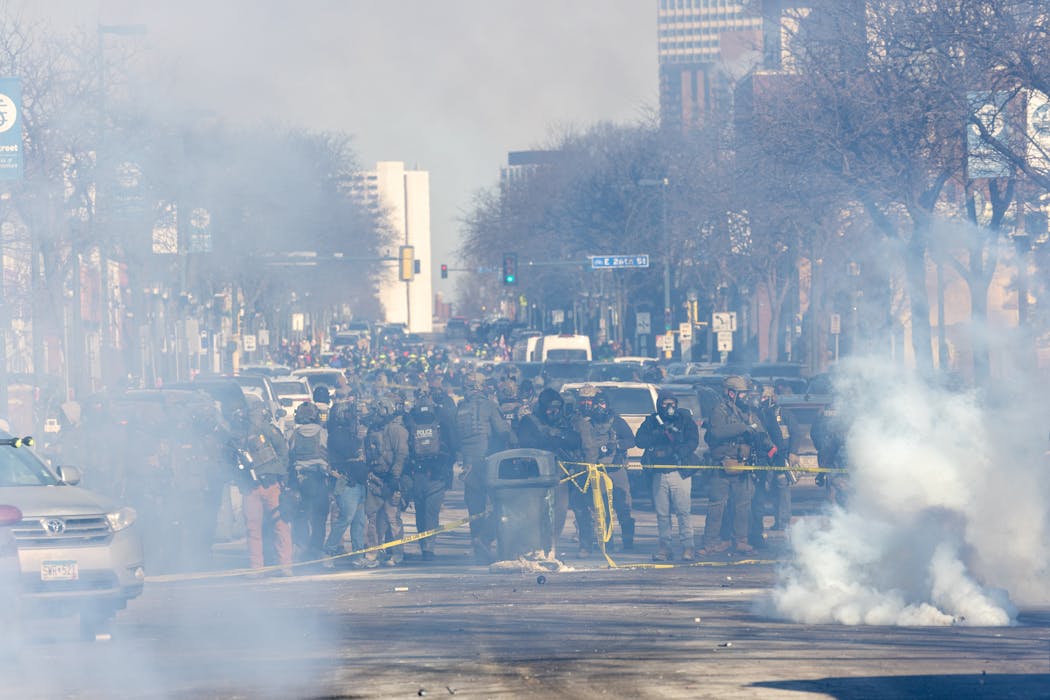
The negative public reaction to Operation Metro Surge – the violent immigration dragnet in Minnesota – was “MAGA’s Gettysburg,” wrote New York Times columnist Jamelle Bouie on Jan. 28.
Bouie, of course, was comparing ICE’s setbacks to the Confederate defeat at Gettysburg, the battle often credited with turning the tide of the American Civil War. Fresh off a string of victories, Robert E. Lee, commander of the Army of Northern Virginia, believed his men were “invincible” and launched an invasion into the North.
But Gen. George G. Meade and the Army of the Potomac won the battle of Gettysburg, and the Confederates would fight on the defensive for the rest of the war.
Since early 2026, growing numbers of commentators have turned to the Civil War of 1861 to 1865 to make sense of America’s fractured political climate.
After a masked federal agent shot and killed a 37-year-old mother of three, Renée Good, in Minneapolis, novelist Thane Rosenbaum wondered whether the city might become a “new Antietam.” The battle of Antietam, fought on Sept. 17, 1862, remains the bloodiest day in all of American history, leaving more than 3,600 soldiers dead.

Later in January 2026, Minnesota Gov. Tim Walz speculated that ICE violence in the Twin Cities could spark a national conflict. “I mean, is this a Fort Sumter?” he asked an interviewer, alluding to the South Carolina harbor fortress where, in 1861, the opening shots of the Civil War were fired.
In response, defenders of Donald Trump, including CNN commentator Scott Jennings and House Majority Whip Tom Emmer, compared Walz to Jefferson Davis, the president of the Confederate States of America. On Fox News, Washington Examiner columnist Tiana Lowe Doescher said: “News flash, Tim Walz. In this case, you’re the Confederacy,” accusing him of conspiring to defy federal immigration policy.
At a time of deepening national division, the recent spate of Civil War analogies should come as no surprise.
The Civil War remains the nation’s most divisive and defining epoch. The secession of 11 states propelled a democratic nation into unprecedented political fracture. After four years of bloodshed, the Union was preserved and 4 million enslaved people were granted their freedom.
Preservation of the Union came at a heavy price. More than 700,000 people were dead, about 2% of the 1860 population, or a number roughly equivalent to the current population of the state of Maryland.
But the Civil War’s staggering death toll cannot fully explain the references to “Gettysburg” and “Jeff Davis” in media coverage of ICE operations in Minnesota and elsewhere.
As we argue in our book, “They Are Dead and Yet They Live: Civil War Memories in a Polarized America,” the impulse to connect the American Civil War to contemporary crises can be traced to the politics of memory, the ways interest groups, politicians and ordinary people shape the past to meet the needs of the present.
Likening Walz to Jefferson Davis or Minneapolis to Gettysburg or Fort Sumter are clear examples of how Americans appropriate the Civil War for our contemporary political needs.
In the Civil War’s aftermath, the conflict’s participants quickly crafted competing versions of the Civil War.
Some Union veterans labeled their former adversaries as traitors. Clinton Spencer, a captain in the 1st Michigan Infantry, declared, “disloyalty to the old flag was is and shall always be TREASON, deep, dark, and damnable.”
Yet the Union memory soon became subsumed by the dominance of the “Lost Cause,” an intentional and distorted narrative crafted by white Southerners. That version of the Civil War ignored slavery and celebrated Confederate soldiers in a war to defend states’ rights from federal tyranny.
By the early 1900s, Lost Cause ideology had taken root across the nation. The United Daughters of the Confederacy and other Southern apologists erected hundreds of Confederate monuments throughout the United States, and blockbuster movies like “The Birth of a Nation,” from 1915, and “Gone with the Wind,” from 1939, turned Lost Cause nostalgia into big-screen spectacle.
Over the past few decades, however, communities around the United States have made great strides to disentangle the Lost Cause from public memories of the Civil War.
After Dylann Roof massacred nine African American worshippers at Charleston’s Emmanuel AME Church in 2015, he was found to have espoused white supremacist ideas and posted a photo of the Confederate battle flag on his website. In the killings’ aftermath, cities across the South removed more than 300 Confederate flags, monuments and symbols from public view.
“The Confederacy was on the wrong side of history and humanity,” declared New Orleans Mayor Mitch Landrieu in a 2017 speech about the removal of four Confederate statues in the city. “It sought to tear apart our nation and subjugate our fellow Americans to slavery. This is a history we should never forget and one that we should never, ever again put on a pedestal to be revered.”
In 1961, poet Robert Penn Warren famously observed, “Many clear and objective facts about America are best understood by reference to the Civil War.”
That remains the case today.
For many Americans, the Civil War is the prime example of the danger of allowing political division to spiral into organized violence.
Minnesota’s governor, Walz, could have used the sinking of the USS Maine in 1898 or the bombing at Pearl Harbor in 1941 for his historical analogy, but the references to the start of the Spanish-American War or World War II would not have been as powerful. Using the Civil War as a reference point underscores the danger when Americans decide to abandon their shared history and values and engage in fratricidal war.
Many of the recent Civil War analogies do not hold up to scrutiny. The events going on in Minneapolis bear little to no resemblance to the years of tumult leading to the assault on Fort Sumter, and the violence on the streets of Minneapolis can hardly compare to the horrors on the fields along the Antietam Creek.
But that’s beside the point.
More than 160 years after the defeat of Confederate forces at Gettysburg, the Civil War continues to have an enduring hold on the American political consciousness – shaping the way we view the past and offering a vocabulary for understanding the political conflicts of the present.

The authors do not work for, consult, own shares in or receive funding from any company or organization that would benefit from this article, and have disclosed no relevant affiliations beyond their academic appointment.
Politics + Society – The Conversation
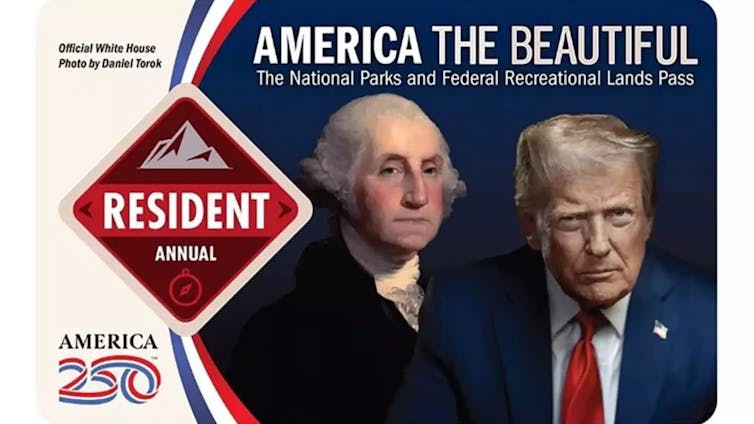
In November 2025 the Trump administration announced a special park pass commemorating the nation’s 250th anniversary that featured images of two presidents: George Washington and Donald Trump.
Featuring the current president – in place of the National Park Service’s usual landscape pictures – triggered both a lawsuit and a social media movement to put stickers over Trump’s face.
As a businessman, Trump has frequently emblazoned buildings and consumer products – shoelaces, an airline, an edition of the Bible, among many others – with his own name.
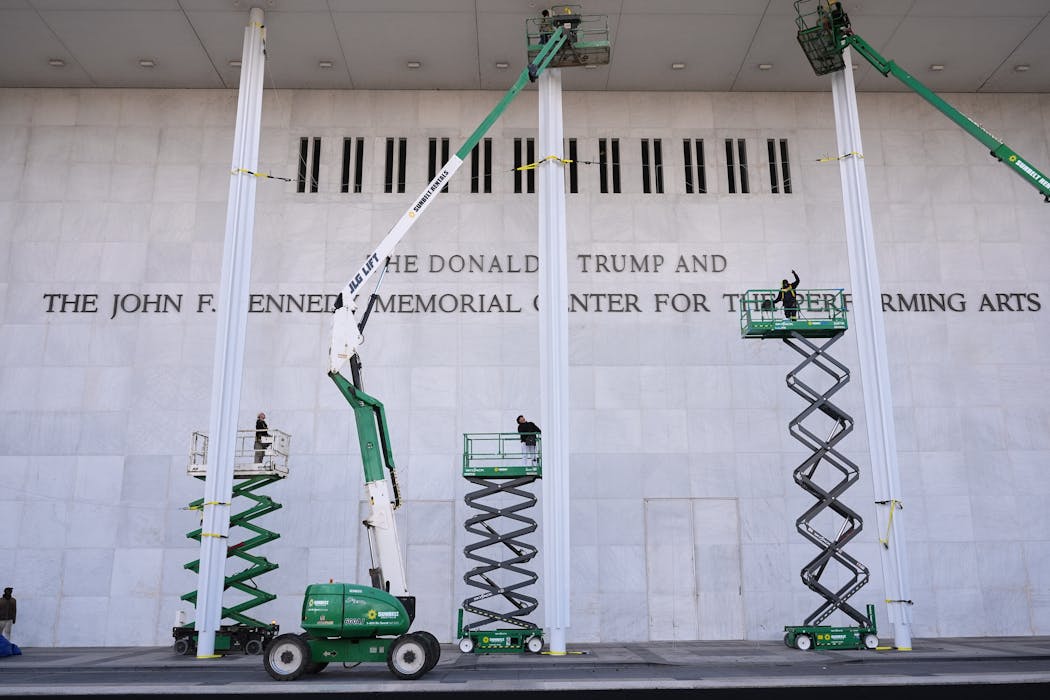
During his current presidential term, his administration has put his name on numerous government properties – perhaps most famously the Kennedy Center, but also money, monuments and military equipment. In January 2026, Trump floated the idea Congress would rename both New York’s Penn Station and Washington’s Dulles International Airport after him.
With Florida lawmakers considering renaming the airport near Mar-a-Lago after the president, the Trump Organization has filed an application to trademark his name for use in airports and ancillary activities, although the company said it would not charge a fee in the case of the Palm Beach airport.
As a communication professor who studies the First Amendment, I was intrigued by the federal actions and the protests they’ve triggered.
Citizens certainly have the right to protest these decisions, like any government action. The First Amendment prevents the government from making laws that abridge freedom of speech.
But does the federal government itself have freedom of speech? And can a president put his name and image wherever he wants?
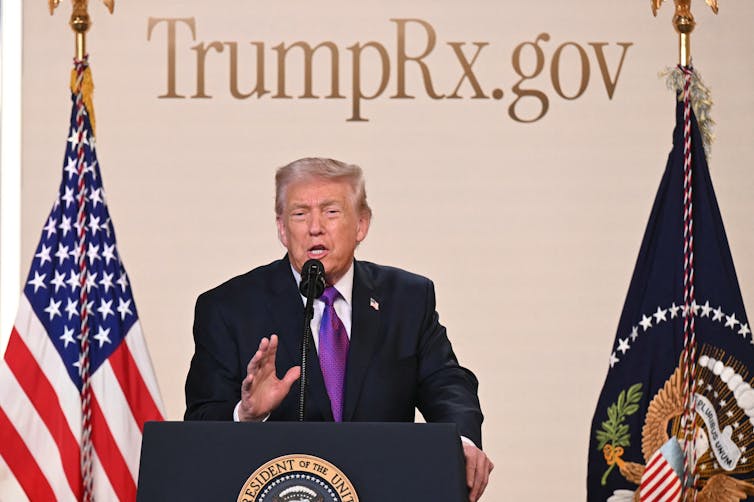
The answer to the first question has already been answered. In a series of rulings, the Supreme Court has upheld the government speech doctrine, which allows the government as speaker to say whatever it wants.
Moreover, if the forum is governmental, the government may even be able to compel people to express its messages – for example, with public employee speech that is part of job duties. The 2006 Supreme Court decision establishing that principle involved a deputy district attorney who’d questioned the validity of a warrant, but the rule applies to other employees, such as teachers who have to offer instruction in state-mandated curricula.
The court’s decisions in government speech cases imply that if people do not like the government speech, they should change the government with their votes.
However, some scholars and advocates argue that this relatively new constitutional doctrine gives the government too much power to drown out other viewpoints in the marketplace of ideas.
In most instances, the government cannot compel speech or force citizens to express a certain message. Compelled speech is not allowed when the government is forcing a citizen to endorse an ideological message.
For example, the Supreme Court allowed a Jehovah’s Witness to cover the words “or Die” on his license plate, which included the New Hampshire state motto, “Live Free or Die.”
The First Amendment is not absolute, and some government regulations will infringe on speech.
The federal government has strict regulations on how the American flag should be disposed of, but it cannot punish someone who is burning a flag as a form of political protest.
What happens when the government itself hosts forums for citizen speech, such as placing monuments in a park or flying flags on government property? Can the government deny certain speech based on the speaker or message?
In such cases, courts have had to decipher whether the forum was purely governmental. To do so, they examine the history of the forum in which the contested speech takes place, who controls the forum, and the public perception of who controls it.
This brings us back to the question of Trump’s name and likeness. As a constitutional matter, the Trump administration can express itself as it sees fit under the government speech doctrine. But in some cases, the administration may be bound by statute or formal contracts, as with the legal battle over the naming of the Kennedy Center, which was named by an act of Congress. The lawsuit over the National Park passes claims that the administration is violating a federal law requiring that the winning entry in a public lands photo contest be used for the passes.
Still, I believe it would be difficult to win a lawsuit claiming that the new passes are a form of compelled speech, with bearers of the pass arguing they are being forced, in effect, to endorse Trump. Most people would likely see the park passes’ artwork as being controlled by the government and therefore a form of government expression, not a form of private expression.
But the Trump administration may not be able to defend its policy of declaring passes null and void if the president’s image is covered by a sticker. Citizens protesting Trump’s appearance by covering up the president’s image is protected speech, in my view. The government’s action to void the passes is likely a violation of the First Amendment.
On the face of it, placing stickers on passes would appear to violate the long-standing Interior Department rule that passes are “void if altered.” Those regulations were content neutral and incidental to any particular message or cardholder.
However, the updated policy, voiding the pass if Trump’s image is covered or marred, is more suspect. The new rules seem to be a direct response to the protesters’ political speech and, as applied, primarily aim to affect these stickers and speakers.
With an administration known for its social media savviness, it may not be convincing for officials to argue they did not know about the protest or that the policy was not a direct attempt to chill such speech.
The government will have the right to put Trump’s name and images on more government property in many cases, but most resulting political protests, in my view, will also be protected speech.

Jason Zenor does not work for, consult, own shares in or receive funding from any company or organization that would benefit from this article, and has disclosed no relevant affiliations beyond their academic appointment.
Politics + Society – The Conversation
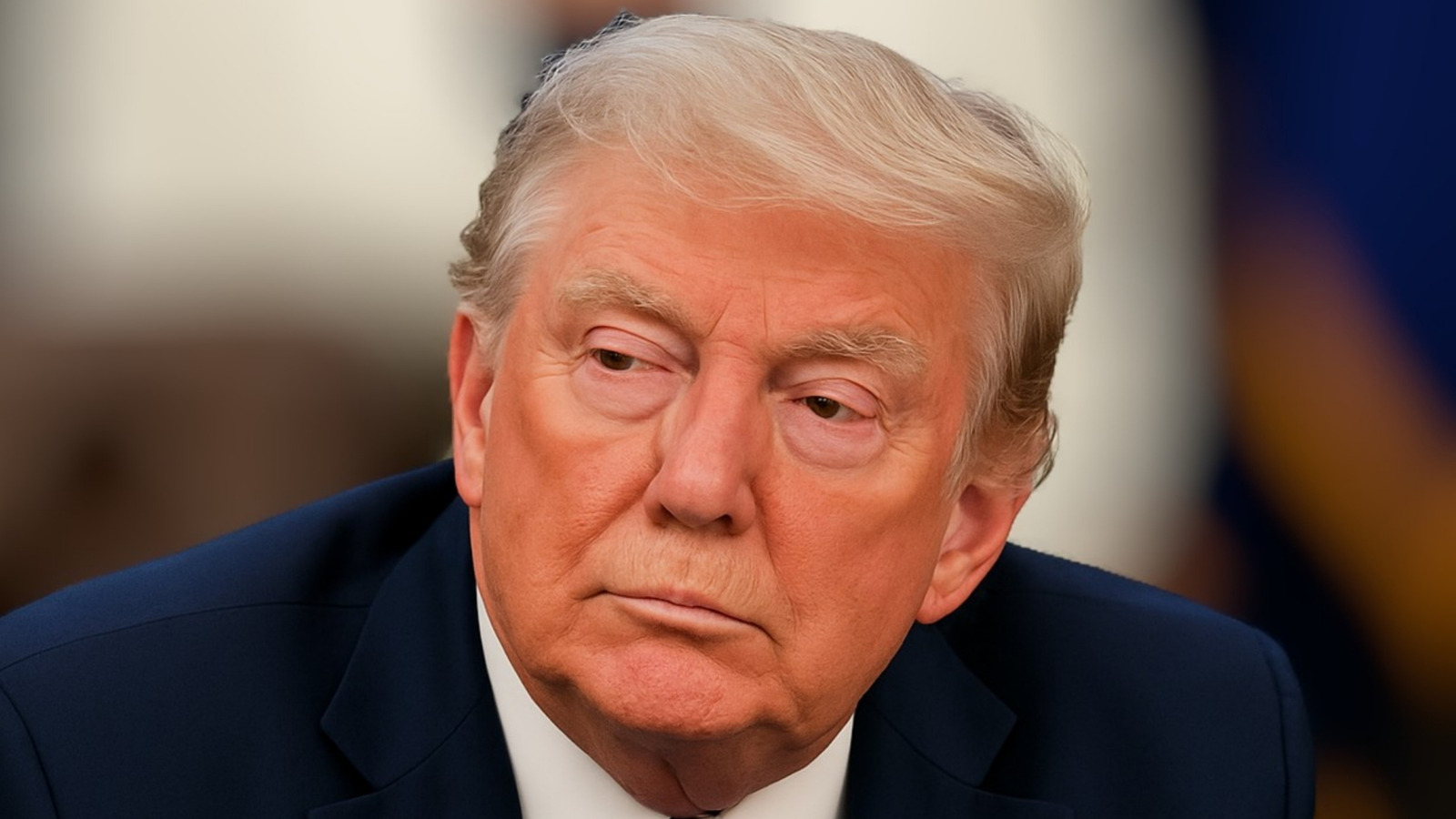
In a recent interview, President Donald Trump claimed that he only needed five hours of sleep per night. But is that enough for older people?
Health Digest – Health News, Wellness, Expert Insights
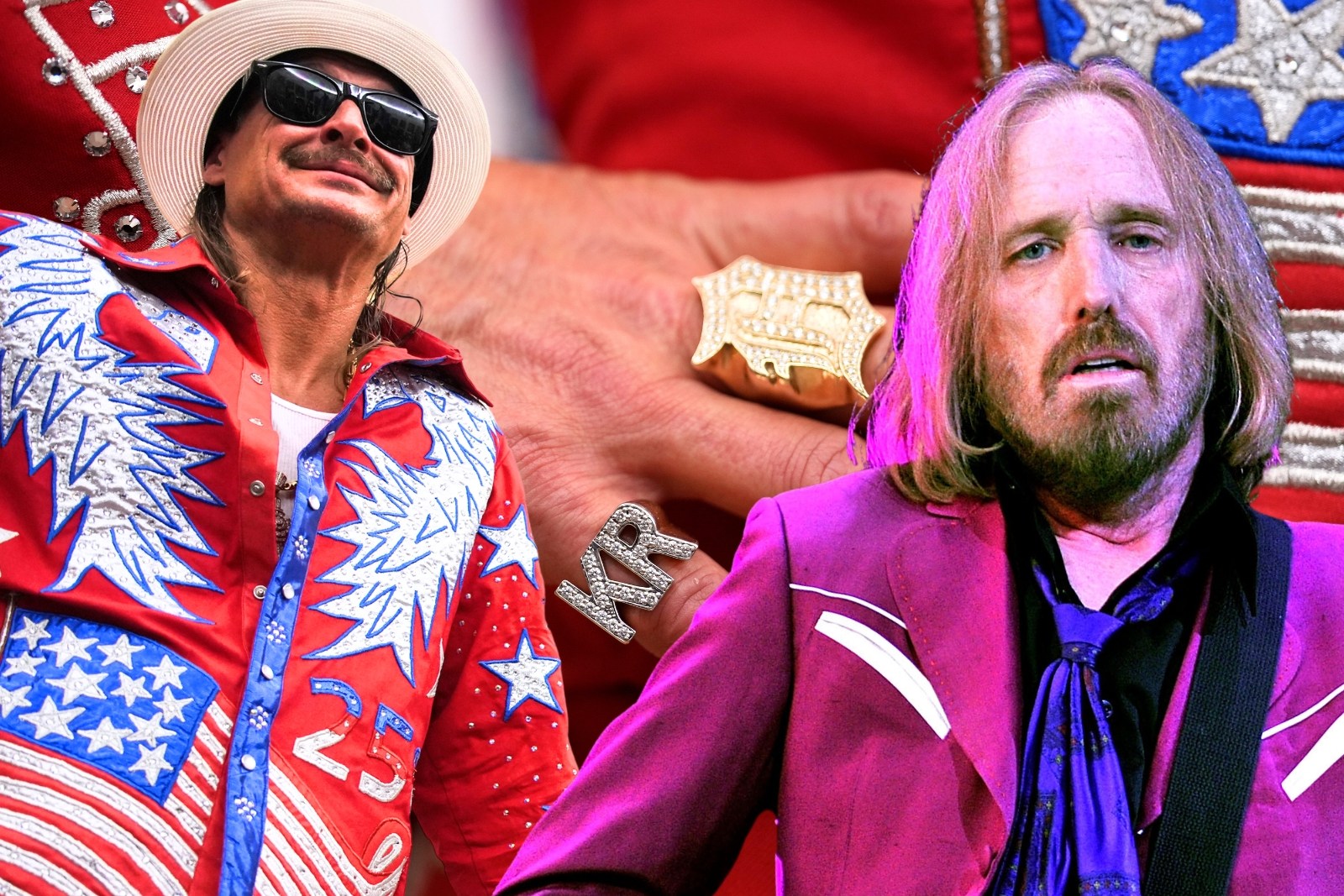
Last year, Kid Rock revealed a surprising anecdote from his past connecting him to rock legend Tom Petty. Continue reading…The Boot – Country Music News, Music Videos and Songs
Last year, Kid Rock revealed a surprising anecdote from his past connecting him to rock legend Tom Petty. Continue reading…Country Music News – Taste of Country

Flavors come and go, falling in and out of favor with the passing time, but there’s one old-school flavor of ice cream we wish would make a comeback.

Food Republic – Restaurants, Reviews, Recipes, Cooking Tips